
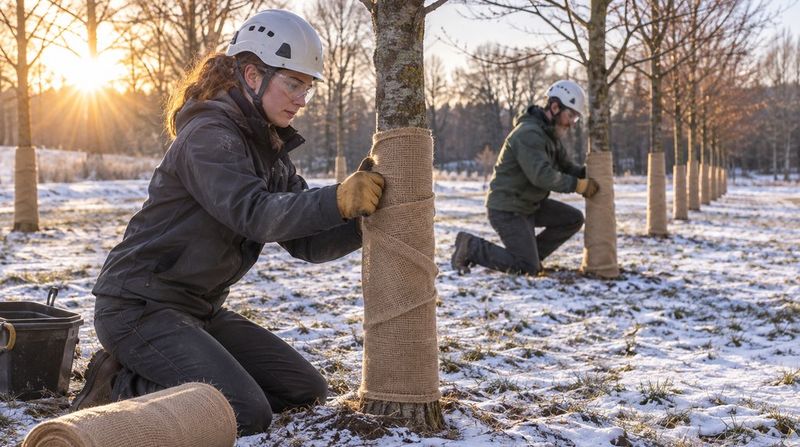
A long vertical split in the bark of a young maple or fruit tree can make any gardener’s stomach drop. The simple fix people point to is wrapping the trunk with a light-colored guard before winter, and it is a smart habit for thin-barked trees.
The wrap goes on the whole trunk, though, not just the sunny side, and it has to go on before the damage shows up. Here is how winter splits happen, what a guard can and cannot do, and how to care for a tree that is already cracked.
A split can have more than one winter cause
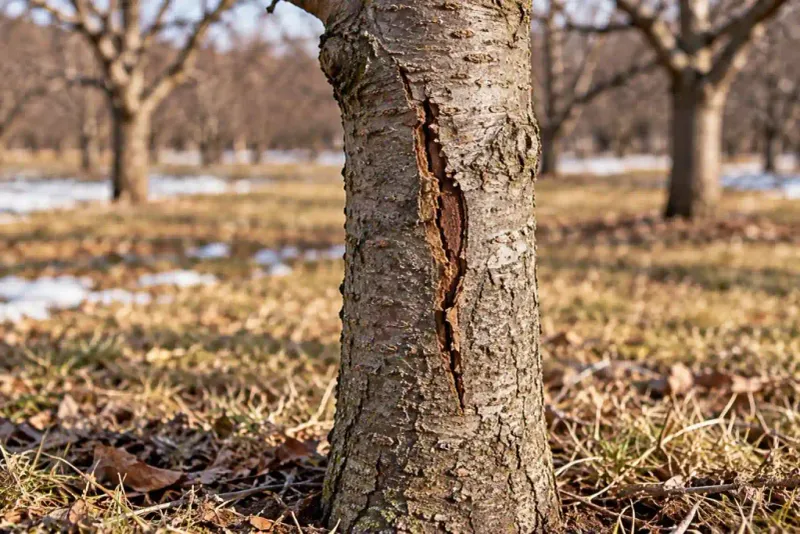
Not every winter split is the same injury. Sunscald damages bark that has been warmed by the winter sun and then chilled.
Frost cankers are dead patches of bark that often show up on the south or southwest side. True frost cracks are splits that reach into the wood itself.
That is why the side of the trunk can only tell you so much. Damage facing south or southwest fits sun-related injury, but University of Minnesota urban forestry researchers note that true frost cracks can appear on any side of the trunk.
A crack on the sunny side is not automatically sunscald, and one on the shady side is not automatically a frost crack.
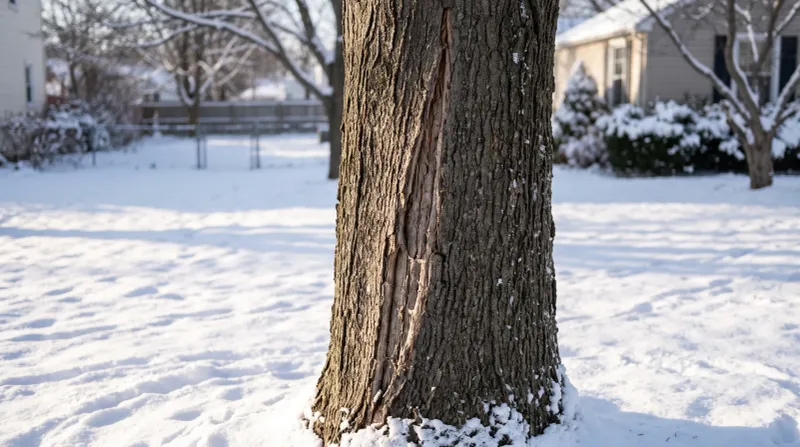
Frost cracks are described as long, lengthwise splits tied to severe temperature swings, according to Purdue Extension. So a visible split tells you the tree was stressed this winter.
It does not tell you the cause by looks or direction alone.
Winter temperature swings can injure trunks
Picture a clear, cold January afternoon. The low sun warms the trunk, and the living tissue under the bark wakes up a little.
When the sun dips or a cloud rolls in, the temperature can plunge fast, and that quick chill can kill the warmed tissue. The result is sunscald, often seen as sunken or peeling bark.
Frost cracks are a different story. Purdue Extension links these lengthwise splits to severe temperature fluctuations.
Experts do not fully agree on exactly how the splitting happens, so it is best to say the swings are associated with the cracks rather than the single proven trigger.
What matters for you is the pattern. Big jumps between warm days and freezing nights are hard on trunks.
Because the injuries can have different causes, not every winter split formed the same way, and each one deserves a careful look rather than a quick guess.
Young, thin-barked trees are more vulnerable

Thin bark gives a trunk less cushioning against sun and sudden cold, and young trees have plenty of it. That makes them the usual suspects for winter trunk trouble.
University of Minnesota Extension lists maple, cherry, crabapple, plum, linden, and honey locust among trees prone to sunscald. Purdue also names maple, crabapple, and linden as examples that can suffer winter trunk injury.
Still, being on a list does not mean your tree will crack. Plenty of young maples and plums sail through winter untouched, and species alone cannot predict what will happen.
A better question is whether your tree is young, has smooth thin bark, and sits where winter sun hits the trunk hard. If so, it earns some preventive attention.
An older tree with thick, rough bark usually needs far less worry.
Use a seasonal guard on the trunk
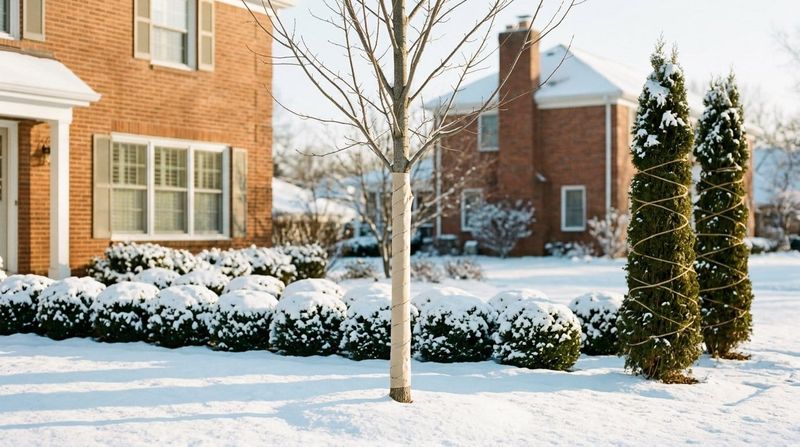
If you decide to protect a young, thin-barked tree, choose a light-colored or reflective guard. Purdue Extension advises covering the trunk up to about the first branches.
That means the whole trunk from near the base upward, not a patch on the sunny side.
Timing is simple. Put the guard on in fall, and take it off in spring once the risk of local freezing has passed.
Dates vary with climate, so watch your own forecast instead of the calendar. Wrap snugly but not tightly, since the trunk keeps growing.
Do not leave it on all year. Purdue notes that wraps left in place can squeeze a growing trunk and give insects a hiding spot or hold moisture against the bark.
Colorado State University Extension also describes seasonal wrapping of the trunk for some young, thin-barked trees.
A trunk guard is a precaution, not a guarantee
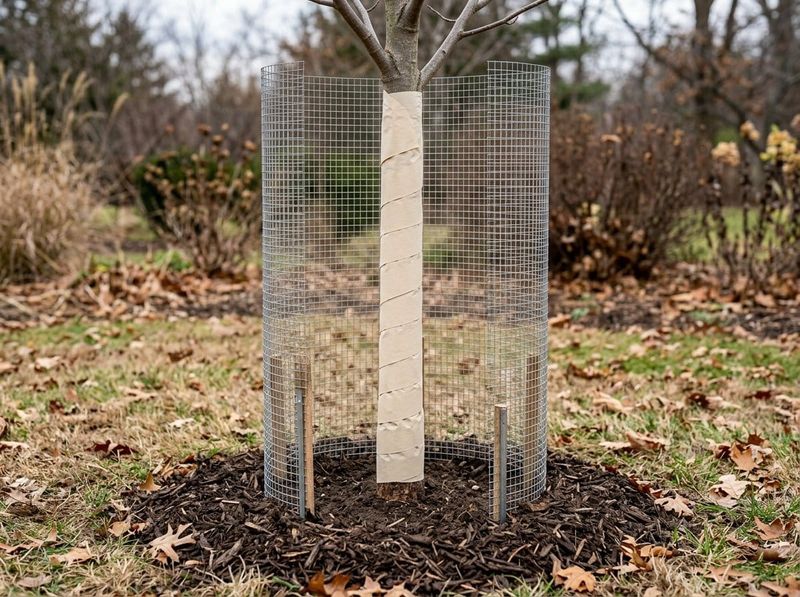
Wraps are a commonly recommended precaution, and they make sense for sun-related injury. But the research is less tidy than the advice.
The University of Minnesota group says studies have not conclusively shown that wraps prevent trunk damage, and notes reports that paper wraps may speed temperature change or hold moisture.
Washington State University describes reflective guards as something that may provide protection, which is a careful way of saying no promises.
Sources also disagree on materials. Purdue and Minnesota favor white or reflective guards, while Colorado State specifies light-colored crepe paper and cautions against plastic, dark materials, or burlap.
No single material has universal backing, and dark wraps are not a good choice.
Finally, a guard goes on before winter. It will not repair a split that already exists.
Protect the trunk and monitor existing damage
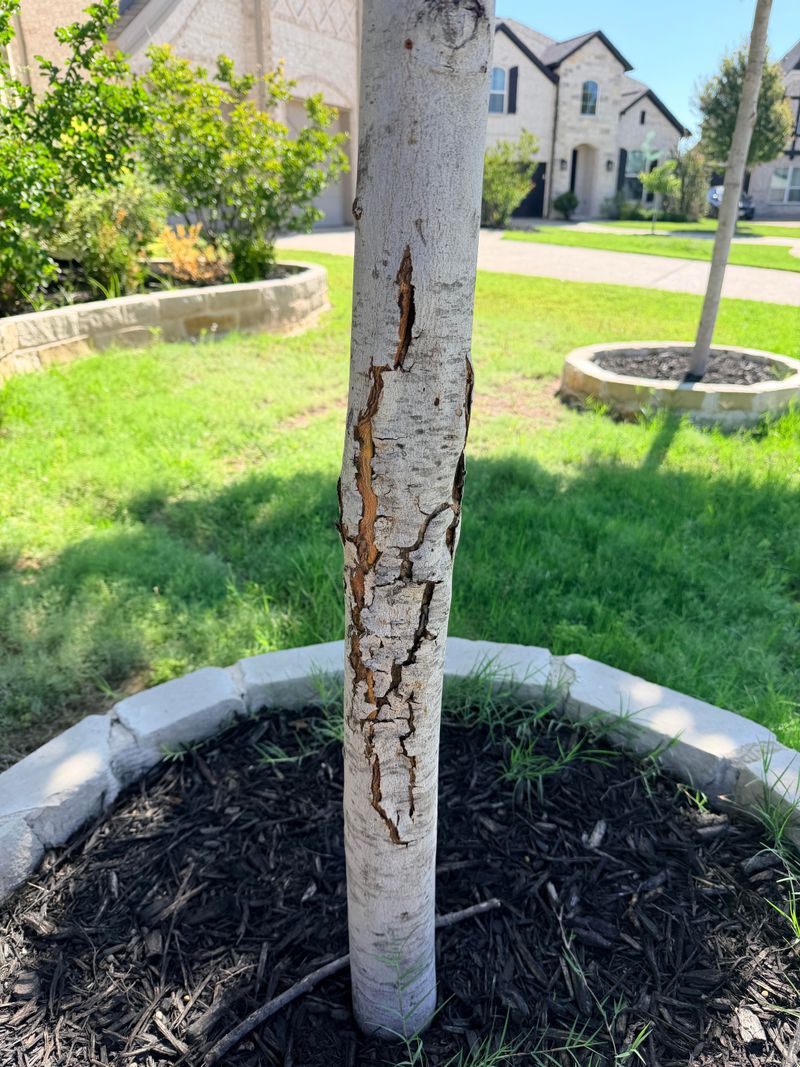
Start with the basics. Keep mowers and string trimmers away from the trunk, and prune properly, because Washington State University Extension reports that old wounds and weak spots can be starting points for cracks.
A mulch ring with grass kept back is an easy shield.
Water recently planted trees when the soil is dry through the growing season and until the ground freezes. Soak the root zone, but do not flood it.
If a crack has already formed, skip wound paint, tar, and sealants, which are not recommended for frost cracks. Callus may grow from the edges, but the split fibers stay split, and Purdue Extension says cracks can look healed and then reopen.
Keep the tree vigorous and check the crack each season for spreading decay, soft wood, or fungus. If decay looks extensive or the tree could be a safety risk, call a qualified arborist.
A cracked trunk can often carry on for years with good care.