
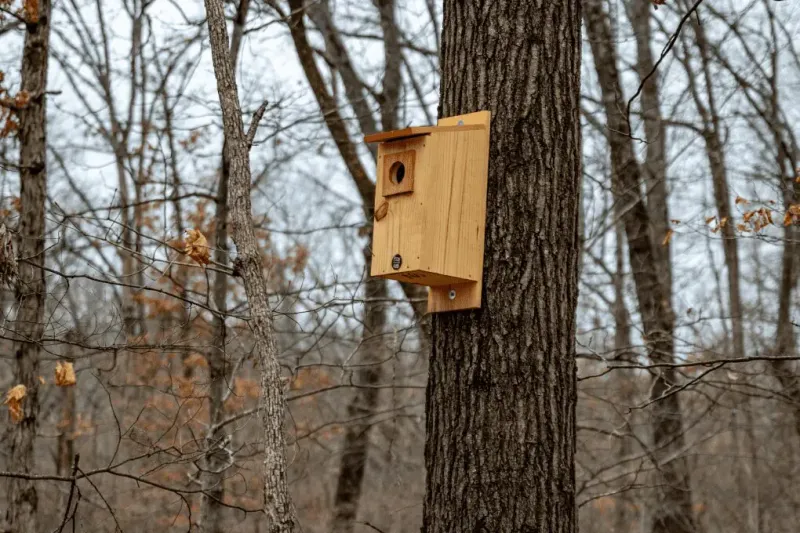
The right spot for an owl box in a Central Texas yard is usually a tree-covered corner with a clear approach to the entrance, and the box should be sized for an Eastern Screech-Owl. Getting it up before spring gives local owls the best chance to find it.
Where you hang it matters as much as the box itself. A few smart choices now can turn a quiet oak or pecan into a place owls might actually visit.
Which owl is your yard suited for?
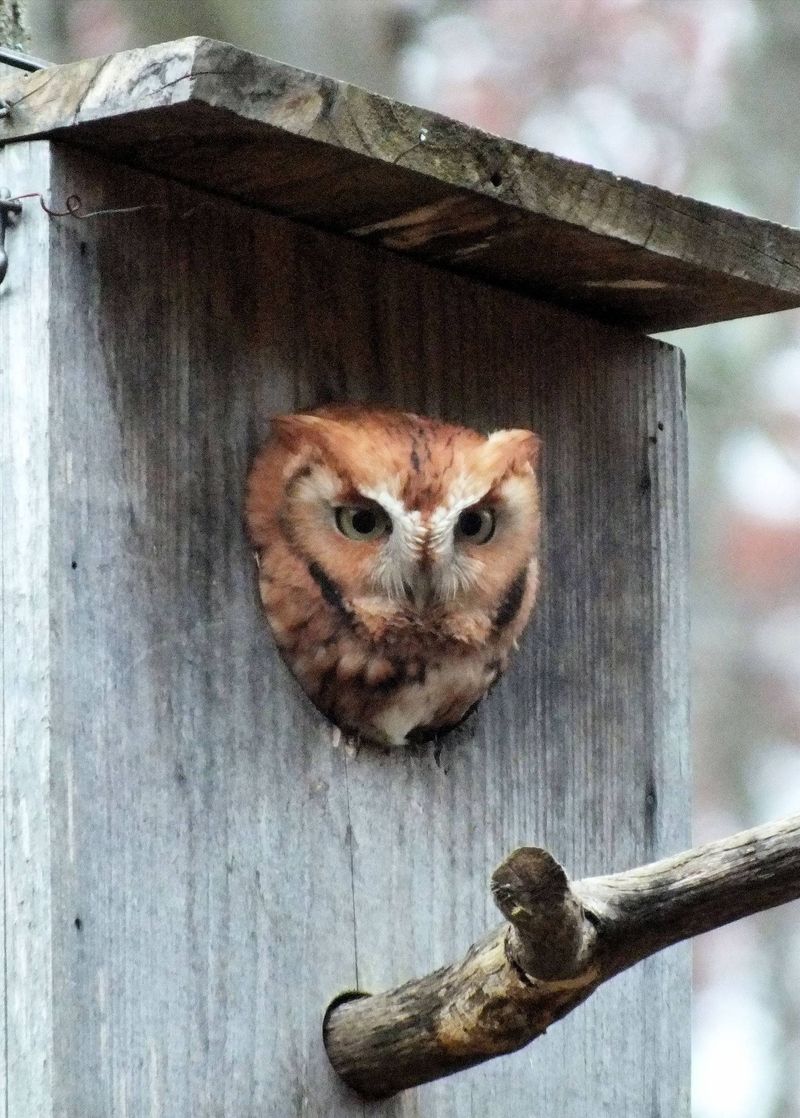
Start with the owl, because the owl decides the box. For a typical Central Texas yard with a few mature trees, the Eastern Screech-Owl is the practical choice.
Texas Parks and Wildlife describes this small owl as a bird of woodlands that also lives in suburban neighborhoods, nesting in hollow trees and old woodpecker holes.
Screech-owls also accept nest boxes. That makes them a good match for yards with neighborhood trees, a lawn, and a few garden beds.
Barn Owls are a different story. They hunt over wide stretches of open ground, and although they can live around towns, Cornell Lab notes they need large open areas for hunting.
A tree-lined lot on a quiet street does not automatically suit them. Unless you live beside pasture, hayfield, or similar open country, a Barn Owl box is likely the wrong tool.
The boxes differ too. TPWD lists separate designs for each species, so advice written for one will not work for the other.
An owl box is not one-size-fits-all.
Natural cavities still matter. Old trees with hollows are where screech-owls normally nest, so a box helps most where such cavities are scarce.
Decide on the species first, then pick the spot.
Give a screech-owl a clear approach
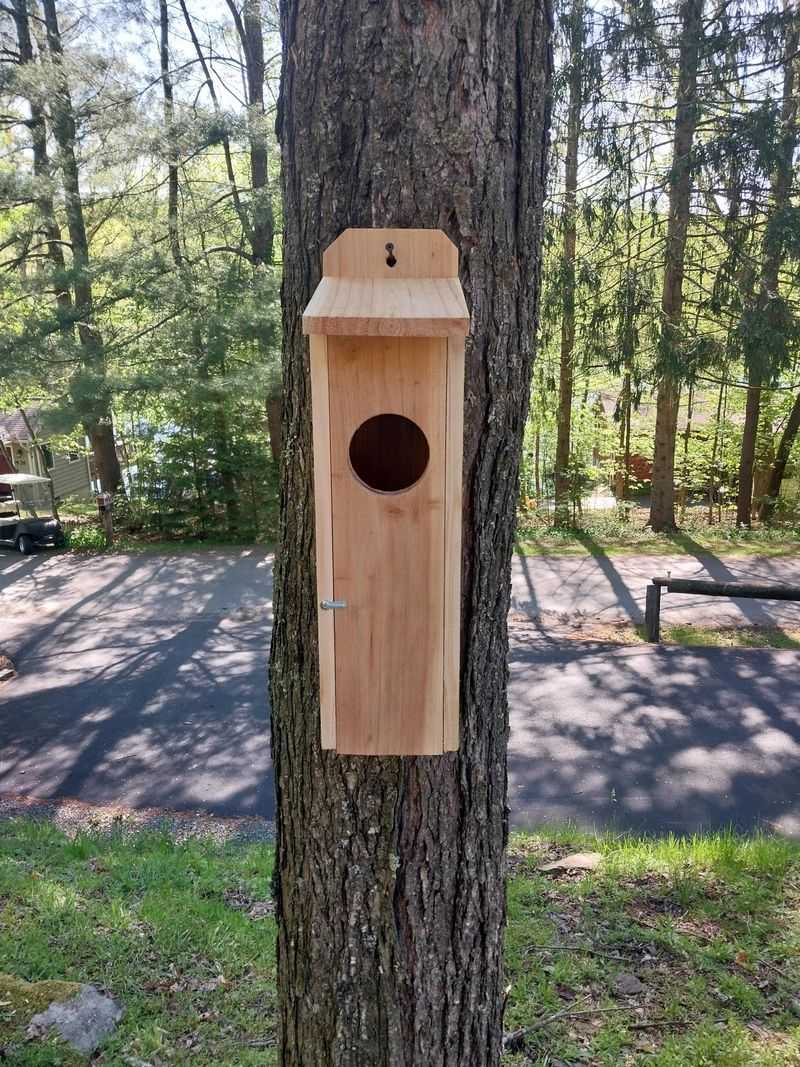
Walk your yard like an owl would. Look for a spot near tree cover, with open air in front of the entrance so a bird can glide in without hitting branches, fences, or wires.
Screech-owls live in wooded settings, and TPWD’s species page backs up that preference for tree cover.
Keep the entrance hole visible and open. Do not tuck it behind leafy limbs, and do not hang it where a swing set, a patio, or a busy walkway blocks the way in.
Quiet corners work best. Bright security lights, pool lights, and spots with constant foot traffic are worth avoiding, since owls are nocturnal and easily bothered by glare and commotion.
Shade is the other piece. Texas summers cook a box that sits in full afternoon sun, so a spot under a canopy helps keep the inside from overheating.
Flower Mound’s owl house guidance recommends tree cover for this reason and suggests keeping away from bright lights and busy areas.
A quick test: stand where the entrance will be and picture a small owl landing there. If you can see a clean path, you are close.
Use the right dimensions for a screech-owl
Texas guidance gives clear numbers. TPWD’s nestbox page lists an 8-by-8-inch floor, a depth of 12 to 15 inches, and a 3-inch entrance hole placed 9 to 12 inches above the floor.
It suggests mounting the box 10 to 30 feet above the ground.
Treat these as Texas-specific guidance, not a guarantee that owls will use the box. Sources vary a bit, and Audubon’s design advice points to about 10 feet, so the height is a range, not a strict rule.
Compare that to a Barn Owl box. TPWD lists those at 10 by 18 inches, 15 to 18 inches deep, with a 6-inch entrance, hung 12 to 18 feet up.
Building the wrong one for your target owl wastes a weekend.
Inside, skip any fancy nest. Owls do not build one.
Add a couple of inches of loose material such as sawdust, wood chips, or dry leaves. TPWD recommends sawdust, and Audubon suggests wood chips or dry leaves.
Choose an entrance direction for the site
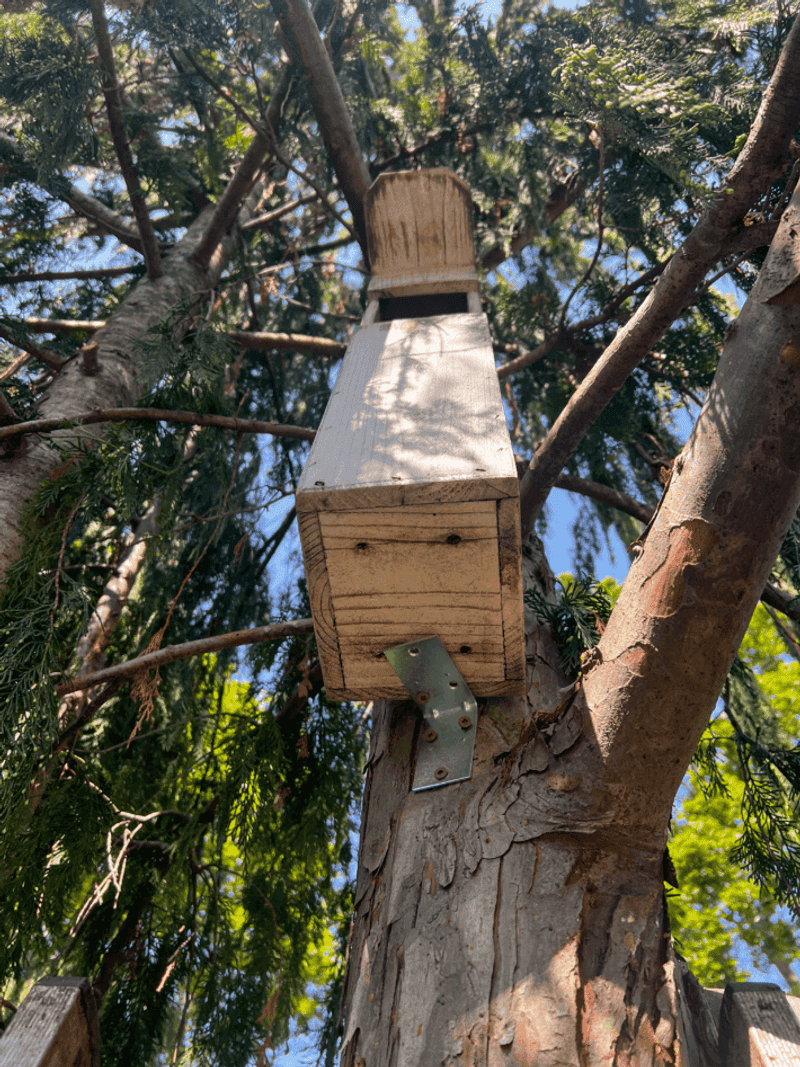
Advice on which way to point the hole does not match from source to source, and that is fine. Your yard decides.
Audubon’s screech-owl guidance says to avoid north-facing entrances and, where possible, face east or south to catch some sunlight. Local guidance such as Flower Mound’s leans on shade to limit summer heat.
In Central Texas, those two ideas can pull against each other. A south-facing hole on an exposed trunk may bake in July, while a shaded north side may stay cool but dark and damp in winter.
Weigh what your site offers. Morning sun with afternoon shade is a comfortable middle ground.
A box under a thick canopy may do fine with any direction except straight into the prevailing cold wind.
Do not let a compass rule outrank the basics. A clear approach to the entrance and good nearby cover matter more than a few degrees of rotation.
Install ahead of nesting, without expecting a deadline
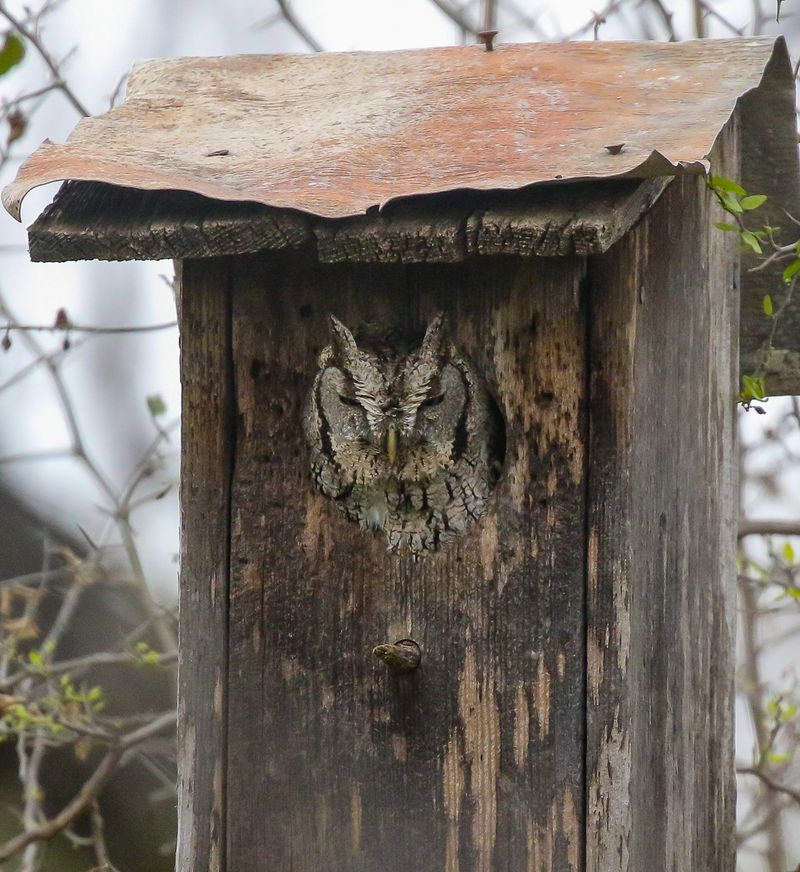
Hanging a box before spring makes sense, because the birds need time to find it. The Texas Breeding Bird Atlas reports that Eastern Screech-Owls in Central Texas usually lay eggs between March 5 and May 4, with a peak in mid-March.
It also notes extremes from mid-December to mid-June, so no single start date fits every pair.
Those egg-laying dates do not tell us when owls scout for nest sites. They only show when eggs show up.
What research does show is winter use. A Journal of Raptor Research study documented Central Texas screech-owls using nest boxes as winter roosts.
A roosting owl is not the same as a nesting pair. You might see feathers, pellets, or a sleepy face in the hole in January and still have no eggs in April.
So install early, then be patient. Some boxes get used in the first season, others take longer, and some never do.
Protect owls from poison and disturbance

Once the box is up, two habits protect the birds. First, skip rodent poison.
Owls that eat poisoned mice or rats can be harmed too. TPWD advises using traps instead, and the EPA also warns that predators and scavengers can be hurt after eating poisoned rodents.
Never use poison to feed or attract owls. Snap traps checked daily, sealed trash, and storing pet food indoors cut down on pests without risking the birds.
Second, leave the box alone once birds are using it. Opening it to peek at eggs or chicks can scare adults away.
Watch from a distance, and keep pets and kids back from the tree.
The law adds another reason. The U.S.
Fish and Wildlife Service explains that destroying an in-use nest with eggs or chicks requires authorization under the Migratory Bird Treaty Act.
Treat the box as an invitation
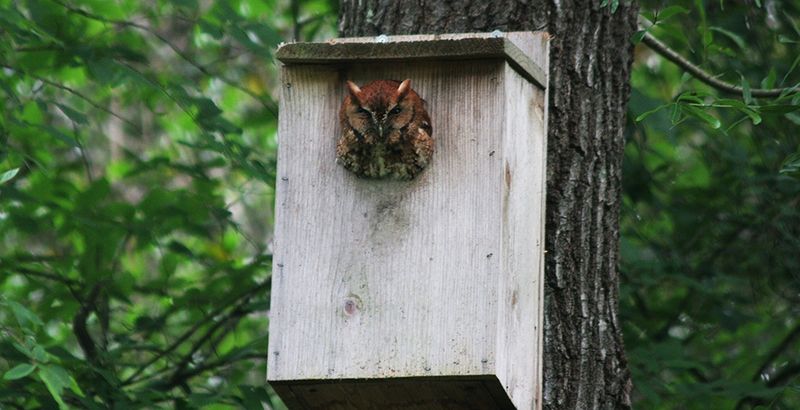
A box is an offer, not a promise. Pick a screech-owl design, put it in a shaded, open-approach spot near trees, and hang it before the usual egg-laying months.
Keep in mind that natural cavities still matter most. Then wait, and listen at dusk.