
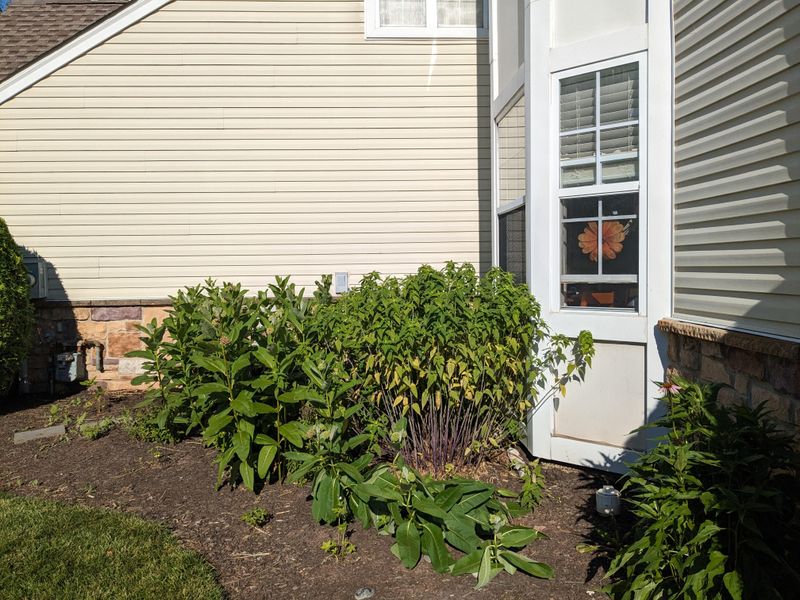
When the cold hits, mice start shopping for a warm place to spend the winter, and your house is right at the top of their list. What many homeowners never realize is that the plants hugging the foundation can act like a welcome mat, offering food, shelter, and a hidden path straight to the walls.
A few smart changes in your landscaping can make your home far less tempting. Here are nine common plants that may be helping mice move in, plus simple fixes for each one.
1. English Ivy

Picture a thick green blanket draped right against your siding. That is exactly what English ivy becomes, and mice treat it like a private hallway leading to your home.
The dense, tangled vines hide them from hawks, owls, and curious cats while they scout for cracks.
Ivy also holds moisture against the foundation, which can soften mortar and widen tiny gaps over time. A mouse only needs an opening about the size of a dime to squeeze inside.
Once ivy grows over vents, weep holes, or utility lines, you may never spot the entry point until you hear scratching in the walls.
Removing ivy completely is the best fix, but even cutting it back helps a lot. Aim to keep a bare strip of at least 18 inches between the plant and your house.
Pull vines off the siding carefully so you do not tear loose paint or mortar.
If you love the look of a climbing plant, try a trellis set a foot or two away from the wall. That way you keep some greenery without building a covered bridge for rodents.
Check the base of the wall each fall for droppings or chewed spots.
2. Juniper Shrubs
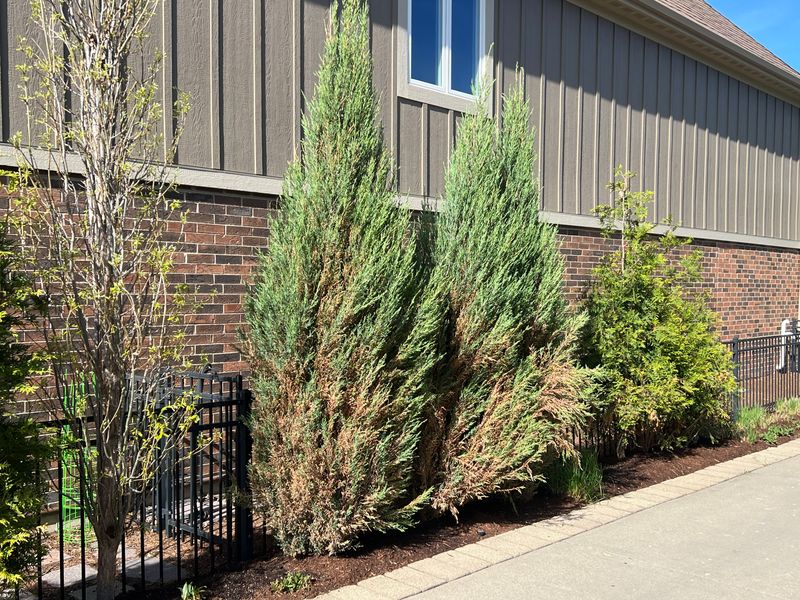
Ask any pest control pro which shrub they dread finding next to a house, and plenty will say spreading juniper. Its low, prickly branches sit right on the ground, forming a cozy tent that predators cannot easily reach.
For a mouse, that is a dream setup.
Underneath all those needles, dead foliage and debris pile up year after year. That layer stays dry and insulated even during snowstorms, giving rodents a perfect spot to build nests.
From there, the trip to your foundation is only a few inches long.
Fun fact: creeping junipers can spread six feet or wider, so a small plant from the garden center can swallow a whole corner of your yard within a few seasons. Many homeowners plant them as easy ground cover and forget about them entirely.
You do not have to rip junipers out. Instead, prune the lower branches up so you can see the soil underneath, and rake out the old needles each fall.
Keep the shrub trimmed back so it never touches the siding. If you are planting new ones, place them at least three feet from the house and choose upright varieties rather than spreading types.
3. Sunflowers

Sunflowers bring so much cheer in July that it feels mean to blame them for anything. By October, though, those big drooping heads turn into a seed buffet.
Every seed that falls to the ground becomes a free snack for mice gathering supplies before winter.
Rodents are hoarders by nature. A single mouse will carry seeds back to a hidden stash, and if your foundation is close by, that stash might end up inside your wall or crawlspace.
Once they find a steady food source, they settle in for the long haul.
Birds make the problem worse in a sneaky way. Finches and chickadees love sunflowers, but they are messy eaters, flinging hulls and seeds everywhere below the plant.
That spilled food quietly draws mice night after night.
The solution is pretty simple. Grow sunflowers in a bed away from the house, ideally 10 feet or more.
When the heads mature, cut them off and dry them in a garage or shed inside a sealed container if you want to save the seeds for birds. Clean up any fallen seeds around the stalks, and pull the old stems once the season ends so nothing lingers into winter.
4. Ornamental Grasses

Leaving ornamental grasses standing through winter is a popular trend, and for good reason. They look stunning with frost on them.
Unfortunately, mice think they look stunning too, just for very different reasons.
Varieties like miscanthus, fountain grass, and switchgrass form thick clumps with hollow centers. That center fills with dead blades, creating an insulated nest that stays surprisingly warm.
On top of that, many grasses drop seeds in fall, which means food and shelter in one handy package.
When those clumps sit right against the house, mice can move from grass to foundation without ever stepping into the open. They feel safe, so they stick around and start testing for weak spots in siding or around pipes.
Here is a balanced approach. Keep grasses that are farther out in the yard standing for winter interest and wildlife.
For any clumps within a few feet of the foundation, cut them down to about four to six inches in late fall. Tie the tall stems together before cutting to make cleanup faster.
When you plan new beds, place grasses out in the landscape instead of tucking them against the walls, where they cause the most trouble.
5. Boxwood Hedges

Boxwoods look so tidy and proper that it is hard to imagine anything shady going on beneath them. Yet that perfect clipped shape hides a dark, dry pocket of space where mice love to hang out.
Foundation plantings of boxwood are a classic look, and also a classic rodent hideout.
Because boxwoods are evergreen, they keep their leaves all winter. That steady cover blocks wind and snow, so the soil underneath stays dry.
Mice can tunnel, nest, and travel along the hedge line completely out of sight, using it like a covered sidewalk around your home.
The real issue is spacing. Many builders plant boxwoods just a foot or so from the house, and after a decade of growth, the branches press right against the siding.
That leaves zero room for airflow or for you to inspect the foundation.
Try thinning the inside of each shrub so light can reach the center. Trim the back side so there is a clear gap between the hedge and the wall.
Rake leaves and debris from under the plants every fall. If you are replacing old shrubs, set new ones farther out so you can walk behind them easily.
6. Fruit Trees and Berry Bushes

Nothing beats picking a fresh apple from your own tree. The trouble starts with the apples you do not pick.
Fallen fruit and berries rotting on the ground are like ringing a dinner bell for every mouse in the neighborhood.
Mice are not picky eaters. Soft apples, pears, raspberries, blueberries, and even the seeds inside fruit all count as food.
When those trees or bushes grow close to your foundation, the snack bar sits just steps away from a warm entry point.
Did you know mice can breed when they are only about six weeks old? A reliable food source near your house means a population can grow quickly, and a few visitors in September can turn into dozens by January.
To keep your harvest from becoming a mouse magnet, pick fruit as soon as it ripens. Walk the area every few days in late summer and fall to gather drops.
Compost them far from the house, or throw them away in a sealed bin. Prune low branches so fruit does not hang right over the foundation.
When planting new fruit trees or berry bushes, give them their own spot in the yard rather than squeezing them beside the walls.
7. Thick Groundcovers like Pachysandra

Groundcovers are often sold as the lazy gardener’s best friend. Plant them once, and they fill in every bare spot without fuss.
Pachysandra, vinca, and creeping euonymus do this job well, maybe too well when they spread right up to the house.
These plants create a continuous low mat of leaves that mice can travel under without being seen. Think of it as a tunnel system with a leafy roof.
Rodents can move from the yard to your foundation entirely hidden, which makes them bolder about exploring.
The thick mat also traps fallen leaves and moisture, keeping the soil cool and damp in summer and insulated in winter. Insects thrive there too, and some mice will happily munch on bugs when seeds run low.
You can keep groundcovers and still protect your home. Edge them back so there is a strip of gravel or bare soil between the planting and the foundation.
A border of crushed stone works especially well because mice dislike crossing open, rough surfaces. Pull out any runners creeping toward the wall a couple of times a year.
A quick trim in spring and fall is usually enough to hold the line.
8. Rhododendrons and Azaleas
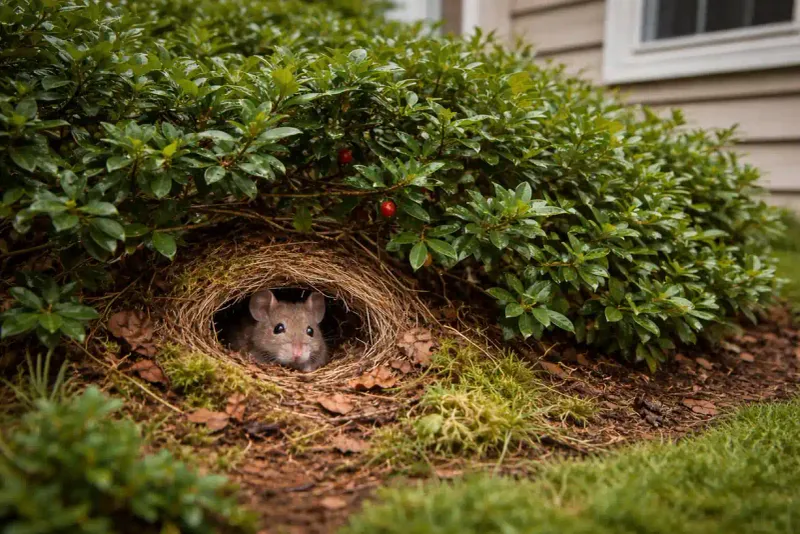
My neighbor swore her house was mouse-proof until the exterminator crawled behind her giant rhododendrons and found three nests. Those big glossy leaves and woody branches had been hiding a whole family of rodents for months.
Rhododendrons and azaleas often grow much bigger than expected. A shrub labeled as four feet tall can easily reach eight feet after a few years.
Planted near the foundation, they create a dense evergreen wall that shelters mice from cold wind, snow, and predators.
These shrubs also drop a steady layer of leaves underneath. That leaf litter makes excellent nesting material, and it piles up right where you are least likely to look.
Mice can gather it, shred it, and carry it straight into gaps in your siding.
Keeping these beauties healthy and mouse-free is mostly about access. Prune after spring bloom so you do not cut off next year’s flower buds.
Remove dead lower branches and open up the space beneath so you can see the ground. Clear the leaf litter each fall.
If a shrub has outgrown its spot entirely, consider moving it to a spacious bed away from the house where it can grow freely.
9. Overgrown Perennial Beds
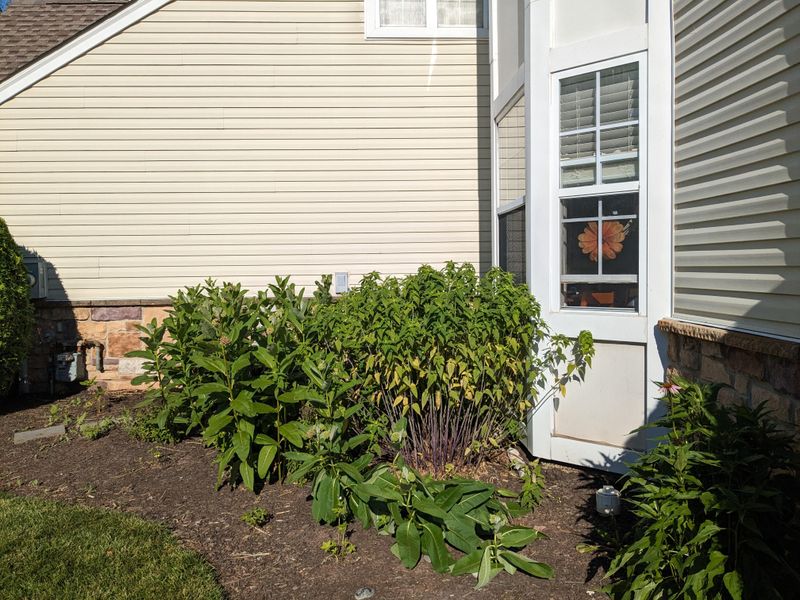
Coneflowers, black-eyed Susans, and other seed-bearing perennials are wonderful for pollinators. Left standing next to the house all winter, though, they become a seed pantry with built-in cover.
It is the combination that really draws mice in.
Gardeners are often encouraged to leave stems up for overwintering insects and birds, and that advice has merit. The catch is location.
A wild, tangled perennial bed out in the yard is fine. The same bed pushed up against your foundation hands mice food, nesting material, and a hidden doorway.
Heavy mulch adds to the problem. A deep layer of wood chips piled against the siding gives mice an easy place to burrow and stay warm.
Many experts recommend keeping mulch at least six inches away from the foundation and no more than two or three inches deep.
So here is the takeaway for your fall cleanup. Cut back perennials growing within a few feet of the house, and leave the seed heads standing in beds farther out for the birds.
Pull mulch away from the walls. Pair this with sealing gaps around pipes and vents, and you will give mice far fewer reasons to spend the winter under your roof.