
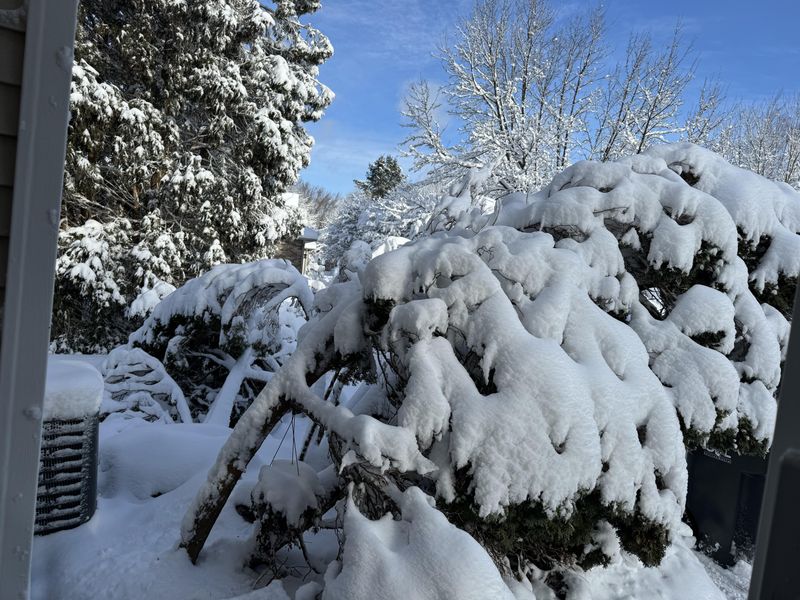
After an ice storm, your evergreens can look like glass sculptures, sparkling and bent low under the weight. Your first urge might be to grab a broom and start whacking, but that one move can snap branches that would have bounced back by lunch.
Frozen wood is brittle, and the wrong kind of help does more harm than the ice itself. Here are eight things to keep your hands off so your trees and shrubs make it through the night in one piece.
1. The ice coating itself
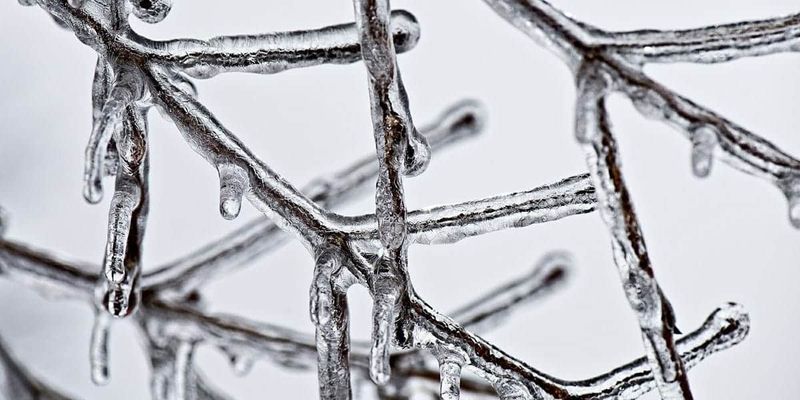
Picture a spruce wearing a suit of glass armor. It looks heavy and helpless, so knocking the ice off feels like a rescue mission.
Here is the catch. Ice bonds tightly to needles and bark, and when you strike it, the shock travels straight into wood that is already stiff and brittle from the cold.
Instead of the ice popping off, the branch often cracks right at the point where it joins the trunk.
Frozen tissue simply cannot flex the way it does in July. Arborists compare it to bending a frozen garden hose, which splits instead of curving.
Even a light tap can leave hidden fractures that show up as dead, brown limbs come spring.
The smarter move is patience. Most ice melts or sublimates within a day or two once temperatures climb or the sun hits the tree.
As it disappears, branches slowly rise back toward their normal position on their own.
If a limb is blocking a door or resting on a car, gently prop it from below with a padded board rather than chipping at it. Let warmth do the heavy lifting.
Your evergreen has handled winter storms for millions of years, long before brooms existed.
2. Your broom and rake
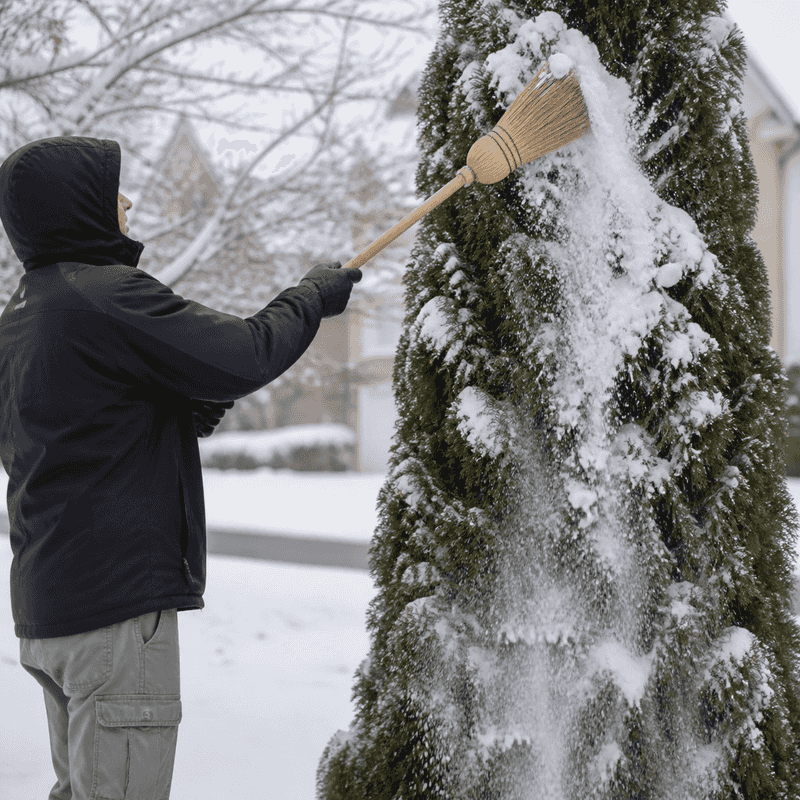
Ah, the trusty broom. Every winter it gets pressed into duty as a snow tool, and for fluffy powder it works beautifully.
Ice is a whole different animal. A broom or rake swung at a glazed shrub becomes a club, and arborvitae, yews, and junipers have thin, flexible stems that shatter when frozen.
Gardeners often hear a sharp crack and realize too late that they just did what the storm could not.
So when should the broom come out? Only for fresh, loose snow, and even then use an upward sweeping motion instead of pushing down.
Lifting from underneath lets snow slide off without adding extra strain.
With ice, keep the broom in the garage. If the coating has a layer of snow on top, you can carefully brush off just that loose snow to lighten the load, leaving the frozen shell untouched below.
A fun bit of history: Victorian estate gardeners used long bamboo poles with cloth wrapped on the ends to tease snow off topiaries. They knew back then that ice was off limits.
Borrow their wisdom, and your hedge will thank you by standing tall and green once the thaw arrives.
3. The garden hose and hot water
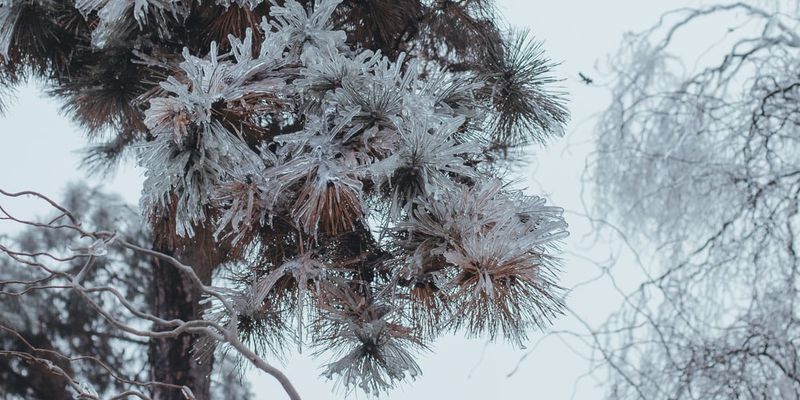
It sounds clever. Warm water melts ice, so why not spray the tree down and be done in five minutes?
Unfortunately, this trick backfires in almost every case. Cold or lukewarm water from a hose freezes almost immediately on contact with icy branches, adding another heavy layer to a tree that is already struggling.
You end up making the problem worse with every pass.
Hot water carries its own risks. A kettle of boiling water can scald needles and bark, killing the tissue underneath.
Rapid temperature swings also cause wood to expand unevenly, which can split bark in long vertical cracks called frost cracks.
Those cracks open a doorway for insects and fungal disease. Pines, firs, and hemlocks may ooze sap for months as they try to seal the wound, and some never fully recover.
Think of a frozen windshield. Pour hot water on it and you might crack the glass.
Your evergreens deserve the same caution. Leave the hose coiled and the kettle on the stove for cocoa instead.
The best defrosting tool remains a slow, natural warm-up, which treats bark kindly and keeps every branch intact through the night.
4. Bent branches that look broken
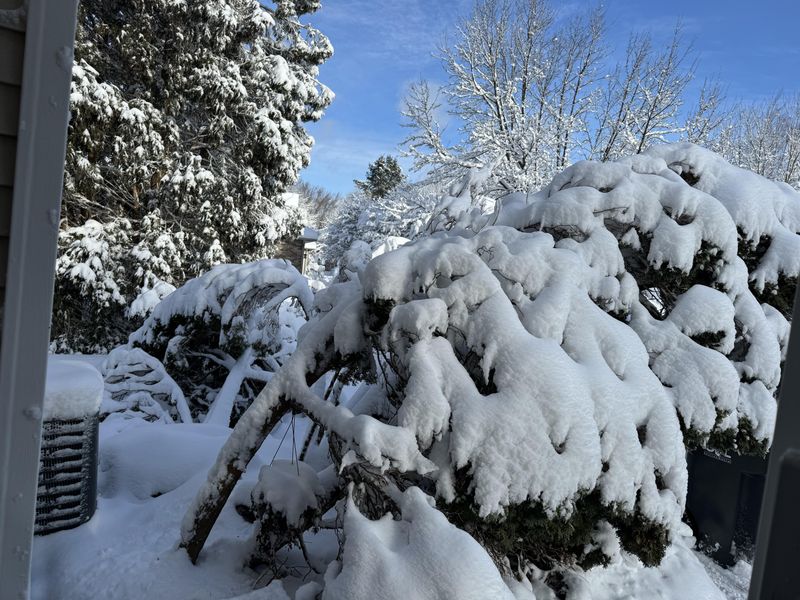
My neighbor once stood at her window nearly in tears. Her young white pine was folded nearly in half, its top touching the ground.
Two days later it stood upright again, looking a little sheepish but perfectly fine. Evergreens are built to bend, and many conifers have flexible branches that arch under weight instead of snapping.
Bowing is their defense, not a sign of death.
The trouble starts when people try to straighten bowed limbs while they are still frozen. Pulling a branch upward against the ice puts twisting force on the joint, and that is exactly where splits happen.
So resist the urge to play chiropractor. Let the bend stay bent until the ice is gone.
Once things thaw, give the tree a week or two to rebound on its own before deciding anything needs help.
If a branch still sags after several weeks, that is the time for gentle support. Soft tree straps or strips of old pantyhose can loosely tie it toward the trunk for a season.
Never wrap wire around bark, though, since it cuts in as the tree grows. A slow recovery beats a forced fix every single time.
5. Pruning shears and saws
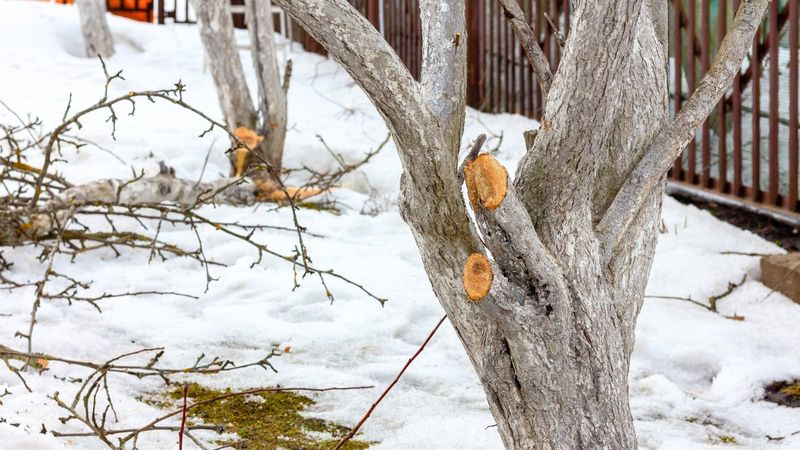
Grabbing the loppers right after a storm feels productive. Something looks damaged, so cut it off and tidy things up, right?
Hold that thought. Frozen wood does not cut cleanly.
Blades tend to crush and tear the fibers instead of slicing through them, leaving ragged wounds that heal slowly and invite rot. Even a sharp saw can splinter icy branches in unpredictable directions.
There is also a visibility problem. Ice hides the real damage, so a branch that looks ruined might be completely healthy underneath.
People cut off limbs that would have recovered perfectly well, and the tree loses shape it took years to build.
Wait for a mild, dry day after everything thaws. Then walk around the tree and look for clean breaks, hanging limbs, or torn bark.
Those are your real targets.
When you do prune, cut just outside the branch collar, that slightly swollen ring where the limb meets the trunk. Skip the wound paint too, since research shows trees seal themselves better without it.
Big broken limbs high up are a job for a certified arborist with proper gear. Your safety matters more than any shrub, and a professional can save a tree you might write off.
6. Salt and chemical de-icers

Salt is a lifesaver on slippery sidewalks. Near your evergreens, though, it quietly turns into a slow poison.
Sodium chloride, the cheap rock salt sold everywhere, dissolves into meltwater and soaks into the soil around roots. Once there, it pulls moisture away from the plant and blocks water uptake.
Come spring, you may notice needles turning brown from the tips inward, a classic sign of salt burn.
Spraying a de-icer directly on branches is even worse. Some people try it as a quick fix, but the chemicals coat needles and dry them out fast.
Boxwoods, white pines, and hemlocks are especially touchy.
Here is a quick fact. Studies along highways have shown salt spray damage on evergreens up to a few hundred feet from the road.
That is how far the harm can travel.
Keep salt off branches entirely, and use it sparingly on paths near shrubs. Better choices include sand, kitty litter, or calcium magnesium acetate, which is gentler on plants.
You can also shovel salty snow away from planting beds so it does not melt into the root zone. A little planning now keeps your hedges green instead of crispy by April.
7. Shaking the trunk
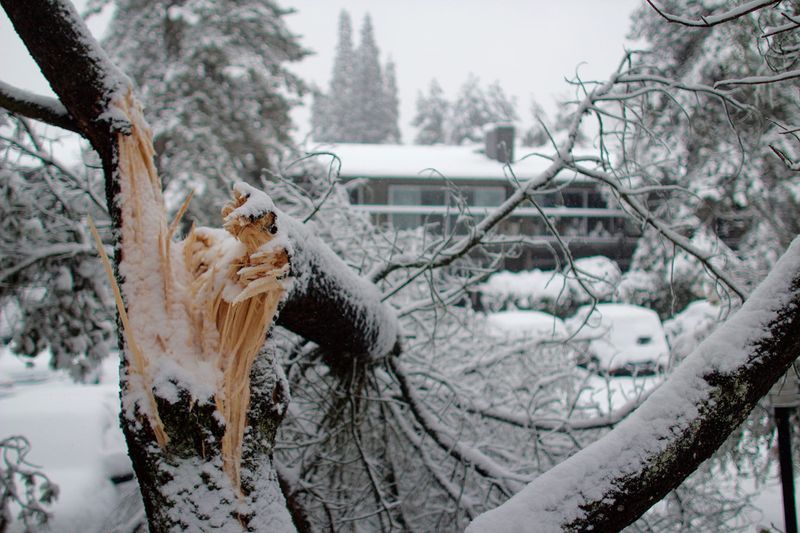
Some folks skip the broom and go straight to the trunk, giving the whole tree a good hard shake like a dog drying off.
It seems logical. Shake the trunk, and ice should rattle loose from every branch at once.
In reality, the jolt sends a wave of stress through limbs that are locked stiff with cold. Weak spots at branch joints often give way all at once, and you could end up with a pile of broken wood at your feet.
There is a safety angle too. Chunks of ice and snapped branches can fall from above without warning.
A falling icicle from a tall spruce hits with surprising force, and people have been injured this way every winter.
Younger trees face another risk. Rocking the trunk can loosen roots in soil that is partially frozen, tearing the fine feeder roots that keep the tree alive.
So keep your hands in your pockets and your feet a safe distance away. Admire the sparkle from the porch with a warm drink.
If you have small trees that bend every year, consider staking them loosely in fall before storms arrive. Prevention always works better than a frantic shake at midnight.
8. Fertilizer and quick-fix treatments

When a beloved plant looks rough, the instinct to nurse it back with fertilizer is completely understandable. It is a caring impulse.
It is also badly timed.
Feeding an evergreen in winter or right after ice damage can push it to produce tender new growth. That soft growth has zero cold tolerance, so the next freeze kills it outright, draining energy the tree needs for real repairs.
Roots in cold soil cannot use most nutrients anyway, so much of it washes away.
The same goes for miracle sprays, sealants, and recovery tonics sold online. Most do nothing for ice injury, and a few can clog needle pores.
What your tree truly wants is rest. Its stored energy is already working on sealing small wounds and preparing buds for spring.
Wait until growth starts naturally, usually mid to late spring. Then, if a soil test shows a need, apply a slow-release fertilizer made for evergreens.
A two to three inch layer of mulch around the base, kept a few inches off the trunk, also helps by holding moisture and protecting roots. Sometimes the kindest gardening is simply stepping back and letting nature take its time.