
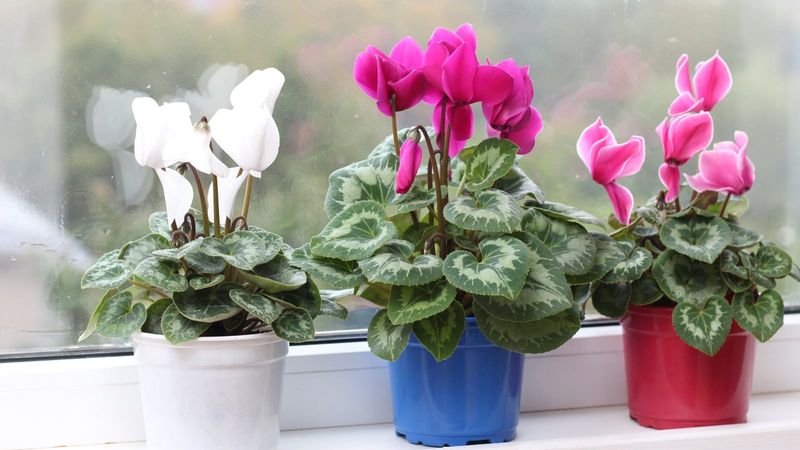
That droopy cyclamen from the holidays is often asking for a cooler, brighter spot, not a trip to the trash. Florist cyclamen like chilly rooms, and warm living rooms can cut their flower show short.
A few quick checks can tell you what your plant really needs. Here is how to read the signs and give it a better chance.
Check the soil before you try to revive a wilted plant
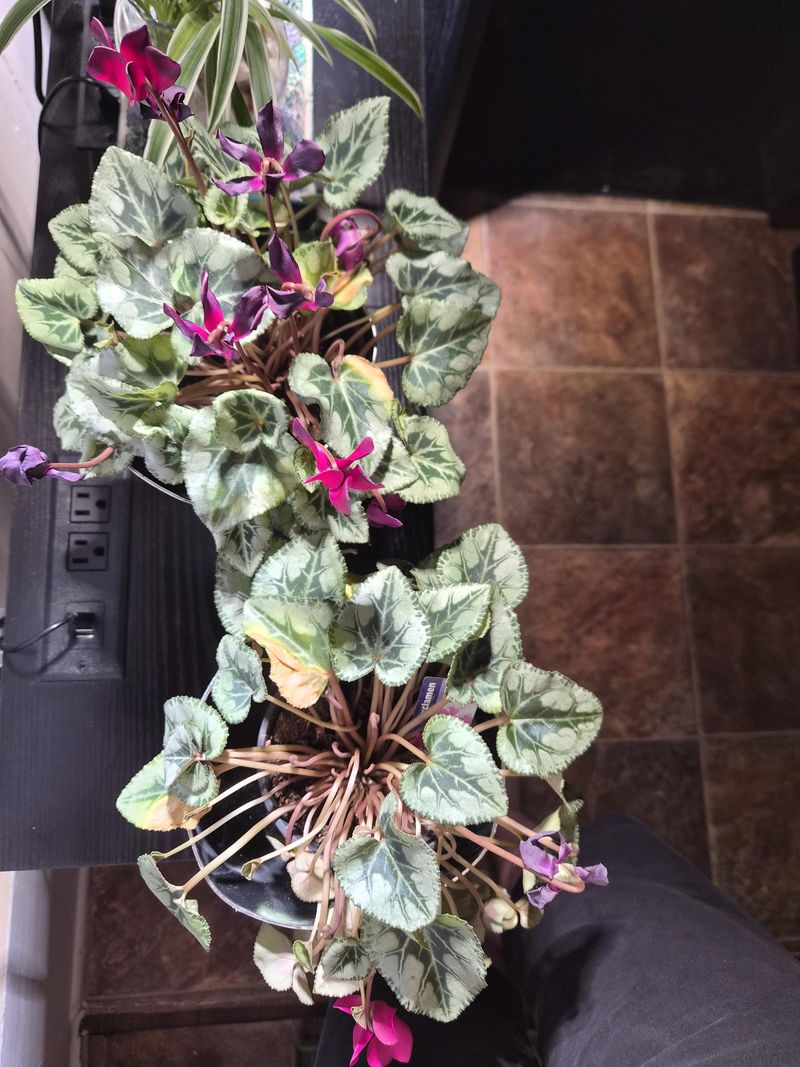
Before you move the pot or grab the watering can, poke a finger into the soil. Floppy leaves and bent flower stems look the same whether the plant is thirsty or drowning, so the droop alone cannot tell you the cause.
Heat can be part of the story too, but it is only one possibility.
Soil that stays soggy is a common trouble spot. The New York Botanical Garden’s care guide notes that limp leaves and stems can come from soil kept too wet, and that too little water can harm the plant as well.
The Cyclamen Society gives similar warnings about overwatering.
Here is a simple test. If the soil feels wet or the pot feels heavy, hold off on water and let it dry a bit.
If the surface is dry and the pot feels light, it likely needs a drink. Adding water to an already wet pot can make things worse, so always check first.
Also lift the pot and look at the saucer. Standing water under the pot is a clue that the roots have been sitting wet.
Choose a bright, cool place indoors
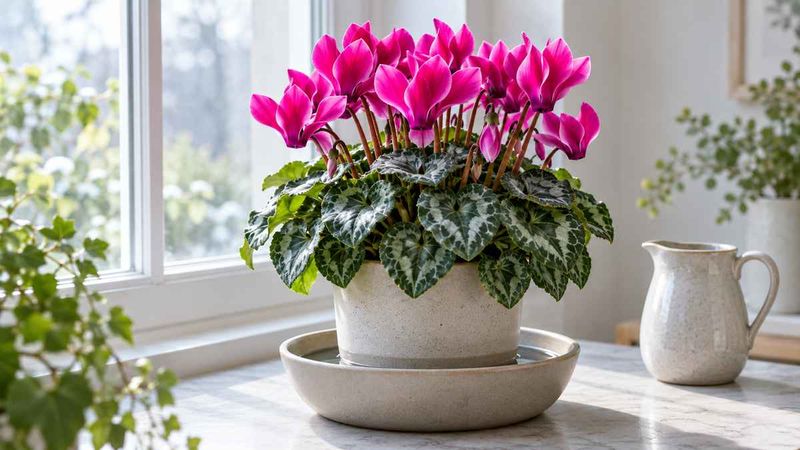
Walk through your home and notice where the air feels coolest while still staying bright. An entryway, an unheated sunroom, or a spot near a cool bedroom window can work well.
Keep the pot away from radiators, heat vents, and strong direct sun, and also away from frost or a freezing window pane.
University of Wisconsin Extension gives targets of roughly 55 to 65°F by day and about 50 to 55°F at night. Missouri Extension prefers daytime temperatures below 70°F.
Treat those numbers as helpful guidance, not strict rules. A cheap thermometer placed next to the pot takes the guesswork out.
Cooler conditions can support a longer flowering display, but they cannot reverse tuber rot or fix every cause of decline.
If the plant sits in a warm room by day, try moving it to a cooler room at night.
Water carefully and let the pot drain
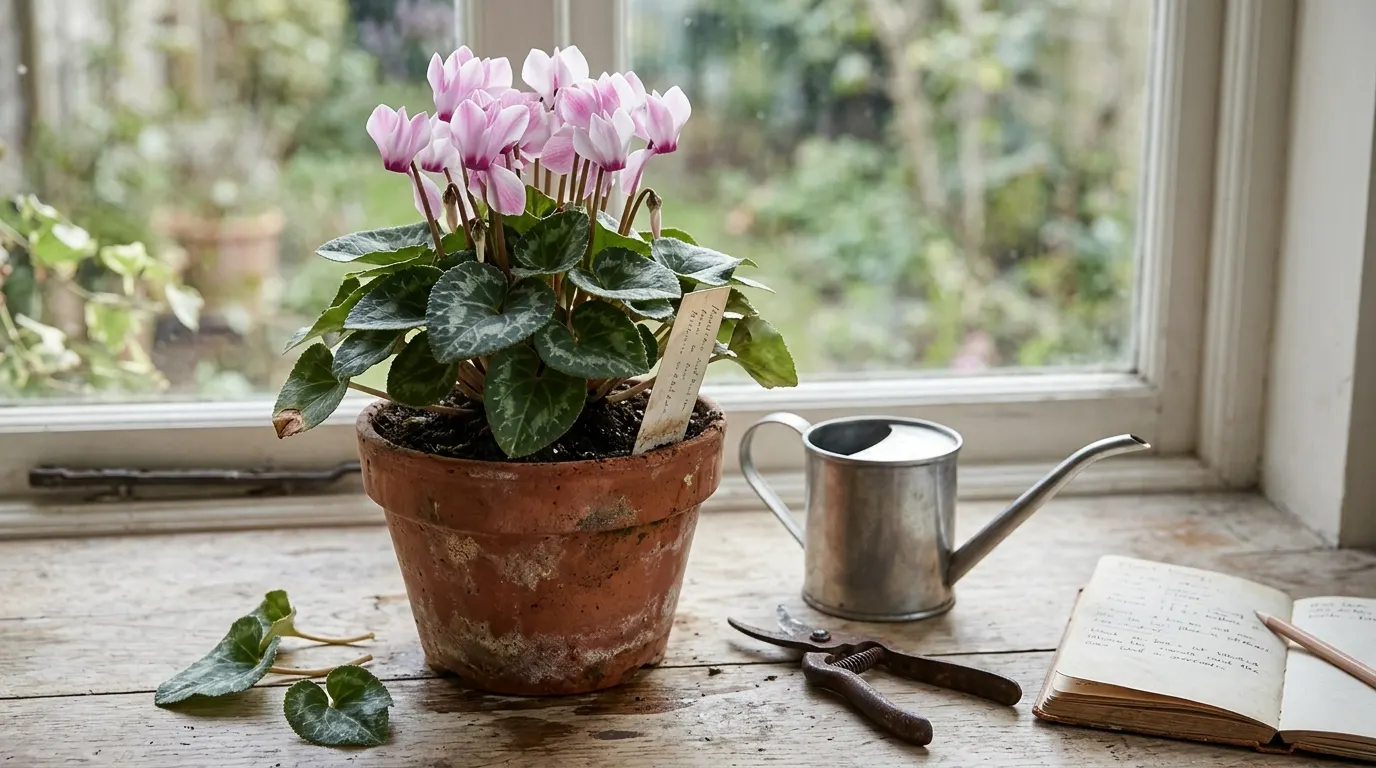
Once you have checked the soil, water only when the surface feels dry to the touch. Then let the pot drain fully and never leave it standing in water.
The goal is lightly moist soil, not soggy and not bone dry.
To bottom-water, set the pot in a shallow dish of water for about 15 minutes, as NYBG suggests. Lift it out and let the extra water run off.
This keeps moisture away from the crown, the center where leaves and stems meet the tuber.
You can also water gently around the pot’s edge. The Cyclamen Society says watering from above or below is fine if you avoid the crown and the pot drains well.
Iowa State Extension offers similar advice on keeping the soil evenly moist.
Bottom watering is a handy option, not a requirement, and it does not guarantee longer blooms on its own.
Remove spent flowers and set realistic bloom expectations
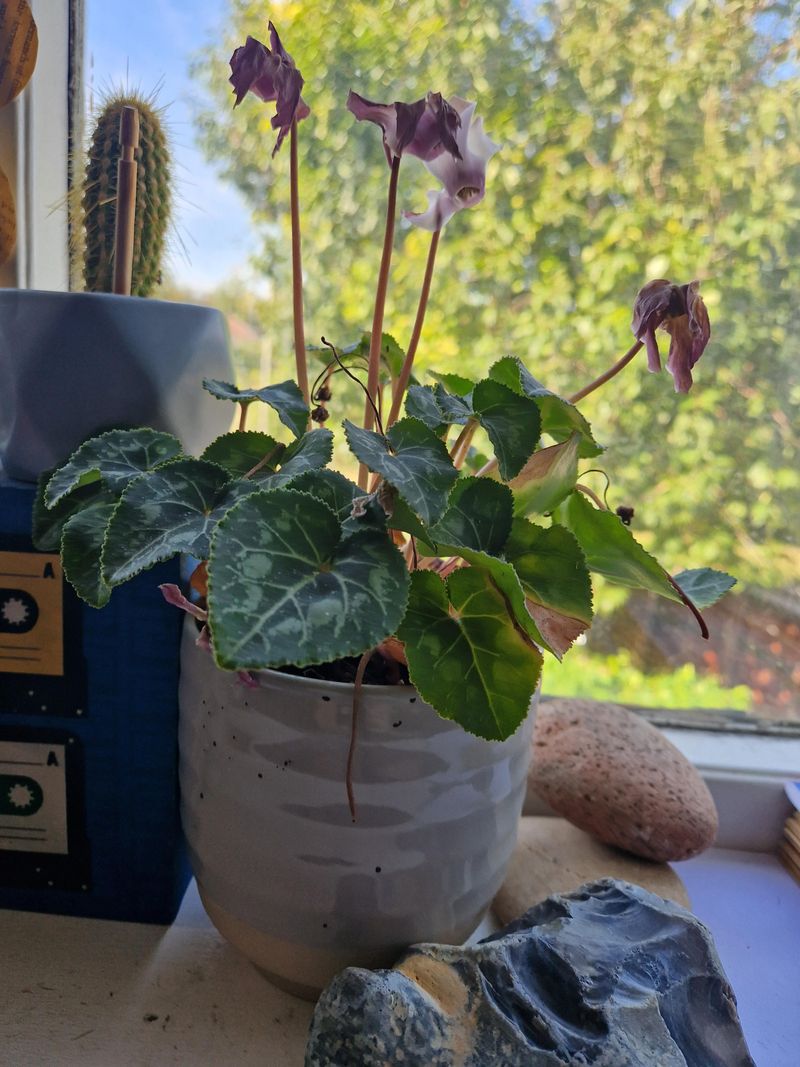
Tidy-up time helps a lot. Follow a faded flower stem down to the base and gently remove it there, and do the same with dead leaves.
This keeps the plant looking fresh and clears away spots where moisture and mold can linger.
How long will the show last? Extension sources describe flowering that can run from several weeks to about three months with good care.
Iowa State and Missouri guidance point the same way.
Your result depends on the room, the watering, and how far along the plant was when you got it. A plant bought already full of open blooms may fade sooner than one still covered in buds.
There is no set end date, and no single watering trick decides it.
Judge progress by new buds pushing up from the center rather than the calendar.
Keep cyclamen away from pets
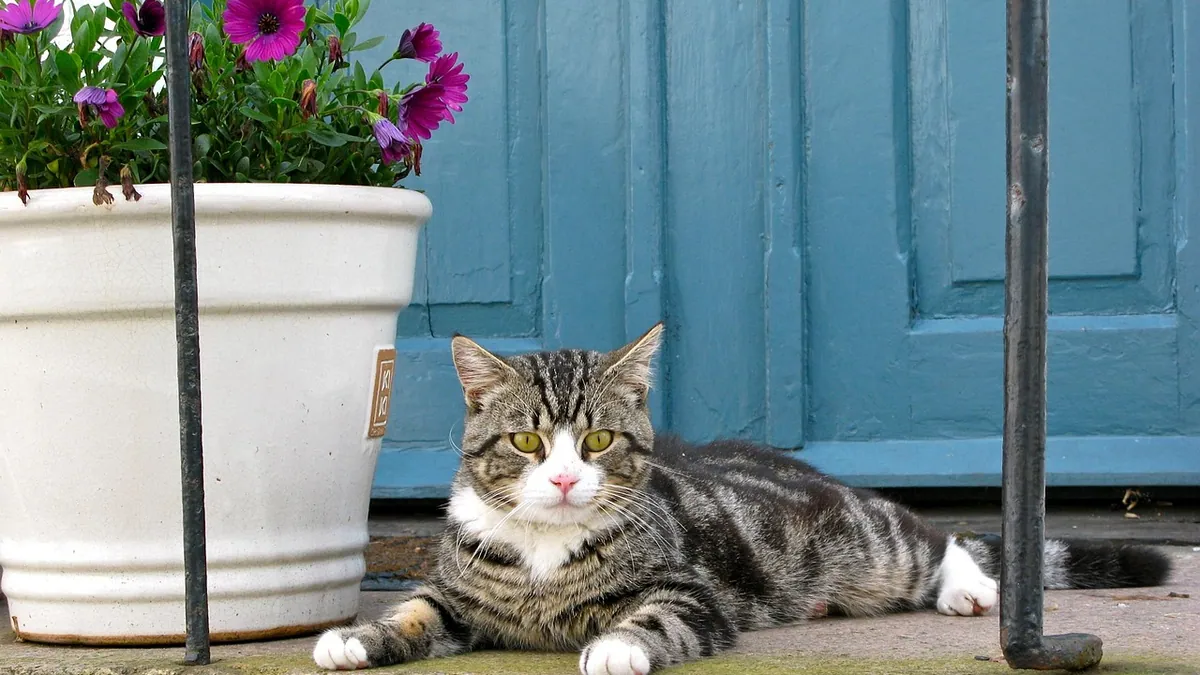
Cyclamen is pretty, but it is toxic to dogs and cats. The ASPCA lists it as a problem plant, and the tubers are especially dangerous in large ingestions.
That does not mean every nibble leads to severe poisoning. Still, it is smart to be careful.
Place the pot on a high shelf, in a closed room, or anywhere pets cannot jump, climb, or knock it over. Sweep up fallen leaves and petals too.
If your pet chews on it, call your vet or an animal poison hotline for advice.
Recognize when the plant is entering dormancy
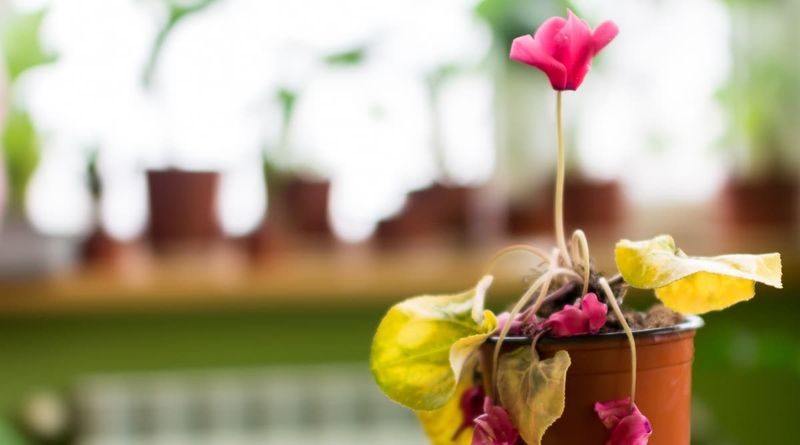
Yellow leaves can have several causes, including overwatering, underwatering, too little light, too much warmth, or normal rest. Wisconsin Extension lists these possibilities, so leaf color alone cannot tell you which one you have.
Go back to your soil check and your room temperature first.
If leaves decline gradually after the flowers finish, usually around late spring or summer, the plant may be entering seasonal dormancy. In that case, cut back on watering rather than trying to force new growth, as the NYBG guide and Iowa State describe.
You can keep the tuber for another season. Reblooming at home, though, is difficult and unreliable, so enjoy any second show as a bonus.
A resting cyclamen is not a failure, just a plant keeping its own calendar.