
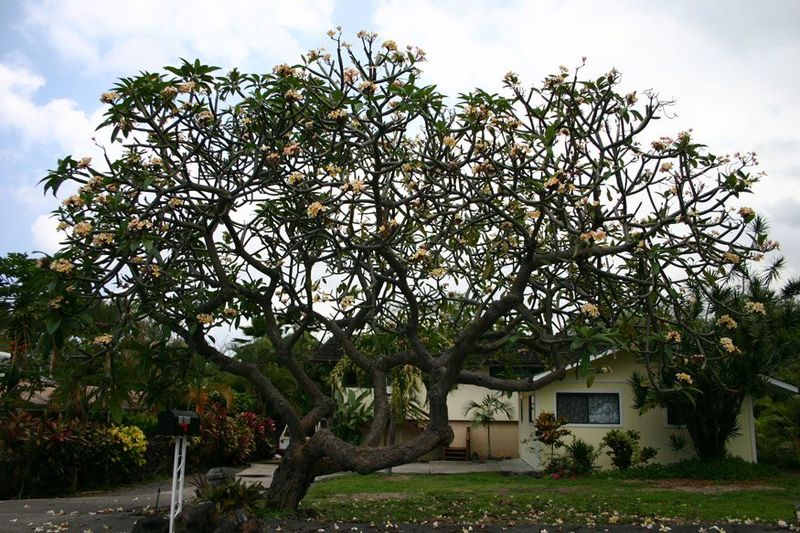
Your plumeria is slowing down for winter, and the way you care for it now sets the stage for the growing season ahead. Many Florida plants drop leaves, stop growing, and look a little rough for a few months.
That is often normal, and a few simple choices can help the plant wake up healthy in spring. Here is what to do about water, cold, feeding, and cleanup.
Support a Healthy Return to Growth
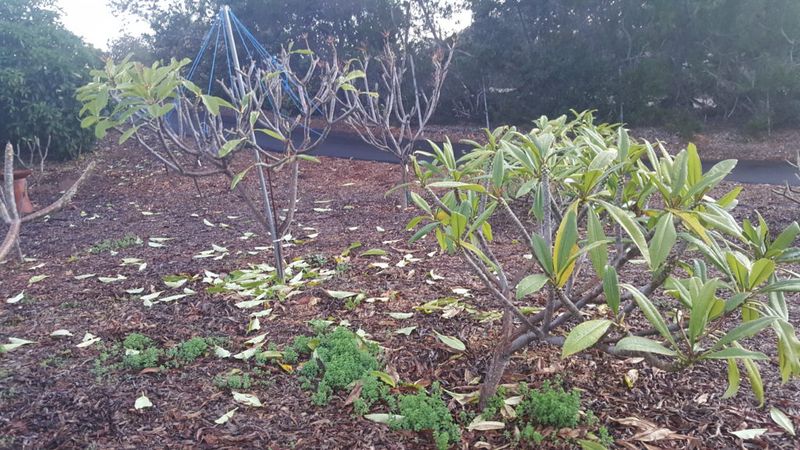
Walk out to your plumeria this month and you may find bare branches, yellowing leaves, or a plant that has simply stopped pushing out new growth. According to UF/IFAS Gardening Solutions, plumerias in Florida commonly go dormant and drop their leaves in winter.
Common is not the same as universal, though. Some plants in warm spots, and some types, hold onto leaves all winter long.
Winter is a useful time to adjust how you care for the plant. Slower growth means the plant needs less of some things and more protection from others.
A few smart choices now can help it start growing again when days lengthen and temperatures climb.
Here are the choices that matter most. You will water less often as growth slows, and you will protect the plant when freezing weather is forecast.
You will also hold off on routine fertilizer and clean up leaves that carry rust, a point that UF/IFAS Extension in Indian River County highlights for the next growing season.
One honest caution before we go further. Good winter care supports a healthy plant, but it cannot promise a particular flower display.
Blooming also depends on the plant itself and the conditions it grows in, which we will come back to at the end.
Leaf Drop Can Be Part of Winter Rest
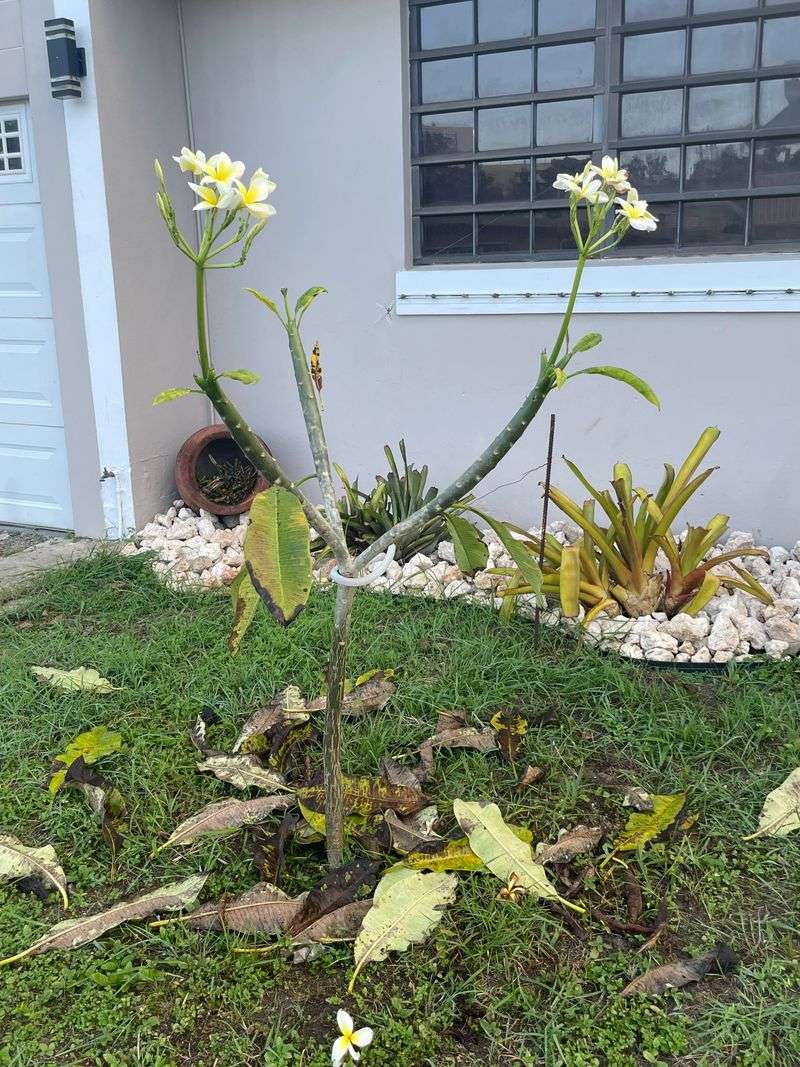
Shorter days and cooler nights tell many plumerias it is time to rest. Leaves turn yellow, drop, and leave thick stems standing bare.
An Indian River County Extension article describes this pattern in Central Florida as running from roughly November through February.
A leafless plumeria is not a dead plumeria. Stems can stay green and keep making some food for the plant even without leaves.
Give a bare plant time before you decide anything is wrong.
Timing varies a lot across Florida. Plants in South Florida or in sheltered, warm spots may stay leafy most of the winter.
Evergreen types also exist, and a Charlotte County Extension article talks about a different, evergreen kind of plumeria. Because of this, a single leaf-drop calendar will not fit every yard.
So how do you tell rest from trouble? Look at the stems.
Firm, green or gray-green stems are a good sign. Soft, mushy, or foul-smelling tissue, especially near the base, is a signal to look closer.
University of Wisconsin Extension notes that plumerias are deciduous and lose leaves as light drops, so a bare plant in winter fits the normal pattern.
Water Less Often as Growth Slows
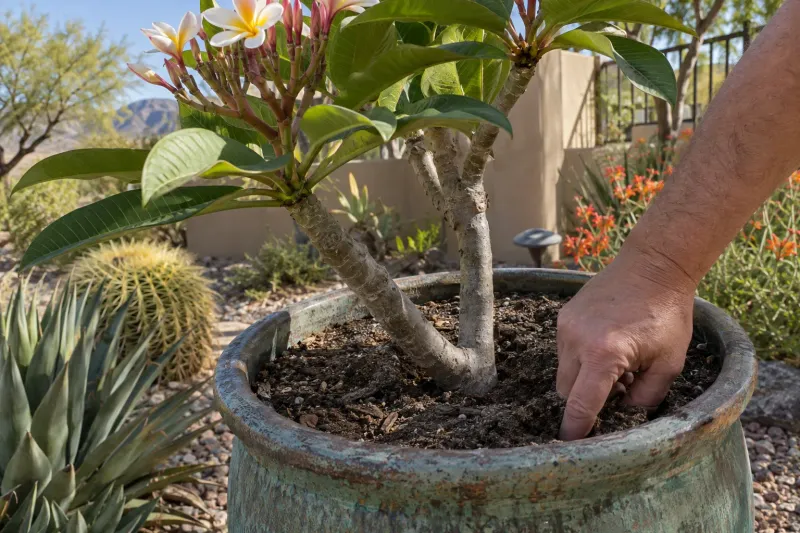
Slower growth means the plant uses less water. Cooler air also keeps soil wet longer, so the same watering habit from summer can soak roots in winter.
Cut back as growth slows and let the growing medium dry between waterings.
Skip the fixed calendar. No single schedule fits every Florida plant, so check the medium instead.
Push a finger a few inches into the pot or soil, and water only when it feels dry. A leafy plant in South Florida will drink more than a bare one in North Florida.
Container plants need the closest eye. A pot in a rainy spell can stay wet for days, so move it under cover or tip out standing water from saucers.
Well-drained mix and a pot with open drainage holes help a lot, a point Missouri Botanical Garden makes in its plumeria care advice.
Why does it matter? Roots that sit in soggy medium can rot, and a rotting plant may decline fast.
University of Wisconsin Extension also warns that overwatering can lead to root rot. Do not stop watering altogether, though.
A plant that stays too dry for too long can also suffer, so a light drink when the medium is dry is fine.
Protect Plumerias From Freezing Weather
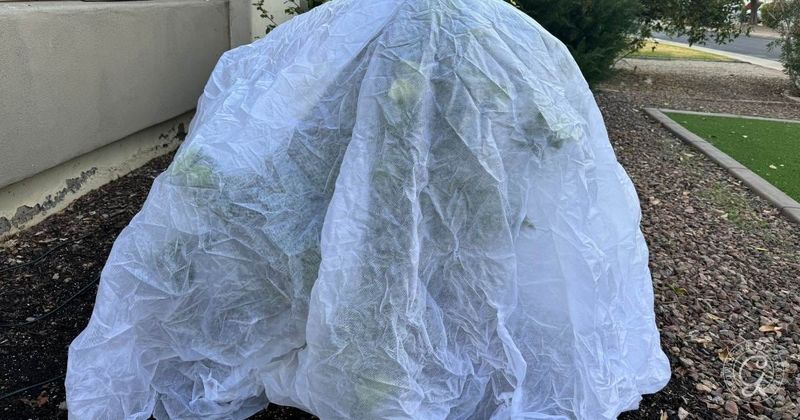
Cold is the biggest winter threat. UF/IFAS Gardening Solutions calls plumerias cold-sensitive and says Central Florida’s Zone 9B can still see frost.
Risk is not the same everywhere. South Florida plants face it rarely, while Central and North Florida growers need a plan.
Container plants have a big advantage because you can move them. In the northern parts of the state, UF/IFAS suggests growing in pots so plants can come indoors or into a garage during cold snaps.
Watch the forecast, and move pots before the temperature drops, not after.
For in-ground plants, cover them before a freeze. Frost cloth or a blanket draped over a frame helps hold in warmth, and removing the cover the next morning keeps trapped moisture from causing trouble.
Plastic touching the plant can transfer cold, so keep it off the branches.
If a freeze does hit, resist the urge to cut right away. UF/IFAS Extension in Indian River County advises waiting before removing apparent freeze damage, since recovery can take time.
Blackened tips may look bad, but new growth in spring will show you how far the damage really went.
Wait for Growth to Resume Before Feeding
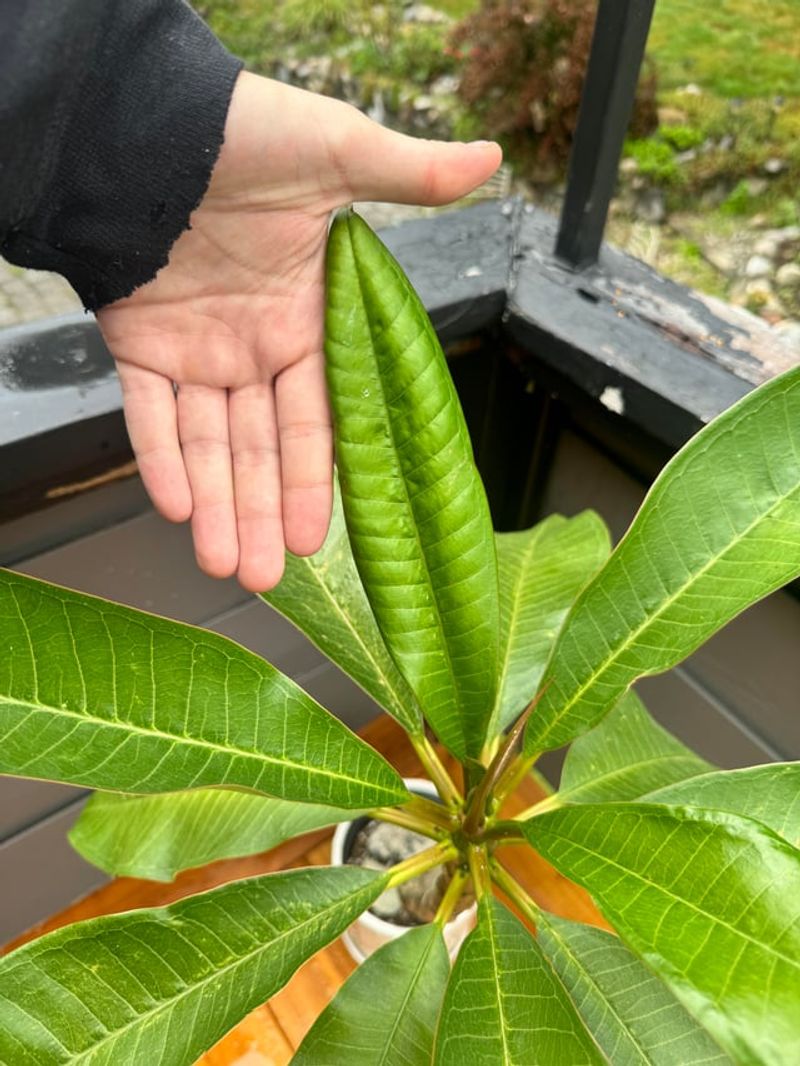
A plant that is resting is not using nutrients the way it does in summer. Feeding it in December can leave unused fertilizer in the pot, where it may build up as salts.
The simpler move is to pause routine feeding while growth is stopped.
University of Wisconsin Extension recommends fertilizing during the growing season and not at other times. Watch for the signal that growth is back.
New leaves unfurling at branch tips or fresh flower buds forming means it is time to start feeding again.
You may have seen the idea of a December bloom booster. Some sources do suggest higher-phosphorus fertilizer during active growth, but nothing shows that adding phosphorus in winter will guarantee flowers.
A resting plant cannot put it to good use, so save the money.
When feeding resumes, follow the label on whatever product you use and keep the amounts modest. Missouri Botanical Garden places fertilizing in the growing season as well.
A quick calendar note to check for new growth in late winter or early spring is a handy way to remember.
Clear Rusty Leaves and Avoid Hard Pruning
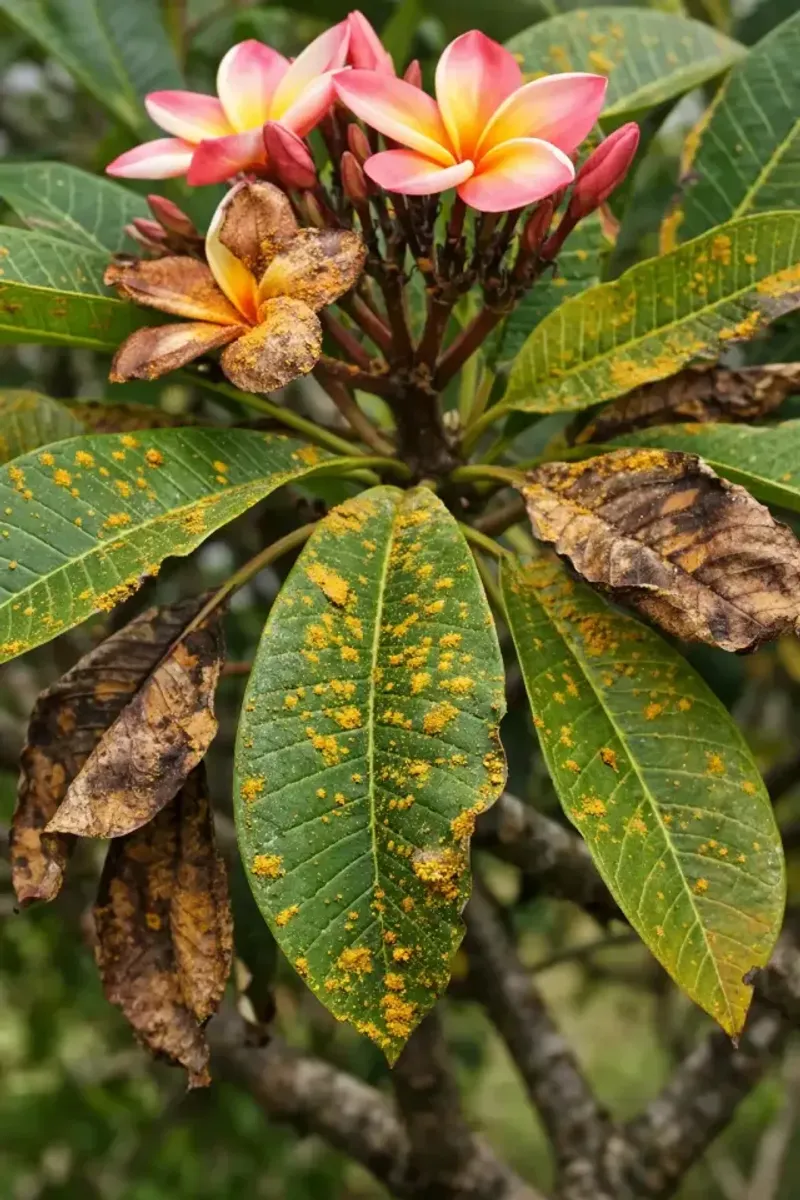
Flip over a fallen leaf and you may see orange, powdery spots. That is plumeria rust, a common fungal problem.
UF/IFAS says removing dead leaves can reduce rust in the next growing season.
Rake up fallen leaves and pick off badly infected ones still on the plant. Bag them and throw them out with the trash.
Do not add them to the compost pile, since the spores can survive and spread. An Indian River County Extension article gives the same bagging advice.
Pruning is a different story. Credible sources do not agree on timing.
A University of Hawaii Extension publication says pruning after leaf drop is convenient but warns that heavy pruning sacrifices spring bloom. Wisconsin Extension instead suggests pruning, if needed, in spring before leaves return.
Given that split, skip hard pruning just to coax more flowers. Remove only what is dead, broken, or diseased, and do it carefully.
Wear gloves and eye protection whenever you cut. Plumeria sap can irritate skin and eyes, so keep it away from your face and wash up afterward.
Clean your tools between cuts, a habit covered in University of Hawaii cutting propagation guidance, to avoid spreading problems from plant to plant.
Flowering Varies With the Plant and Its Conditions
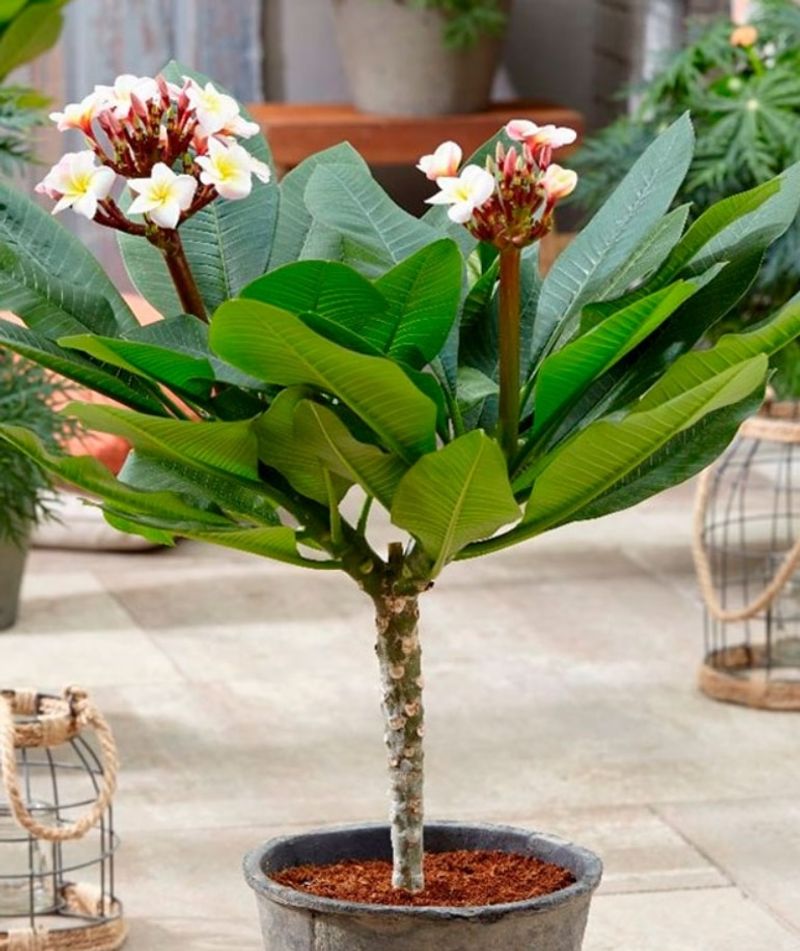
Sound winter care sets up a healthy plant, but flowers have their own list of influences. UF/IFAS notes Florida plumerias can flower from May through November, a broad window rather than one fixed moment.
Cultivar matters, and so do sunlight, plant maturity, and growing conditions. University of Hawaii Extension notes that flower production varies by cultivar, with some peaking in spring and others blooming again over a long season.
A young plant or one in shade may bloom less no matter what you do in December.
So keep your winter priorities simple. Protect the plant from cold, water only when the medium has dried, and hold off on feeding until growth returns.
Bare branches in winter are a pause, not a verdict.