
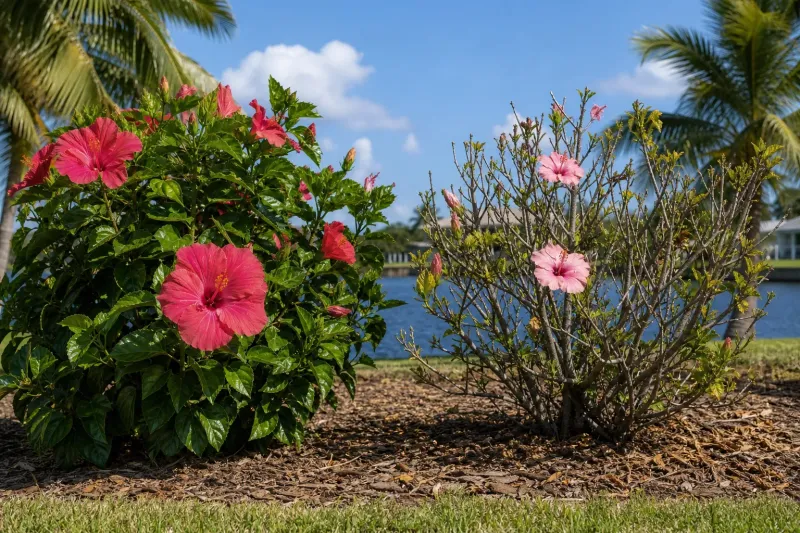
A cold night can make a tropical hibiscus drop its unopened buds, and a bad cover can add to the trouble. Cold stress and sudden temperature swings can play a part, but they are not the only reason buds fall.
Knowing when to move a pot, how to cover a plant, and when to water can lower the damage. Here is a calm, step-by-step plan for Florida yards.
What cold can do to hibiscus buds
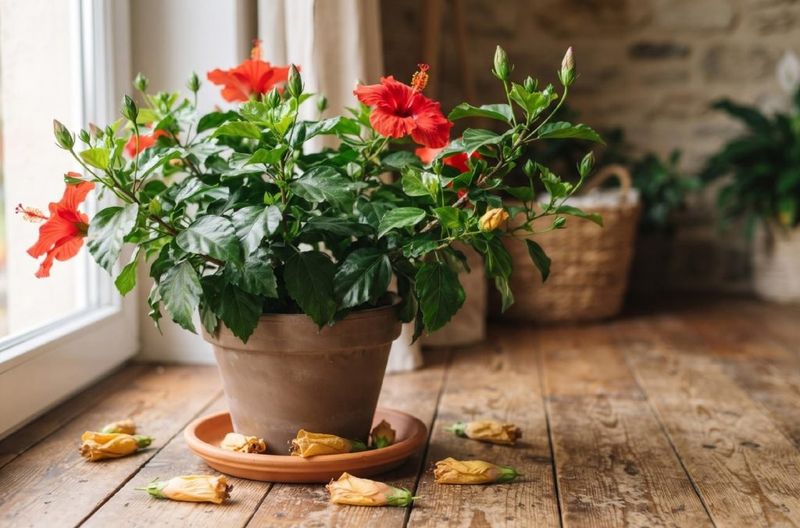
Cold stress and sudden temperature changes can contribute to unopened buds dropping from tropical hibiscus. A plant that was warm and settled on Monday and shivering on Tuesday may let go of buds it was not ready to open.
That is a common story in Florida winters, when a mild week can be followed by a sharp dip.
One cold night, though, cannot tell you why a particular plant lost its buds. Smithsonian Gardens care guidance lists temperature swings and water stress among the reasons buds fall, along with pests and disease.
Thrips or other insects can damage buds, a pot that dried out can trigger drop, and a move to a new spot can do it too.
So treat the cold as one suspect, not the verdict. Look at the whole picture before blaming the weather.
Check the soil, look closely at buds and leaves for insects, and think about whether anything else changed recently, such as a new location or a lapse in watering.
That uncertainty leads to practical steps. You cannot control the weather, but you can reduce how much cold the plant feels.
Moving a pot to a sheltered spot, covering an in-ground plant the right way, and watering only when the soil is dry are all low-cost moves. They lower the odds of cold stress, though they cannot promise the buds will stay.
Know which hibiscus you have
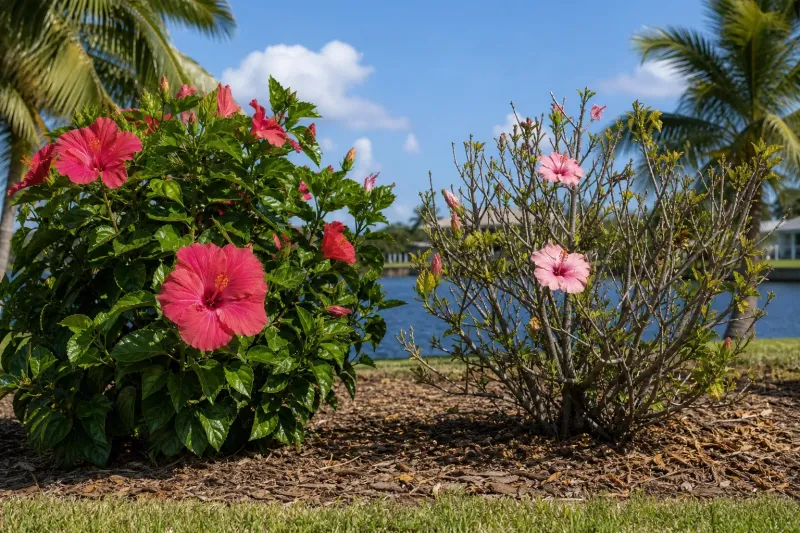
Before you plan for a cold night, confirm the plant is tropical hibiscus (Hibiscus rosa-sinensis). It has glossy, dark green leaves and flowers that often come in orange, red, yellow, or pink.
Hardy hibiscus is a different group, usually with larger, flatter blooms, and it dies back to the ground in winter and returns on its own. Cold advice for one does not fit the other.
Tropical hibiscus is cold-sensitive. UF/IFAS cold protection guidance notes that many tropical plants can suffer chilling injury below 50°F.
Treat that number as a warning point, not a line where every plant is harmed. Plant size, wind, how long the cold lasts, and how healthy the shrub is all matter.
Where you live also changes the picture. UF/IFAS hibiscus guidance says tropical hibiscus may stay green in South and Central Florida, but in North Florida it may freeze to the ground and regrow from its roots.
Freezes are more common in North and Central Florida than in the south.
Your own yard matters too. A spot beside a south-facing wall, under a tree canopy, or in a low pocket where cold air settles can differ by several degrees.
Once you know your plant and your local risk, the next choice depends on whether it lives in a pot or in the ground.
Move a potted plant before the cold arrives
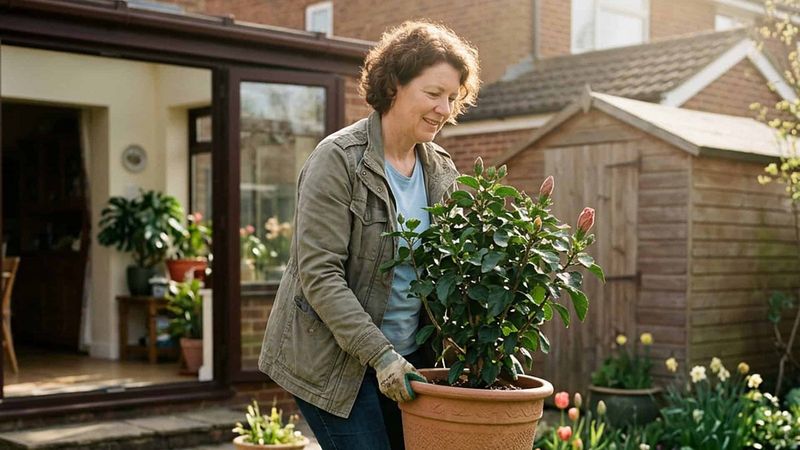
A pot gives you a big advantage: you can take the plant out of the cold. Check the forecast a day or two ahead, and if a cold night is coming, plan to move it before sunset.
Waiting until dark makes it easy to forget or to rush.
Tropical hibiscus prefers temperatures above 50°F, according to Smithsonian Gardens. Think of that as a guide, not a guarantee.
A plant sitting just under that number for a short time may be fine, while a long, windy night calls for more caution.
Good spots are warmer and out of the wind. A screened porch, a garage with a window, or a spot against a house wall under an eave all work.
UF/IFAS notes that wind and local conditions affect how much protection you get, so a sheltered corner beats an open patio.
Big pots are heavy, so a plant dolly can save your back. Before you move it, check the soil with a finger and water only if it feels dry.
Look over the leaves for insects so you do not bring pests inside.
Put the plant back outside once the cold passes, ideally on a mild morning. A pot that spent the night indoors may drop a few leaves as it adjusts.
That is a reason to ease it back into its spot rather than expect perfect results.
Cover an in-ground hibiscus without touching its leaves
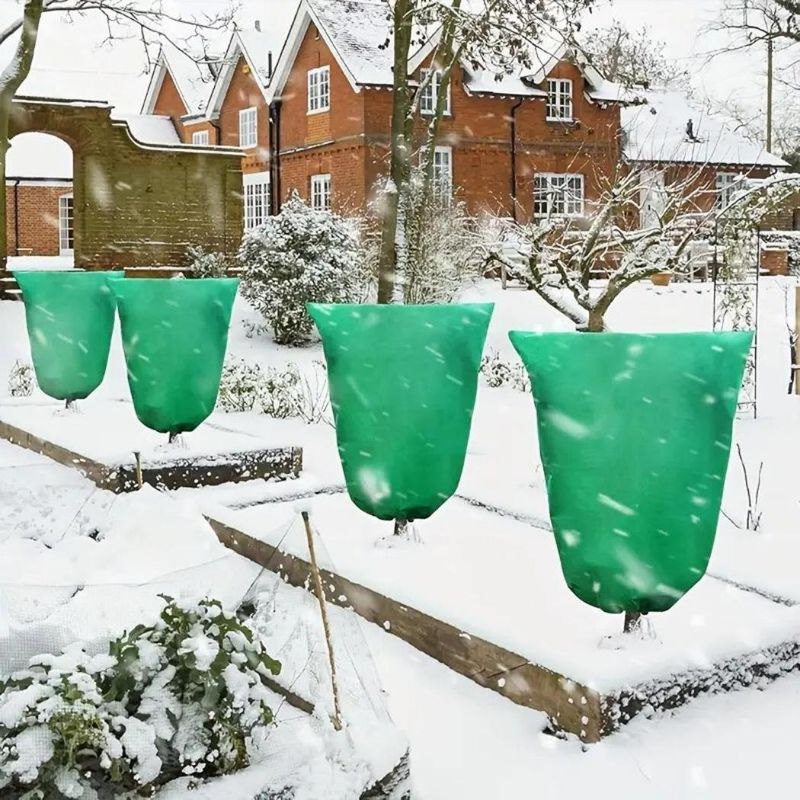
Plants in the ground cannot move, so a good cover does the job. Use frost cloth, an old sheet, or another suitable fabric.
The key is to keep it off the leaves. Stakes, a tomato cage, or a light frame can hold the cover up like a small tent.
Extend the cover all the way to the ground and secure the edges with bricks or stakes. UF/IFAS cold weather guidance explains that a cover reaching the ground helps trap heat rising from the soil.
A cover that stops at the shrub’s knees lets that warmth escape.
Plastic can be used, but only as part of a supported cover and never draped on the plant. According to UF/IFAS Extension, plastic should be removed or ventilated on sunny days because heat can build up underneath.
Leaves and buds touching a cover can also pick up cold directly. Those are the real risks, not a rule that plastic always scorches buds.
Remove the cover once temperatures rise above freezing the next day. Leaving it on through a warm afternoon can cook the plant or hold in moisture.
Keep expectations realistic. Covers help more against frost than against extreme cold, so a hard freeze can still hurt a covered plant.
In a mild winter in South Florida you may rarely need one, while North Florida gardeners may use theirs several times a season.
Water according to the soil

Forget the fixed winter watering schedule. The better rule is to check the soil first.
Push a finger a couple of inches into the ground or pot, and water only if it feels dry.
There is a reason watering before a cold night can help. UF/IFAS explains that moist soil absorbs and releases more heat than dry soil, which can soften the chill near the roots.
But the same guidance warns that long-saturated soil harms roots, so the goal is damp, not soggy.
In practice, that means giving a dry bed a good drink during the day, ahead of the cold, so water has time to soak in. If it rained recently and the soil is already moist, skip it.
Potted plants dry out faster than in-ground ones, so they may need checks more often.
Do not confuse this with overhead sprinkling for freeze protection. UF/IFAS Extension says that method works only when water is applied continuously and the system is properly designed, and it must keep running until the ice has thawed.
Ordinary home sprinklers can put on too little water and may cause more damage.
So the routine is simple. Check the soil, water if dry, and leave the sprinklers off.
Water stress is also one of the possible causes of bud drop, so steady, sensible moisture helps no matter what the weather does.
Wait before pruning or fertilizing
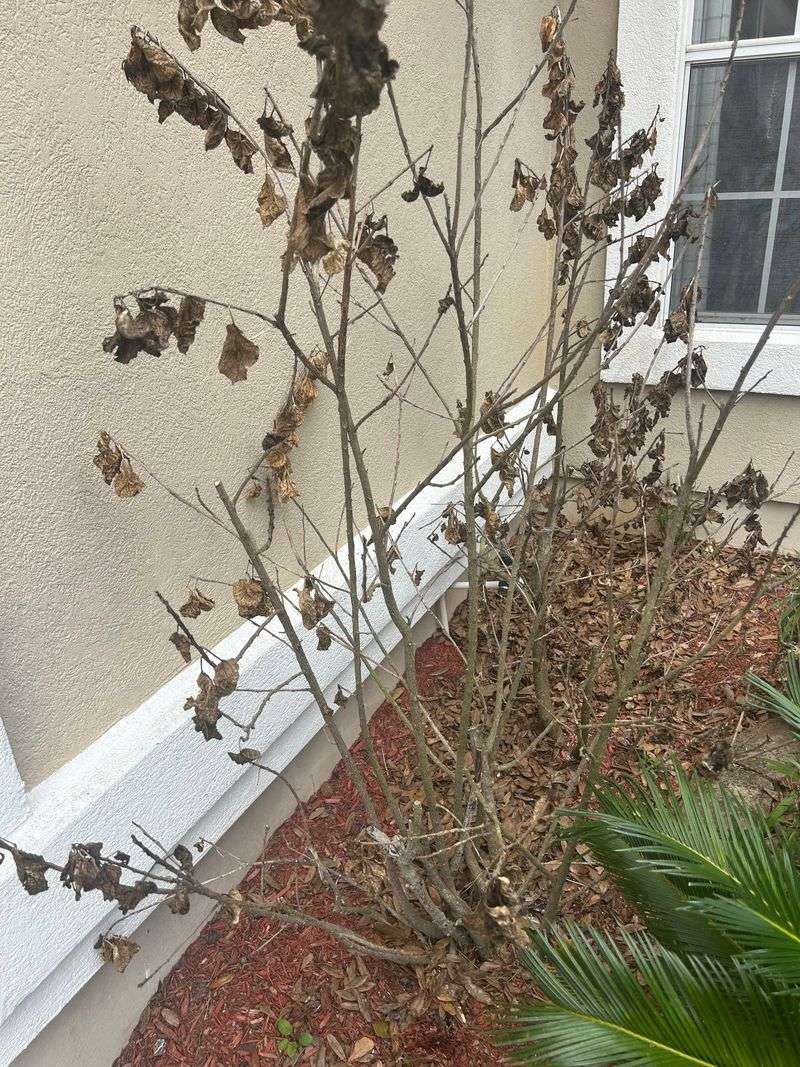
The morning after a cold night, the plant may look rough, and it is tempting to grab the shears. Hold off.
UF/IFAS guidance on cold-damaged plants advises waiting so you can see what is truly damaged. Browned leaves can look worse than the stems underneath.
Give it time, then check. Scratch a bit of bark on a twig with a thumbnail.
Green below means the stem is alive, while brown and dry suggests it may be dead. Damage can take days or weeks to show, and in North Florida a plant may die back to the ground yet regrow from its roots.
Leaves left on the plant can even shield tender stems from further cold. If another cold night is forecast, the damaged growth gives some protection.
Once the risk of cold has passed and new growth begins, you can cut back what is clearly dead.
Fertilizing has its own timing. The same UF/IFAS guidance, along with its cold weather preparation advice, says to wait until spring.
Fertilizer pushes tender new growth that another cold snap could injure.
In the meantime, check soil moisture and water only when it is dry. A stressed plant needs steady care, not a push.
Protect the plant without expecting guaranteed blooms
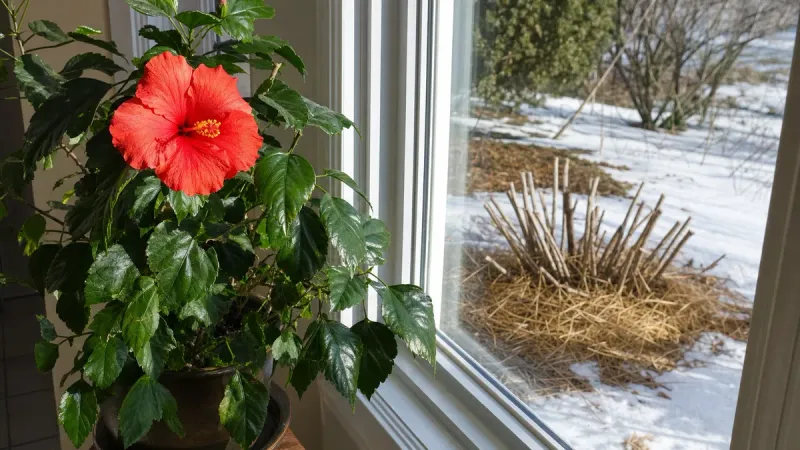
Match your response to the plant and the forecast. Know whether you have tropical hibiscus, move a pot to shelter, cover an in-ground plant off its leaves, and water when the soil is dry.
Cold may add to bud loss, but Smithsonian Gardens also names water stress and pests, so it is rarely the only suspect.
Protection lowers exposure, and UF/IFAS says covers work better against frost than extreme cold. A long, hard cold event can still win.
A hibiscus that loses its buds this winter can still bloom again when warm weather returns.