
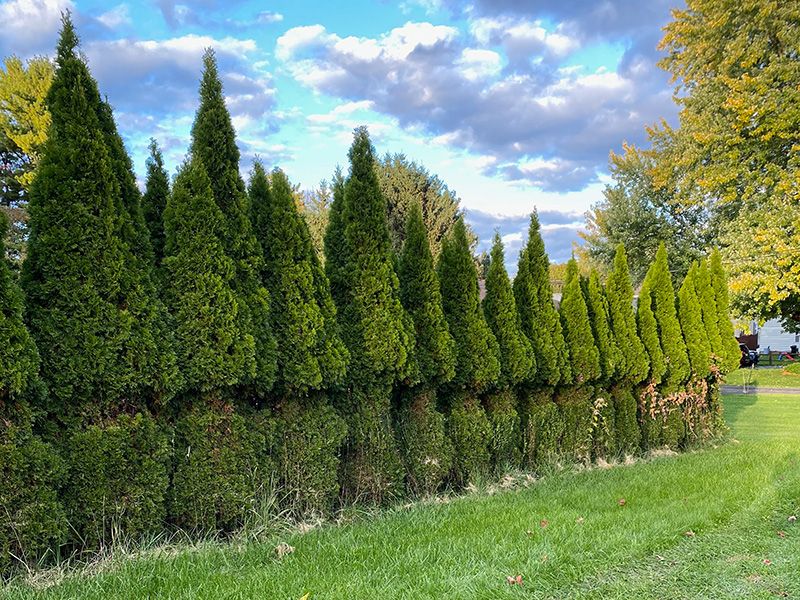
You walk out on a winter morning and your arborvitae has a bare, chewed-looking band along the bottom. Deer are a common suspect, because they turn to evergreens when other food runs short.
Before you wrap, fence, or spray anything, it helps to know what you are really looking at. A few simple checks and the right barrier can limit further damage, even though nothing works every time.
A bare band can point to deer, but it is not proof
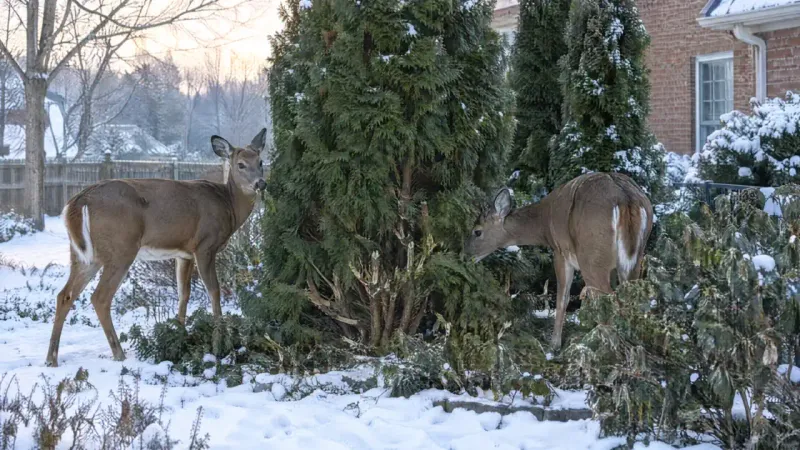
Start by walking up close and looking at the branch tips. Deer have no upper front teeth, so they tend to leave ragged or torn ends.
Rabbits and rodents more often leave clean, angled cuts, as described in UMass Extension guidance on deer and the landscape.
Height is a clue, but not proof. Deer commonly feed within about six feet of the ground, and Iowa State Extension notes that deep snow can lift that reach even higher.
A neat straight line is not a guarantee either.
Also check the color. Winter sun and wind can brown evergreen foliage, especially on exposed sides, as University of Minnesota Extension explains.
Browned but intact foliage points toward winter injury, while missing and torn growth points toward an animal. Look for tracks or droppings too.
Why winter can increase browsing pressure
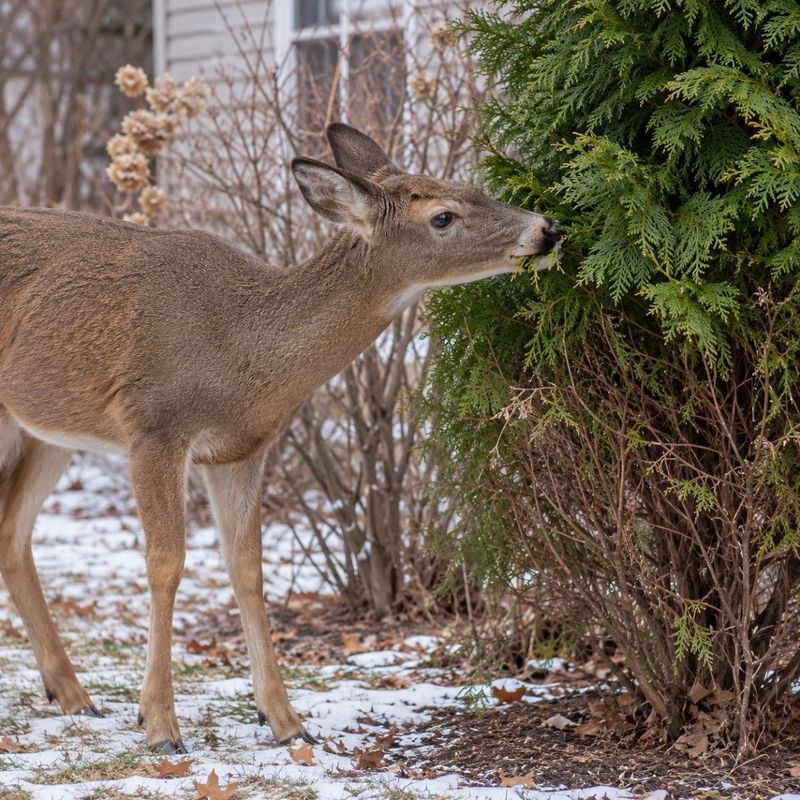
Once gardens are bare and leaves are gone, deer have fewer choices. Evergreens like arborvitae stay green and edible all winter, so they can become a go-to food.
When snow cover lingers, that pull can get stronger, and the same shrubs may get visited again and again.
Snow also changes the math on height. A deer standing on a deep drift can nibble branches that were out of reach in fall.
That is one reason a browse height that looks too high for deer in your memory may still fit.
Not every deer acts the same way. Some yards get heavy traffic, while a neighbor’s shrubs may be left alone.
Food supply, herd size, and local habits all play a part, and Iowa State Extension lists arborvitae among the evergreens deer commonly browse when food is scarce.
The practical takeaway is that damage you see now may continue. If deer found your shrubs once, expect repeat visits until access is blocked.
Burlap may help only when it blocks access
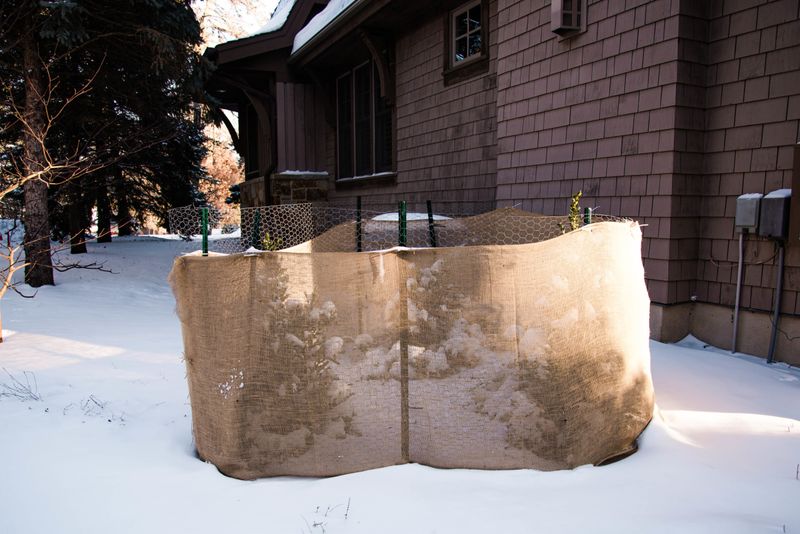
Burlap is only as good as the barrier it makes. Wrapped snugly and fully around a single shrub, it can physically keep deer from reaching the branches.
Utah State University Extension lists burlap or snow fencing as options for vulnerable shrubs.
The catch is that it is not foolproof. A loose wrap, a gap near the top, or branches poking through can give a deer a way in.
One Michigan State Extension reply on Ask Extension described deer browsing arborvitae even with burlap in place, and it suggested fencing set away from the plants.
So the goal is simple: deer must not be able to touch the foliage. Test your wrap by pressing on it.
If branches can be reached through the cloth or over the top, a deer may manage it too.
Protect a few shrubs before browsing intensifies
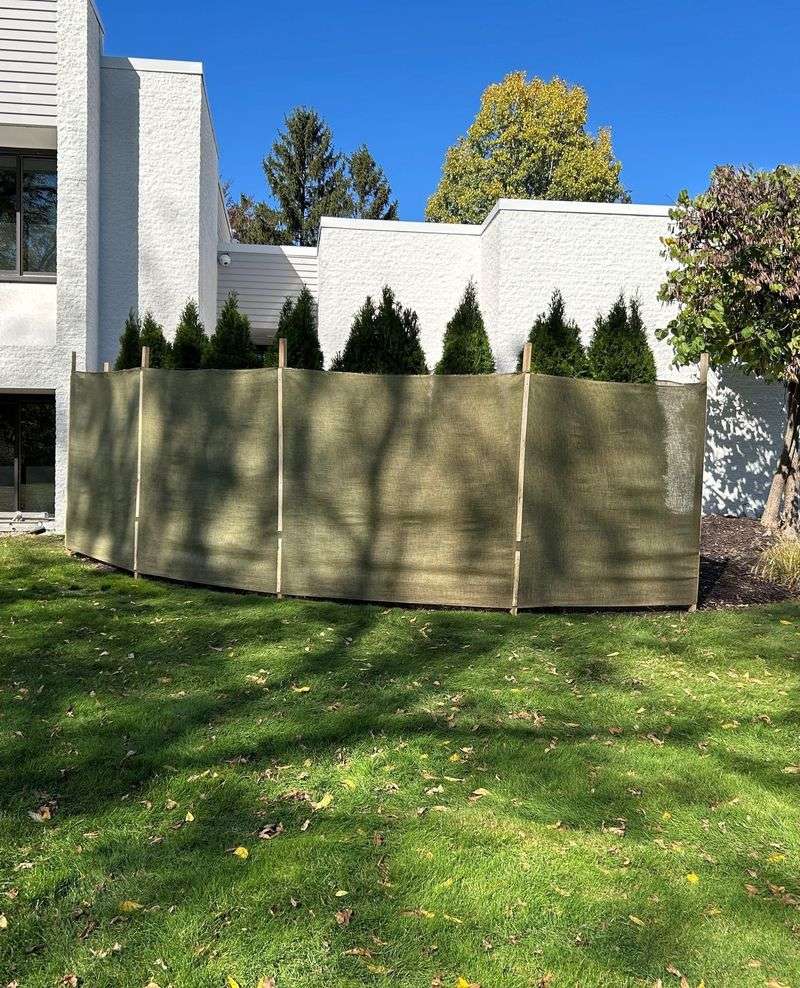
For one to a few plants, a cage-style enclosure is a manageable job. Drive sturdy stakes around the shrub, then attach burlap or snow fencing so it stands clear of the foliage and closes the top.
Deer should not be able to reach through to any branch.
Timing matters. Iowa State Extension recommends putting up seasonal barriers in early fall, typically September or October, and taking them down in spring.
If damage has already started, installing a barrier now can still limit more.
Do not confuse this with burlap for winter burn. University of Minnesota Extension suggests burlap on the south, southwest, and windward sides, or around the plant with the top open for air and light.
That setup shields from sun and wind, but a screen on a few sides or an open top does not by itself keep deer out.
Use perimeter fencing for a larger area
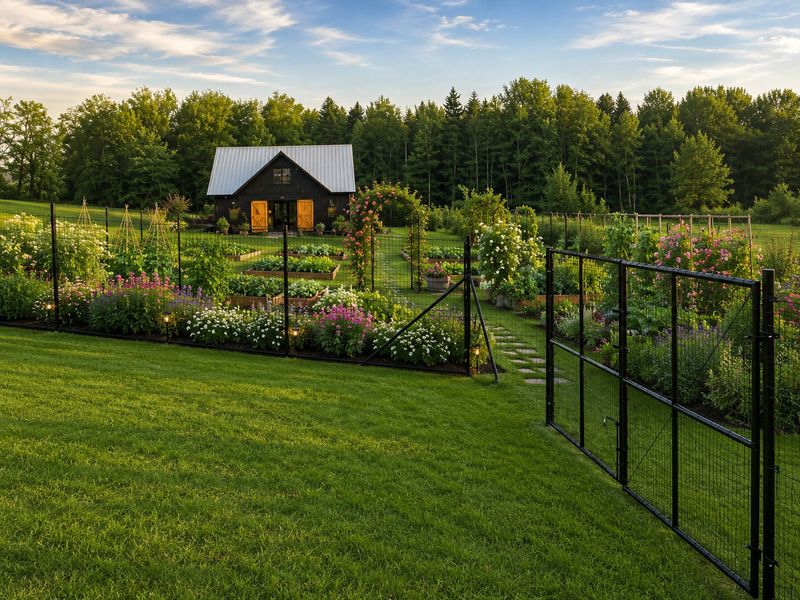
Wrapping every shrub gets tiring when you have a long hedge or a whole planting bed to protect. At that scale, a sturdy fence around the whole area is usually more practical than many small enclosures.
It also keeps deer away from nearby plants.
Height is the key detail. Iowa State Extension recommends a fence of at least eight feet for a standard passive deer fence.
That is a recommendation, not a promise, and a determined deer may still find a way through or over a weak spot.
Check the fence for sagging sections and gaps at the bottom or at gates, since those are where deer tend to test. Local rules and neighbor concerns can limit fence height, so check before you buy materials.
For a small yard, a shorter option may fit better.
Use repellents as a possible extra layer
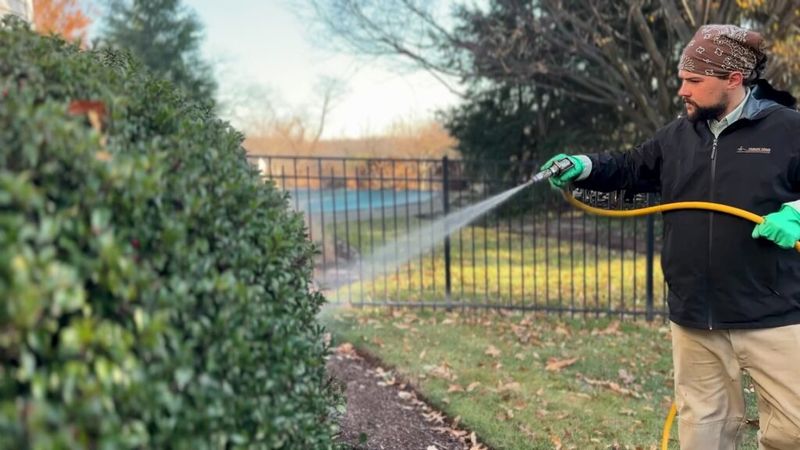
Repellents can add a layer, but they should not stand in for a barrier. They may reduce browsing for a while, and results vary a lot from yard to yard.
Think of them as a supplement to a wrap or fence, not a fix on their own.
Read and follow the product label for timing, temperature limits, and how often to reapply. Rain, irrigation, and melting snow can wash product away, and new growth is not covered by an earlier application.
Iowa State Extension notes that repellents can lose effectiveness and that deer may ignore certain odors or tastes.
Hungry deer and heavy deer pressure make repellents less dependable. Deer can also get used to a smell over time.
If you try one, rotate your approach, keep notes on what happens, and watch the shrubs for fresh browsing.
Wait for spring growth to judge recovery
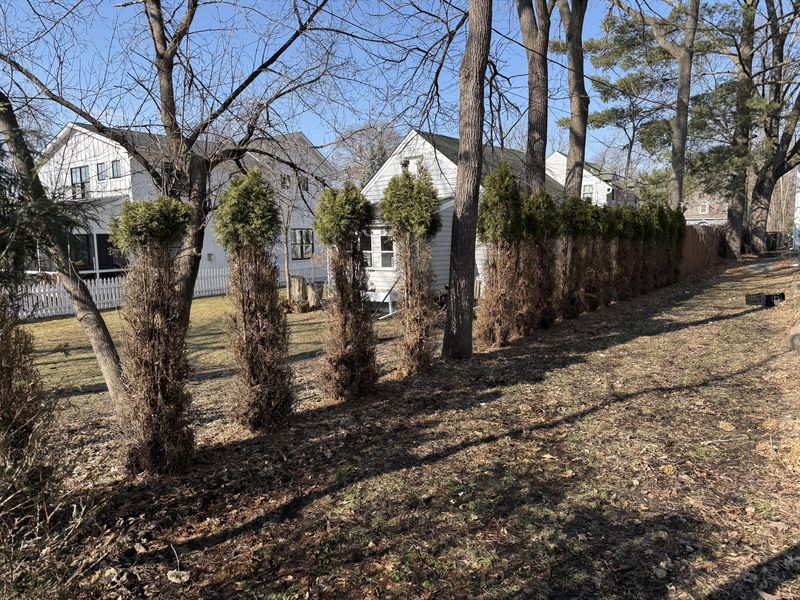
It is tempting to cut or replace a damaged shrub right away, but spring will tell you more. New growth shows which branches are still alive.
Iowa State Extension points to regrowth where buds remain.
Arborvitae may fill in where growing buds survived the browsing. Sections stripped back to wood with no growing points may stay bare.
A Michigan State Extension answer on deer eating arborvitae reflects that same limit on recovery.
Meanwhile, keep protection in place until the weather warms, then remove seasonal barriers. Check the shrubs again once new growth appears and decide what to do then.
A bare band is a clue, not a verdict, and a plant tells its story in spring.