
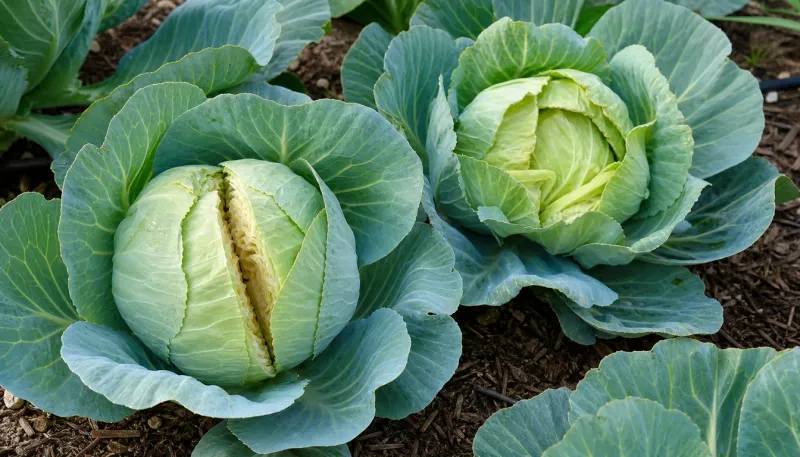
You walk out to the garden after a soaking rain and find a cabbage head cracked wide open. It happens fast, and it can wipe out weeks of work in a single night.
The good news is that you can read the signs early and pick the right move for each head. Here is how to handle firm heads, intact heads that must wait, and heads that have already split.
Why mature cabbage heads can split
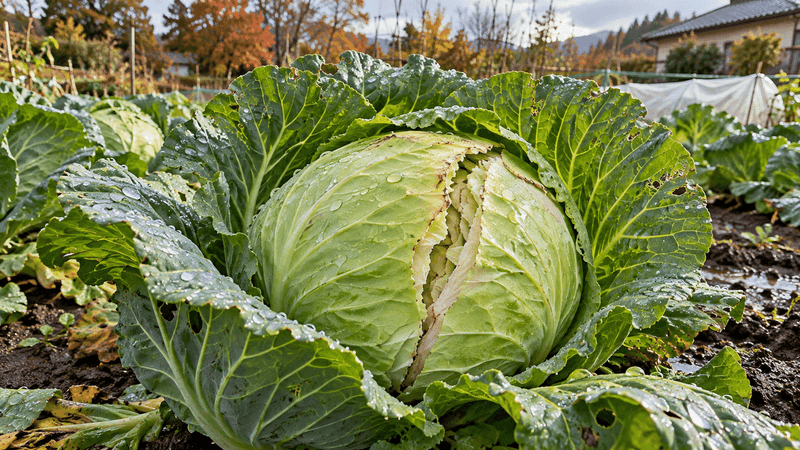
A split head shows up as a crack running down from the top, with pale inner leaves pushed apart. It usually happens to heads that are already mature and tightly packed.
When the roots suddenly pull in a lot of water, the inside grows faster than the outer leaves can stretch.
Heavy rain is one common trigger, but it is not the only one. Iowa State Extension points to excess water uptake as the cause, and a long irrigation session can do the same thing.
University of Minnesota Extension notes that heads left in the garden past maturity are the ones most at risk.
So the first question is simple: is the head firm and solid, and is it still in one piece? That answer decides your next step.
Harvest a firm, solid head promptly
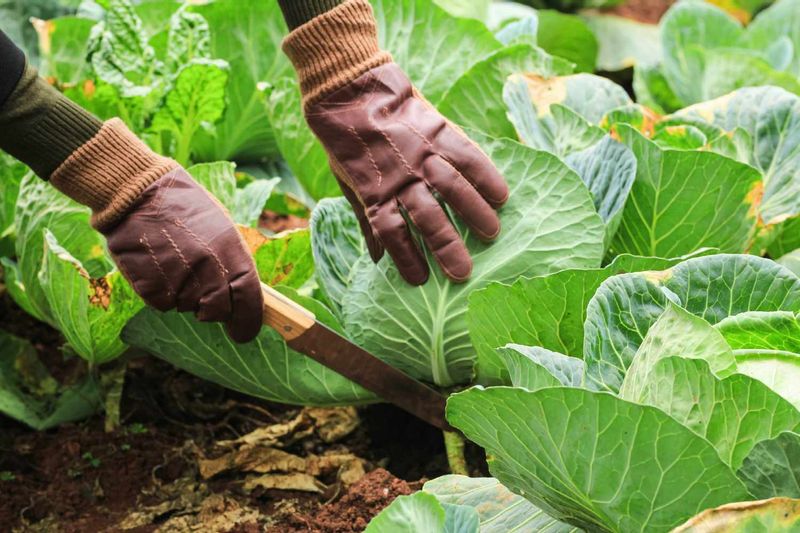
Once a head feels firm and solid when you squeeze it, cut it. Prompt harvest is the most reliable way to avoid a split, and it is the advice you will find across extension guides, including Iowa State.
Every extra day in the bed leaves a mature head exposed to a downpour or a heavy watering. A split can arrive overnight, so waiting for a perfect harvest day is a gamble.
If rain is in the forecast, pick ahead of it.
Sometimes you cannot pick right away, because of travel, a busy week, or a head that is not quite ready for the table. In that case, University of Minnesota Extension describes a stopgap, covered next.
Think of it as a backup plan, not the main one.
A gentle turn may buy time
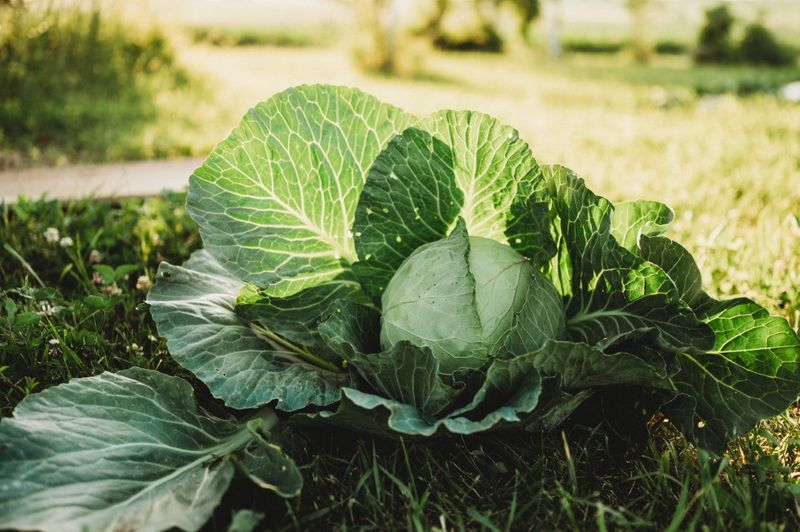
If a mature head is still intact and you must wait, you can try to slow its water intake. University of Minnesota Extension suggests turning the head about a quarter turn.
Another option from the same source is shearing the roots on one side with a spade.
The goal is to break some roots so less water flows into the head. Use a gentle, steady turn of the whole head or plant.
Do not wrench it, and do not think of it as twisting the stem to a precise spot.
Texas A&M AgriLife’s cole crop guide also describes breaking some roots this way. Treat the result as a delay.
It may reduce the chance of splitting, but it does not guarantee a head will stay whole.
Treat root disturbance as a short-term measure
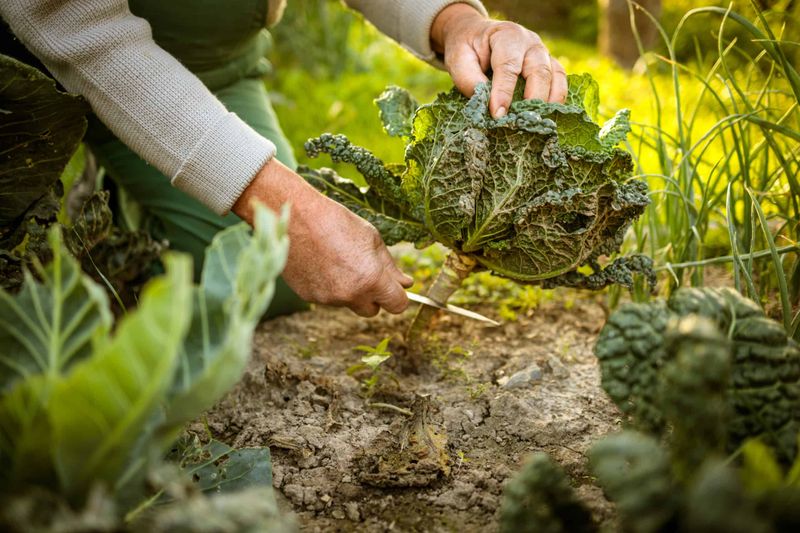
Breaking roots protects the head for a while, but it costs the plant something. Fewer roots means less ability to take up water and nutrients, so the plant is being held in a weakened state.
Illinois Extension advises harvesting relatively soon after you do it.
That is the tradeoff. Harvesting right away gives you a healthy, solid head with no risk.
Turning the roots gives you a few extra days at the price of a stressed plant.
A practical approach is to pick a harvest date when you turn the head, perhaps within the next several days. If the head still feels firm and looks sound, cut it then.
Do not leave it sitting for weeks and expect the turn to keep working.
Harvest a split head instead of trying to repair it
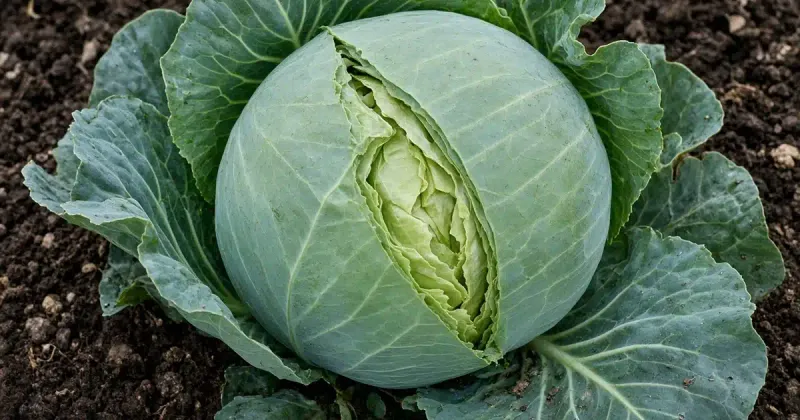
Root turning only works before a crack appears. It cannot close a split, and nothing you do will knit the leaves back together.
Illinois Extension frames it as a preventive step for heads that are still intact.
Once a head has cracked, cut it that day. Exposed inner leaves soon become unusable, as Mississippi State Extension warns, and a wet crack invites rot.
Bring it inside and trim off any soft, dirty, or discolored parts. Use the clean portions soon for slaw, soup, or a quick sauté.
Leaving it in the bed to see what happens usually means losing the whole head.
Keep moisture as even as practical
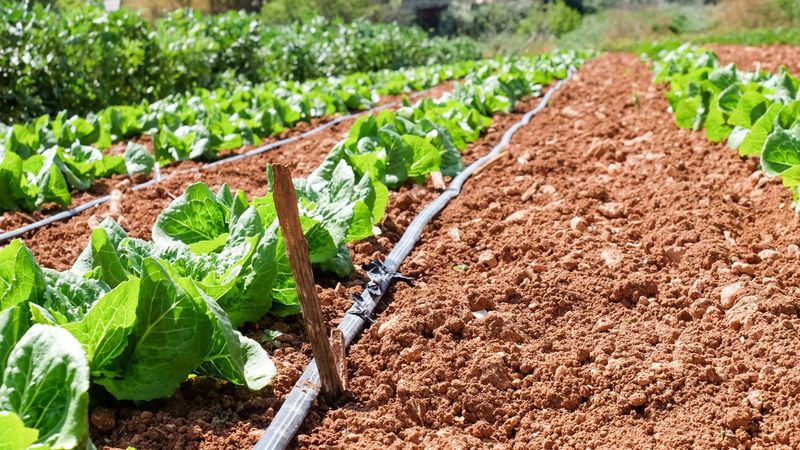
Prevention starts well before heads form. UF/IFAS notes that supplying water evenly helps prevent head cracking.
A bed that swings from bone dry to soaked sets up the sudden gulp of water that splits heads.
Try a steady routine. Check the soil with a finger, water when the top inch or two feels dry, and apply a consistent amount instead of an occasional flood.
A layer of mulch can help the soil hold moisture more evenly, and drip lines or a soaker hose make delivery steadier.
Do not hold back water to keep heads from splitting. Growing cabbage needs a steady supply to size up.
The aim is a regular rhythm, not a drought.
Check local planting windows in Texas and Florida
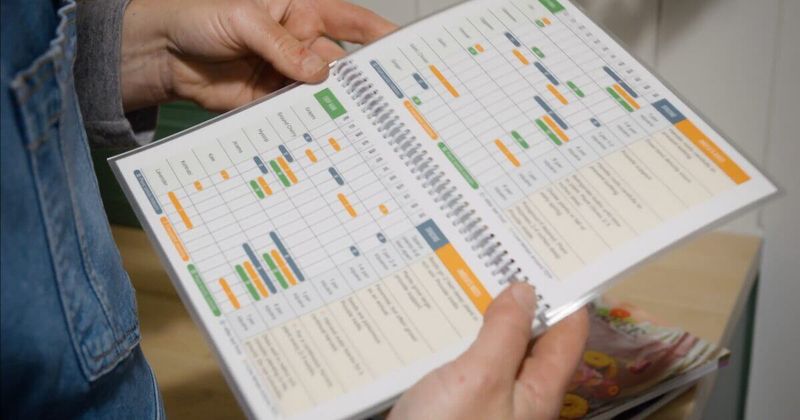
A winter cabbage bed means different things in different places. UF/IFAS lists separate cabbage planting periods for North, Central, and South Florida, so a friend in Gainesville and a gardener in Miami will not plant on the same schedule.
Texas varies too. The Texas A&M planting guide calendar covers Travis County, not the whole state.
Check with your county extension office for dates that fit your area. Timing affects when heads mature, which tells you when to watch for splitting.
Choose the next step by the head’s condition
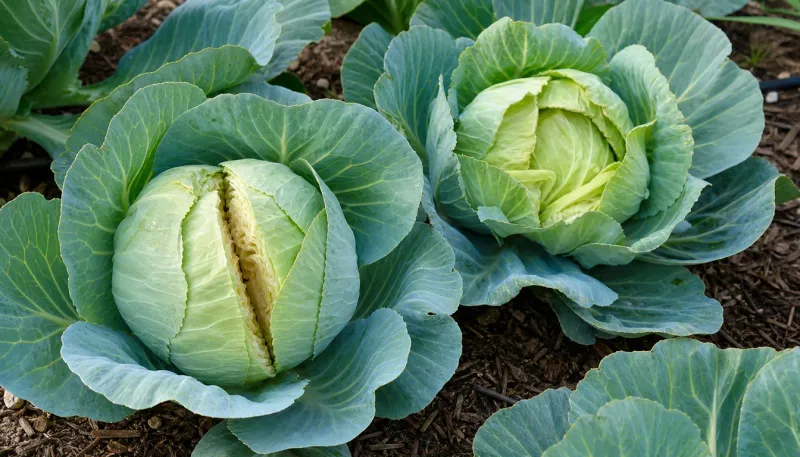
Let the head in front of you set the plan. A firm, mature head should come out of the garden as soon as you can cut it.
If it is intact and harvest has to wait, a gentle turn may buy a few days, as University of Minnesota Extension describes.
If it has already split, harvest it promptly, following Illinois Extension advice.
A cabbage in the kitchen beats a cabbage in a rainstorm.