
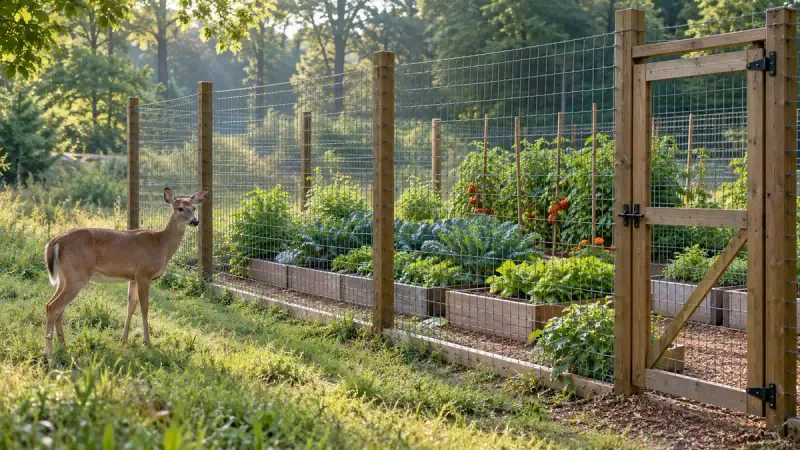
Walk out to your garden one morning and find your kale and chard chewed down to stubs, and you will want an answer fast. Deer may browse gardens harder when natural food gets scarce, though the timing depends on where you live.
One fence design uses empty space as a barrier, and it may help protect your remaining greens. It also has limits, and knowing them can save you time and money.
Check that deer are causing the damage

Rabbits, insects, and deer all leave damage that looks a little alike at first glance, so a quick check comes before any fence building. UF/IFAS notes that deer browse often leaves ragged or jagged edges on plants, because deer tear leaves rather than snipping them cleanly.
Look at the height of the damage too. Chewing well above the ground on chard stalks or lettuce heads points toward a larger animal than a rabbit would be.
Tracks and scat give extra clues. Check soft soil near the bed edges for split, heart-shaped hoofprints, and look for small piles of pellets nearby.
If you find torn leaves plus tracks or droppings, deer are a likely culprit, and it makes sense to start planning a barrier.
Limited forage can increase browsing
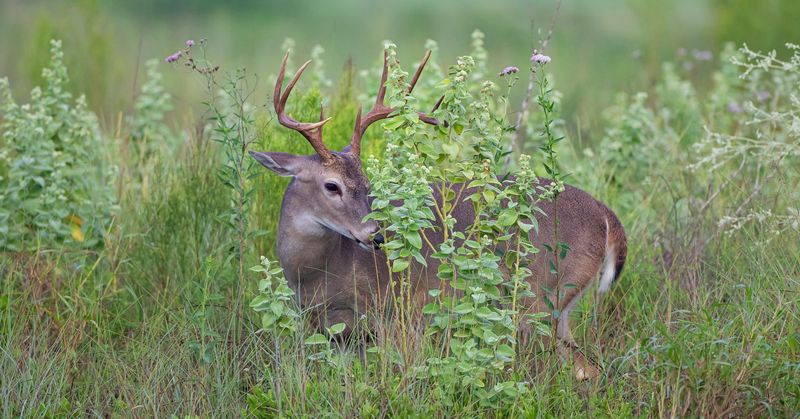
Deer eat what is available, and when natural food gets scarce they may turn to yards and gardens. Missouri Extension says damage is generally more extensive in winter than in summer where preferred natural foods are less available.
Oklahoma State reports complaints after the first fall cold spell, and says low food availability can push deer to eat plants they might otherwise skip.
The timing is not the same everywhere. Florida and Texas do not have the same seasonal forage conditions as northern states, and local habitat, deer numbers, and weather all matter.
In Texas, Texas A&M AgriLife notes that drought-related forage shortages can bring deer into landscapes.
For your garden, the practical point is to watch your own beds. Kale, chard, and lettuce are tender crops you may want to protect, but deer have no proven special taste for them in fall.
If a dry spell or a cold snap hits, check your plants more often.
A two-tier fence may deter deer
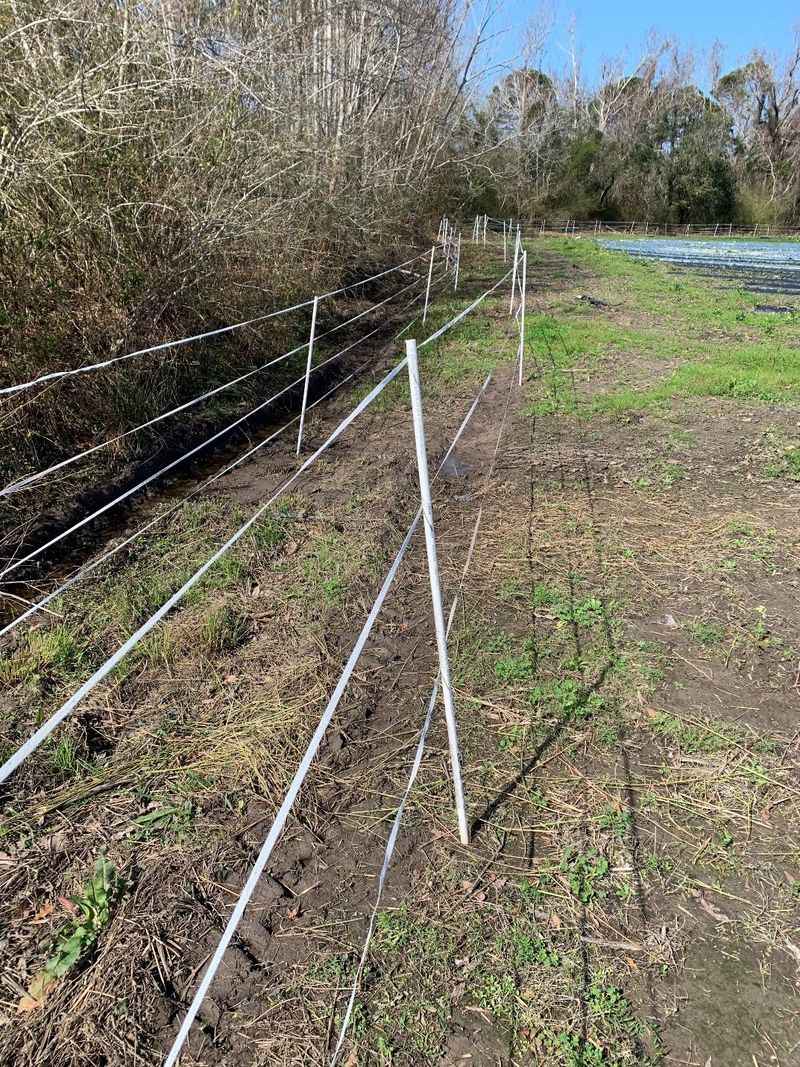
A two-tier fence uses two barriers set apart with open space between them. The idea is that deer may be less willing to jump into or across a wide, awkward gap than over a single fence of the same height.
Clemson Extension recommends placing the inner fence 4 to 5 feet from the outer one. Its design is an electric-polytape system, so it is not the same as putting up any two lightweight fences.
Other guides offer different numbers. A University of Arizona guide describes two low fences 38 inches apart, which is a separate example and not a swap for Clemson’s spacing.
Be realistic about results. A University of Idaho report says short double fences have had limited success.
Treat this as a deterrent that uses extra space, not guaranteed exclusion.
Electric fencing needs upkeep and care
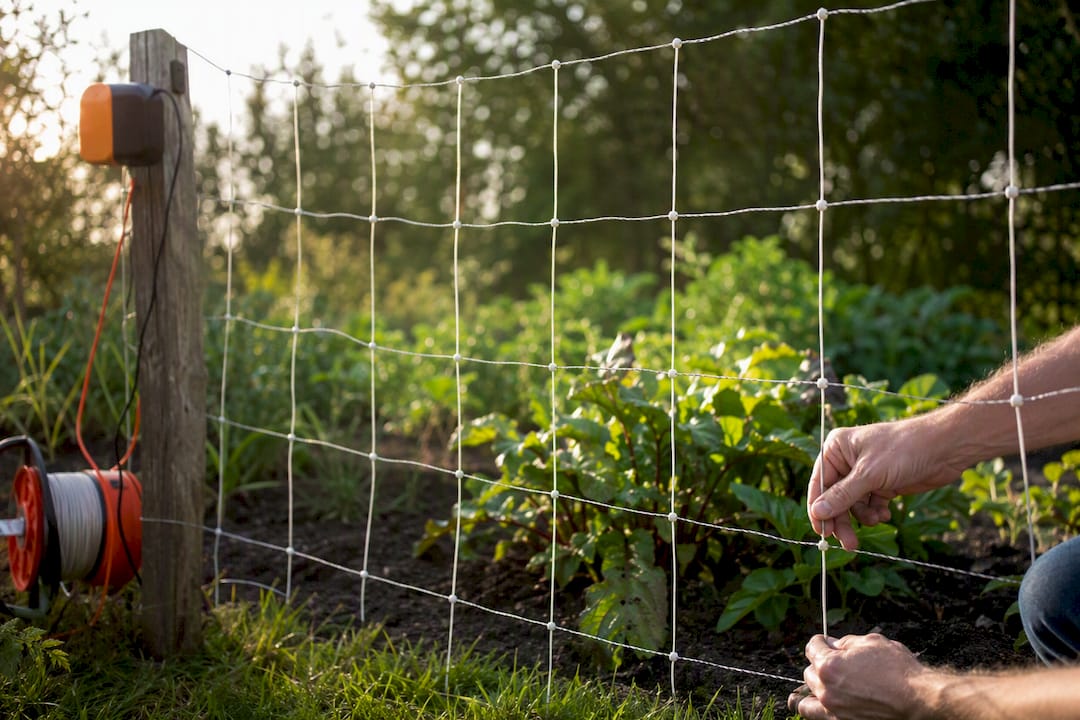
Electric polytape is not a set-it-and-forget-it fix. It needs equipment made for the purpose, a careful installation, and regular attention.
Weeds and grass are the usual troublemakers. Missouri Extension says vegetation touching the wire can short it out, and that electric fences need regular monitoring.
In warm Southern fall weather, growth can keep going, so clear the fence line often.
Walk the fence on a schedule. Look for sagging tape, broken sections, and leaves or vines leaning on the wire, and fix problems right away.
A fence that has quietly stopped working will not deter much.
Think about people, too. The same Missouri source points out that electric fences near homes can raise concerns for children and visitors.
If kids, neighbors, or guests use your yard, plan how you will keep them clear of the wire.
A tall, continuous fence offers stronger protection
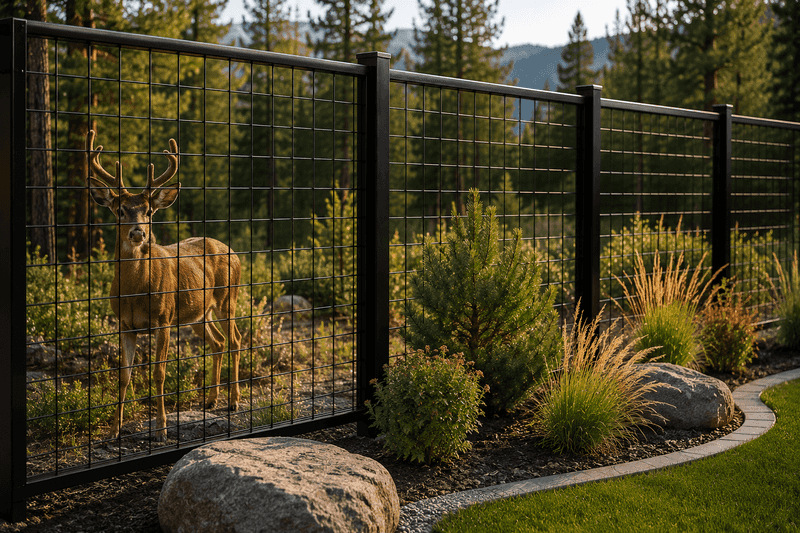
If you need stronger exclusion, a taller fence is the better route. UF/IFAS recommends fencing at least 6 feet high.
UC IPM describes a well-built, maintained 7 to 8 foot fence as the most effective control.
Height is only part of it. WDFW advises enclosing the whole area, keeping the fence close to the ground, and securing gaps around gates.
A deer will test any weak spot, so a loose corner or a gap at the gate can undo the whole project.
No fence is infallible, and a tall fence costs more and takes more work than a short double fence. Still, it is a different kind of protection from a deterrent.
Repellents and deer-resistant plants are weaker tools. UF/IFAS says repellents rarely eliminate damage, and UC IPM says hungry deer may eat many plants labeled deer-resistant.
Choose a barrier you can maintain
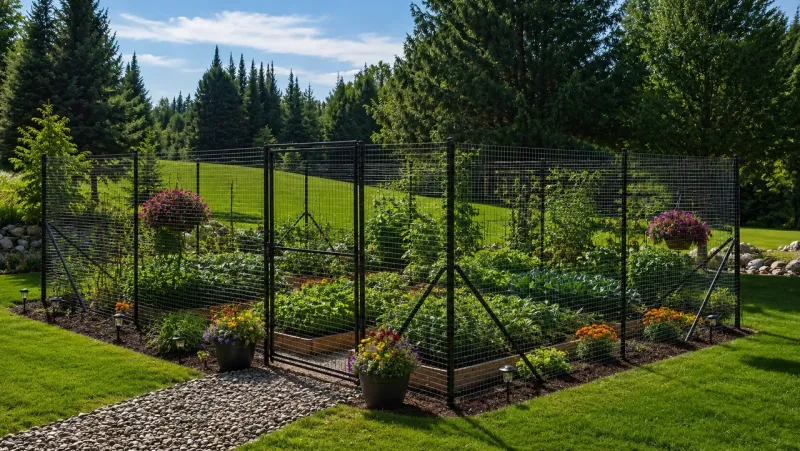
Start by confirming deer are the problem. Then measure: does your bed have room for two barriers, and can you keep electric tape clear and working?
If stronger exclusion matters most, choose a taller, continuous fence.
A double fence may help protect your vegetables, but it cannot promise a deer-proof bed.
The best fence is the one you will still be maintaining in February.