
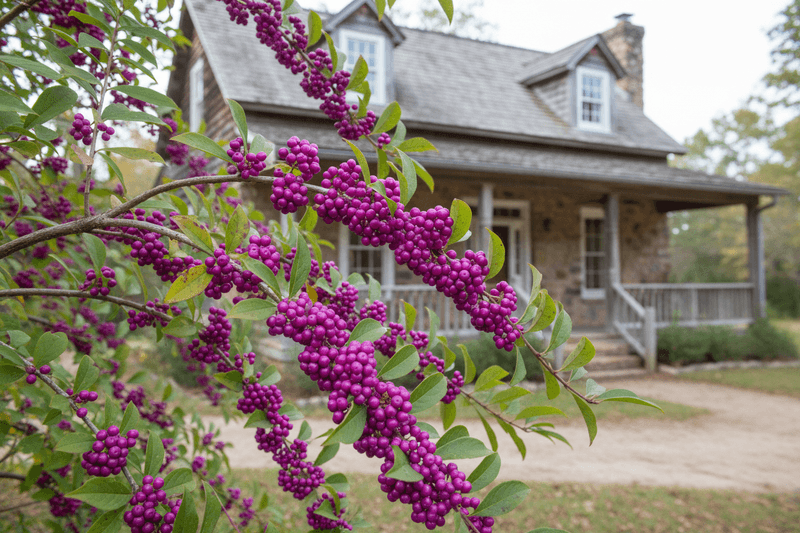
American beautyberry (Callicarpa americana) is a North Carolina native shrub that earns its place along a wooded edge with clusters of vivid purple berries that feed birds and small mammals from August through October. Most yards go quiet in late summer, but this deciduous shrub delivers bold seasonal color right when the landscape needs it most. Understanding what it can and cannot do, especially around ticks, helps homeowners get real value from every plant they put in the ground.
A Useful Native Shrub for the North Carolina Wooded Edge
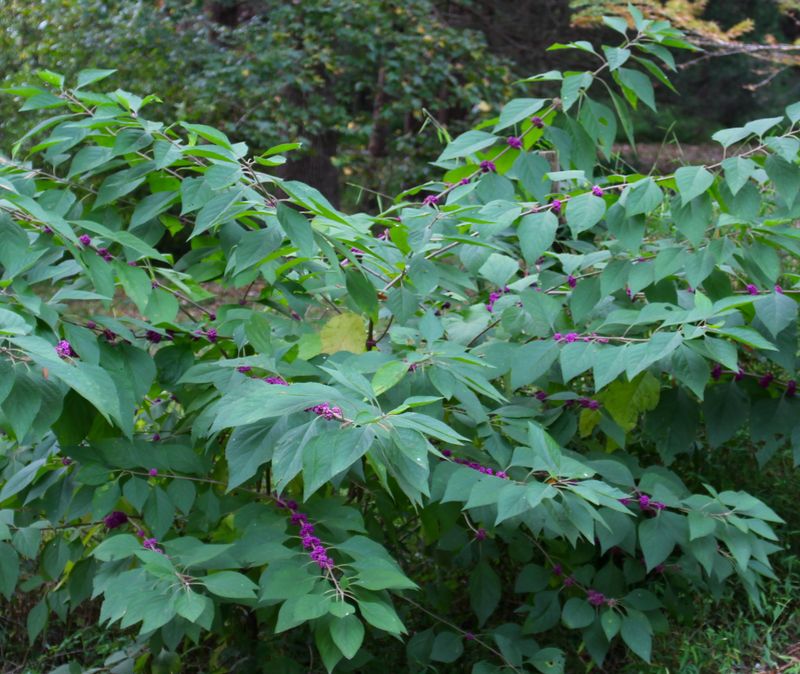
American beautyberry, known botanically as Callicarpa americana, is a deciduous native shrub that grows across all three of North Carolina’s major regions: the Coastal Plain, the Piedmont, and the Mountains. Gardeners looking for a plant that belongs in the NC landscape, not just one that survives here, will find it a genuinely suitable choice for an informal wooded edge. Its presence in each region reflects real adaptability, not marketing.
The shrub’s growth habit is open and arching rather than dense and upright. Branches spread outward in graceful curves, which gives the plant a relaxed, naturalistic look that works well against a tree line or along a property boundary. Because of this form, NC State Extension’s plant profile for American beautyberry places its typical planting space at roughly 3 to 6 feet. That spread means it fits as an informal accent or small grouping, not as a clipped formal hedge.
On soil, beautyberry is notably flexible. It tolerates clay, loam, and sandy soils, handles occasionally dry conditions, and performs well in moist ground as long as drainage is adequate. Sun exposure can range from full sun to partial shade, which makes it practical for edges where the canopy is patchy or variable. A spot that gets morning sun and afternoon shade from nearby trees is a comfortable home for this plant.
One point worth setting clearly from the start: placing beautyberry along the wooded edge does not change how ticks move through that zone. The shrub is a native habitat and seasonal-interest plant first. Its tick-related research is real but limited in scope, and that distinction matters when homeowners are making decisions about yard safety. The University of Florida IFAS Extension also notes the plant’s informal, open character in its Callicarpa americana fact sheet, reinforcing that this is a shrub suited to naturalistic plantings rather than structured borders.
Late-Summer Color Comes From Berries, Not Peak Bloom
Plenty of shrubs put on a show in spring and then fade into the background. American beautyberry takes a different path, timing its strongest visual moment for the stretch of the calendar when most home landscapes have gone flat. The key is understanding which part of the plant delivers that late-summer payoff.
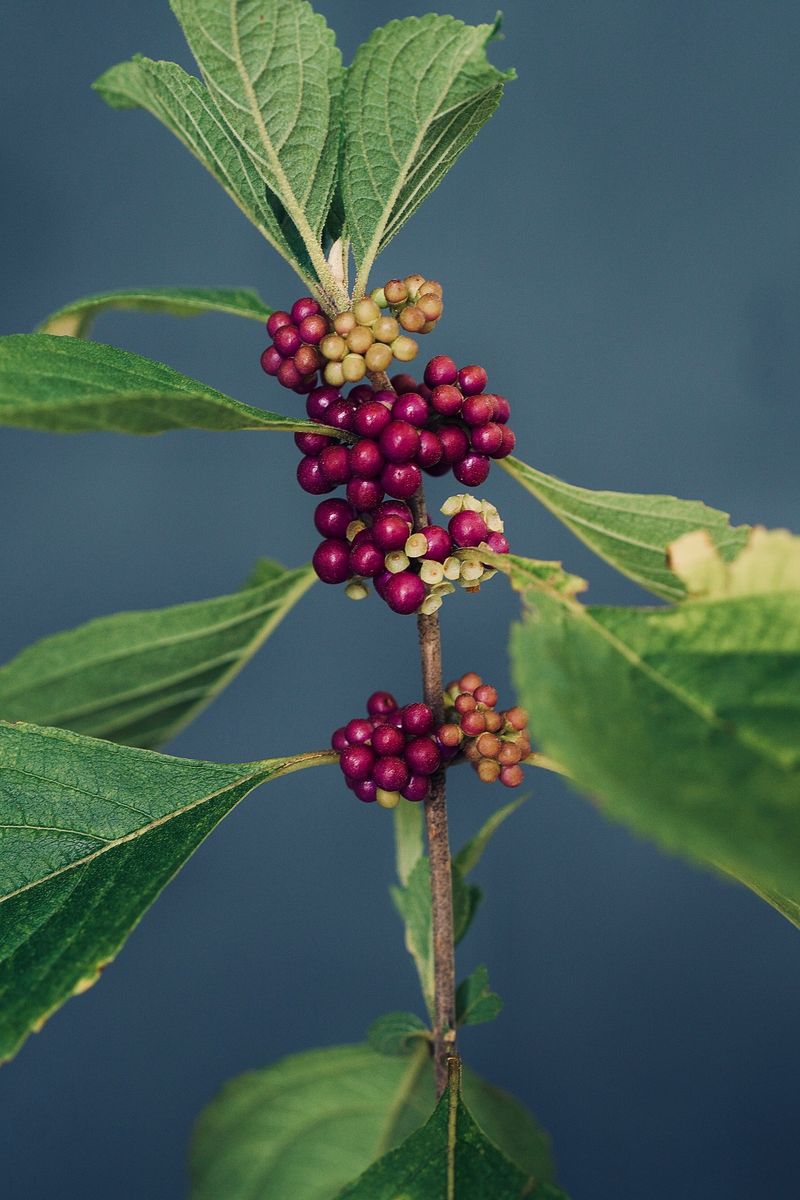
Flowers appear in June and July on beautyberry, producing small, pale pink to lavender blooms that pollinators visit but that most people barely notice from a distance. The real display comes later. NC State Extension’s beautyberry profile places the berry-display period from August through October, with the vivid purple clusters sometimes persisting into early winter if birds and mammals haven’t stripped them first. That window covers the stretch when most flowering shrubs have long finished and the yard badly needs a focal point.
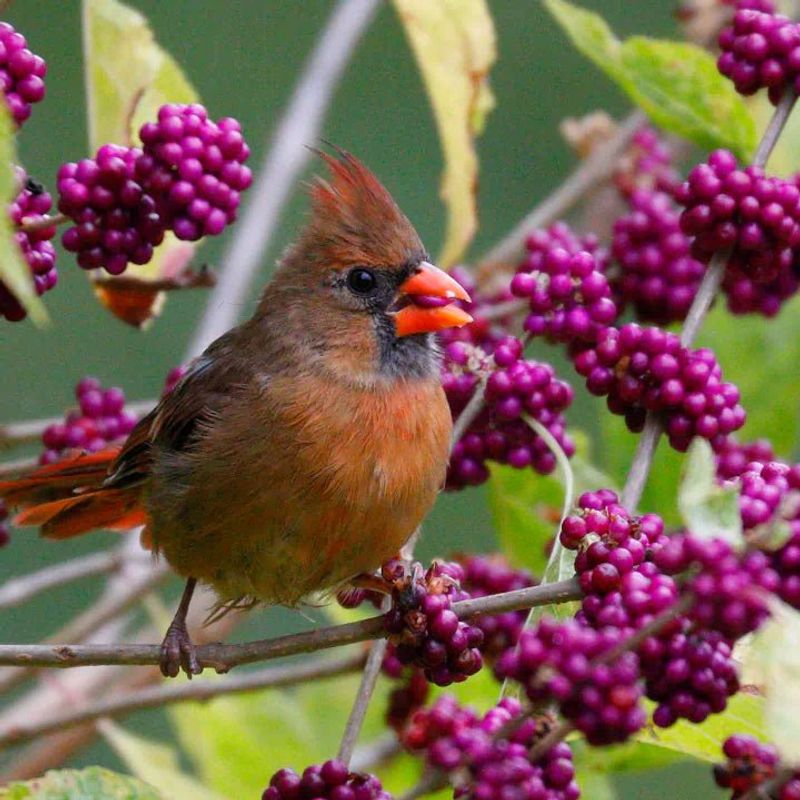
The berries are not just ornamental. American robins, brown thrashers, purple finches, and other songbirds rely on the fruit as a food source heading into fall migration and cooler months. Small mammals also feed on the berries, which means a single well-placed shrub pulls wildlife into the yard at a time when natural food sources are starting to thin out. The June and July flowers, though modest in size, bring in bees and other pollinators before the berry set begins.
Framing the late-summer benefit accurately matters for anyone planning a planting. If the goal is August and September flowers, beautyberry is not the right answer on its own. If the goal is late-summer color, wildlife food, and seasonal interest that bridges the gap between midsummer bloom and fall foliage, the berry display is exactly the right tool for that job. The plant simply delivers its best work in fruit rather than in flower.
What Beautyberry’s Tick Research Actually Shows
A published study brought a lot of attention to American beautyberry and ticks, and the findings are genuinely interesting. Getting the details right, though, makes a real difference between useful information and a misleading promise.
Researchers isolated two terpenoid compounds from beautyberry leaves: callicarpenal and intermedeol. They then tested these extracted compounds against tick nymphs using treated cloth assays, a controlled laboratory method where treated material surrounds a test area and nymphs are observed for repelled movement. The published study in the Journal of Medical Entomology found that both compounds repelled blacklegged-tick nymphs at the doses tested. Against blacklegged ticks, the results were notable enough to draw comparisons to standard repellents under those specific laboratory conditions.
The lone star tick results told a different story. At the higher tested dose, callicarpenal repelled roughly 20 percent of lone star tick nymphs and intermedeol repelled about 40 percent. Since lone star ticks are a common and active species across much of North Carolina, that weaker response is relevant for any homeowner trying to evaluate what this research means for their yard.
The USDA Agricultural Research Service news report on the findings described the work as preliminary, which is the accurate characterization. The study tested isolated chemical compounds on treated cloth under controlled conditions. It did not test a living beautyberry shrub planted in a yard. It did not measure whether ticks moved toward or away from intact plants.
It did not track yard-level tick counts, tick migration across a planted border, or any disease-related outcome. The gap between a laboratory cloth assay and a residential landscape is significant, and no subsequent reviewed study has closed it.
The chemistry is real and worth knowing about. What it does not do is tell a homeowner that planting beautyberry will reduce the number of ticks in their yard.
A Shrub Is Not a Proven Tick Barrier
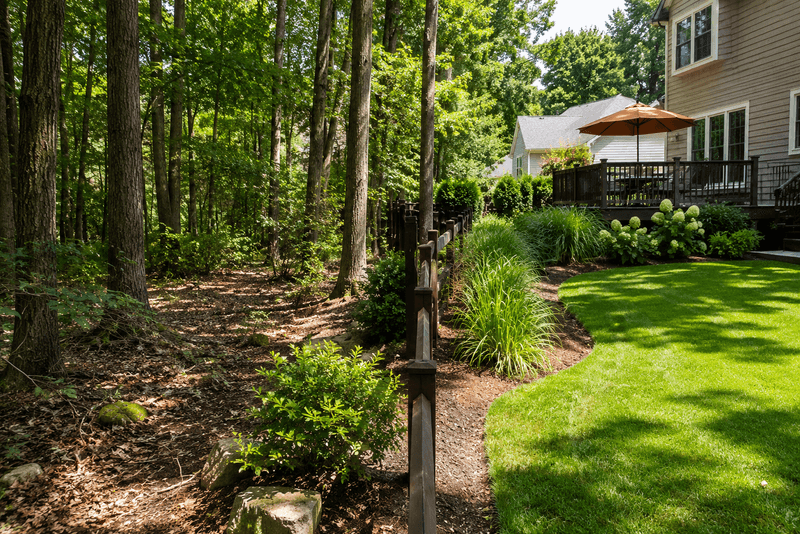
After reading about the laboratory research, a reasonable question follows: if beautyberry compounds repelled ticks in a controlled test, does a row of beautyberry shrubs do the same thing in a yard? Based on what the research actually tested, the honest answer is that nobody knows yet.
The published study worked with isolated compounds placed on treated cloth, not with intact plants growing in soil. The researchers did not plant a beautyberry hedge and then count ticks on either side of it. They did not measure whether living leaves release repellent compounds in concentrations high enough to affect tick behavior at normal garden distances. They did not test whether a shrub row reduces yard-level tick abundance, slows tick movement from wooded habitat into mowed lawn, or changes the risk of tick-borne disease for the people using that yard.
Those are different questions, and none of them have a reviewed answer yet.
That distinction matters practically. A homeowner who plants beautyberry expecting it to function as a protective border may skip or reduce other prevention steps that actually have strong evidence behind them. CDC guidance on tick bite prevention does not include planting any specific shrub as a tick-control measure. The recommended landscape steps involve physical separation, habitat management, and maintenance routines, covered in a later section of this guide.
None of this makes beautyberry a poor choice for the wooded edge. It is a native shrub with genuine wildlife value, a striking late-summer berry display, and leaf chemistry that researchers found worth investigating further. Those are real reasons to plant it. They just do not add up to a proven tick barrier, and treating them as one would leave a yard less protected than it should be.
Create Separation Between Lawn and Wooded Habitat
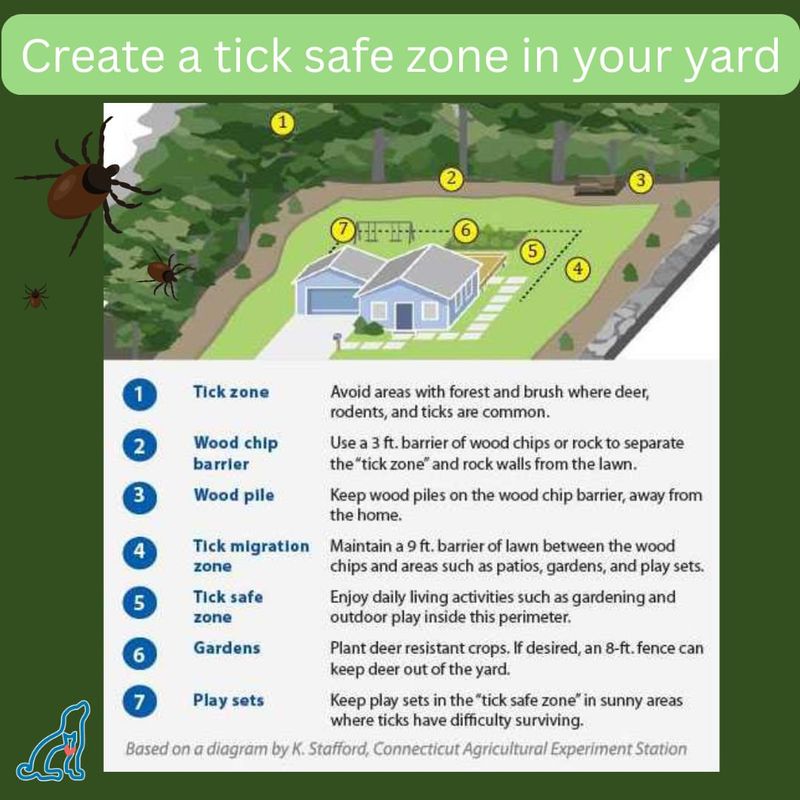
Where beautyberry goes in the yard matters as much as whether it goes in at all. Planting it thoughtfully means thinking about tick exposure from the start, not as an afterthought once the shrub is already in the ground.
Ticks are most active in the transition zone between mowed lawn and unmaintained wooded or brushy areas. That edge is exactly where beautyberry thrives, which means placement needs a little planning. A dense, unmanaged planting directly beside a patio, play structure, or frequently used lawn increases the time people and pets spend brushing against vegetation in a tick-active zone. Beautyberry’s arching habit also means branches spread outward and can overlap foot-traffic areas if the shrub is placed too close to paths or seating.
CDC tick prevention guidance recommends placing a 3-foot-wide strip of wood chips or gravel between the lawn and any wooded or brushy area. That strip creates a physical separation that ticks are less likely to cross, since they generally move through vegetation rather than across open, dry ground. Beautyberry should sit on the wooded side of that strip, not in the lawn zone or straddling the boundary.
Habitat maintenance around the planting matters too. University of Maine Cooperative Extension tick management guidance identifies removing leaf litter, clearing brush, and keeping grass mowed as the primary landscape-level steps for reducing tick habitat near the home. Piles of leaves or debris near a beautyberry planting create exactly the moist, shaded cover that ticks prefer.
Give each shrub enough room for its natural spread, as noted in the NC State beautyberry profile, so that maintenance access stays easy and the planting does not become a dense tangle over time. These are exposure-management steps, not tick elimination, but they make a measurable difference in how much tick habitat exists immediately around the home.
Prune in Late Winter for Flowers and Berries
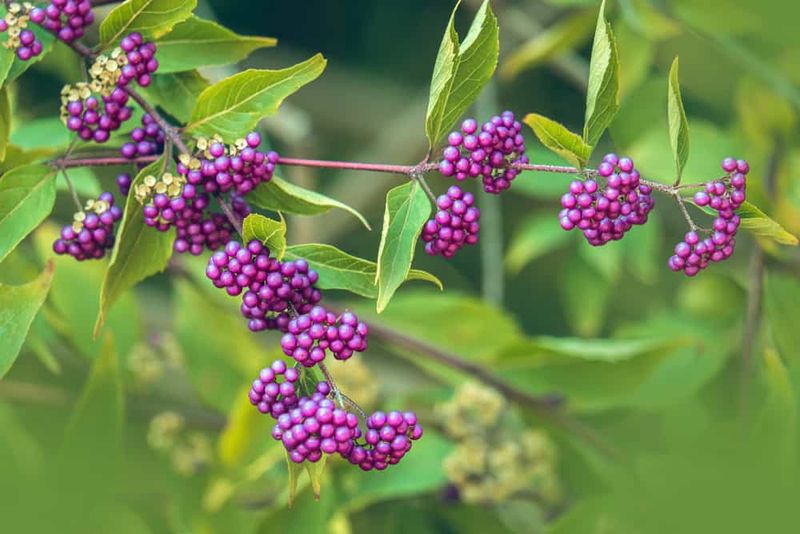
Beautyberry rewards a simple, well-timed maintenance routine. The key fact that shapes the whole approach: this shrub flowers and fruits on new growth produced in the current season. Old wood from the previous year does not carry the season’s berries. That biology points directly to when and how to prune.
Late winter, before new growth begins, is the right window. NC State Extension recommends cutting beautyberry back hard at that point, potentially to about 1 foot above the ground when renewal is needed. The new shoots that emerge from those low cuts will carry the summer flowers and the August-through-October berry display. Skipping the late-winter prune for a few years typically produces a taller, woodier shrub with fewer berries and a less tidy habit.
Fall pruning is the timing mistake to avoid. Removing branches in autumn takes away berries that are still on the shrub and available to birds and small mammals heading into the colder months. Waiting until late winter preserves that wildlife food source through the season and then removes the old growth before the new season’s flush begins. NC State Extension’s general pruning guidance supports this approach for shrubs that bloom on new wood.
Beyond pruning, beautyberry’s documented tolerances mean it does not demand intensive care once established. It handles the light and soil conditions found across NC wooded edges without supplemental fertilizer in most situations, and established plants manage short dry spells reasonably well. That said, “low-maintenance” does not mean “no maintenance.” The shrub benefits from occasional inspection for crossing branches, enough clearance from neighboring plants to maintain its natural form, and the consistent late-winter prune that keeps berries coming year after year.
Continue Personal Tick Protection After Planting
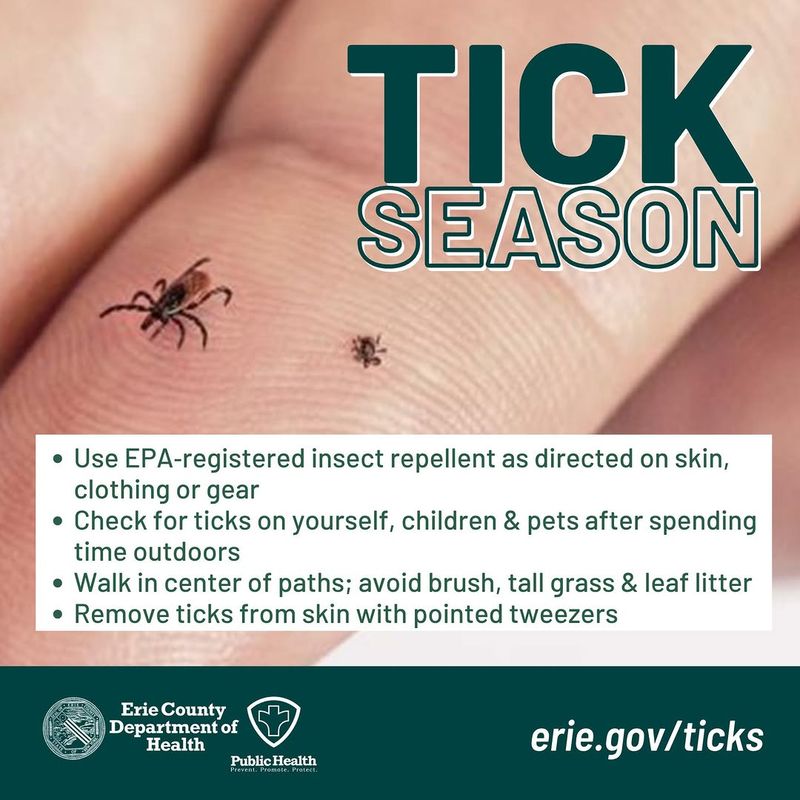
Adding a native shrub to the yard is a landscaping decision, not a health intervention. Beautyberry does not change the need for personal tick protection, and treating it as though it does would leave real gaps in a household’s prevention routine.
North Carolina homeowners encounter ticks while gardening, playing in the yard, or walking near wooded areas on their own property. The North Carolina Division of Public Health tick-borne illness page documents several illnesses present in the state, including ehrlichiosis, Lyme disease, Rocky Mountain spotted fever and related spotted-fever illnesses, and STARI. These are real risks in NC yards, not abstract concerns, and they are why layered prevention matters even after thoughtful landscaping work is done.
CDC tick-bite prevention guidance recommends using EPA-registered repellents as directed on the label. Products containing DEET, picaridin, IR3535, or oil of lemon eucalyptus are among the options with established safety and efficacy records. Wearing long sleeves and pants, tucking pants into socks, and treating clothing with permethrin adds another layer when spending extended time near wooded edges.
After coming indoors, checking the entire body for ticks, paying close attention to the scalp, behind the ears, under the arms, around the waistband, and behind the knees, is one of the most effective steps available. Showering within two hours of outdoor exposure can help remove unattached ticks. CDC guidance on Lyme disease prevention notes that prompt tick removal, within 24 to 36 hours of attachment, significantly reduces the risk of disease transmission.
One point to address directly: crushing beautyberry leaves and applying them to skin as a homemade repellent is not a safe or recommended practice. The laboratory research tested purified compounds under controlled conditions, not raw leaf material applied to people or pets. EPA-registered repellents have been evaluated for safety and effectiveness in ways that homemade preparations have not.
Plant Beautyberry for What It Can Reliably Do
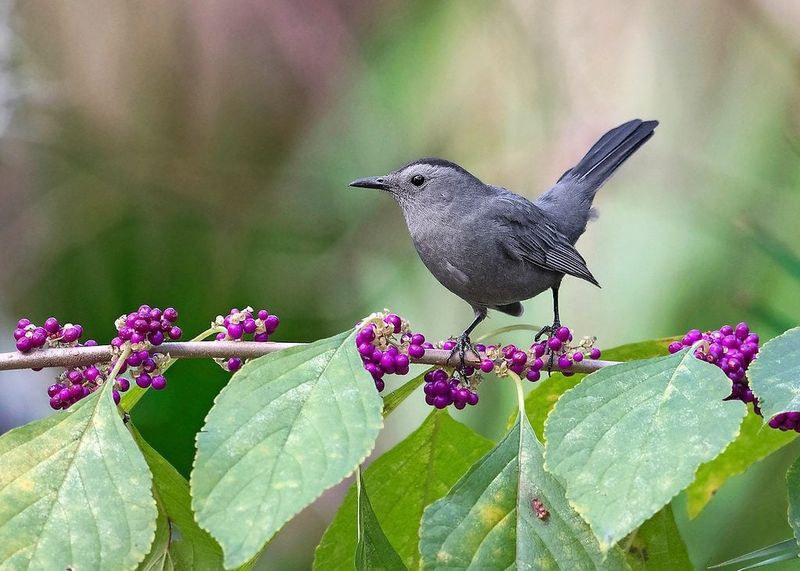
American beautyberry earns a place in a North Carolina yard on the strength of what it actually delivers: late-summer berry color from August through October, reliable food for songbirds and small mammals, support for pollinators during its June and July bloom, and genuine adaptability across the Coastal Plain, Piedmont, and Mountain regions. For an informal wooded-edge planting, those are solid, practical reasons to choose a native over a non-native alternative.
The tick-related research adds an interesting layer to the plant’s story, but it stays in the laboratory for now. The published compound study showed real repellency against blacklegged-tick nymphs under controlled conditions, and that finding is worth knowing. What it does not establish is a protective border around a home yard, and CDC tick prevention guidance remains the right standard for keeping a household safe.
The combined action plan is straightforward. Site beautyberry on the wooded side of a 3-foot wood-chip or gravel separation strip, give it enough room for its arching spread, and prune it back in late winter to keep the berry production strong. Clear leaf litter and brush from the surrounding area, keep grass mowed, and continue using EPA-registered repellents, checking for ticks after outdoor time, and removing any attached ticks promptly. NC State Extension’s beautyberry profile gives everything needed to get the plant established and maintained well.
A native shrub that feeds birds, supports pollinators, and lights up a dull August landscape is already doing a lot. Pair it with sound prevention habits and it becomes part of a yard that works for both the family and the wildlife sharing it.