
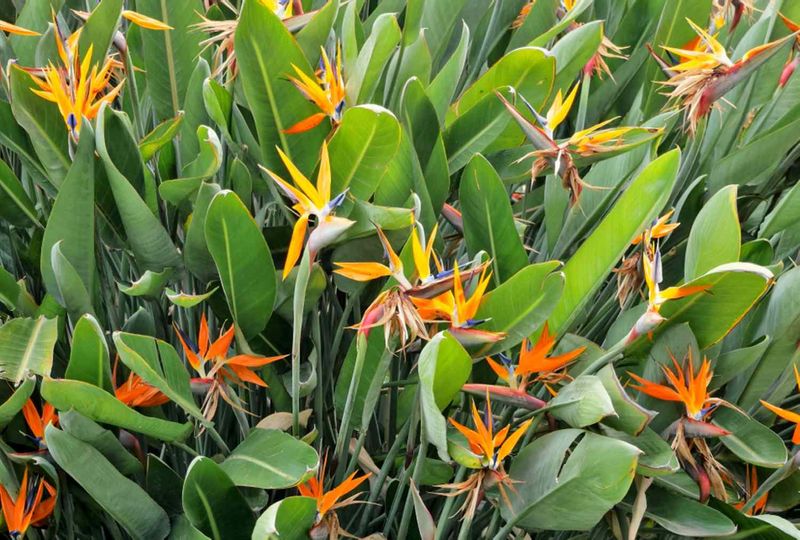
That big clump of paddle-shaped leaves looks a little rough by October, and the loppers are calling your name. Hold off for a minute.
UF/IFAS guidance points to a gentler fall routine than a whole-plant chop. Here is what to do instead, and how it changes depending on your species and where you garden in Florida.
Identify your bird of paradise before choosing a care plan
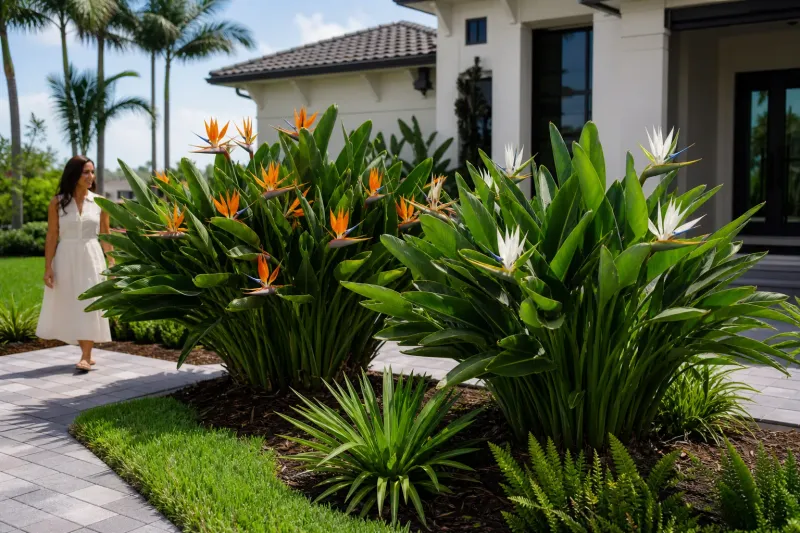
Walk out to the yard and look closely, because “bird of paradise” is not one single plant. Two Strelitzia species show up in Florida landscapes, and they do not play by the same rules.
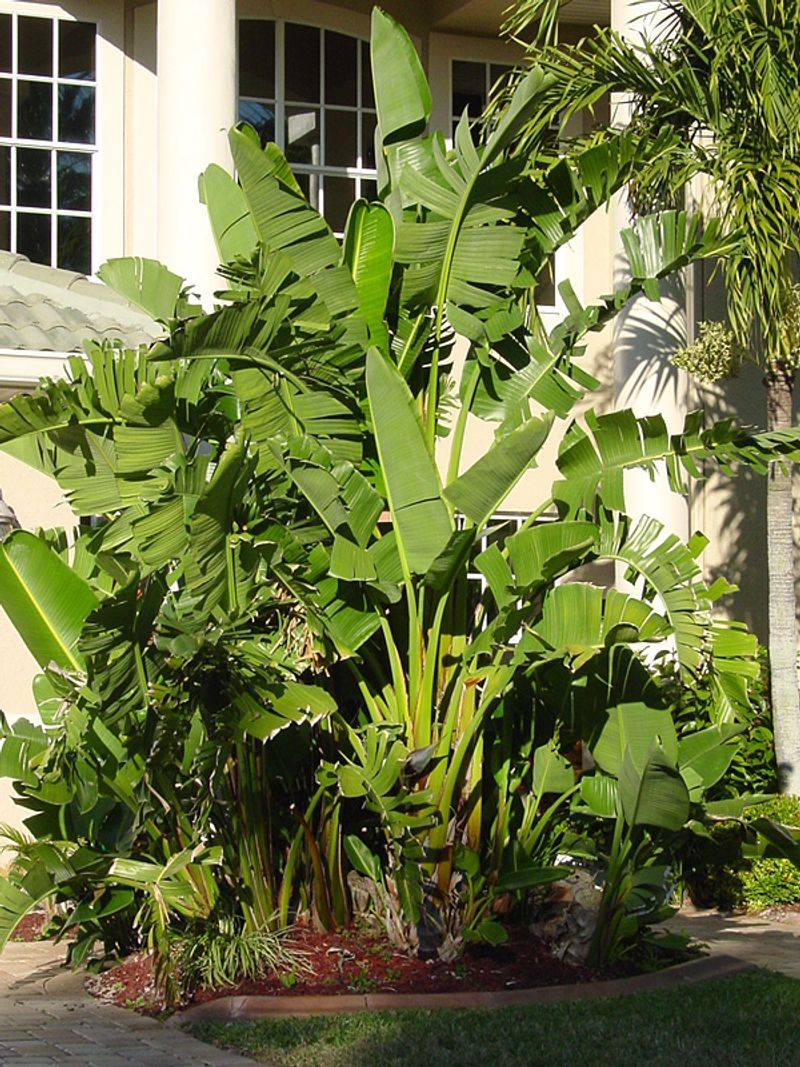
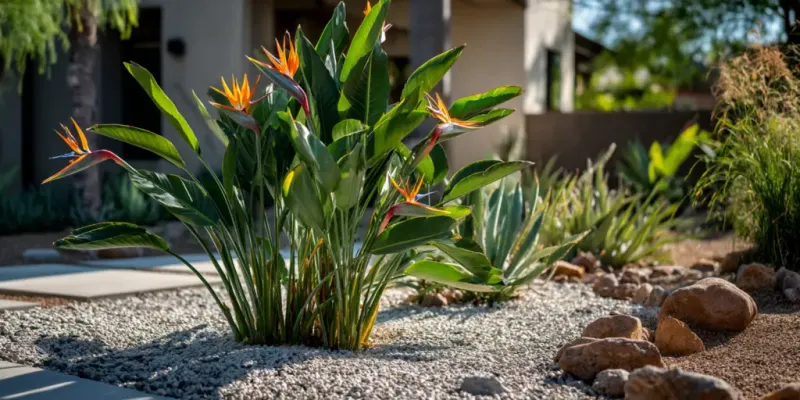
The orange bird of paradise, Strelitzia reginae, stays fairly compact, with blue-green, paddle-shaped leaves and orange and blue flowers that look like a bird’s head. The giant or white bird of paradise, Strelitzia nicolai, grows much larger, with a trunk-like, banana-style form and white and blue-black blooms.
UF/IFAS’s bird-of-paradise care sheet centers on S. reginae and separates it from S. nicolai.
That difference matters for this article. The feeding schedule and the short-duration cold tolerance described below are stated for S. reginae.
If you have the giant white type, treat those numbers as a starting point to check, not a rule that fits your plant.
A quick test: if your plant is about waist to chest high and has orange flowers, it is probably S. reginae. If it towers over a porch roof and looks like a small banana tree, you likely have S. nicolai.
Not sure? Snap a photo and take it to your county UF/IFAS Extension office.
Limit fall cleanup to dead leaves and old flower stalks
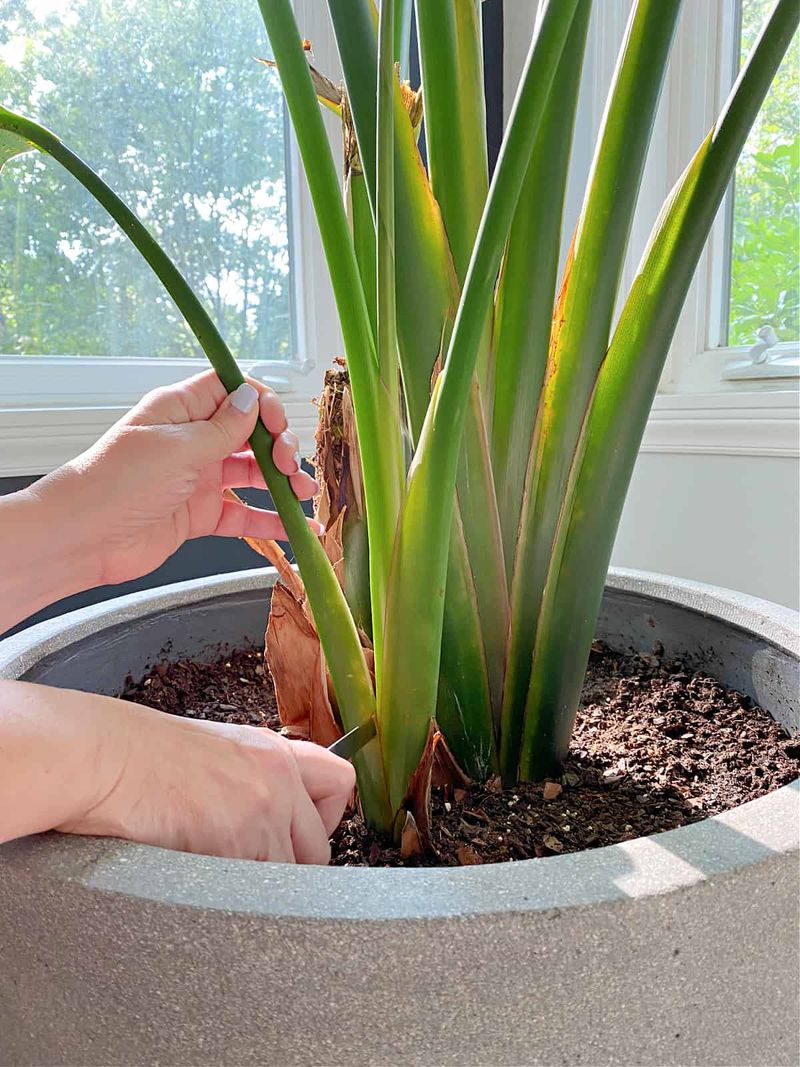
Routine cleanup is a small job, not a major haircut. UF/IFAS says to remove dead leaves and old flower stalks from bird of paradise, and it frames that mainly as keeping the plant tidy.
Look for leaves that are fully brown, dry, or collapsed, plus flower stalks that have finished and faded. Cut each one off near the base with clean, sharp shears.
Leave the green, healthy foliage alone, since those leaves are still feeding the plant.
Nothing in the UF/IFAS care sheet or the Gardening Solutions bird of paradise page calls for shearing the whole plant back in fall to get more flowers. A hard cutback is not a proven way to boost next year’s blooms, so there is no payoff for taking off healthy growth.
A practical habit helps here. Wipe your blades with rubbing alcohol between clumps, and pull out the cut material so it does not sit and rot at the base.
If a leaf is only tattered or has a brown tip, you can trim just the brown edge or leave it be.
Keep this cleanup separate from anything that happens after a freeze. Cold-damaged foliage is a different situation, and it gets its own plan later in this article.
Base fertilizer decisions on growth and local rules
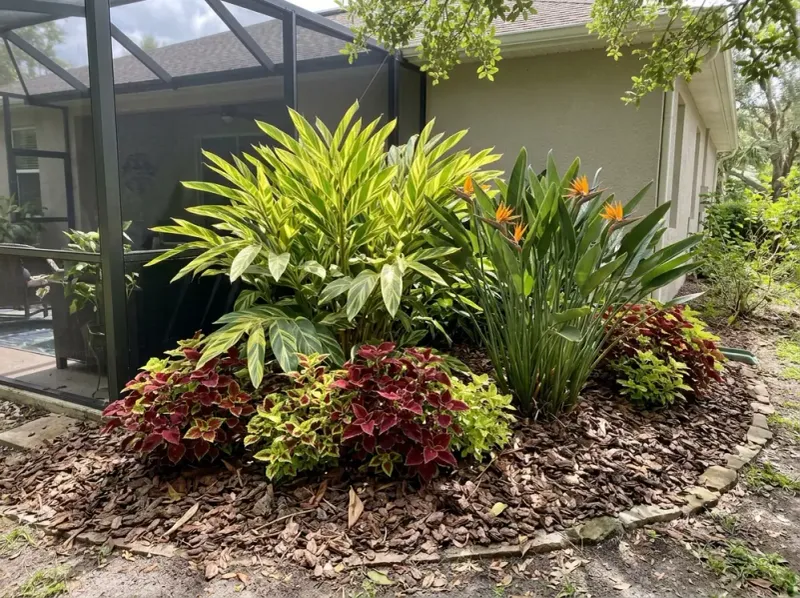
Feeding is where a calendar can mislead you. For S. reginae, UF/IFAS recommends fertilizing about every three months during the growing season, following the product label, as noted in its bird-of-paradise guide.
That is not the same as “feed every plant in fall.” Ask yourself a few things first. Is the plant pushing out new leaves?
Does it look healthy, or is it stressed? Has cool weather slowed everything down?
A plant that is not actively growing may not need a meal right now.
Florida’s sandy soil drains fast, so nutrients can wash through, which is one reason UF/IFAS talks about steady, label-guided feeding. Its nitrogen in the home landscape publication also stresses fertilizing when plants need nutrients and following directions so you do not waste product or harm waterways.
Local rules matter too. Many Florida cities and counties have fertilizer ordinances that limit when and how you can apply landscape fertilizer, and some include summer restrictions.
Use the UF/IFAS Florida Fertilizer Ordinances tool to check your area before you open a bag.
Read the label for rate and spacing, keep granules off the stems, and water in as directed. If the rules or the plant say wait, waiting is fine.
Match cold preparation to your part of Florida
A freeze warning in Tallahassee and one in Miami are very different events, so cold prep should follow your local risk. UF/IFAS says S. reginae can tolerate temperatures as low as 24°F for a short time.
That figure is for S. reginae, and it assumes a brief dip, not a long hard freeze.
Even when the plant survives, freezing temperatures can damage flowers and developing flower buds, according to UF/IFAS. North Florida plants may need cold protection, and in North and Central Florida, container plants can be moved indoors when a freeze is imminent.
In frost-free pockets of South Florida, you may never need to act.
For in-ground plants, UF/IFAS recommends a 2 to 3 inch layer of mulch to hold moisture and moderate soil temperature. Pull the mulch back so there is a 2 to 3 inch clear space around the stems, which reduces the risk of stem rot.
The Gardening Solutions page backs up the point that cold protection depends on location.
For general freeze tactics, such as covering plants before nightfall, see UF/IFAS cold protection guidance. Watch your own forecast rather than a calendar date.
If you have the giant white type, do not assume the 24°F figure applies. Protect it based on your own site and local forecast.
After a freeze, wait before pruning or fertilizing
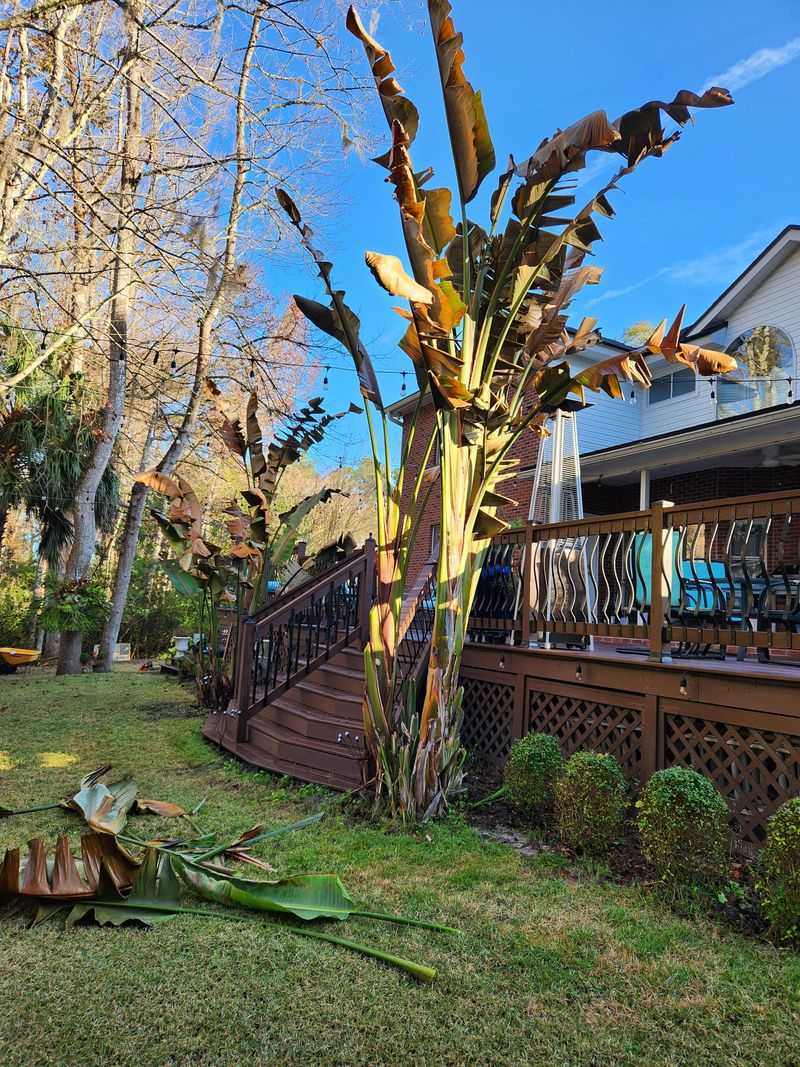
The morning after a freeze, the plant may look awful. Resist the urge to grab the shears.
UF/IFAS advice on treating cold-damaged plants is to wait and assess the damage before pruning or fertilizing.
There are two practical reasons. Damaged foliage can help insulate the plant from the next cold snap, and early fertilizer can push out tender new growth that the next freeze may hit.
Give it time to show you what is alive and what is not.
Here is the specific warning to remember. UF/IFAS notes in a piece on pruning cold-damaged plants that cutting a freeze-damaged bird of paradise to the ground may leave it without flowers the following spring or summer, and it can take 12 to 15 months to flower again.
That caution is about cutting a freeze-damaged plant to the ground. It is not a ban on all pruning.
Removing a dead leaf or a spent stalk on a healthy plant is still ordinary cleanup.
Once the weather settles and new growth appears, you can see which leaves are truly dead and remove those. Check a few weeks later, then decide on feeding using the growth and local rules from earlier.
Protect the plant without promising next year’s blooms
Your fall order of operations is simple. Identify the species, clear dead leaves and old stalks, feed only when growth and local rules allow, protect against your local cold risk, and pause after a freeze.
These steps support sound care, but they cannot guarantee flowers. UF/IFAS says plants in Florida do flower, and its Strelitzia reginae fact sheet notes cold can affect blooms, alongside plant maturity and growing conditions.
Good care keeps the plant ready; the weather and the plant’s age decide the rest.