
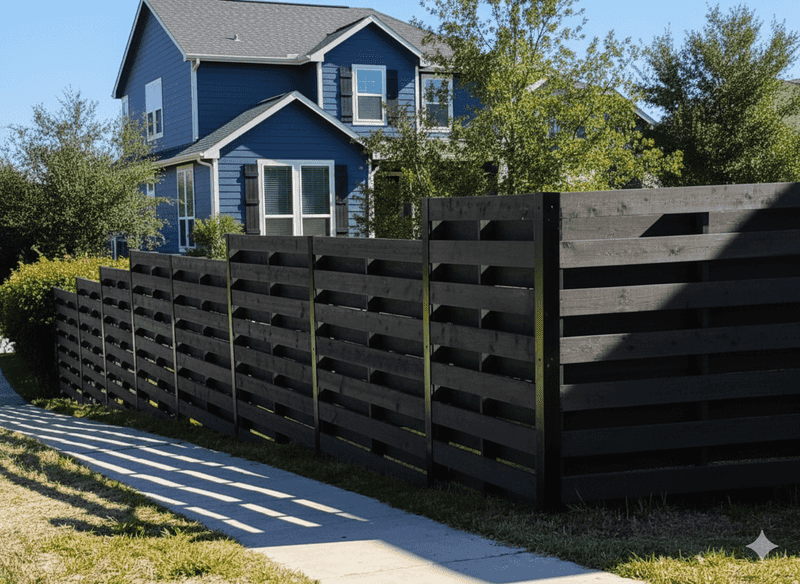
A headline making the rounds says California has banned wood panel fences, and homeowners across the state are understandably alarmed. The real story is narrower, more specific, and still unfinished. California’s Board of Forestry is developing new rules that would restrict certain combustible fencing close to homes in defined wildfire-risk areas, and as of July 24, 2026, those rules are still a draft. Knowing what the proposal actually targets, and what it leaves alone, can help you figure out whether your fence is affected and what, if anything, you need to do next.
The proposed rule is narrower than the headline
Headlines have a way of outrunning the facts, and this one is a clear example. California has not banned wood panel fences. What the state is developing is a targeted set of restrictions on combustible fencing in specific locations, close to homes, in defined wildfire-risk zones, and as of July 24, 2026, those restrictions are still being drafted.
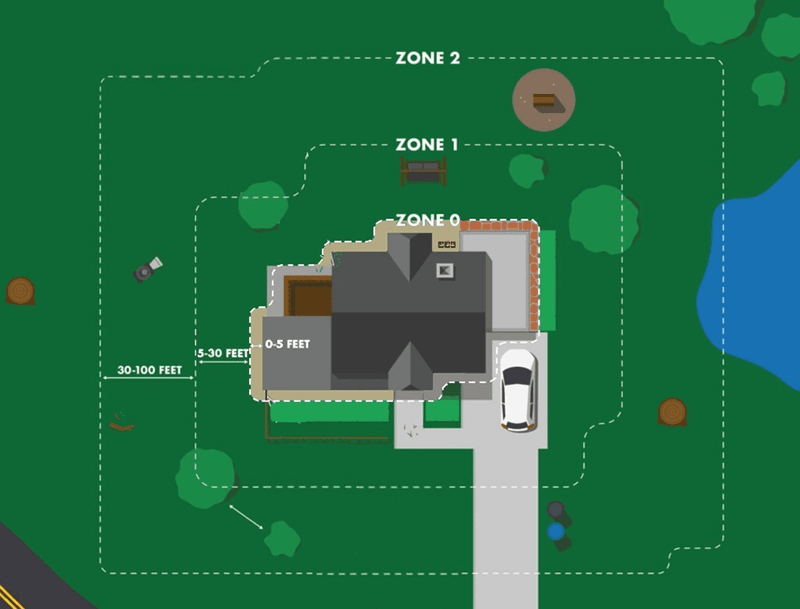
The July 2026 Board of Forestry material is described by the state itself as a draft or rule plead, not a finalized statewide regulation. According to the California Board of Forestry and Fire Protection’s defensible space program, the developing framework is called Zone 0, and it focuses on the first 5 feet around a structure. The proposal would not make every wood fence in California illegal overnight.
The distinction that matters most in the draft is where the fence sits and how it connects to the building. A fence that physically attaches to your house or to a deck connected to your house is treated very differently from a freestanding fence running along your back property line. The draft’s concern is the fence-to-house connection and any new combustible fence section built within that 5-foot perimeter.
According to the July 2026 draft Zone 0 summary and rule plead, the proposal would require a noncombustible section where a fence attaches to a home and would prohibit new combustible fence sections within 5 feet of a structure or attached deck. A wood fence running across your yard, well away from any structure, is not the target of this proposal.
The geographic scope is also limited. The rule is not intended to reach every California backyard. Understanding who the proposal actually covers is the essential first step before making any decision about your fence.
Zone 0 focuses on the first five feet
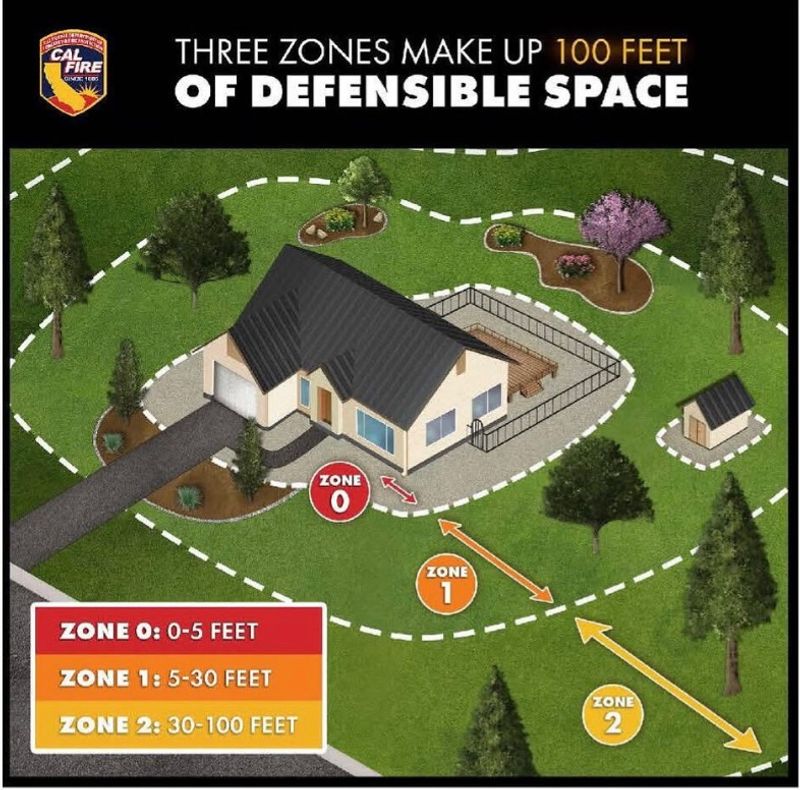
Picture a ring drawn 5 feet out from every exterior wall, every attached deck, every set of stairs connected to the house, and every pergola bolted to the structure. That ring is Zone 0, and it is the center of California’s developing wildfire-safety framework for the area immediately surrounding a home.
The reasoning behind the 5-foot perimeter comes down to how wildfires reach houses. During a fire, strong winds carry glowing embers far ahead of the flame front. Those embers land on roofs, in gutters, against fences, and in mulch beds. When combustible materials sit within a few feet of a home, a small ember ignition can grow into a fire that reaches the structure within minutes.
CAL FIRE’s defensible space guidance identifies this ember exposure as one of the primary ways homes are lost in wildfires, making the area immediately around a structure especially critical.
Zone 0 is not a brand-new concept invented in 2026. California law has required defensible space in specified wildfire-risk areas for years, generally extending to 100 feet from a structure, with more intensive fuel reduction in the zone between 5 and 30 feet. SB 504 directed the Board of Forestry to establish more specific requirements for the 0-to-5-foot area, and the developing Zone 0 rule is the result of that legislative direction.
The July 2026 draft addresses what is allowed and prohibited within that 5-foot ring. Attached decks, stairs, and pergolas are treated as part of the structure for Zone 0 purposes, which means fencing that meets any of those elements also falls under the proposal’s reach. According to the July 2026 draft summary, the goal is to reduce the chance that windblown embers ignite nearby materials and carry fire to the building, not to eliminate every natural or wood element from the yard.
For fences specifically, the implication is straightforward: a wood fence that runs into the Zone 0 perimeter, especially at the point where it meets the house wall, becomes a potential ember-to-structure pathway. That is the problem the draft is designed to interrupt.
The rules depend on where the property sits
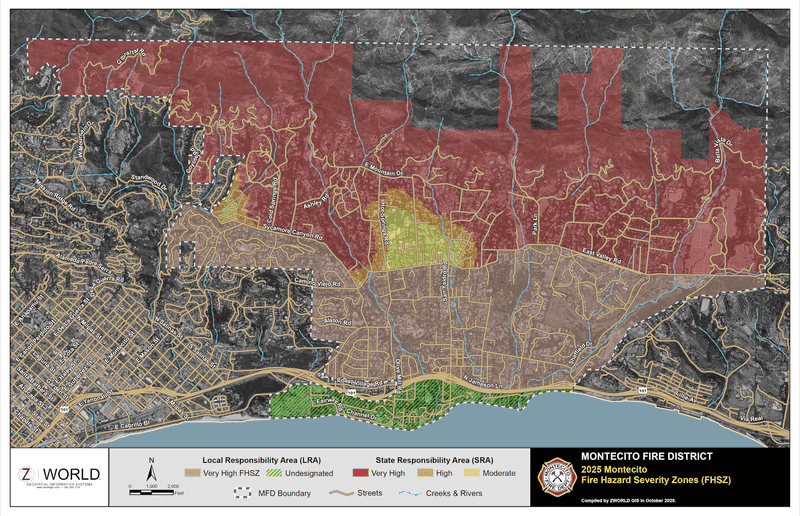
Not every California backyard falls under the developing Zone 0 framework. The proposed state rules apply in two defined geographic categories: State Responsibility Areas, where CAL FIRE has primary responsibility for wildfire prevention and suppression, and Very High Fire Hazard Severity Zones within Local Responsibility Areas, where a city or county fire department is the primary agency but the hazard level has been formally designated as very high.
If your property sits outside both of those categories, the state’s Zone 0 fence provisions, as currently drafted, would not apply to you under the state framework. However, that does not mean you are automatically clear. Local jurisdictions can adopt requirements that are stricter than the state baseline, and many California cities and counties already have their own fire-safety codes that address fencing, vegetation, and combustible materials near structures. According to the Board of Forestry’s defensible space program, local agencies may also develop alternative practices under the draft, as long as those practices deliver substantially similar fire-safety results.
Checking your property’s hazard designation is the first step in this process. The OSFM Fire Hazard Severity Zone map allows homeowners to look up their address and see whether their parcel falls within a designated zone. Keep in mind that zone maps are updated periodically, so a designation that was accurate a few years ago may have changed.
After confirming the hazard category, the next step is contacting your city or county fire department directly. Ask whether your jurisdiction has locally adopted Zone 0 requirements, whether those requirements differ from the state draft, and whether any alternative compliance practice is available for your specific situation. The July 2026 draft explicitly anticipates local variation, which means the answer for a homeowner in one county may look different from the answer for a neighbor across the county line. Skipping this verification step and acting only on the state-level summary could lead to unnecessary work or, worse, changes that still don’t meet your local requirement.
The fence-to-house connection matters most
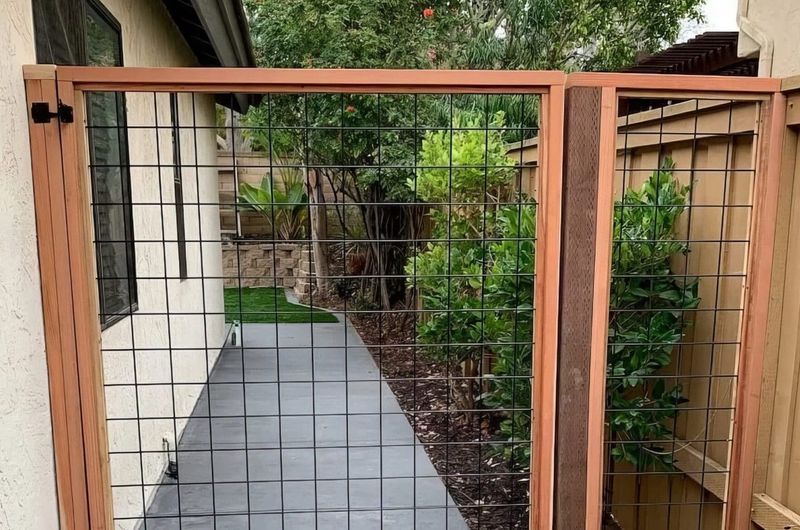
Two fences can look identical from the street and carry very different wildfire risk. The difference often comes down to one thing: whether the fence physically touches the house. A fence that runs into the side of a home, or meets a deck bolted to the house, creates a continuous combustible path from the yard directly to the structure. A fence that stops several feet short of the building leaves a gap that embers must cross before reaching the house itself.
CAL FIRE’s home hardening guidance identifies this attachment point as a specific concern because a burning fence can provide a direct fire pathway to the residence. NIST research on fence fire behavior reinforces this concern: NIST experiments found that burning wood privacy fences can rapidly spread fire and generate embers, with wind speed and angle significantly affecting how quickly fire travels along a fence line toward a structure.
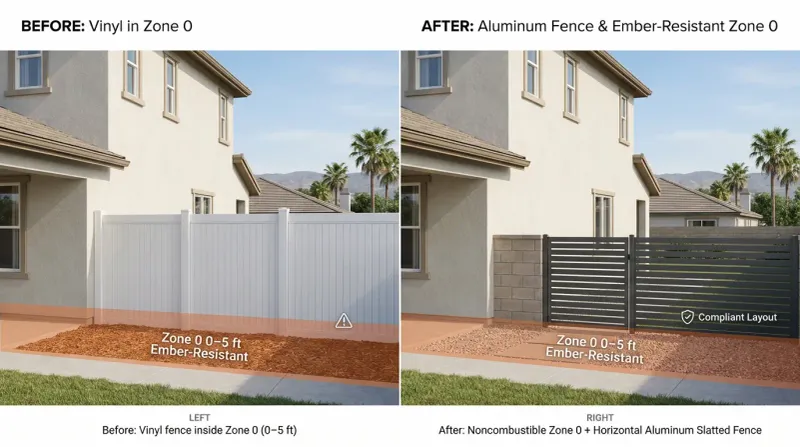
The July 2026 draft addresses this directly. According to the draft Zone 0 summary, the proposal would require a noncombustible section at the point where a fence attaches to a home, and it would prohibit new combustible fence or gate sections within 5 feet of any structure, including an attached deck. This is a structural rule about connection points, not a blanket prohibition on wood anywhere on the property.
Risk at the attachment point also depends on surrounding conditions. Mulch piled against the fence base, dead leaves accumulated in fence corners, nearby low-hanging vegetation, and gaps or vents in the home’s exterior all affect how quickly an ember ignition can escalate. A noncombustible fence section at the house connection reduces one specific pathway, but the overall exposure depends on the full picture: fence construction, debris management, wind patterns, and what the home’s exterior walls, windows, and eaves are made of. UC Agriculture and Natural Resources describes the last 5 feet of an attached fence as the highest-priority segment for material improvement, precisely because that segment sits closest to the structure’s most vulnerable surfaces.
Understanding the connection point is not just about meeting a rule. It is about recognizing where the actual risk concentrates and addressing it thoughtfully rather than reactively.
New fences, repairs, and existing homes follow different paths
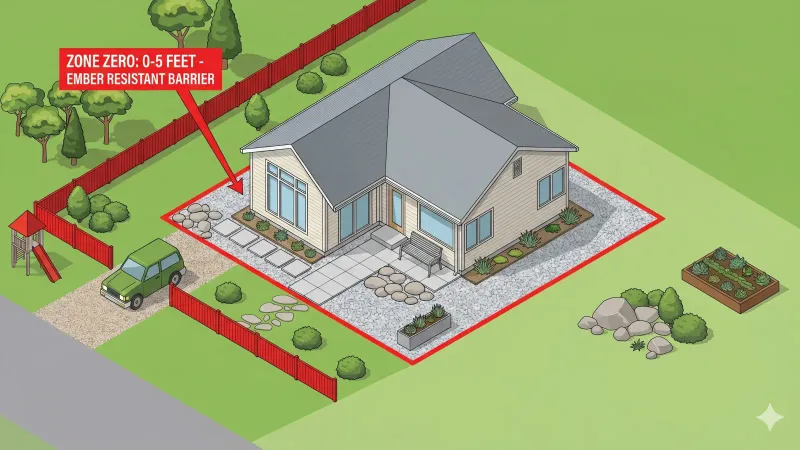
One of the most common misreadings of the developing Zone 0 framework is treating it as a single rule that applies the same way to every fence situation. The July 2026 draft actually draws clear distinctions between three different scenarios: building a new fence, repairing an existing one, and adjusting an older fence that was already in place before the rule takes effect.
For new construction, the draft’s position is the most straightforward. No new combustible fence or gate section would be permitted within 5 feet of a structure, including an attached deck. If you are planning to build a fence that will run up to the house or to a connected deck, the draft would require that the section entering Zone 0 be noncombustible from the start. This applies to new projects, not to fences already standing.
Existing fences get more flexibility under the draft’s proposed phased approach. According to the July 2026 draft Zone 0 summary and rule plead, the proposal organizes compliance into two phases. Phase 1 would address easier-to-change items, including wood chip mulch, firewood stored against the house, dead leaves, clogged gutters, and dead vegetation, within approximately three years of the rule’s effective date. Phase 2, which would address more substantial changes such as combustible gates, under-eave conditions, sheds, and necessary fencing adjustments, would allow up to five years, with the exact timeline determined in part by the local jurisdiction.
Existing fence repairs are explicitly permitted under the draft. A homeowner whose wood fence needs a few boards replaced would not be forced to convert the entire fence to noncombustible material simply because a repair is needed. That said, every timeline and threshold in this description is provisional. The draft is not yet a finalized regulation, and the details could shift before the rule is adopted.
Treating any of these timelines as a firm legal deadline before the rule is finalized would be premature.
The practical takeaway: if you are planning a brand-new fence project near your house today and your property is in a covered zone, the noncombustible-section requirement is already the direction the state is heading. If you have an existing fence, the draft proposes time to adjust, not an immediate removal order.
Check the property and local code before changing the fence
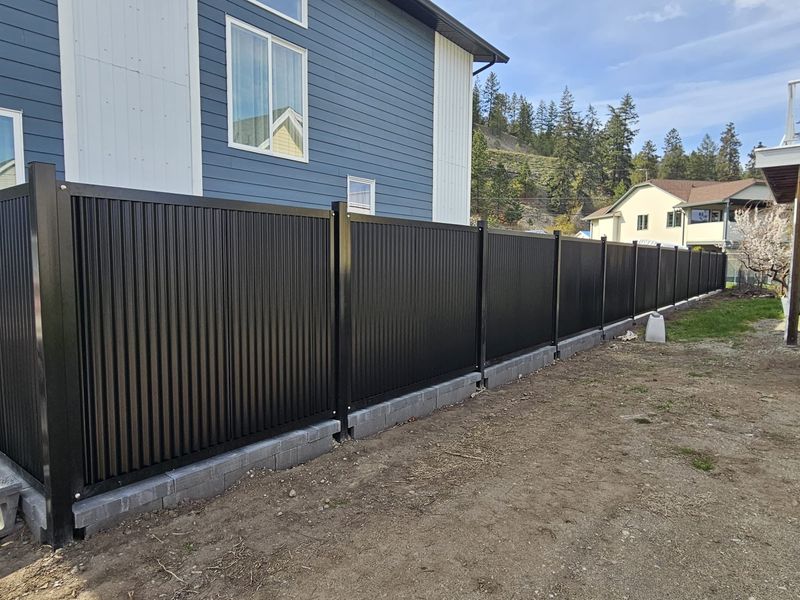
Before pulling out a single fence post or ordering metal panels, there is a sequence of questions worth working through carefully. Skipping steps in this process can lead to unnecessary expense, code violations, or changes that still fail to meet the locally applicable requirement.
Start with the hazard designation. Use the OSFM Fire Hazard Severity Zone lookup to confirm whether your parcel is in a State Responsibility Area or a Very High Fire Hazard Severity Zone in a Local Responsibility Area. If your property is not in either category, the state’s developing Zone 0 fence provisions may not apply to you under the state framework, though your local jurisdiction may have its own rules.
Next, look at your fence’s physical relationship to the house. Does the fence physically touch the home’s exterior wall, an attached deck, or any structure connected to the house? A fence that meets the building is the primary concern in the draft. A freestanding fence running along the back of a large lot, with clear space between it and the structure, is a different situation entirely.
Then contact your local fire department or building department before making material decisions. Ask what is currently required in your jurisdiction, whether the state’s developing Zone 0 draft has been locally adopted in any form, and what materials and dimensions are approved for your specific configuration. UC ANR’s fence guidance recommends treating the last 5 feet of an attached fence as the highest-priority segment, suggesting a noncombustible section such as a metal gate as a practical approach. Separately, CAL FIRE recommends replacing combustible fencing or gates attached to a residence with noncombustible material for the first 8 feet.
These two recommendations describe the same general concept from different angles, but neither one, by itself, establishes the exact legal dimensions required on your property. Your local authority has the final word on that.
Beyond fire code, the checklist for any fence change should also include property lines and easements, HOA rules and approval requirements, local height limits, permit requirements for structural changes, gate placement and fire-access rules, and any deed restrictions. The July 2026 draft anticipates that local jurisdictions will play a role in setting the precise requirements, which means the answer for your address may differ from a neighbor two blocks away in a different fire zone or jurisdiction.
Material swaps do not eliminate wildfire risk
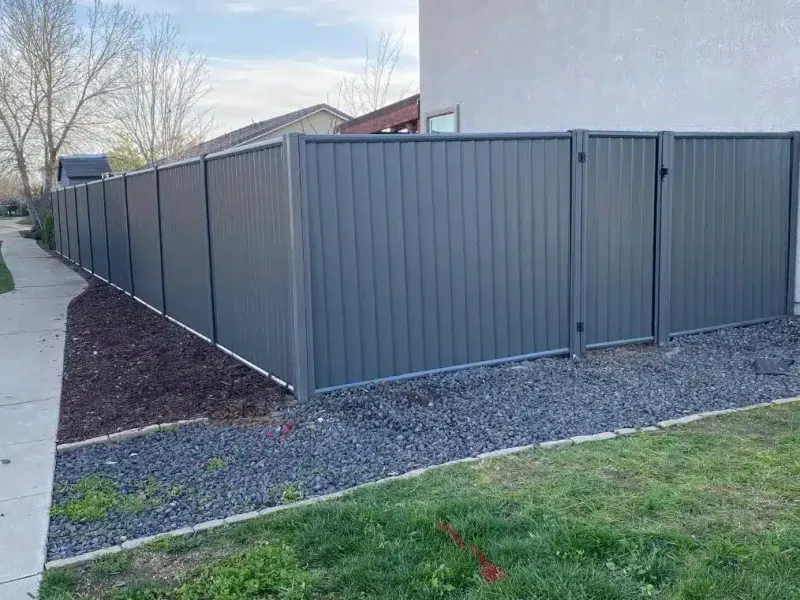
Swapping fence materials is a meaningful step, but treating it as a complete solution can produce a false sense of security. A few common shortcuts deserve a closer look before homeowners make decisions based on them.
Vinyl fencing comes up often as an alternative to wood in fire-risk areas. CAL FIRE notes that vinyl fencing is less vulnerable to ember ignition than some combustible fences, but it can ignite under direct flame exposure and deform under radiant heat. Calling vinyl fireproof is not accurate, and installing vinyl does not automatically satisfy a noncombustible-material requirement. Confirm with your local authority whether a specific material qualifies before purchasing it.
Another shortcut that can backfire is simply moving a fence a few feet away from the house and assuming the problem is solved. The Zone 0 draft addresses both fences that attach to homes and new combustible sections within the 5-foot perimeter. Moving a fence slightly may not clear every requirement, and factors such as an attached deck, low eaves, nearby windows, gate placement, and fire-access obligations may change the answer for your specific layout. According to UC ANR’s fence guidance, fences are not included in California’s Chapter 7A building standards.
The fence restrictions at issue come from defensible-space rules, local ordinances, and the developing Zone 0 regulations, not from a general Chapter 7A prohibition on wood fences. Conflating these two frameworks could lead to confusion about what is actually required.
NIST research on fence fire behavior shows that outcomes depend heavily on wind speed and direction, debris at the fence base, fence construction details, and nearby exposures. A noncombustible fence section at the house connection removes one specific ignition pathway. It does not address mulch piled against the foundation, dead leaves in fence corners, combustible eaves, unscreened vents, or wood decking. Each of those factors contributes independently to ember exposure.
Addressing the fence connection while leaving the other combustible materials in place reduces risk in one area while leaving others open.
Wildfire mitigation works as a system. A noncombustible fence section, combined with debris clearance, vegetation management, and home hardening, reduces overall exposure. No single change, including a material swap, can guarantee that a home will survive a wildfire.
Verify the zone, the connection, and the current local rule
The developing policy targets combustible fencing near structures in defined wildfire-risk areas. It does not target every wood fence in California, and as of July 24, 2026, the July Board of Forestry language remains a draft, not a finalized statewide mandate.
Three questions can help you figure out where you stand. First, is your property in a State Responsibility Area or a Very High Fire Hazard Severity Zone in a Local Responsibility Area? Use the OSFM hazard zone lookup to check. Second, does your fence physically attach to your home or to a connected structure within the first 5 feet?
That connection point is where the draft’s requirements concentrate. Third, what does your local fire authority currently require? The Board of Forestry’s defensible space program and the July 2026 draft both anticipate local variation, so the locally enforced rule is the one that matters for your fence today.
Do not remove or replace a fence based only on a headline. Confirm your zone, examine the connection, check with your local authority, and then decide. A fence built thoughtfully for your specific situation does more good than one changed in a hurry based on incomplete information.