
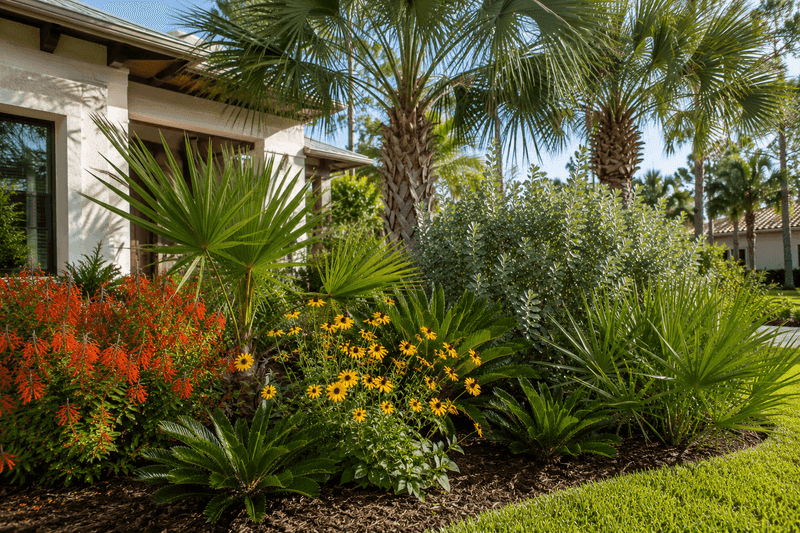
In most cases, a Florida HOA cannot ban Florida-friendly landscaping on your own land, and state law says so in plain words. That rule can matter a lot if a violation letter lands in your mailbox after you planted a yard full of natives.
But the law has limits, and a garden does not qualify just because the plants grew here first. Knowing where the line sits can help you answer that letter calmly and with proof.
Florida law protects qualifying landscaping on an owner’s land
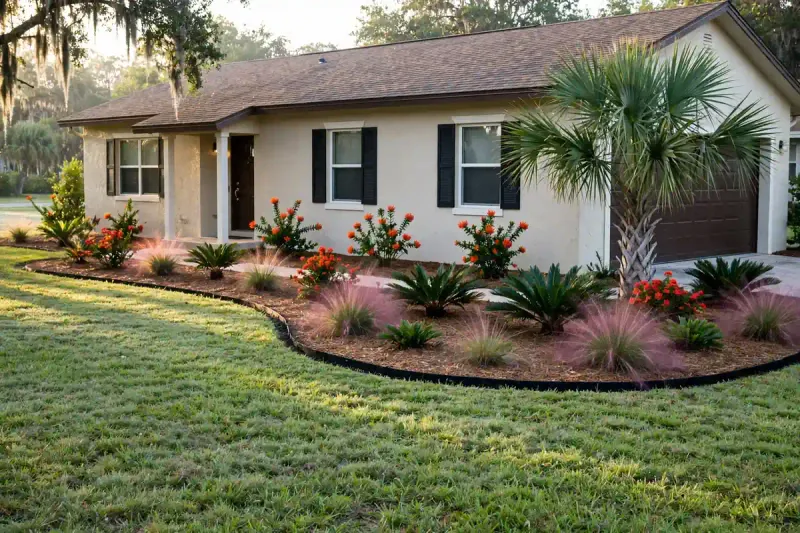
Here is the short version of the rule. Under Florida Statutes §720.3075(4)(b), homeowners’ association documents may not prohibit an owner from implementing Florida-friendly landscaping on the owner’s land.
They also may not be enforced in a way that prohibits it. That means a flat ban written into the covenants, or a blanket enforcement push against a qualifying yard, runs into state law.
The phrase to watch is Florida-friendly landscaping, which the statute defines by pointing to §373.185. The law protects that category of landscaping.
It does not create a right to plant anything you like, and it does not say every native plant is shielded.
Location matters too. The protection concerns your land, meaning the lot you own.
It is not a promise about shared property, such as common areas or entrances managed by the association, and it should not be read as covering every kind of community association.
The statute also does not decide whether your particular garden qualifies. That question comes next, and it is where most disagreements begin.
A violation letter may be right about some features and wrong about others, so the facts of your yard carry real weight.
Native plants alone do not determine whether a garden qualifies
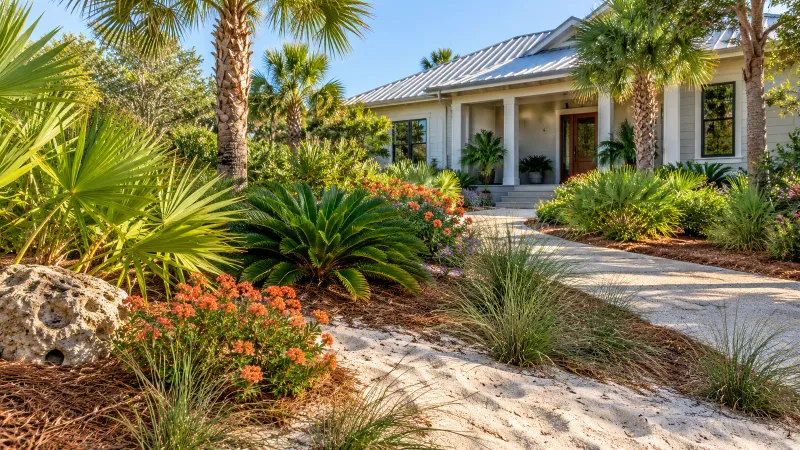
Picture two yards. One is packed with natives but sits in a drainage swale, gets blasted by sprinklers, and is heavily fertilized.
The other mixes native and non-native plants, keeps some turfgrass, and suits its soil and sun. The second may fit the law better, because qualification depends on the definition and principles, not on plant origin.
The definition in §373.185 describes quality landscapes that conserve water, protect the environment, adapt to local conditions, and tolerate drought. Its principles include right plant, right place, efficient watering, appropriate fertilization, mulching, attracting wildlife, responsible pest management, recycling yard waste, reducing runoff, and protecting waterfronts.
UF/IFAS explains in its community association guidance that these landscapes can include native or non-native plants and turfgrass when the choices fit the site. The same guidance notes that Florida-friendly yards do not all look alike.
A UF/IFAS plant selection guide can help you match plants to your conditions.
So the practical question is not whether your plants are native. It is whether your design follows the principles for your site.
Swapping a lawn for all rock or artificial turf does not automatically count, and neither does any lawn replacement.
Approval rules and reasonable design standards can still matter
Many people assume the statute wipes out the HOA’s approval process. It does not.
In its Q&A on the 2009 legislation, UF/IFAS advises that if your governing documents require approval for landscape changes, you should seek it before starting work.
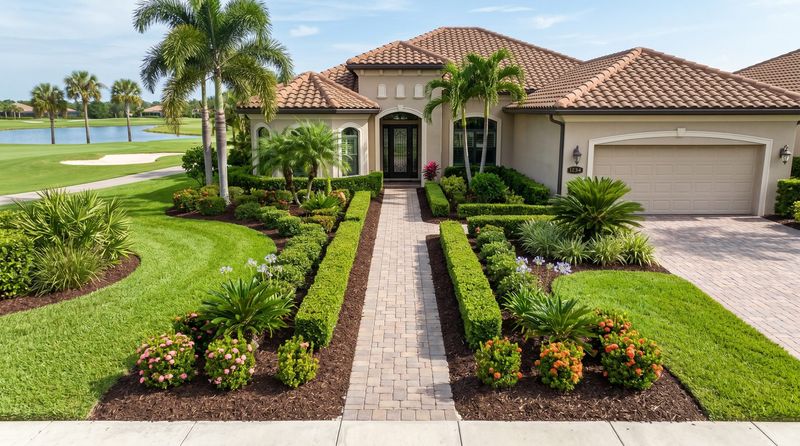
Associations may also keep reasonable design parameters. According to UF/IFAS Hillsborough, examples include height limits, edging, or plant-type standards.
The line is crossed when a rule amounts to an outright ban on Florida-friendly landscaping or forces water-wasting practices.
Reviewers are not free to invent rules, though. Under §720.3035, architectural review authority is limited to what the declaration states or reasonably implies, or what authorized published guidelines provide.
A restriction that has no footing in those documents may be open to challenge.
That does not mean every restriction is valid or invalid. Whether a rule is a fair design standard or an effective prohibition can depend on the facts, so read your declaration and current guidelines closely before you plant or reply.
A written, documented reply gives the HOA something specific to review
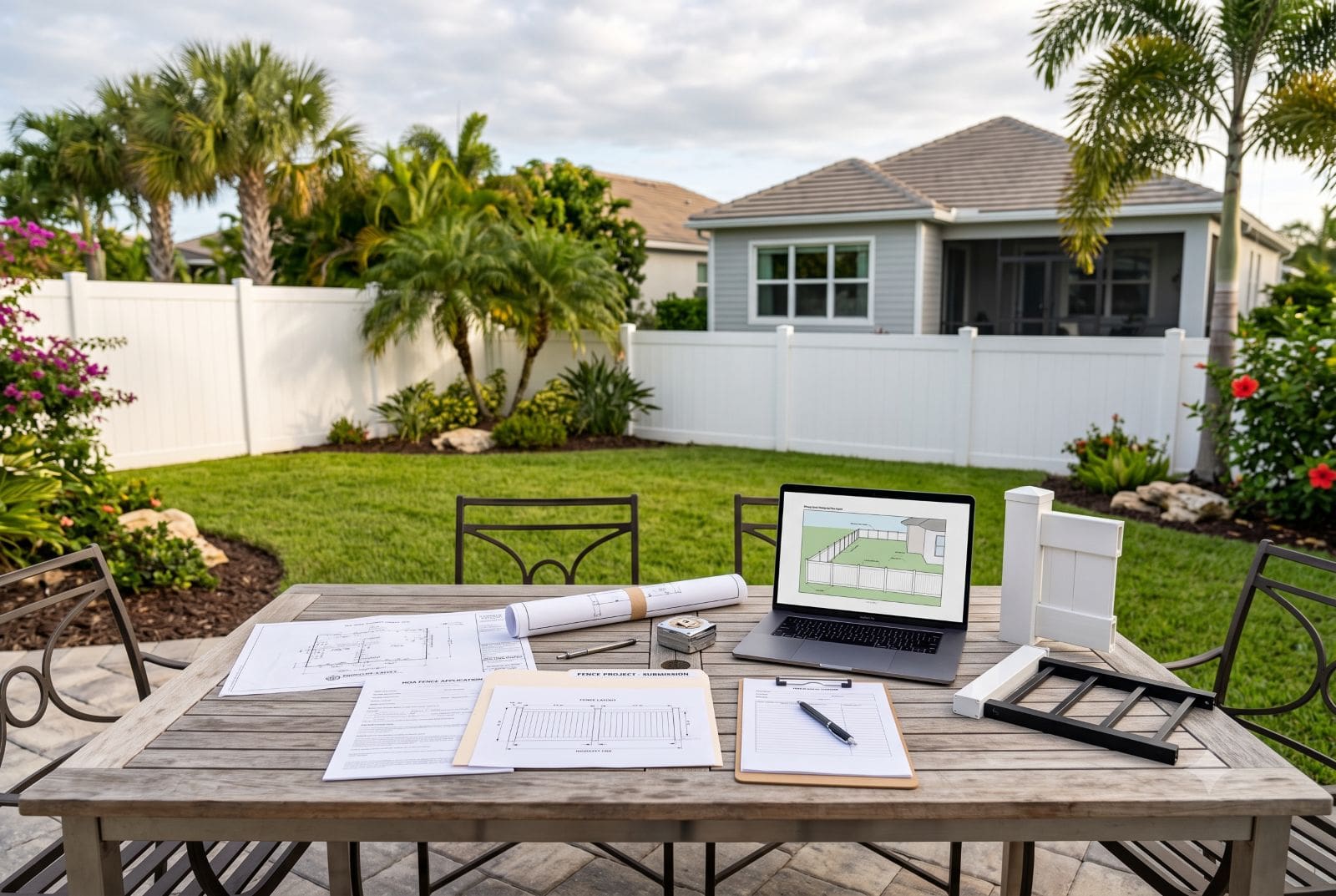
Start by keeping the letter, the envelope, and any emails. Then read your declaration and the association’s current landscaping or application rules.
You want to know exactly what you agreed to and what review steps apply.
Next, write to the HOA and ask which rule and which landscape feature prompted the notice. Vague letters are common, and a specific answer lets you respond to the real concern.
Keep your tone factual, and keep copies of everything you send.
Then send a reply that connects your design to Florida-friendly principles. Include a plan, a plant list, dated photos, and site details such as sun exposure, soil, irrigation, and mulch.
Both UF/IFAS Hillsborough and its 2009 legislation Q&A point toward this kind of documented, cooperative approach.
Your county UF/IFAS Extension office can supply technical information about plants and landscape practices. It is not a court or an enforcer, and it cannot decide your legal rights or settle the dispute.
Ignoring the letter is a poor idea, and so is tearing out the garden right away.
A proposed fine or suspension has a separate hearing process

An ordinary violation letter and a proposed penalty are different stages. If the association wants to impose a fine or suspend your rights, §720.305 calls for at least 14 days’ written notice of your right to a hearing.
That hearing is held before a committee of at least three eligible members.
The notice must describe the alleged violation. When it applies, it must also state the action needed to cure it.
Those details give you something concrete to answer, so compare them against your earlier correspondence.
Bring the same records you used in your written reply: your plan, plant list, photos, and any correspondence. Explain how the landscape fits the Florida-friendly principles and which rule you believe is being enforced against it.
Stay calm and stick to specifics.
A hearing does not guarantee a favorable result. It is a chance to be heard and to put your side on the record.
The statute also sets fine limits and other procedures, so read its current text rather than relying on older summaries, and consider legal advice if a penalty is on the table.
The statute protects a category of landscaping, not every design
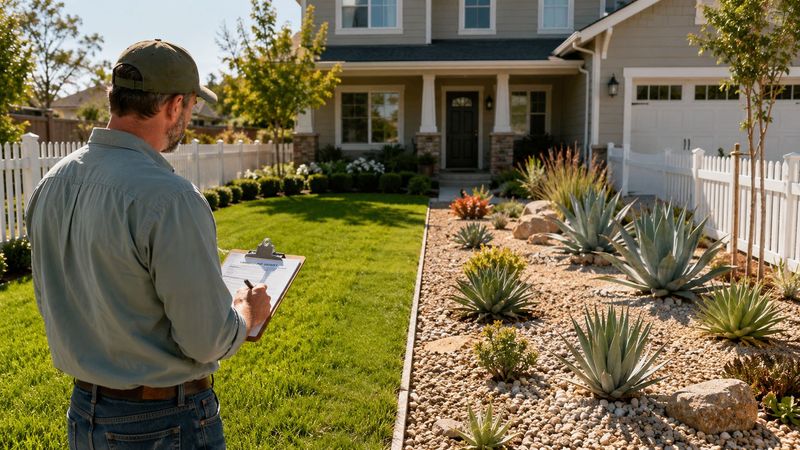
The core question is twofold. Does your landscape qualify as Florida-friendly, and does the HOA’s rule or enforcement effectively prohibit it?
Plant origin alone does not answer either part, and the outcome can turn on the facts.
UF/IFAS, as described on its community association page, offers education rather than binding dispute resolution. Legal fights can also be costly, and a Florida Bar Journal article discusses that uncertainty.
It is commentary, not a court ruling.
Keep photos, plant lists, and every notice, follow any review steps that apply, and talk to a lawyer if the dispute heads toward fines or court. A garden is easier to defend when the paperwork is as healthy as the plants.