
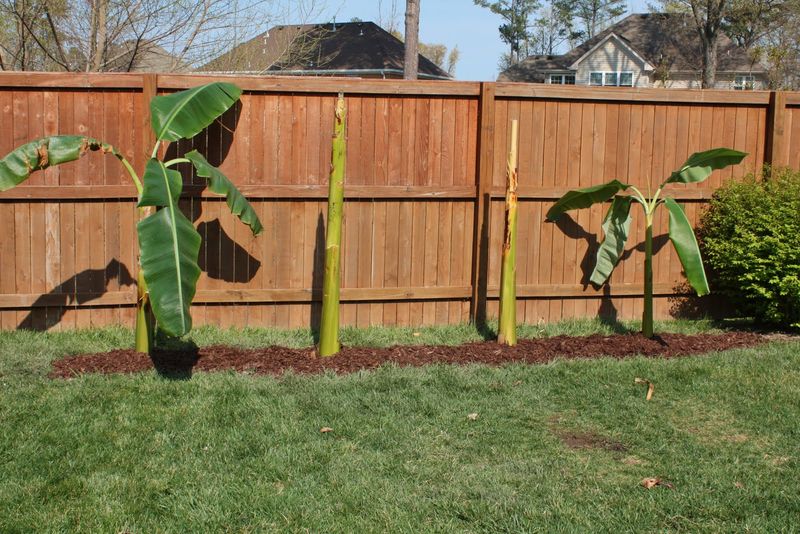
Banana plants grow fast, and their huge leaves can make a Florida yard look like a tropical getaway. That makes them tempting for anyone who wants to hide a fence, a neighbor’s view, or a bare property line.
But a leafy row is not the same as a solid wall, and a few things decide how well it works. Here is what to check before you plant.
Can bananas screen a property line?
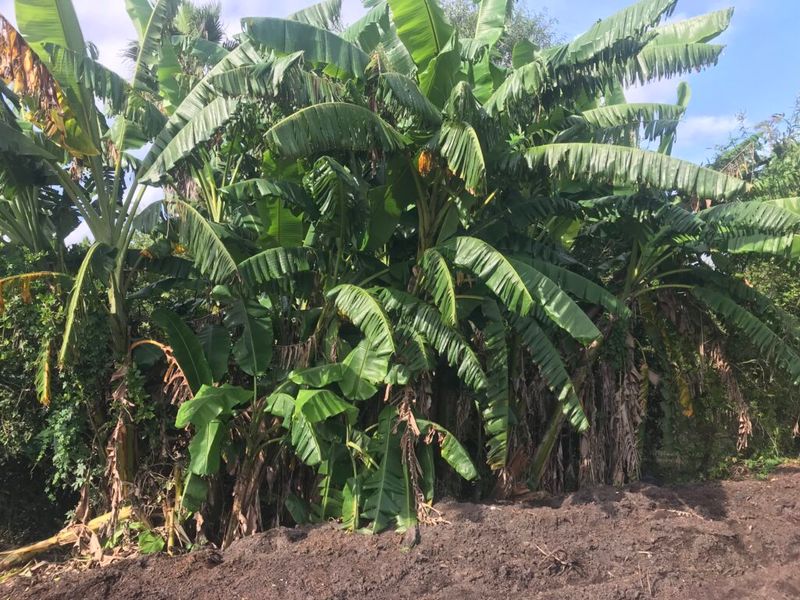
Bananas grow quickly, and that speed is the main reason homeowners think of them for screening. Their paddle-shaped leaves can fill space fast, and the plants spread into clumps from underground rhizomes.
UF/IFAS describes banana as fast-growing, with a spread that can reach 10 to 15 feet on common types.
Fast growth is not the same as a guaranteed privacy timeline, though. The extension sources give no estimate for when a new planting becomes a dense screen, so promising privacy in one season would be a stretch.
You may see a noticeable tropical effect within months under good conditions, but a thick barrier is a different goal.
Several factors shape the result. The cultivar matters, since sizes vary.
So does the starting plant, because a small sucker takes much longer to fill out than a large, established plant. Spacing, weather, and care all play a part too.
Picture the finished look honestly. The crowns are open, so a banana row can block a view from some angles while leaving sightlines at others, especially while plants are young.
The UF/IFAS banana landscape guide is a good starting point for judging whether your yard fits. If you need full opacity from day one, pair bananas with a fence or other plants.
Choose a warm, sunny site with good drainage
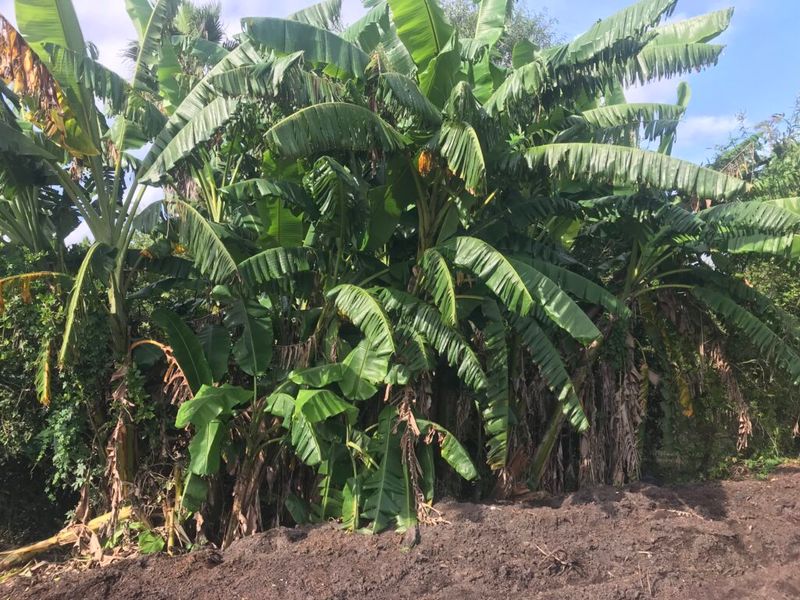
Walk your property line at different times of day before you buy anything. Bananas want warmth and sun, and UF/IFAS says they tolerate light shade but grow and fruit more slowly there.
A line shaded by oaks or a tall building will give you a slower, thinner screen.
Drainage deserves just as much attention. Florida’s sandy soils work for bananas, but the plants do poorly where water stays put.
Avoid low spots, swales, and areas that flood after a summer storm.
A simple test helps. After a heavy rain, check the planned spot a few hours later and again the next morning.
If puddles linger, pick another stretch of the line or reconsider bananas there.
Sandy soil drains fast, which helps with soggy roots but means you will need to pay attention to moisture in dry spells. Plant in a place where you can reach a hose easily.
Choosing the site well saves more trouble than any fix you can make later.
Give the plants room to spread
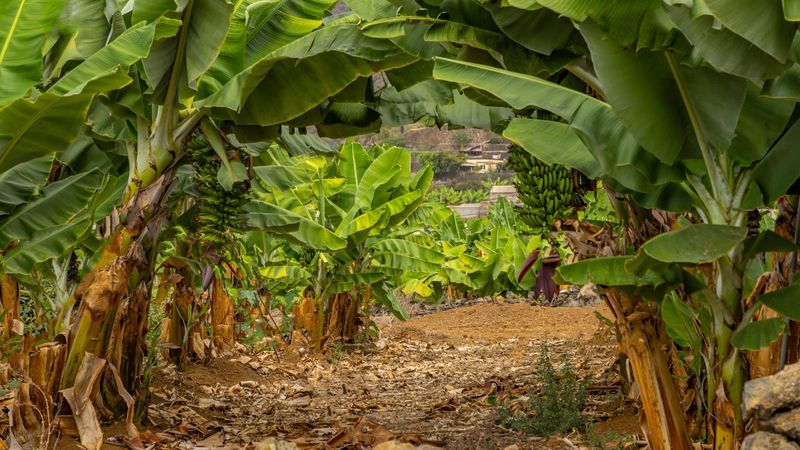
Spacing decides whether your row grows into a healthy planting or a crowded tangle. UF/IFAS guidance says small or dwarf bananas can go as close as 8 feet apart, while large varieties should be at least 12 feet apart.
Those numbers are about room for the plants and their expanding clumps. Bananas send up new shoots from the rhizome, so each mat gets wider each year.
The distances do not promise that the row will look opaque, and gaps between clumps may stay open for a while.
Think about mature size before choosing a spot. Tall cultivars can topple in strong wind, so keep them well away from windows, buildings, power lines, and anything storm-exposed.
UF/IFAS specifically warns that a banana near a window can become a hazard if it falls.
On a narrow lot, a dwarf type may suit the line better than a giant. Measure your setback from the fence, the house, and overhead wires first.
Then mark each planting spot with a stake so you can see the real spacing before digging.
Manage water and keep the clump from crowding
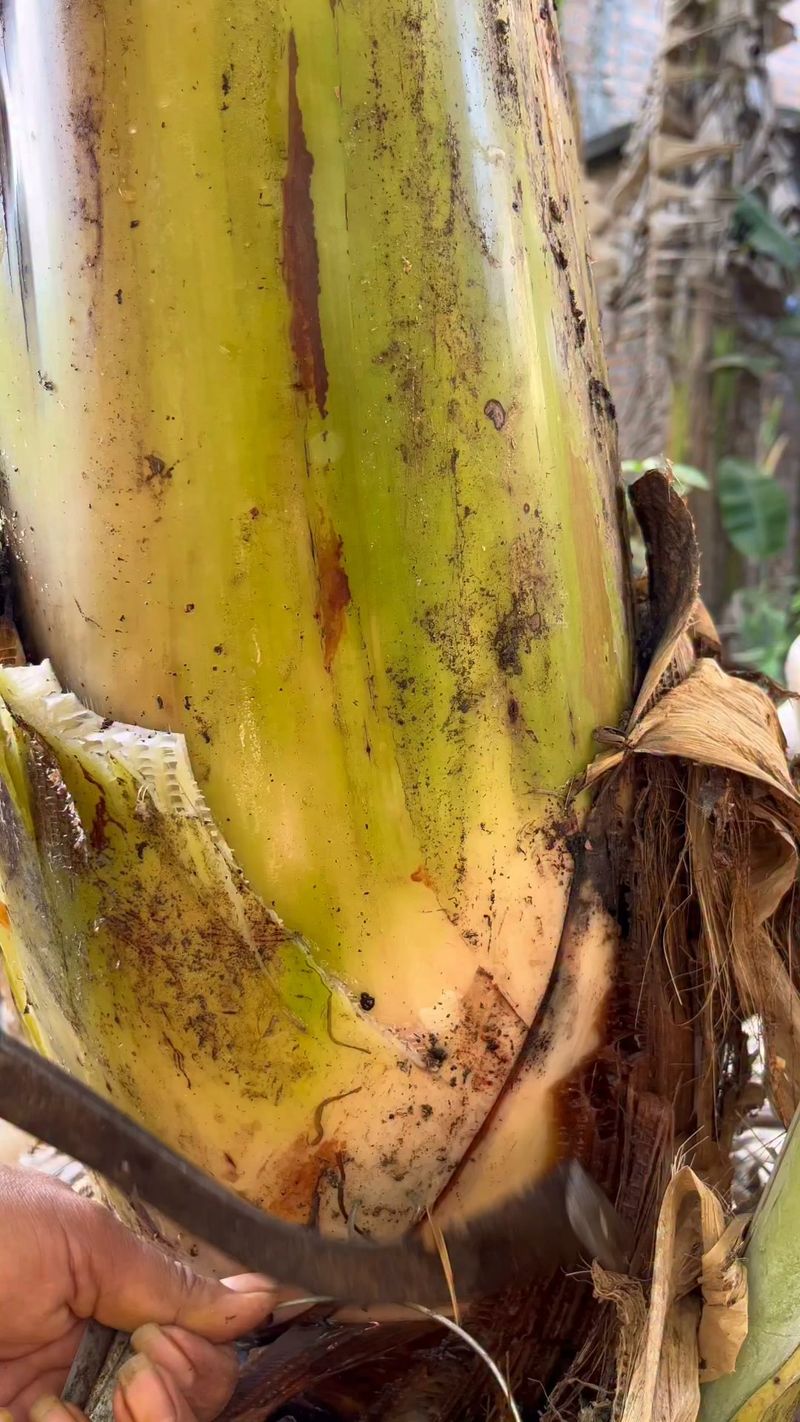
Bananas are not a plant-it-and-forget-it screen. They drink a lot, and dry spells slow them down.
UF/IFAS gives about 1 to 1.5 inches of water per week as a general guideline for production, and warns that drought slows flowering and shrinks fruit.
Too much water causes its own harm. Saturated soil and flooding can damage plants, so aim for steady moisture, not a swamp.
In Florida’s fast-draining sand, that often means checking the soil by hand rather than following a fixed schedule.
Then there are the suckers. Each mat keeps sending up new shoots, and unwanted ones crowd the clump and compete for water, light, and nutrients.
Left alone, a mat can get dense, messy, and slow to fruit.
UF/IFAS advises keeping a limited number of pseudostems per mat when fruit is the goal. For a screen, you may keep more stems for fullness, but you still need to thin enough that light reaches the center and the clump stays inside its space.
Plan on a regular check, perhaps every few weeks in the growing season, to cut back extras.
Wind and cold can open gaps in the screen
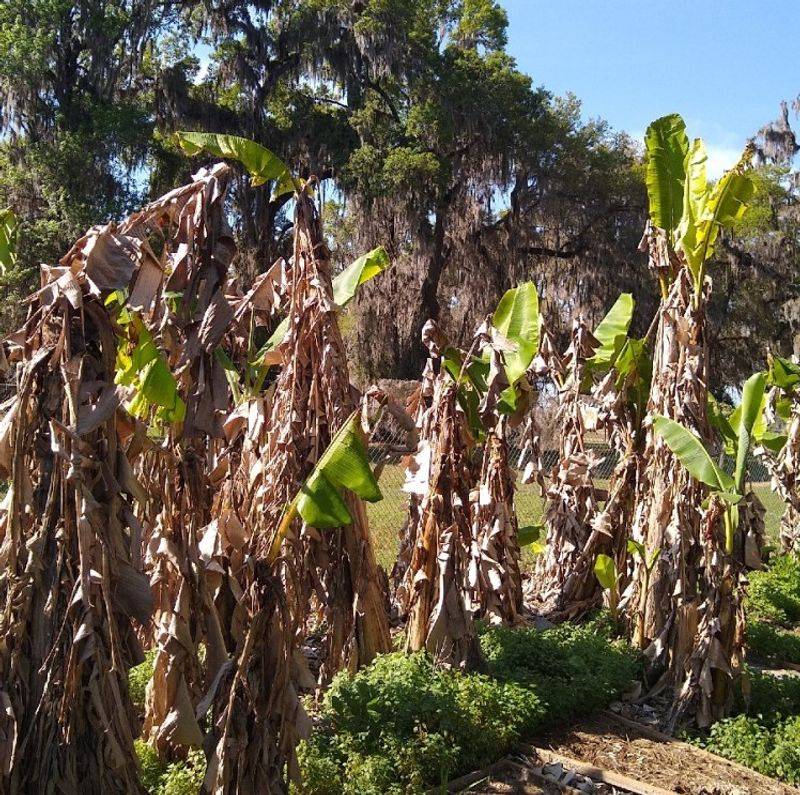
A banana row can look lush in August and ragged by winter. UF/IFAS reports that strong winds shred the big leaves and that winds above roughly 25 mph may topple tall cultivars.
A separate UF/IFAS guide on environmental factors calls banana intolerant of constant wind and says it can be uprooted at those speeds.
That means bananas are not a dependable hurricane screen. Torn leaves still give some cover, but they leave holes, and a toppled plant leaves a gap you cannot ignore.
Keep them away from windows and other things a falling stalk could hit.
Cold is the other gap maker. Florida is not frost-free everywhere, and below 28 degrees F the above-ground growth can die back to the ground.
The rhizome often sends up new growth when warm weather returns, so the plant may recover, but your screen will be thin until it does.
If your yard sits in a cold pocket or an open, windy spot, expect more gaps. A sheltered side of the property usually does better than an exposed corner.
Treat fruit as a possible later payoff
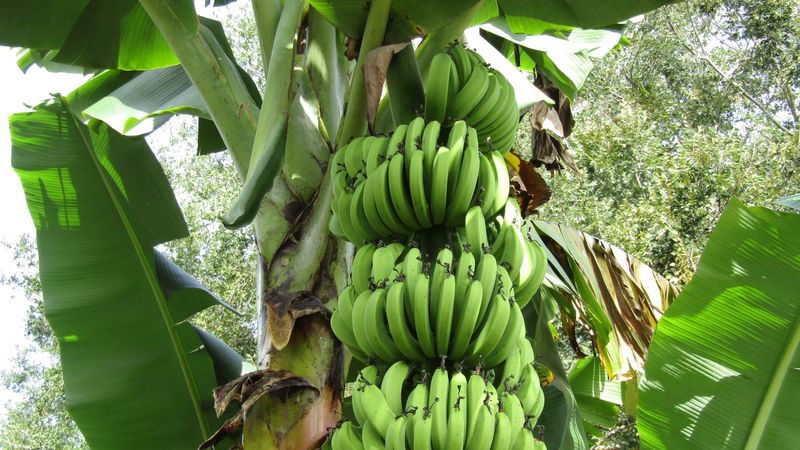
Fruit is a nice maybe, not a first-season promise. UF/IFAS says flowering generally begins 10 to 15 months after planting.
From a small sucker, harvest can take anywhere from 9 to 20 months.
Timing swings with temperature, cultivar, soil moisture, and care. A cold winter, a dry spring, or too much shade can push everything back.
Heavy suckering can slow fruiting too.
Not every banana you see in a nursery is grown for eating. Some ornamental types make little useful fruit, so check what you are buying before counting on a harvest.
Ask the seller which cultivar it is and whether it is meant for fruit.
The best way to think about it is as a separate goal from privacy. Plant for the leaves, and treat any bunch of bananas as a bonus that may show up in year two or later.
If you do get fruit, you will be glad the clump had room and steady water.
Plan for a developing tropical border, not an instant wall
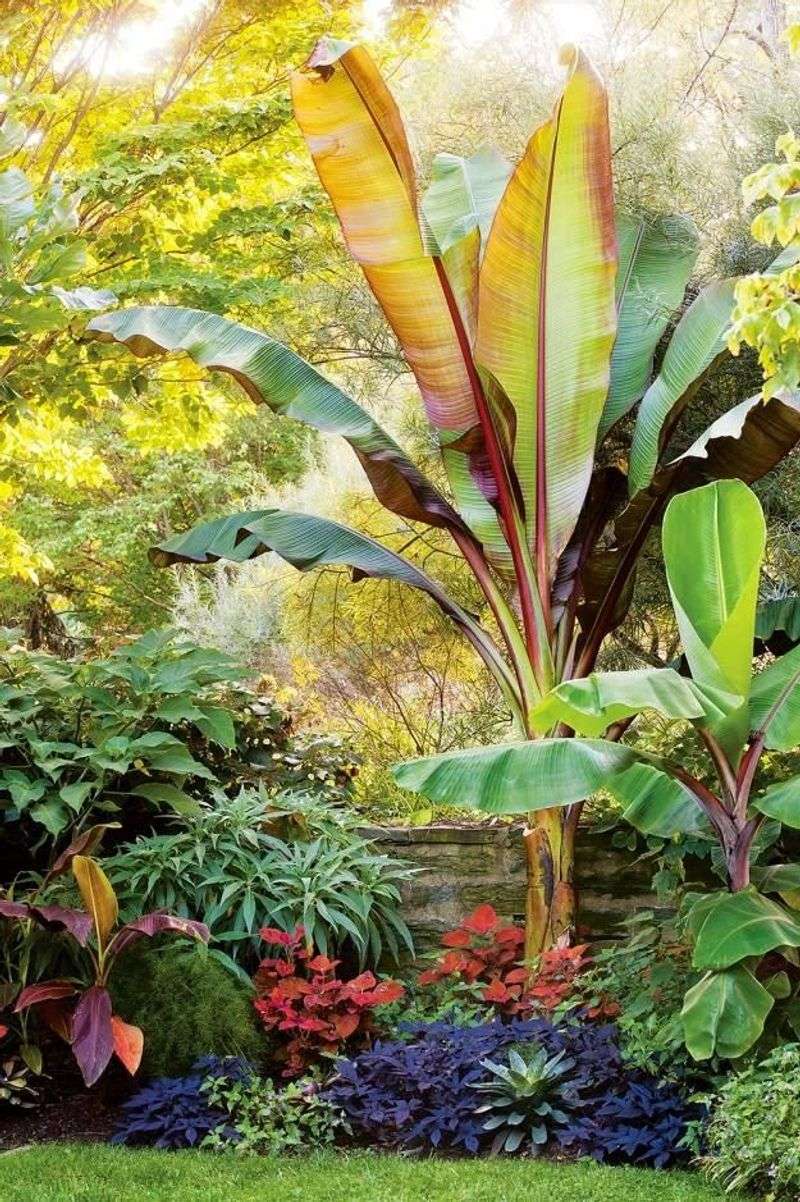
Bananas suit homeowners who want a broad-leaved, tropical look and can give the plants space, water, and regular trimming. They do not suit anyone who needs a privacy deadline or storm protection.
Treat the row as a border that fills in as it grows.
Before buying, identify the exact species or cultivar. The UF/IFAS Musa fact sheet says banana is not considered a problem species at this time, but that does not cover every ornamental type, so check current local guidance.
For layout and care details, return to the UF/IFAS banana guide.
A banana screen rewards patience: the leaves arrive fast, but the fullness comes with time.