
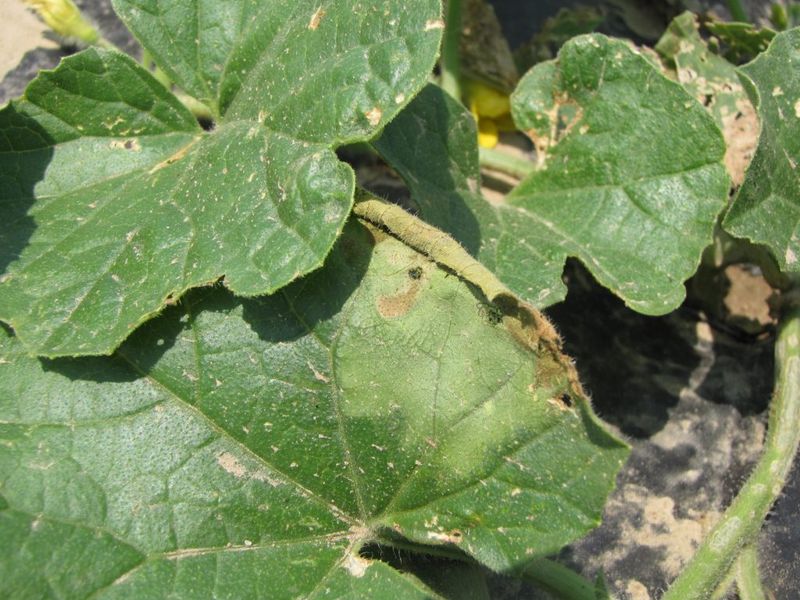
Your cucumber vines looked strong this morning, but by afternoon they were drooping like they gave up entirely. September heat can do that to plants, but the wilt you are seeing is a warning sign that could mean several different things.
Knowing which problem you are actually dealing with is the difference between saving your harvest and losing it.
Afternoon wilt is a warning, not a diagnosis
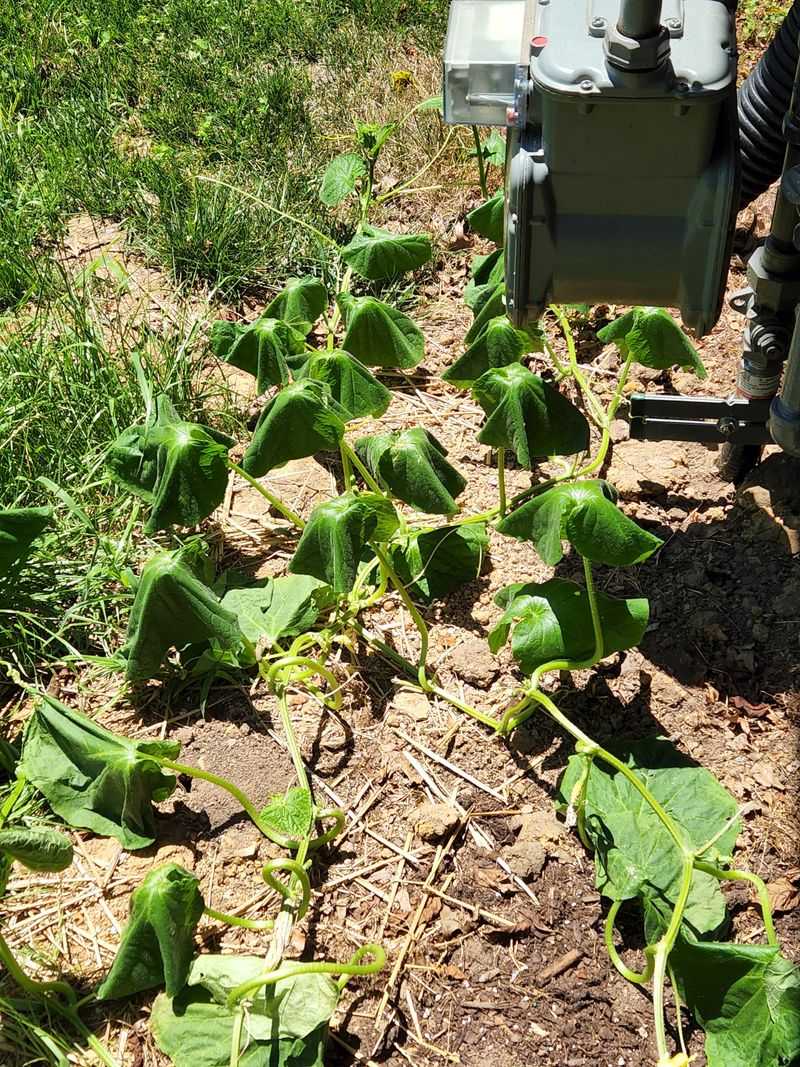
Cucumber plants are surprisingly good at looking fine at dawn and falling apart by midday. Hot, windy September weather can pull moisture out of leaves faster than roots can push it back up, and that imbalance alone causes wilting even when the soil underneath still holds plenty of water.
University of Minnesota Extension guidance on heat stress confirms that foliage can wilt under high temperatures even when soil moisture is adequate, which means wilting leaves by themselves tell you very little.
The real risk in treating afternoon wilt as an obvious diagnosis is that you may apply the wrong fix. Pouring on extra water when the bed is already saturated can make things worse.
Pulling a plant that only has heat stress wastes a productive vine. The smarter move is to run through a quick checklist before you decide anything.
Work through soil moisture, drainage, visible pests, stem tissue, and root condition in that order. Minnesota Extension’s cucumber wilt diagnosis tool lists heat stress, bacterial wilt, Fusarium wilt, and nematode injury as separate explanations that can all produce daytime wilt followed by partial recovery at night.
Evening or morning recovery is encouraging, but it does not clear any of those possibilities from the list. Treat it as a clue, not a verdict.
Check moisture two inches down before you water
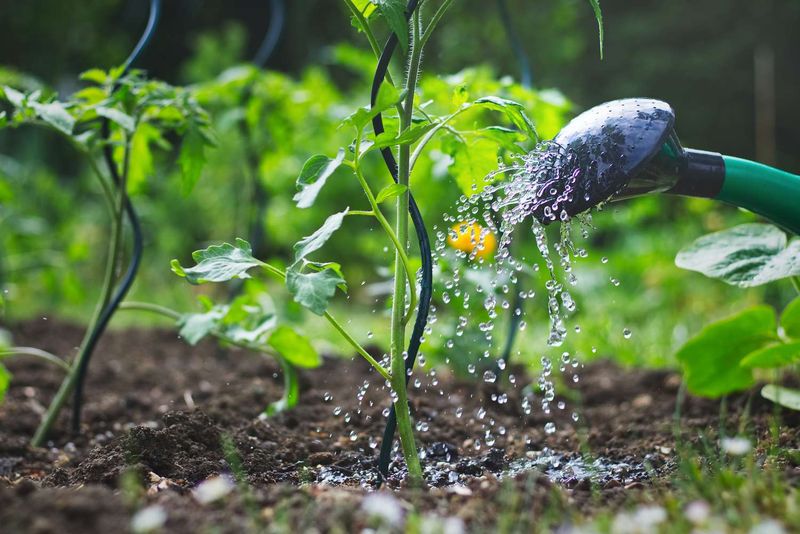
Before reaching for the hose, push your finger or a small trowel into the soil near the cucumber’s root zone and feel what is two inches below the surface. Wilted leaves are not a reliable moisture meter because heat wilt and drought wilt look identical from above.
If the soil at that depth feels dry and crumbly, the plant genuinely needs water and you should provide it now rather than waiting for a scheduled watering time.
University of Minnesota Extension watering guidance recommends checking soil moisture before irrigating and delivering water slowly and deeply at the root zone rather than in frequent shallow passes. A drip line or soaker hose works better than overhead sprinklers because it reduces evaporation, keeps foliage dry, and puts water exactly where roots can use it.
Two important limits apply here. First, heat alone can cause wilting even when soil moisture is adequate, so adding more water to an already moist bed will not help and may harm.
Second, UGA Extension’s cucumber growing guide notes that cucumbers need consistent moisture during fruiting but cannot tolerate waterlogged roots. If the soil feels wet or the bed drains poorly, stop before adding more water and move to the next step in the inspection.
Beetles can turn a heat symptom into bacterial wilt
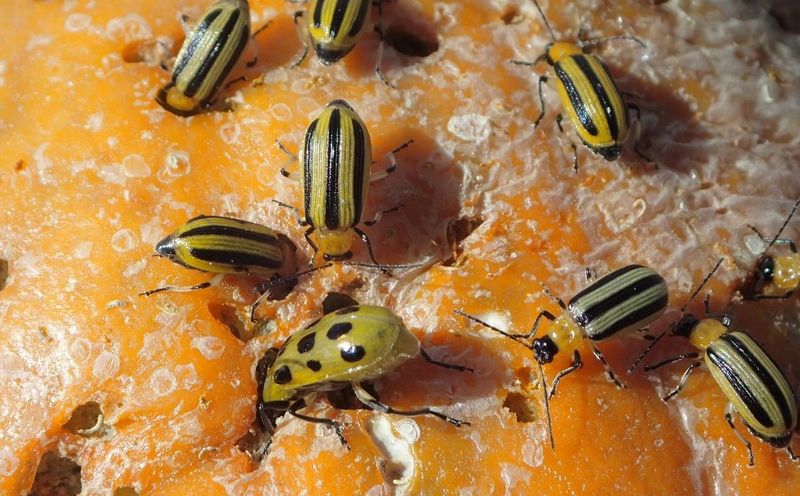
Once you have checked the soil, scan every part of the plant for striped or spotted cucumber beetles. Look at the undersides of leaves, along stems, and inside flowers.
Feeding holes, ragged leaf edges, and the beetles themselves are the clues you need. These insects are not just a nuisance; University of Minnesota Extension explains that cucumber beetles carry and transmit the bacterium responsible for bacterial wilt as they feed on plant tissue.
Bacterial wilt is a vascular disease, not a root disorder. The bacterium enters through beetle feeding wounds and spreads through the plant’s water-conducting tissue, cutting off the supply of moisture to leaves and stems.
A useful field check is the cut-stem test: snip a wilted stem near the base, press the two cut surfaces together firmly, and then pull them apart slowly. Sticky, thread-like strands between the surfaces suggest bacterial infection.
Oklahoma State Extension’s cucurbit disease guide presents this as a helpful field clue, though it recommends laboratory or Extension confirmation for a definitive answer.
If a plant shows sticky strands and active beetle pressure, controlling beetles at that point is unlikely to save it. Minnesota Extension IPM guidance states that plants confirmed or strongly suspected of bacterial wilt generally do not recover and should be removed and discarded, not composted, to reduce the chance of spreading the disease to nearby vines.
Galled roots reveal how nematodes amplify heat stress
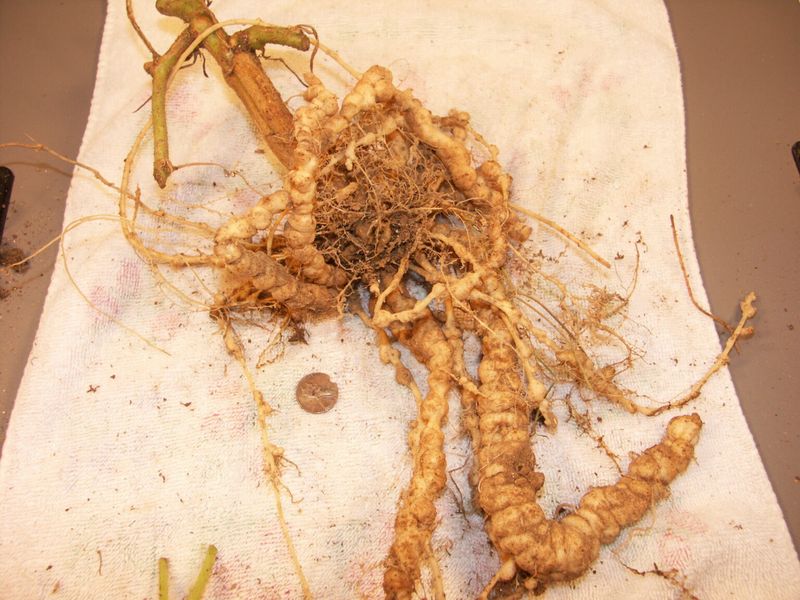
Root-knot nematodes rarely cause a single dramatic collapse. Their damage tends to build quietly underground, producing a pattern of reduced vigor, shorter vines, pale or yellowing leaves, and plants that wilt earlier in the day and recover more slowly than healthy neighbors.
The heat of September turns that slow decline into a visible crisis because damaged roots simply cannot move enough water to keep up with high transpiration demand.
UF/IFAS research on nematode management in cucurbit crops highlights warm, sandy Southern soils, particularly in Florida, as especially favorable environments for root-knot nematode populations. Sandy soil drains quickly, heats up fast, and offers little resistance to nematode movement, which is why growers in these regions face higher pressure than gardeners in heavier soils further north.
To check, carefully dig up a declining plant and rinse the roots under water. Healthy cucumber roots are pale and relatively smooth.
Roots affected by root-knot nematodes carry firm swellings or galls that cannot be rubbed off. UGA Extension notes that galled roots are a key sign of nematode injury in Southern vegetable gardens.
If you find galls, resist the urge to treat with a home remedy and instead contact your county Extension office. UGA’s nematode diagnostic guide recommends submitting soil and affected root samples, kept cool and moist, to a diagnostic lab for confirmation before planning next steps.
Wet soil changes the diagnosis
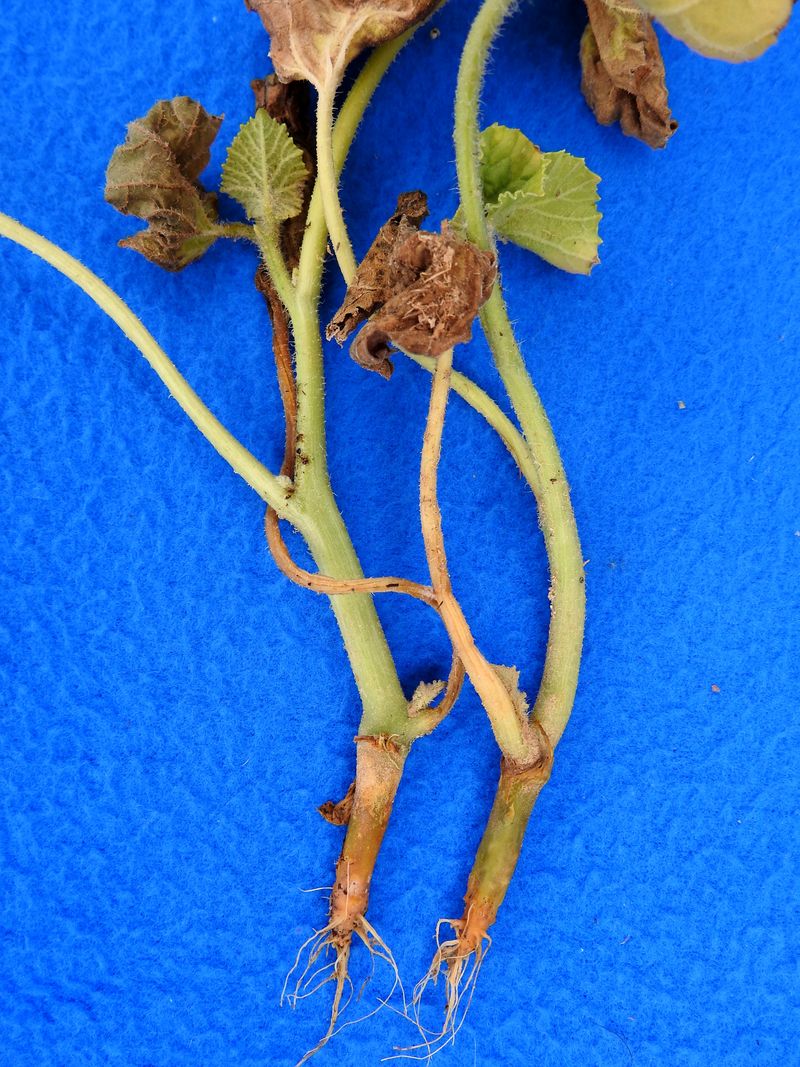
Not every wilting cucumber is thirsty. After heavy rain, repeated overwatering, or in a bed where water pools and drains slowly, the more likely culprit is a root rot pathogen rather than drought or nematodes.
Texas A&M AgriLife Extension’s cucurbit Phytophthora resource describes rapid wilt and collapse as a hallmark of Phytophthora root rot, which thrives in saturated, poorly drained soil conditions.
Pull up a struggling plant and look at the roots and crown. Brown, soft, or water-soaked tissue that smells off is a red flag for root rot.
Healthy roots are firm and pale; rotted roots may fall apart when handled. The heat of September can make the visible symptoms appear faster and more severe, but heat is not the cause of the rot itself.
Phytophthora and similar pathogens need excessive moisture to establish and spread.
Continuing to water a plant with root rot will accelerate the damage. Instead, stop irrigating until the bed dries to a reasonable level, and assess whether drainage is the underlying problem.
Raised beds and amended soil that drains freely are the most practical cultural measures for preventing a repeat. For the current season, remove severely affected plants and avoid working wet soil, which can spread the pathogen to other areas of the bed.
Disease-specific guidance from your local Extension office is more reliable than a blanket removal instruction for every plant showing soft roots.
Persistent wilt points toward a vascular disease
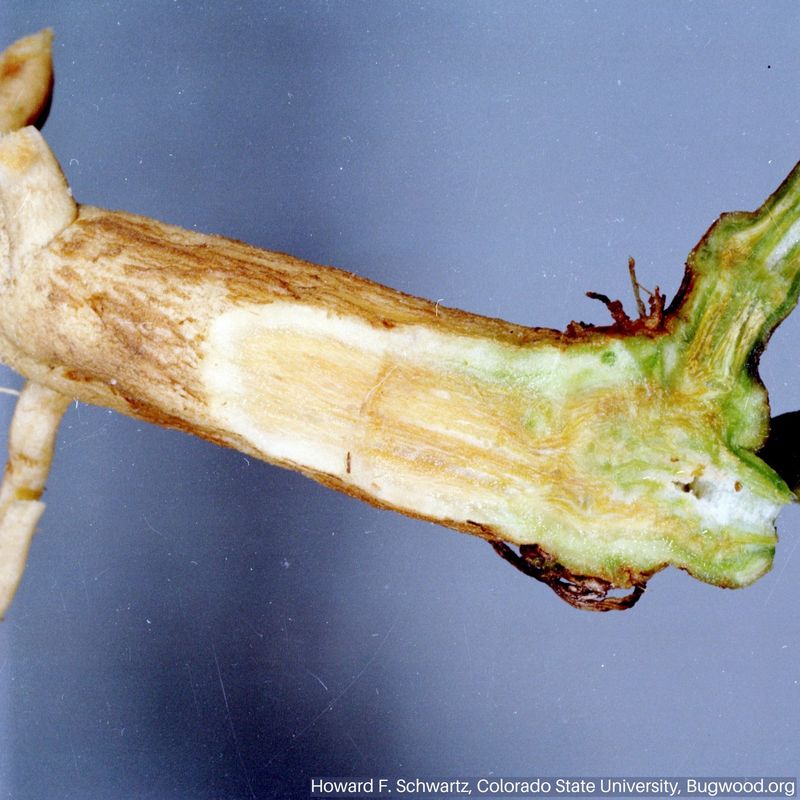
When a cucumber vine wilts during the heat of the day, partially recovers overnight, and then fails to perk up fully over successive days, a vascular disease becomes a stronger possibility. Fusarium wilt is soilborne and works by colonizing the plant’s water-conducting tissue from the inside, progressively blocking the flow of moisture to leaves and stems.
Utah State University’s Fusarium guide for cucurbits describes the disease as beginning with heat-of-day wilting that gradually becomes permanent, often accompanied by yellowing and eventual vine death.
A useful diagnostic step is to cut a wilted stem a few inches above the soil line and look at the cut surface. Brown or tan discoloration in the ring of vascular tissue is a warning sign that something is disrupting water movement inside the plant.
USU Extension’s research on Fusarium and Verticillium wilts clarifies that brown vascular tissue can indicate a wilt disease, but the cut alone cannot confirm Fusarium or distinguish it from other vascular problems. A sample submitted to a diagnostic laboratory or Extension plant clinic gives a more reliable answer.
Repeated watering and improvised treatments will not clear a vascular infection. If the stem shows discoloration and the wilt is progressing rather than stabilizing, getting a confirmed diagnosis before the end of the season is more useful than guessing.
Knowing the exact pathogen helps you choose a rotation strategy, resistant variety, or soil management approach that actually addresses the source of the problem next year.
Match the response to the evidence
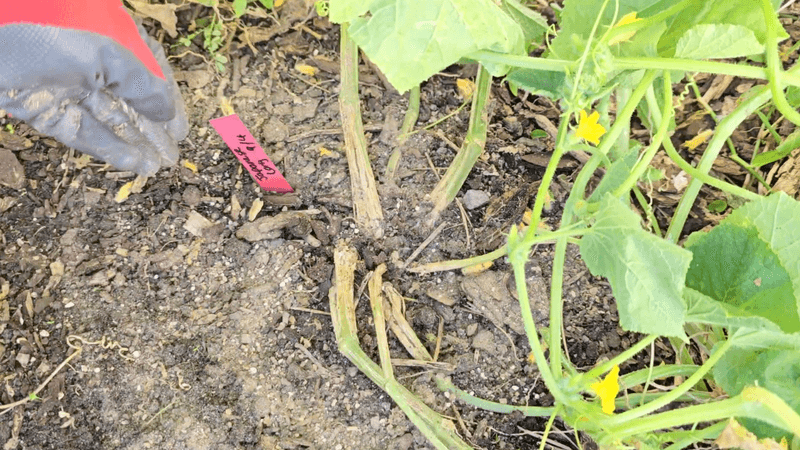
Each clue you collect from the soil, the beetles, the stem, and the roots points toward a different response. University of Minnesota Extension watering guidance supports deep, thorough irrigation at the root zone when the soil is genuinely dry two inches down.
During fruiting and heat events, keep moisture consistent, but stop short of saturation. Organic mulch spread a few inches from the crown helps hold that moisture and moderate soil temperature.
UGA Extension’s home garden disease management guide includes mulching as part of sound cultural practice for reducing moisture loss and limiting disease pressure.
For plants confirmed or strongly suspected of bacterial wilt based on beetle activity and a positive cut-stem test, Minnesota Extension IPM guidance recommends removing and discarding those plants rather than treating them. Do not apply that same blanket removal to root rot or nematode situations.
For root rot linked to poor drainage, the priority is reducing excess moisture and improving bed structure. For suspected nematodes, UGA Extension recommends soil and root testing as the first step toward an integrated management plan rather than an unproven midseason rescue.
Any pesticide you consider, whether an insecticide for beetles, a fungicide for root rot, or a nematicide for nematode pressure, must be registered for use on cucumbers and applied exactly as the EPA-approved label directs. Cucumbers are pollinated by bees, so timing and method matter.
EPA pollinator protection guidance asks applicators to follow all label restrictions and avoid treatments when pollinators are actively foraging on flowering crops.
A late-season replacement may save more than a failing vine
September timing for cucumbers is not the same across the South. Texas A&M AgriLife Extension’s cucumber crop guide covers both spring and fall planting windows, while local calendars in Oklahoma suggest an August planting window for fall crops.
Your county Extension office holds the most accurate planting dates for your specific location, and those dates should take priority over any generic September advice.
A cucumber that has been in the ground for weeks and is now struggling with wilt, disease pressure, or declining production may simply be at or past its productive peak. UGA Extension’s fall garden guidance acknowledges that late-summer cucumber plants sometimes make more sense to remove and replace than to revive.
Accumulated disease pressure, aging root systems, and reduced fruit set are signs that the vine has done most of what it will do.
UGA Extension’s home garden disease management publication supports using crop rotation, sanitation, and timing to reduce carryover problems in the next planting. The most productive use of a failing September vine may be to remove it cleanly, rest the bed, and put a healthy transplant in the ground at the right time.
Diagnose the stress signal first, match the response to the evidence, and let the calendar, not wishful thinking, guide what you plant next.