

A fresh cut on the trunk and a steady drink of water are the two best moves for keeping your Christmas tree green through the holidays. The recut opens up the base so the tree can take in water, and the water is what slows needle drop.
Hot water gets a lot of attention, but the advice on it is mixed, and no trick can promise a particular result. Here is how to give a tree bought around Thanksgiving its best shot at lasting to New Year’s.
How long can a tree stay fresh indoors?

A tree set up the weekend after Thanksgiving and kept until January 1 has to last about five weeks. That is a long stretch for a cut tree living in a warm house.
Extension guidance shows why the timing is tight. Iowa State gives three to four weeks as a general indoor lifespan for a cut tree.
Five weeks is a little past that range.
Some species do better. Michigan State’s species guide rates certain trees as excellent at holding needles, at four to six weeks under typical household conditions.
Those ratings describe what a species can do, not what your particular tree will do.
Seed source, how the tree was handled, how warm your home runs, and how well you water all shift the outcome. So treat five weeks as a goal you can work toward, not a promise.
Check freshness before you bring the tree home
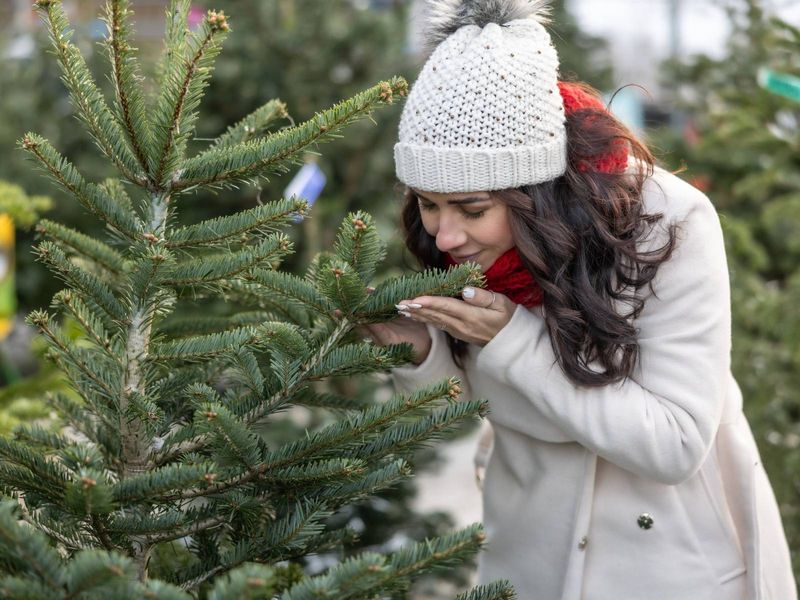
Before you pay, grab a branch and bend it. Fresh needles and branches feel pliable, not brittle or crunchy, and the needles should not shower off when you give the tree a gentle shake.
The harvest date on a sign tells only part of the story. A tree cut weeks ago but kept cool and in good shape can beat one cut yesterday that sat in sun and wind.
NC State Extension points out that proper storage and handling matter a great deal for how fresh a tree is.
Look at where the trees are kept. A lot with trees shaded, upright, or stored cool is a better sign than rows baking in open parking lot sun.
Time without water also counts. The longer the trunk has been dry, the worse the tree’s starting condition, and nothing you do at home fully undoes that.
Recut the trunk if its time out of water is uncertain
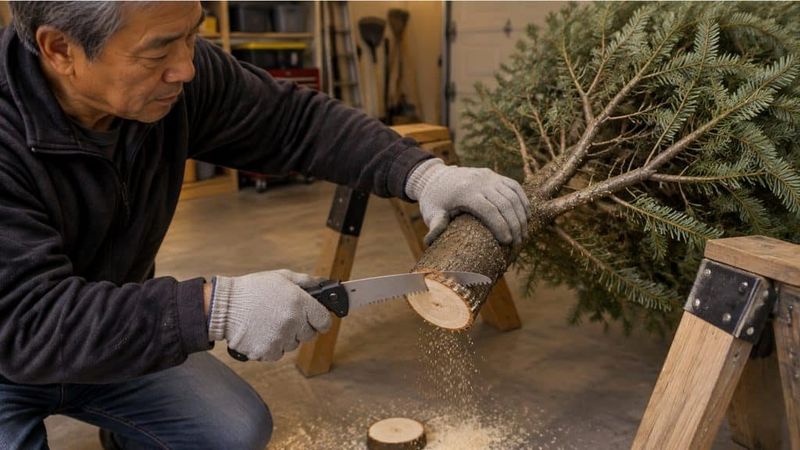
Think of a recut as a way to reopen the door for water. A fresh, flat cut across the base refreshes the trunk’s water-entry surface.
It cannot bring back a tree that has already dried out.
Experts differ a bit on timing. Penn State says a recut is unnecessary if the tree was cut within the previous 12 hours.
Iowa State recommends removing an inch or more before bringing the tree indoors.
Here is the practical call. If you cut the tree yourself this morning, you can skip it.
If you bought it from a lot and nobody can say when it was cut or how long it sat dry, recut it.
Cut straight across, not at an angle or in a V shape, so the trunk sits flat in the stand. Then get it into water promptly.
Keep the cut end under plain water
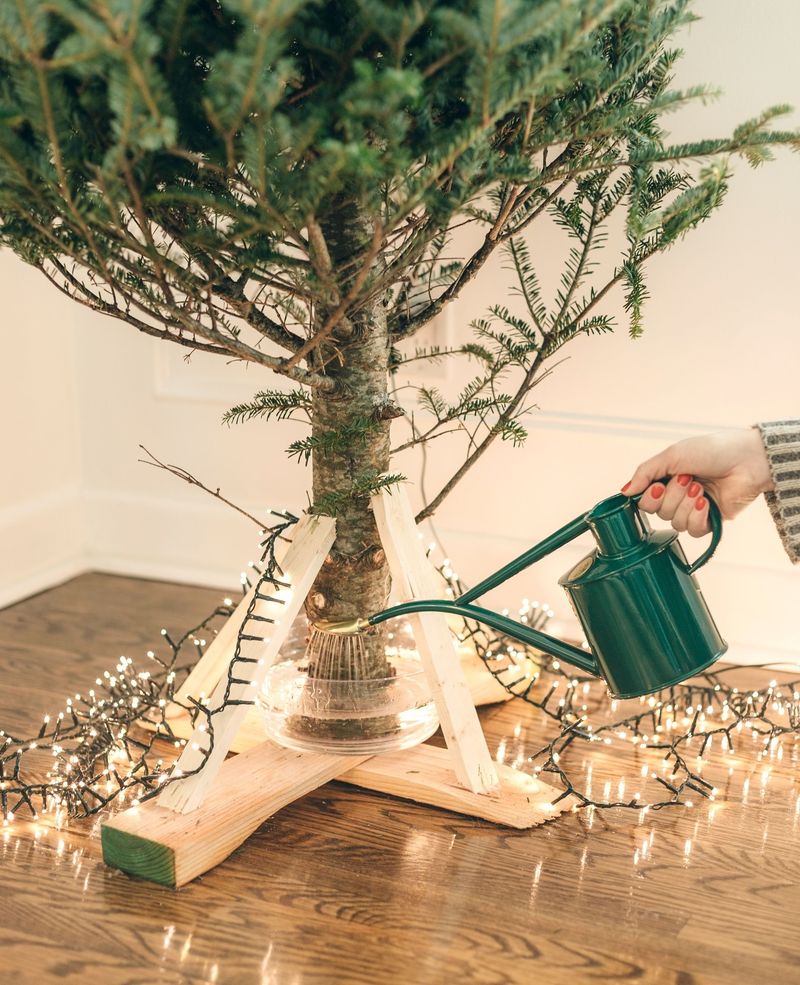
Water is the daily job that matters most. Pick a stand with a generous reservoir, since a big tree can drink a surprising amount, especially in the first days.
Check the level at least once a day, and twice a day at first is a smart habit. Never let the water drop below the bottom of the trunk.
If it does, the cut surface can dry out, and the tree may take in less water afterward.
Plain water is enough. Penn State and Iowa State both consider additives unnecessary, so you can skip the sugar, aspirin, or bottled mixes.
Good watering gives your tree its best chance, but it does not guarantee a set number of weeks. A dry-looking tree in week three may simply have started in worse shape.
What the guidance says about hot water
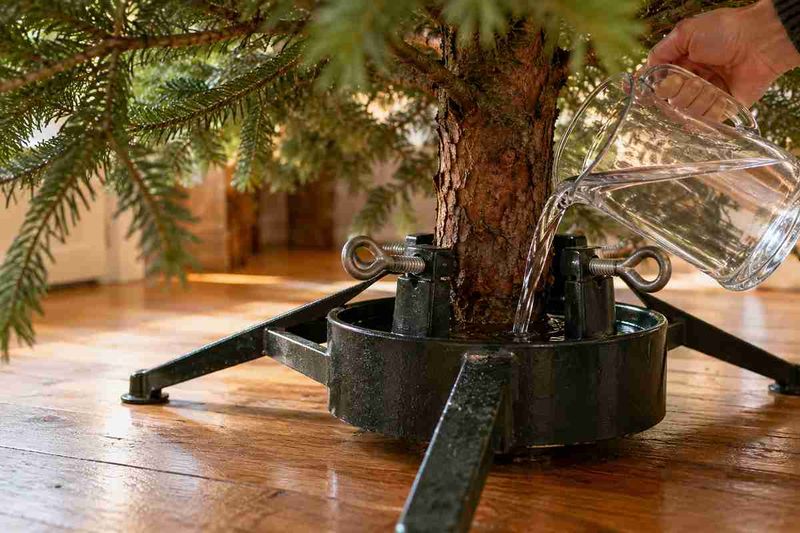
Hot water is where the experts disagree. K-State Extension recommends warm water and says hot water can increase uptake.
NC State Extension takes a different view. It says reports of very hot water helping are testimonials that have not been tested by research methods.
So the added benefit of hot water is not established. If you like using warm water for the first fill, it is unlikely to hurt, but boiling water is not something you need.
Notice what the other guidance stresses. Penn State and Iowa State focus on a fresh cut when needed and an adequate water supply, not on water temperature.
Put your effort there: recut if the timing is unclear, and keep that stand full every day.
Keep the tree away from heat and watch for drying
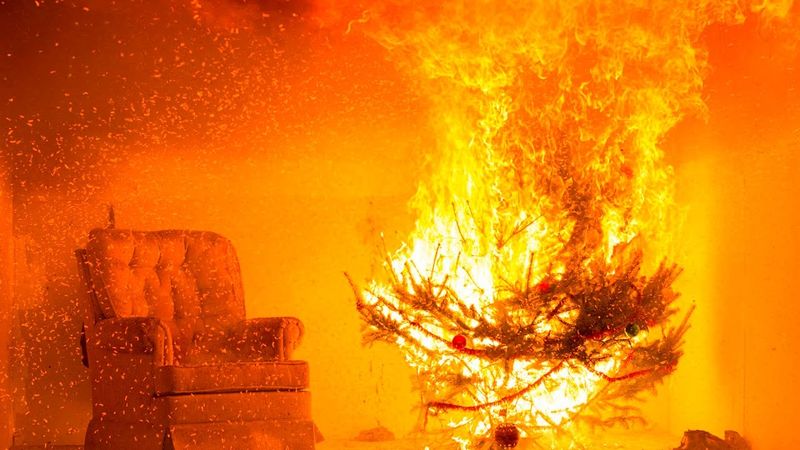
Heat pulls moisture out of a tree. A spot next to a fireplace, wood stove, radiator, or heating vent can speed drying, so pick a cooler corner if you can.
For fire safety, the U.S. Fire Administration advises watering daily, keeping the tree at least three feet from heat sources, and removing it after Christmas or when it is dry.
Watering helps hold moisture, but it does not make a tree fireproof.
Run your hand along a branch now and then. Needles that fall in handfuls, or branches that snap instead of bend, tell you the tree is drying out and it may be time to take it down, even before January 1.
Your routine is short: pick a fresh tree, recut when timing is unclear, and keep the water topped up. Those steps improve care without setting a lifespan.
A tree is a short-term guest, and the best you can do is treat it kindly while it stays.