
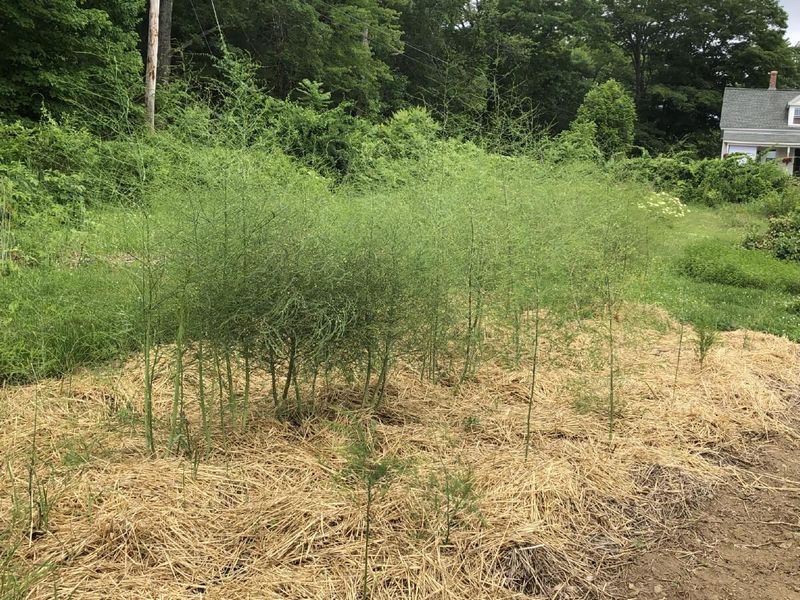
That tall, feathery asparagus patch looks messy by fall, and it is tempting to trim it flat. But those green fronds are still working for next year’s harvest.
Knowing what to look for, and when, helps you tidy up without shortchanging the roots. Here is how to read your patch, whether you garden in Texas, Florida, or somewhere in between.
Make sure you mean edible asparagus
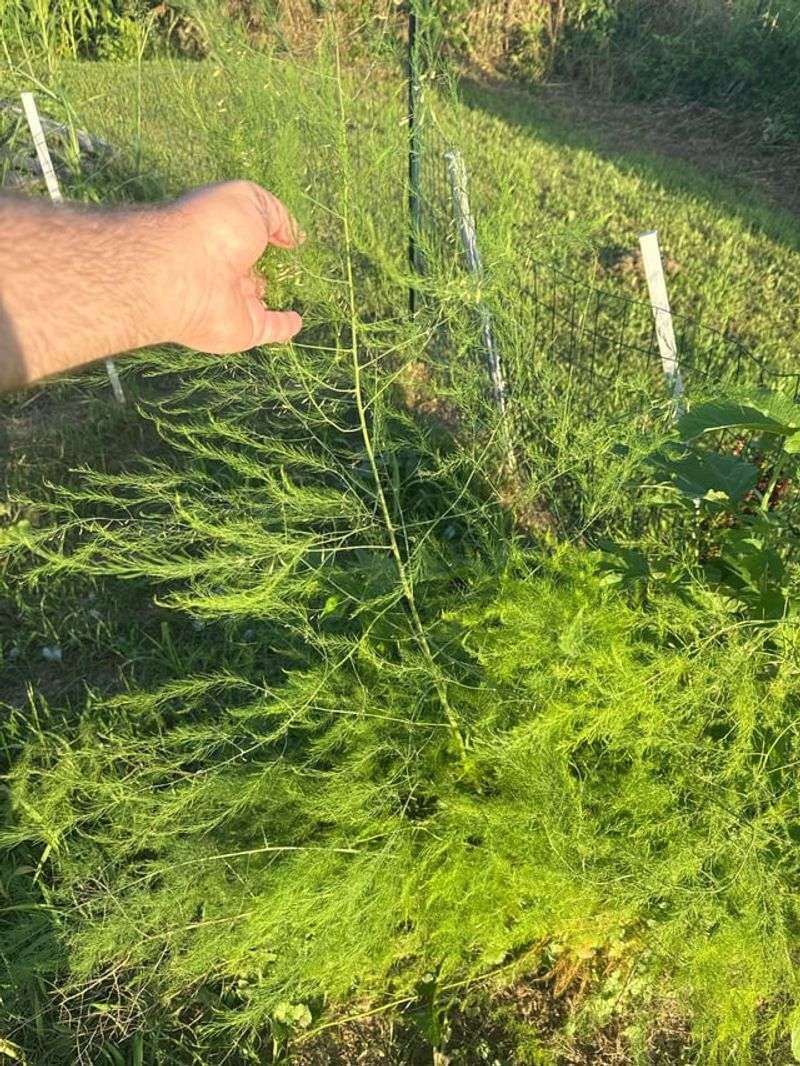
Two very different plants share the word fern in their nicknames. Edible asparagus, Asparagus officinalis, grows tall, airy, feathery tops after the spears are done being harvested.
Those tops are what this article is about.
The ornamental plant sold as asparagus fern is a separate landscape plant. UF/IFAS describes Sprengeri asparagus fern as an ornamental, and a UF/IFAS Nassau County post also draws the line between it and the edible crop.
Because their needs are not identical, do not carry fall care tips from one to the other automatically. If you grow spears for dinner, keep reading.
Green foliage replenishes the crown
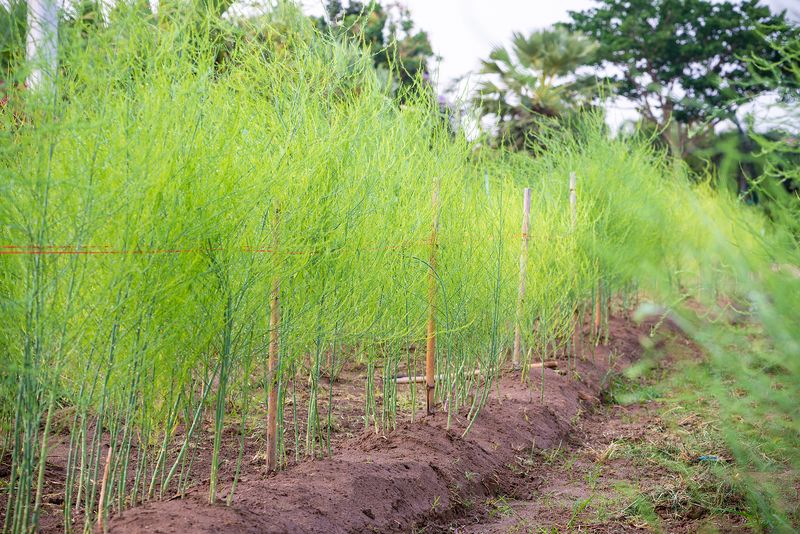
Every green frond works like a tiny solar panel. It makes sugars from sunlight, and that energy is what the plant banks underground for the next season.
As the foliage dies back, University of Minnesota Extension explains that the tops move carbon and nutrients into the roots. UNH Extension describes the same fall transfer into the crown.
That is why a quick tidy-up of green tops is a poor trade. Cutting them early can reduce the reserves stored in the crown, and that may weaken the following crop.
You will not necessarily see a dramatic drop in every bed. Still, spears are fueled by those reserves, so there is little reason to take the risk just for a neater look.
Use complete yellowing or browning as a cue
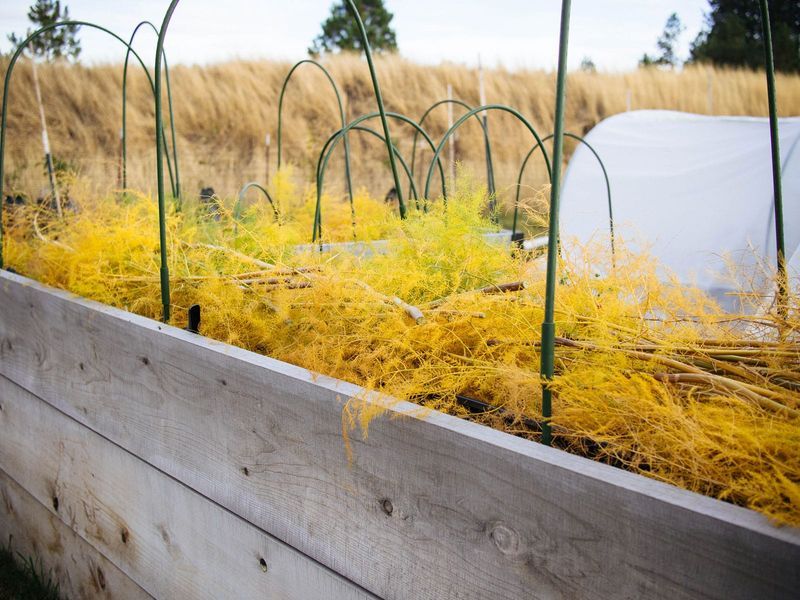
Your eyes are the best calendar. Green means the plant is still feeding the roots, so leave it alone.
Once the fronds have turned completely yellow or brown, the transfer is done and cleanup makes sense. A hard frost that kills the tops works as a signal too.
The foliage does not have to go fully brown before you cut, because complete yellowing is a practical cue as well.
Plants do not all follow one schedule. A patch in a sunny spot may fade weeks before one in partial shade, and a mild fall can stretch the process out.
Walk the bed and look for a few things: no green left in the stems, fronds that look dry or limp, and a stem that feels brittle. If any green remains, give it more time.
The same guidance in Minnesota and New Hampshire sources points to color, not a fixed date.
Let local conditions set the timing
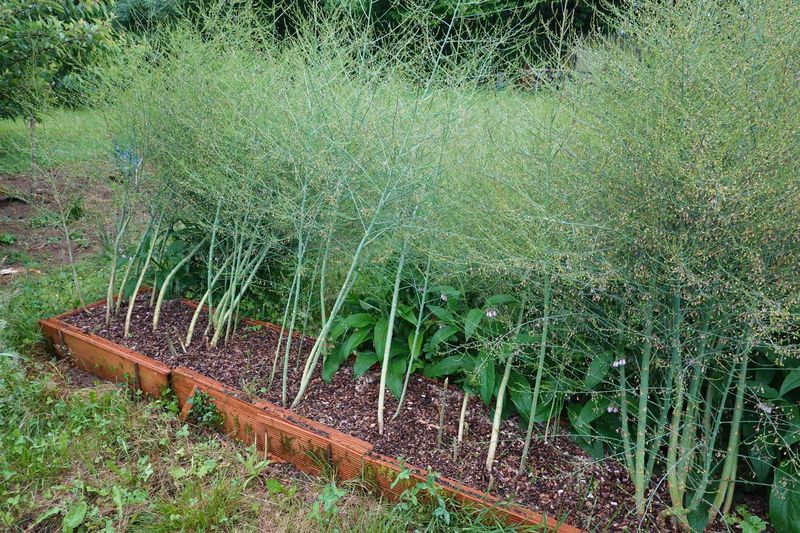
The South does not run on one fall schedule. In Texas, Texas A&M AgriLife recommends cutting after the first hard frost or freeze in many areas.
Where a freeze does not kill the foliage, it says to remove the tops in late November once they have turned yellow.
So a Panhandle gardener and a Rio Grande Valley gardener may be cutting weeks apart. Let your own frost and your own fronds decide.
Florida is trickier. UF/IFAS notes that the warm, wet climate often does not give asparagus the dormancy it needs, and the crop tends to do poorly there.
Its vegetable questions page backs that up.
If you grow it in Florida, do not count on a typical fall dieback. If the tops do die back naturally, use that as your cue.
If they stay green, skip the forced cleanup.
Cut dead tops at ground level
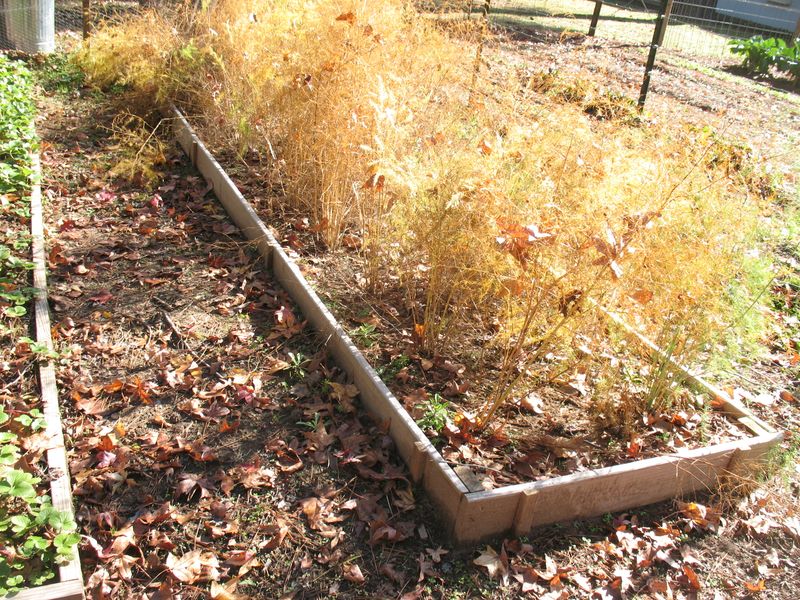
Once the tops are ready, the job is simple. Grab clean, sharp pruners or a hand sickle and cut the dead stems at ground level, as Texas A&M guidance advises.
Leave the crown alone. Do not dig around it, and do not slice below the soil line, since the buds that become spears sit just underneath.
Work on a dry day so stems snap cleanly and you are not tracking wet soil over the bed. Gather the cut tops as you go.
For disposal, bag them for yard waste pickup or add them to a hot compost pile if you are comfortable with it. Burning is not a routine home-garden choice, and local rules may prohibit it.
Clear old foliage with pests and winter conditions in mind
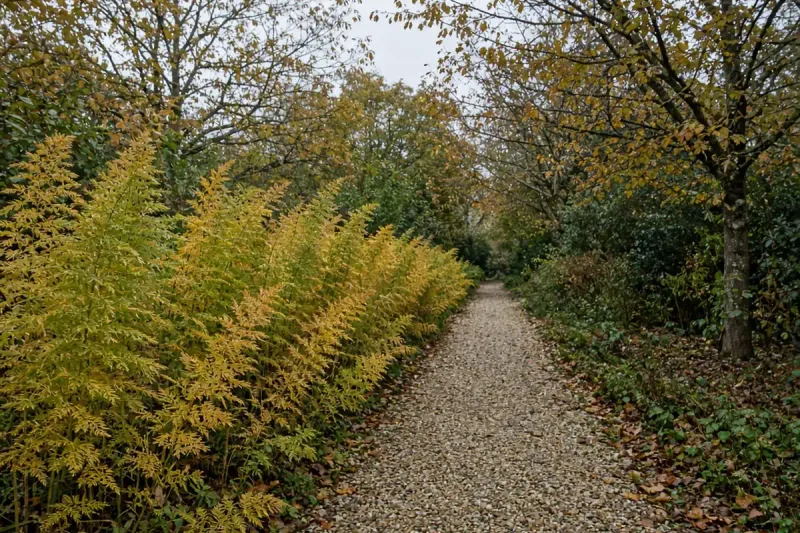
Old ferns can be a winter hideout. University of Minnesota Extension says asparagus beetles overwinter in old foliage, so removing dead tops in late fall can help reduce their numbers.
It also recommends removing infected ferns before spring for some diseases.
You may have read that dead tops can simply stand all winter. Iowa State says that is acceptable, and snow caught by the stems can help protect crowns there.
Southern winters rarely offer that kind of snow cover, so it is not a strong reason to leave debris behind in Texas or Florida.
If you do let the tops stand for a while, set a reminder. Remove them before spears emerge in spring so the new shoots are not tangled in old stems.
Investigate unusually early browning
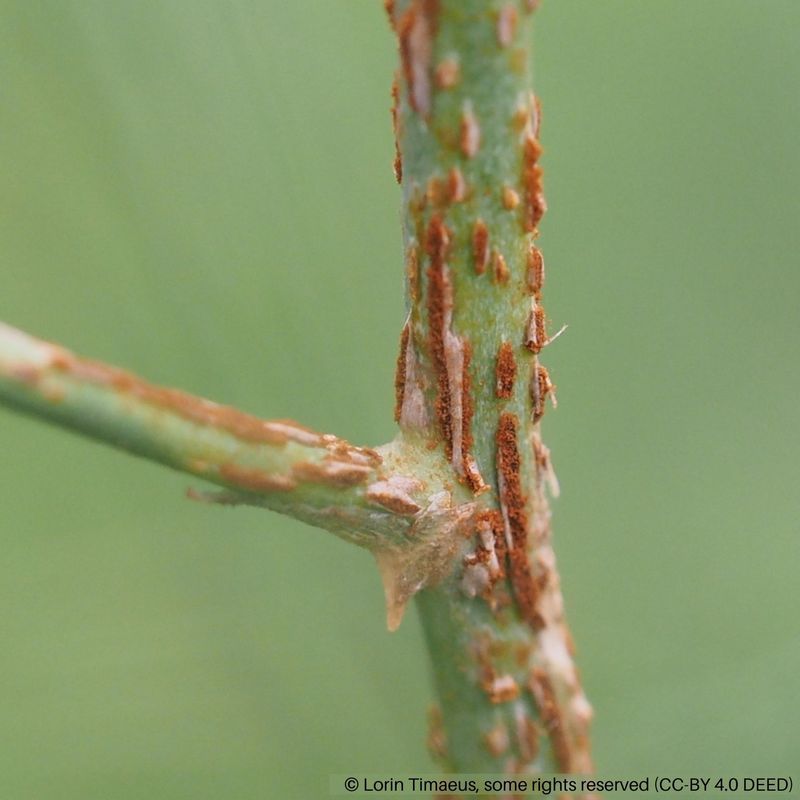
Not every brown fern is a sign that the season is over. If fronds yellow or brown while the rest of the garden is still lush, something may be off.
Maine guidance in this Extension article on premature browning advises keeping healthy green foliage as long as possible, while checking early browning for disease signs such as lesions or blisters.
Look closely at the stems and branches. Spots, sunken patches, or blistered areas deserve a second look, and color alone cannot tell you what is causing the problem.
Take photos and contact your county Extension office for help. Until you know more, avoid treating the plants as if they are ready for routine cleanup.
A frond that browns on schedule is ordinary dormancy. One that browns early is a question worth asking.