
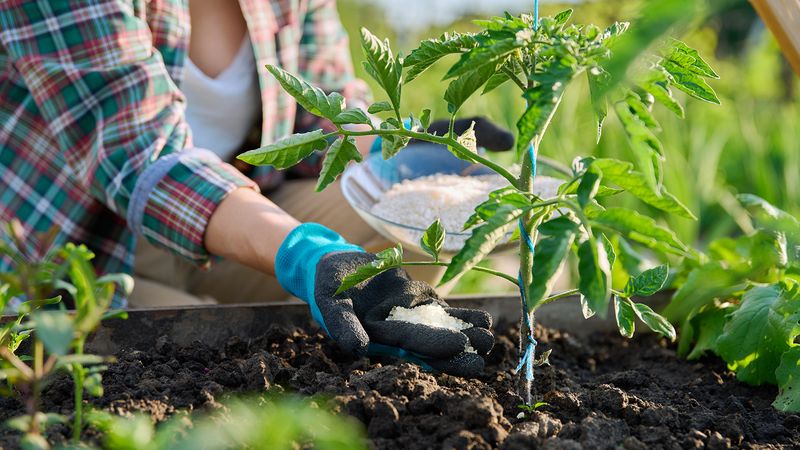
Gardeners across the South have heard the tip dozens of times: sprinkle a little of that white powder from under the bathroom sink and watch your tomatoes explode in size. The ingredient most often named in that advice is Epsom salt, and the promise sounds almost too easy to pass up.
But before you reach for the bag, the story is more complicated than most garden blogs let on, and getting the details right can save your plants from real harm.
The popular ingredient is Epsom salt—but the claim needs a correction
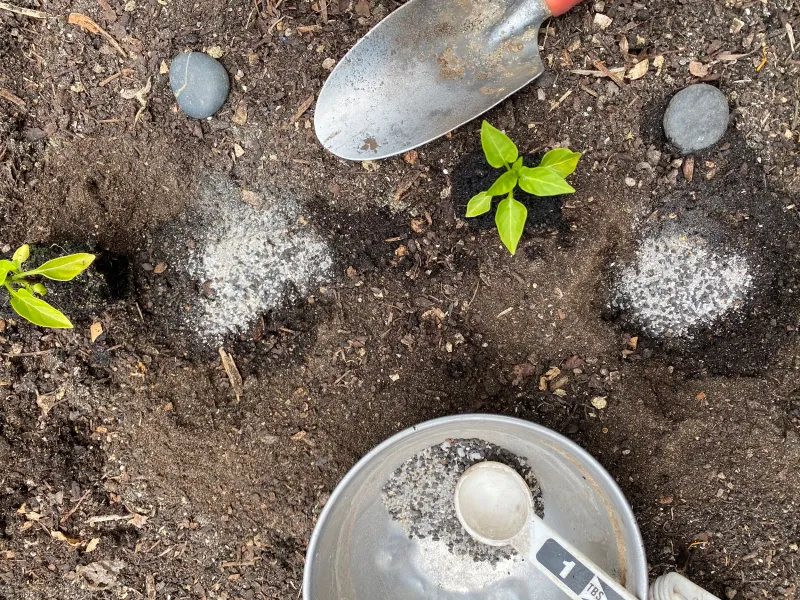
Plenty of viral garden tips promise that one ingredient from your bathroom cabinet is the secret to enormous tomatoes. The ingredient most commonly named is Epsom salt, which is magnesium sulfate.
Magnesium is a real and essential plant nutrient: it sits at the center of every chlorophyll molecule and plays a role in energy transfer and root development, so a genuine shortage does limit how well a plant grows and produces.
The problem is the leap from “magnesium matters” to “add Epsom salt and grow bigger tomatoes.” Oregon State University Extension lists routine Epsom-salt use as a gardening myth and recommends it only when a soil or tissue test confirms a magnesium shortage. Without that confirmation, adding magnesium sulfate can throw off the balance of other nutrients and may end up hurting rather than helping your plants.
Epsom salt supplies magnesium and sulfur, and nothing else. According to University of Maryland Extension, it is approximately 10 percent magnesium and 13 percent sulfur.
Calcium, nitrogen, phosphorus, and potassium are not in the bag. Tomato fruit size responds to many interacting factors, including cultivar genetics, balanced nutrition, consistent moisture, sunlight, root health, and temperatures during flowering, as the UGA Commercial Tomato Production Handbook makes clear.
No single amendment starts or guarantees a large harvest.
Magnesium can affect fruit size without guaranteeing a larger harvest
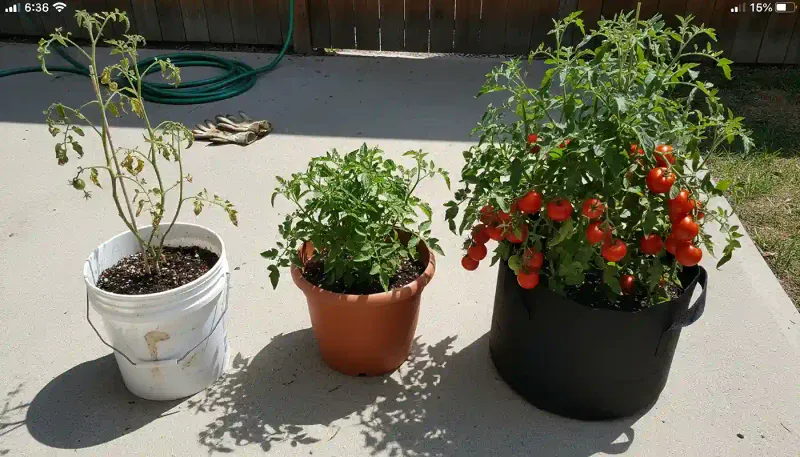
When gardeners say they want bigger tomatoes, they usually picture one thing: a hefty fruit that barely fits in one hand. But “bigger tomatoes” can mean several different things, and those meanings do not always move together.
Average individual fruit weight, total fruit count, total yield per plant, and total harvest weight are separate outcomes, and a treatment that nudges one of them may do nothing at all to the others.
A greenhouse study published in the journal Horticulturae found that foliar magnesium applications increased average tomato fruit weight under the controlled conditions of that experiment. However, that same study reported no significant increase in total yield, meaning the plants did not produce meaningfully more tomatoes overall.
The experiment used controlled greenhouse conditions, measured nutrient rates, and specific cultivars, so its results cannot be converted directly into a recommendation for sprinkling a household product around a backyard plant.
Responses to magnesium fertilization also vary widely. A published meta-analysis on magnesium fertilization found that crop response depends on the existing nutrient status of the soil, application rate, soil conditions, and the crop itself.
A garden that already has adequate magnesium is unlikely to respond the way a deficient one does, and adding more will not push fruit beyond what the plant’s genetics and growing conditions allow.
Test the soil before you add magnesium
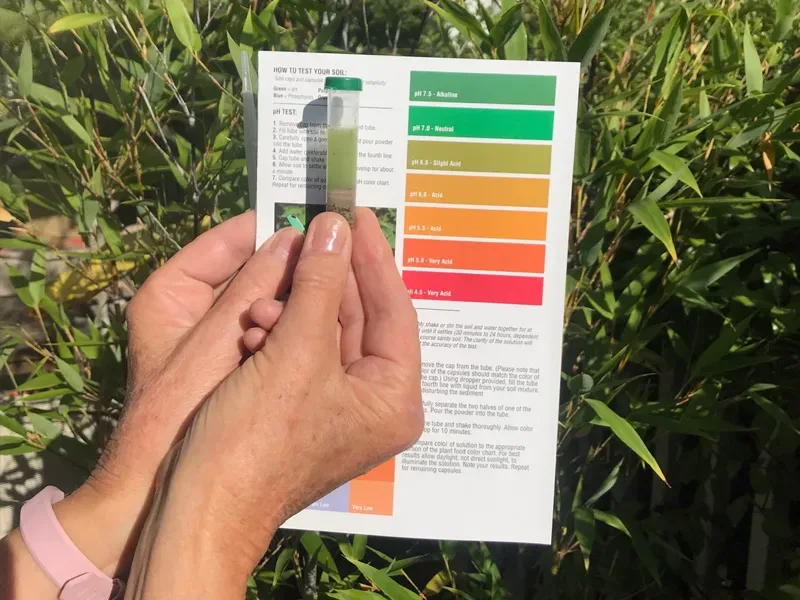
Soil testing is the clearest, most direct way to find out whether your garden actually needs magnesium before you spend money on Epsom salt. A standard soil test checks magnesium alongside calcium, potassium, phosphorus, and pH, giving you a complete picture of what your soil already supplies.
Penn State Extension explains that soil testing is the standard method for determining whether a fertilizer or amendment is actually needed, rather than guessing based on plant appearance or advice from a neighbor.
When a test comes back showing adequate or high magnesium, there is no scientific reason to add more. Soil that already supplies enough magnesium will not reward you with larger fruit just because you add extra.
Applying Epsom salt to a sufficient soil can actually interfere with other nutrients, particularly calcium and potassium, and repeated applications can contribute to salt accumulation that stresses plant roots.
University of Maryland Extension guidance on growing tomatoes at home recommends testing soil as a first step before applying any fertilizer or amendment. If a test does confirm a magnesium deficiency, follow the laboratory’s specific product and rate recommendation rather than copying a fixed recipe from the internet.
The label on the product you purchase is also a required reference, not an optional one.
Yellow leaves can signal many different problems
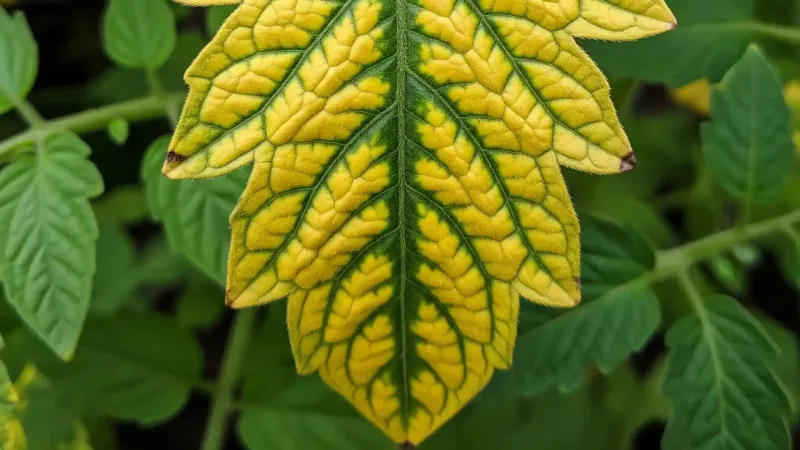
Interveinal chlorosis, the pattern where leaf tissue between the veins turns yellow while the veins themselves stay green, can be consistent with a magnesium shortage. That pattern is real and worth knowing about.
But a yellow leaf on a tomato plant is not a diagnosis, and reaching for Epsom salt as a first response is a gamble that can make the underlying problem worse.
An Oregon State University Extension newsletter on nutrient deficiency symptoms notes that interveinal yellowing is associated with magnesium deficiency in plants, but the same visual pattern overlaps with symptoms caused by nitrogen problems, excess moisture, root injury, fungal or bacterial disease, and pH-related nutrient lockout. When soil pH is too high or too low, nutrients already present in the soil become unavailable to roots, producing deficiency symptoms even though the nutrient is physically there.
Before treating yellow leaves with any amendment, look at the whole plant and the root zone. Check whether the yellowing starts on older lower leaves or on new growth at the top, since that pattern helps narrow down the cause.
Pull back the mulch and inspect the soil moisture level. Soil testing and a broader plant assessment will give you far more useful information than a visual guess, and UMD Extension’s home tomato guide supports starting with a test rather than an amendment.
Choose a cultivar that matches your fruit-size and climate goals
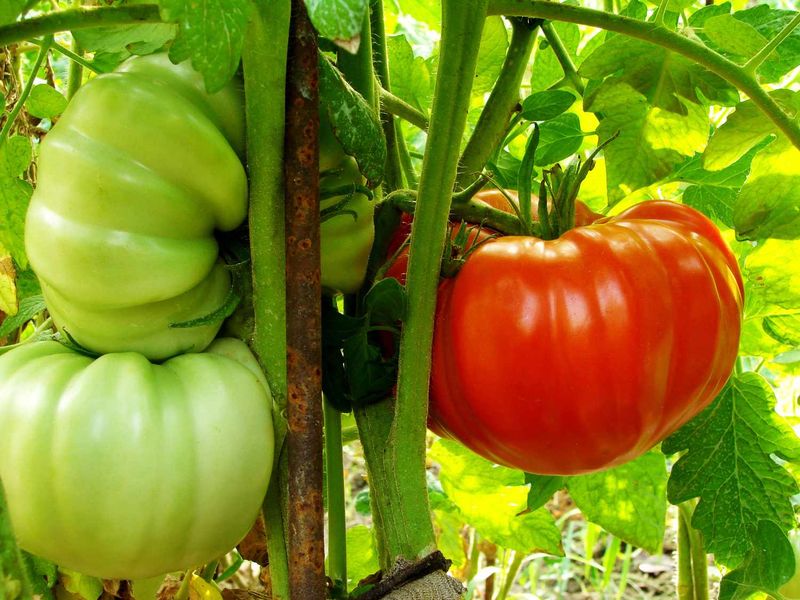
Cultivar choice is one important factor shaping how large your tomatoes can grow, but it works alongside growing conditions rather than overriding them. Beefsteak types and some heirloom varieties carry the genetic potential for large individual fruits, sometimes exceeding a pound per tomato.
Cherry and grape types, by contrast, are bred for prolific small-fruit production, and no amount of fertilizer will turn them into beefsteaks.
In the Southern U.S., the tradeoff gets more complicated because heat adaptation matters as much as raw size potential. The UGA Commercial Tomato Production Handbook emphasizes that cultivar selection must account for local conditions, not just catalog descriptions of fruit size.
A variety that sets fruit reliably through a Georgia or Texas summer may produce more usable tomatoes per season than a large-fruited type that drops its blossoms every time the temperature climbs.
Florida gardeners face a similar calculation. UF/IFAS guidance on tomato cultivar selection notes that some varieties are better adapted to Florida’s heat and humidity than others, and that adaptation affects both fruit set and disease resistance.
Choosing a cultivar that fits your specific climate and growing window gives your plants a better foundation than any amendment can provide on its own.
Treat blossom-end rot as a moisture and calcium-transport problem
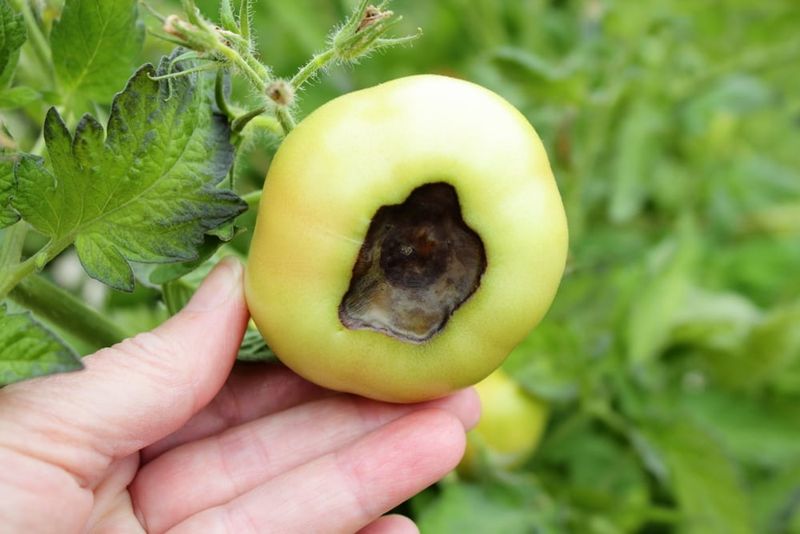
Blossom-end rot shows up as a dark, leathery, sunken patch on the bottom of a developing tomato, and it is one of the most common reasons Southern gardeners reach for Epsom salt. That response will not help.
University of Maryland Extension specifically warns that Epsom salt contains no calcium and will not prevent or reverse blossom-end rot. Applying it to an affected plant adds magnesium that the plant does not need for this problem, and excess magnesium can actually interfere with the calcium uptake that the plant does need.
Blossom-end rot is primarily a calcium-transport disorder. University of Minnesota Extension explains that the disorder commonly involves inadequate or uneven movement of calcium into rapidly developing fruit tissue.
Calcium moves through plants in water, so anything that disrupts water flow through the plant can reduce calcium delivery to the fruit tip. Fluctuating soil moisture, drought stress, root injury from cultivation or pests, and excessive vegetative growth driven by too much nitrogen are all contributing factors.
Steady, even soil moisture is the most practical management tool available. Mulch around your plants helps buffer soil temperature and retain moisture between waterings.
The UGA publication on blossom-end rot and calcium nutrition reinforces that consistent moisture management and avoiding nitrogen excess are the primary approaches to reducing the disorder, not adding a magnesium supplement.
Manage water and fertility before reaching for a quick fix
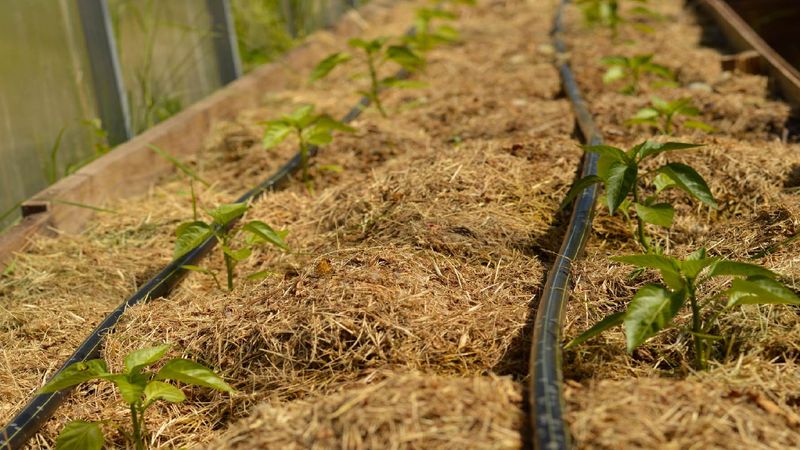
When a soil test does not point to a magnesium deficiency, the most productive thing you can do for your tomatoes is focus on water and balanced fertility. Georgia Cooperative Extension recommends roughly one to two inches of water per week for tomatoes, adjusted for soil type and weather, and favors deep, thorough watering over frequent light sprinkling.
Shallow watering encourages shallow roots, which are more vulnerable to heat and drought stress during the hottest weeks of summer.
Drip irrigation or soaker hoses deliver water directly to the root zone and help keep foliage dry, which reduces disease pressure. A two- to three-inch layer of mulch over the soil surface slows evaporation, moderates soil temperature, and reduces the moisture swings that contribute to blossom-end rot and fruit cracking.
These two practices together do more for Southern tomato plants than most amendments.
Fertility also needs to stay in balance. Extension guidance on vegetable fertility notes that excess nitrogen produces lush, fast-growing foliage but can delay fruit set, contribute to blossom-end rot, and make plants more attractive to certain pests.
Texas A&M AgriLife Extension recommends basing nitrogen rates on soil-test results and splitting applications between a preplant dose and a side-dress application after fruit set begins, rather than applying a single heavy dose at planting.
Protect flowering plants from Southern heat
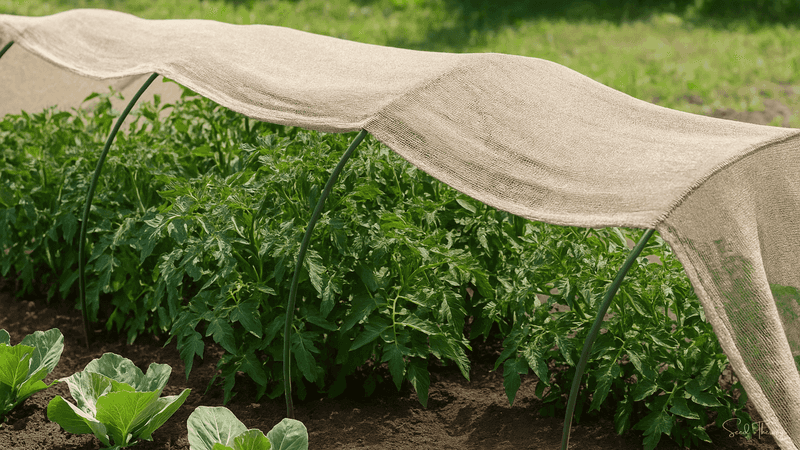
Heat is often the most limiting factor for Southern tomato growers, and no fertilizer can fix a pollination problem caused by temperature. When daytime temperatures climb and stay near or above roughly 90 degrees Fahrenheit, pollen viability can drop and fruit set may decline, even on otherwise healthy plants.
UF/IFAS greenhouse tomato guidance notes that some cultivars handle high temperatures better than others, which is one reason cultivar selection matters so much in Florida and along the Gulf Coast.
Texas growers face similar heat pressure during midsummer. Texas A&M AgriLife Extension recommends timing plantings so that the main fruit-set period falls before the worst summer heat, then managing irrigation and nutrition carefully through bloom to keep plants in the best possible condition.
Uniform water supply during flowering is especially important because drought stress during that window can trigger blossom drop regardless of how well-fed the plant is.
Commercial fertigation systems used in Florida production, as described in UF/IFAS fertigation research, rely on calibrated nutrient rates, soil monitoring, and precise irrigation control. Backyard gardeners cannot replicate those conditions with a household product, and trying to import commercial recommendations into a home garden without the underlying system rarely produces the same result.
Working with your local climate rather than against it is the more reliable path.
Use Epsom salt only as a tested, targeted correction
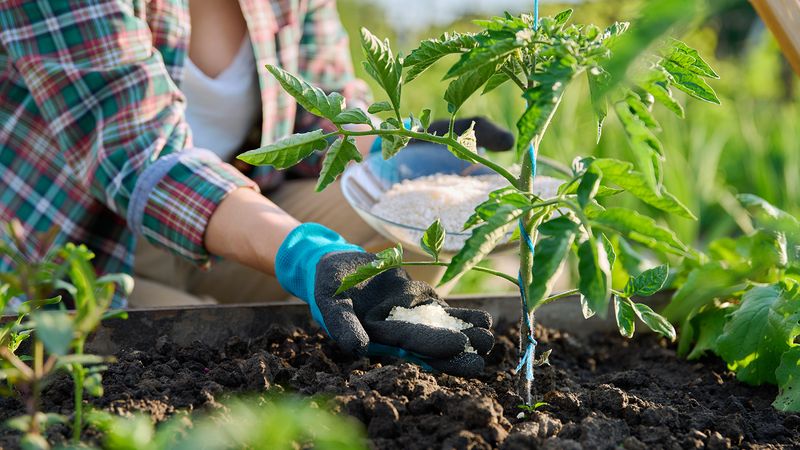
The clearest path forward with Epsom salt is also the simplest: test first, then decide. If a soil or tissue test confirms a magnesium deficiency, follow the laboratory’s rate recommendation and the product label for how and when to apply.
Skip it entirely when the test shows adequate or high magnesium, because adding more will not produce bigger tomatoes and may interfere with calcium and other nutrients your plants actually need.
OSU Extension’s review of common gardening myths is direct on this point: routine Epsom-salt use is not supported by evidence, and treating it as a universal tomato booster ignores the conditions under which magnesium actually helps. University of Maryland Extension reinforces that magnesium sulfate cannot substitute for a complete fertilizer program and will not address blossom-end rot or the many other things that limit tomato performance.
The factors that most reliably support a good tomato harvest are the ones that have always mattered: a cultivar suited to your climate, balanced fertility based on a soil test, steady and even moisture, healthy roots, adequate sunlight, conditions that allow pollination, and temperatures that let fruit set and develop. As Georgia Extension notes, getting those fundamentals right gives your plants the best chance of producing well.
Epsom salt used carefully in the right situation is a legitimate tool; used carelessly, it is just a bag of salt.