
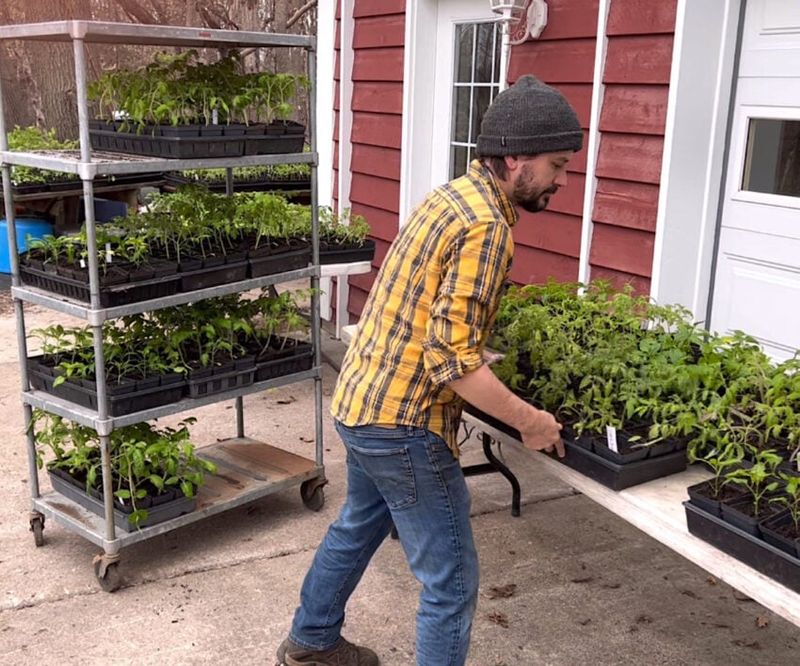
You did the hard part this fall and coaxed those bare fig sticks into growing real roots. Now comes the tricky stretch, because the months between now and spring are when many young figs quietly fail.
Baby fig plants are tough in some ways and surprisingly fragile in others. Give them these eight simple things, and you will carry a tray of healthy little trees right up to planting day.
1. Bright Light for 12 to 16 Hours a Day
Picture a sunny July day in the orchard. That is the kind of light a fig was born to love, and a winter windowsill simply cannot match it.
Even a south-facing window in December offers only a few weak hours of sun. Young cuttings in that spot often grow tall, pale, and floppy as they stretch toward the glass.
Gardeners call this legginess, and it leaves stems too thin to handle outdoor life later.
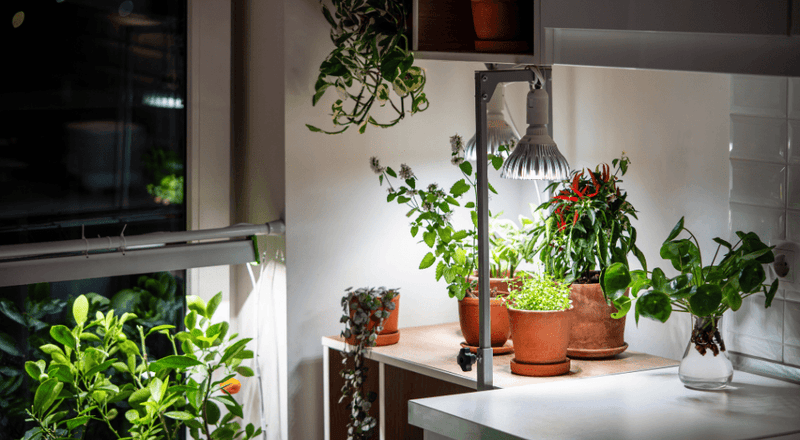
A simple LED grow light solves the problem for very little money. Hang it about 6 to 12 inches above the leaves and run it 12 to 16 hours a day on a cheap outlet timer.
Full-spectrum white lights work great and look nicer in a living room than the purple kind.
Watch the leaves for clues. Big, deep green leaves on short stems mean the light is just right.
Small, washed-out leaves on long stems mean you should lower the fixture or add another one.
Fun fact: figs are one of the oldest cultivated plants on earth, grown by people for more than 11,000 years. They have always been sun lovers, so a little extra glow keeps them feeling at home all winter long.
2. Steady Warmth Between 65 and 75 Degrees
Cold feet are bad news for a baby fig. Roots that just formed a few weeks ago grow fastest when the soil stays cozy, and they nearly stall when temperatures drop.
Aim to keep the room between 65 and 75 degrees Fahrenheit. Drafty spots near exterior doors, chilly basements, and windows at night can drop far lower than you think.
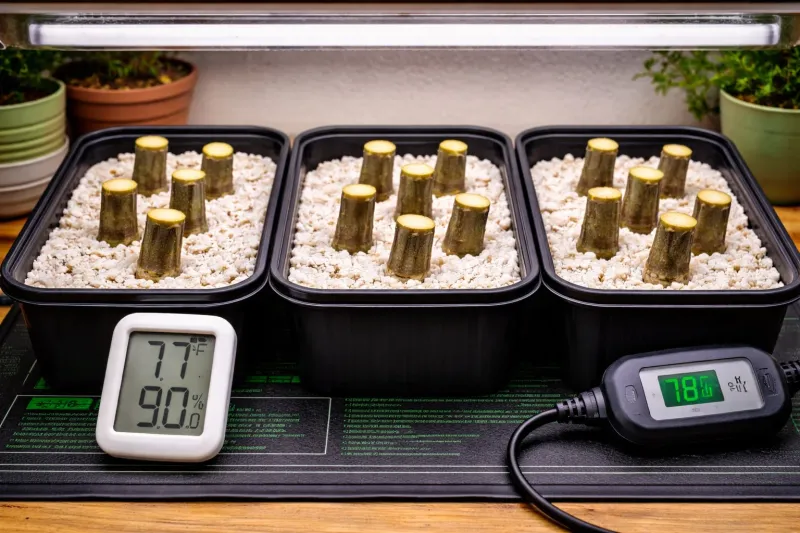
A cheap digital thermometer placed right beside the pots tells you the real story.
If your house runs cool in winter, a seedling heat mat is a smart upgrade. Set the pots on the mat, and the gentle bottom heat keeps roots active even when the air feels nippy.
Many growers pair the mat with a thermostat so it never overheats the soil.
Avoid the opposite extreme too. Parking cuttings beside a heating vent or on top of a radiator dries them out fast and can cook tender roots.
Think of it like tucking a toddler in for a nap. Warm, steady, and calm beats hot one hour and freezing the next.
A stable temperature lets your figs pour their energy into building strong roots instead of struggling to adjust every day.
3. Careful Watering That Never Drowns Roots
More rooted fig cuttings die from kindness than from neglect. Too much water is the number one killer, and it usually happens because we love them a little too hard.
Young fig roots need air as much as moisture. When soil stays soggy, those tiny white roots turn brown and mushy, and the plant collapses even though the soil looks perfectly wet.
That sad sight is root rot at work.
Here is a simple trick many growers use. Lift the pot and feel its weight right after watering, then again a few days later.
Water only when it feels noticeably light and the top inch of soil is dry to the touch.
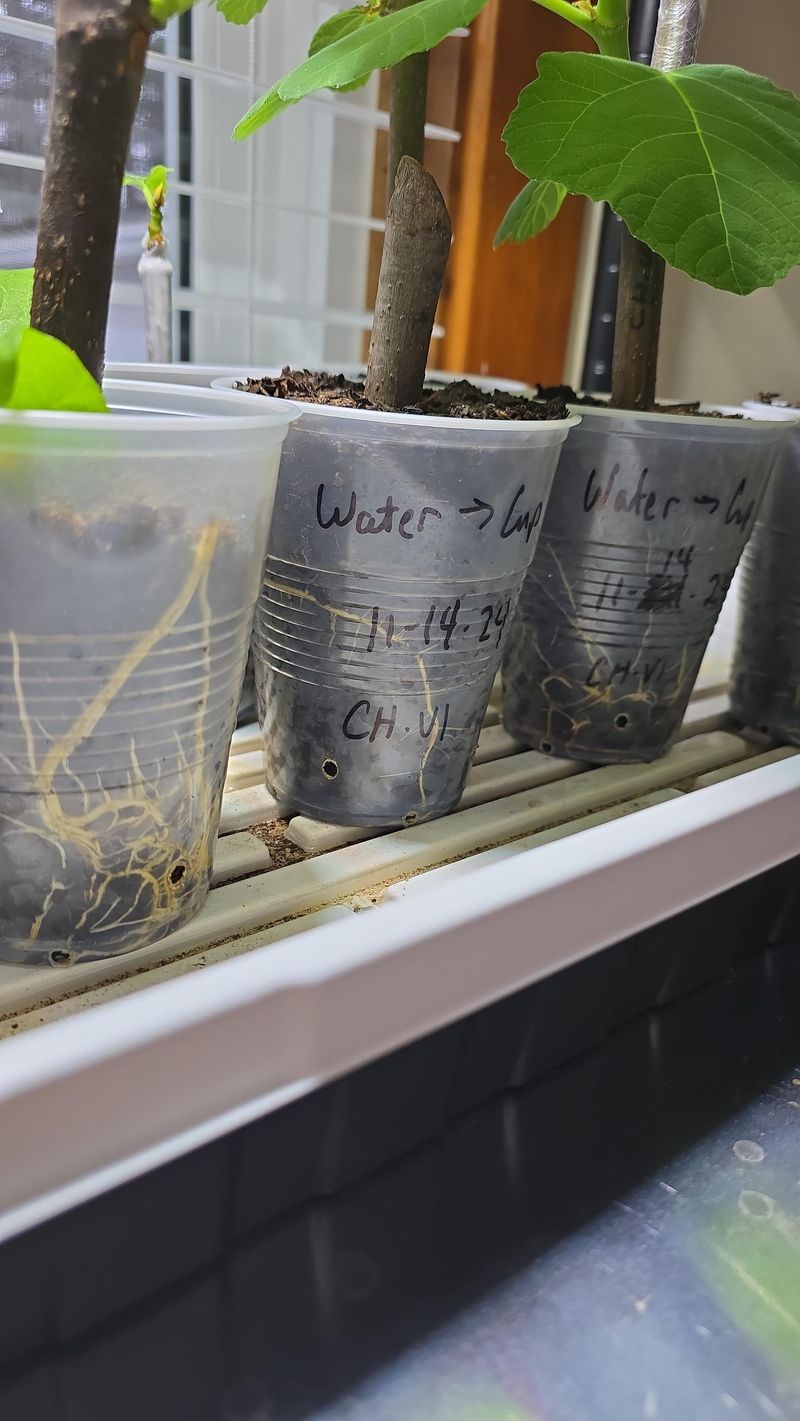
Clear plastic cups make this even easier. You can see the roots and check whether the mix looks damp or dry along the sides.
When you do water, soak thoroughly until a little drains out the bottom, then dump any leftover water from the saucer.
Room-temperature water is kinder than an icy splash from the tap. Over the winter, your watering schedule may stretch to once every week or two.
Let the plant, not the calendar, decide when it is thirsty.
4. A Light, Fast-Draining Potting Mix
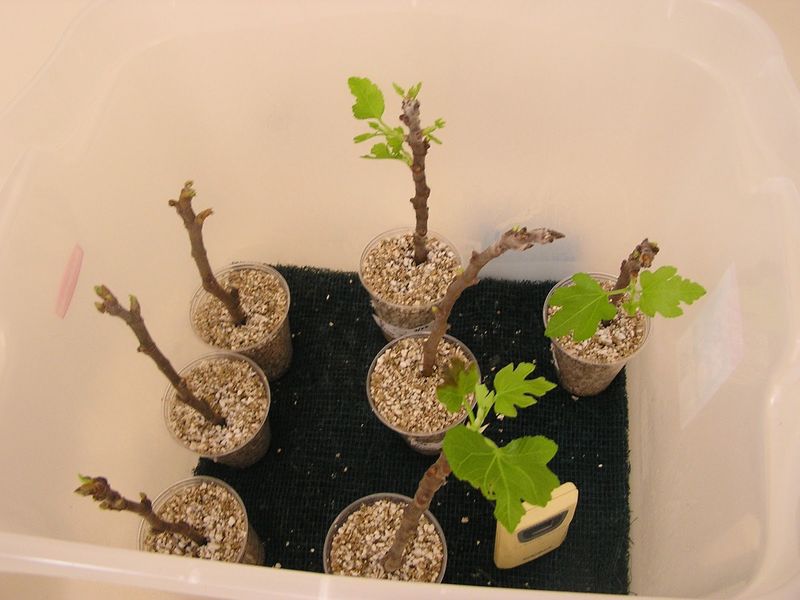
Ever tried to breathe through a wet towel? That is roughly how fig roots feel in heavy, dense soil.
Garden dirt and cheap topsoil pack down hard in pots. They hold too much water and squeeze out the air pockets roots need.
Your little figs want something fluffy that drains quickly and still holds a bit of moisture.
A popular homemade blend is about half quality potting mix and half perlite. Some growers add a handful of coarse bark or pumice for extra airflow.
The result should feel light in your hand and crumble apart easily when squeezed.
If you rooted your cuttings in damp sand or sphagnum moss, now is the time to move them into this mix. Do it gently.
New roots are brittle and snap like thin spaghetti if you yank them.
Start with a pot only slightly larger than the root ball, such as a 16 or 32 ounce cup or a small nursery pot with drainage holes. A giant container holds extra soggy soil that roots cannot reach yet.
Moving up in size slowly keeps the soil from staying wet and helps roots fill each pot completely before the next step.
5. Gentle Air Movement
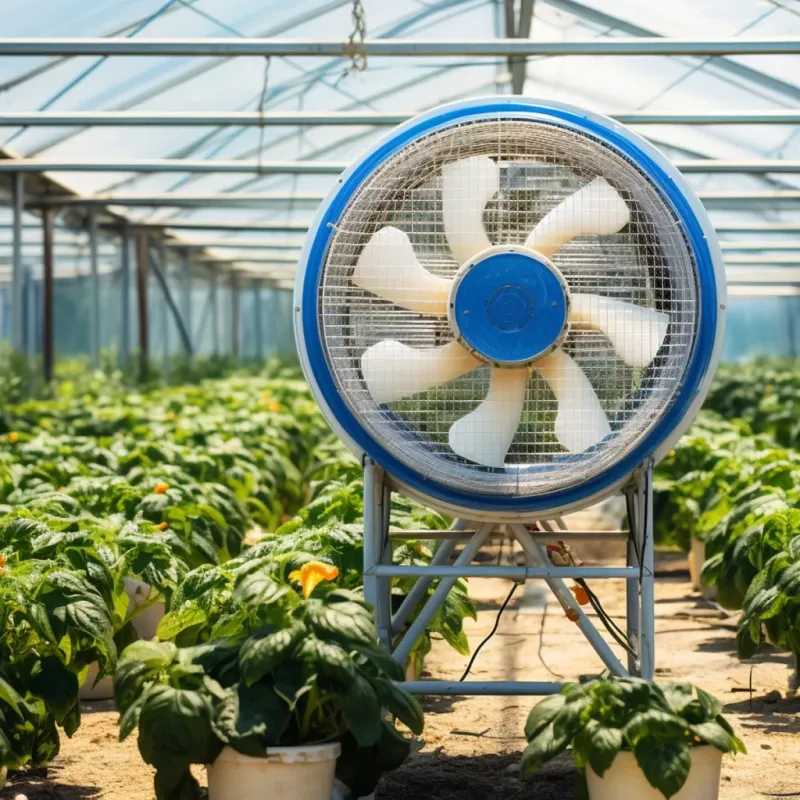
A tiny clip-on fan might be the most underrated tool on your plant shelf. It costs a few dollars, and it quietly solves two big problems at once.
First, moving air helps stop mold and fungus gnats. Still, damp air around pots invites fuzzy white mold on the soil surface and swarms of little black flies.
A light breeze dries the top layer and makes your setup much less welcoming to both.
Second, a soft breeze makes stems stronger. Outdoors, wind constantly sways plants, and they respond by growing thicker, sturdier trunks.
Indoor figs that never feel a breath of air often end up weak and wobbly.
Keep things gentle, though. You want leaves that flutter slightly, not plants that whip around like they are in a storm.
Point the fan across the shelf rather than straight down at the pots.
Running it for a few hours a day is plenty, and many growers simply plug it into the same timer as the grow light. Your cuttings get a daily workout without any extra effort on your part.
Come spring, they will be far better prepared for real wind in your yard.
6. Humidity Help Without the Mold
Winter heating turns most homes into deserts. Indoor humidity can drop below 30 percent, and freshly rooted figs with small root systems struggle to keep their leaves hydrated in air that dry.
You might notice crispy brown leaf edges or new leaves that shrivel before they open. Those are classic signs your cuttings are losing water faster than their roots can replace it.
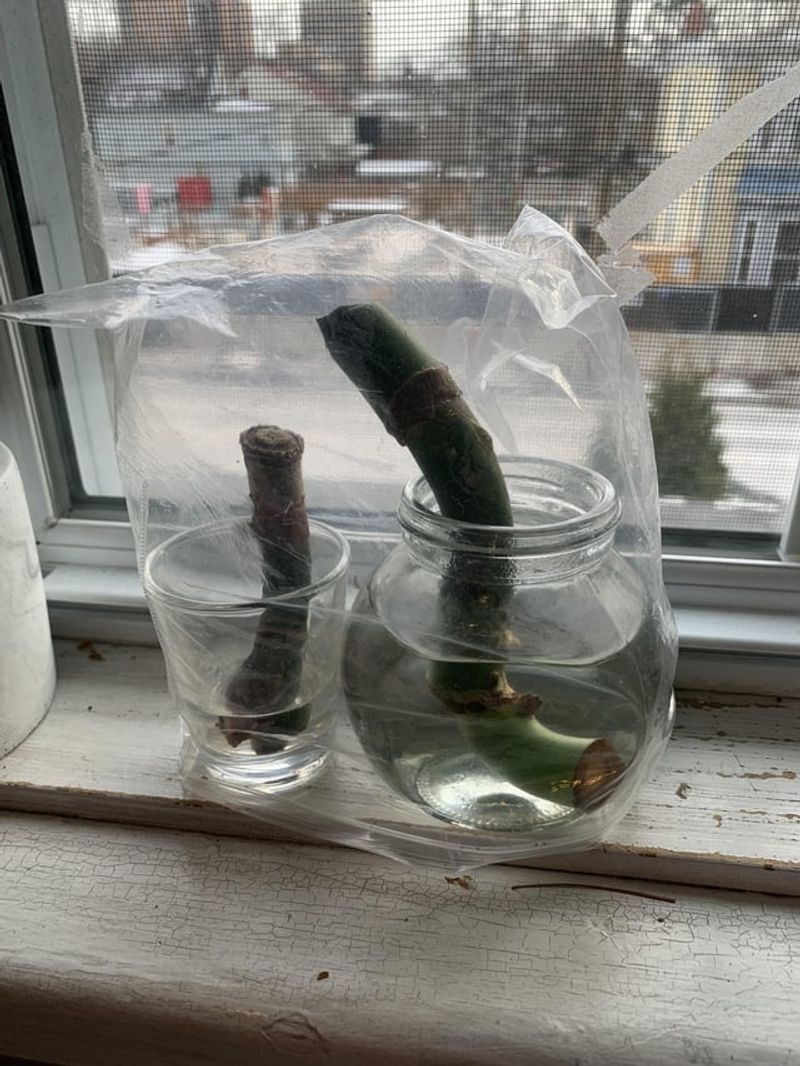
Many growers use a clear plastic storage tote as a mini greenhouse. Place the pots inside, set the lid loosely on top, and the trapped moisture keeps leaves happy.
A humidity dome from a seed-starting kit works the same way on a smaller scale.
The catch is balance. Sealed containers with zero airflow become mold factories.
Crack the lid open a bit, and wipe away heavy condensation every couple of days.
Over a few weeks, slowly open the lid wider and wider. Your figs will toughen up and adjust to normal room air without a shock.
A small humidifier running nearby is another easy option if you would rather skip the tote entirely and keep plants out in the open on a shelf.
7. A Light Touch With Fertilizer
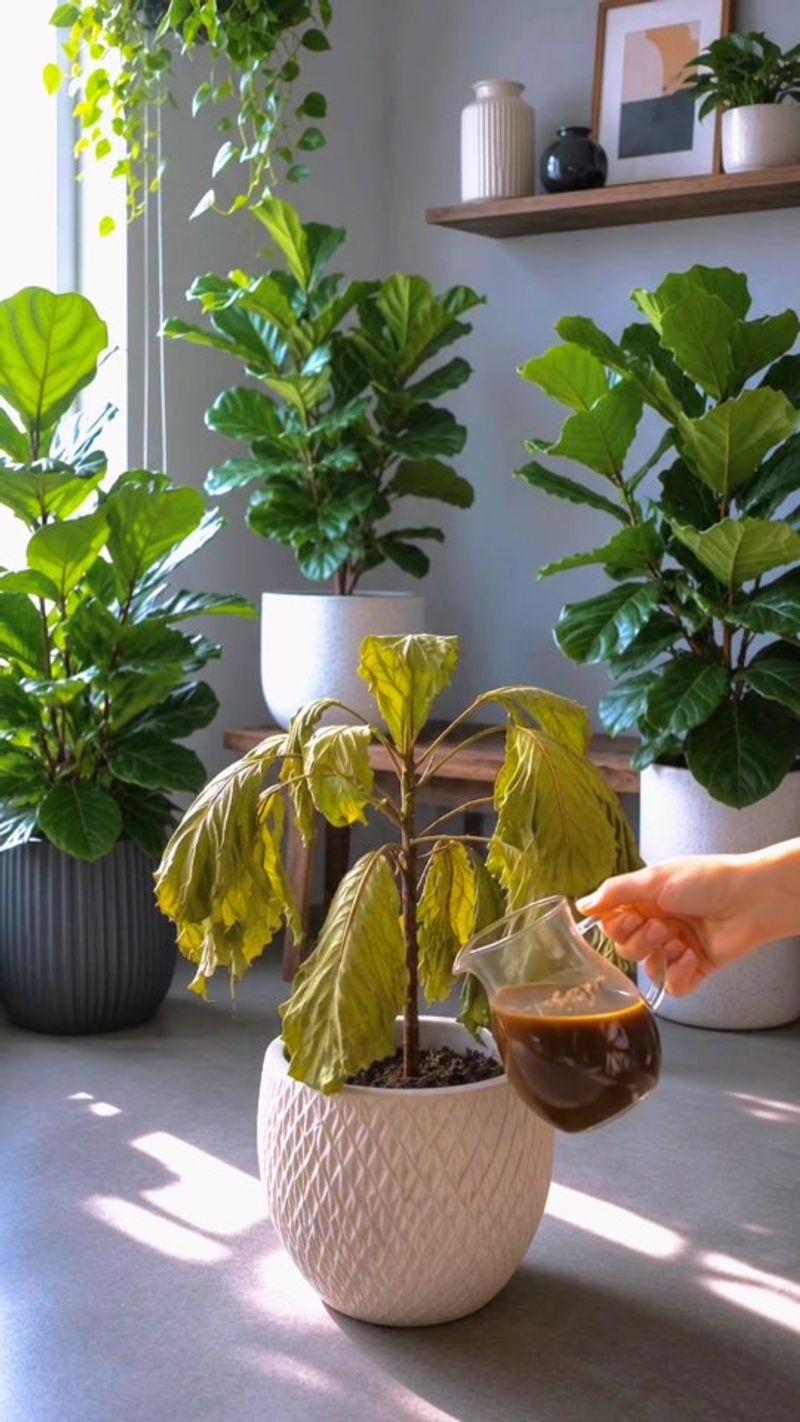
Hold off on the plant food for now. Fresh roots are delicate, and a strong dose of fertilizer can burn them before they ever get a chance to settle in.
Wait until your cutting has several healthy leaves and roots are clearly filling the pot. That usually takes a few weeks after potting up.
Before that point, the plant is still living off stored energy in the woody stem.
Once it is ready, use a balanced liquid fertilizer mixed at one quarter to one half the label strength. Feed every two to three weeks with your regular watering.
A gentle, steady trickle of nutrients beats one heavy meal every time.
Pay attention to what the leaves tell you. Pale, yellowish new growth may mean the plant is hungry.
White crust on the soil or brown leaf tips often signals too much fertilizer, so flush the pot with plain water.
A fun detail about figs is how eager they are. Well-fed indoor cuttings sometimes even form tiny baby figs during winter.
They rarely ripen indoors, so many growers pinch them off to keep the plant focused on roots and leaves for spring.
8. A Slow Hardening-Off Plan for Spring
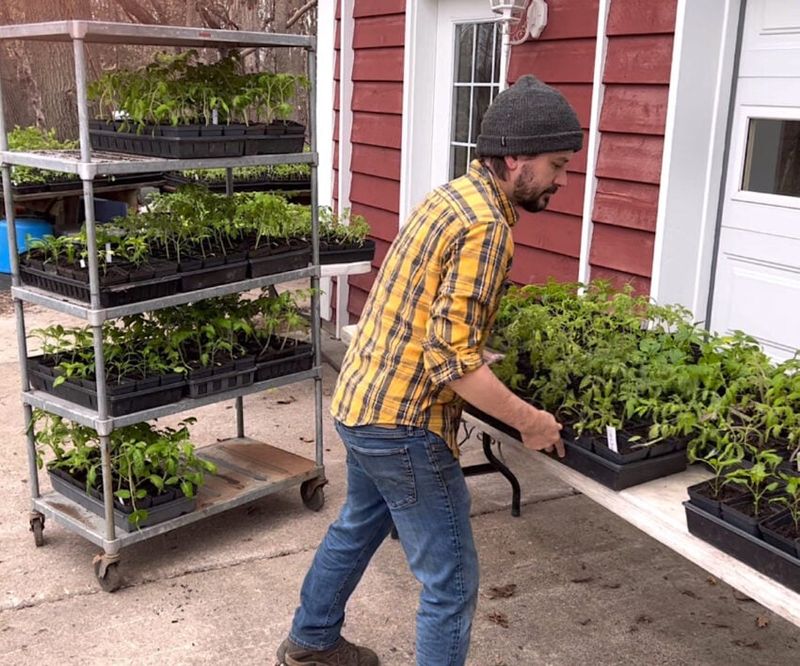
Spring fever hits, the sun shines, and you carry your figs straight outside. Two days later, the leaves look bleached and scorched.
Sadly, that scene plays out in backyards every single year.
Plants raised under indoor lights have never felt real sunshine, wind, or chilly nights. They need a gradual introduction called hardening off.
Planning for it now means you will not rush things later.
Wait until nighttime temperatures stay above 50 degrees and your last frost date has passed. Then start with an hour or two outdoors in shade.
Each day, add a little more time and a little more sun over about one to two weeks.
Bring the pots back inside if a cold snap or strong storm is coming. Young leaves tear easily, and frost can wipe out months of careful work in one night.
By the end of the process, your figs should handle a full day outside without wilting. That is when they are ready for the ground or a bigger container.
All the winter care pays off right here, as you set a sturdy little tree in place that may feed your family figs for decades.