
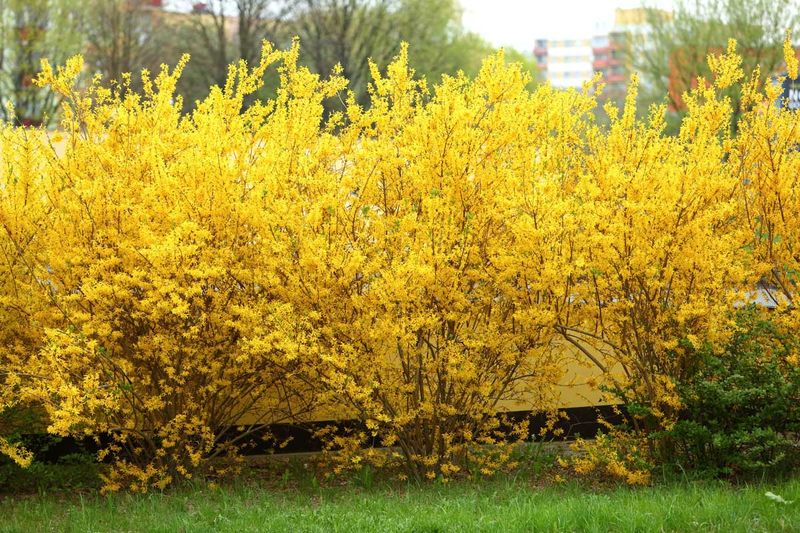
A few bare forsythia stems can turn into new shrubs without a trip to the garden center. That is why so many North Carolina gardeners try it.
The trick is knowing when the shrub is ready to be cut and what the cuttings need afterward. Here is how to give your cuttings a fair shot, and what to expect along the way.
Forsythia can grow from dormant hardwood cuttings
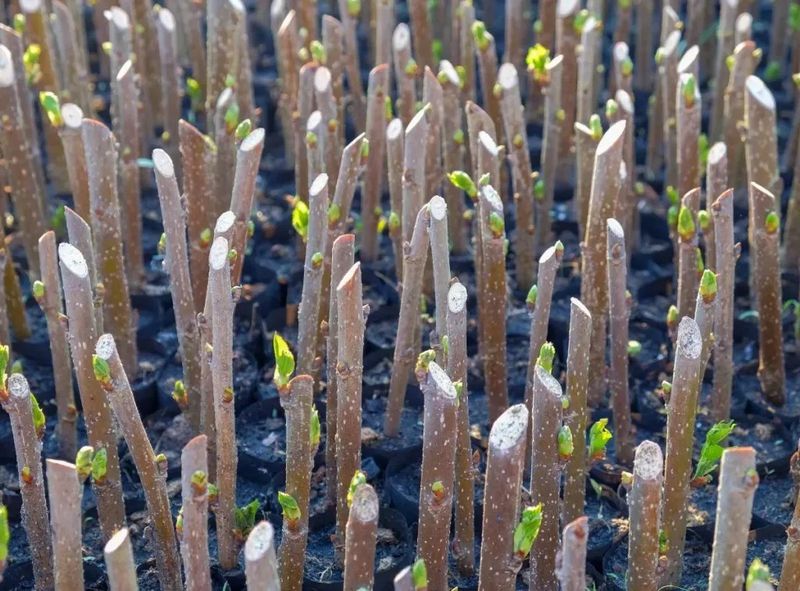
Few shrubs are as easy on the wallet as forsythia. NC State Extension’s propagation handbook lists it among the shrubs that can be started from dormant hardwood cuttings.
That means a stem taken from a healthy shrub you already own, or one a neighbor is willing to share, can become a new plant.
Forsythia also has a second trick. NC State’s Plant Toolbox notes that long branches often root on their own where they touch the ground.
Gardeners can borrow that habit on purpose, and we will get to that method near the end.
Still, being a good candidate is not the same as being a sure thing. Timing, moisture, and the condition of the stems all affect whether a cutting roots.
A method that works well in one yard can fail in another, and a method that suits one time of year may be wrong for another.
So think of this as a low-cost experiment rather than a guarantee. Take more cuttings than the number of shrubs you want, since some will not make it.
If you want a row of five, start with fifteen or twenty.
The goal for most homeowners is simple: add forsythia to a border, a slope, or a property line without paying for nursery plants. That goal is realistic.
It just calls for patience, a little planning, and an honest look at what each stage requires.
The next sections cover when to cut, how to handle the stems, how to keep them moist, and what to expect after roots form.
The shrub’s dormancy matters more than the calendar
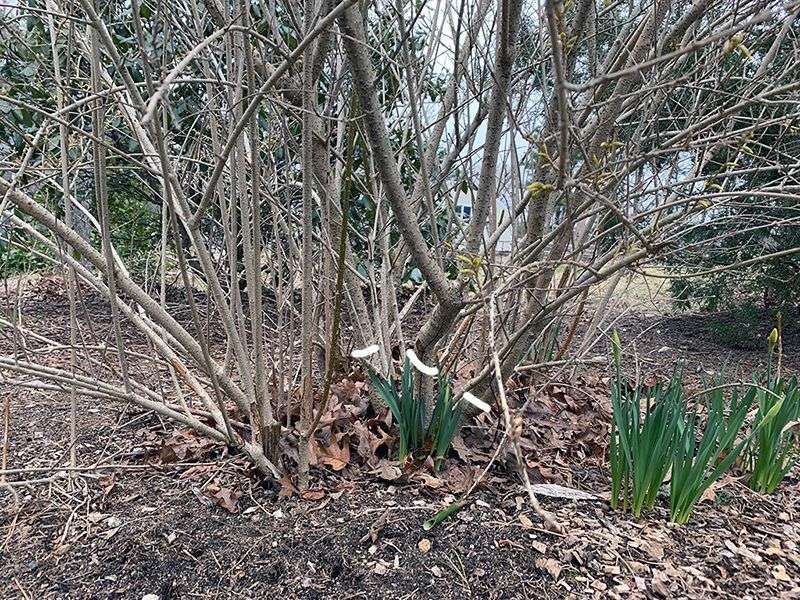
Early fall can fool you. In late September a forsythia in the Piedmont or along the coast is still covered in green leaves and busy growing, so it is not ready for hardwood cuttings yet.
Stems taken now are still soft and growing, and they behave differently from mature wood.
According to NC State Extension, hardwood cuttings come from mature stems when the plant is dormant. That generally means late fall, winter, or early spring.
The better cue is the shrub itself: leaves have dropped, growth has stopped, and the stems feel firm.
Because North Carolina spans mountains, Piedmont, and coast, dormancy arrives on different dates. A Asheville shrub may go dormant weeks before one near Wilmington.
Let a hard frost and bare branches guide you rather than a date on the calendar.
It also helps to know the other cutting types. Semi-hardwood cuttings are taken earlier, from partly mature growth of the current season, while the plant still has leaves.
Hardwood cuttings are a separate method with a separate window, so do not mix the two up.
If your forsythia is still green, use the waiting time to scout. Mark healthy shrubs with bright, straight stems, and plan to return after leaf drop.
A little patience here makes everything that follows go more smoothly.
Choose firm stems and keep them cool and moist
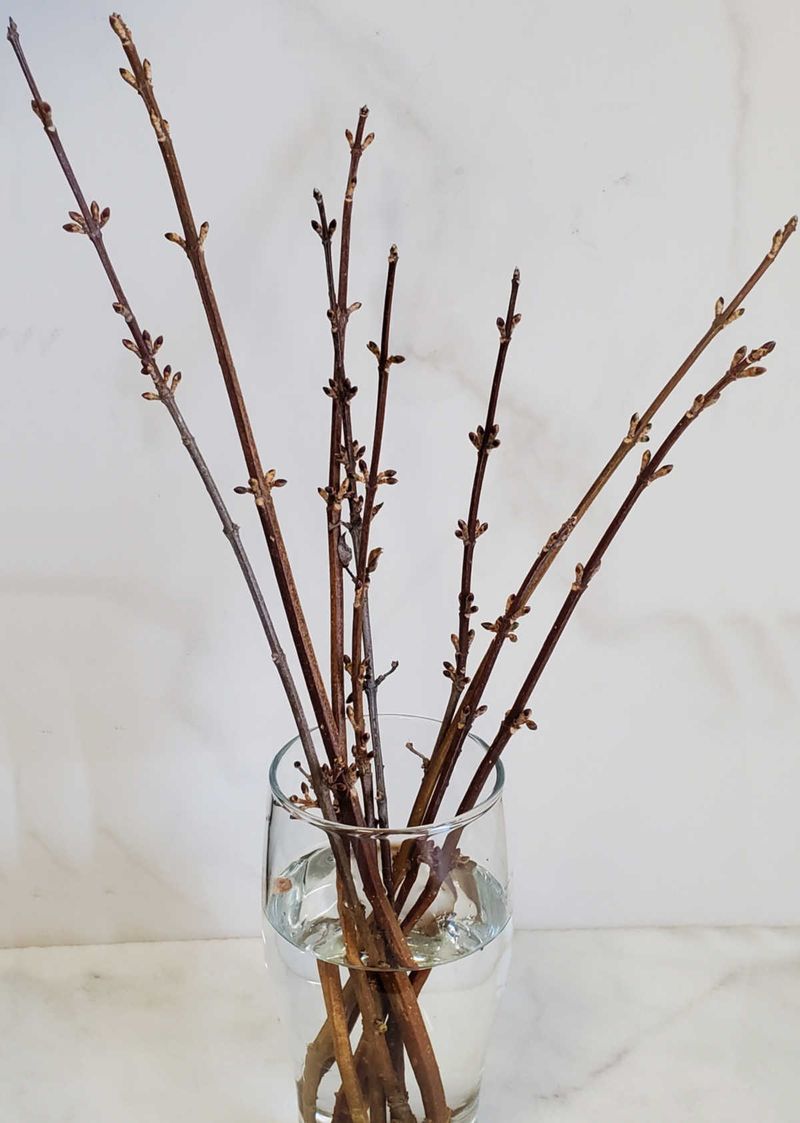
Once the shrub is dormant, pick your stems with care. Choose healthy, firm wood from the past season, free from damage or disease.
Skip anything thin, floppy, or spotted.
Look closely at the buds as you cut. NC State advises avoiding flower buds when preparing woody cuttings, so favor sections with leaf buds, which are usually slimmer and flatter against the stem.
A nursery example shows one way to handle storage. University of Tennessee Extension describes 6 to 8 inch dormant cuttings kept in damp sand until planting around March.
That is one documented approach, not a required home recipe, but it shows the principle well.
Whatever you do, do not let cuttings dry out. Wrap them in a damp paper towel inside a plastic bag, or bury them in barely damp sand or similar material, and keep them in a cool spot such as a garage or refrigerator.
Check every week or two for mold or shriveling.
Keep the cut ends pointing the same direction so you remember which end goes down when planting. Snipping a straight cut at the bottom and a slanted one at the top is a handy trick.
Label your bundles if you are collecting from more than one shrub.
Keep the rooting medium moist, not saturated
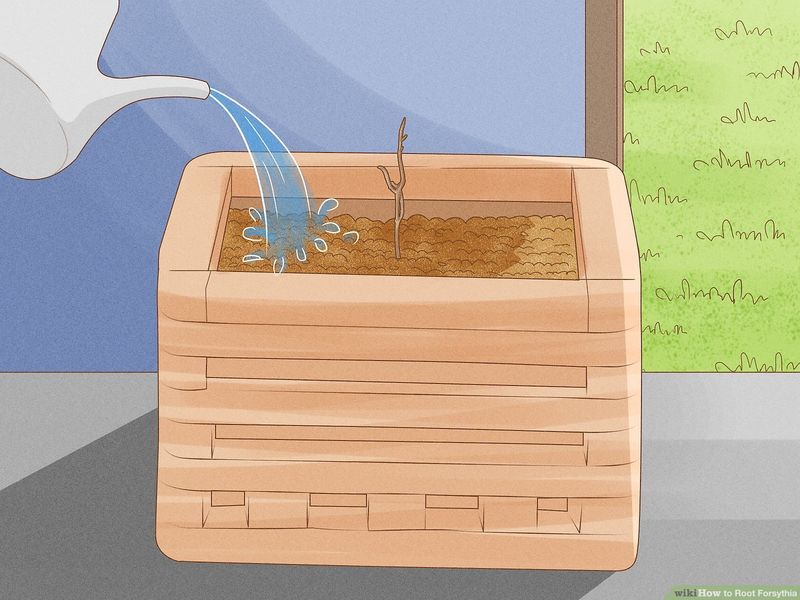
Water is where many home attempts succeed or fail. Cuttings have no roots to draw water, so they depend on the soil around them.
Yet Iowa State Extension notes that too much water reduces oxygen and can encourage rot.
Aim for a loose, well-drained medium that feels like a wrung-out sponge. Squeeze a handful: it should hold together without dripping.
If it is soggy, improve drainage. If it is dusty, water gently.
Rooting hormone is optional. Some easy-to-root material does fine without it, and the same Iowa State guidance warns that too much can hurt rooting.
If you use it, apply a light dusting and tap off the extra rather than coating the stem.
Direct-sticking cuttings outdoors needs a careful look. Iowa State’s live-stake method uses much larger cuttings, about 18 to 30 inches long and up to an inch and a half thick, stuck after the soil thaws in spring.
That does not show that small twigs pushed into an ordinary border in fall will root reliably.
If you want to try a border anyway, treat it as a gamble and plant extras. A protected nursery bed or deep pots give you more control over moisture and let you watch progress.
Mulch lightly and check the soil after dry spells, which are common in a North Carolina fall.
Nursery results show why “foolproof” goes too far
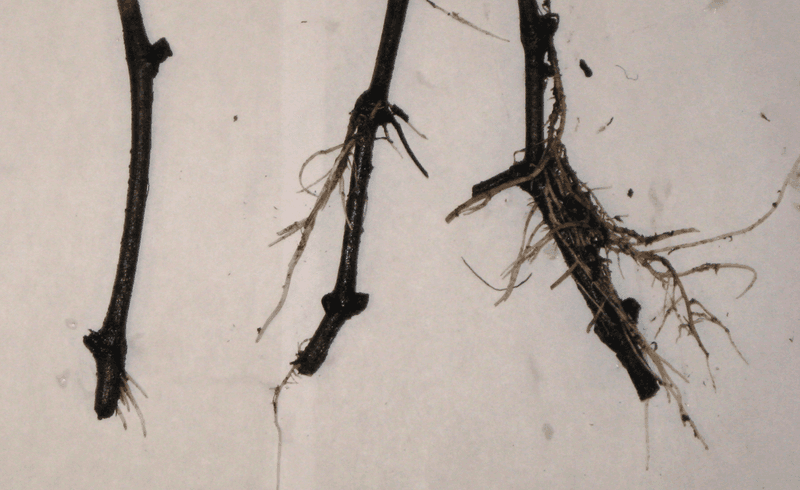
Numbers help cut through the hype. Tennessee Extension reports on a commercial nursery that field-stuck forsythia cuttings.
Their results showed roughly 80 percent rooting when moisture stayed good and even through spring and summer, and only 20 to 40 percent without it.
Those are nursery figures, not predictions for a backyard border. Professional growers manage their rows closely.
Home conditions vary, so your rate could be higher or lower. The big lesson is that moisture alone can swing results by a wide margin.
The same nursery lifted its plants after one growing season. In other words, even under good management, cuttings were given a full year before moving.
That timeline matters when you plan your garden.
An NC State Master Gardener handout from Buncombe County adds that leaves may show up in spring, but young plants can take a full year to grow strong.
Early leaves are encouraging, but they do not prove the cutting has rooted. A stem can leaf out on stored energy and then fade in summer heat.
Give a gentle tug after several months, or watch for steady new growth, before you count a cutting as a success.
Rooting and a spring flower display are different milestones
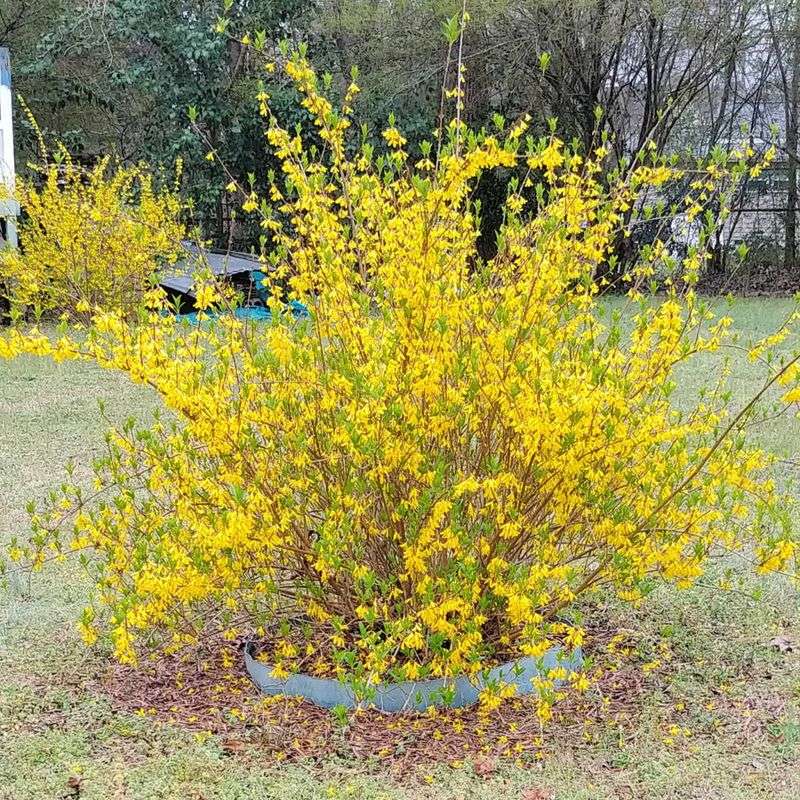
Picture the payoff: a hedge glowing yellow in late winter. Getting there takes more than roots.
Forsythia blooms in early spring on old growth, meaning stems that grew the previous year, so a young plant that just rooted may have little flowering wood.
For that reason, do not count on a dependable show the first spring after cuttings go in. Think of year one as root building, year two as growing stems, and flowers as a bonus that builds over time.
Where you plant matters too. NC State’s Plant Toolbox says forsythia in full sun produces more flowers earlier than plants in partial shade.
Choose a spot with plenty of direct light, and give new shrubs room to spread.
Pruning is the other half of the flower plan. Because buds form on last season’s growth, the usual advice is to prune just after spring flowering.
Cutting in late summer, fall, or winter can remove next year’s flower buds.
One more note for stewardship: forsythia is non-native in North Carolina, native to China, Japan, and southeastern Europe. That does not make it invasive statewide, but it is worth pairing with native shrubs such as spicebush, which prefers moist, shadier sites and supports pollinators and birds.
Layering offers a lower-effort alternative
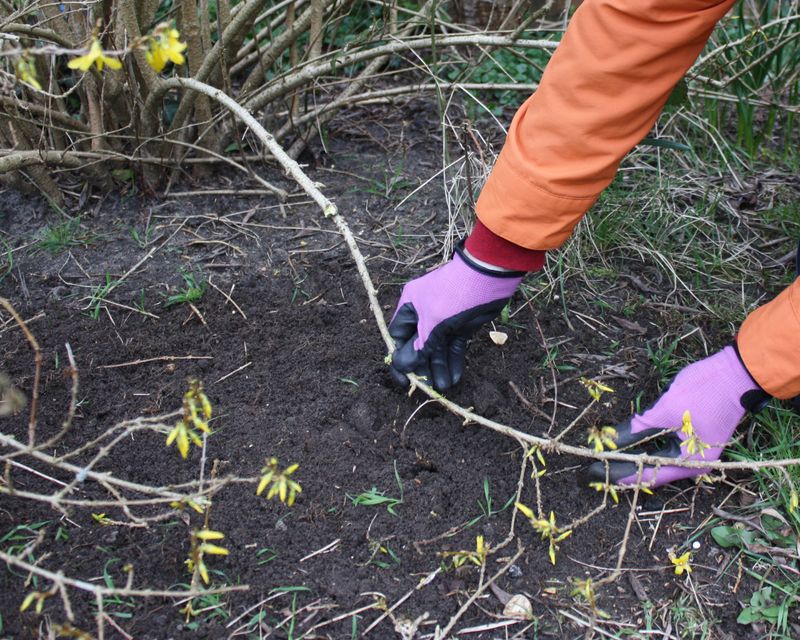
If detached cuttings sound fussy, let the parent plant do the heavy lifting. Layering keeps the branch attached to the shrub while roots form.
NC State describes simple layering for forsythia, noting that the attached stem minimizes water stress.
Start with a low, flexible branch. Bend it to the soil, cover a section with a few inches of loose soil, and leave the tip exposed.
A brick or rock on top holds it in place.
Keep the soil there evenly moist and wait. Forsythia does this naturally where branches touch the ground, and NC State’s Plant Toolbox says rooted layers can be cut from the parent once they have enough roots.
Check by gently lifting the buried section later. When you see a healthy network of roots, snip the branch from the parent and move the new plant to its spot.
Water it well afterward.
Layering is a different method from hardwood cuttings, and it still takes time. Do not expect a ready-to-display shrub by spring.
Expect a small, rooted start that will need a season or more to fill in.
Forsythia rewards patience more than speed.