
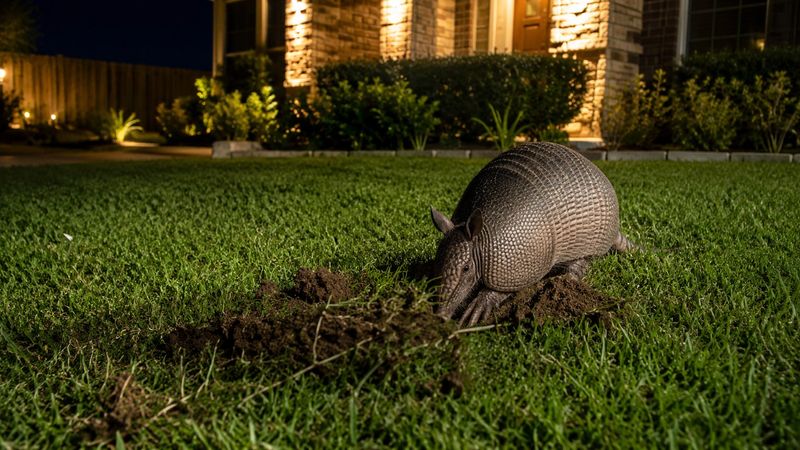
You step outside with your coffee and find small craters scattered across the grass that were not there yesterday. It is easy to blame the first animal that comes to mind, but a hole alone does not tell you who dug it.
Knowing the likely cause helps you pick a fix that fits your yard instead of wasting money on the wrong one. Here is how to read the clues, weigh your options, and stay on the right side of Texas rules.
Fresh overnight holes do not establish a fall digging peak
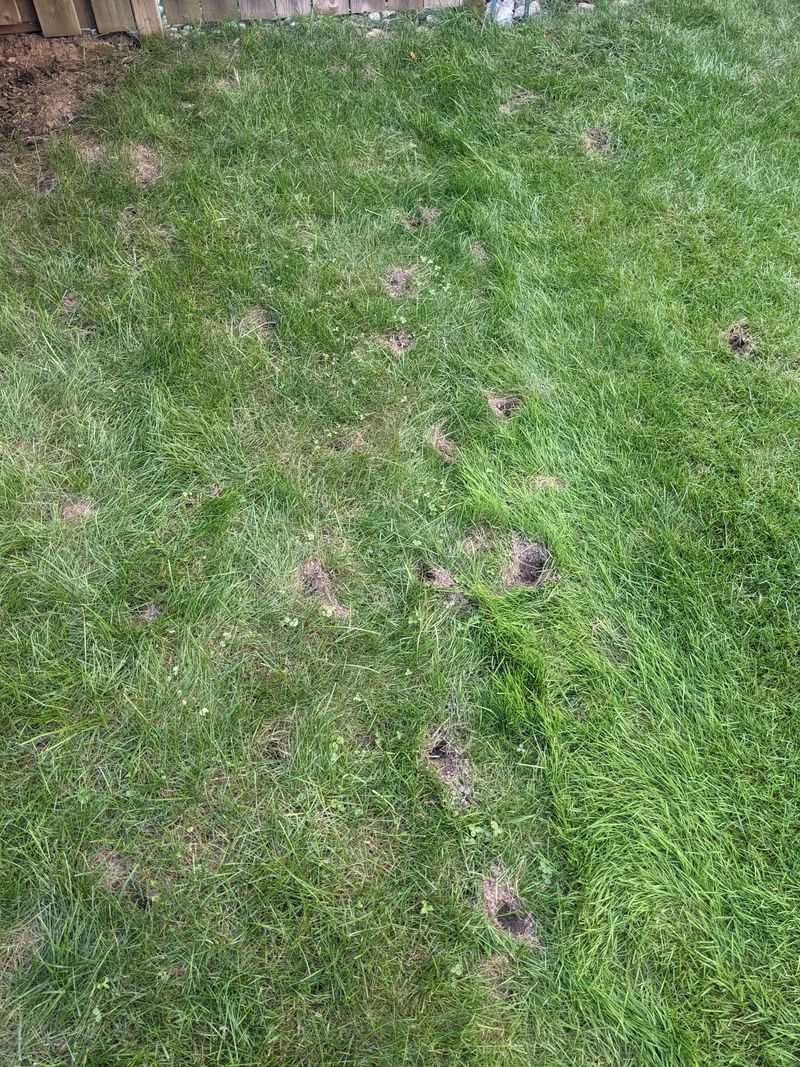
Few things sour a morning like fresh holes in the lawn you just mowed. Many Texans quickly settle on an armadillo and on fall as the reason.
That story is popular, but it is not proven.
The sources do not show that armadillos dig hardest in fall, either in Central Texas or anywhere else in the state. University of Georgia Extension says nine-banded armadillos do not hibernate or build up large fat stores, so the idea that they are bulking up for winter does not hold.
Texas Parks and Wildlife says they forage on summer evenings and on warm winter afternoons, which points to activity shaped by temperature rather than a fall rush.
Oklahoma State Extension notes that lawn damage is generally worst in summer in irrigated lawns. None of this means your yard is imagining things.
A particular lawn can absolutely get hit in October, especially if the soil is soft and the sprinklers are running.
The difference is between what you saw at your house and a pattern documented across the region. Your observation is real.
It just is not enough to name the animal or the season as the cause.
The next sections walk through what armadillos eat, how to compare the damage with other diggers, which yard measures are worth trying, and what to check before any trapping.
Armadillos dig for varied food in soft soil
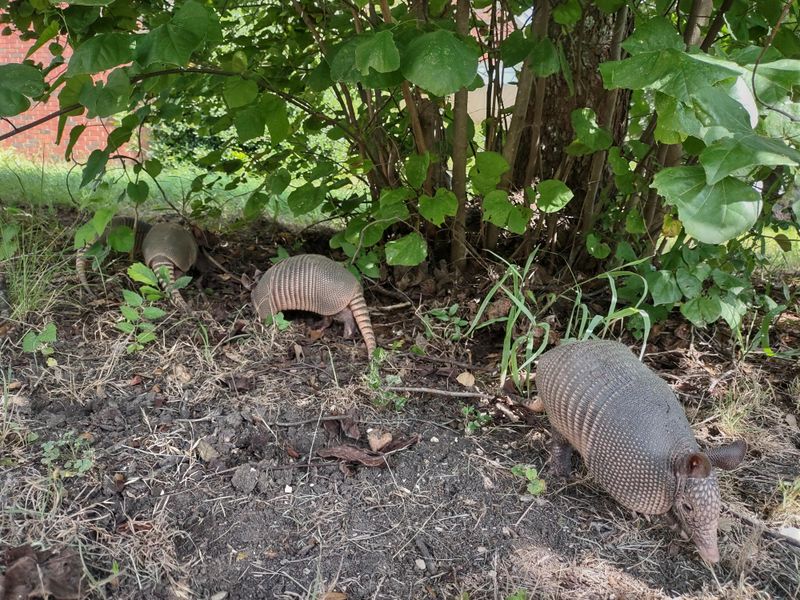
Armadillos are digging machines with a simple motive: dinner. Texas Parks and Wildlife says nine-banded armadillos live throughout Texas except the Trans-Pecos, so Central Texas yards are well inside their range.
The same page explains that they dig for food and also to make burrows.
Their menu is wide. Insects, grubs, earthworms, and other small invertebrates are all fair game.
Grubs are one possible item, not the only one, so a hole in your turf does not prove you have a grub problem.
Soft soil makes the work easier. Ground that is loose or recently watered gives a snout and claws less resistance, which is one reason well-kept lawns and mulched beds draw attention.
A freshly irrigated patch after a dry spell can be especially tempting.
Timing fits too. Armadillos are mostly nocturnal in warm weather, and the TPWD natural-history page describes them out on summer evenings and warm winter afternoons.
So holes that appear overnight are consistent with an armadillo. They are not proof, because other animals also work at night.
Think of this as a reason to look closer rather than a verdict. The shape and spread of the holes tell you much more.
Check the damage pattern before naming the animal
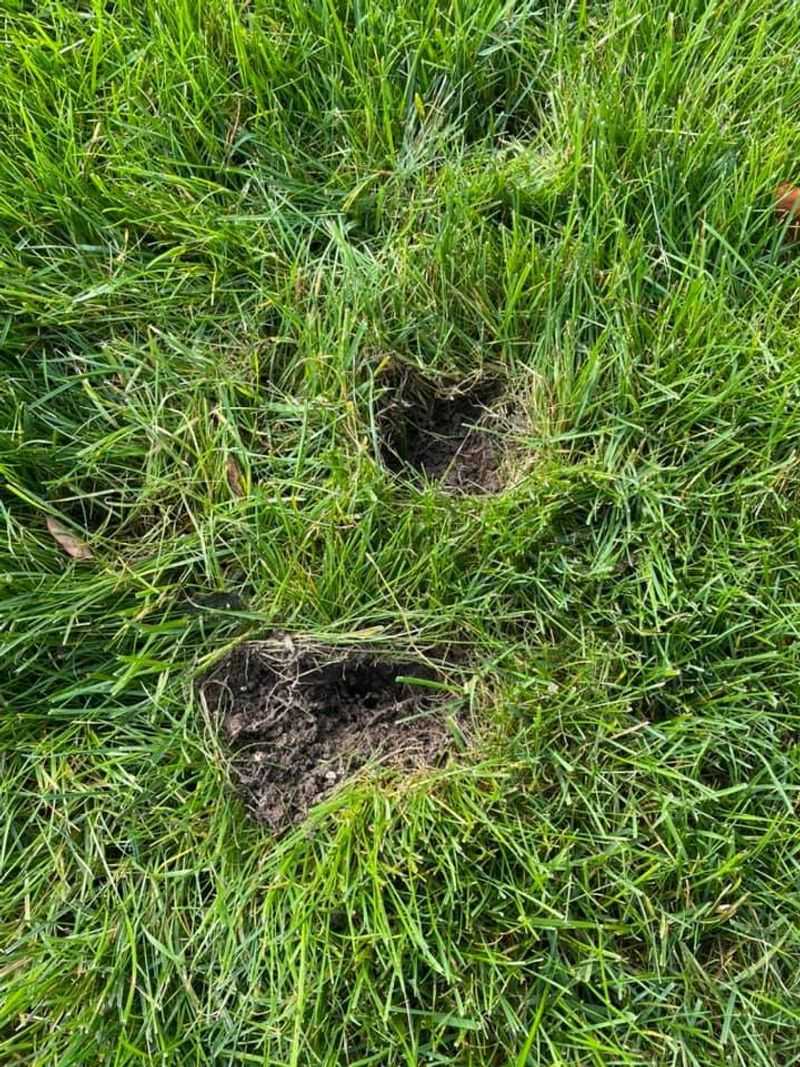
Grab a ruler and a flashlight before you grab a trap. Oklahoma State Extension describes armadillo damage as multiple shallow holes, usually up to about 6 inches deep.
The same guidance cautions that skunk and squirrel digging can look similar.
So treat what you see as a set of clues. Several small, shallow holes scattered over turf fits armadillo foraging.
It also fits other animals that root for insects or bury and retrieve food.
Walk the yard and note a few details. How deep are the holes, and how many appeared in one night?
Is the soil flung out in a loose pile or neatly pushed aside? Are the holes in the sprinkler zone or spread across dry ground too?
Other signs can add weight. A larger burrow entrance near a fence, shed, or slab suggests an animal denning nearby.
A trail camera aimed at the damaged spot for a few nights can answer the question far better than guessing.
Hold off on animal-specific steps until you have a reasonable basis for the culprit. Setting a trap for an armadillo when a skunk is the digger wastes effort and can create new problems.
A little patience here keeps your response proportionate.
Water and grub treatments are not guaranteed deterrents
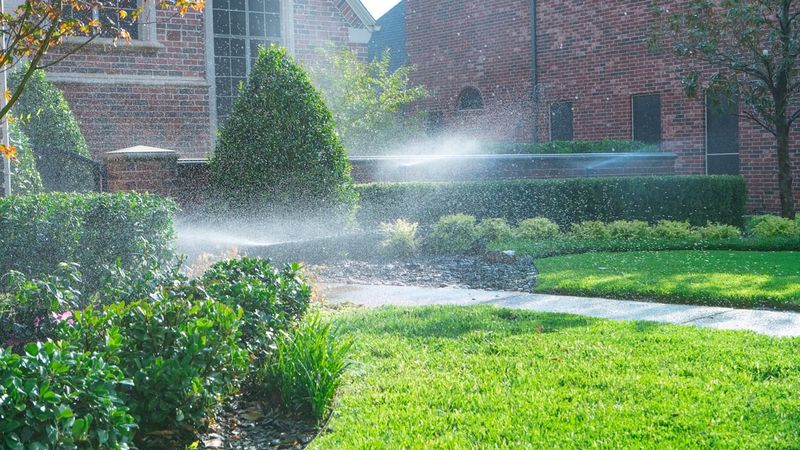
Cutting back on watering sounds like an easy way to make a yard less appealing. Oklahoma State Extension suggests that reducing irrigation may sometimes make a lawn less attractive for foraging.
It is not a dependable fix on its own, though.
Your grass still needs enough water to stay healthy through Texas heat, and local watering rules may set your schedule anyway. Do not stress the lawn or break a restriction just to test a theory.
Grub killer is another tempting move. UF/IFAS says that insecticides to reduce food sources have not been proven to stop armadillo digging.
Oklahoma State Extension adds that treatment may not stop an animal already used to feeding in your yard, and digging can even increase for a while as it searches for food.
The sensible approach is to treat a confirmed lawn pest on its own merits. If you peel back a square of sod and find a real grub problem, deal with it for the sake of your turf.
Do not apply insecticide only as an armadillo repellent.
Repellents and scare devices deserve the same caution. The OSU fact sheet says repellents are not considered effective and scare tactics do not give long-term relief.
Lights, noisemakers, and sprays may buy a night or two, but none of them should be counted on.
Protect a small bed with a targeted barrier

If the damage keeps landing on one prized spot, a physical barrier may be worth the effort. A vegetable bed, a new planting, or a small flower border is far easier to wall off than an entire lawn.
Fencing a whole yard is rarely practical, and it is not a promise of full protection.
Extension guidance does support fencing under some conditions, but the details vary. Oklahoma State Extension and UF/IFAS do not describe installation in exactly the same way.
Because of that, no single height or buried depth can be called a sure thing.
Armadillos are strong diggers, so a barrier that stops at the soil surface may not do much. Think about how the bottom edge is anchored and whether gaps remain at gates, corners, or uneven ground.
Weigh the size and value of the area against the work. A small raised bed with plants you care about can justify the time and cost.
A wide, irregular lawn probably cannot.
Plan on checking the fence after storms and mowing, since loose edges are where animals test first. If the barrier does not hold, adjust it rather than assuming the problem is solved.
Check current rules before trapping or transporting wildlife
Trapping is one possible way to remove an armadillo, but it should not be your automatic next move. Texas rules can change, and local ordinances may add their own limits.
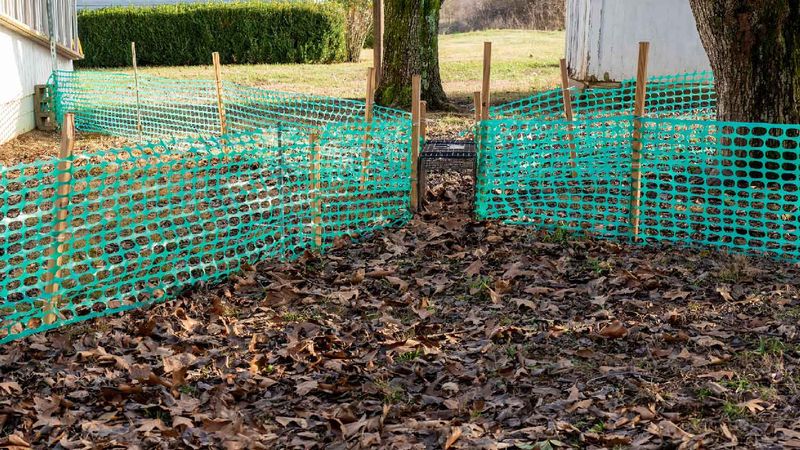
Texas A&M AgriLife guidance recommends setting a cage trap along travel routes, fences, buildings, or near a burrow. It also suggests using boards to funnel the animal toward the trap.
When funnels are in place, bait is generally unnecessary.
Before you buy or borrow a trap, look at the legal side. TPWD’s Outdoor Annual lists armadillos as nongame wildlife and says a hunting license is required to take nongame species.
The same page covers restrictions and lawful methods, so read it as it stands today rather than relying on a neighbor’s memory.
City or county rules may also limit traps, firearms, or relocation. A call to your city animal services office or a licensed wildlife-control professional can save you trouble.
Moving the animal is a separate question. Do not drop it at a park, greenbelt, or someone else’s land unless the rules allow it and you have any permission required.
Releasing wildlife in the wrong place can bring legal trouble and simply shift the problem to another yard.
Repair disturbed turf and keep cleanup in perspective
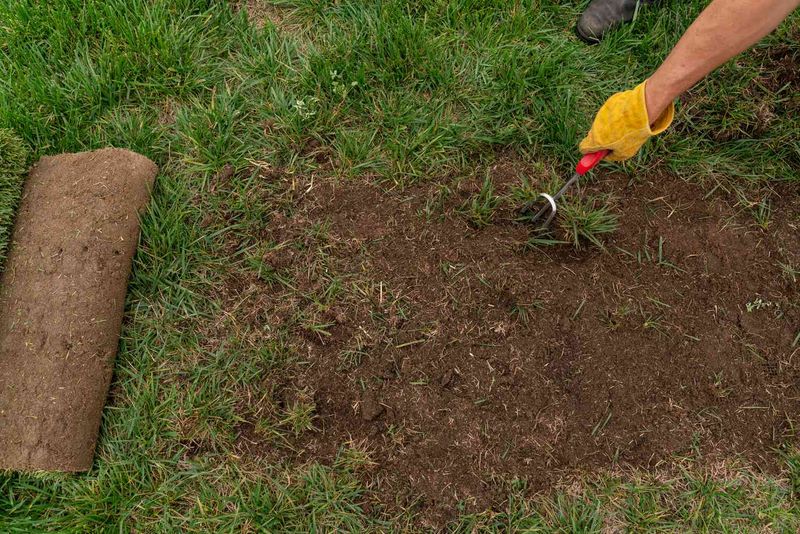
Once the digging stops, fix the damage. Put on gloves, fill the holes with soil, press it down, and patch bare spots with sod or seed that suits your lawn.
Keep the area watered within local limits so the repair can root.
Skip direct handling of any armadillo, living or dead. The CDC says some armadillos in the southern United States carry the bacteria that cause Hansen’s disease, but the risk to most people is very low.
Gloves and basic hand washing are enough for ordinary yard cleanup.
The order of action is simple: look at the damage, choose a measure that matches it, and check the rules before any removal. A fresh hole is a clue, and a calm look at the evidence beats a rushed guess.