
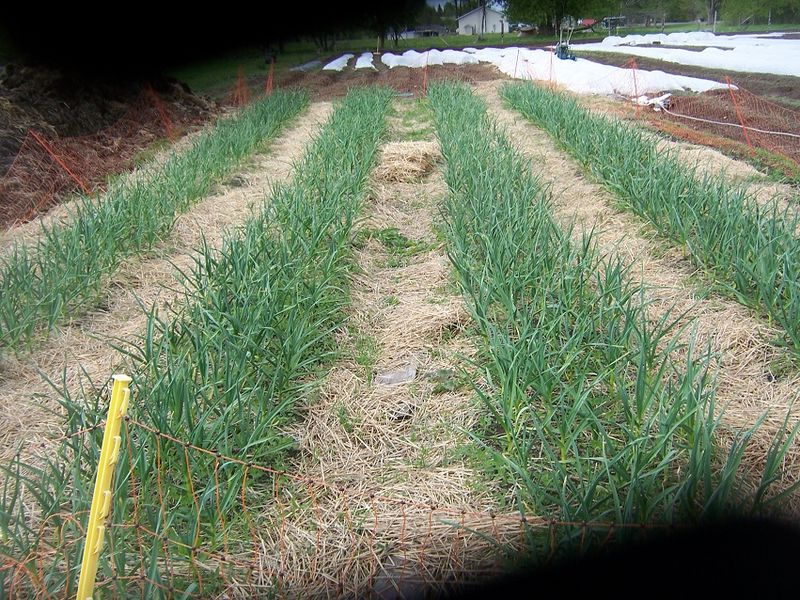
Weeds love a freshly planted garlic or onion bed, and the slow-growing alliums can lose the race. Straw mulch is a popular helper, but when you spread it matters as much as the straw itself.
Gardeners in Florida and Georgia plant on different calendars than people in cold states, so the advice needs a little adjusting. Here is how to use mulch wisely and what to expect when spring arrives.
Garlic needs careful weed control
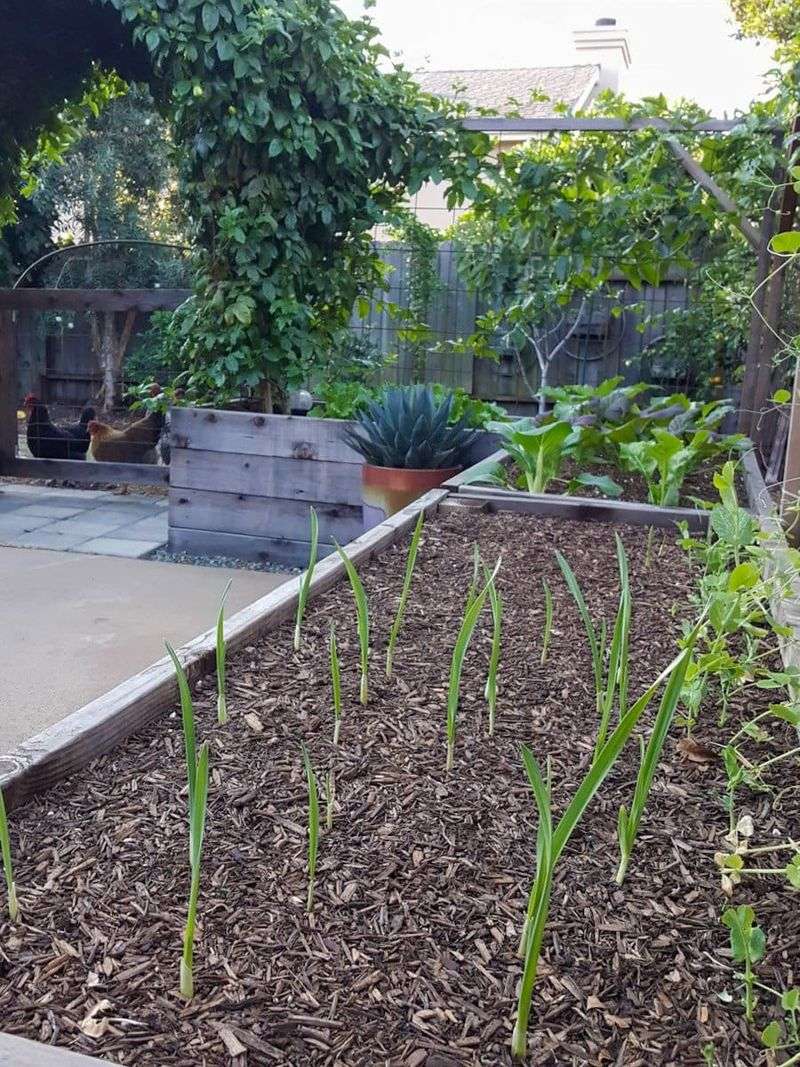
Picture a garlic bed in late winter: neat green spears poking up, with chickweed and grass crowding in between. Garlic does not fight back well.
University of Minnesota Extension advises controlling weeds early, because garlic is a weak competitor.
Its roots also stay close to the surface. Iowa State Extension notes that these shallow roots make careful weed control important, since a pulled weed or a deep hoe can disturb the bulbs.
Mulch can help here, but it works best as a partner to hand weeding, not a replacement. A layer of straw can make new weeds harder to start, yet it will not smother the ones already growing.
Clear the bed first, then think about the mulch.
Straw can reduce weeds, not eliminate them
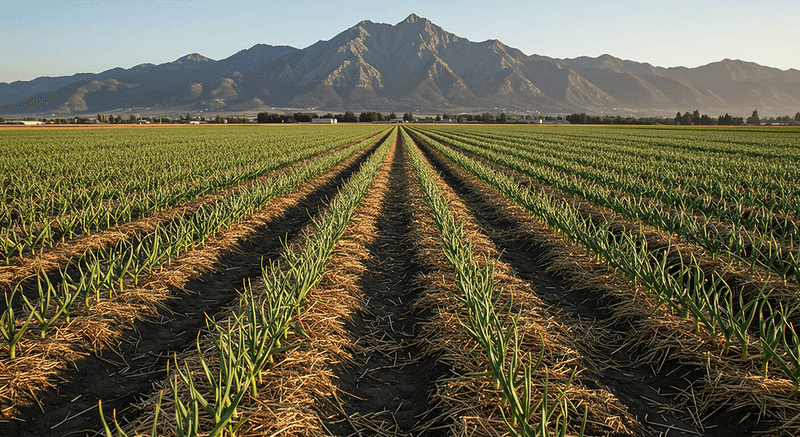
Mulch works mostly by blocking light, so fewer weed seeds get the signal to sprout. That means less weeding for you, but not zero weeding.
A few determined weeds will still push through, especially where the layer is thin.
In cold-winter regions, mulch has a second job. University of Maine Extension recommends it for garlic to reduce weed pressure and freeze-thaw heaving, when soil swells and shrinks and can push bulbs upward.
Minnesota guidance also mentions moderating soil-temperature swings.
Keep your expectations realistic. Maine’s garlic newsletter points out that coverage can shift or thin, and weeds may still emerge.
A quick walk down the rows every couple of weeks lets you patch gaps before weeds take hold.
Time mulch for the crop and region
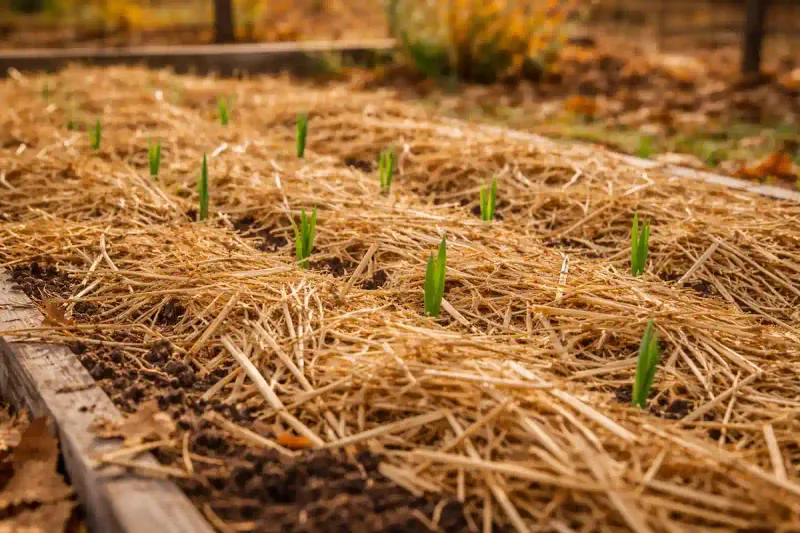
Ask three extension services when to mulch garlic and you may get different answers. Minnesota recommends mulching garlic as part of fall planting, with 3 to 4 inches of leaf or straw.
That makes sense where winters are hard.
Georgia gardeners get another plan. UGA Extension says to hand-weed before garlic emerges, then apply mulch after the shoots are up.
Mulch can then go on a clean bed, not on top of weeds waiting underneath.
Florida adds its own calendar. UF/IFAS says garlic can be planted from late fall through early winter.
For onions, UF/IFAS guidance puts planting generally from September through December. Garlic and onions are separate crops, so check each one.
Texas readers should look to their local extension office for dates.
Prepare the bed and choose straw carefully
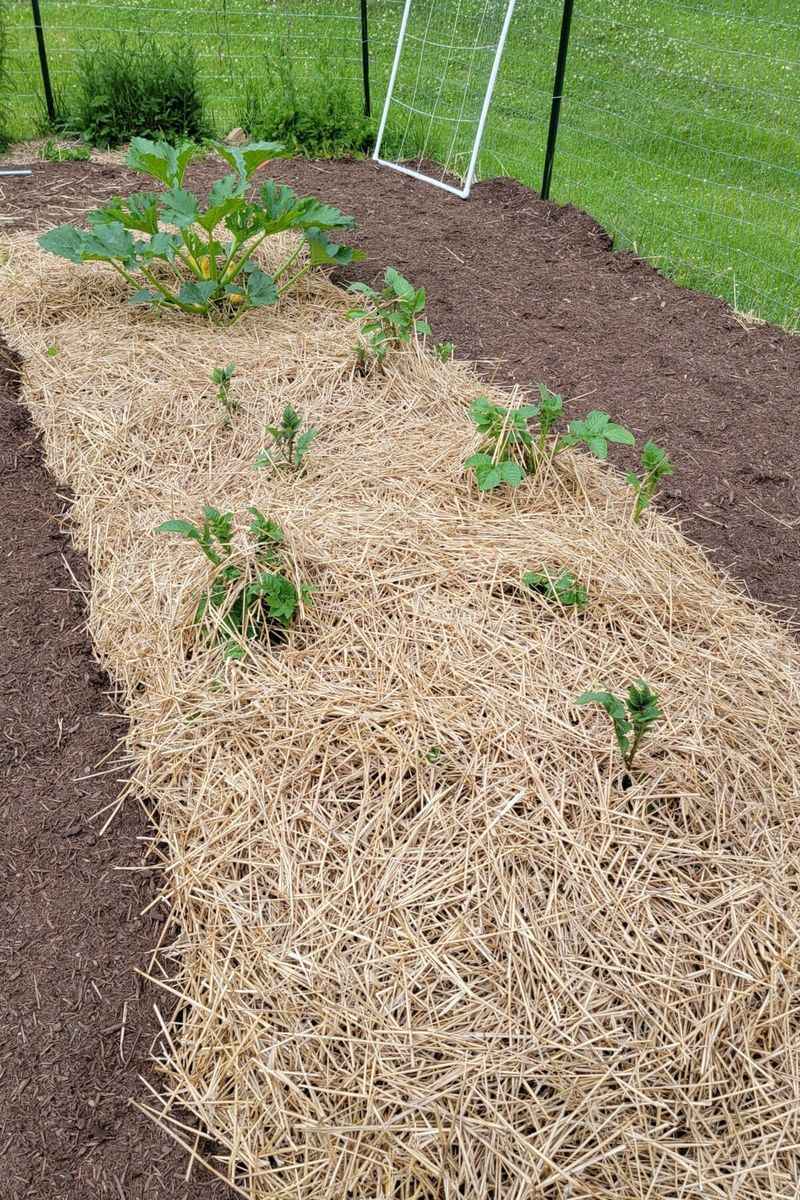
Start with a bed that is already clean. Iowa State Extension explains that mulch hinders weeds from emerging, but it does not get rid of established ones.
Pull or cut those weeds, roots and all, before any straw goes down.
Next, look at the straw itself. UGA Extension says wheat straw can bring in foreign weed seeds, so look for straw labeled weed-free when you can.
It also helps to ask the supplier about herbicide history. Virginia Tech Extension documents plant injury from herbicide residues in straw, hay, manure, and compost.
That does not mean every bale is a problem, and it does not show that garlic and onions are equally at risk. A short question at the feed store is cheap insurance.
Match mulch depth to the crop and climate
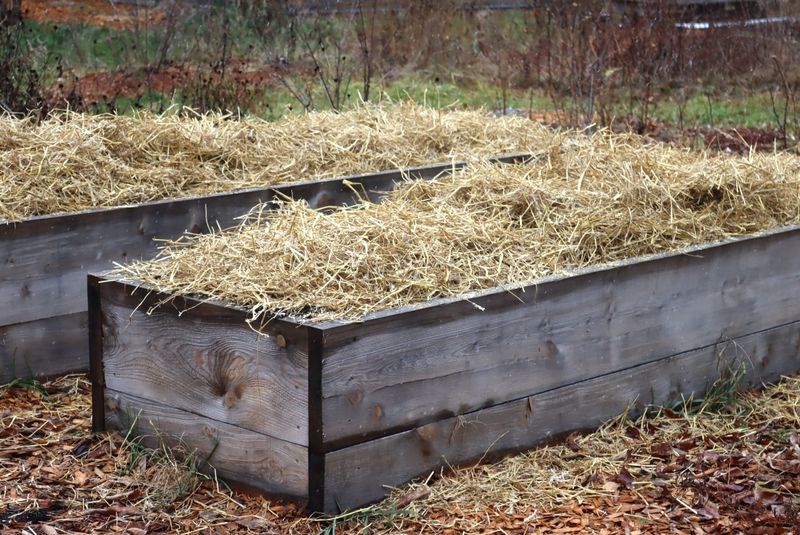
Depth numbers vary because climates and crops vary. For cold-winter garlic, Minnesota Extension suggests 3 to 4 inches of leaf or straw, while Maine Extension suggests about 3 inches.
Treat that as a cold-region benchmark, not a Southern rule.
In Georgia, UGA recommends 2 to 3 inches after emergence, kept 2 to 3 inches away from the stems.
Onions differ again. Minnesota recommends 3 to 4 inches of weed-free mulch, while Iowa State suggests 1 to 2 inches between rows.
Florida is lighter still. UF/IFAS recommends about 1 inch around small vegetables and herbs.
Pick the guidance closest to your crop and conditions, and remember that thicker is not automatically better.
Watch for shifting mulch and persistent wetness
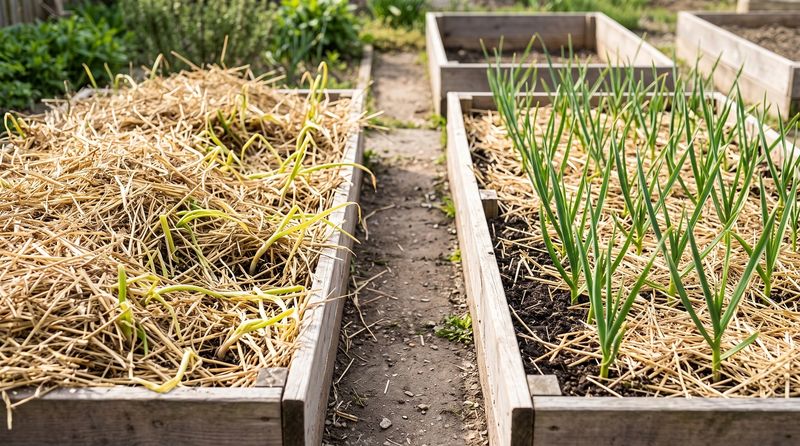
After a windy week or a heavy rain, take a few minutes to inspect the bed. Straw settles and blows around, leaving bare strips where weeds can start.
Fluff the thin areas and add a little straw to fill gaps.
Wetness deserves a close look too. Maine Extension says heavy or low-lying soil may do better with mulch pulled back so it can dry and warm sooner, and continuously wet soil favors disease.
Georgia gardeners have a clear rule for stems. UGA warns that damp mulch touching the stem may create disease conditions.
If the straw feels soggy or slimy near the plants, pull it back and let the area dry out.
Reassess the mulch in spring
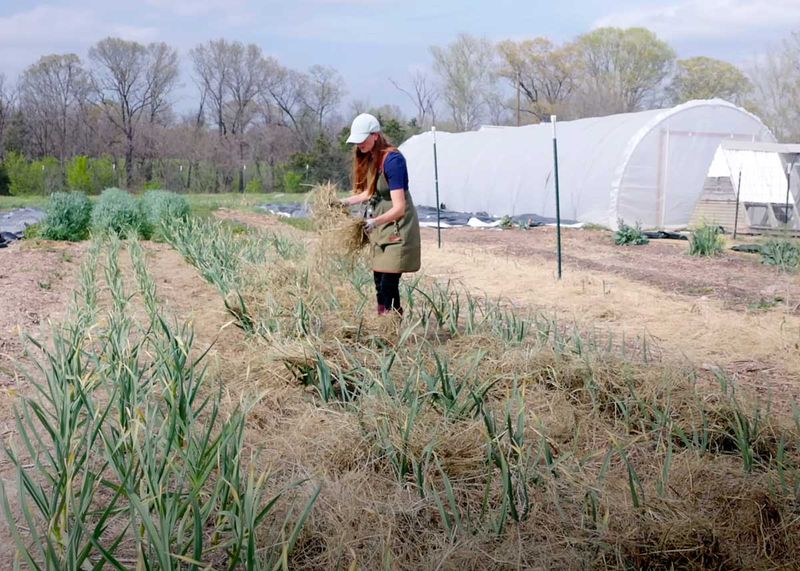
When spring warms up, you get to decide what happens to the straw. Minnesota Extension says mulch may be pulled back after the risk of hard freezes passes, which helps the soil warm.
You can also leave it in place for weed control and moisture conservation.
Those are options from a cold-winter region, not set instructions for Florida or Georgia. In the South, your own weather, soil drainage, and how the bed looks should guide you.
Damp soil and a lot of weeds point to different choices than dry soil and a thick, tidy layer.
Either way, pull any weeds that sneaked through while they are small. Straw makes the job easier, but it never promises a bed with no weeds.
Think of it as a way to trade a weekend of hard weeding for a few quick check-ins.