
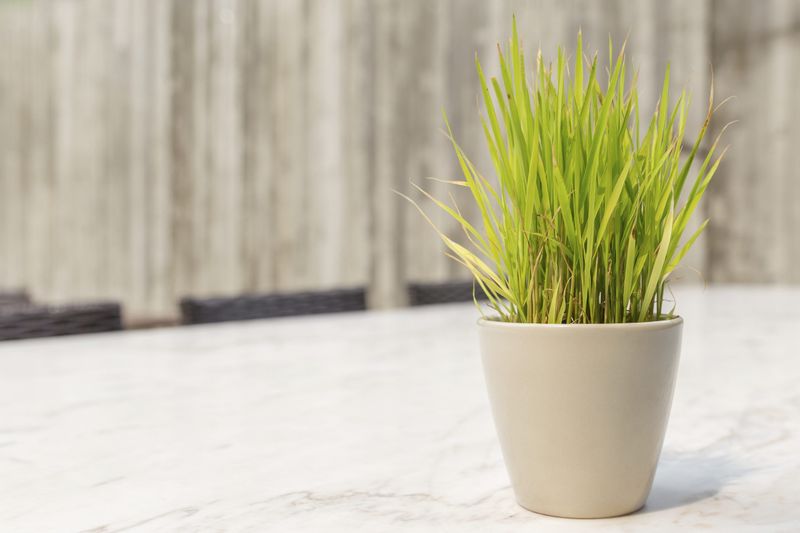
That big lemongrass clump in your yard can be a lot harder to replace than it looks, and cold snaps can damage it fast. A small rooted piece potted up in fall can ride out winter on a bright windowsill.
It may even give you an occasional stalk for the kitchen. Here is how to do it, and what to expect from a plant living indoors.
Bring the plant in before frost threatens it
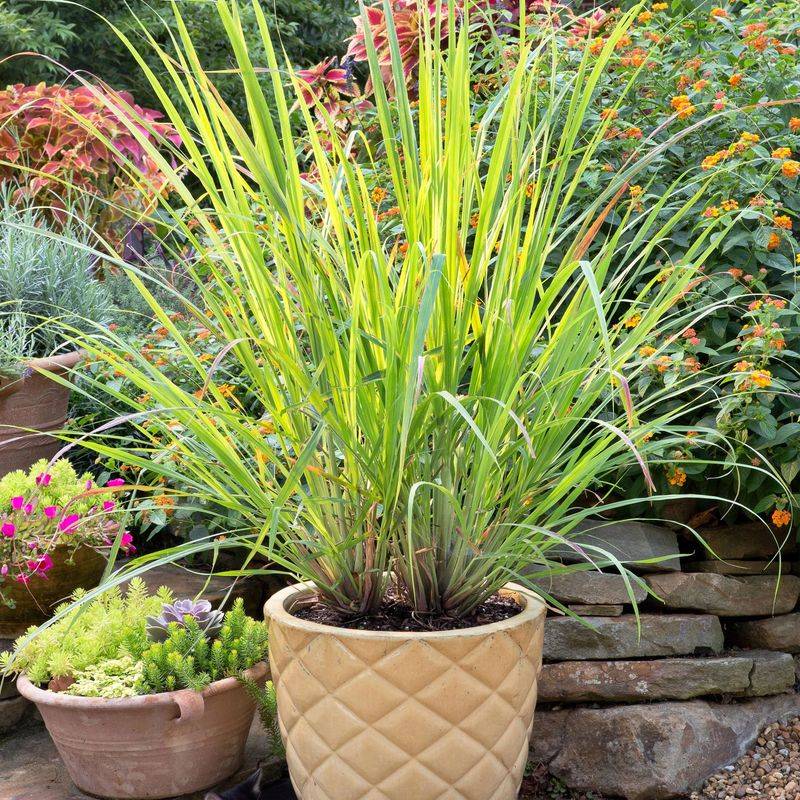
Waiting for frost to show up is a gamble. Wisconsin Extension advises digging or harvesting lemongrass before overnight temperatures reach freezing, and that is a safer plan than waiting to see what happens.
Southern yards vary a lot, so skip any single magic number. Freezing weather is normal in north and central Florida, while UF/IFAS cold protection guidance notes that below-freezing temperatures are rare in south Florida.
Watch your own local frost and freeze forecast, and act when it starts to show up.
Frost does not always mean the end. UF/IFAS describes lemongrass in north-central Florida as a perennial that may turn brown after a hard freeze, while Texas A&M AgriLife lists it among ornamental grasses that often do not resprout after freeze damage.
Results depend on your site and how severe the freeze is, so a saved division is cheap insurance.
Choose a division with shoots and roots
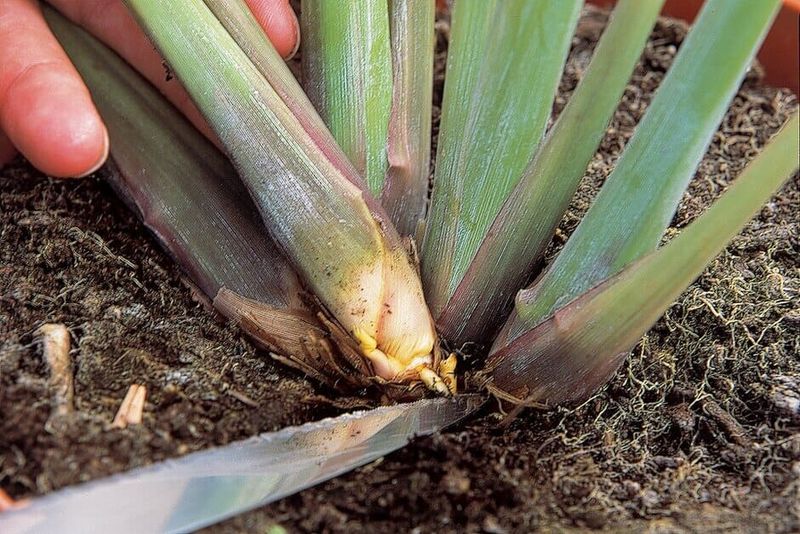
Look for a section of the clump that has living shoots and roots still attached. Utah State University Extension recommends saving a piece of the bulbous shoot base with its roots before the first fall frost.
Use a sharp spade to cut down through the outer edge of the clump, then lift the piece free. Shake off loose soil so you can see the roots.
A division with a few firm shoots and a healthy root mass has the best shot at settling in.
Leaves alone will not do the job. A cut blade with no roots or rhizome has nothing to anchor or feed it, so leave those behind.
Trimming the foliage back can make the division easier to handle and carry, as University of Guam Extension describes when separating rooted slips, though trimming is a convenience rather than a requirement.
Wear gloves, because the leaf edges can be sharp.
Pot the division in a draining container
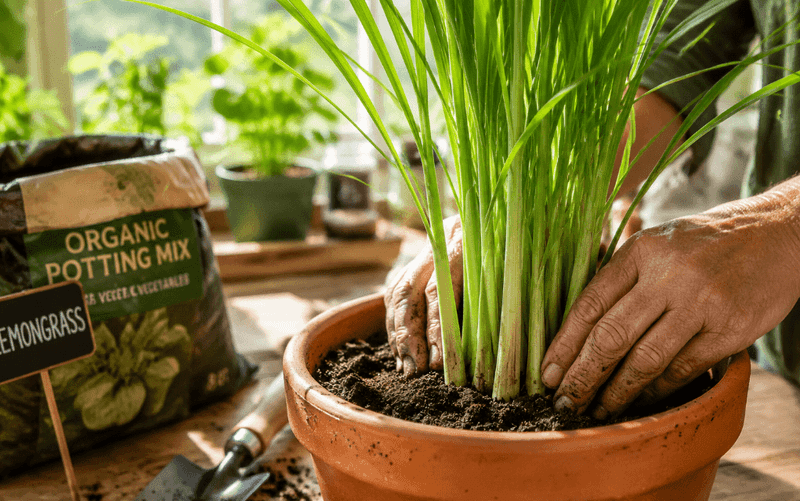
Grab a pot with drainage holes and fill it partway with fresh potting mix. Set the division in so the shoot bases sit at about the depth they grew in the garden, then fill in around the roots and press the mix down gently.
Water it in until the mix is evenly moist. Both Utah State and University of Guam extension guidance describe potting rooted pieces and keeping them moist while they establish.
Pick a pot only a little larger than the root mass. A huge pot holds extra wet mix that the small plant cannot use yet.
Let the extra water drain out before the pot goes back on its saucer.
Expect a quiet start. Some divisions sulk for a few weeks, and slow new growth is normal rather than a sign you failed.
Choose the brightest warm indoor location
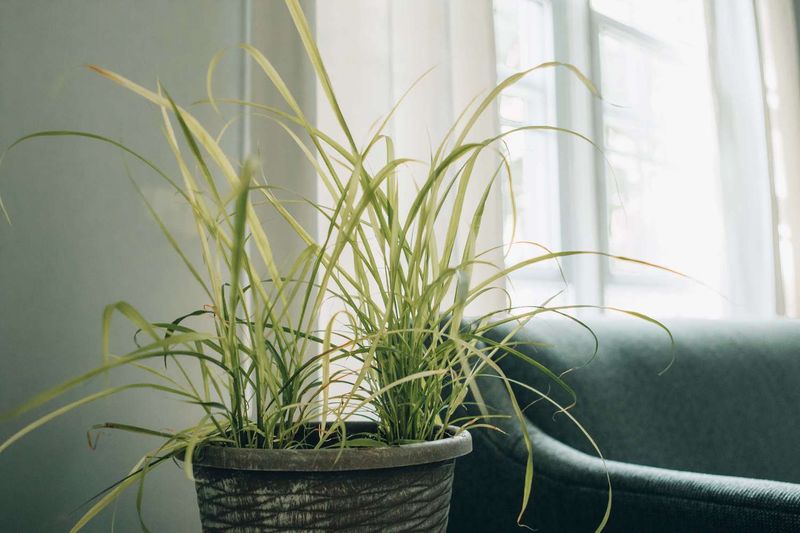
Light is the biggest limit indoors. Put the pot in the brightest warm spot you have, such as a south-facing window, since Utah State Extension notes that lemongrass can grow indoors but low winter light holds back stalk production.
If your windows are dim, a grow light can help. Iowa State Extension lists supplemental lighting as an option for herbs that do not get enough natural light indoors.
Keep the plant away from cold glass at night and from heating vents that blow dry air. A cool draft can stall growth just as quickly as a gloomy corner.
Better light improves the odds of growth, but it does not guarantee stalks. As UC Master Gardeners describe, lemongrass wants plenty of sun and warmth, which a winter window can only partly supply.
Water by checking the potting mix
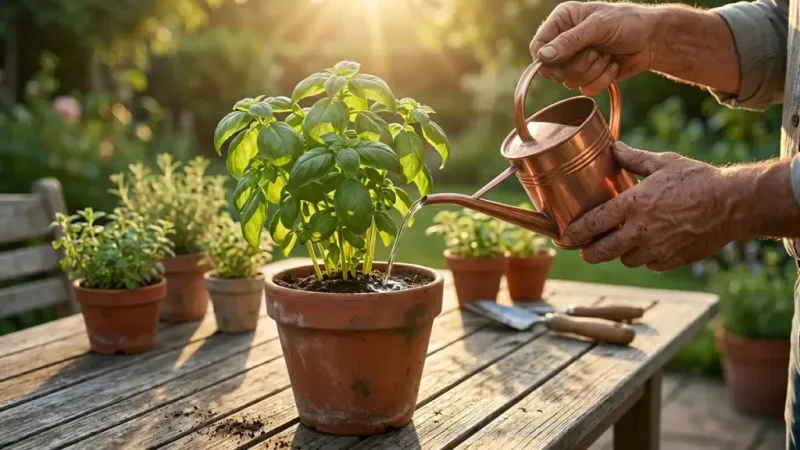
Forget the calendar and use your finger. Poke it about an inch into the mix, and water when that layer starts to feel dry.
Pour until water drains from the bottom, then empty the saucer.
Lemongrass likes moisture, as Utah State Extension points out, so letting the pot dry out completely can stress it. Soggy mix is the bigger danger in winter, when the plant uses less water.
Waterlogged soil can contribute to root rot, according to UC Master Gardeners. Yellowing blades along with a pot that stays heavy and wet are a clue to ease off.
Brown, crispy tips with bone-dry mix point the other way, so give it a good soak. A pot in a bright, warm room may need water more often than one in a cooler corner, which is why checking beats guessing.
Inspect the plant before bringing it indoors
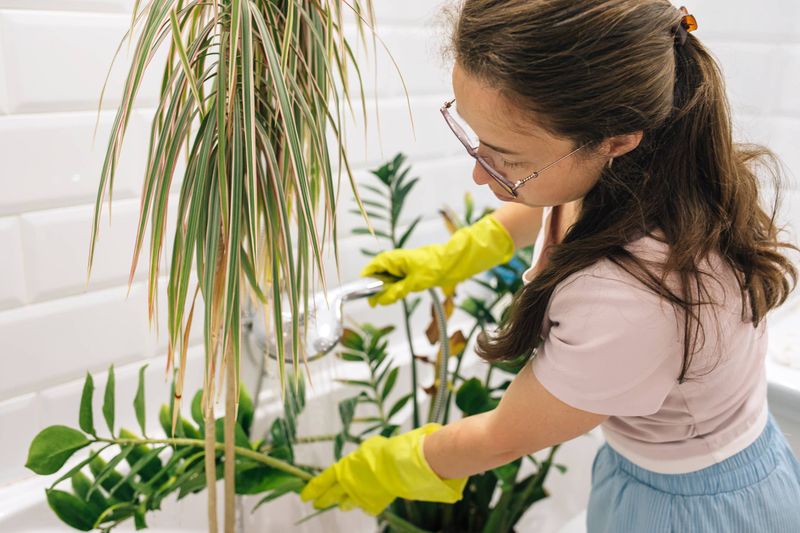
Outdoor plants can carry hitchhikers like aphids, mites, or scale. Before the pot crosses your doorway, look closely at the leaf bases, the undersides of blades, and the surface of the mix.
Give the foliage a gentle rinse with a hose, and check again after it dries. Guidance such as Penn State Extension’s advice on bringing plants indoors stresses inspecting plants before the first frost and bringing them in with care.
Once inside, keep an eye on it. Look over the leaves every week or so for sticky residue, webbing, or tiny moving specks, and consider keeping it a bit apart from your other houseplants while you watch.
If you spot pests, treat them early.
Treat winter stalks as a bonus
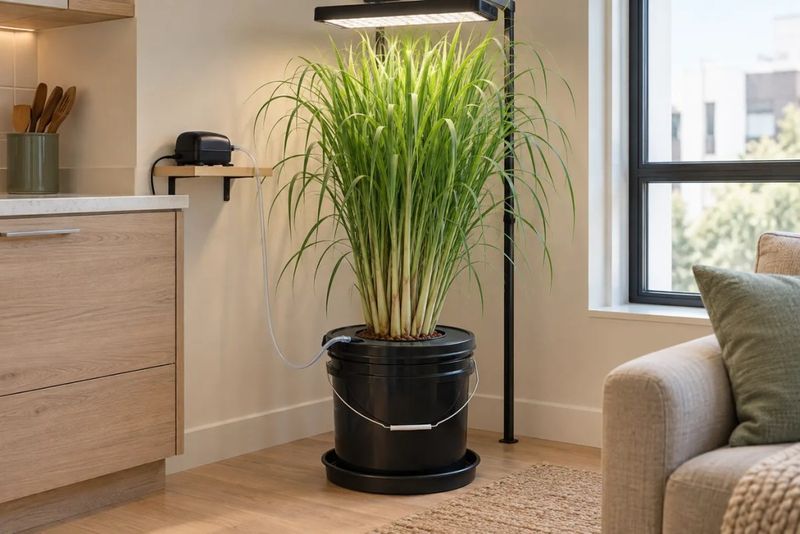
A living plant is a win, even if it gives you nothing to cook with. Weak winter light means many windowsill divisions produce only a few stalks, or none.
If stalks do fatten up, wait until they reach about a half-inch across. Utah State Extension uses that size as a harvest guide.
Cut near the base, then peel away the tough outer layers. The tender inner stalk base is the part you will chop or bruise for soups, teas, and curries.
Wear gloves, since the leaf edges can be sharp. UC Master Gardeners also warn that chewing the plant may upset dogs’ and cats’ stomachs, so set the pot where pets cannot nibble it.
Harvest lightly so the plant keeps enough growth to stay healthy. A healthy rooted division can still serve as a spring starter, much like the potted slips described by University of Guam Extension.
Think of winter lemongrass as a savings account, not a paycheck.