
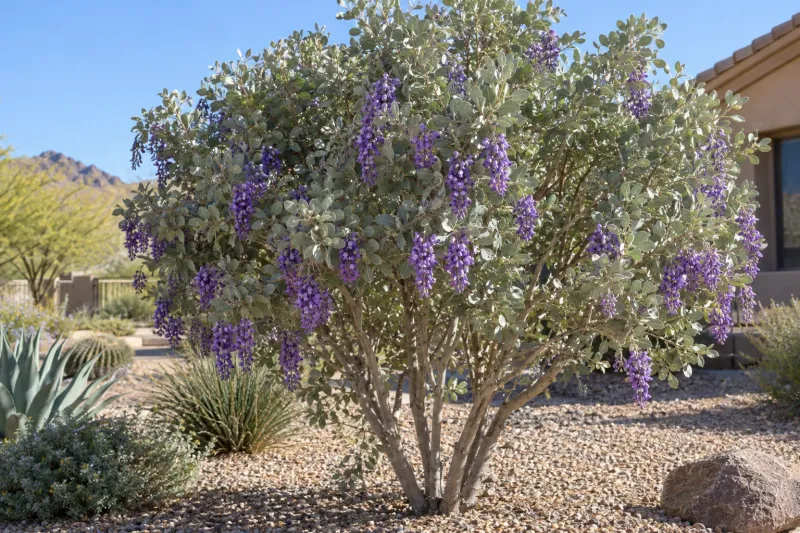
Texas mountain laurel seeds are poisonous if a child or dog eats them. The bright red seeds sit inside hard pods that follow the spring flowers, and they carry a toxic compound called cytisine.
Knowing what the seeds look like and when to check your tree makes it easy to keep your family and pets safe. Here is what Texas homeowners should know, and what to do if someone swallows one.
The red parts are seeds, not berries
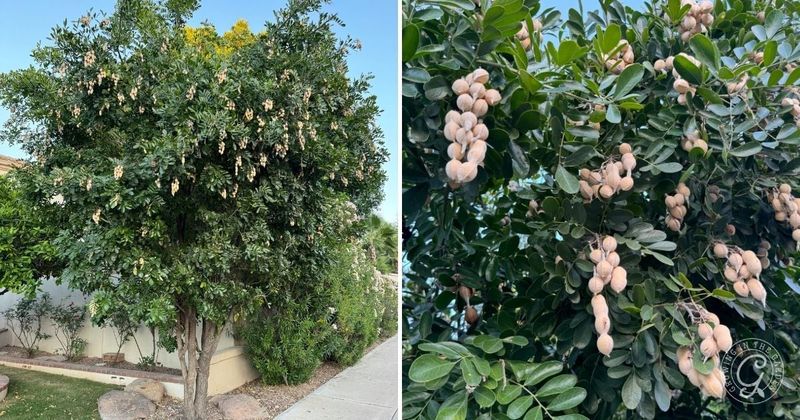
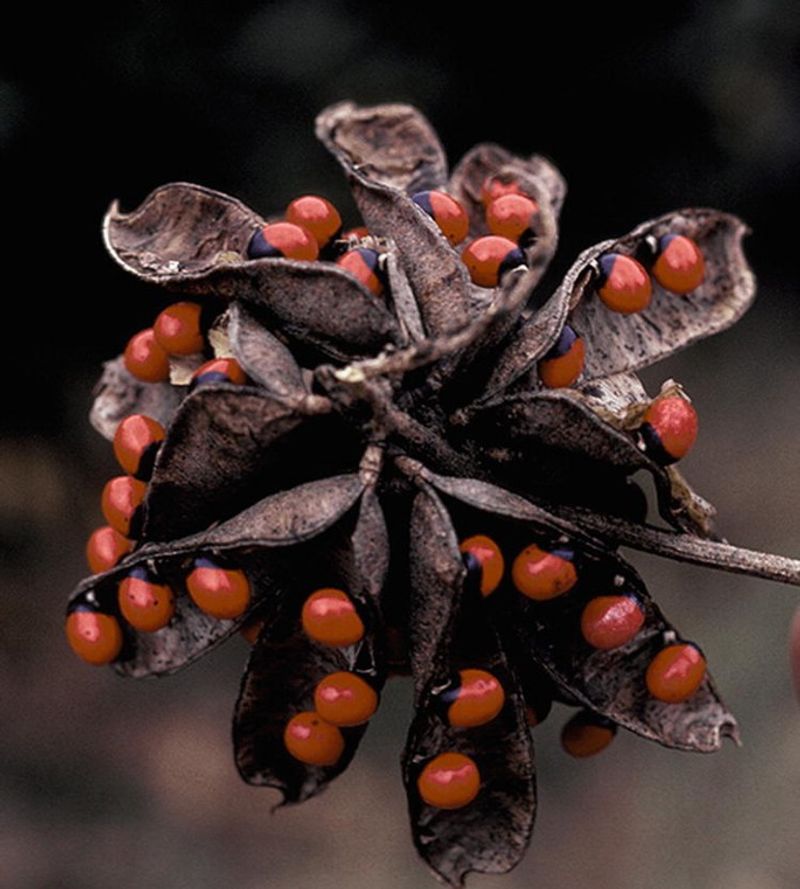
Texas mountain laurel (Sophora secundiflora) is a familiar evergreen shrub across Central Texas, known for grape-scented purple blooms in spring. After the flowers fade, the plant produces pods, and those pods are where the bright red color comes from.
The red parts are not berries. They are seeds sitting inside a pod.
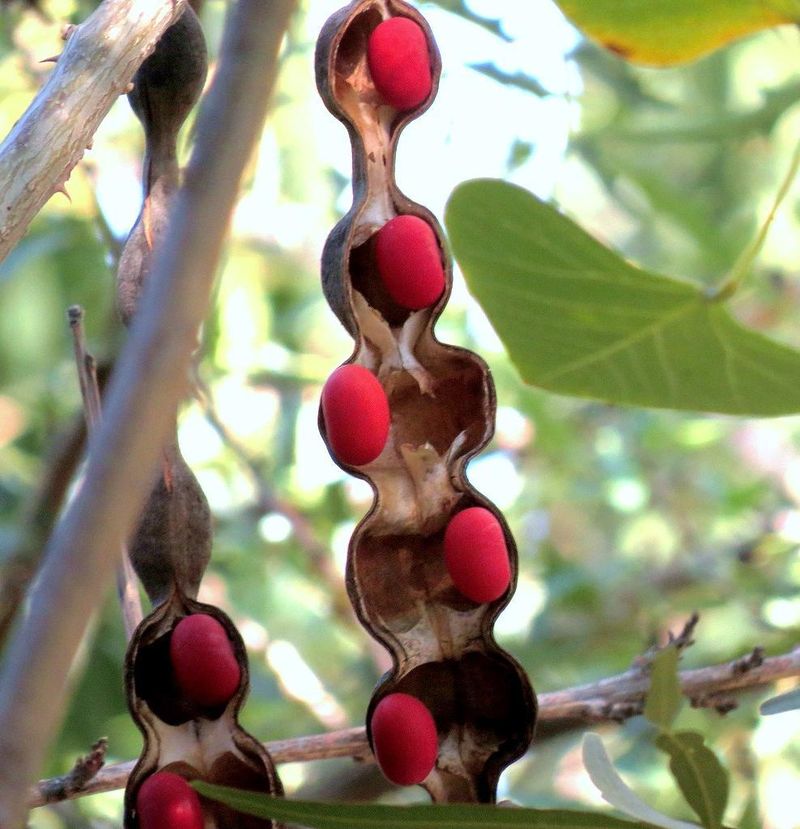
According to Texas A&M’s Plants of Texas Rangelands entry, the pods are thick, woody, and hard, while the seeds inside are bright red with a hard surface. Some people call them mescal beans, which is another name for the same seeds.
This difference matters when you look over your yard. The seeds are the part the sources point to as the main concern.
Texas A&M describes them as toxic, and its Texas Tree Selector also lists the seeds as the poisonous part of the tree. That does not mean every leaf, flower, or pod has been shown to be equally dangerous, and a woody pod is not the same as a seed.
To check your own shrub, look for fuzzy, hard, knobby pods hanging in clusters among the dark, glossy leaves. If a pod has split, you may see one or more shiny red seeds inside.
Fallen seeds can also turn up on the soil, mulch, or pavement beneath the tree. Those bright seeds can catch the eye of a curious child or dog, so it helps to know exactly what you are looking for.
Check your tree for pods
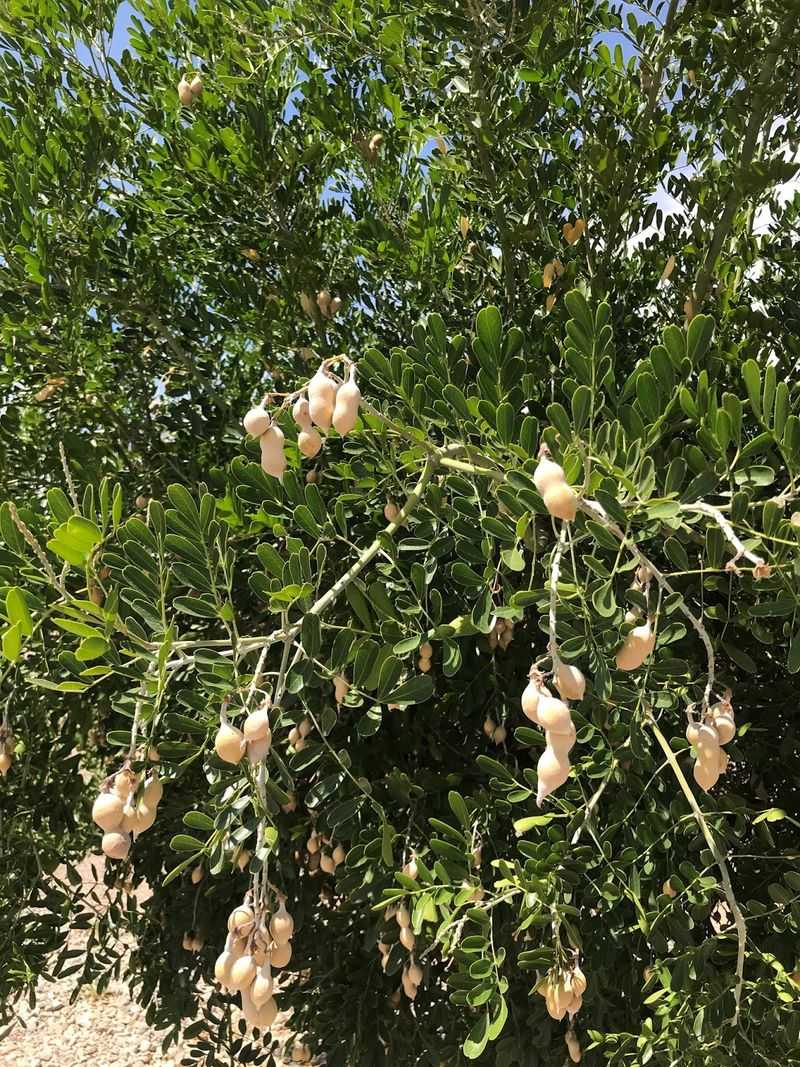
Timing varies from tree to tree, so the best approach is a quick look at your own shrub. The Texas Parks and Wildlife tree guide describes pods with red seeds as present in September.
That supports a late-summer-to-fall check.
It does not mean every tree still holds pods in late November, or that pods appear across Central Texas all at once. Some shrubs may have dropped their pods, some may hold them longer, and some young plants may not have produced any yet.
Your own tree is the only one that counts.
A simple routine works well. Walk around the shrub and scan the branches, including the higher ones you may not usually notice.
Then look at the ground beneath it, since split pods can drop seeds into mulch, gravel, or grass.
If you find pods, note whether they are still closed and whether any are within reach of a child or dog. Pods that are high up are less of a concern than ones at kid height or seeds lying on the ground where a dog sniffs and mouths things.
If you have a fenced area where pets spend time, check that part of the yard first.
Make this a repeat habit rather than a one-time job. A quick look each week or two through early fall, and again after a windy storm, tells you more than any calendar date can.
Ingestion is the concern
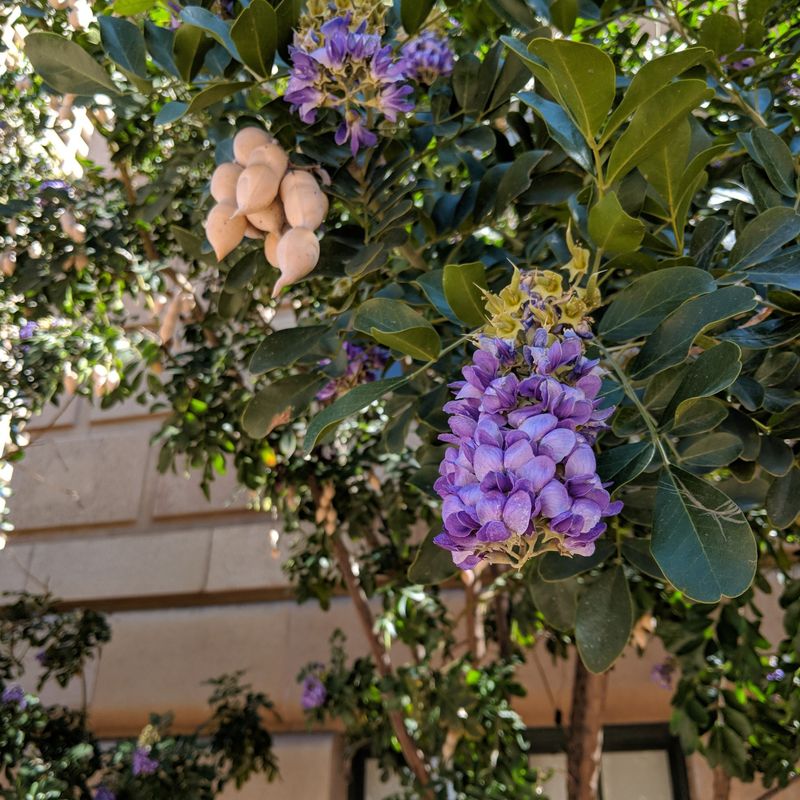
Poisoning from this plant comes from swallowing the seeds. They contain toxic alkaloids, and a published chemistry study reports cytisine as a major alkaloid from them.
Cytisine is the compound behind the warnings you see about this shrub.
How the seed is eaten matters too. Texas A&M describes chewed or ground seeds as more toxic than the foliage.
A livestock reference notes that whole seeds may pass through intact, but that is not proof a swallowed seed is harmless for a child or a dog. A hard seed coat is not a safety guarantee.
Just as important is what the sources do not say. They do not establish that standing near the shrub, mowing around it, or touching an intact pod causes poisoning.
You can enjoy the tree and garden beside it. The focus belongs on keeping seeds out of mouths.
The pod itself is a separate question. The documented risk is tied to the seeds, and the sources reviewed do not show that every pod is as toxic as a seed.
Treating the pod as a container for the seeds is a sensible way to think about it.
One more point clears up a common mix-up. As Poison Control explains, the name mescal bean does not mean the seeds contain mescaline.
They are a different plant chemistry, and the cytisine alkaloid is the reason for caution.
Human poisoning can affect more than the stomach
Stomach upset is only part of the picture. Poison Control reports that mescal bean poisoning can cause vomiting and abdominal pain, along with low blood pressure, a rapid heart rate, confusion, agitation, and tremors.
That list shows how widely the seeds can affect the body, but it is not a checklist. Having none of these signs does not prove a person is fine, and having one does not confirm poisoning from a seed.
Many things can cause a child to vomit or seem off, so symptoms alone cannot settle the question.
It also helps to avoid guessing at amounts. A seed that was swallowed whole, one that was chewed, and one that was only mouthed all raise different questions.
The size and age of the person matter too. A general article cannot sort that out, and neither can the hardness of the seed surface.
If you saw a child put a seed in their mouth, or you find a missing seed and a worried feeling, treat it as a real exposure and move on to expert advice. You do not need to wait for symptoms to appear before calling.
The steps in the next section explain who to contact and when to call 911.
Keep in mind that the aim here is awareness, not alarm. Most yards with this shrub never lead to a problem, and a bit of attention goes a long way.
One dog case shows why suspected ingestion matters
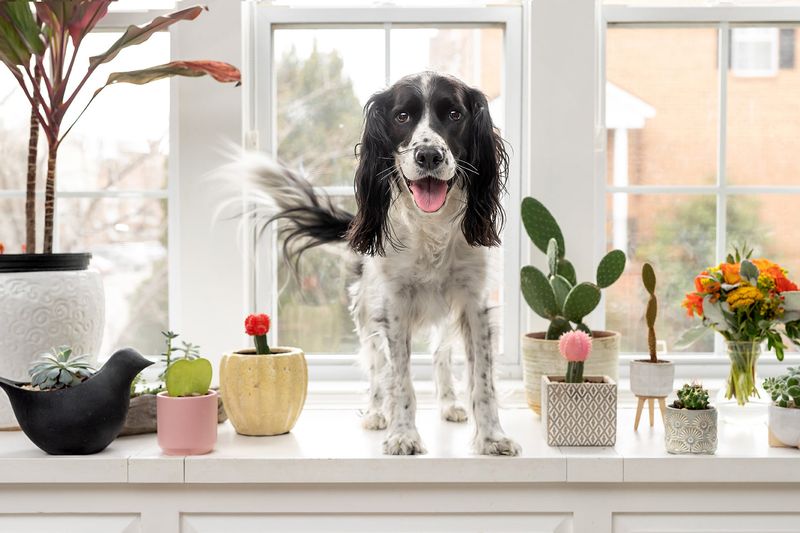
The dog evidence is limited, and it helps to describe it plainly. A published case report on mescalbean toxicity in a dog describes exercise intolerance, muscle rigidity, and collapse.
The dog recovered with rest.
That is one case. It does not tell us how often dogs in Texas yards get poisoned, and it does not give a dose that causes harm.
It also does not mean every dog that eats a seed will look like that patient. Some dogs may show different signs, and some may show none that you notice.
What the case does show is that the seeds can affect a dog’s muscles and stamina, not only its stomach. That is a good reason to take a suspected ingestion seriously.
A dog that suddenly tires out, stiffens up, or collapses after being near the shrub deserves quick attention.
Dogs explore with their mouths, and a fallen seed in the mulch can be hard to spot until it is gone. If you notice seeds missing from a pod, chewed pod pieces, or crushed seeds near where your dog was digging, mention that to your veterinarian.
Details like these help them decide what to do.
You do not need to guess whether the amount was enough to matter. Call a veterinarian or a veterinary poison service promptly and let them guide you.
The next section lays out who to call.
Contact poison experts or a veterinarian after ingestion
If a person may have tasted or eaten a seed, contact poison experts. Poison Control advises using webPOISONCONTROL online or calling 1-800-222-1222.
The service is free and the call connects you with specialists who can ask the right questions about what happened.
You may read that a taste of a mescal bean should not be toxic. That comment appears alongside the advice to call, and it is not a reason to brush off a real exposure.
Amount, whether the seed was chewed, and the person involved all matter, so let the experts weigh them rather than trying to estimate risk from an article.
Some situations are emergencies. The Texas Poison Center Network says to call 911 if a person is unconscious, has trouble breathing, or has a seizure.
Do not wait for a phone call back in those cases.
For a pet, the path is similar. Pet Poison Helpline’s mountain laurel page points owners toward prompt contact with a veterinarian or a veterinary poison service after a suspected ingestion.
If your regular clinic is closed, look for an emergency veterinary hospital nearby.
When you call, have a few details ready: the age and weight of the child or animal, what you think was eaten, roughly when, and whether the seed seemed chewed. If you can safely bring a pod or seed along, that can help too.
Stay calm, keep the person or pet resting, and follow the instructions you are given.
Keep seeds and pods out of reach
Reasonable precautions are simple. Teach children not to put seeds or pods in their mouths, and keep dogs from chewing on them.
Pick up any fallen seeds where little hands or paws can reach, and check the ground again after wind or rain.
If you want to remove pods, clipping accessible ones is a cautious, practical option. Use hand pruners and clip intact pods at the stem, then drop them into a bag or bucket you can close and throw away.
This is a choice, not a rule. The sources reviewed, including Texas A&M and New Mexico State University Extension, do not say every homeowner must strip every tree.
Pods high out of reach may not need any attention.
Do not crack or cut open seeds, and do not try to see what is inside. Damaged or chewed seeds are the ones described as more toxic, so leave them as they are.
Wearing gloves and washing your hands afterward is a sensible habit while you work.
Keep your tools and trimmings out of reach too. A bag of clipped pods left open on the patio gives a curious pet an easy target.
If a child or pet might have swallowed a seed, call Poison Control for a person, or a veterinarian or Pet Poison Helpline for an animal. A beautiful spring bloomer can stay in the yard when you keep its seeds out of the picture.