
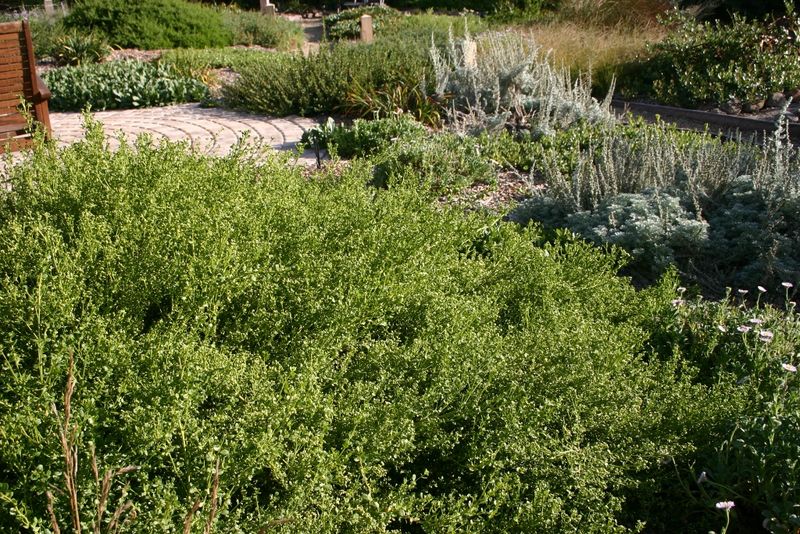
Every fall, California yards face a choice between bare dirt that sprouts weeds and thirsty lawn that needs mowing all year. The good news is that a handful of tough, low plants can cover the ground so thickly that weeds never get a chance.
Planting them now, right before the winter rains, lets the rain do most of the watering while roots settle in. Here are ten groundcovers that can retire your mower and shrink your weeding chores for good.
1. Creeping Wild Rye (Leymus triticoides ‘Grey Dawn’)
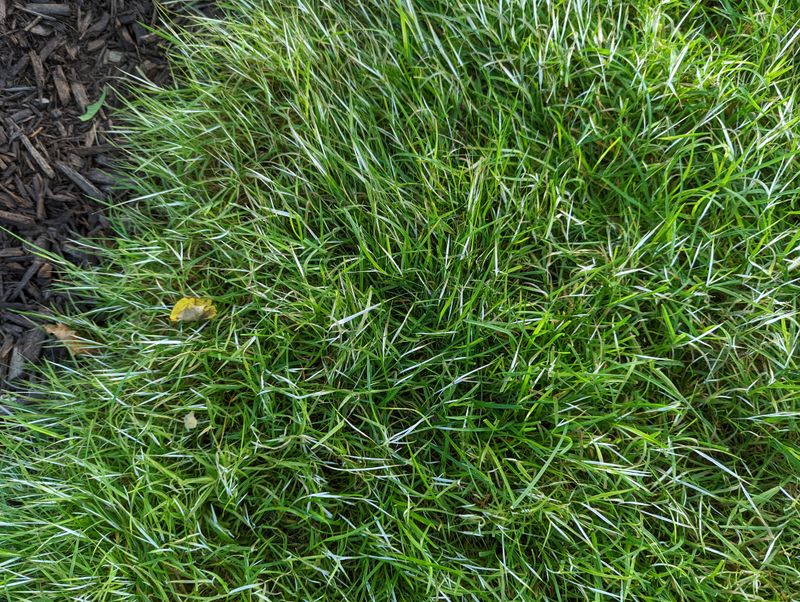
Picture a lawn that spreads by itself, stays soft underfoot, and asks for water maybe twice a month in summer. Creeping wild rye pulls that off by sending out underground runners that knit into a dense, blue-gray mat.
Weeds simply run out of room.
You can mow it once or twice a year for a tidy look, or leave it shaggy for a meadow feel. It handles clay soil, foot traffic, and even short floods, which makes it a favorite for rain gardens and swales.
Plant plugs about 18 inches apart in October or November. By spring, the gaps close up, and you can sell that gas mower to a neighbor who has not caught on yet.
2. Dwarf Coyote Brush (Baccharis pilularis ‘Pigeon Point’)
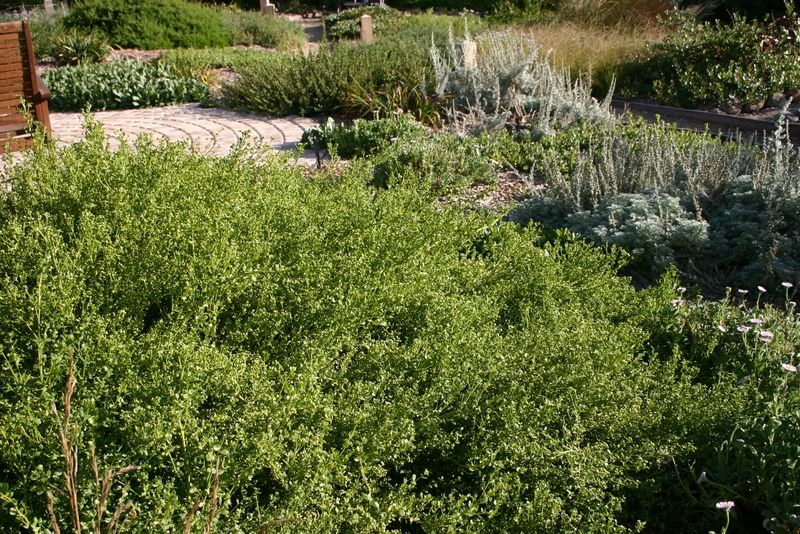
Ask any slope-owner what they wish they had planted sooner, and coyote brush comes up a lot. The ‘Pigeon Point’ form stays about a foot or two tall but spreads eight feet wide or more, with glossy green leaves that shade out nearly everything beneath it.
Its roots dig deep, grabbing soil on hills that would otherwise slide when the first big storm hits. Once established, it often survives on rainfall alone along the coast.
A quick trim in late winter keeps it fresh and thick. Few plants give you this much coverage for this little effort.
3. Yerba Buena (Clinopodium douglasii)
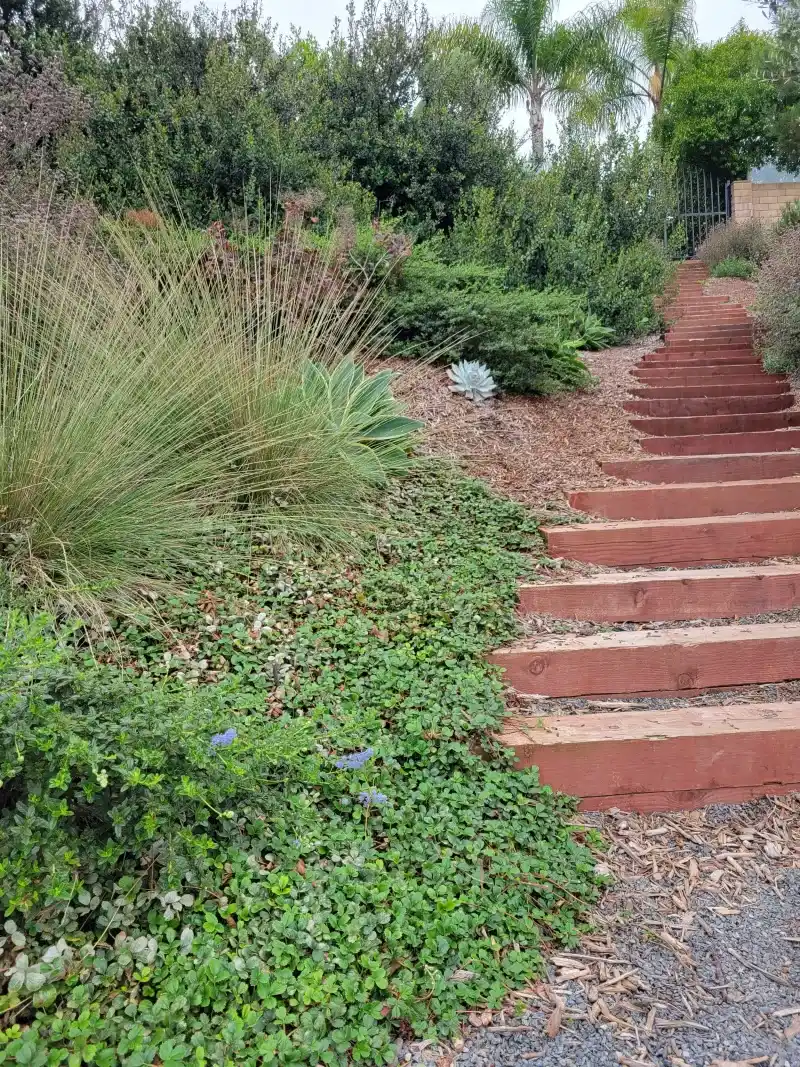
Brush your hand across yerba buena and the air fills with a sweet minty scent. San Francisco was once named after this little trailing native, which tells you how common it used to be along the coast.
It shines in the shady spots where lawns sulk, like under oaks or along north-facing walls. The stems root as they creep, slowly building a low carpet that crowds out clover and oxalis.
Give it a bit of summer water inland. Bonus: the leaves make a calming tea.
4. Carmel Creeper (Ceanothus griseus horizontalis)

Come March, this plant puts on a show that stops traffic. Carmel creeper explodes in clouds of blue flowers that hum with bees for weeks.
The rest of the year, it is a sturdy, glossy green mat about two feet tall and up to ten feet across. Its thick branches block sunlight from reaching weed seeds, and its roots even fix nitrogen in poor soil.
Plant it where it can stretch out, since crowding shortens its life. Skip summer watering once it is settled, because soggy soil is its biggest enemy.
5. Silver Carpet (Dymondia margaretae)
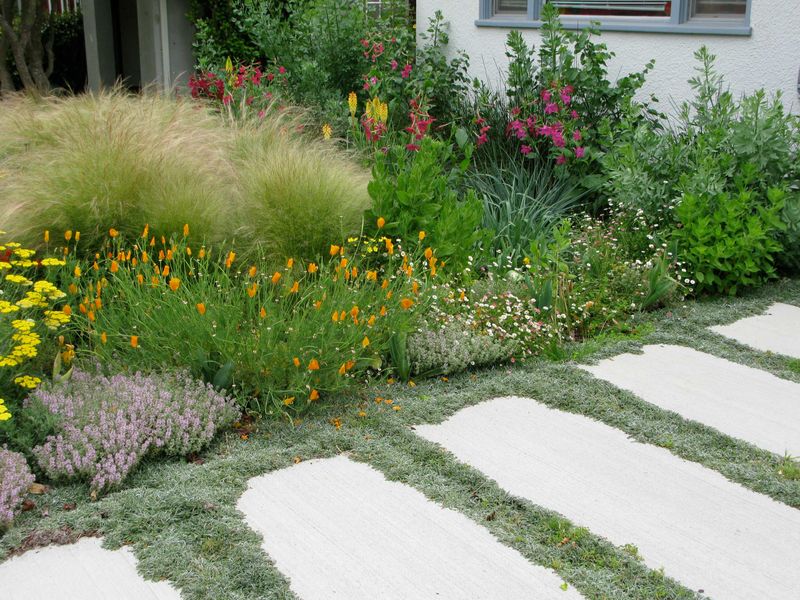
Not a California native, but a South African import that behaves beautifully here. Dymondia hugs the ground at barely two inches tall, forming a tight silvery mat you can actually walk on.
It is the go-to plant for filling gaps between pavers and stepping stones. Once it fills in, weeds struggle to poke through the dense rosettes.
Growth is slow at first, so plant small pieces close together. Patience in year one pays off with a nearly maintenance-free path for years.
6. Prostrate Manzanita (Arctostaphylos ‘Emerald Carpet’)
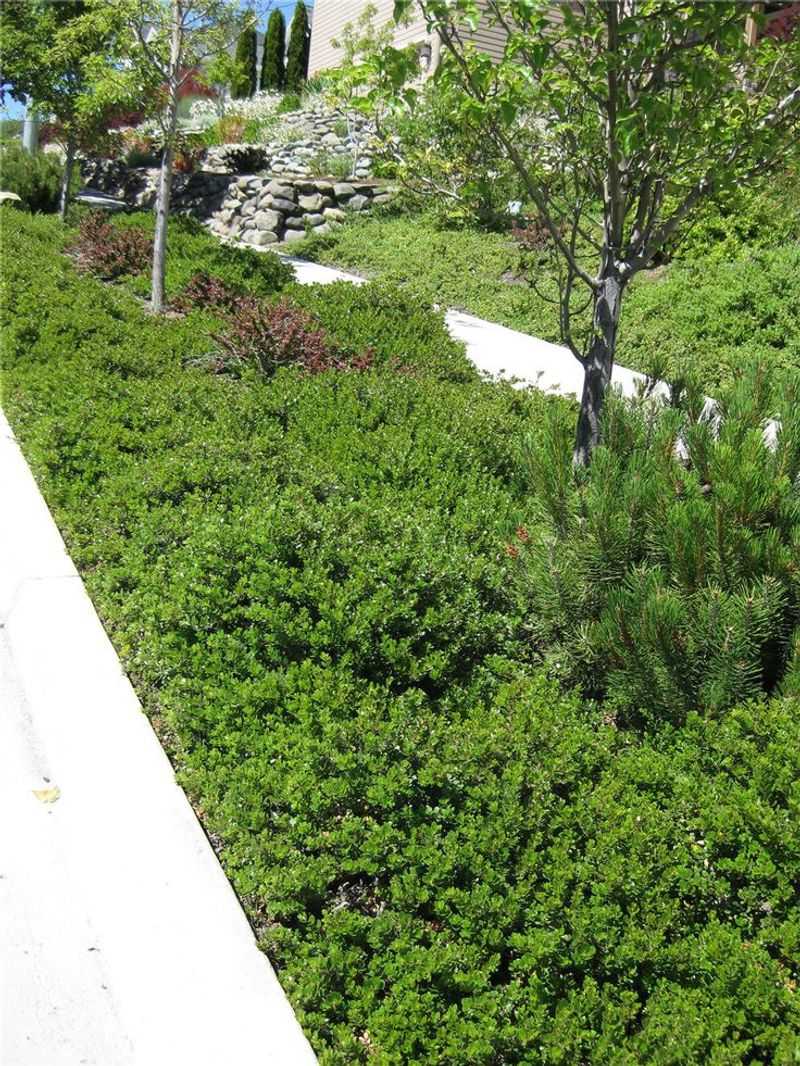
Think of it as the fancy cousin of the big red-barked manzanitas on the hills. ‘Emerald Carpet’ stays under a foot tall with small, shiny leaves and tiny pink bell flowers in late winter.
The foliage grows so thick that light barely reaches the soil. Hummingbirds visit the blooms when little else is flowering.
It prefers good drainage and a bit of afternoon shade inland. Mulch with gravel or bark until it closes ranks.
7. California Sagebrush ‘Canyon Gray’ (Artemisia californica)
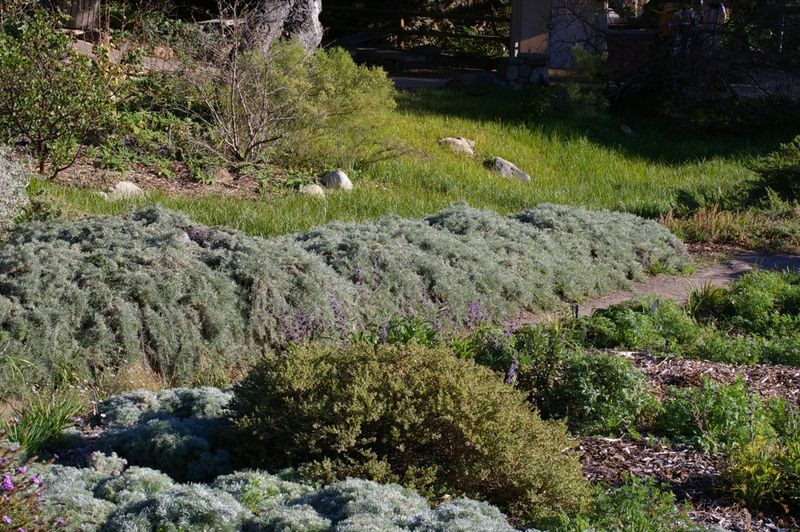
One rainy afternoon on a coastal trail, the smell hits you first: sharp, clean, unmistakable sage. ‘Canyon Gray’ brings that scent home in a flat, sprawling form.
The feathery silver stems grow about a foot tall and several feet wide, spilling over walls and covering dry banks. It loves heat and poor soil and needs almost no summer water.
It also glows in moonlight, a nice touch for evening patios. Shear lightly in fall to keep it dense.
8. Seaside Daisy (Erigeron glaucus)
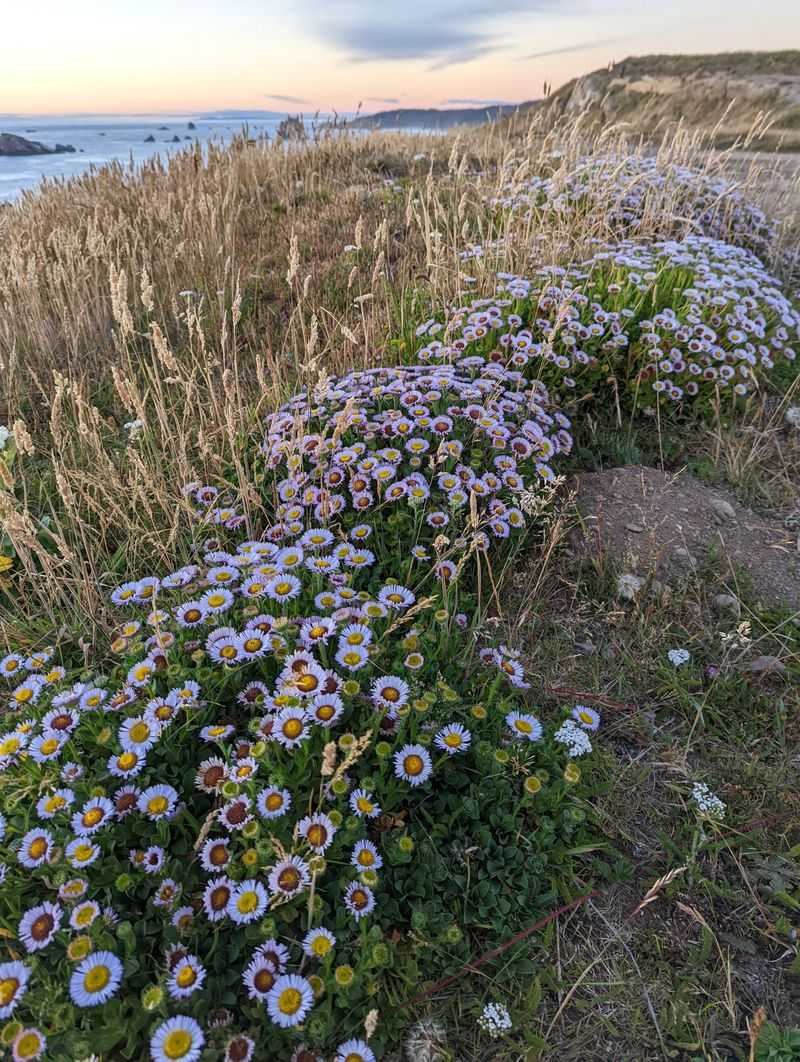
Cheerful is the word. Seaside daisy forms low clumps of fuzzy leaves topped with lavender, yellow-centered flowers for months.
The clumps spread steadily, making it great for edging beds or filling small spaces where a full carpet plant might take over. Salty wind and sandy soil do not bother it one bit.
Deadhead now and then to keep blooms coming. Inland gardeners should offer light shade and occasional water.
9. Creeping Sage (Salvia sonomensis)
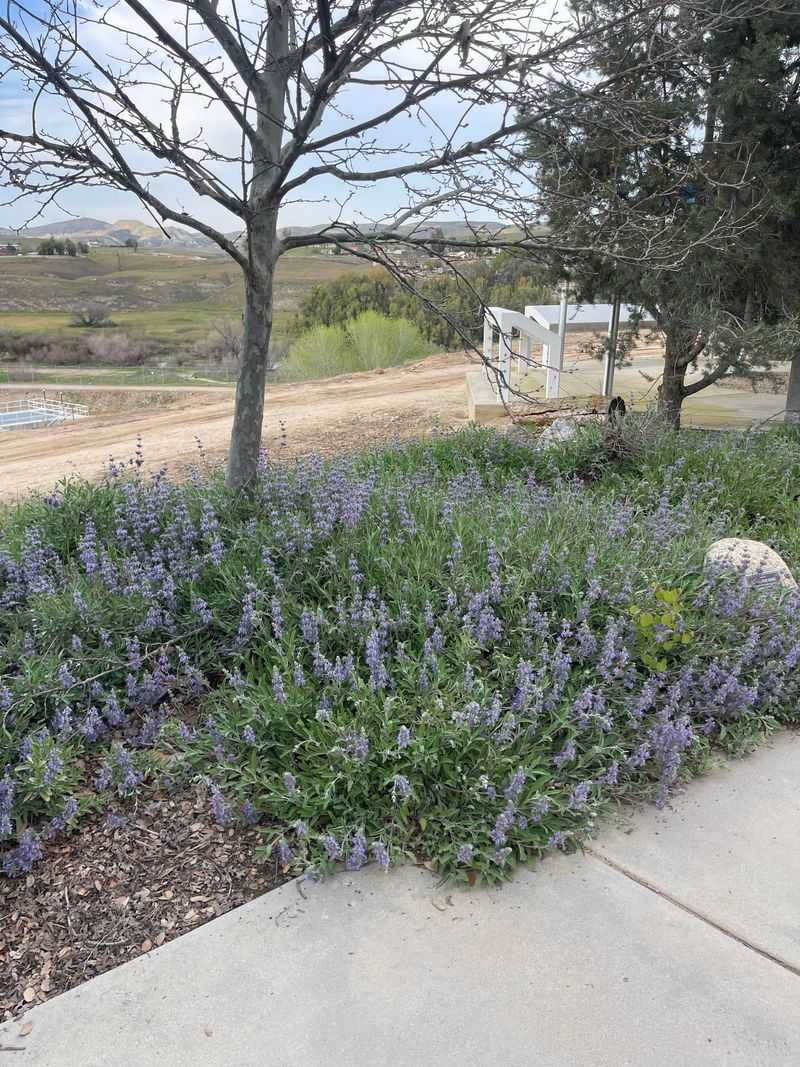
Few groundcovers handle dry shade under oaks, and creeping sage is one of them. It spreads into a fragrant gray-green carpet about six inches high.
Spring brings violet flower spikes that bees adore. Once rooted, it wants no summer water at all, which makes it safe near native oaks that hate irrigation.
Plant in fall with excellent drainage. Varieties like ‘Bee’s Bliss’ grow faster and are easier to find.
10. Pacific Sedge (Carex pansa)

Want something that still looks like a lawn? Dune sedge is the answer most designers reach for.
Grassy and green, it spreads by runners into a soft carpet that can be mowed a few times a year or left at six inches. It uses a fraction of the water of turf and tolerates sun or part shade.
Plugs planted a foot apart this fall will fill in by summer. Your weekends just got a lot quieter.