
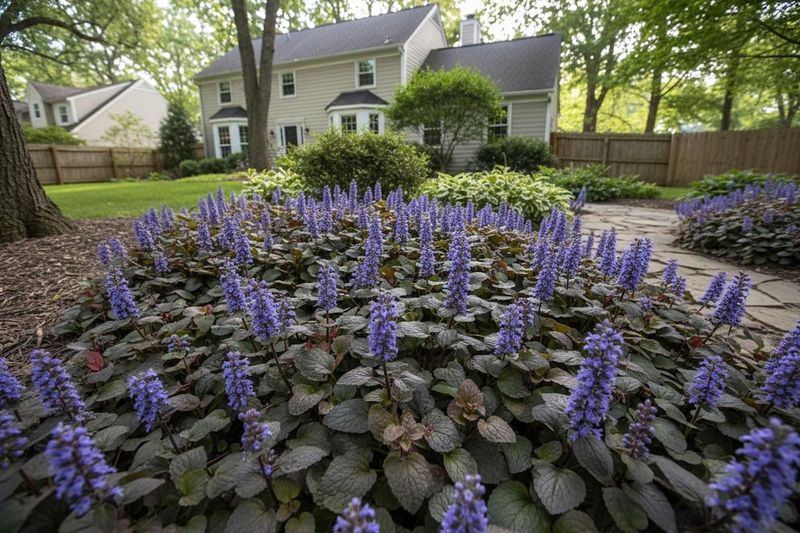
Many North Carolina yards have a shady strip under old trees where grass gives up and bare soil shows through. Ajuga is a common fix, but it is not the only one.
A native called green-and-gold may suit some of these spots, and it offers cheerful yellow flowers in spring. Here is how to tell whether your tree border is a good match.
Green-and-gold is one native option for a shady border
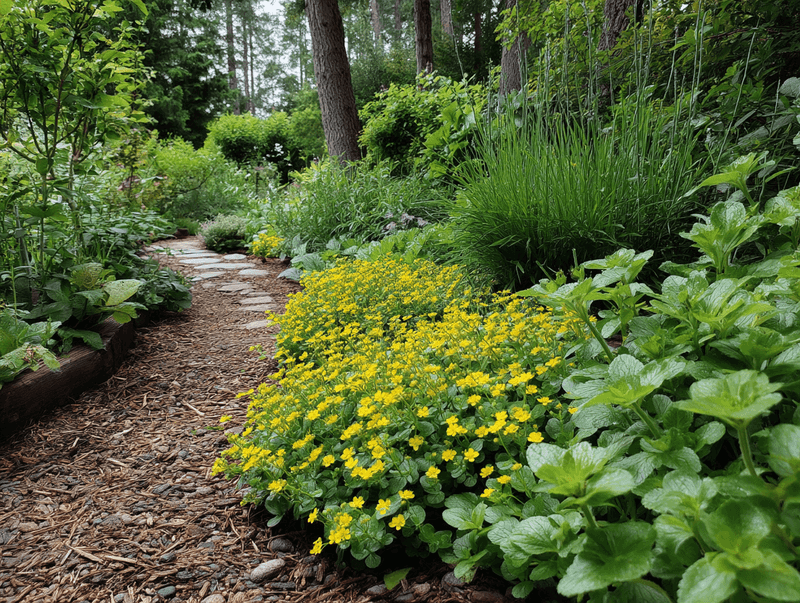
Green-and-gold (Chrysogonum virginianum) is a low, spreading, semi-evergreen groundcover that grows in partial to deep shade. NC State Extension lists it as native to North Carolina’s Coastal Plain, Piedmont, and Mountains.
That makes it a handy choice for gardeners who want a native plant in a shady border instead of an imported one.
Its leaves are soft, fuzzy, and medium green, and they stay close to the ground. In spring, small yellow flowers rise above the foliage and brighten a part of the yard that often looks dull.
Because it is semi-evergreen, some leaves may hang on through winter, but you should not count on a fully green mat in every season.
Here is the honest part. Being native to your region does not mean the plant will thrive in every yard.
A spot with deep shade, steady moisture, and loose soil is a very different place from a root-packed strip under a big oak that rarely gets a soaker. The North Carolina Native Plant Society’s native plant booklet is a useful place to browse other regional natives if you want more choices.
Think of green-and-gold as an option to consider, not an automatic swap for ajuga and not a guaranteed carpet. The next sections help you compare the two plants, check your site, and plant with care.
After that, you can decide if it fits your trees.
Ajuga and green-and-gold offer different tradeoffs
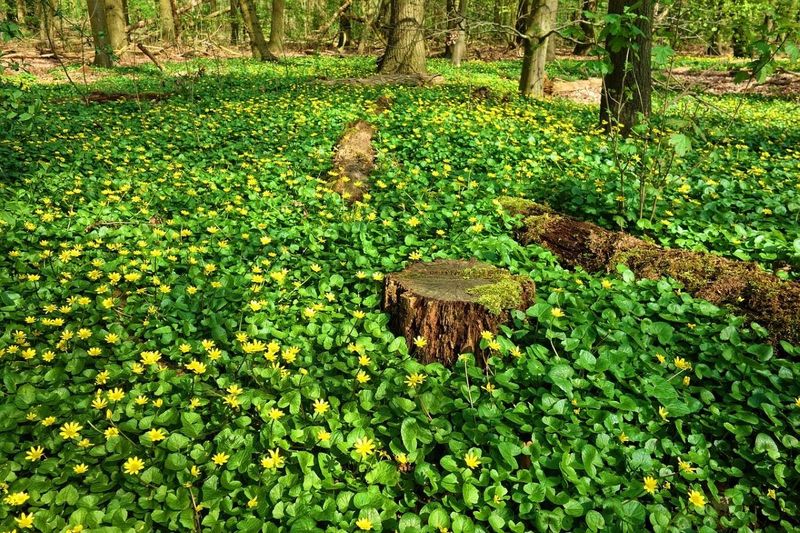
Ajuga (Ajuga reptans) earns its popularity honestly. It forms a compact, dense mat that fills shady ground quickly.
NC State Extension describes ajuga as nonnative to the United States and able to spread aggressively. It also rates it as a low threat to native plant communities in North Carolina.
That label matters, because ajuga is not a villain here. The practical headache is its habit of wandering.
It can be difficult to remove from nearby beds or lawns, so a border next to turf or a tidy perennial bed may become a long-term chore.
Green-and-gold trades speed and density for local roots. NC State lists its growth rate as medium, and it is semi-evergreen rather than reliably evergreen.
You will likely wait longer for it to knit together, and the result may look looser than a thick ajuga blanket.
So the choice comes down to priorities. If you want a native plant with yellow spring flowers and can be patient, green-and-gold is worth a look.
If you need fast, tight coverage right now, expect the native to feel slower and plan accordingly.
Check the conditions beneath the tree before planting
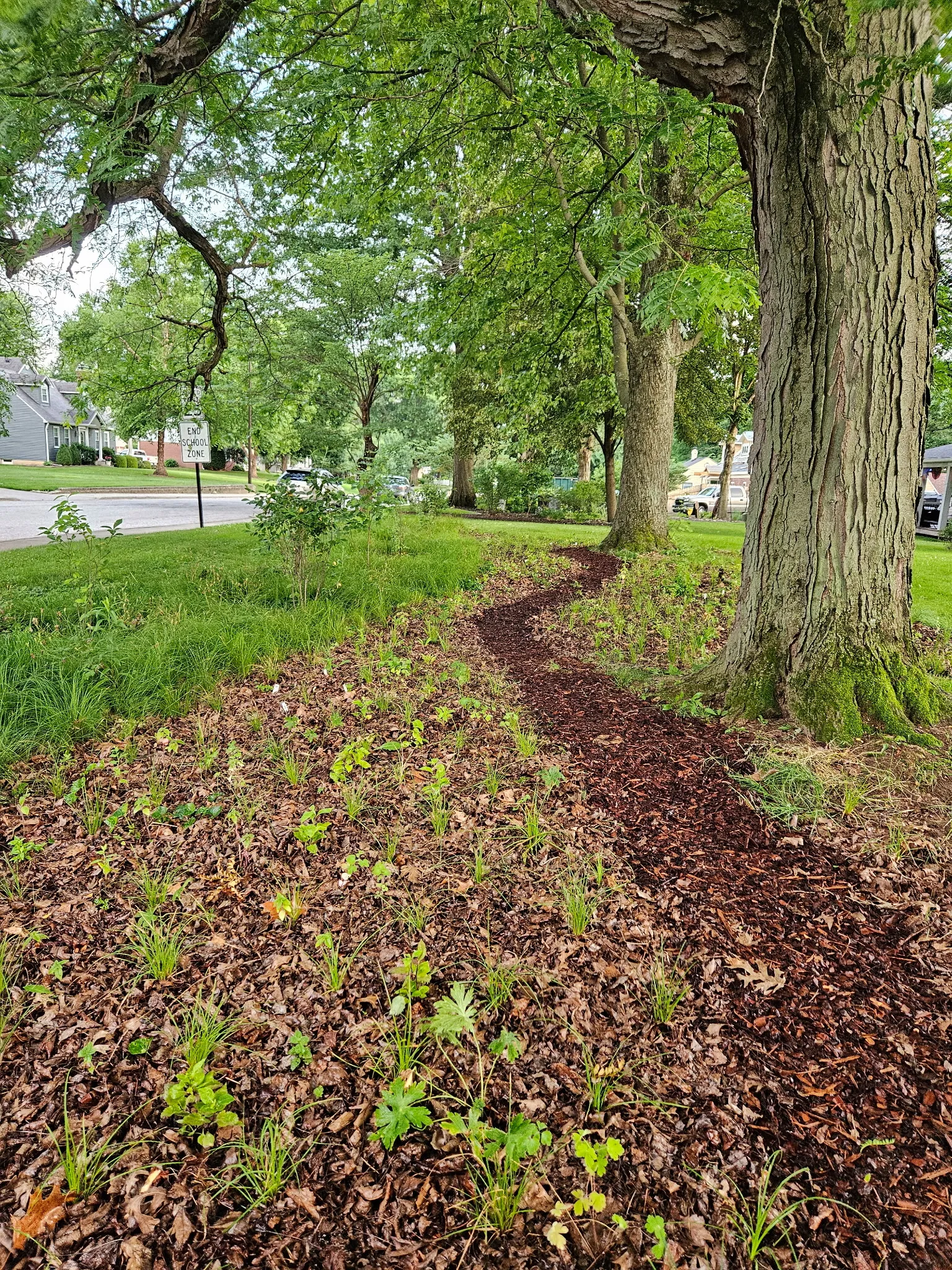
Start with light, but do not stop there. Green-and-gold grows in part shade to full shade, so a spot under a leafy tree often sounds ideal.
The plant prefers moist, well-drained, acidic, humus-rich soil, according to NC State Extension, and it tolerates occasional dryness.
Occasional is the key word. Shade under an established tree can be much drier than it looks.
University of Maryland Extension points out that tree roots compete with groundcovers for moisture, and a dense canopy can intercept rainfall before it reaches the ground.
A simple check can save you money. After a good rain, push a trowel a few inches into the soil under the canopy and see whether it is damp or dusty.
Do this again a few days later, and note how fast it dries out.
Look at the soil itself, too. Dark, crumbly soil with leaf litter is a better sign than hard, pale ground full of surface roots.
Standing water after storms is a warning for drainage, while bone-dry soil days after rain suggests root competition.
If your strip stays moist but drains, green-and-gold has a fair chance. If it stays dry most of the season, treat it as a risky bet rather than a dependable fix.
Dry shade is a tough site for many plants, and this one is not a promised solution.
Plant with care around established tree roots

Established trees do not like surprises, so go small. University of Maryland Extension notes that smaller plants need smaller holes, which helps you avoid cutting through too many existing roots.
Choose plugs or small pots, and dig only as much as each root ball needs.
Skip the rototiller. Deep tilling can chew up the feeder roots that keep your tree healthy.
Resist the urge to build up a thick layer of fresh soil over the root zone, too, since that can change conditions around the tree.
Mulch needs a light touch as well. UF/IFAS Gardening Solutions warns that mulch piled against a trunk can hold moisture and encourage rot.
Keep any mulch pulled back from the base of the tree.
Once the plants are in, weeds become the main rival. Keep the planting site weed-free while the green-and-gold establishes, because young plants have little room to spare.
Pulling weeds by hand is gentle on nearby roots.
When a hole hits a thick root, stop and shift a few inches over rather than hacking through it. A slightly uneven layout is a fair price for a healthier tree.
Expect seasonal flowers and gradual groundcover growth
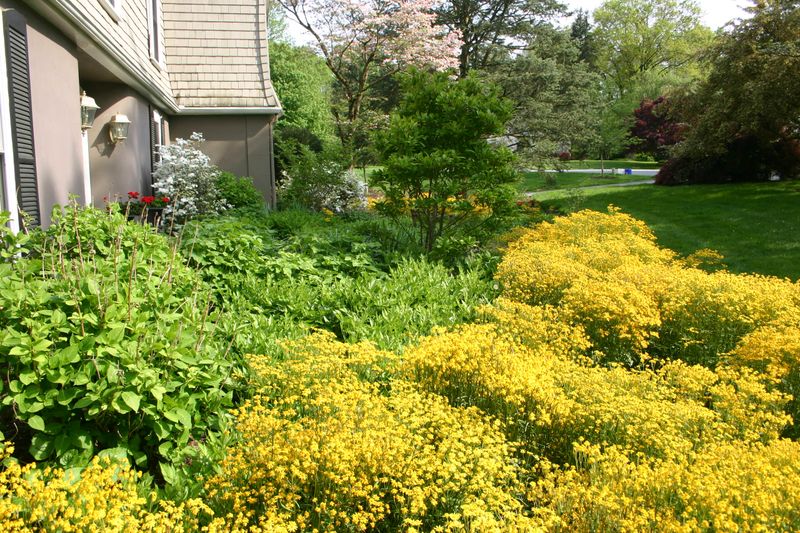
Picture a plant about 1 to 2 inches tall in foliage that spreads roughly 1 to 2 feet wide, per NC State Extension. Growth is medium, so each plant fills outward over time rather than overnight.
Gaps between young plants are normal in the first seasons.
The foliage is semi-evergreen. In milder winters or sheltered spots, many leaves may linger, but do not expect a perfectly green mat all year.
Some browning or thinning can happen as the cold sets in.
Flowers are the showpiece. Yellow blooms are profuse in spring and may continue into early summer.
In North Carolina’s summer heat, flowering often becomes sparse or stops, and a light rebloom may show up in fall. Plan for a spring display, with any later flowers as a bonus.
Wildlife benefits are modest but real. Bees and butterflies visit the flowers, and songbirds eat the seeds.
That is a nice touch for a shady corner, though it should not be counted on to bring any particular visitor.
Finally, keep expectations realistic about coverage. Green-and-gold is not sold as a weed-proof barrier or a fast replacement for anything.
Treat it as a gradual, low-growing native that rewards a patient gardener.
Choose green-and-gold only if the site fits
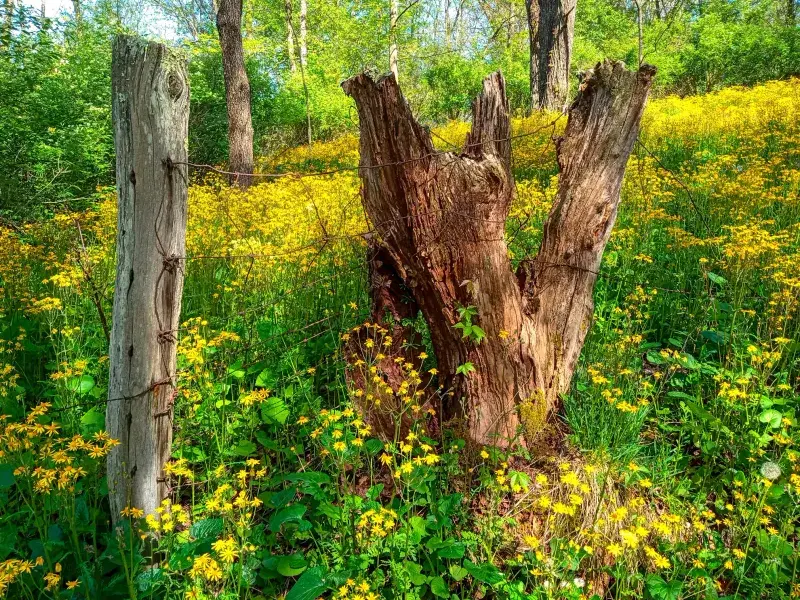
Green-and-gold gives North Carolina gardeners a native, low-growing option when the shade, drainage, and moisture under a tree are a fair match. NC State describes its growth as medium, so patience is part of the deal.
Root competition can also limit how well it settles in, as University of Maryland Extension explains.
Try a few plugs in your best spot first. If they settle in, you will know your tree border is a match.