
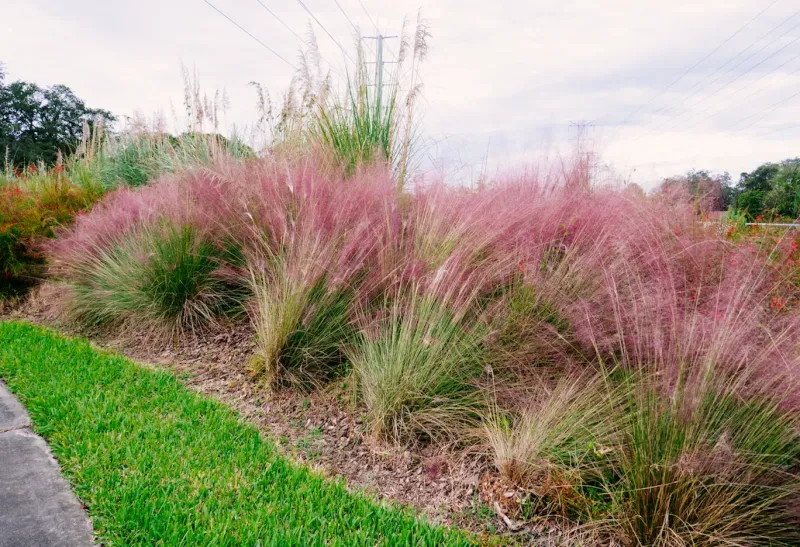
Drive through a Central Texas neighborhood in the fall and you may spot soft pink clouds floating above a clump of grass. That plant is often Gulf muhly, a Texas grass known for its airy plumes.
If you admire the look, fall is a smart time to start your own. Here is how to pick a spot, plant a clump, and care for it so you can work toward a display of your own.
Gulf muhly’s pink plumes are a fall feature
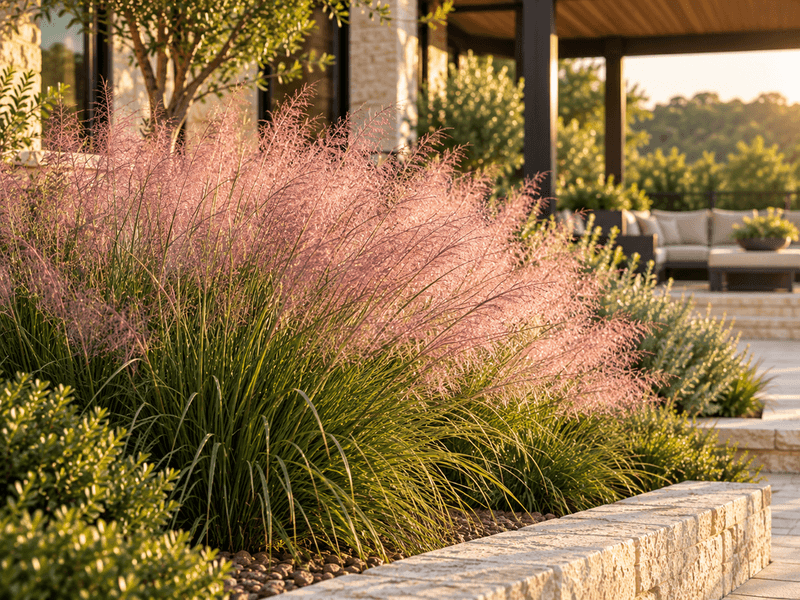
Picture a fine, hazy cloud of pink that seems to hover over a mound of thin green blades. That is Gulf muhly (Muhlenbergia capillaris) in flower.
It is a warm-season perennial grass, and its airy pink-to-purple plumes show up in fall.
The Native Plant Society of Texas lists October as its bloom month, and the City of Austin plant guide also describes the fall color. Those sources give a general season.
They do not report that every Central Texas yard is in peak bloom on any particular week, and timing can shift with the yard and the conditions.
The pink is also temporary. As the flowering plumes mature, they give way to tan or brown seed, as described in the USDA fact sheet.
So the show is a fall event, not a year-round feature.
Knowing that helps you plan. If you see a neighbor’s clump glowing pink, note the date and the spot it grows in.
Then use the rest of this guide to work toward a clump of your own.
Texas is part of this grass’s native range, but sources differ on whether it is native to every part of Central Texas. If local nativity matters to you, check a region-appropriate plant source before you buy.
Choose a sunny spot and make room for a clump
Before you shop, walk your yard and look for sun. Gulf muhly flowers best in plenty of light, and UF/IFAS lists full sun.
Austin’s guide allows sun or part shade, so a partly shaded spot can work, though you may see a thinner show.
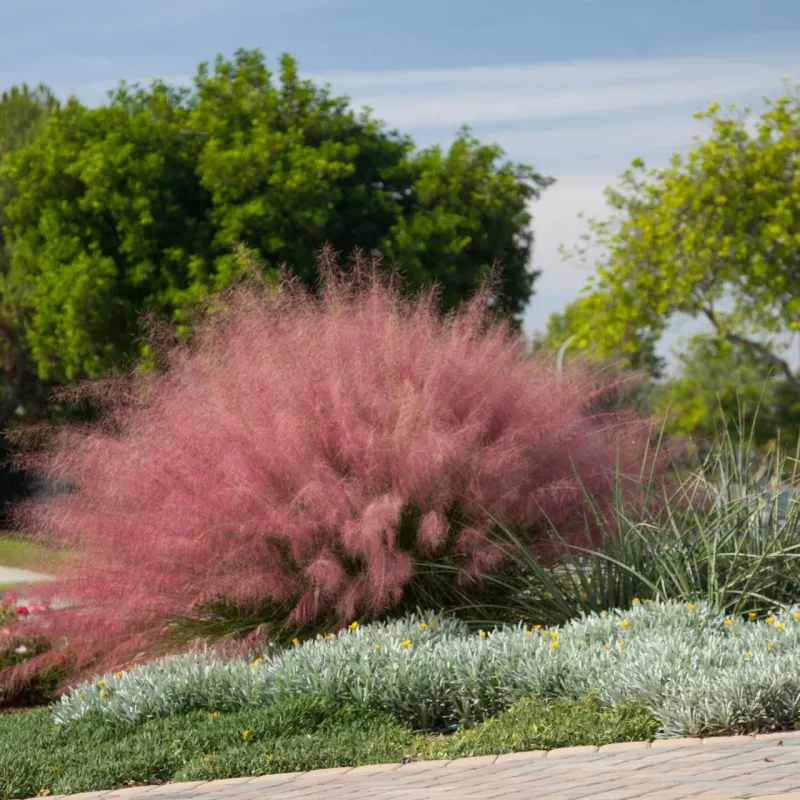
Plan for size. Per the USDA fact sheet, the plant is generally about 1 to 3 feet tall and 1.5 to 3 feet wide.
It grows in a tidy clump and does not spread by runners above or below ground, so it will not creep across your bed.
Soil and water call for some nuance. The City of Austin lists medium water needs, while USDA describes established plants as drought tolerant.
UF/IFAS calls the grass adaptable to several soils, including wet conditions.
That means a sunny, reasonably drained bed is a good bet, but it is not a promise of success in every corner. It also is not a no-water or no-care plant.
Think of it as an ornamental clump for borders and beds, not a lawn replacement.
A nursery-grown clump is a practical way to begin
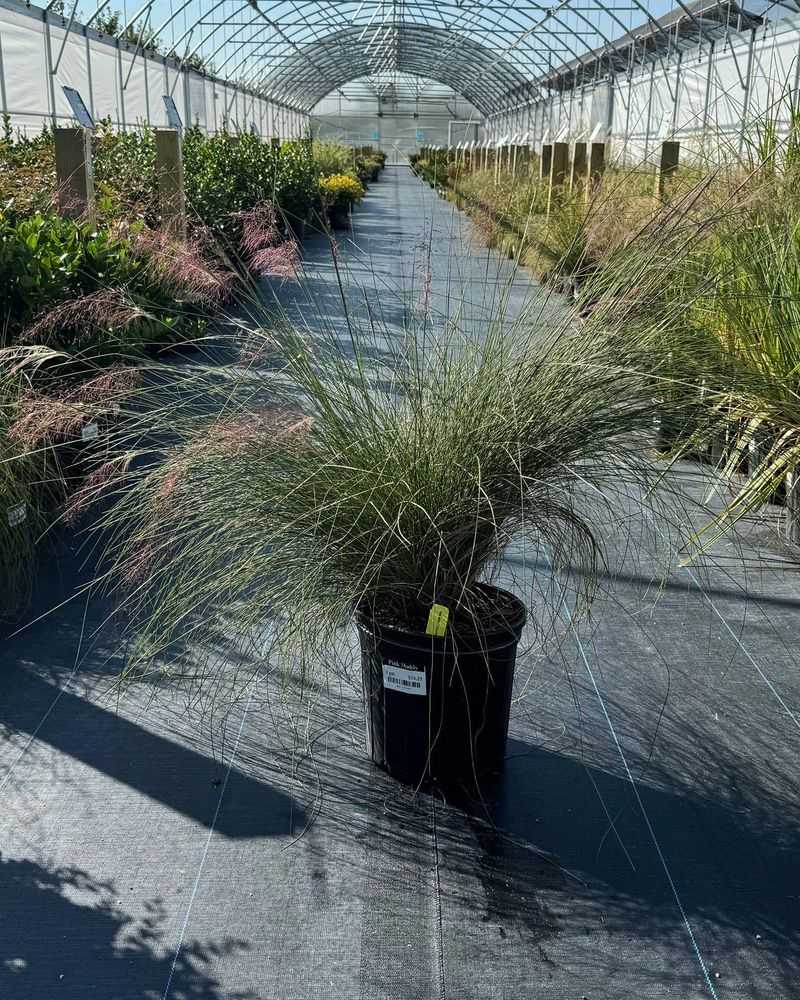
Timing is the main reason to buy a potted plant. Texas A&M AgriLife Extension in Travis County recommends fall planting for ornamental grasses so roots can settle in before summer heat.
A nursery clump already has a head start on that root growth.
Seed is slower and less predictable. The USDA fact sheet says seed can be sown outdoors about 1/8 inch deep and kept moist, or started in a greenhouse in winter for spring planting.
It also says seed does not need cold treatment.
The Native Plant Society of Texas sees it differently. Its propagation entry suggests sowing outdoors after frost risk has passed, with some cold exposure.
Since the advice varies, seed is a bit of an experiment.
If you want a predictable install, a nursery-grown clump is the practical choice. It is a solid step toward a future display.
No source promises a full bloom by next October, so treat the first year as a time for the plant to settle in.
Give the new plant space and moisture as it establishes
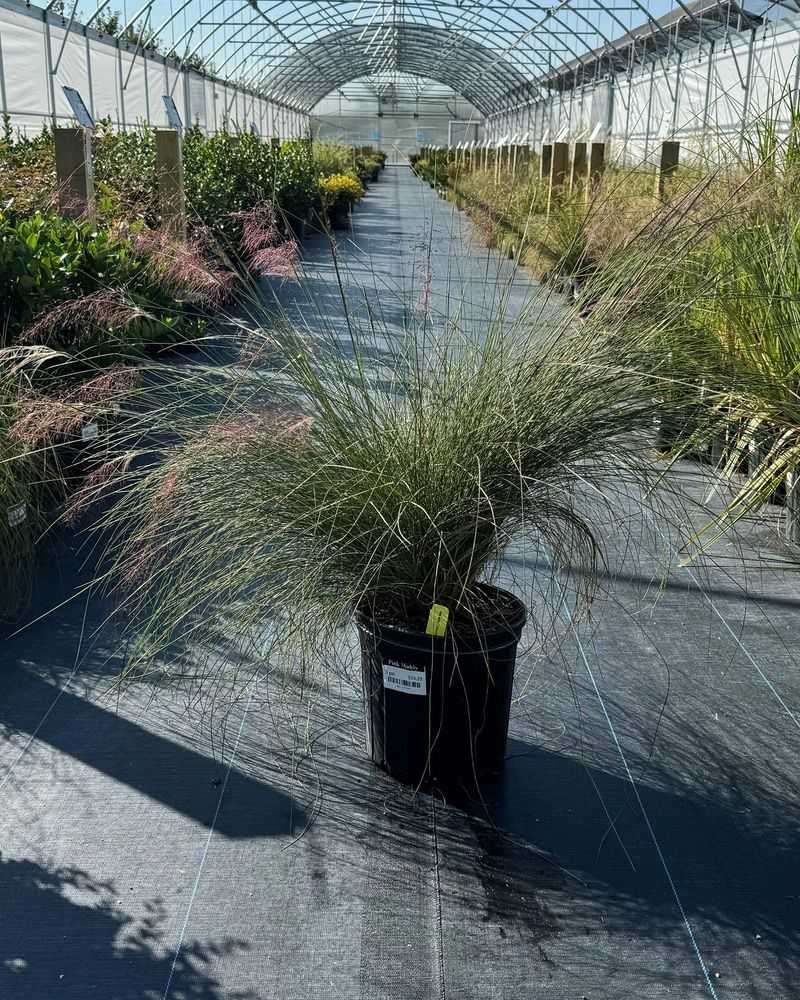
Spacing comes first. UF/IFAS recommends 24 to 36 inches between plants.
Treat that as a guideline: a tight row for a hedge look might use less room, while a single specimen can have more.
Dig a hole about as deep as the pot and set the crown level with the soil. Fill, firm gently, and water well.
A layer of mulch nearby helps hold moisture, but keep it off the crown.
New plants need regular moisture while roots grow. The USDA says direct-sown seed must stay moist through establishment, and the same idea applies to young plants.
The drought tolerance USDA describes is for established plants, not fresh transplants.
No single watering schedule fits every yard. Check the soil with a finger: if the top couple of inches are dry, water.
Sandy beds dry faster than clay, and a cool, cloudy week needs less than a warm, windy one.
Well-drained soil is a good goal, since Texas A&M says ornamental grasses generally prefer sunny, well-drained sites. But it is not an absolute rule, because UF/IFAS describes muhly as adaptable.
Keep the plumes for fall, then cut back in late winter
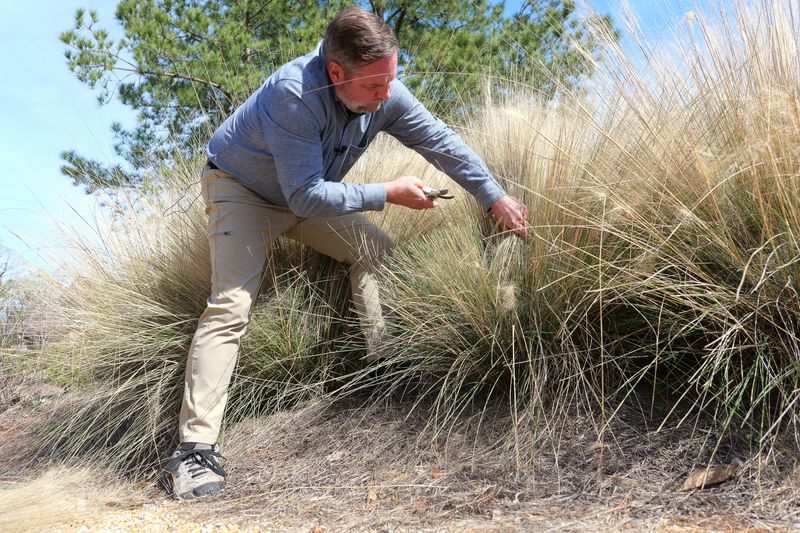
Once the clump is in the ground, the yearly rhythm is simple. Leave it standing while the pink plumes put on their fall show.
Cutting early would remove the very feature you planted it for.
After the color fades, the plumes turn to tan or brown seed, and the clump looks more subdued through winter. Leaving it up a while longer is fine, and the City of Austin advises cutting it back in winter.
For stands, the USDA fact sheet recommends late-winter mowing or burning before new growth. That advice is aimed at larger plantings, so a home gardener would typically use hand pruners or shears on a single clump instead.
Aim for late winter, just before fresh green shoots appear. Neither source sets one exact cut height for every yard, so cut back the old growth while leaving the crown healthy.
Pull out the old blades, tidy the area, and water if the weather turns dry. The clump will push up new growth when spring warms.
The clump can offer wildlife value beyond its color
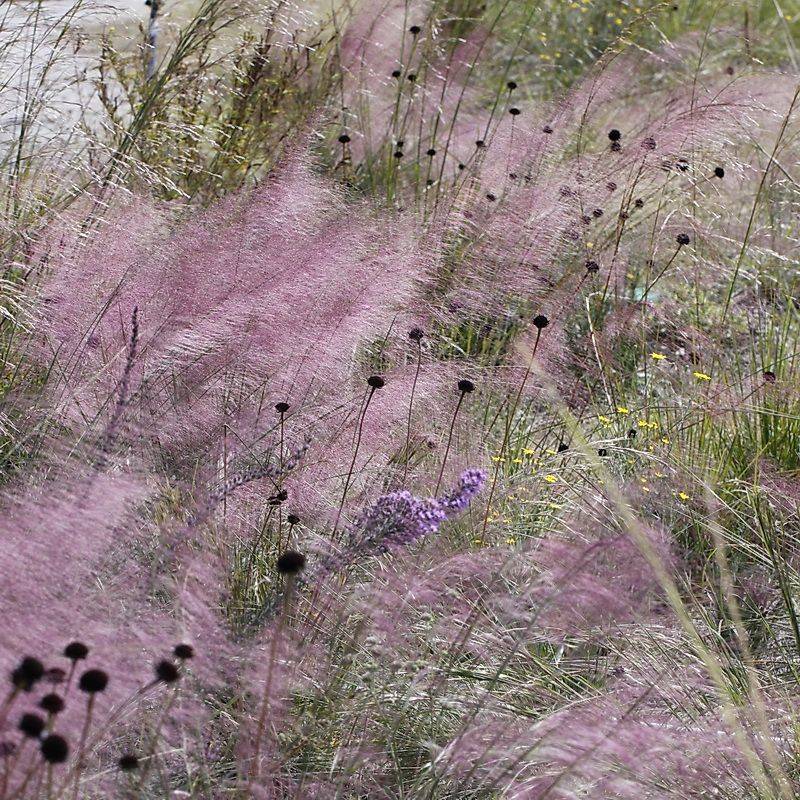
A clump of grass can do more than look pretty. Texas A&M AgriLife Extension says ornamental grasses can provide cover and nesting material, and that small birds forage on the seedheads.
There is one detail tied to this plant specifically. The Native Plant Society of Texas identifies Gulf muhly as a larval host for the Orange Skipperling, a small butterfly.
Keep expectations realistic. Those are specific benefits, not a promise that one plant will draw a crowd of pollinators or wildlife.
Think of it as one useful piece of a yard that already offers water, shelter, and other plants.
Leaving the seedheads up into winter fits that role, which is one more reason to wait until late winter to cut back.
Work toward a future fall display
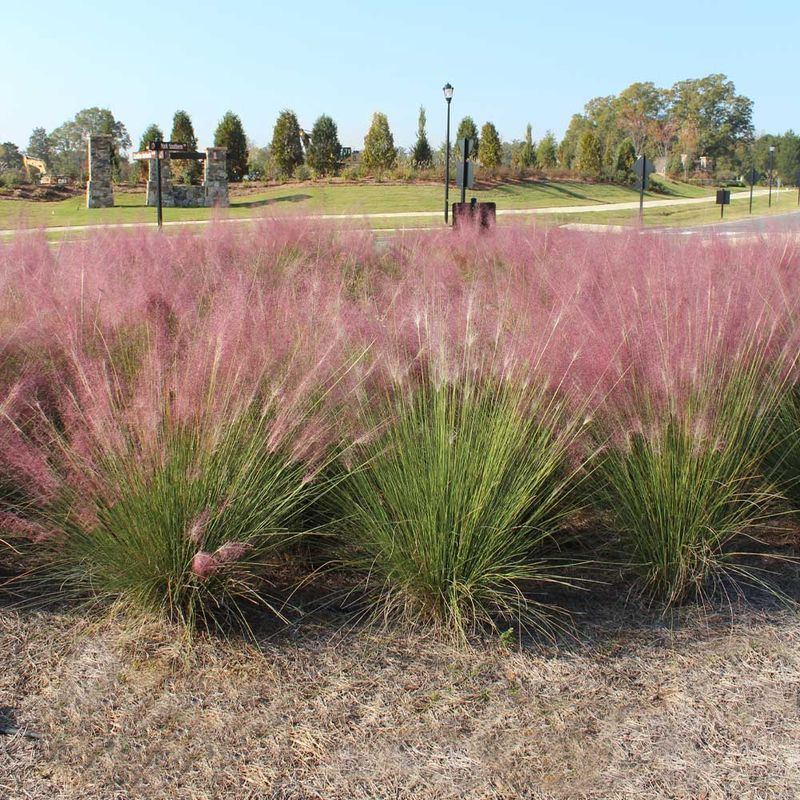
The plan is straightforward: pick a sunny spot, plant a nursery-grown clump this fall, and keep it watered while it settles in. Texas A&M backs fall planting for ornamental grasses, and the USDA describes the clumping habit you can count on.
No source guarantees a full pink show by a set date, so give the plant time. Pink clouds are earned over seasons, and the wait is part of the fun.