
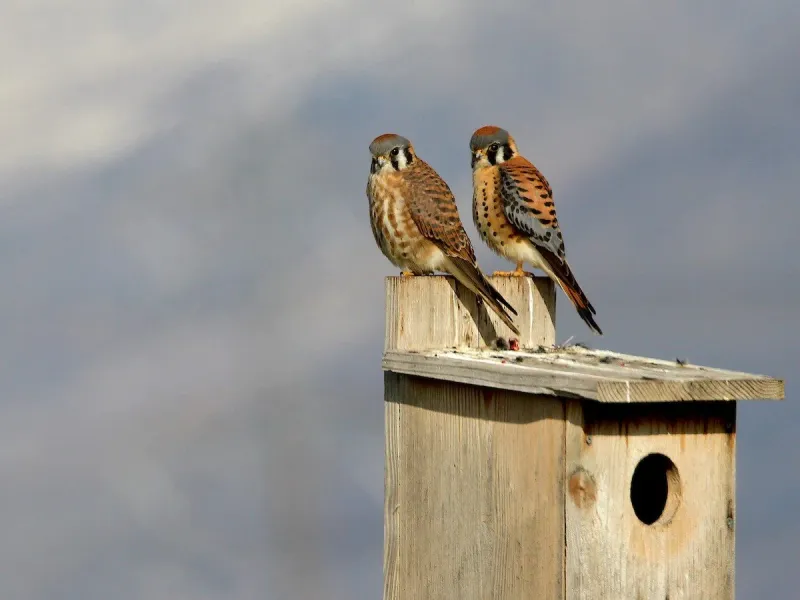
Put up a kestrel box on your barn before spring, and you give the smallest falcon in North America a place to nest right where you can watch it hunt over your pasture. American Kestrels snap up big insects like grasshoppers, along with mice and other small prey.
A box is a simple way to invite one in, and a few smart choices about where and how you hang it make a real difference. Here is how to do it well, and what to expect once it is up.
Kestrel Nesting Varies Across Texas
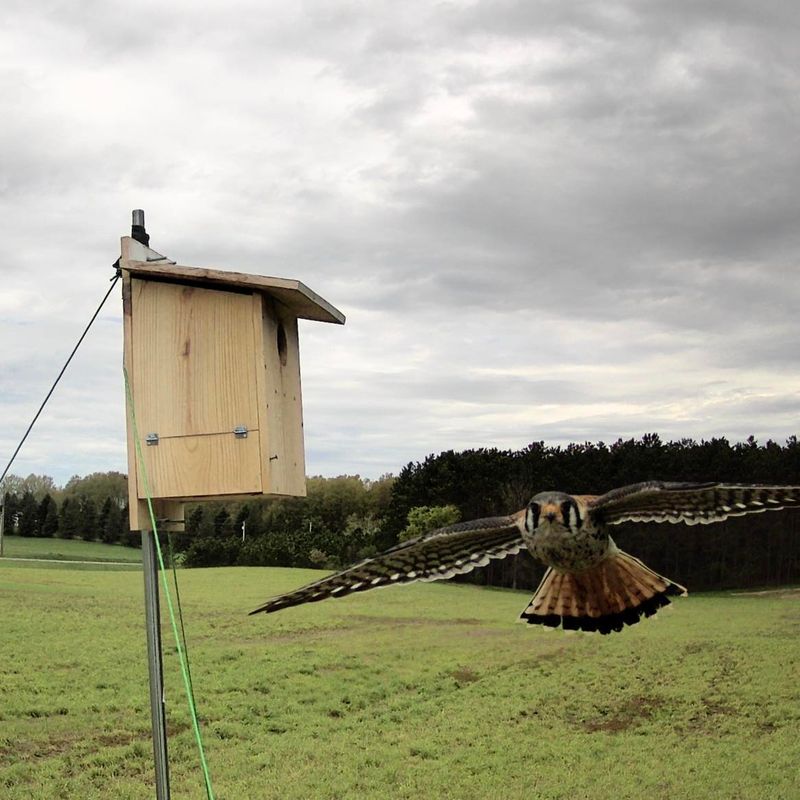
Kestrels are a familiar sight on Texas wires and fence posts for much of the year. They are common across the state during migration and winter, when northern birds drift south.
Seeing one in January, though, does not mean it will stay to raise a family on your place.
Breeding is a different story. Texas Parks and Wildlife describes nesting mainly in the northern and western parts of the state, with the general Texas nesting period running from April to early June.
The Texas Breeding Bird Atlas records kestrels in several ecological regions, but it says confirmed nestings were reduced in Central Texas. It also documents some breeding activity earlier than the usual window.
So, candidly, a Central Texas box is a longshot in some places and a fair bet in others. Nobody can promise that a pair will pick your barn.
If you have seen kestrels hunting nearby into the spring, your odds look better than if you only spot them on cold winter days.
That is why getting a box up early makes sense. A box that is already weathered and in place when birds start scouting is ready for any pair that happens by.
Think of it as sensible preparation, not a sure thing, and you will enjoy the project either way.
A Box Offers a Nesting Cavity, Not Pest Control
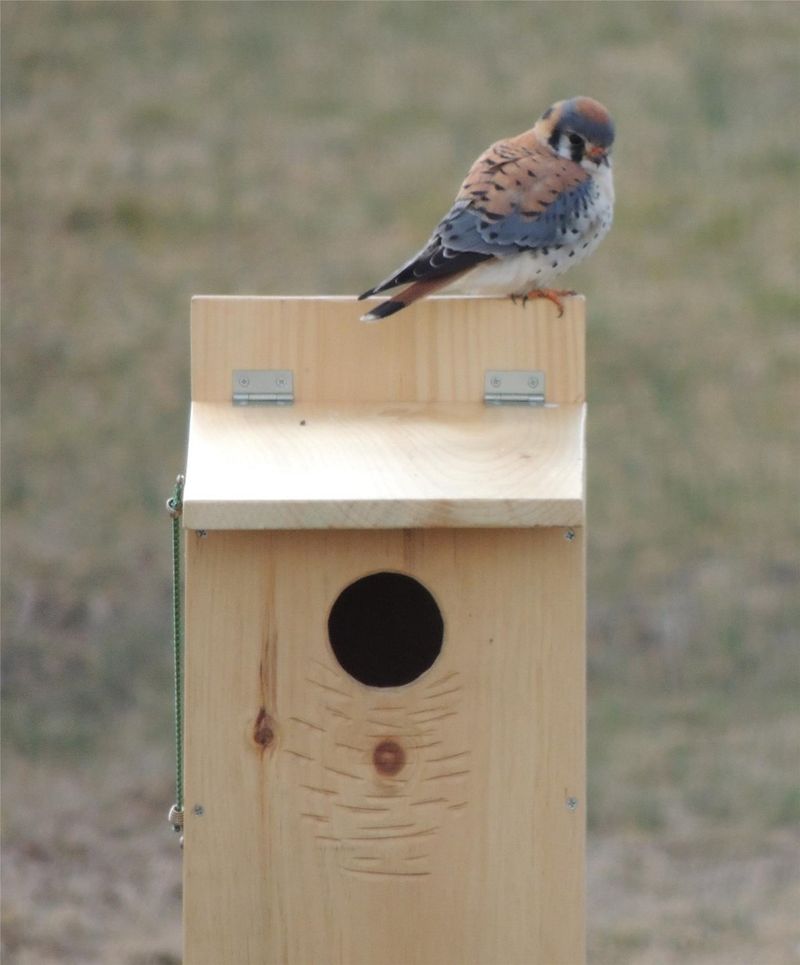
What a kestrel box really gives you is a cavity. Kestrels nest in holes and do not build their own, so a well-made box can stand in for an old woodpecker hole.
What the birds eat is a separate question. As Texas Parks and Wildlife notes, kestrels take large insects, including grasshoppers, along with mice and other prey.
Do not count on a set menu, though. A USGS study watched just five nests on the Southern High Plains, a different part of Texas with its own habitat.
Reptiles made up about 75 percent of prey deliveries, invertebrates about 18 percent, and mammals about 4 percent. Those numbers belong to those nests and should not be applied to your yard.
Michigan researchers looked at cherry orchards and found lower small-mammal abundance and activity at orchards with active kestrel boxes. That is useful context for orchards, but it is not proof that a box controls rodents around a house or garden.
Even getting a tenant is not automatic. A Michigan occupancy study found boxes could raise kestrel presence where nest sites were scarce, but a used box alone does not prove a local population benefit.
Treat any mouse or grasshopper reduction as a bonus.
Look for Open Hunting Habitat
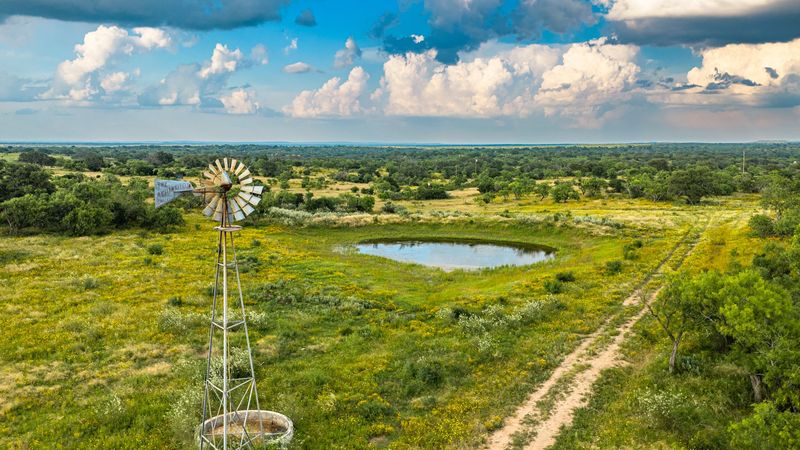
Walk your property before you pick a spot, and look outward instead of at the barn. Kestrels hunt in the open, so open pasture, grassland, or a similar area is the main thing to find.
Nearby perches such as fence posts, wires, and lone trees help them watch for prey.
A barn or outbuilding can hold a box, but it cannot make up for a lack of hunting ground. A barn surrounded by dense brush, thick woods, or buildings gives a kestrel little to work with.
Stand where the box would hang and ask whether a small falcon could glide in to the entrance without a tangle of branches in the way.
University of Missouri Extension advises placing kestrel boxes near grassy habitat. A hayfield edge or a neighbor’s pasture can count, since the birds do not care about your property lines.
Also think about what is sprayed on the land around you. UC Davis box guidance recommends locating boxes away from heavily pesticide-treated fields.
A box does not make a site suitable on its own. If the surrounding habitat is poor, it is better to skip the box than hang it in the wrong place.
Build From One Kestrel-Specific Plan
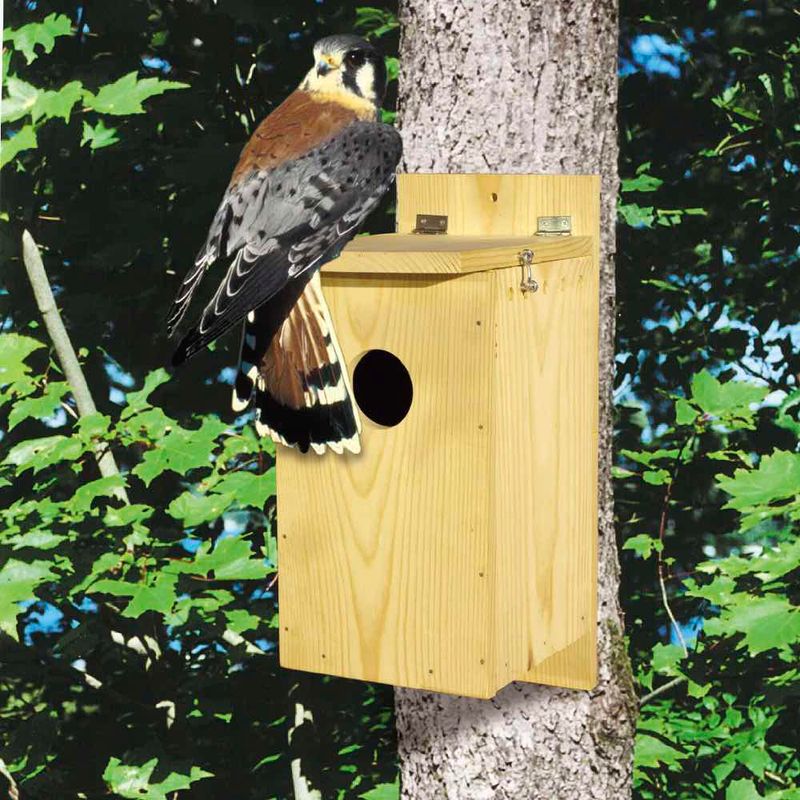
Pick one kestrel plan and stick with it. The American Kestrel Partnership plan is a solid choice.
It calls for untreated cedar or pine, a 3-inch entrance, ventilation, drainage, and an access panel.
Each feature has a job. Untreated wood avoids chemicals around eggs and chicks, and vent and drain holes keep a hot Texas box from turning stuffy or soggy.
The access panel is there so a box can be checked or cleaned at the right time, which we will get to later.
Resist the urge to blend designs. Different plans use different dimensions for height, depth, and hole placement, and mixing numbers can leave you with a box that does not work as intended.
If you buy a ready-made box, check it against the plan you trust.
You may hear that a box must face a certain direction. An Idaho study found orientation was associated with differences in box temperature and hatching success, but the authors said the link needs more study.
Treat it as a reason to think about sun and shade at your site, not a rule for one compass direction.
Install Before Nesting Season

Timing is where preparation pays off. The American Kestrel Partnership plan recommends having a box up by late February.
Texas nesting in general runs from April to early June, according to Texas Parks and Wildlife, so late February leaves a cushion. Neither date guarantees a tenant.
Start with your chosen plan and a spot with a clear flight path. Mount the box firmly so it will not wobble in a spring storm, and make sure you can reach it safely with a ladder.
Double-check that the entrance is open and the access panel latches.
For height and spacing, Missouri Extension lists kestrel boxes at 10 to 30 feet high and at least half a mile apart. That is one source’s guidance, not a requirement for every plan, so compare it with the plan you are using.
If you hang more than one box, the half-mile spacing is why a single box is plenty for most small properties.
If you mount on a pole rather than a barn wall, UC Davis recommends a predator guard. Raccoons and snakes are good climbers.
Once the box is up, step back and give it time.
Leave an Active Nest Undisturbed
If a kestrel moves in, enjoy the show from a distance. Binoculars from across the yard work far better than a ladder.
Do not open the box, peek inside, or move it while birds are using it.
The law backs this up. According to the U.S.
Fish and Wildlife Service, destroying a migratory-bird nest with eggs or chicks, or dependent young, is illegal without authorization. Disturbance that does not destroy a nest is not the same offense, but there is no good reason to risk it.
When the season is over, you may wonder about cleaning. Read the Service’s guidance first if there is any chance the box is still occupied.
Do not open, relocate, or remove a box during nesting, and do not rely on a fixed cleaning schedule from anyone else.
A quiet yard is the best help you can offer a nesting pair. Keep pets, mowers, and visitors away from the box, and let the birds get on with it.
A kestrel at the entrance is reward enough, whatever the grasshoppers do.