
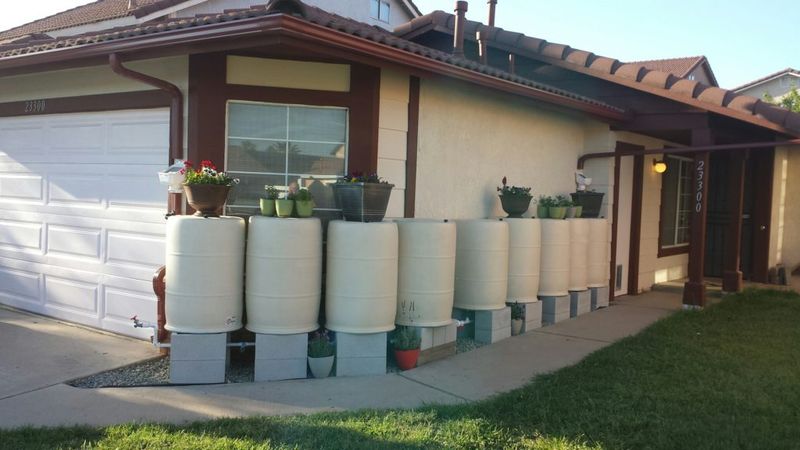
One inch of winter rain on a 1,000-square-foot roof can send about 600 gallons of water running toward your gutters. A rain barrel lets you grab some of that free water instead of watching it wash down the street.
Setting one up takes a little planning, but the payoff is useful water for your yard when the dry months arrive. Here is how to do it safely and realistically.
The 600-gallon figure describes roof runoff, not a barrel
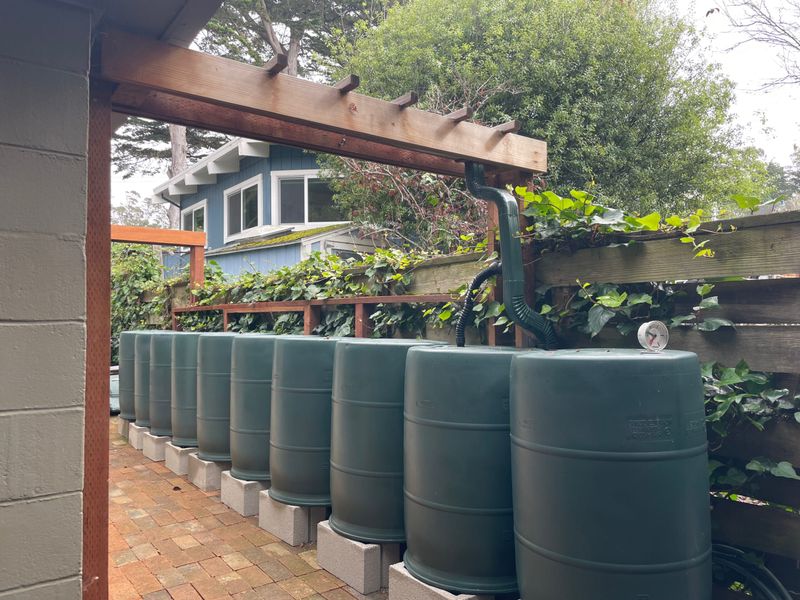
Start with the math. One inch of rain on a 1,000-square-foot roof can produce about 561 gallons of potential runoff, using an approximate 0.90 runoff factor for common roofing, according to Valley Water’s rainwater harvesting FAQ.
Rounded up, that is the roughly 600 gallons in the headline.
Notice what that number describes. It is water coming off the roof, not water that one barrel can hold.
A typical barrel stores a fraction of it, so the rest will overflow unless you plan for more storage and a safe place for extra water to go.
The 1,000-square-foot roof is an example catchment area, not a claim about the average California roof. A City of Los Angeles study found an average roof area of 1,488 square feet for its single-family homes, as described in a UCLA Luskin Center study.
That is a local sample, not a statewide figure, and your own roof could be much smaller or larger.
Cities such as Pasadena also publish rainwater harvesting guidance using the same style of calculation. Keep the gap between roof runoff and barrel storage in mind as you read on, because it shapes every setup choice that follows.
Start with the roof area that drains to your downspout
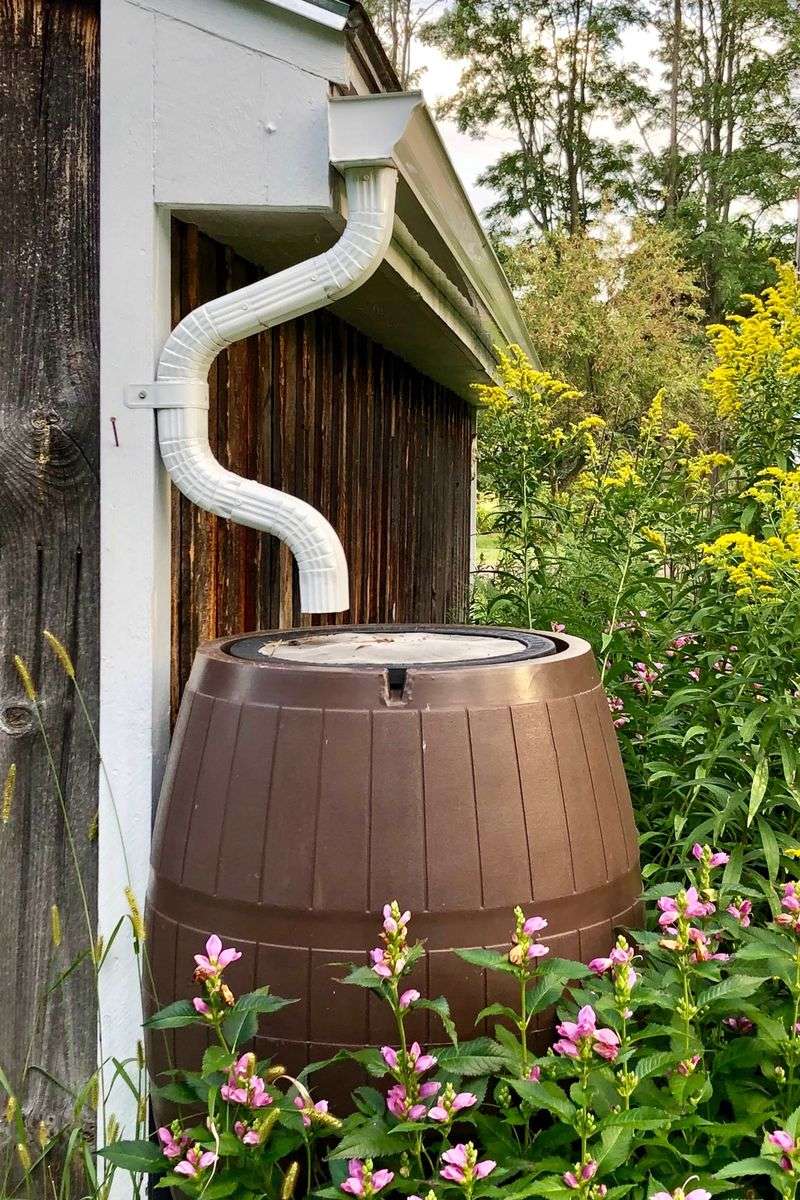
Your barrel connects to one downspout, so the number that matters is the roof area feeding that downspout. Many homes have several downspouts splitting the roof, so using the whole roof would overstate what you can collect.
Walk the property, look at where the gutters slope, and measure the footprint of the section that drains to your chosen spot.
The Valley Water guidance gives the formula: rainfall in inches times 0.623 times catchment area in square feet times a runoff factor of about 0.90. A 500-square-foot section in a one-inch storm would send roughly 280 gallons toward the downspout.
Roof material, losses from splash and wind, and gutter condition can all lower the real figure.
Now compare that result with your barrel. Most barrels are rated at 50 to 70 gallons, so a 280-gallon runoff would fill one in a short burst and the remainder would spill out.
Virginia Cooperative Extension notes that a barrel holds only its rated capacity, and that bigger totals call for connected barrels or a cistern.
Also think about timing. A barrel that is already full before a storm catches nothing, so using the water between rains matters as much as the roof math.
Choose a stable site near the downspout
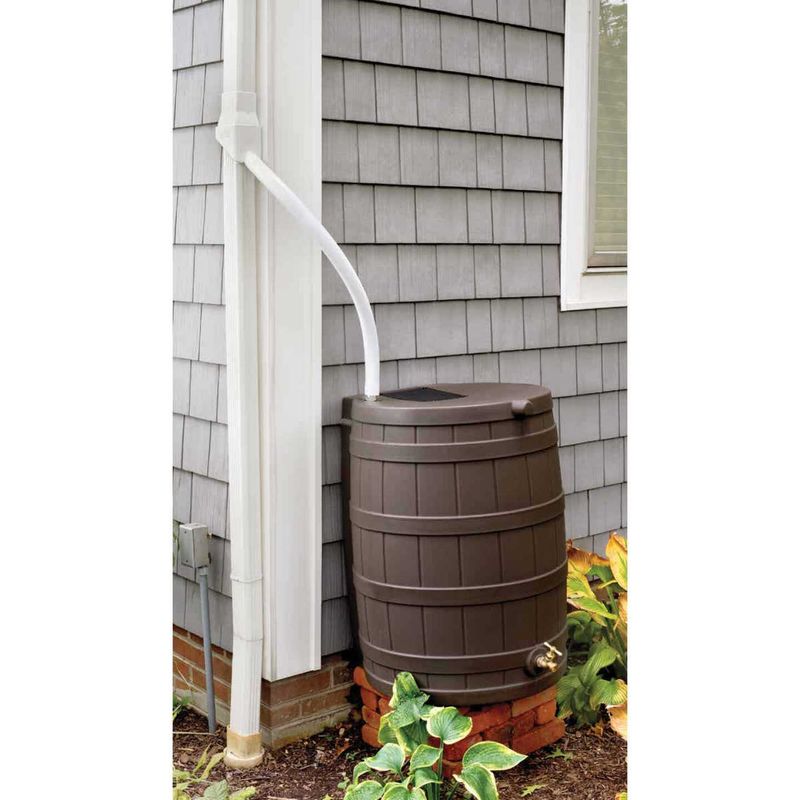
Water is heavy, and a full 55-gallon barrel weighs over 450 pounds. That alone is reason to give it a level, stable base such as compacted gravel, pavers, or concrete blocks.
A barrel that tips on soft soil is a safety problem and can crack its fittings.
Pick a spot right beside the downspout you measured earlier. Look beyond the barrel too: overflow should be able to drain into landscaping, away from your foundation and away from your neighbor’s property.
Walk the ground during or after a rain to see where water naturally flows.
Height helps with use. Raising the barrel makes the spigot easier to reach with a watering can and gives gravity a bit more push for a hose.
San Diego County’s Rain Barrel Basics recommends elevating the barrel 6 to 12 inches. Treat that as one local guide’s suggestion, not a rule for every yard.
Programs like Pasadena Water and Power’s offer more local setup ideas. Whatever stand you build, make sure it is sturdy enough for the full weight.
Connect the barrel and know what a first flush does
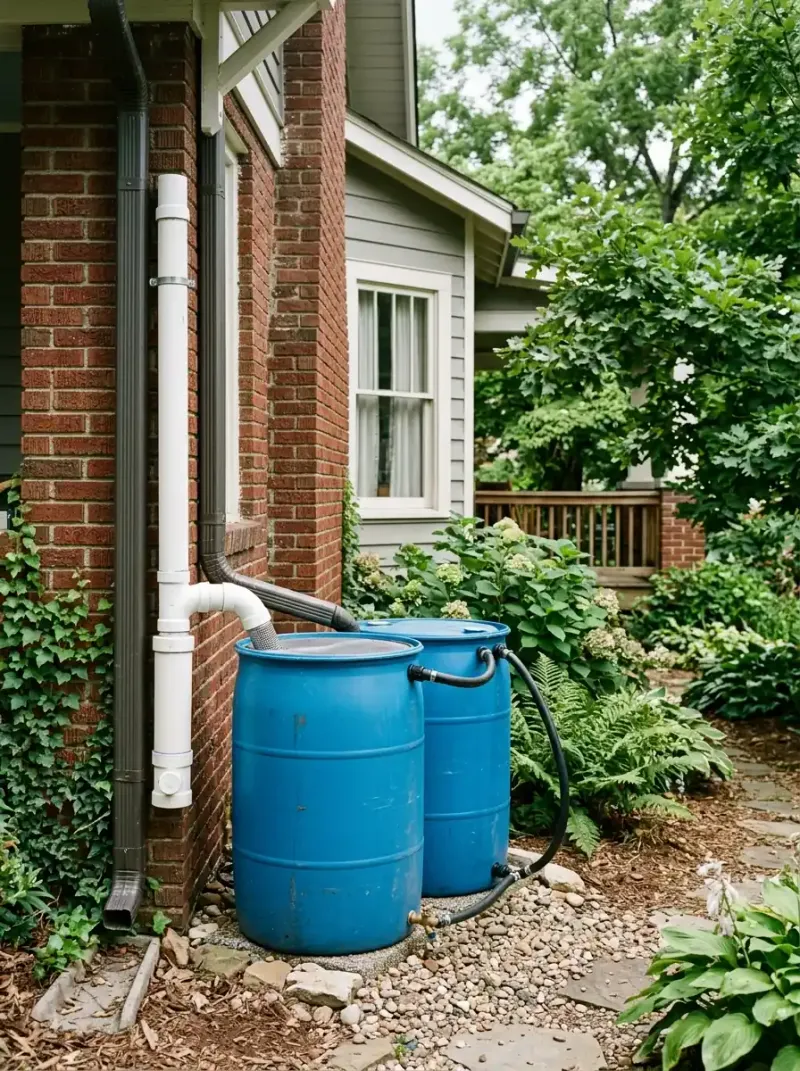
The connection is simple in concept. Roof water runs into the gutter, down the downspout, and is directed into the barrel’s inlet.
Many people shorten the downspout and add a diverter or flexible elbow, though the right fittings depend on your downspout shape and your barrel.
A first-flush diverter is an optional add-on. It sends the first bit of roof runoff, which carries most of the dust, bird droppings, and debris, into a separate chamber instead of your barrel.
Be realistic about what it does. A Texas Water Development Board study found that flushing the roof generally improved water quality, but samples taken after a first flush still had some contaminants above drinking-water standards.
So a diverter improves quality, yet it does not remove every contaminant or make the water drinkable.
Check your city’s rainwater harvesting guidance for examples of connection setups. Cover overflow separately, since that is its own planning step.
Give excess water a safe route out
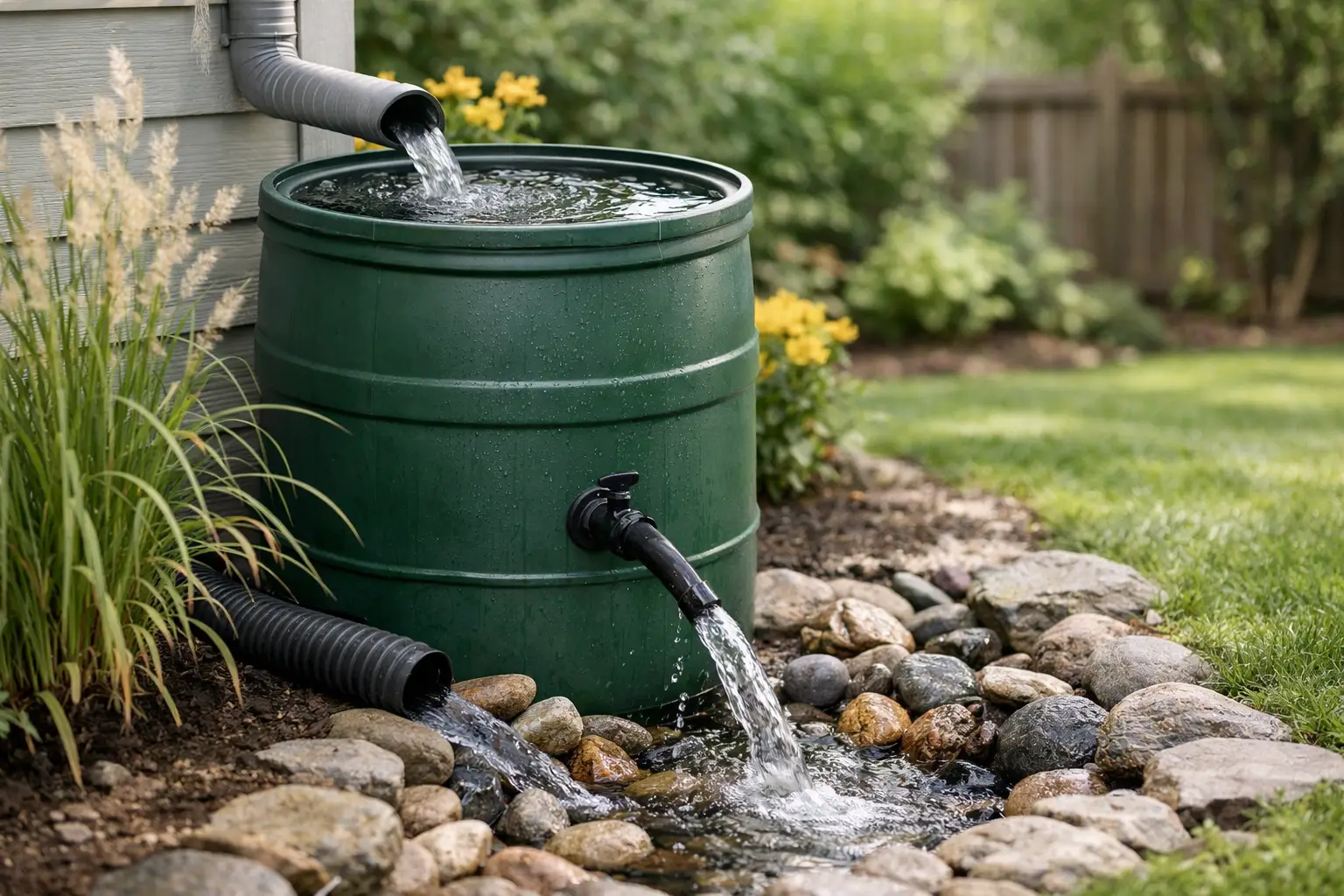
Once a barrel reaches its rated capacity, every extra gallon has to go somewhere. Without a plan, that water may pool against your foundation or run onto a neighbor’s lot.
An overflow outlet near the top of the barrel, with a hose or pipe attached, solves this.
Aim the overflow into a planted area, a mulched basin, or a rain garden where the soil can soak it up. Keep it pointed away from buildings and property lines.
San Diego County’s guide suggests landscaped areas for this purpose.
If you want more storage, you can link barrels together or install a cistern. Extension guidance supports this, but extra capacity still needs its own overflow route.
Remember that a single barrel may fill and overflow in one or two storms, as Valley Water points out. More storage helps, though it does not guarantee water for summer.
Seal openings and maintain mosquito barriers
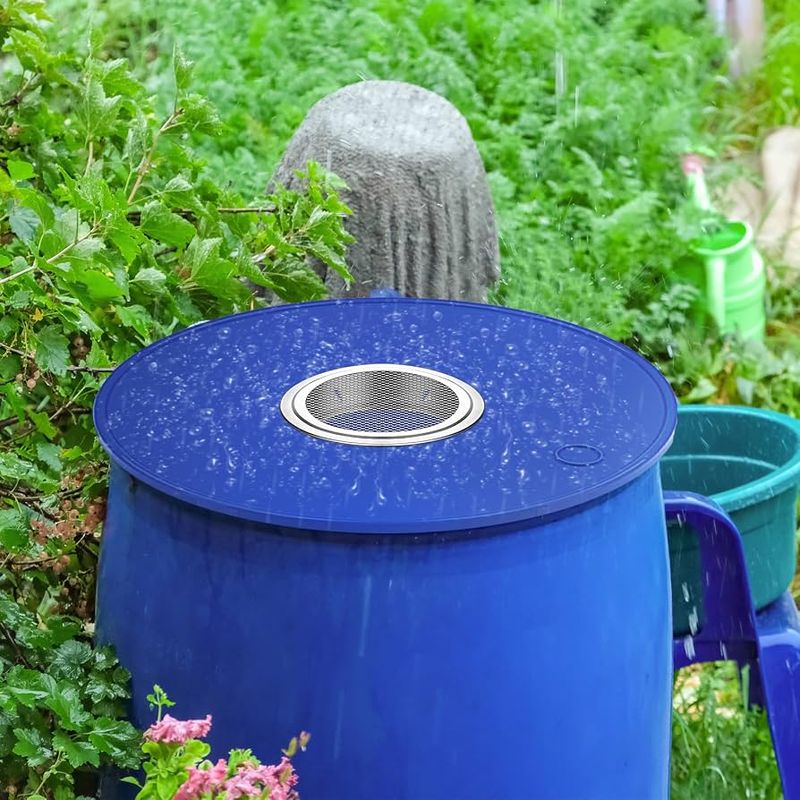
Standing water is an invitation to mosquitoes, and a rain barrel is a tempting nursery. Screen or seal every opening, including the inlet and the overflow outlet.
Fine mesh and tight-fitting lids keep egg-laying females out.
Treat this as ongoing upkeep, not a one-time job. Every few weeks, look over the screens, filters, seals, and fittings for tears, gaps, or loose connections.
Clean filters so leaves and grit do not clog them or leave a pool of stagnant water above the screen.
The UC Integrated Pest Management program specifically advises mosquito-proofing rain barrels and keeping filters clean. California’s mosquito-control best-practices manual backs up the idea of checking water-holding containers regularly.
If you ever spot wigglers, which are tiny swimming larvae, empty and clean the barrel and repair the gap. A quick check after each storm or windy week keeps small problems from growing.
Use barrel water as nonpotable water
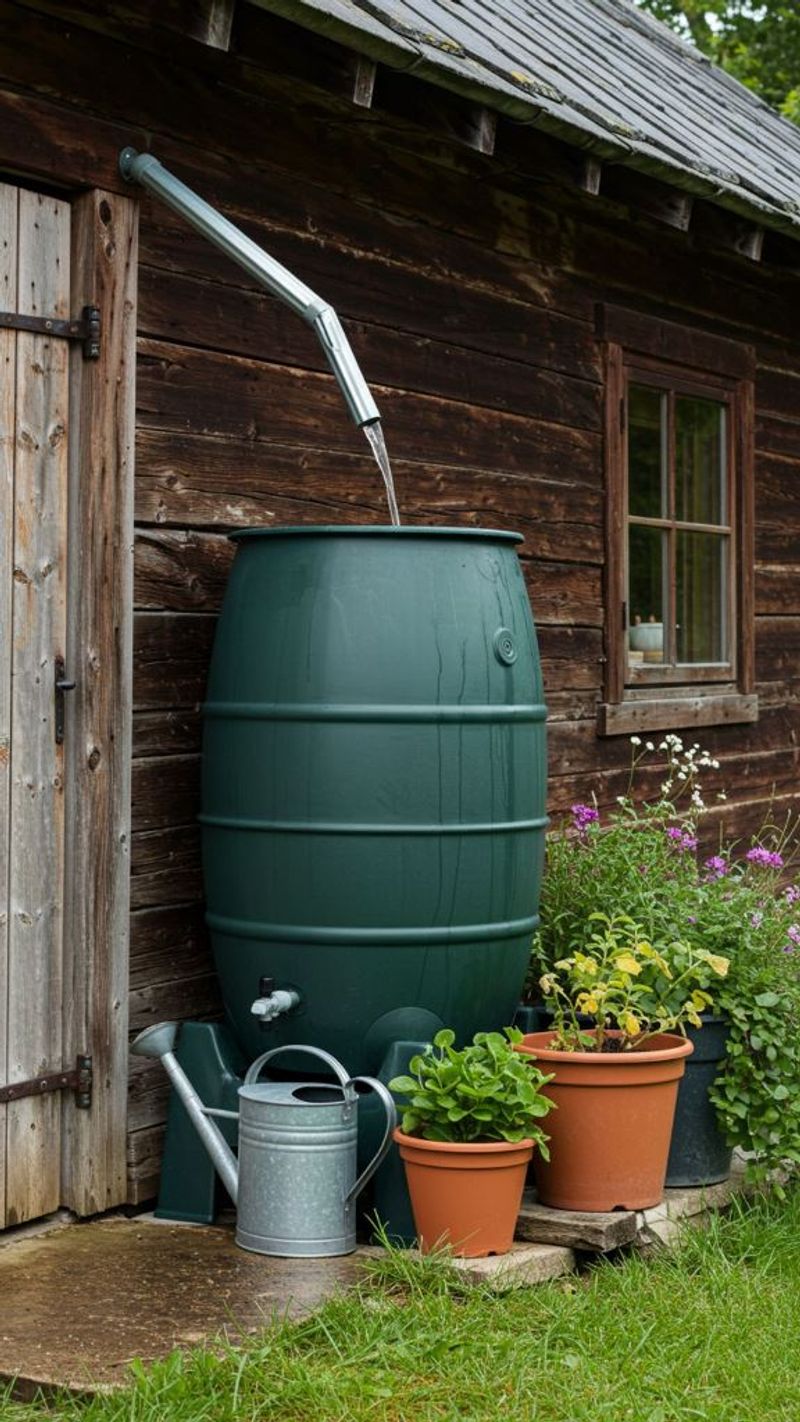
Rain may fall clean, but it does not stay that way. On its way to your barrel it touches the roof, gutters, pipes, and storage materials, and it can pick up germs and chemicals from the air too.
That is why roof-collected water is nonpotable.
The CDC advises against using harvested rainwater for drinking, cooking, rinsing produce, or watering plants intended for eating. For those jobs, use tap or bottled water instead.
That leaves plenty of good uses: ornamental shrubs, trees, flower beds, lawn patches, and washing the car or outdoor tools. Many homeowners find that is where most of their outdoor water goes anyway.
Some gardeners ask about vegetables. UConn Extension describes soil-level watering or drip irrigation, and keeping water off edible leaves, as ways to reduce exposure.
That reduces contact but does not prove untreated barrel water is safe, so follow the CDC advice if you want the most cautious approach.
Check local rules and plan for variable rainfall
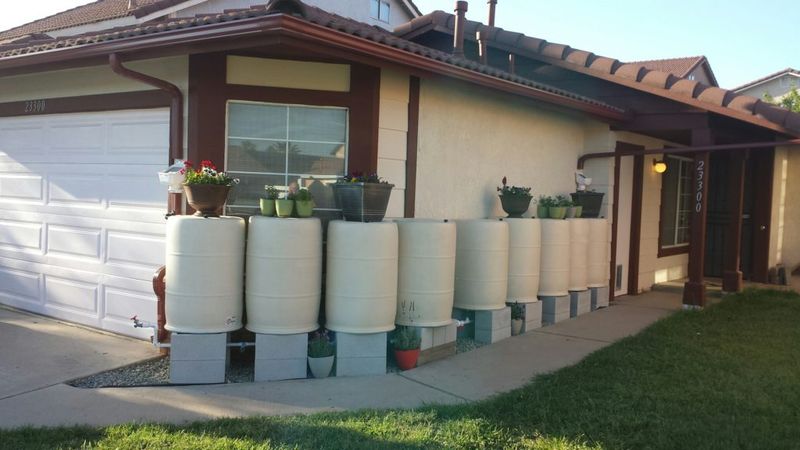
Good news first: according to the State Water Resources Control Board, rooftop rainwater harvesting in California does not require a state water-right permit. That covers water rights only.
Plumbing, building, local permitting, and rebate-program rules are separate. For example, Marin Water’s rebate program requires installations to follow California Plumbing Code Chapter 16 and local permitting.
Call or check the websites of your city, county, and water district before you buy anything.
Rebates vary a lot. Some programs set barrel sizes, require particular overflow or screening features, or ask for photos, so no single barrel or connection suits every property.
Finally, plan around the weather. Rain varies by region and year, as Drought.gov shows for California.
A barrel may fill and overflow in one or two storms, per Valley Water, so expect it to help with some outdoor watering rather than provide a dependable supply for next summer.
Have the barrel ready before the next storm
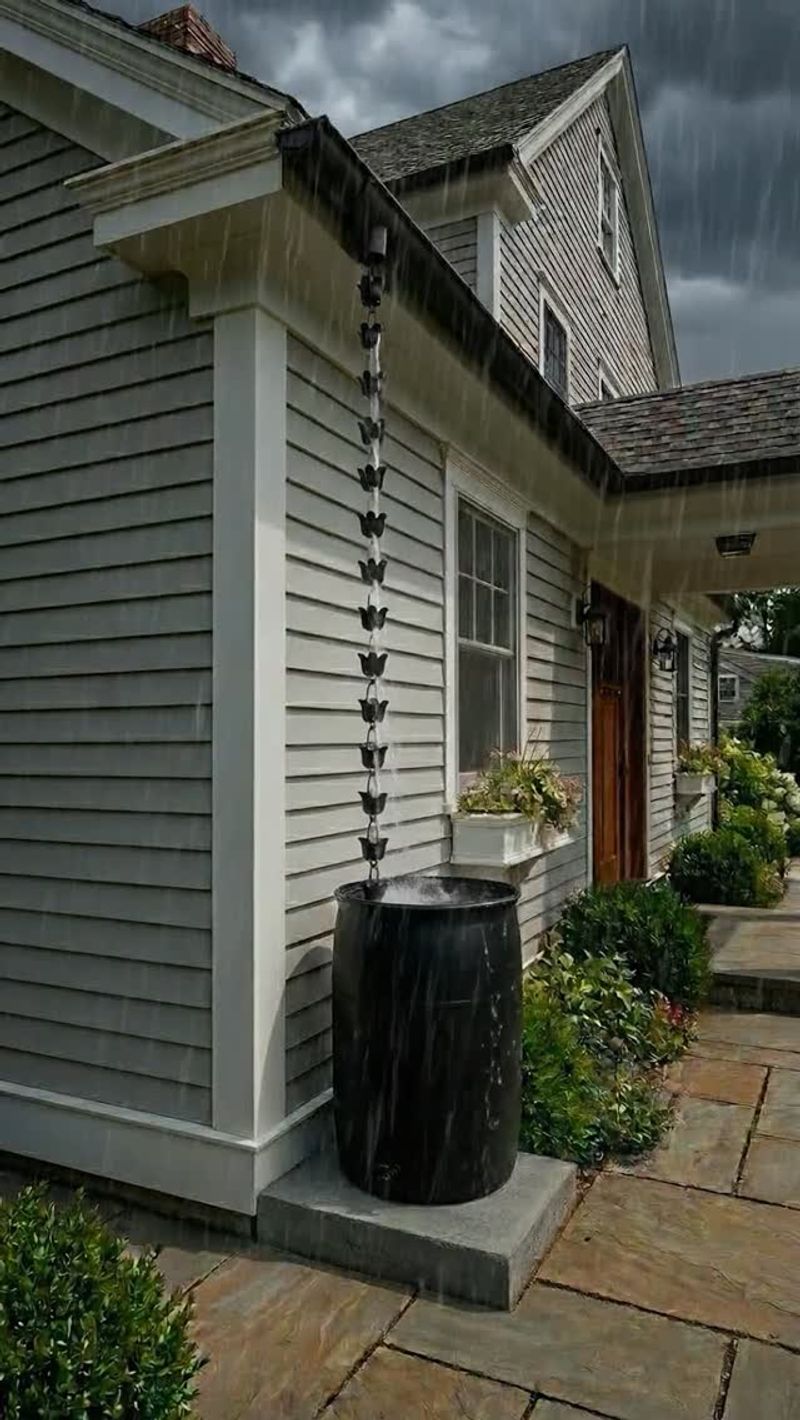
Before the clouds roll in, run through the list: estimate the roof area that feeds your downspout, pick a barrel and a stable site, screen every opening, build a safe overflow route, and confirm local requirements, as the Water Boards and Valley Water suggest.
The reward is modest and real: some roof runoff saved for nonpotable outdoor use. A barrel will not hold a whole storm, but every gallon it keeps is one you did not pay for.