
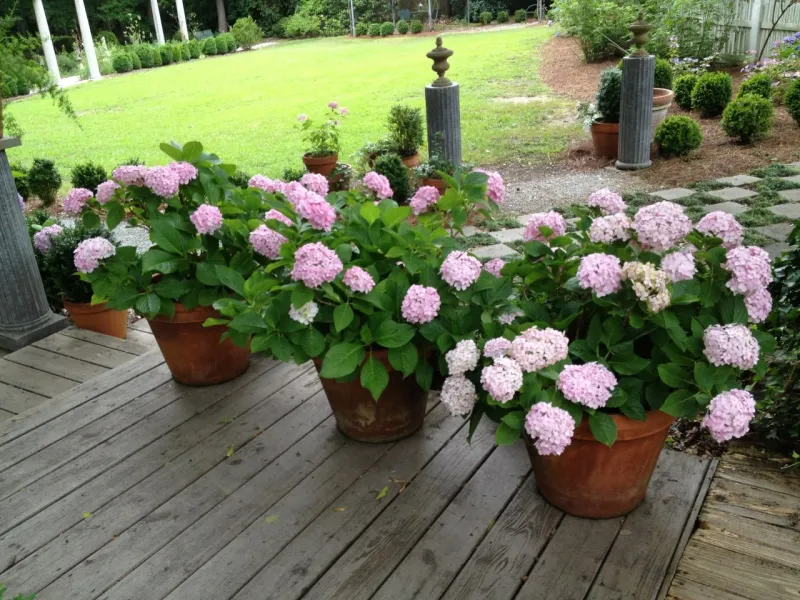
A hydrangea in the ground has a thick blanket of soil around its roots. A hydrangea in a pot has only a thin wall of plastic or clay between its roots and the cold air.
That difference can matter when a freeze heads your way. Here is how to read your forecast and pick a protection method that fits your yard.
A pot can leave hydrangea roots more exposed to winter cold
Picture the soil around a backyard shrub. It is deep, wide, and warmed by the earth below, which slows how fast cold reaches the roots.
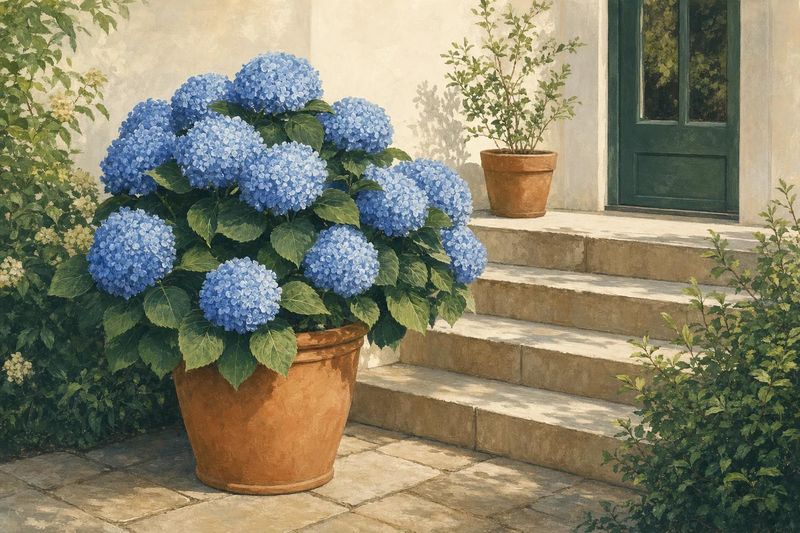
A container has none of that, so the potting mix can drop close to the outdoor air temperature when the pot sits out in the open.
According to Iowa State extension guidance, container roots are more exposed than roots planted in the ground, which is why overwintering plans matter for pots. Severe or prolonged cold can freeze the root ball and injure the roots inside.
That said, frozen roots are a risk, not a sure outcome. Many potted plants come through winter, and roots are not the only thing that can go wrong in cold weather.
Stems and buds can be damaged, and a pot’s size, material, and location all change how much cold the roots actually feel.
A big, thick-walled pot against a warm house wall faces a very different winter than a small thin pot on an open deck. Knowing that difference helps you decide how much effort your plant needs.
Use local forecasts to decide when to act
Calendar dates and a single magic temperature make poor guides, because a light frost and a hard, long freeze are very different events. Texas A&M AgriLife separates the two, and its cold weather preparation advice ties moving potted plants to a hard freeze or prolonged freezing in the forecast.
Watch how low the temperature is expected to go, how many hours or nights it will stay there, and how exposed your spot is. Then factor in the plant and the pot.
A small container on an open patio needs more attention than a large one tucked beside a wall.
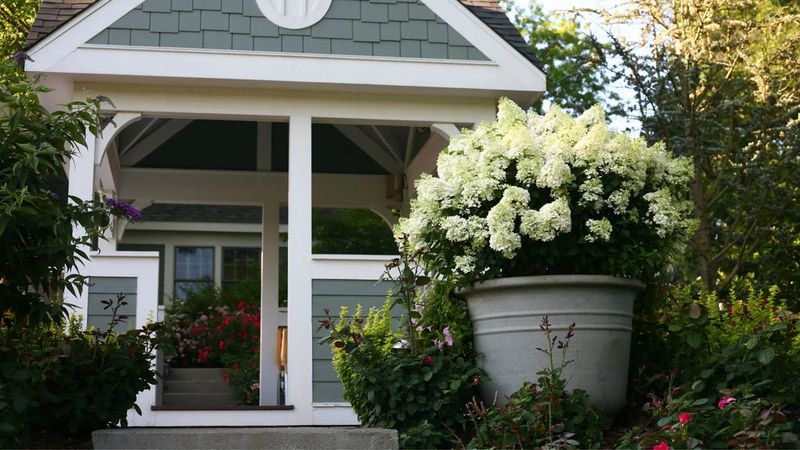
Florida and Texas do not share the same exposure. UF/IFAS says French or bigleaf hydrangeas suit North and Central Florida and need cool winters, and it names panicle hydrangea as the most cold-hardy type.
UF/IFAS also advises moving tender potted plants to a sheltered place when frost or a freeze is forecast.
In South Florida, a freeze may rarely matter at all. In North Texas, it may come several times a winter.
Move dormant pots to cool, protected storage
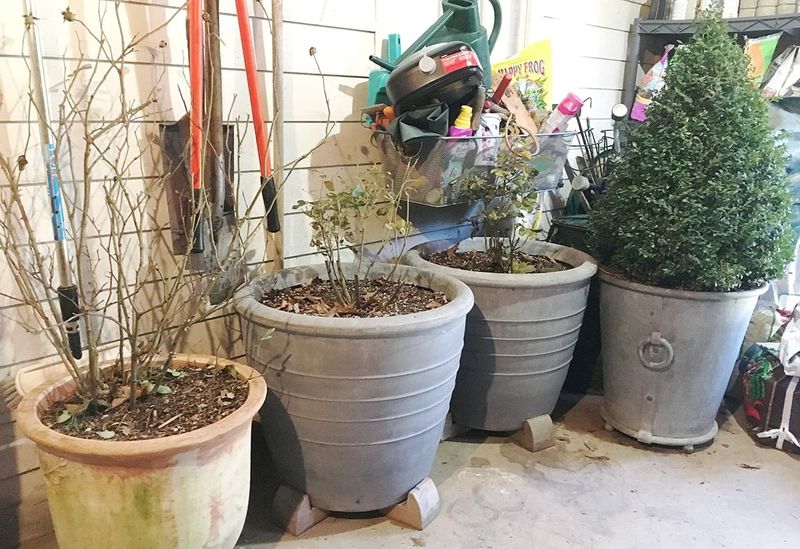
When the forecast calls for serious cold, an unheated garage or shed is a common home for dormant container shrubs. Walls and a roof soften the swings in temperature, and the plant stays asleep.
Guidance from University of Maryland Extension on potted hydrangeas points to this kind of cool storage.
Skip the heated living room. Warmth can wake the plant too early and leave it weak and leggy.
Iowa State says a consistently cool spot between 20 and 45 degrees F can work for container-grown woody plants, but that is general overwintering advice, not a hydrangea-specific survival number.
Once the pot is stored, look at it now and then. Poke a finger into the mix.
If it feels bone-dry, give it a little water, and if it feels soggy, hold off and let it ease up. There is no fixed schedule, since a garage that stays cool needs far less water than a warmer shed.
More tips are in Iowa State’s container overwintering FAQ.
Moving a pot lowers risk but cannot guarantee survival or blooms.
Insulate the pot if it must stay outdoors
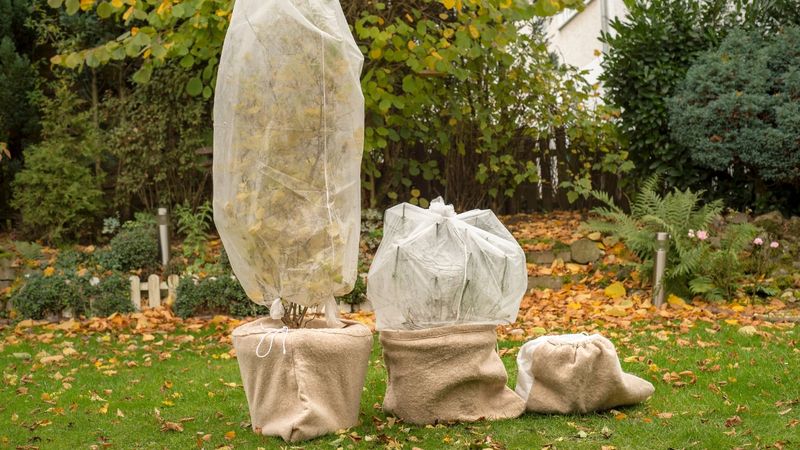
Some pots are too heavy to move, and that is fine. Cluster them in a sheltered corner, ideally close to a wall that blocks wind.
Grouping keeps the containers from facing the cold alone.
Next, insulate the pots themselves. UGA Extension describes wrapping the base of the containers and adding mulch around and between them.
Burlap, blankets, or bubble wrap around the pot sides work, and so does a thick layer of leaves or pine straw packed into the gaps.
Another option is heeling in. Dig a hole, set the pot into it, and let the surrounding soil act as insulation, as Iowa State’s overwintering guide explains.
Remember what is being protected. Wrapping the pot covers the root zone, while covering the stems handles a separate risk.
Wrapping stems alone will not reliably keep roots from freezing. Either way, these steps reduce risk without promising survival.
Root protection does not always protect next season’s buds
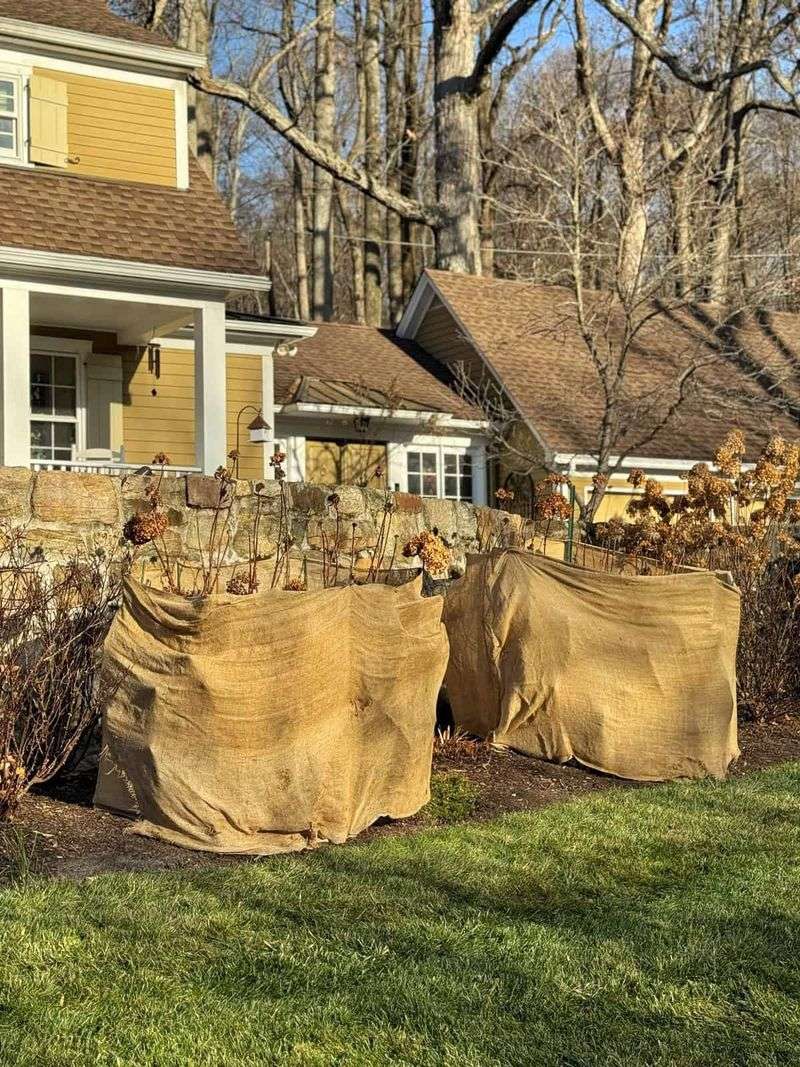
A wrapped pot looks well protected, yet the part above the soil still faces the weather. A temporary cover over the plant is a different measure that shields stems and buds during a forecast freeze.
Texas A&M AgriLife covers how frosts and freezes affect plants, and UGA’s freeze protection tips include covering. Take covers off when warm, sunny weather arrives, since trapped heat can overheat the plant.
Covers do not replace root-zone insulation, and insulation does not replace covers.
Flowering depends on the type. UGA’s bigleaf hydrangea publication explains that bigleaf types set next season’s buds on older stems, so cold damage to those stems can mean fewer flowers.
Panicle and smooth hydrangeas bloom on new wood, as Illinois Extension notes. Some reblooming bigleaf cultivars can also flower on new growth.
So a plant can live through winter and still bloom less.
Assess the plant as spring growth resumes
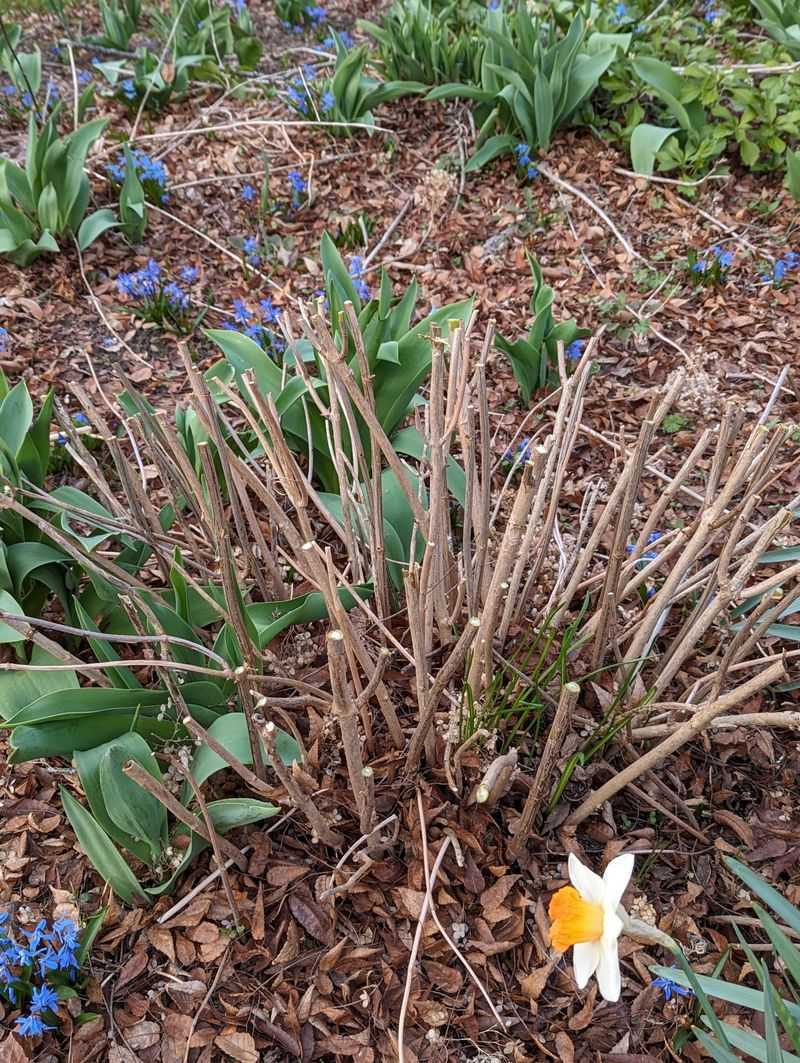
Spring is when the real answers show up. Root injury may stay hidden until new leaves push out and the plant needs more water.
A shrub that leafs out and then wilts or stalls may be telling you its roots took a hit. Texas A&M AgriLife notes that freeze damage can take time to appear.
Be careful about blaming the roots for every problem, because few blooms alone do not prove they froze. Cold-damaged buds, pruning at the wrong time, and too much shade can all cut flowers.
UGA’s bigleaf hydrangea guide is a useful check on timing and care.
Wait for growth before cutting back, and scratch a stem lightly to look for green tissue. Then match next winter’s plan to your conditions.
Choose cool storage or outdoor root-zone insulation based on your local forecasts and site, and treat either one as risk reduction, not a promise.
Hydrangeas are forgiving, and a little care before the cold usually gives them a better chance.