
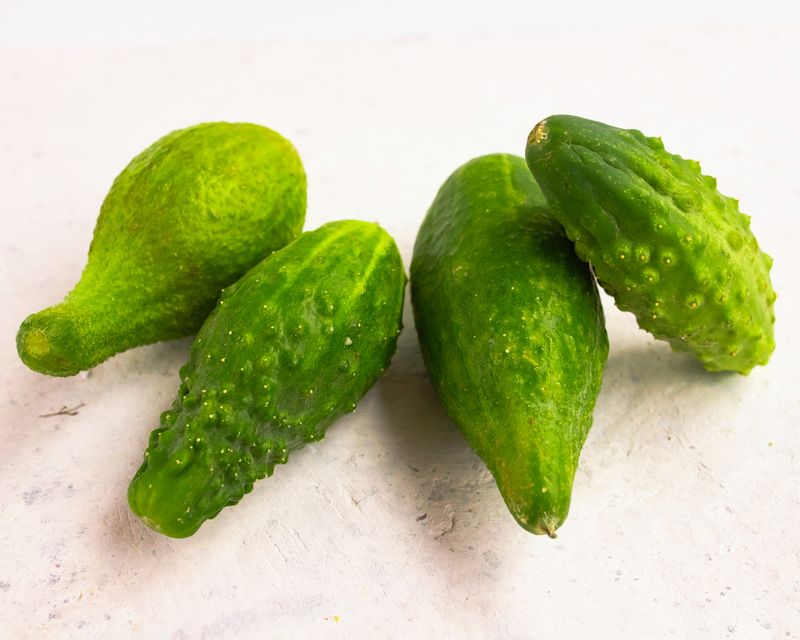
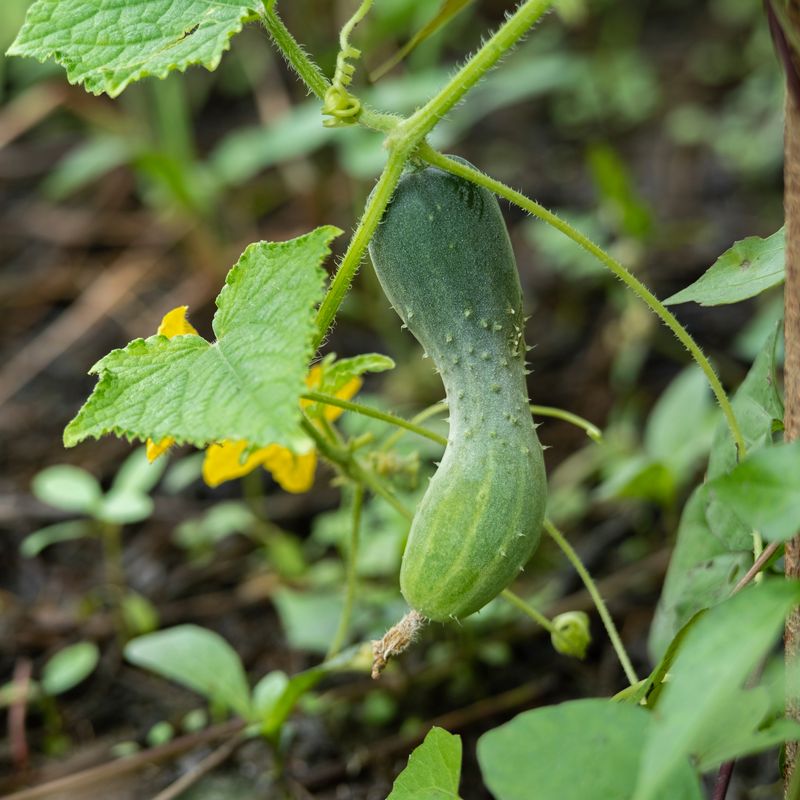
Pull a cucumber off the vine and find one end swollen like a club while the other tapers to a skinny nub, and your first instinct is probably to blame the heat. That instinct is not wrong, but it is not the whole story either.
Incomplete pollination is one of the most common reasons ordinary cucumbers develop that fat-at-one-end, pinched-at-the-other shape, especially when bees have been scarce and fruit set has been disappointing. Before reaching for a fix, though, a quick look at the flowers, the variety, the soil moisture, and the surrounding plant will tell you far more than the fruit shape can on its own.
Treat the shape as a clue, not a diagnosis
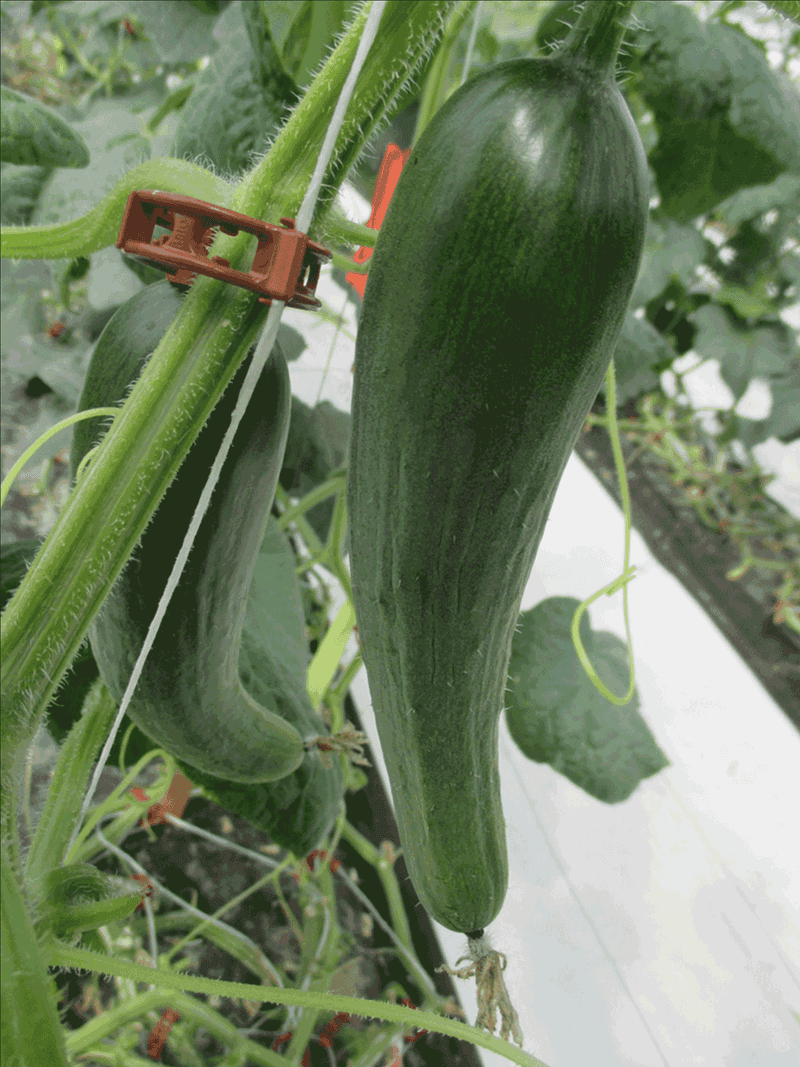
A cucumber that bulges at the stem end and pinches toward the blossom tip is one of the more frustrating sights in a summer garden. When a female flower receives pollen from a male flower, fertilized ovules along the fruit trigger the surrounding tissue to swell and fill out.
If only part of those ovules get fertilized, Penn State Extension’s cucumber pollination guide explains that the fruit can begin growing but will fail to expand evenly, leaving sections near unfertilized ovules underdeveloped and pinched. The result is exactly the lopsided shape you are holding.
Here is the catch: that same shape can appear for reasons that have nothing to do with pollination. Drought or wildly fluctuating soil moisture, low fertility, certain viruses, cold snaps, mechanical injury from a trellis wire, and even the variety itself can produce crooked or unevenly developed cucumbers.
Shape alone cannot tell you which cause is at work.
Before assuming incomplete pollination is the answer, look for supporting clues. Low overall fruit set on the vine, very few bee or pollinator visits during the morning hours, young fruit that starts to form and then shrivels off, or cucumbers with noticeably few seeds inside all point more specifically toward a pollination shortfall.
University of Minnesota Extension’s pollination requirements resource reinforces that these accompanying signs, not shape alone, are what make incomplete pollination a reasonable working diagnosis rather than a guess.
See how heat interferes with fruit set
Southern gardeners in Florida and Texas know that late-summer heat is relentless, and cucumbers feel every degree of it. The connection between high temperatures and misshapen fruit is real, but the path is less direct than most people assume.
Heat does not simply warp a cucumber from the outside; instead, it disrupts the conditions that make successful pollination possible in the first place.
Cucumber flowers open for only a short window, generally in the morning hours, and that brief period is when pollination must happen. University of Minnesota Extension’s heat stress guide notes that temperatures around 90 degrees Fahrenheit and above can reduce bee activity and contribute to deformed cucumbers.
Bees forage less aggressively in extreme heat, so fewer visits happen during the window that actually counts. Pollen viability can also decline under prolonged heat stress, reducing the odds that the pollen transferred does its job effectively.
Beyond the pollination window itself, heat adds compounding pressure. Flower abortion rates tend to climb when plants are stressed by high temperatures combined with moisture fluctuation, meaning fewer female flowers make it to the stage where pollination is even possible.
Minnesota Extension’s vining vegetable guide identifies hot, rainy, cloudy, or windy conditions during flowering as factors that can reduce successful pollination. No single temperature is a guaranteed threshold for every garden, but the combination of heat, low bee traffic, and moisture stress creates conditions where incomplete pollination becomes a much more likely explanation.
Inspect the flowers and identify the variety
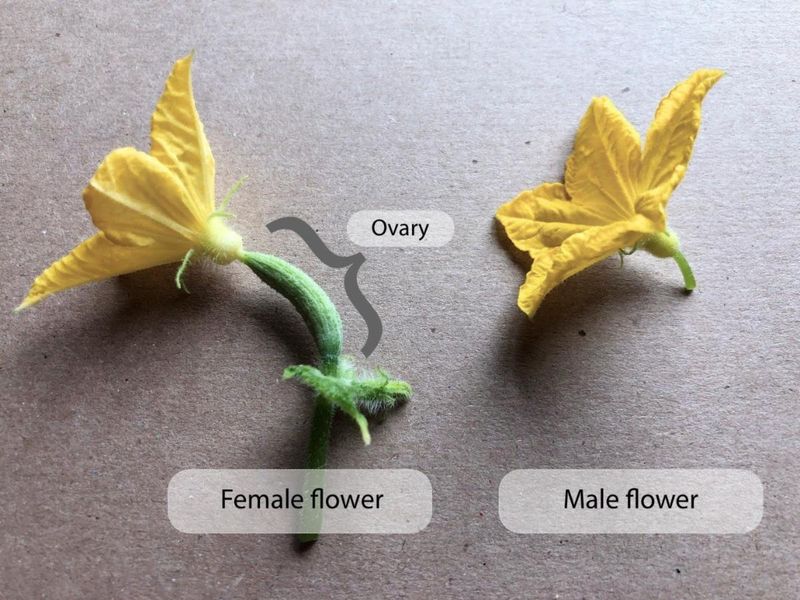
Before deciding whether to intervene, spend a few mornings watching the vine. Female cucumber flowers are easy to spot once you know what to look for: a small, immature cucumber-shaped swelling sits right at the base of the blossom, between the flower and the stem.
Male flowers attach directly to the vine without that tiny proto-fruit beneath them. University of Minnesota Extension’s cucumber growing guide confirms this distinction and explains that bees and other insects are the normal transfer agents, moving pollen from male to female flowers during that short morning window.
Knowing your variety matters just as much as knowing the flower. Most standard field cucumbers grown in home gardens rely on insect pollination to set fruit.
Gynoecious varieties, which produce mostly female flowers, may need a compatible pollenizer variety planted nearby; the seed packet or plant tag will usually say so. Oklahoma State Extension’s cucumber production fact sheet describes how gynoecious types are often sold with a few seeds of a standard variety mixed in to supply pollen.
Parthenocarpic varieties are a different situation entirely. These cucumbers are bred to set fruit without any pollination at all, and adding pollination can actually work against you.
Penn State’s high-tunnel cucumber guide notes that when parthenocarpic types receive pollen, the resulting fruit can become seeded, curved, or misshapen. If your seed packet says “seedless,” “parthenocarpic,” or “greenhouse type,” do not automatically try to boost pollination.
The fix for one variety can create problems for another.
Rule out moisture stress and other look-alikes
Moisture stress is one of the most common reasons cucumbers develop irregular shapes, and it can mimic incomplete pollination closely enough to fool even experienced gardeners. When the soil swings between bone-dry and waterlogged, fruit development becomes uneven.
Utah State University Extension’s cucumber guide lists drought and fluctuating moisture among the recognized causes of misshapen cucumbers, alongside low fertility, cold conditions, and viruses. Mechanical injury from a trellis wire pressing against a young fruit can also produce a pinched or bent shape that looks like a pollination problem.
The most useful diagnostic step is to look at the whole plant, not just the fruit. Spots, lesions, scarring, insect feeding marks, wilting that does not recover after evening, yellowing leaves, or distorted new growth all point toward a broader problem that needs a different response.
University of Minnesota Extension’s cucumber diagnostic tool walks through these visual clues systematically. A plant with only misshapen fruit and otherwise healthy foliage sits in a different diagnostic category than one showing widespread decline.
Fertility is worth considering but deserves caution. Low nitrogen or potassium can contribute to poor fruit development, but applying fertilizer without a clear reason is not a safe default.
Mississippi State University Extension’s cucumber page recommends appropriate fertility management rather than automatic supplementation. Excess fertilizer can push lush vegetative growth at the expense of fruit, worsen soil imbalances, or burn roots.
A soil test or clear crop-based evidence of deficiency should guide any fertility change, not a shape symptom alone.
Keep the root zone evenly moist
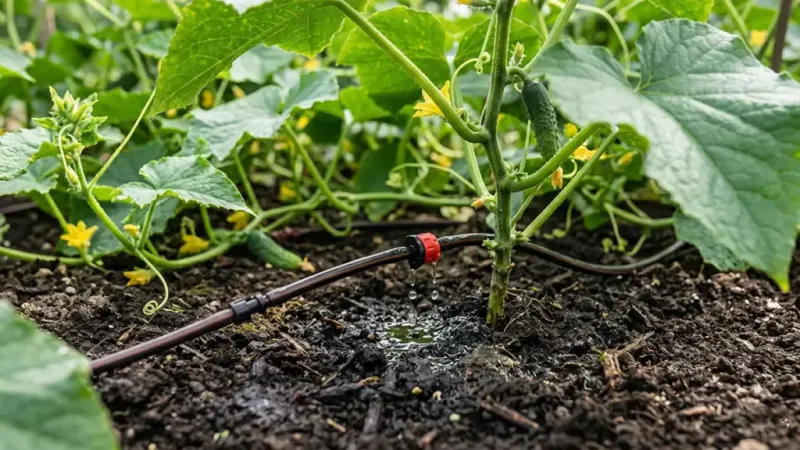
Steady soil moisture is one of the lowest-risk corrections available, and it supports healthy fruit development whether or not incomplete pollination turns out to be the main culprit. The goal is consistency, not volume.
Letting the soil dry out completely between waterings and then flooding it with a long soak creates the kind of stress that leads to uneven fruit development and can contribute to the same lopsided shape you are trying to prevent.
Water needs vary by soil type, plant size, weather, and rainfall, so no single daily schedule works for every garden. Penn State Extension’s cucumber production guide recommends keeping soil consistently moist and avoiding water stress, particularly during flowering and fruit set.
A layer of straw or shredded wood mulch over the root zone slows evaporation significantly, which helps maintain that consistency between waterings without requiring you to run the hose more often.
Drip irrigation or a soaker hose delivers water directly to the root zone without wetting flowers and foliage, which reduces the risk of fungal disease while keeping moisture where the plant needs it most. Penn State’s high-tunnel cucumber resource highlights root-zone irrigation as a practical method for managing moisture during heat stress.
One honest limitation: stabilizing moisture going forward will not straighten a cucumber that has already set with a severe malformation. The benefit is in the fruit that forms next, not the one already on the vine.
Hand-pollinate only when the evidence fits
Hand-pollination is a reasonable tool for the right situation, but it is not a universal fix and should only be used when the evidence actually supports it. The right situation means three things line up: you are growing a standard cucumber variety that requires insect pollination, you have confirmed that female flowers are opening, and you have watched those flowers during the morning hours and seen few or no bees visiting.
If all three are true, hand-pollinating is worth trying.
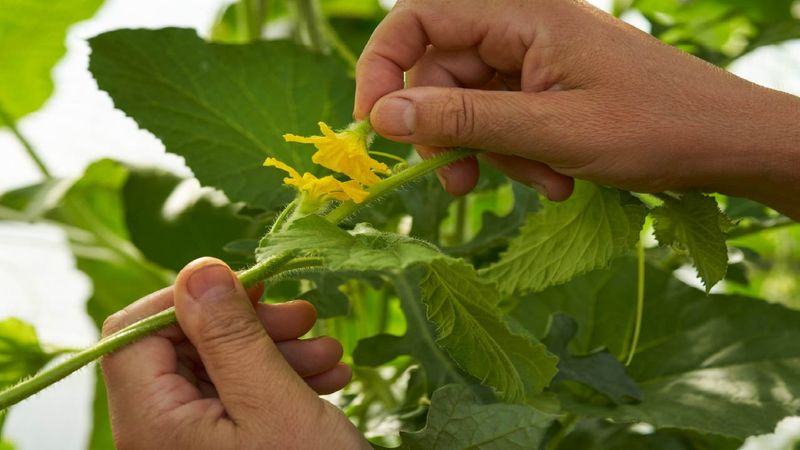
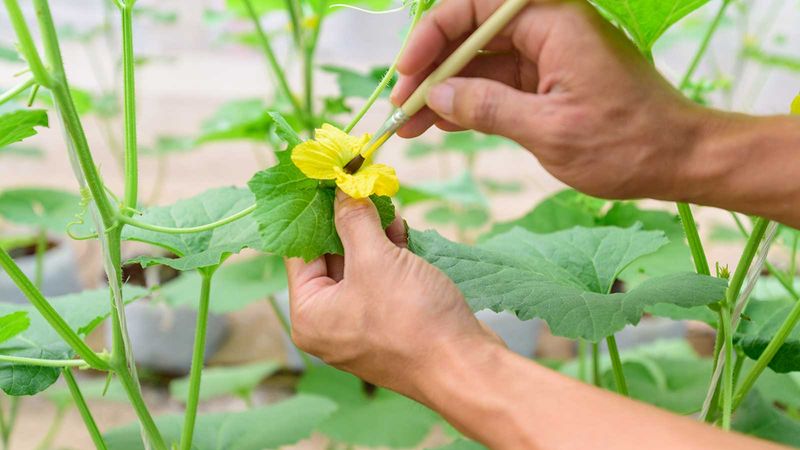
The method is straightforward. Pick a freshly opened male flower in the morning, gently peel back the petals to expose the pollen-covered center, and press it directly against the stigma inside an open female flower.
University of Alaska Fairbanks Extension’s greenhouse cucumber guide describes this technique as practical for situations where natural pollinator activity is limited. A small, clean, soft-bristled brush works as an alternative if you prefer not to use the whole flower.
Ask Extension’s hand-pollination resource confirms the brush method as an effective transfer option.
Keep expectations realistic. Hand-pollination increases the odds of complete fertilization on newly opening flowers, but it cannot repair a cucumber that has already developed with a pinched or lopsided shape.
UC ANR’s pollination guidance frames it as a practical home-garden intervention rather than a guaranteed cure. After hand-pollinating, watch the new fruit that forms over the next week or two while also keeping soil moisture steady, and that combination will give you the clearest read on whether the approach is helping.
Protect bees instead of spraying the flowers
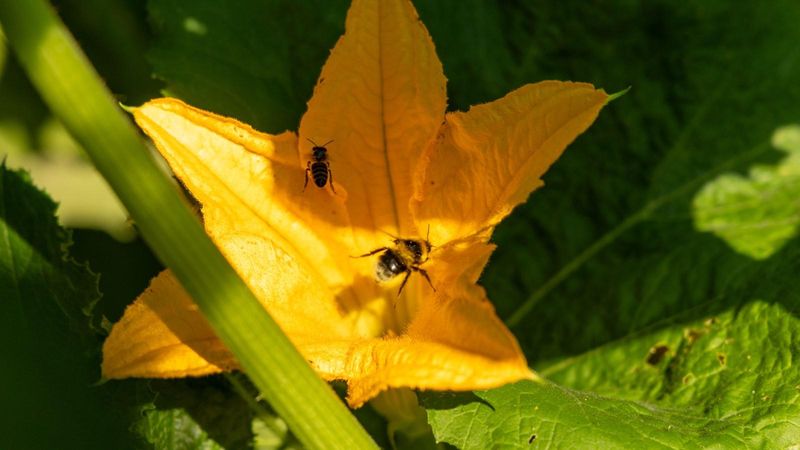
When fruit set is poor and you suspect a pollination problem, the temptation to spray something can feel strong. Resist it.
Applying insecticide to blooming cucumber plants to fix a pollination problem is not only ineffective, it can make things considerably worse by killing or repelling the very bees you need.
Many common garden pesticides, including some labeled for vegetable use, are hazardous to bees and other pollinators. EPA pollinator protection guidance outlines strategies for reducing pesticide risks to pollinators, including avoiding applications when bees are actively foraging and following all bee-hazard and timing restrictions on the product label.
Even products that seem low-risk can harm bees if applied during the morning hours when flowers are open and pollinators are working. UGA Extension’s integrated pest management handbook reinforces that any pesticide decision should begin with a confirmed pest identification, not a symptom that could have multiple causes.
Pesticide use on cucumbers requires an identified pest, a product labeled for that pest on that crop, and a timing plan that keeps bee exposure as low as possible. Protecting pollinator activity, planting nearby flowering plants that attract bees, and avoiding unnecessary sprays during bloom are all practical steps that support fruit set without creating additional problems.
Reset the plant and watch the next fruit
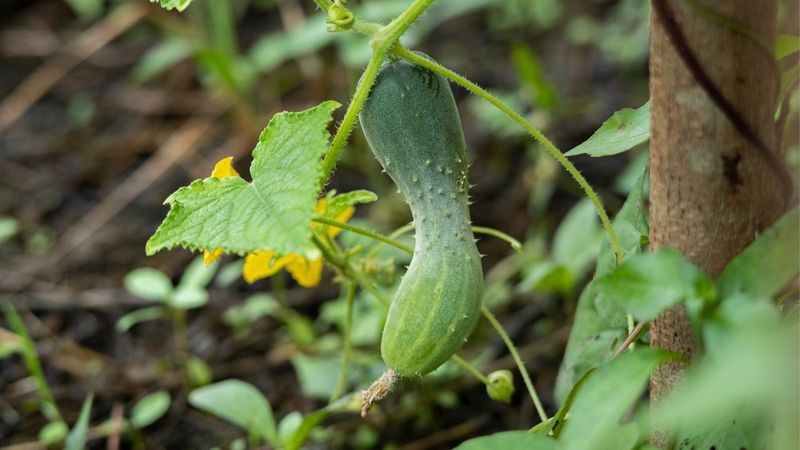
Once you have assessed the flowers, checked the variety, stabilized soil moisture, and decided whether hand-pollination fits your situation, the last practical step is to clear out the fruit that will not recover. Cucumbers that have already set with a severe malformation will not straighten as they continue to grow.
Utah State University Extension notes that removing malformed or overmature fruit can help the plant redirect energy toward new fruit set, though removal alone does not fix the original pollination, moisture, disease, or fertility problem that caused the shape in the first place.
When handling harvested cucumbers, discard any fruit showing rot, mold, disease lesions, or signs of spoilage. Mississippi State University Extension focuses disposal guidance on spoilage and disease symptoms rather than on shape alone.
A crooked or fat-ended cucumber is a quality and production concern, not a food-safety signal by itself.
After clearing the vine, keep morning observations going for the next week or two. Watch for bee activity during the flowering window, check that soil moisture stays consistent, and look at the shape of new fruit as it develops.
Penn State Extension’s pollination guide reinforces that incomplete pollination remains a plausible explanation in ordinary cucumbers when the supporting clues are present. The fruit forming after your corrections will tell you more than any single misshapen cucumber ever could.