
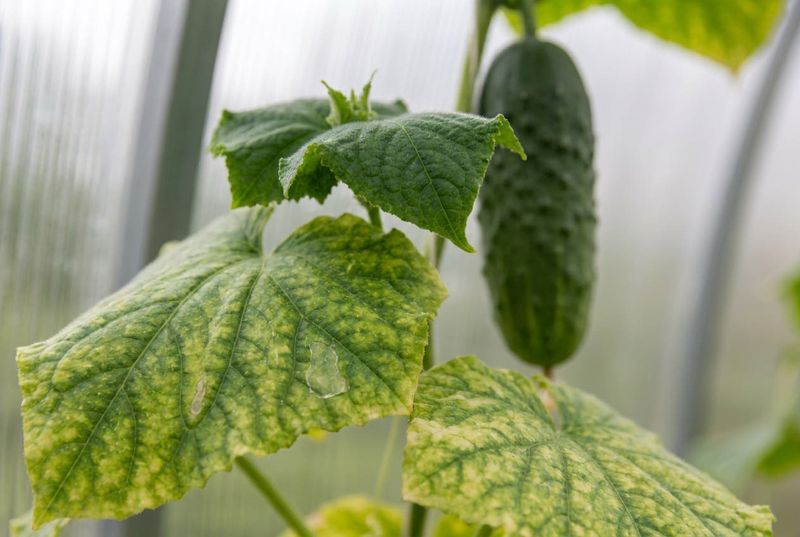
Seeing yellow patches spread between the green veins on your cucumber leaves in August is genuinely unsettling, especially when the vines were looking healthy just weeks ago. The symptom does point toward a specific nutrient problem, but the cause is rarely as simple as one feeding mistake.
Before reaching for fertilizer, it pays to read a few more clues your plant is already giving you.
Older leaves make magnesium the leading clue
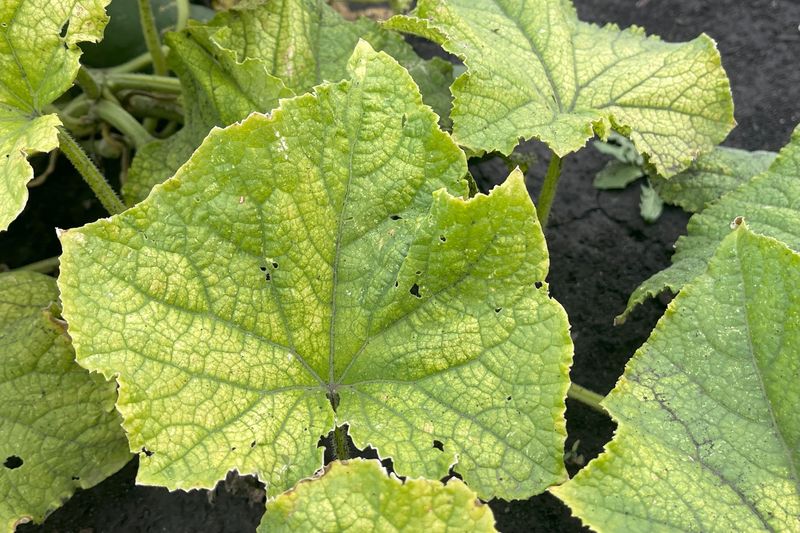
Yellow tissue spreading between veins that stay green is one of the more recognizable symptoms in a vegetable garden, and when it shows up on older or recently mature cucumber leaves, magnesium deficiency is the strongest candidate to investigate first. Magnesium is a mobile nutrient, meaning the plant can pull it from older tissue and redirect it toward actively growing parts when the supply runs short.
That mobility is exactly why older leaves tend to show the symptom before younger ones do.
Cucumber-specific research on magnesium deficiency documents classic interveinal chlorosis as the visible result when magnesium falls short, and extension diagnostic guides consistently identify older-leaf interveinal yellowing as the expected pattern. The green veins remain intact because magnesium is needed for chlorophyll production in the tissue between the veins, not in the vein structure itself.
Keep the diagnosis conditional, though. Several other problems can produce a pattern that looks nearly identical, including potassium deficiency, certain viruses, root stress, and chemical injury.
Before opening a fertilizer bag, hold the affected leaf next to the plant’s newest growth. Iowa State Extension’s magnesium deficiency guide notes that if the youngest leaves are also yellowing between the veins, a different nutrient or problem is more likely at work, and treating for magnesium would be premature.
A recent fertilizer imbalance may restrict magnesium uptake
When the title’s “one feeding mistake” has any truth behind it, the most plausible version involves applying too much potassium or a high-ammonium fertilizer in the weeks before symptoms appeared. Magnesium, potassium, and ammonium are all positively charged ions, and they compete for the same uptake sites on root cells.
When one of them floods the root zone, the others can get crowded out even if the soil contains plenty of them.
Research on cucumber nutrient interactions reports that magnesium uptake can be strongly depressed by elevated ammonium and potassium levels, and University of Missouri Extension separately notes that heavy potassium applications can trigger magnesium deficiency in otherwise adequate soils. That mechanism is real, but it only fits the situation when the feeding history actually supports it.
Pull out any fertilizer bags used in the past four to six weeks and check the guaranteed analysis on the label. A product with a very high middle or last number, representing phosphorus and potassium respectively, or one that lists ammonium as the primary nitrogen source, is worth flagging.
This explanation does not apply if the most recent feeding was a balanced, low-rate fertilizer or if no fertilizer has been applied recently at all. Treating for a problem that does not match the history rarely helps and can make the root zone worse.
Heat can increase stress without proving magnesium deficiency
August heat is real stress for cucumber vines, and it is easy to assume that the timing of the symptom and the timing of the hot weather are connected as cause and effect. Heat can reduce root growth and impair the plant’s ability to take up water and nutrients, so it is a contributing factor worth accounting for.
What the research does not support is the idea that hot August soil specifically locks up magnesium in cucumber roots.
A review of heat stress effects on plant-nutrient relations finds that the impact of high temperatures on nutrient uptake varies by crop, nutrient, temperature level, duration, and whether the root zone or the shoot is primarily exposed. Heat is a stressor, not a universal nutrient-lockout switch, and treating it as one can send you toward the wrong fix.
The most useful response during a heat wave is correcting water stress first. Dry soil makes fertilizer inaccessible, and Ohio State Extension advises delaying fertilizer applications during intense heat or drought because pushing new growth under those conditions can increase overall plant stress.
Pausing fertilizer and foliar feeding during the worst heat makes sense, but continue appropriate irrigation and mulching. UC IPM’s cucumber cultural guidance recommends keeping the soil evenly moist and using mulch to moderate soil temperature and slow moisture loss, both of which support root function without adding fertilizer risk.
Inspect roots, moisture, pests, and disease before feeding
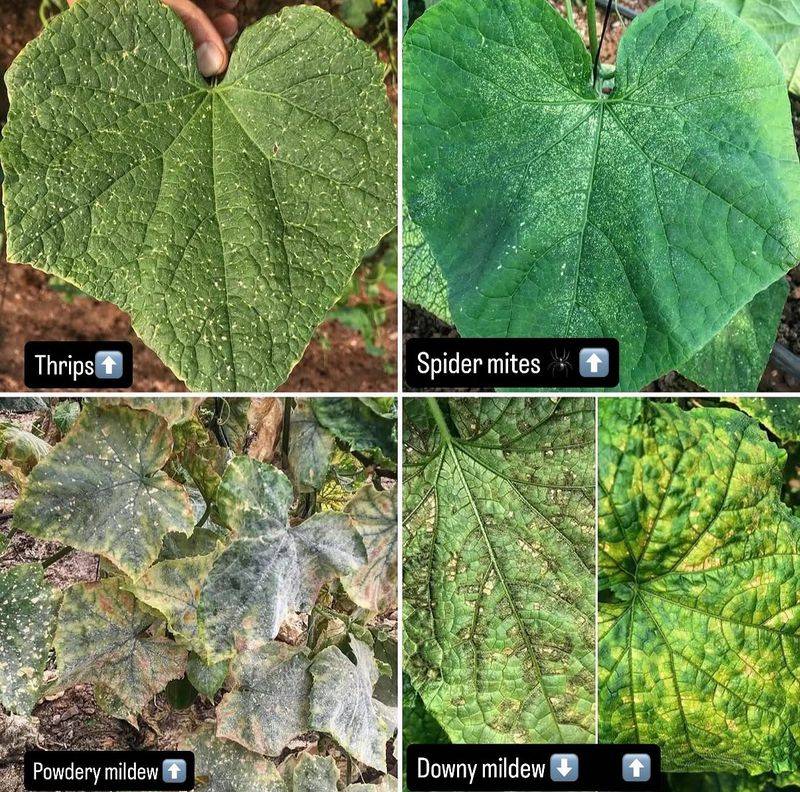
Interveinal yellowing is a symptom category, not a confirmed diagnosis, and several common August problems can produce patterns that look nearly identical to a nutrient deficiency. Running through a short physical checklist before adding any fertilizer or amendment protects you from treating the wrong problem.
Start with soil moisture. Push a finger two inches into the soil near the root zone and check whether it feels bone dry, evenly moist, or soggy.
Both drought and waterlogged soil can damage roots and restrict nutrient uptake, so the goal is moist but not saturated. Missouri Extension’s nutrient deficiency diagnostic guide emphasizes that root problems from drainage, compaction, or soil pathogens can mimic deficiency symptoms exactly, and visual leaf symptoms alone cannot separate the two.
Next, flip several leaves and examine the undersides with good light. Spider mites are especially active during hot, dry August conditions and leave fine stippling or a dusty yellow speckle that can be confused with interveinal chlorosis; look for the characteristic fine webbing.
Powdery mildew, downy mildew, bacterial wilt, and cucurbit viruses can all produce yellow or mottled patterns on cucumber foliage. University of Minnesota Extension’s cucumber leaf discoloration diagnostic tool walks through these overlapping symptoms in detail.
Remove severely diseased leaves or plants when disease is confirmed, and address pest populations with an appropriate, label-directed product before assuming the cause is nutritional.
Use a soil test to guide, not replace, the diagnosis
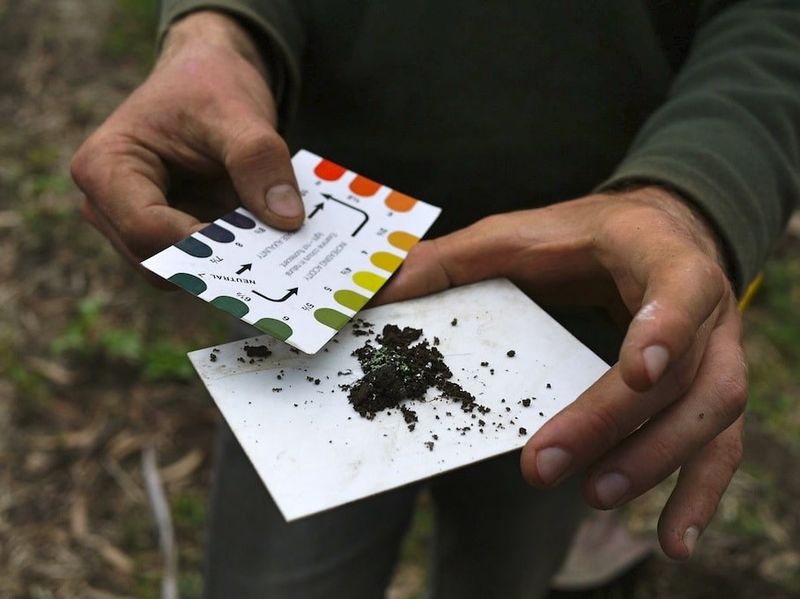
A soil test is one of the most useful tools available for a situation like this, but it works best as a guide alongside the other observations already gathered, not as a shortcut that replaces checking roots, moisture, pests, and leaf age. Testing before adding magnesium, potassium, lime, sulfur, or repeated fertilizer tells you what the soil actually contains and at what pH, which prevents well-intentioned amendments from making things worse.
Cucumbers generally perform best at a soil pH between 6.0 and 6.5. Iowa State Extension’s home garden fertilizer guide recommends using soil test results to determine both the need for nutrients and the appropriate rates, rather than applying amendments based on symptoms alone.
A pH that has drifted above 6.5 or below 6.0 can affect how well several nutrients are available, even when those nutrients are physically present in the soil.
Poor aeration, compacted soil, excess salts from previous heavy fertilizer use, and root damage from pests or disease can all make nutrients difficult for the plant to access regardless of what the soil test shows. Missouri Extension’s diagnostic resource reinforces that a soil test identifies what is present but cannot independently confirm why a plant is not taking it up.
Think of the test result as one piece of a larger picture that still includes leaf age, root condition, drainage, moisture, and pest and disease status.
Treat confirmed magnesium deficiency cautiously
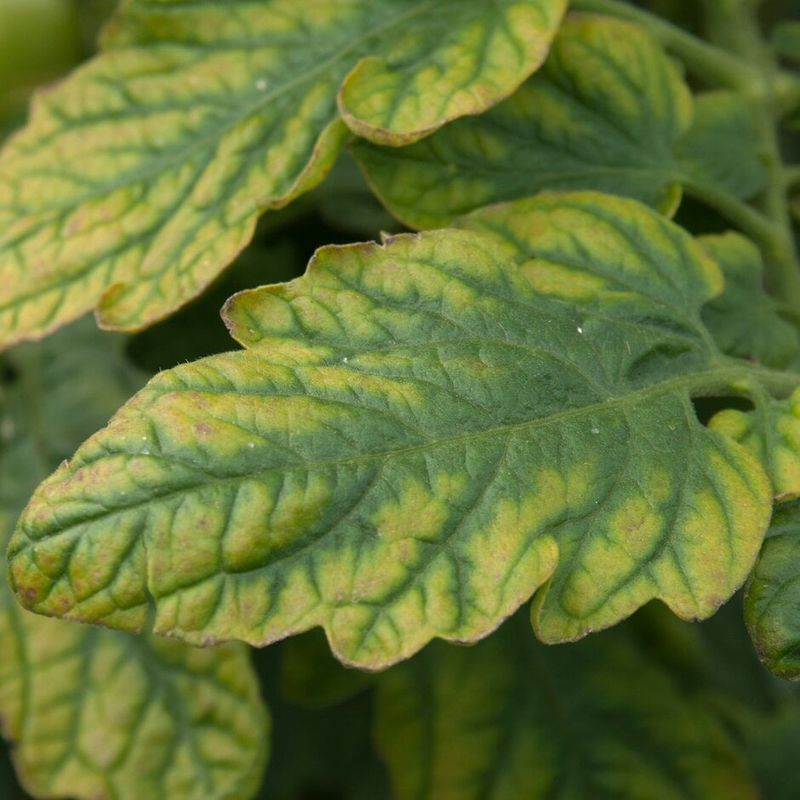
Once a soil test and the overall symptom pattern both point toward magnesium deficiency, a measured response is appropriate, starting with the gentlest and most targeted option the situation calls for. A fertilizer that lists magnesium in its guaranteed analysis applied at the soil-test-recommended rate is usually the most straightforward starting point.
Dolomitic lime is another option when the soil test shows that pH is also low and calcium levels support it. Oregon State’s cucumber production guidance lists dolomitic lime as a magnesium source in cucumber growing, with the condition that soil pH and calcium status make it appropriate.
Applying lime when pH is already adequate can push it too high and create new nutrient availability problems, so this option is truly conditional.
Epsom salt comes up frequently in online gardening discussions, but it deserves careful handling. University of Minnesota Extension recommends Epsom salt only when a soil test confirms magnesium deficiency, warns that foliar sprays can scorch leaves, and notes that excess magnesium can interfere with calcium uptake.
Nebraska Extension’s Epsom salt fact sheet adds that magnesium generally does not become unavailable in high-pH soils the way iron does, which further limits the situations where Epsom salt makes sense. Any foliar application should follow the product label and local extension guidance, and should be avoided during extreme heat unless the label specifically permits it.
Correcting root-zone conditions, drainage, and moisture consistency matters more than chasing temporary leaf color changes with repeated sprays.
Newest-leaf yellowing sends you toward iron and pH
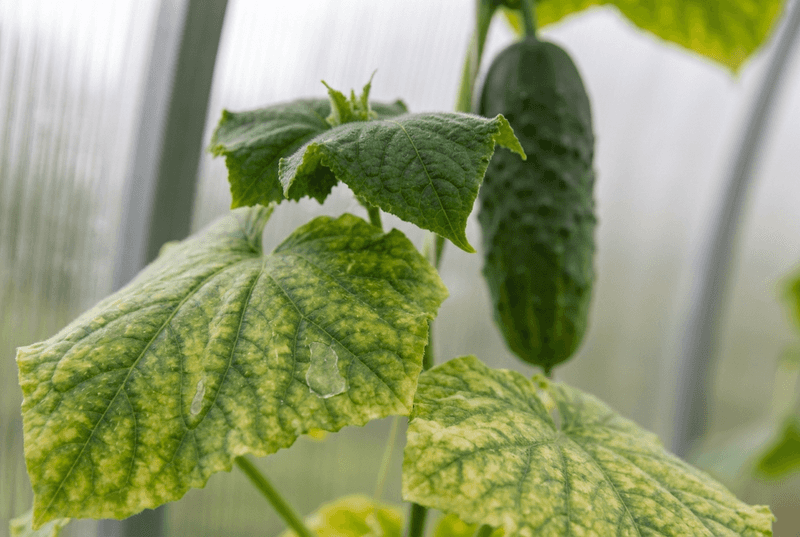
Applying a magnesium treatment to a vine whose newest leaves are the ones yellowing between the veins would be a diagnostic mismatch. The position of the affected leaves is the single most important clue for separating magnesium deficiency from iron deficiency, and getting this distinction wrong can lead to amendments that do nothing or that create new imbalances.
Iron behaves differently from magnesium inside the plant. Because iron is relatively immobile, the plant cannot pull it from older tissue and redistribute it when the supply tightens.
Deficiency symptoms therefore appear first on the youngest, actively growing leaves. Iowa State Extension’s iron deficiency guide describes pronounced interveinal chlorosis on new growth as the characteristic pattern, distinct from the older-leaf pattern seen with magnesium.
High soil pH is much more strongly associated with iron becoming unavailable than with magnesium lockout, and a pH above 7 can make ordinary iron sulfate products largely ineffective soon after application.
When testing and local extension guidance support an iron treatment, chelated iron products hold their availability longer than iron sulfate in alkaline soils. UMass Extension notes that Fe-EDDHA is the most stable chelate at pH above 7 among commonly available forms.
Oklahoma State Extension emphasizes that treating the cause, whether high pH, compacted soil, poor drainage, or root injury, matters more than repeated iron applications that cannot fix the underlying condition. Every rate and product choice should follow the label and local recommendations, with no guarantee of permanent restoration if the root-zone problem remains.
Match the pattern to the next measured step
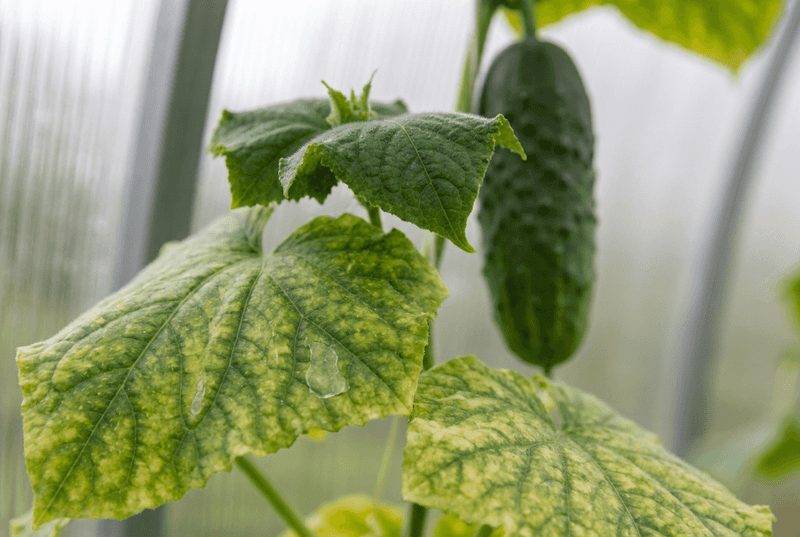
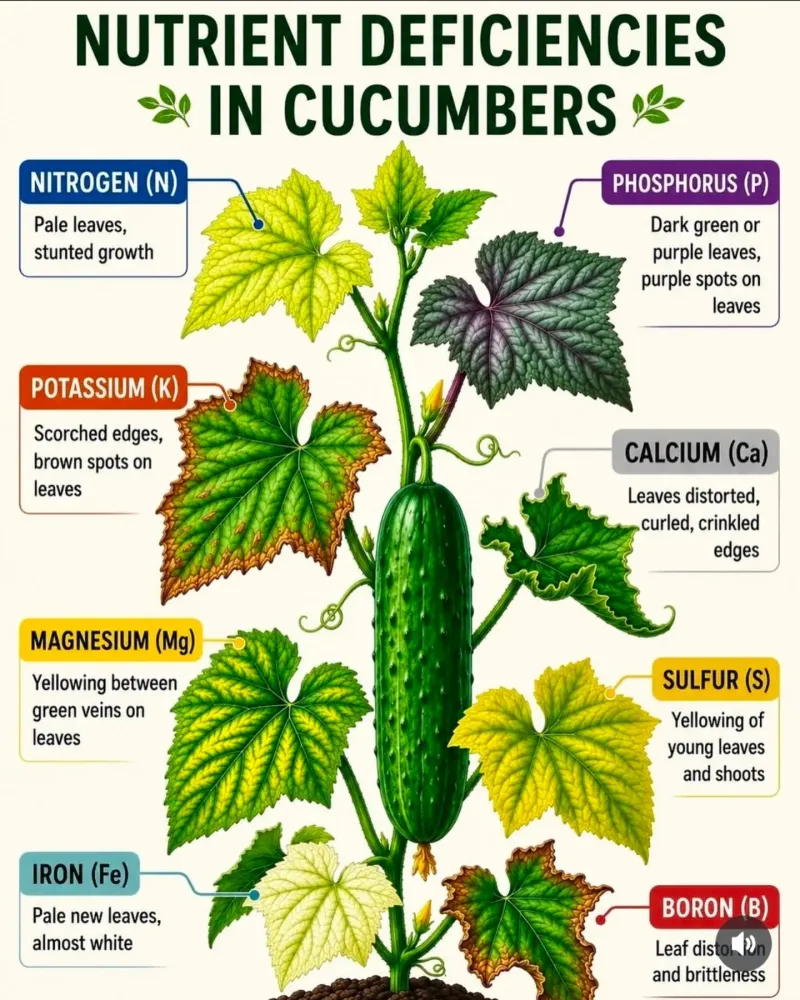
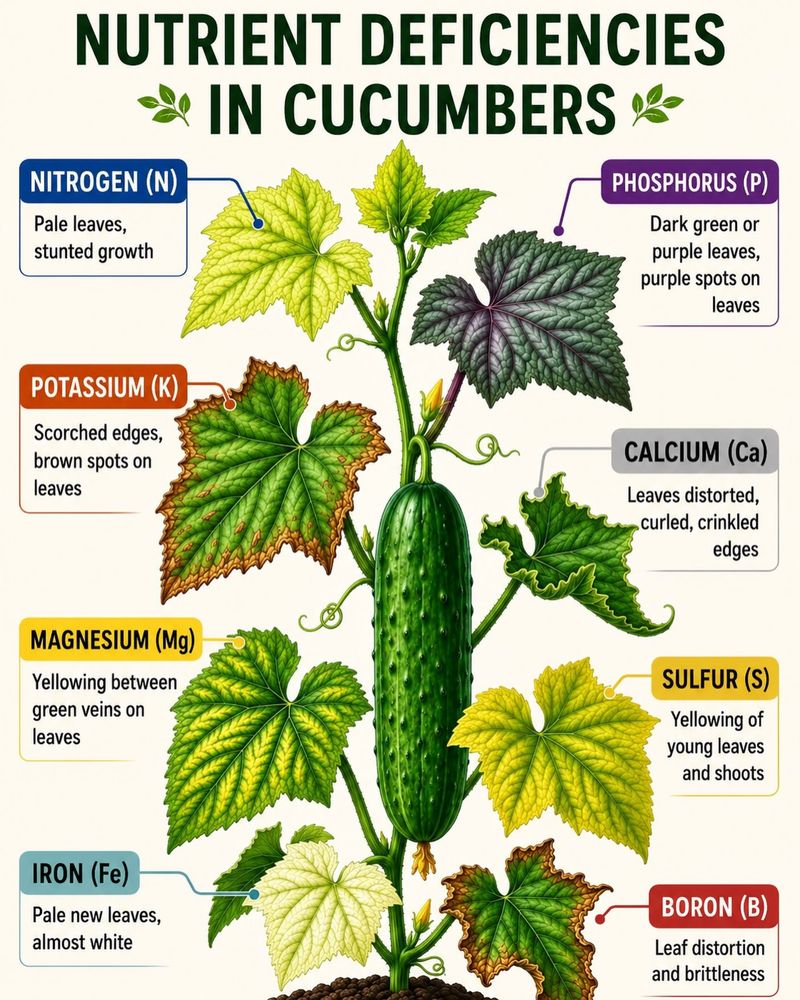
Reading the leaf position gives you a reliable starting point. Older or recently mature leaves with yellow tissue between green veins call for investigating magnesium and reviewing whether recent high-potassium or high-ammonium fertilizer could be a factor.
Yellowing that starts at the leaf edges and moves inward, sometimes with brown scorching at the margins, points toward a different pattern entirely, often potassium deficiency, and warrants its own soil-test-guided response.
Interveinal chlorosis on the youngest leaves shifts attention toward iron availability and pH, not magnesium. When yellowing comes alongside webbing, stippling, white fungal coating, or wilting despite adequate moisture, address the pest or disease problem first before considering any fertilizer.
Missouri Extension’s diagnostic framework reinforces that soggy soil, drought, and root damage each deserve direct correction rather than a fertilizer response.
A cucumber vine recovering from a nutrient problem or environmental stress responds better to accurate diagnosis and corrected growing conditions than to repeated feeding. The green veins are still there, which means the vine is still fighting, and giving it the right fix rather than the fastest one is what actually brings it back.