
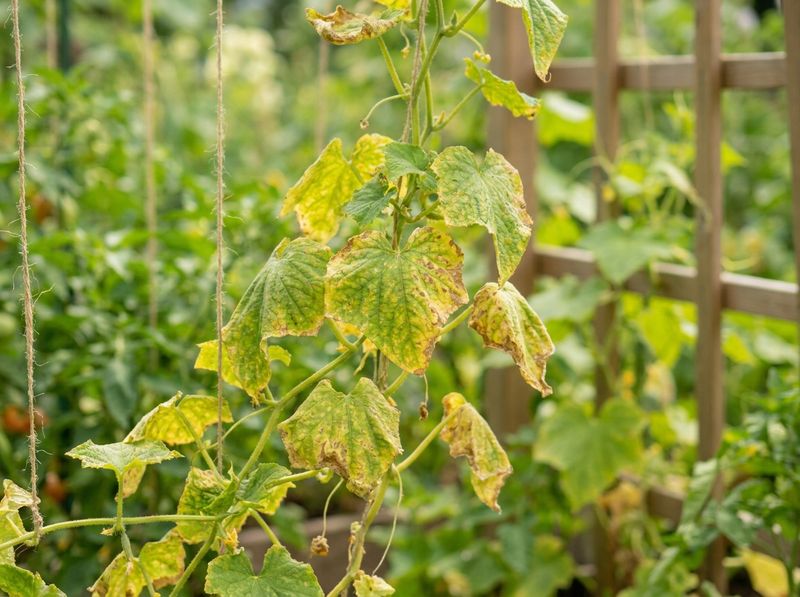
Walking out to your cucumber patch on a scorching August morning to find the leaves cupped upward and feeling stiff is genuinely alarming, especially when your plants were looking fine just a few days ago. Heat and water stress are often consistent with that picture, but they are not the only explanation, and treating for the wrong cause can make things worse.
Before you reach for a spray bottle or start pulling leaves, a quick look at your soil and your plants will tell you a lot more than the temperature alone.
Upward curl has several possible causes
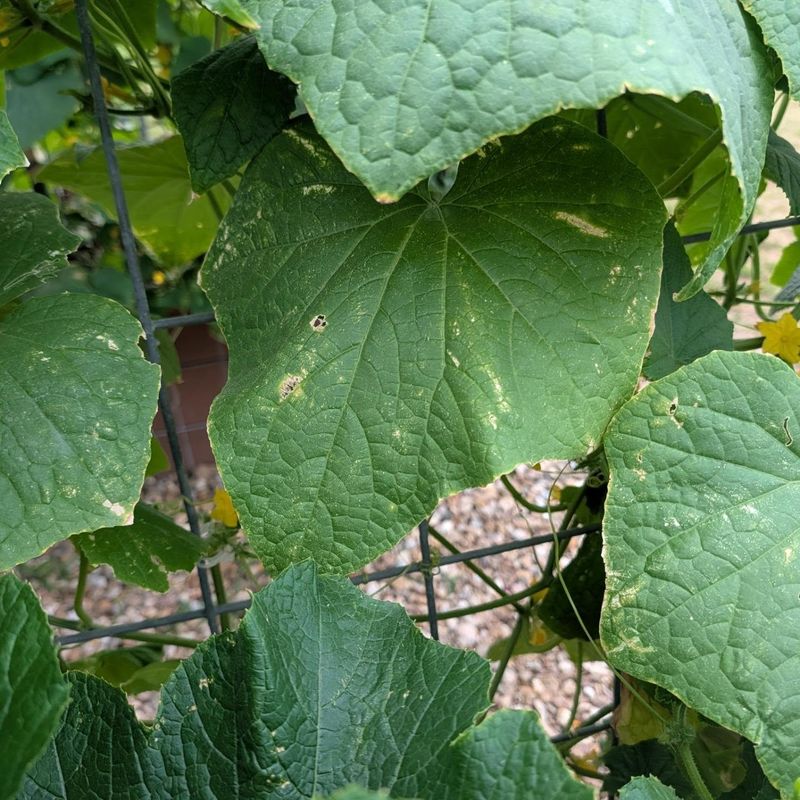
Cucumber leaves that cup upward and feel stiff or leathery during a late-summer heat spell can be consistent with heat and water stress, but the symptom alone does not confirm that diagnosis. Colorado State Extension guidance lists temperature extremes, irrigation problems, and herbicide exposure among the common reasons cucumber foliage changes shape, and none of those causes produces an identical set of signs every time.
Heat and water stress become a more plausible explanation when hot or windy weather coincides with dry or unevenly moist soil and when leaves recover some pliability overnight after temperatures drop. Research on cucumber water status and heat response confirms that cucumbers are especially sensitive to moisture shortfalls during flowering, fruit set, and fruit enlargement, which is exactly when late-summer stress tends to land hardest.
Other causes deserve equal attention before any treatment decision. Growth-regulator herbicides such as dicamba can produce upward-cupped, distorted foliage that looks a lot like heat stress.
Spider mites, powdery mildew, downy mildew, and viruses can all distort or damage cucumber leaves in ways that overlap with environmental stress. Identifying the symptom is only the first step; ruling out look-alike problems is what makes a safe response possible.
Check the root zone before you treat the leaves
Soil moisture is the first thing to verify when cucumber leaves look stressed. Push two fingers or a wooden dowel 2 to 4 inches below the surface near the plant, but not directly against the stem, and feel what is there.
Dry, crumbly soil at that depth supports a water-stress interpretation; cool, wet soil points toward a different problem, possibly overwatering or poor drainage rather than drought.
Midday wilting can be misleading. Heat alone can cause temporary leaf droop even when the root zone holds adequate moisture, because the plant loses water through its leaves faster than roots can replace it during peak afternoon heat.
Utah State Extension cucumber irrigation guidance recommends checking soil moisture as a scheduling tool rather than relying on how the plant looks at the hottest part of the day.
If the soil is genuinely dry, deep and thorough irrigation is more effective than frequent shallow watering. Oklahoma State Extension vegetable FAQs advise moistening the full root zone rather than applying small amounts repeatedly, which can leave deeper roots dry.
A general starting range for cucumbers is roughly 1 to 2 inches of water per week, but Utah State water recommendations for vegetables are clear that this figure shifts with soil type, plant size, fruit load, rainfall, and temperature. Sandy Florida soils, raised beds, containers, and heavy fruiting plants all change how much and how often you need to water.
Rehydrate the soil and lower the heat load
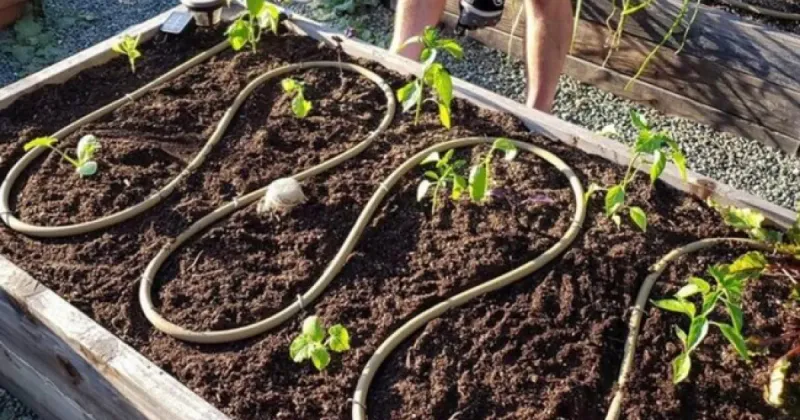
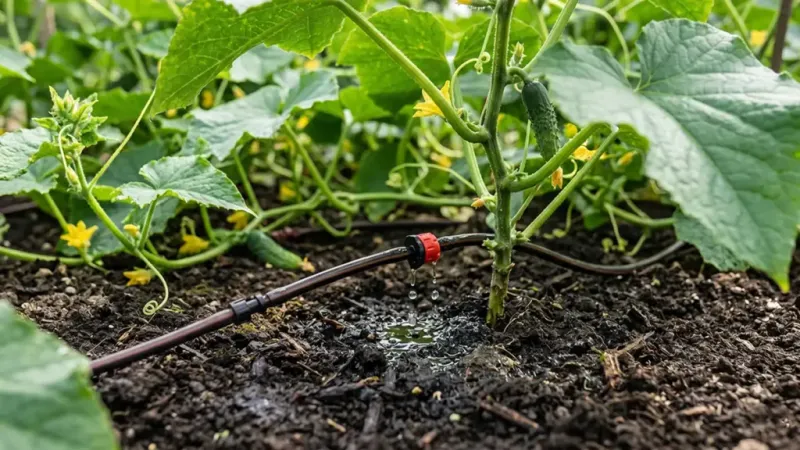
Once dry or uneven soil moisture fits the symptom pattern, the safest first response is slow, thorough watering delivered at the soil line. University of Minnesota watering guidance recommends drip irrigation, a soaker hose, or a slow hose flow placed at the base of the plant rather than overhead sprinklers.
Morning watering gives the root zone time to absorb moisture before afternoon heat peaks and keeps foliage dry through the day.
Spraying the leaves to cool them down is not a reliable fix. Prolonged leaf wetness raises the risk of foliar disease, and overhead watering can interfere with bee activity during cucumber flowering.
The goal is to supply the root zone efficiently, not to mist the canopy.
A fresh or refreshed layer of organic mulch, such as straw, wood chips, or shredded leaves, spread 2 to 3 inches deep around the plants can meaningfully slow soil moisture loss and moderate root-zone temperature. University of Minnesota heat gardening advice describes mulch as a practical tool for protecting plants during heat events; keep it slightly pulled back from the crown and stems so excess moisture does not collect directly against the tissue.
For severe heat or strong drying winds, temporary afternoon shade using row cover fabric, shade cloth, or a propped board on the west or southwest side of the plant can reduce the heat load without blocking the air movement cucumbers need. Minnesota disease management guidance emphasizes keeping air circulating around cucurbits, so avoid enclosing plants in ways that trap humidity.
Inspect for mites and disease-specific symptoms
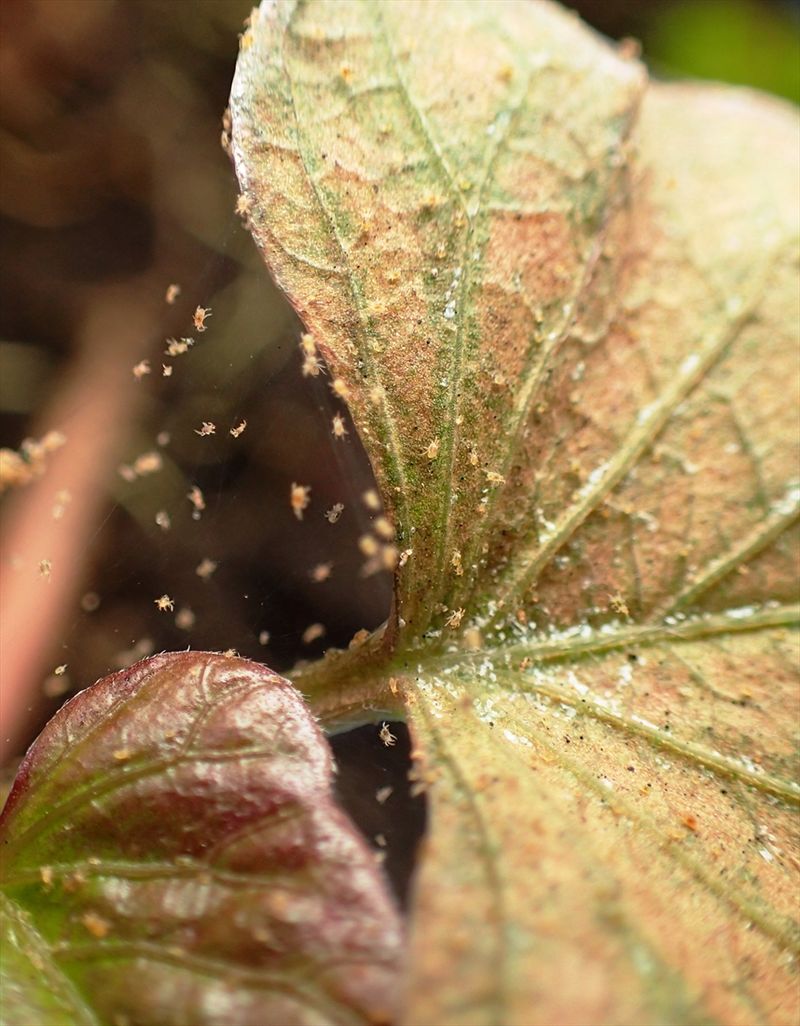
After addressing soil moisture, flip a few leaves over and look closely at the undersides. Spider mites thrive in hot, dry conditions and are a realistic possibility in any Southern summer garden.
Penn State Extension’s two-spotted spider mite guide describes their feeding damage as pale stippling, bronzing, or a washed-out discoloration, often accompanied by fine webbing on the leaf underside. You can also tap a suspect leaf over a sheet of white paper and watch for tiny moving specks.
A uniformly curled leaf with no stippling, webbing, or discoloration is weaker evidence of mite feeding, but hot and dry weather can trigger both heat stress and mite outbreaks at the same time, so the two are not mutually exclusive. The University of Minnesota cucumber leaf diagnostic tool lists mites alongside several other causes of leaf discoloration and distortion, which reinforces the value of a careful underside inspection before drawing conclusions.
Disease signs look different from mite damage and from heat stress. Powdery mildew on cucurbits appears as white, talcum-like patches, usually starting on older or shaded leaves, and it can spread in warm weather even without rain.
Downy mildew produces angular yellow or tan lesions bounded by the leaf veins, sometimes with dark fuzzy growth on the underside under humid conditions. Hot weather does not rule out either disease.
A fungicide is only appropriate after you have identified disease-specific signs, and any product must be registered for use on cucumbers and applied exactly according to its label.
Recent spraying can point to herbicide injury
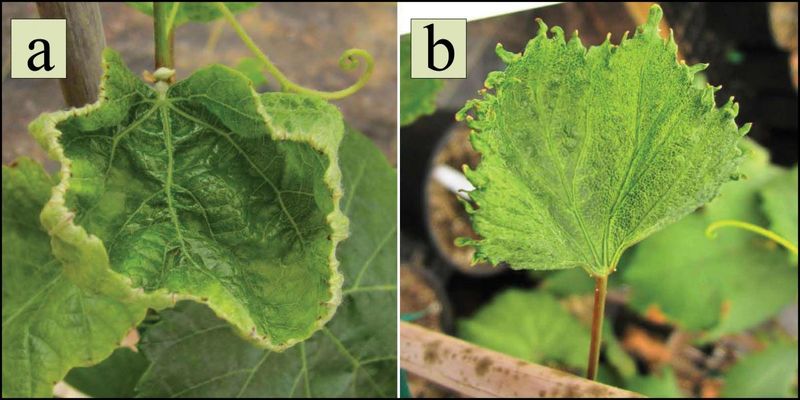
A specific pattern of symptoms should shift your attention away from weather and toward possible herbicide exposure. If the newest leaves, the ones at the growing tips, are sharply cupped, twisted, puckered, or misshapen rather than simply curled along with the rest of the plant, that is a meaningful distinction.
Rutgers Extension reporting on dicamba herbicide drift documents upward-curved leaf edges and distorted new growth as a recognized injury pattern on cucumbers and other broadleaf crops.
Two additional clues strengthen the herbicide interpretation. First, check whether nearby broadleaf plants, tomatoes, beans, ornamentals, or weeds in the same area show similar cupping or twisting.
Second, think back over the past week or two: was there any lawn treatment, weed control spraying, or neighboring property application that could have drifted? UC IPM’s herbicide symptom reference for cucumbers can help you compare what you are seeing against documented injury patterns.
Heat stress, by contrast, tends to affect the whole plant more uniformly during hot afternoons and often eases overnight as temperatures fall. Visual diagnosis between the two can still be uncertain, especially when symptoms overlap.
What not to do in either case is apply extra fertilizer or reach for an unverified spray. Neither corrects herbicide injury, and both can add stress to a plant that is already struggling.
If injury is suspected and symptoms are severe, contacting your local Extension office is a reasonable next step.
Mosaic and stunting require a different diagnosis
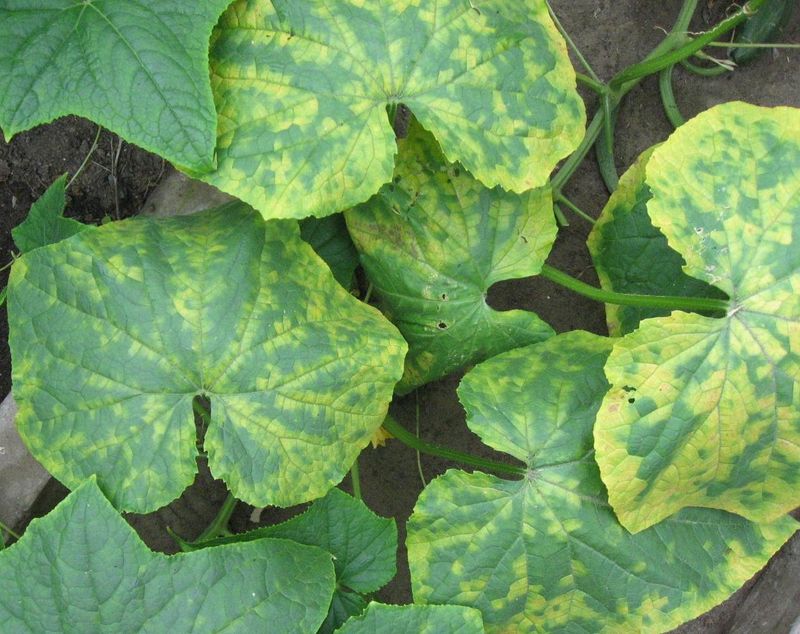
Not every distorted cucumber leaf signals a virus, but certain symptom combinations make a plant-disease diagnosis worth pursuing. Cucumber mosaic virus and related infections more often produce mottling or mosaic-patterned coloration, stunted or reduced growth, leaf distortion, or unusually narrow shoestring-like leaves than a simple afternoon curl that eases with cooler temperatures.
Penn State Extension’s cucumber mosaic virus resource describes the range of symptoms and notes that they can overlap with herbicide injury and environmental stress, making reliable identification from visual inspection alone difficult.
The Cornell vegetable disease key for cucumber leaf symptoms is a useful comparison tool when you are trying to distinguish virus symptoms from other causes of leaf distortion. If the pattern does not match heat stress, mites, or the diseases described in the previous section, working through a structured key can narrow the possibilities before you contact a professional.
Florida gardeners face an additional possibility. UF/IFAS information on cucurbit leaf crumple virus describes chlorosis, crumpling, curling, stunting, and wilting in cucurbits transmitted by whiteflies.
If those symptoms are widespread and accompanied by strong yellowing, significant stunting, and visible whitefly activity, a local Extension diagnosis is more appropriate than a heat-only interpretation. No chemical cures a virus-infected plant; suspect plants should be isolated, diagnosed if the situation warrants it, and removed if infection is confirmed to reduce spread to healthy plants.
Monitor new growth instead of removing every curled leaf
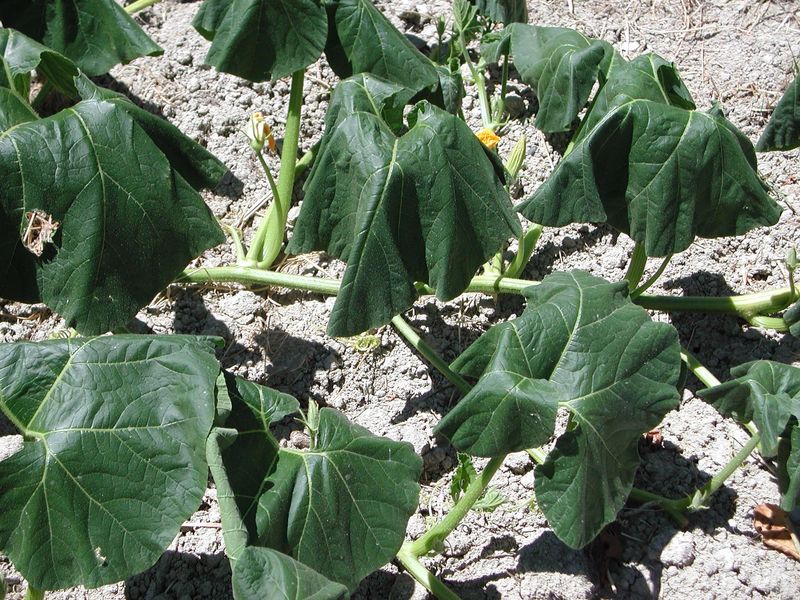
After correcting soil moisture and reducing heat load where possible, the most useful thing to watch is what the plant does next. Research on cucumber heat and water stress documents effects on water status, photosynthesis, and new leaf development, which means new growth emerging with a normal shape and reduced wilting over the following days is a practical sign that conditions are improving.
Existing leathery or scorched tissue may not soften again, and that is normal; the canopy you already have is not the measure of recovery.
Resist the urge to strip off every curled leaf. University of Minnesota plant disease management guidance cautions against removing more than one-third of a plant’s leaves at once, because even stressed foliage contributes to photosynthesis.
Remove tissue only when it is clearly dead, diseased, or showing confirmed pest damage.
Extra fertilizer is not a recovery tool here. It will not reverse heat damage, correct herbicide injury, or cure a virus, and excess nutrients can leach through sandy soils or push tender new growth that is harder to protect during ongoing heat.
Related research on cucumber stress responses supports focusing on stable moisture and reduced heat load as the primary corrective steps.
Keep monitoring over several days. If wilting eases, new leaves emerge normally, and no pest or disease signs appear, heat and water stress were likely a major factor.
If symptoms are widespread, worsening, or accompanied by the mite, disease, herbicide, or virus signs described earlier, a local Extension diagnosis will get you further than any general remedy. A plant that stays green and keeps producing fruit while you sort this out is telling you something good.