
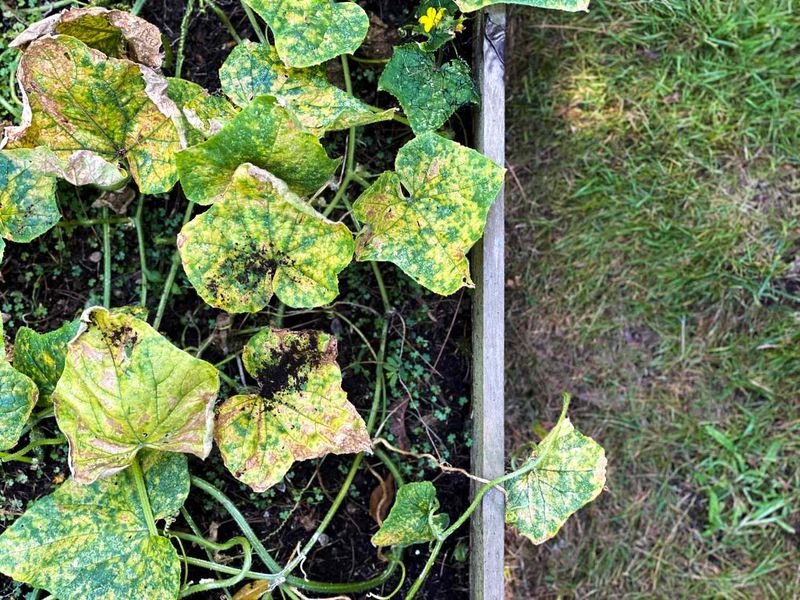
Watching your cucumber leaves turn yellow from the bottom up can feel alarming, especially when summer heat is already putting the whole garden under stress. The good news is that this specific pattern is a useful clue, not an automatic emergency. Before reaching for fertilizer or pesticide, taking a few minutes to read the symptom carefully can save your vines and your time.
Bottom-up yellowing makes nitrogen worth checking first
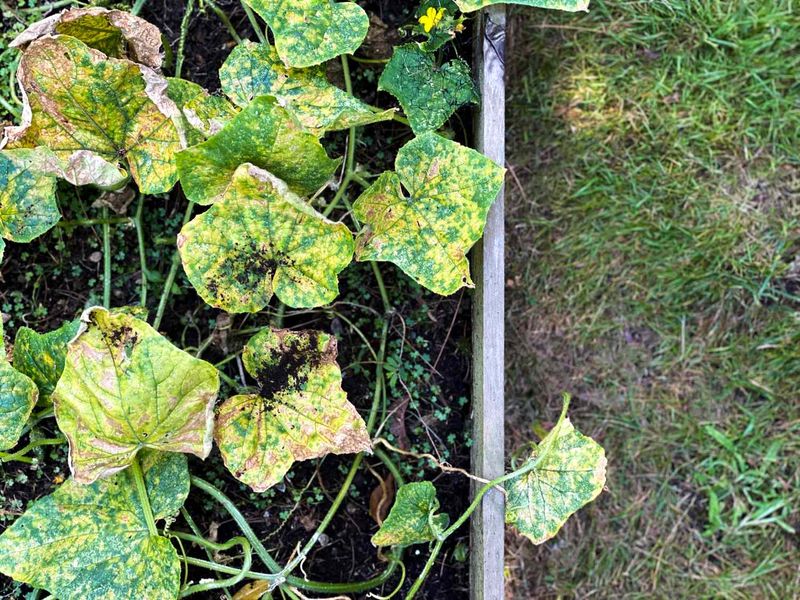
Nitrogen is one of the few nutrients that plants can move from one part of themselves to another. When a cucumber vine runs short on available nitrogen, it tends to pull that nutrient from its oldest, lowest leaves and send it toward the actively growing tips and developing fruit. The result is a fairly even, pale-green-to-yellow color spreading across those older leaves, often paired with slower-than-usual growth, foliage that looks smaller or thinner than normal, and an overall loss of vigor.
According to University of Minnesota Extension guidance on fertilizing plants, older leaves yellowing first is a classic sign that mobile nutrients like nitrogen may be in short supply. The Utah State University vegetable nutrient management guide similarly identifies this bottom-up pattern as consistent with nitrogen shortage in vegetable crops.
That said, this pattern raises nitrogen deficiency as a possibility worth investigating, not a confirmed diagnosis. Hot weather can make the situation feel more urgent because heat raises the vine’s water demand, and any disruption to watering or root health can affect how well the plant takes up nutrients. Heat alone, though, does not cause nitrogen deficiency. The same yellowing can show up when roots are waterlogged, when irrigation has been leaching nutrients below the root zone, or simply when an actively fruiting vine has used up whatever nitrogen was applied at planting.
Read the pattern before reaching for fertilizer
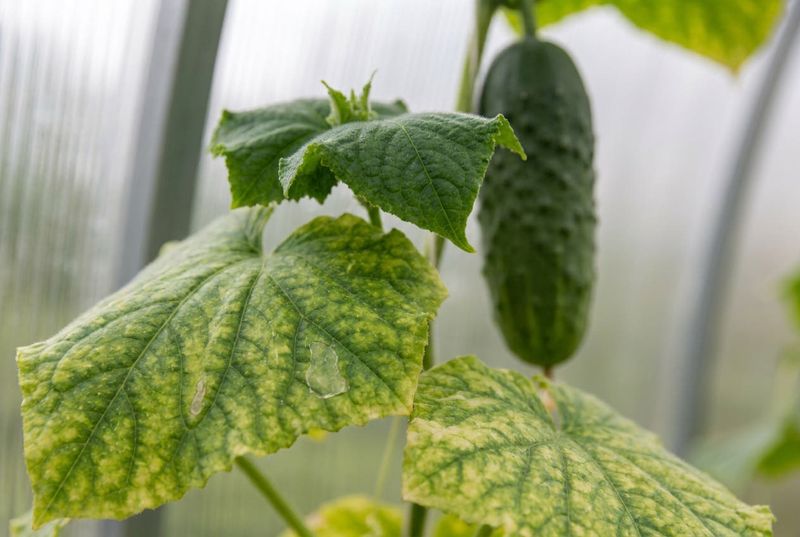
Not every yellow cucumber leaf points to the same problem, and the shape of the yellowing tells you more than the color alone. Fairly uniform yellowing that covers the whole older leaf surface, starting from the bottom of the vine and moving upward over time, is the pattern most consistent with nitrogen or general mobile-nutrient shortage. That even wash of pale color is the key detail to look for.
Potassium problems tend to look different. University of Minnesota Extension’s plant fertilizing guide notes that potassium deficiency commonly begins on older leaves but tends to concentrate along leaf margins and tips, progressing toward browning or scorching rather than an even yellowing of the whole blade. If your leaves are crisping at the edges while the centers stay greener, potassium is worth considering over nitrogen.
The location of new yellowing matters just as much. Yellowing that appears between the veins on your newest, youngest leaves points more toward iron or another relatively immobile nutrient, according to the Utah State University fertilizer guide. Iron and similar nutrients cannot travel easily from old leaves to new ones, so deficiencies show up first where new tissue is forming.
A few of the very oldest leaves yellowing while the growing tips look full and green is also worth noting. That can be natural aging, especially later in the season. The concern grows when yellowing advances steadily upward, accompanies stunted growth, or coincides with reduced fruit production, as University of Illinois Extension points out about distinguishing normal leaf drop from a genuine plant problem.
Heat changes water demand, not the diagnosis
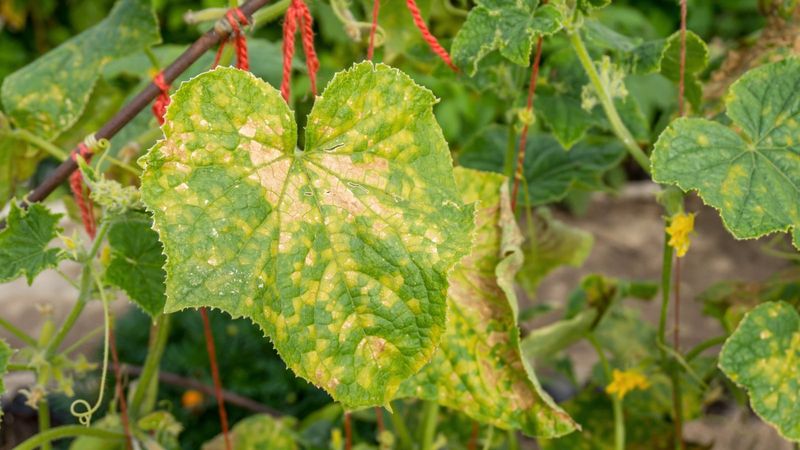
Summer heat puts extra pressure on cucumber vines, but the pressure shows up through water demand first. Cucumbers can handle warm growing conditions reasonably well when soil moisture is consistent, but Penn State Extension’s cucumber production guide notes that temperatures above roughly 90 to 95 degrees Fahrenheit can slow growth, cause flower drop, and reduce fruit set even when fertility is perfectly fine. Wilting at midday, stalled growth, and poor pollination during a heat wave are not automatically signs of a nutrient problem.
Where heat and nutrition do connect is through water movement in the soil. Drought conditions shrink the water film around soil particles that nutrients travel through, limiting how much nitrogen and other elements roots can absorb. On the other end, repeated heavy irrigation can push mobile nitrogen below the root zone faster than the plant can use it, a process called leaching. University of Georgia Extension’s vegetable gardening guide describes how cucumbers need a continuing, consistent supply of water and nutrients throughout the season, making both drought and overwatering potential contributors to nutrient shortages.
Saturated soil creates a third scenario worth understanding. When roots sit in waterlogged conditions, oxygen is displaced and root activity slows or stops. Plants in that situation can show drought-like symptoms, including yellowing, even when the soil feels wet. Colorado State University Extension’s guidance on water and plant growth explains that poor drainage and root suffocation can mimic nutrient deficiency from the outside.
Checking actual root-zone moisture and soil drainage is a more reliable first step than guessing from the leaves alone.
Rule out pests, disease, and root trouble
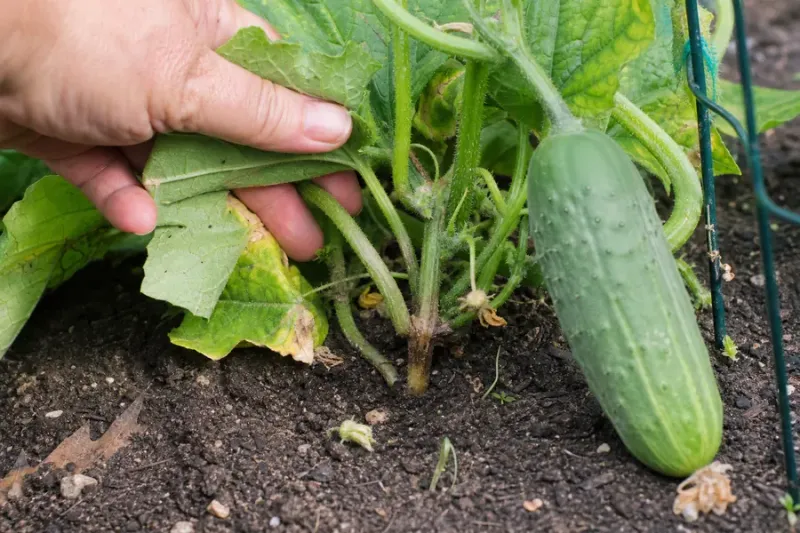
Yellow leaves on a cucumber vine can come from a surprisingly long list of causes, and a few of them require a completely different response than fertilizer. Before making any feeding decision, spend a few minutes inspecting the whole plant, not just the leaves that are already yellow. Colorado State University Extension’s plant disorder diagnosis resource specifically cautions that “yellow leaves” is too general a description to identify a cause without also looking at which leaves are affected, the exact pattern, watering history, pest signs, and disease symptoms.
Start by flipping leaves over and looking at the undersides. Spider mites thrive in hot, dry conditions, and their injury looks like fine stippling, a pale or bronzed speckling, or a mottled wash, often with very fine webbing on the leaf undersides. That texture is different from the even yellowing of a nutrient problem. Penn State Extension’s twospotted spider mite guide describes the bronzed, stippled appearance that distinguishes mite damage from nutrient-related color changes.
Disease patterns have their own visual signatures. University of Minnesota Extension’s cucurbit downy mildew resource describes the angular pale-yellow spots bounded by leaf veins that characterize downy mildew, sometimes with gray or purplish fuzz on the underside in humid conditions. Powdery mildew, by contrast, produces white powdery patches on the leaf surface. Neither of those patterns should be treated as a fertility problem.
Sudden wilting of an entire vine, particularly when cucumber beetles are present on the plant, raises concern for bacterial wilt, a disease spread by those insects. A fertilizer application will not help in that situation.
Root trouble is also worth checking. Persistent soil saturation, compacted soil, or physical damage to roots can prevent nutrient uptake and cause yellowing that looks exactly like a deficiency from above. Colorado State University’s plant pathology notes include root rots among the waterlogging-related problems that can produce decline symptoms similar to nutrient stress. The University of Minnesota cucumber leaf diagnosis tool and the broader UMN cucumber growing guide both list multiple non-fertility causes for discolored leaves, reinforcing why a careful inspection matters before any treatment decision.
Check moisture, soil, and feeding history
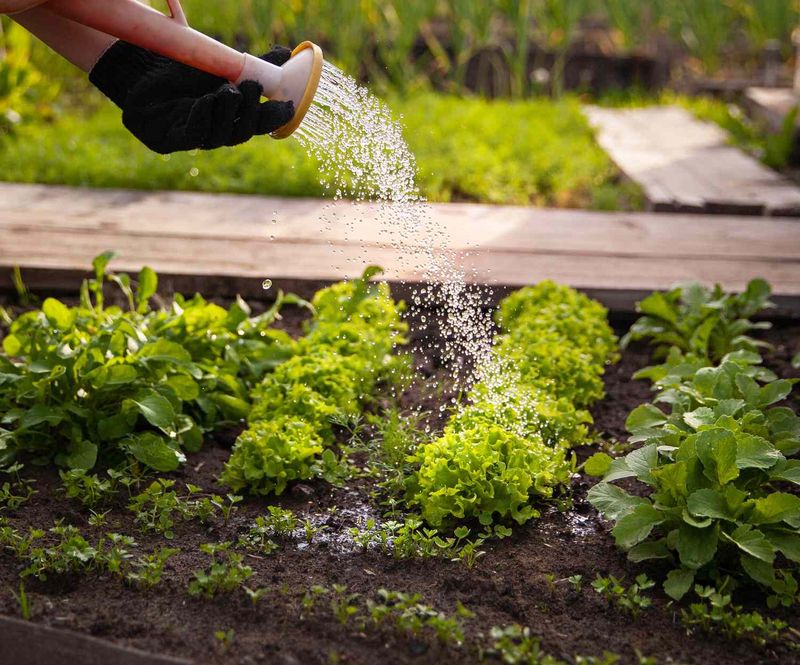
Once you have ruled out obvious pest and disease problems, a short practical inspection can tell you a lot more than the leaf color alone. Push a finger or a small trowel two to three inches into the root zone and feel the soil. Is it bone dry, evenly moist, or soggy? Persistent saturation is a reason to pause and improve drainage before considering any fertilizer, while consistently dry soil points toward correcting irrigation first.
Next, think back through your watering routine. Cucumbers generally need about 1 to 1.5 inches of water per week, adjusted for rainfall, soil type, plant size, and heat, according to University of Minnesota Extension’s hot-weather gardening guidance. If you have been watering heavily and frequently without accounting for rainfall, leaching is a real possibility. If you have been watering lightly during a heat wave, drought stress could be limiting nutrient uptake.
Also review what fertilizer or compost you have already applied this season. Cucumbers planted into soil amended with compost or a balanced fertilizer at the start of the season may not need additional nitrogen yet, especially early in the fruiting period. Penn State Extension’s soil testing guidance recommends testing soil for pH, phosphorus, potassium, and lime needs before adding nutrients, since applying what is already adequate can cause its own problems. Nitrogen is typically not measured directly in a standard soil test because it changes quickly in soil, but Penn State’s fertilizer recommendation guide explains how soil-test results combined with crop history can help you avoid unnecessary applications.
The UMN cucumber growing guide similarly emphasizes that soil preparation and amendment history should factor into any mid-season feeding decision.
Use a measured side-dress only when nitrogen remains likely
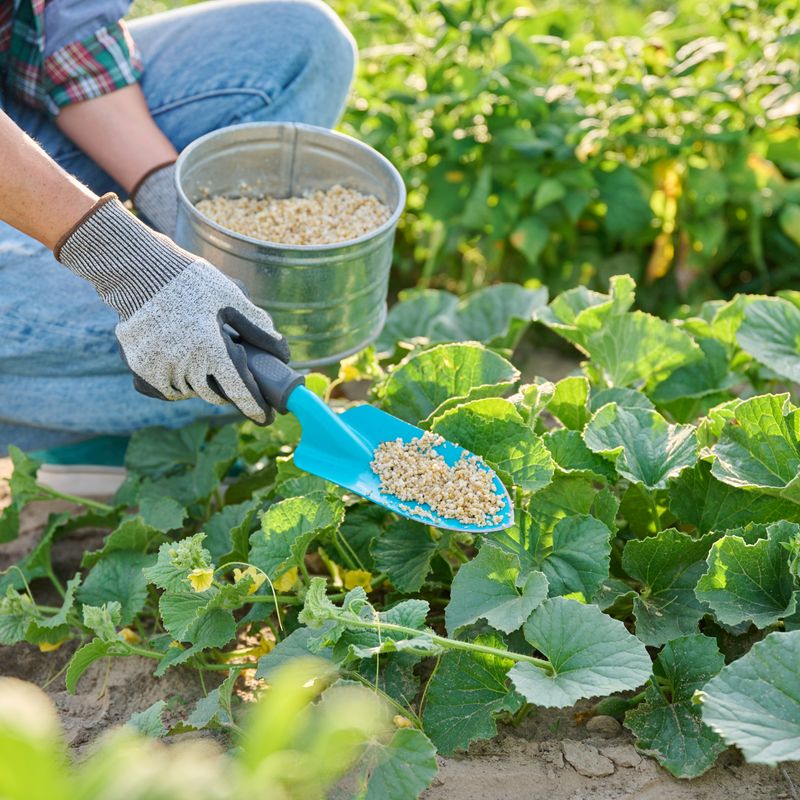
When the pattern on your vines genuinely supports nitrogen shortage, meaning fairly even yellowing on older lower leaves, slower growth, and no signs of pests, disease, waterlogging, or obvious drought, a measured side-dress application is a reasonable next step. The key word is measured. A vegetable-labeled fertilizer and its stated rate are your starting point, adjusted for any soil-test results, the crop stage you are at, and how much fertilizer has already gone into the bed this season.
University of Georgia Extension’s cucumber production guide describes side-dressing as an appropriate mid-season practice for cucumbers, particularly after bloom begins and the plants are setting fruit. Granular fertilizer should be placed several inches away from the main stem rather than directly against it, then either lightly incorporated into the soil surface or watered in thoroughly so the nutrients reach the root zone. Concentrated fertilizer sitting on the stem or left dry on the surface can burn plant tissue and does not move to where roots can use it.
Consistent surface watering and a layer of mulch around the plants support the fertilizer by keeping the root zone evenly moist and reducing the temperature swings that can limit uptake. University of Minnesota Extension’s watering guidance recommends watering at the soil surface rather than overhead when possible, preferably in the morning, to reduce foliage wetness and disease risk.
Foliar feeding, meaning spraying a liquid fertilizer directly on the leaves, is sometimes suggested as a faster route, but Penn State Extension’s foliar fertilization guide presents it as a specialized option rather than a default rescue. Root uptake remains the primary nutrient pathway, and foliar products can burn foliage if mixed incorrectly or applied during heat stress. Reserve foliar feeding for situations where a deficiency has been confirmed or where soil conditions are genuinely preventing normal uptake.
Avoid turning a yellowing problem into a fertilizer problem
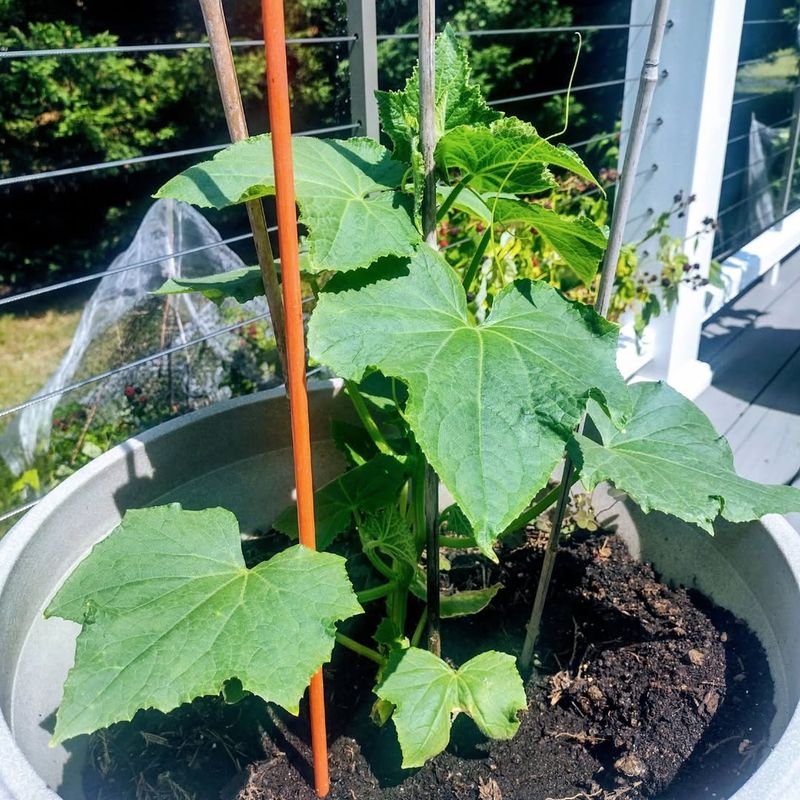
Applying more fertilizer than the plant needs or the soil can support creates a new set of problems on top of the original one. Excess nitrogen in particular tends to push cucumber vines toward producing lots of lush green foliage at the expense of flowers and harvestable fruit. University of Georgia Extension’s cucumber production guide and University of Minnesota Extension’s fertilizing guide both caution that overfertilization can delay or reduce fruit production in vining vegetables, which is the opposite of what most gardeners are trying to achieve.
Waterlogged soil is a specific situation where adding fertilizer makes things worse, not better. When roots are oxygen-deprived from saturation, they cannot absorb nutrients effectively regardless of how much is in the soil. Adding more fertilizer to wet, poorly drained soil can increase soluble salt levels, further stress already struggling roots, and contribute to nutrient runoff. The right sequence is to improve drainage first, allow the soil to reach a workable moisture level, and then reassess whether a deficiency still appears likely before following product label and soil-test guidance.
Some commonly suggested home remedies deserve a clear correction. Coffee grounds are not a meaningful, immediately available nitrogen source; Oregon State University Extension notes they can temporarily tie up soil nitrogen when applied in excess. Epsom salts supply magnesium and sulfur, not nitrogen, and University of New Hampshire Extension cautions against using them without evidence of a relevant deficiency. Fresh manure applied around actively growing food crops can introduce pathogens, excess soluble salts, and weed seeds; UGA Extension’s manure safety guidance recommends properly composted material only, with appropriate food-safety waiting intervals before harvest.
Reassess the vine instead of assuming the first answer
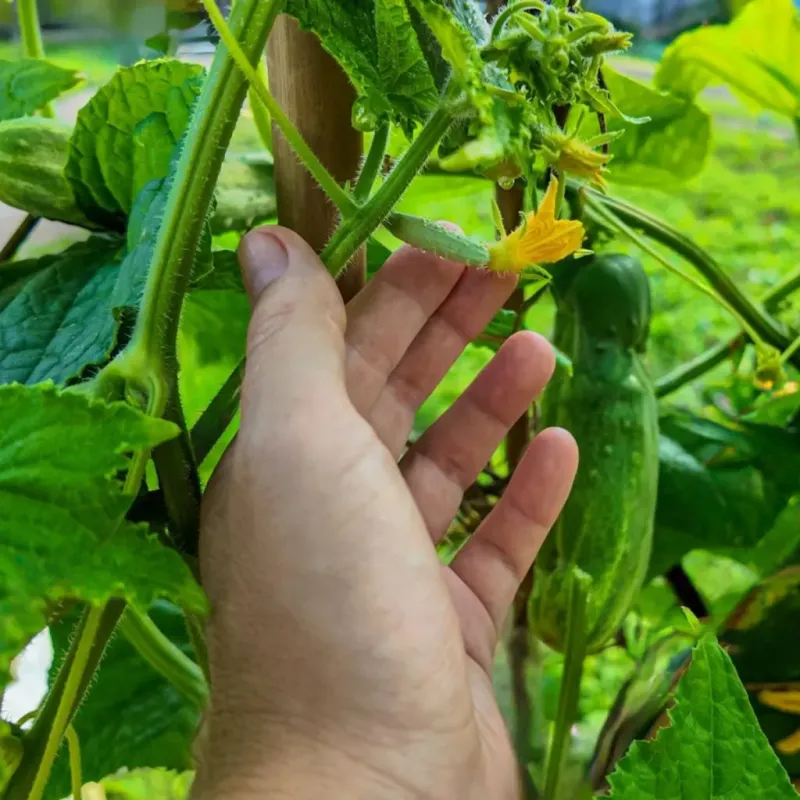
After correcting soil moisture or applying a measured fertilizer when the evidence supports it, give the plant a week or two and then look at the new growth rather than the yellow leaves. Already-yellowed leaves on a cucumber vine are unlikely to turn green again, so the signal to watch for is whether the newest leaves and growing tips look healthy, full-sized, and a normal deep green. Steady new growth in good color is a reasonable sign that conditions are improving.
Some situations call for further investigation rather than patience. If yellowing reaches the newer upper leaves, continues advancing despite corrected moisture and appropriate feeding, or appears alongside pest signs, disease symptoms, or sudden whole-vine wilting, the cause is likely something other than a straightforward nitrogen shortage. The Colorado State University plant disorder diagnostic guide and the UMN cucumber growing guide both recommend revisiting the full symptom picture when initial interventions do not produce visible improvement.
University of Minnesota Extension reinforces the broader principle: match the remedy to the actual problem, not to the most visible symptom. A cucumber vine that is genuinely short on nitrogen will respond to careful, measured feeding. One that is dealing with root rot, mites, or a disease will not. The most useful habit you can build is inspecting before acting, because the leaf color only tells you where to start looking.