
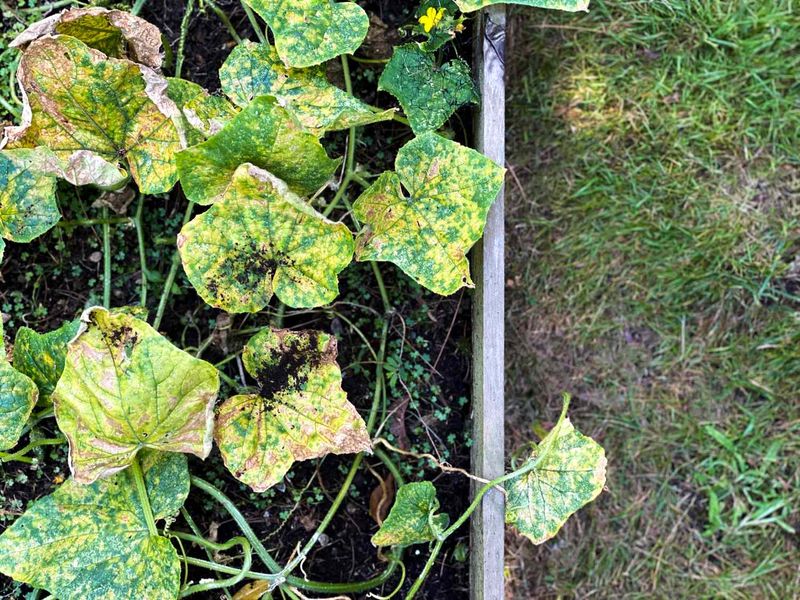
Watching your cucumber plant develop crispy, yellow, or scorched leaves in August is genuinely alarming, especially when you feel like you have been watering regularly. The frustrating truth is that the visible damage does not point to one clear cause on its own.
Heat stress, uneven moisture, disease, pests, and even too much water can all produce leaves that look remarkably similar. Understanding what is actually happening beneath the surface, and on both sides of those leaves, is the first step toward giving your plant real help.
Crispy yellow leaves do not identify the cause
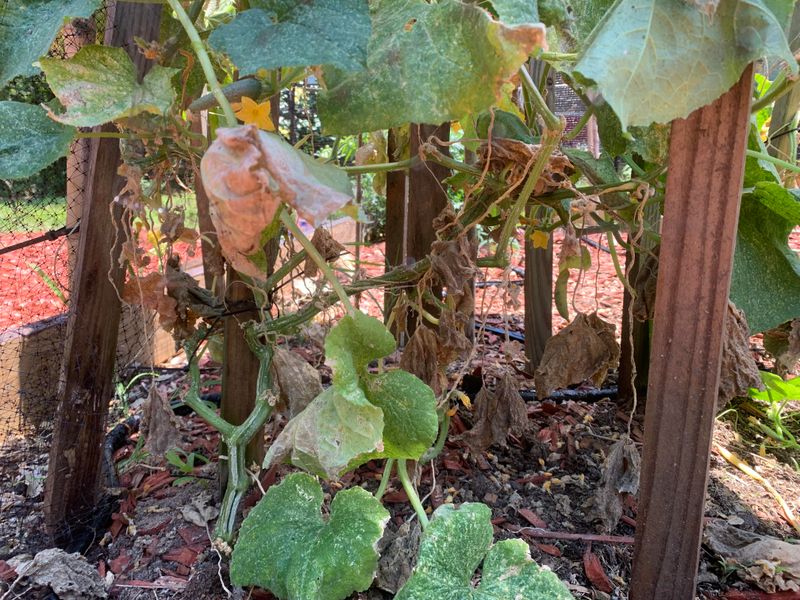
Yellow, crispy, or scorched cucumber leaves are a symptom, not a diagnosis. Several completely different problems can produce tissue that looks identical from a few feet away, which means changing your watering routine may or may not be the right move depending on what is actually going on.
According to the University of Minnesota cucumber leaf diagnostic tool, discolored or dying cucumber leaves can result from powdery mildew, downy mildew, angular leaf spot, viruses, aphids, spider mites, bacterial wilt, nutrient problems, and waterlogged roots, in addition to heat and water stress. Each of those causes calls for a different response.
Drought and uneven soil moisture remain well-supported causes of leaf scorch and should not be ruled out. As Colorado State Extension explains, a plant can also have adequately moist soil and still wilt or scorch when heat, wind, root damage, or waterlogged conditions prevent roots from moving water to leaves fast enough.
One useful early check: pay attention to when the wilting occurs. University of Minnesota heat-stress guidance notes that temporary afternoon wilting can happen even when soil moisture is adequate during peak heat, while wilting early in the morning is a stronger sign that the plant genuinely lacks water.
Inspect both the plant and the soil before changing anything.
The risky habit is keeping cucumber foliage wet
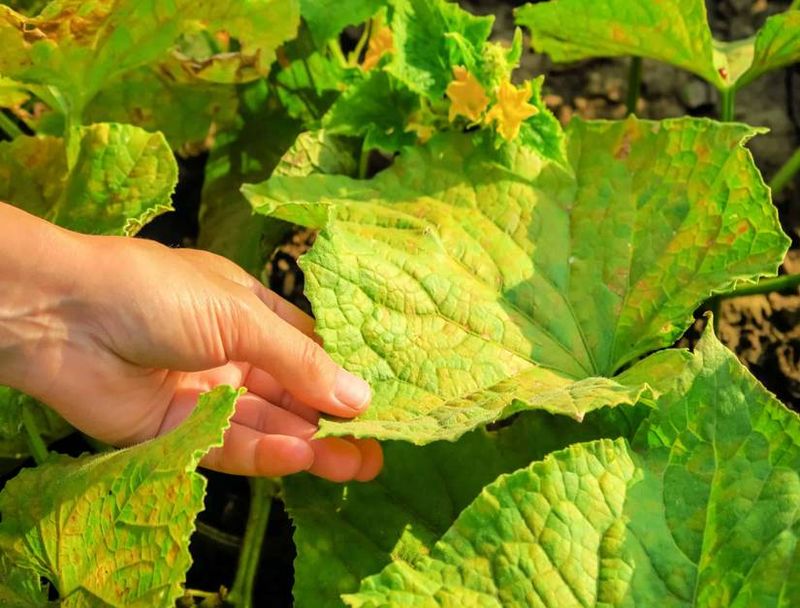
Among the watering habits that can contribute to leaf damage, one stands out as both common and fixable: routinely spraying or sprinkling water over the leaves, especially late in the afternoon or evening, rather than directing water to the root zone.
Oregon State Extension’s vegetable gardening guide and University of Minnesota’s plant disease management guidance both identify prolonged leaf wetness and high humidity around the canopy as conditions that favor fungal and bacterial foliar diseases. When foliage stays damp overnight, the environment becomes much more hospitable to pathogens that can cause yellowing, browning, and brittle tissue.
That does not mean overhead irrigation is always harmful. The key variable is drying time.
If water is applied early enough that leaves can dry completely before nightfall, the risk is considerably lower. The problem is specifically the combination of wet foliage and slow or no drying, which is most likely when watering happens in the evening or at night.
Powdery mildew is one disease associated with cucumber foliage, though as University of Illinois Extension notes, overhead watering is not its sole cause. Keeping leaves drier can reduce favorable conditions, but it is not a guarantee against disease.
The broader point is that wet foliage left to sit overnight creates unnecessary risk that a simple change in technique can reduce.
Water at the soil line, preferably in the morning
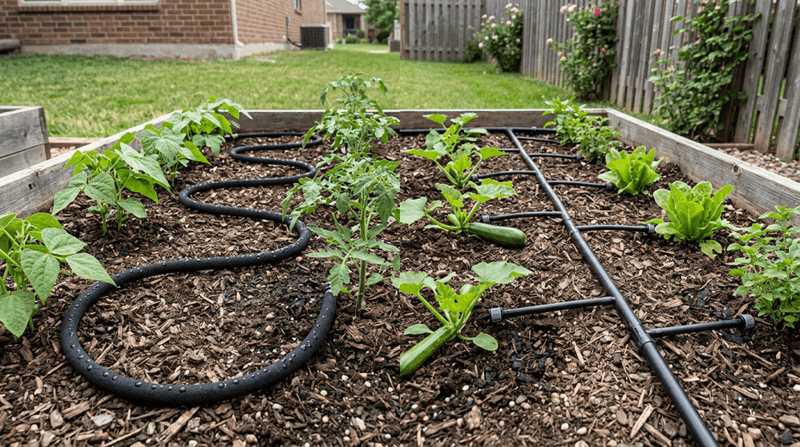
The practical replacement for overhead leaf watering is straightforward: deliver water slowly to the soil at the base of the plant rather than showering the canopy. Drip irrigation, a soaker hose, or a hand-held hose pointed near the root zone all accomplish this.
Oregon State Extension’s squash and cucurbit tips specifically recommend drip or soaker hose irrigation to minimize foliar wetness, and University of Minnesota’s water-wisely guide echoes the value of targeting the root zone directly.
Morning is the preferred time, particularly when overhead watering is unavoidable. Watering early gives any moisture that lands on foliage the entire day to evaporate, and it puts water in the root zone before afternoon heat peaks and transpiration demand rises.
This is the primary reason morning watering is recommended, not the old idea that water droplets act as magnifying glasses and burn leaves. Penn State Extension’s garden myths page addresses that misconception directly, noting that water droplets on smooth leaves like cucumbers do not normally cause sunscald.
There is one important exception. If a plant is actively wilted and the soil is genuinely dry, Ask Extension guidance does not support delaying needed water just to wait for morning.
A plant in acute stress needs water at the root zone as soon as practical, regardless of the time of day.
Check moisture below the surface before watering again
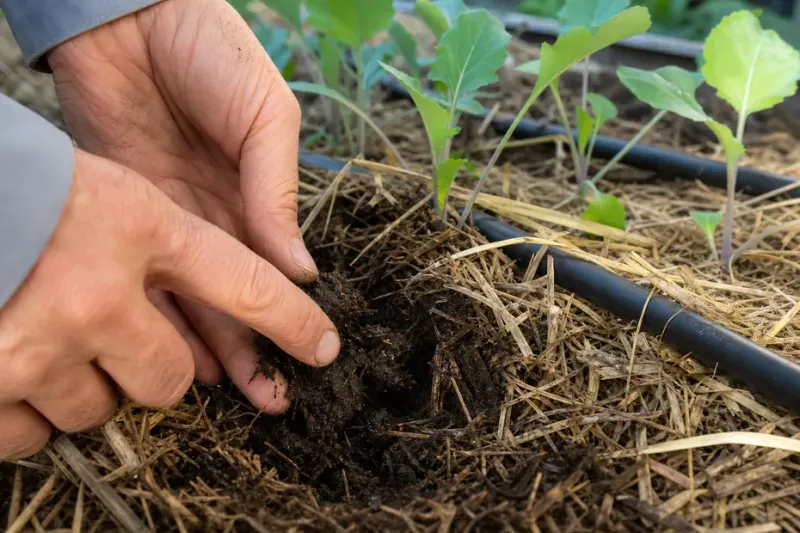
A dry crust on the soil surface can be misleading. The top layer dries out quickly in summer heat, but that does not always mean the root zone below is short on water.
Equally, soil that feels fine on top can be compacted or waterlogged a few inches down, which creates a completely different problem.
University of Minnesota’s vegetable garden watering guide recommends checking whether the soil is dry about 2 inches below the surface as a practical home-garden test before deciding to water. If the soil at that depth still feels moist, waiting is usually the right call.
If it feels dry, the plant likely needs water.
Penn State Extension’s cucumber production guide emphasizes that cucumbers are particularly sensitive to fluctuating soil moisture, and that uneven watering can reduce growth and affect fruit quality. Repeated shallow watering, where only the top inch or two gets wet, leaves roots in the upper soil layer where heat, wind, and evaporation rapidly deplete moisture.
Slow, deep watering that reaches the active root zone is more effective.
Before adding more water, also consider drainage. Colorado State Extension’s plant water guide explains that saturated soil can impair root function and produce symptoms that look almost identical to drought stress: wilting, yellowing, and poor growth.
If the soil feels soggy or water pools rather than draining, more water is not the answer. How often to water has no universal answer because soil type, weather, container versus ground planting, mulch coverage, plant size, and drainage all affect how quickly moisture is depleted.
Mulch and temporary shade can reduce heat pressure

Correcting your watering technique addresses one major stressor, but during extreme August heat, the soil can lose moisture faster than any reasonable watering schedule can replace it. Two additional steps can help buy the plant more time between waterings and reduce temperature-related stress on both roots and foliage.
Adding approximately 2 to 3 inches of organic mulch around the plant base, while keeping it a few inches away from the stem itself, can meaningfully reduce soil evaporation and moderate soil temperature. University of Minnesota’s backyard water guide recommends this approach specifically to slow moisture loss and keep roots cooler during hot periods.
Temporary shade is another option during heat events. University of Minnesota’s heat-stress gardening article notes that shade cloth or a breathable covering can reduce leaf and fruit stress during extreme conditions, provided it does not restrict airflow and is removed once temperatures drop back to normal.
Blocking ventilation or leaving shade in place unnecessarily can create humid, stagnant conditions that create their own problems.
Neither mulch nor shade will reverse leaves that are already damaged. Their value is in protecting healthy tissue and reducing the rate at which conditions worsen while you work through the underlying diagnosis.
Leaf patterns reveal when water is not the whole story
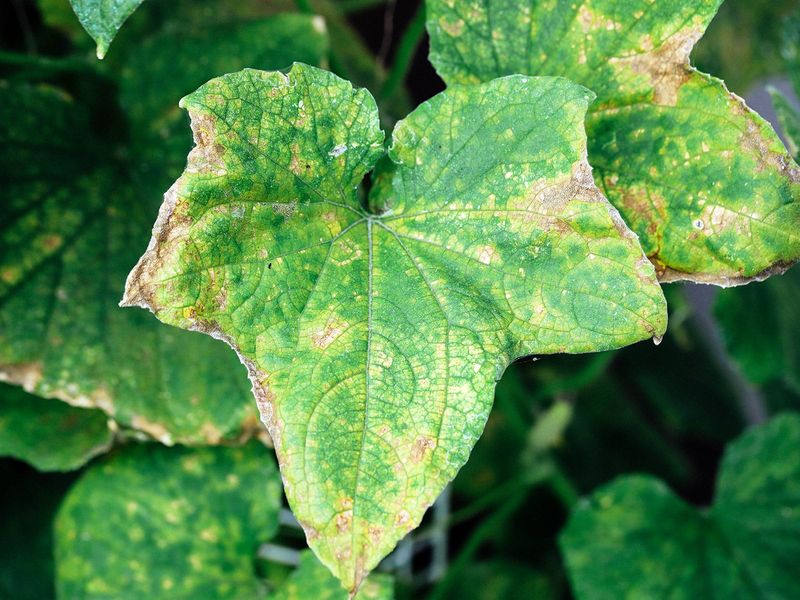
Adjusting irrigation will not fix a disease outbreak or a mite infestation, so learning to read the leaf is worth a few minutes of careful attention. The pattern, color, location, and texture of the damage all provide clues that a water change alone cannot address.
Powdery mildew typically begins as pale yellow areas on older leaves, then develops the white or gray powdery coating that gives it its name. University of Illinois Extension’s powdery mildew page describes how affected tissue eventually yellows, withers, and becomes dry and brittle, which can look similar to heat scorch at a glance.
Checking for the powdery residue helps distinguish it.
Downy mildew produces pale green or yellow spots that tend to be angular and bounded by leaf veins. According to the University of Minnesota cucumber leaf diagnostic resource, gray or purplish fuzz may appear on the underside of the leaf under humid conditions.
Always check the underside, because that is where early signs of both downy mildew and spider mites often appear first.
Spider mites thrive in hot, dry weather and are especially worth checking for in August. Their feeding causes pale stippling, bronzing, or a bleached look across the leaf surface, and fine webbing on the underside is a reliable tell.
University of Minnesota’s cucumber growing guide lists mites among the key pests to watch. A watering adjustment will not resolve an established mite infestation.
Yellowing concentrated on older, lower leaves can also indicate a nutrient issue, particularly nitrogen or potassium deficiency. As University of Minnesota’s fertilizing guide cautions, nutrient symptoms overlap significantly with water stress symptoms and are difficult to diagnose visually with confidence.
Blanket fertilizer applications are not appropriate without more specific information.
When disease or pests are suspected, University of Minnesota’s plant disease management guide advises removing only clearly dead or diseased leaves and never stripping more than one-third of the plant’s foliage at once. Identify the problem before reaching for any treatment, and follow product label directions precisely if a treatment is warranted.
The rescue starts with a soil check, not a calendar
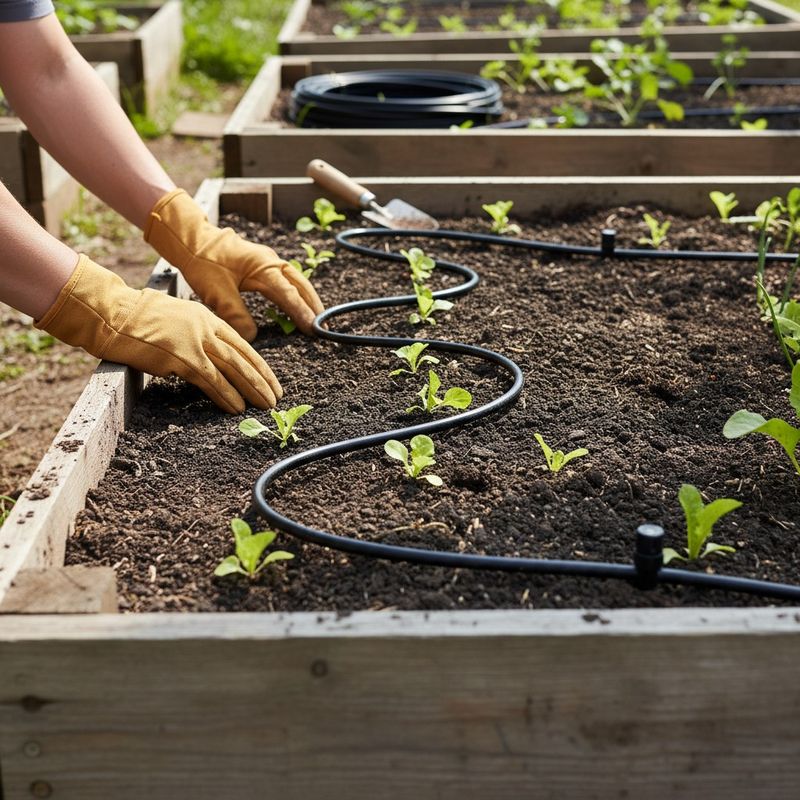
A practical starting sequence is more useful than a fixed watering schedule. Press a finger about 2 inches into the soil near the plant base and check whether the root zone is actually dry.
If it is, water slowly at the soil line rather than overhead, and do it in the morning when possible. If the soil feels saturated or drainage is poor, hold off and investigate the drainage situation before adding more water.
Stop routinely wetting leaves late in the day. That single change can reduce the conditions that favor foliar disease, even if it cannot cure problems already established.
Then turn the leaves over and look at both sides for the specific patterns described above, because University of Minnesota disease management guidance and Colorado State’s plant water resource both make clear that crispy yellow leaves have several possible causes, and the response should match the actual problem.
Stable moisture, a dry canopy, and attentive observation are the foundation. Symptoms that persist or spread after correcting irrigation deserve a closer look, because the plant may be telling you something water alone cannot fix.