
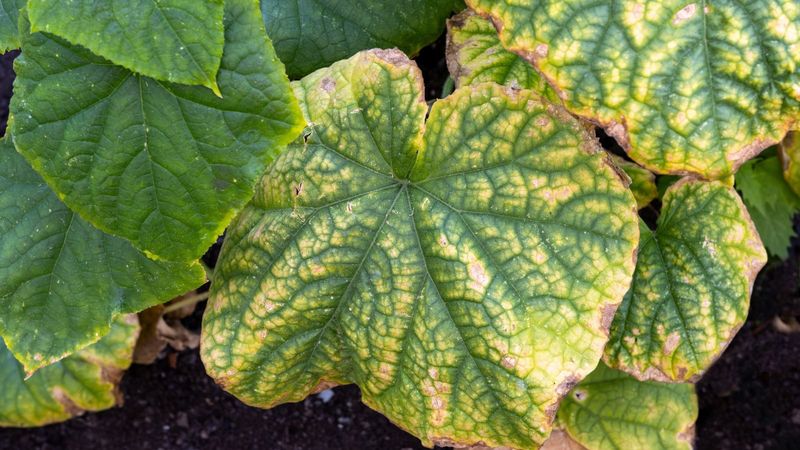
Watching your cucumber leaves go yellow, brown-edged, or crispy during a late-summer heat stretch is genuinely stressful, especially when the plants were looking fine just days before. Hot weather and dry soil make water stress a reasonable first thing to check, but those same symptoms can show up for several different reasons.
Knowing how to tell them apart saves you from adding water when the soil is already soaked, or from missing a pest problem that is quietly spreading. A quick look below the soil surface and under the leaves gives you far more useful information than the color of the foliage alone.
Treat yellow, crispy leaves as a symptom
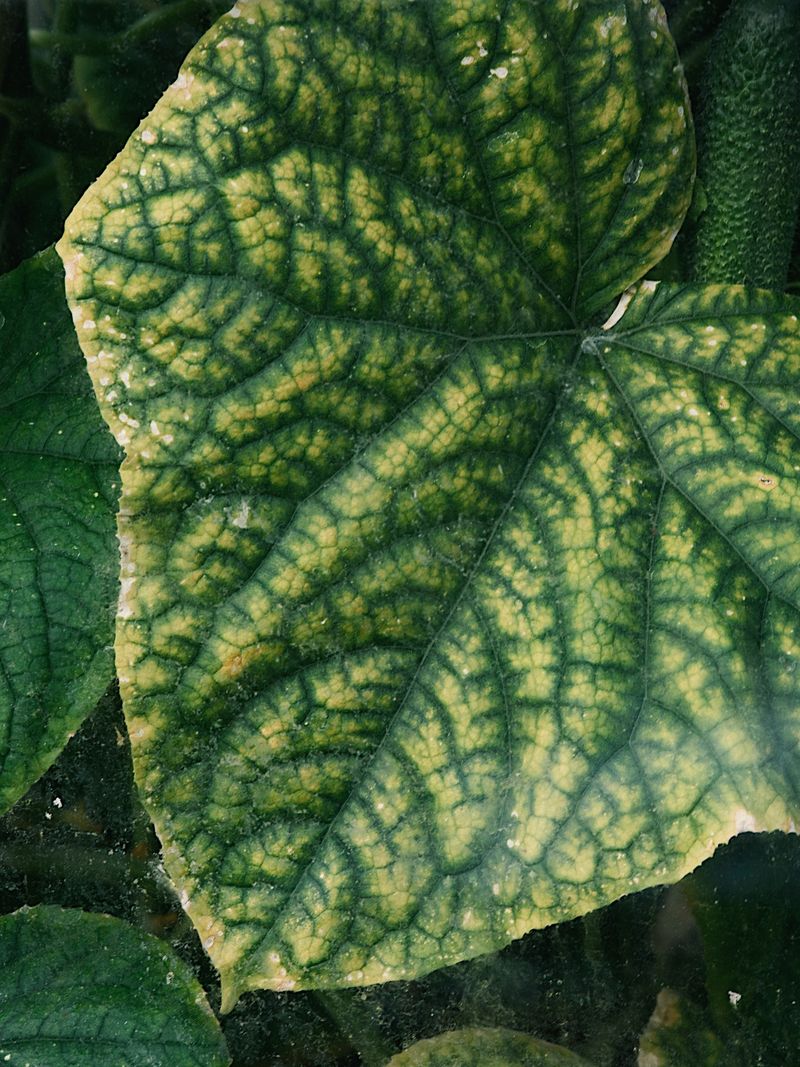
Yellow, brown-edged, wilted, or crispy cucumber foliage during late summer is a symptom, not a self-explanatory diagnosis. Hot, dry weather does make water stress worth investigating first, but the leaf color alone cannot tell you what caused it.
Before reaching for the hose or a bag of fertilizer, spend a minute checking what is actually happening in the root zone.
Surface soil dries out fast in summer heat and can look bone-dry even when moisture still sits a few inches down where the roots actually feed. Push a finger or a thin trowel blade several inches into the soil near the base of the plant.
Oklahoma State Extension advises watering when soil is dry about 2 to 4 inches deep or when cucumbers remain wilted in the morning, making that subsurface check far more reliable than a glance at the surface.
Morning wilting carries more diagnostic weight than afternoon drooping. A plant that is still limp when temperatures are cooler is giving you a clearer signal than one that sags at two in the afternoon and bounces back by evening.
University of Minnesota’s cucumber leaf-discoloration diagnostic lists multiple possible causes for yellowing and crisping, and UMN’s cucumber growing guide reinforces that pests, diseases, and nutrient or drainage problems can all produce similar-looking foliage damage. Start with the soil check and the timing of wilting before drawing any conclusions.
Read the difference between heat wilt and water stress
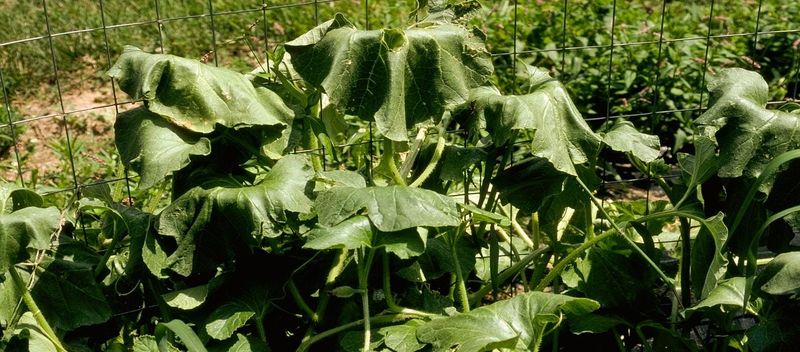
Heat stress and underwatering look remarkably similar from a distance, but they are not the same condition. On a scorching afternoon, atmospheric demand for water can temporarily outpace the plant’s ability to pull moisture up through the roots and replace what evaporates through the leaves, even when the soil holds adequate moisture.
UF/IFAS specifically warns that heat-related wilting can occur even when plants are well hydrated, so a midday slump is not reliable proof that the roots are running dry.
The key distinction is recovery and timing. A cucumber that droops noticeably between noon and four o’clock but stands back up on its own by early evening is most likely responding to atmospheric heat rather than a depleted root zone.
That plant probably does not need more water right now. One that is still limp at seven in the morning, or that fails to recover even after the sun drops, is showing a pattern that lines up more closely with genuine water stress.
Colorado State Extension notes that cucumbers may wilt during intense afternoon heat and recommends reading wilting alongside soil conditions and recent weather. CSU’s overview of water in plant growth explains the broader transpiration dynamic at play.
Put the wilting in context: check the soil, note the time of day, and watch whether the plant recovers before deciding to add water.
Water the root zone deeply and slowly
When the root zone genuinely is dry and the plant is showing persistent wilting, the goal is to move water down to where the roots are feeding, not just to wet the top inch of soil. Shallow sprinkles encourage roots to stay near the surface, which makes the plant more vulnerable every time a watering is skipped or delayed.
Deep, slow watering encourages roots to reach further down, where soil moisture tends to stay more stable between applications.
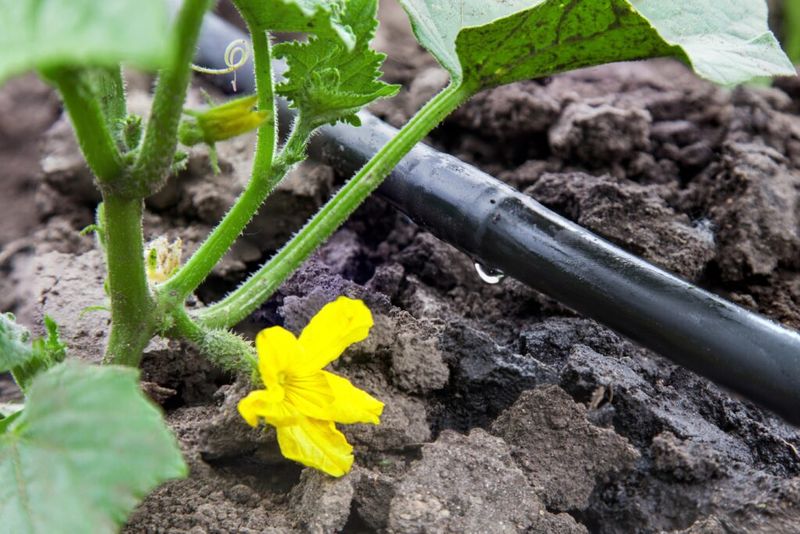
Drip irrigation or a soaker hose laid at soil level works well for this because water seeps in gradually, reducing runoff and keeping foliage dry. Careful hand watering aimed at the base of the plant is a reasonable alternative.
UF/IFAS recommends applying water at the soil surface to reduce evaporation and limit foliar wetness, and Oklahoma State Extension emphasizes watering deeply rather than frequently and shallowly so that the moisture actually penetrates the root zone.
If water pools or runs off before soaking in, split the application into two rounds with a short pause in between. Apply the first pass, let it absorb for fifteen to twenty minutes, then follow with a second round.
Utah State Extension notes that cucumbers need consistent, adequate moisture especially during fruit development, and that inconsistent watering can reduce yield and contribute to fruit quality problems. The priority is thorough penetration and consistent root-zone moisture, not a fixed number of minutes on a timer.
Adjust the water target to your garden
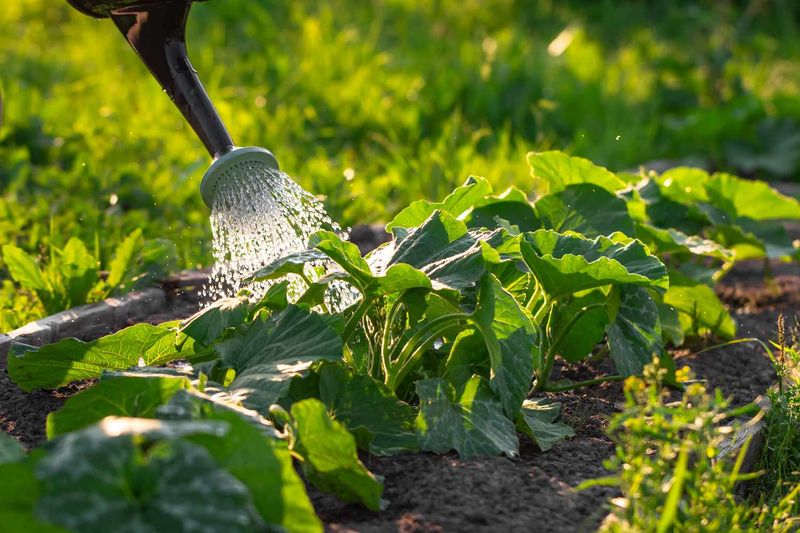
The commonly cited target of about 1 to 2 inches of water per week for cucumbers is a reasonable starting point, not a fixed prescription. Rainfall counts toward that total, so a garden that received an inch of rain midweek may need little or no supplemental irrigation for the rest of that period.
Soil type, plant size, wind exposure, crop age, and whether you are growing in containers or raised beds all pull that number in different directions.
University of Georgia Extension notes that medium and heavier soils may need roughly 1 inch weekly when rainfall falls short, while light sandy soils may benefit from two or three smaller applications of about half an inch each week because water drains through quickly and the root zone dries faster. UF/IFAS guidance on Florida vegetable irrigation reinforces that frequency should follow rainfall, crop age, and soil conditions rather than a calendar.
Florida gardeners in particular can find that a summer storm delivers more than a week’s worth of water in a single afternoon, eliminating the need for supplemental irrigation for several days.
Hot, dry Texas conditions present a different challenge. Oklahoma State’s cucumber production guide and USU’s cucumber resource both point to the need for supplemental irrigation when rainfall is insufficient, and in hot, dry regions that may mean watering more than once a week depending on conditions.
Containers and raised beds dry out more quickly than in-ground beds and may need attention every day or two during a heat spike. UF/IFAS irrigation scheduling guidance advises monitoring soil and plant response rather than sticking to a fixed interval, which holds true whether you are gardening in Houston or Orlando.
Conserve moisture without keeping leaves wet
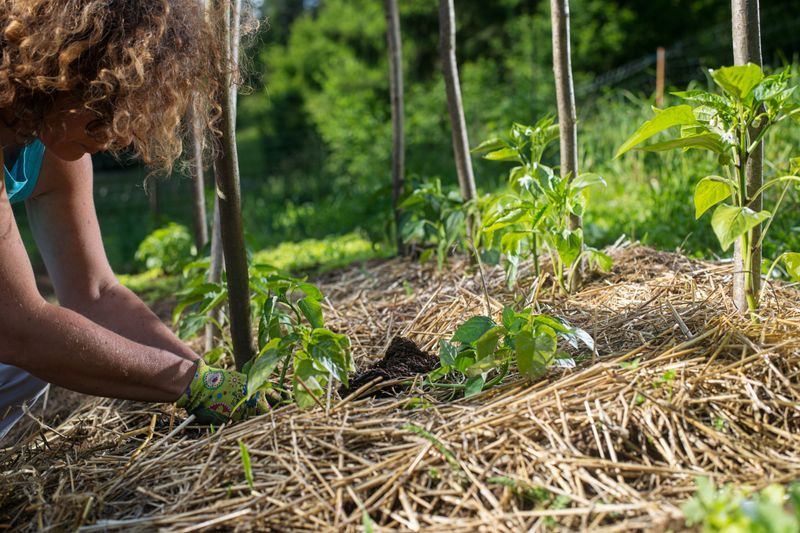
Correcting irrigation is only part of the picture. Keeping that moisture in the root zone longer reduces how often the plant cycles through stress between waterings.
A 2- to 3-inch layer of organic mulch, such as straw, wood chips, or shredded leaves, spread around the base of the plant can slow evaporation from the soil surface, moderate soil temperature during heat spikes, and cut down on weed competition that otherwise competes for moisture. UF/IFAS recommends mulching vegetable beds but cautions against piling mulch directly against the plant stem, where it can trap moisture and create conditions favorable to rot.
Keep a small gap between the mulch and the base of each plant.
Delivering water at the soil surface rather than overhead keeps foliage drier, which matters more than many gardeners realize. Wet leaves, especially overnight, create conditions that favor certain foliar diseases.
UF/IFAS irrigation guidance for cucumbers recommends soil-surface application when practical to limit foliar wetness and reduce evaporation losses.
If overhead watering with a sprinkler is the only option available, water early in the morning so the foliage has several hours of daylight to dry before nightfall. UMN’s downy mildew management resource and UMN’s home garden disease management guide both note that reducing prolonged leaf wetness and avoiding water splash can lower foliar disease risk, though neither approach eliminates it entirely.
Check for saturated soil, mites, and disease
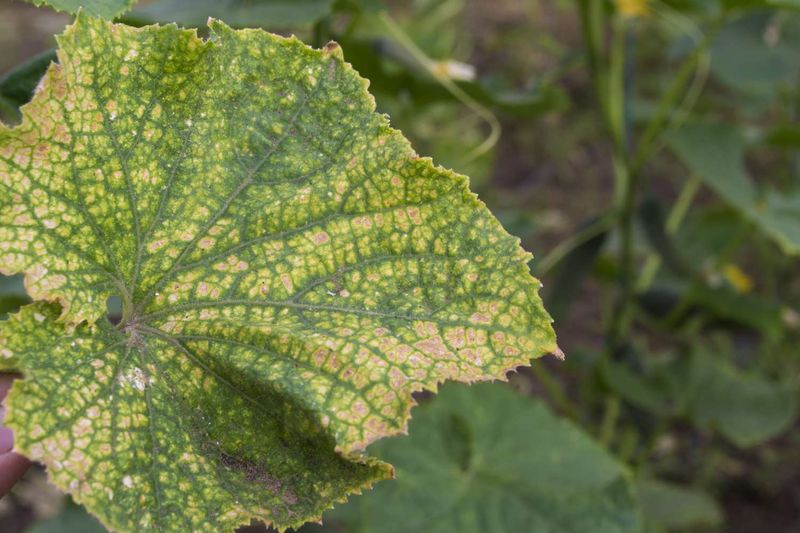
Pausing before adding more water is just as important as recognizing when to water. Saturated or poorly drained soil damages roots and limits their ability to take up water, which can cause yellowing and wilting that looks nearly identical to drought stress.
Before watering again, check whether the soil feels wet several inches down, whether water is pooling near the base of the plant, or whether the area stays soggy after rain. UF/IFAS notes that overwatering and poor drainage can injure roots and produce wilting or yellowing that mimics thirst, so adding more water to an already saturated root zone worsens rather than helps the problem.
When soil moisture is adequate and the leaves still look wrong, flip a few leaves and examine the undersides carefully. Spider mites thrive in hot, dry weather and are a common late-summer complication for cucumbers.
UMN’s heatwave pest guide identifies spider mites as more prevalent and damaging during hot, dry conditions, and UMN’s spider mite resource describes the characteristic signs: fine pale or yellow stippling on the upper leaf surface, bronzing as infestations worsen, and fine webbing on undersides of heavily affected leaves. Mite damage often begins on older leaves or the lower canopy and progresses upward.
Disease patterns look different. UMN’s downy mildew resource describes yellow lesions that may appear angular because they are bounded by leaf veins, sometimes with gray-purple fuzz on the underside.
Other diseases produce discrete spots, halos, or white powdery growth. UMN’s cucumber leaf-discoloration diagnostic tool and UMN’s cucumber growing guide both list multiple causes for discolored foliage.
These clues guide your inspection but do not replace a full diagnosis, and neither fertilizer nor a pesticide should be applied automatically without identifying what you are actually dealing with.
Protect healthy growth instead of chasing damaged leaves
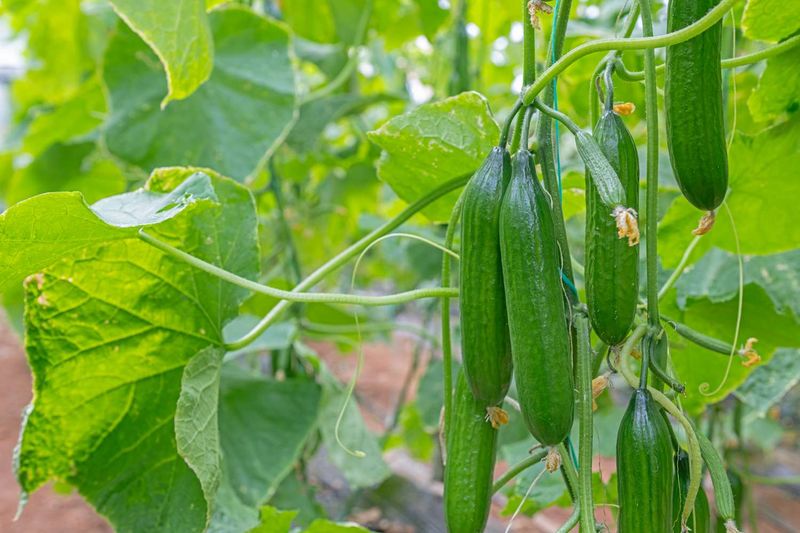
Once you have corrected the underlying condition, whether that was a dry root zone, poor drainage, or a pest problem, realistic expectations matter. Leaf tissue that has already turned brown, scorched, or crispy will not recover its green color.
Dead cells stay dead. What improved care can do is protect the newer growth that is still developing and give the plant a better foundation for the remainder of the season.
Removing clearly dead or badly diseased foliage helps reduce disease pressure and tidies the plant, but restraint is important. UMN’s home garden disease management guide recommends removing no more than one-third of a plant’s leaves at one time to avoid stressing it further.
Strip only what is clearly beyond help, and leave any foliage that is still contributing to photosynthesis.
Heat can also affect fruit set independently of water. Penn State Extension notes that temperatures above roughly 90 degrees Fahrenheit can reduce cucumber reproductive success, and Oklahoma State’s mid-to-late July horticulture tips reinforce that water stress can contribute to misshapen fruit and bitterness.
More water will not reverse flowers or fruit that have already been damaged by extreme heat or prolonged stress. The realistic goal is steadier conditions going forward so the plant can set and develop the fruit that comes next.
Use a moisture check as the practical first step
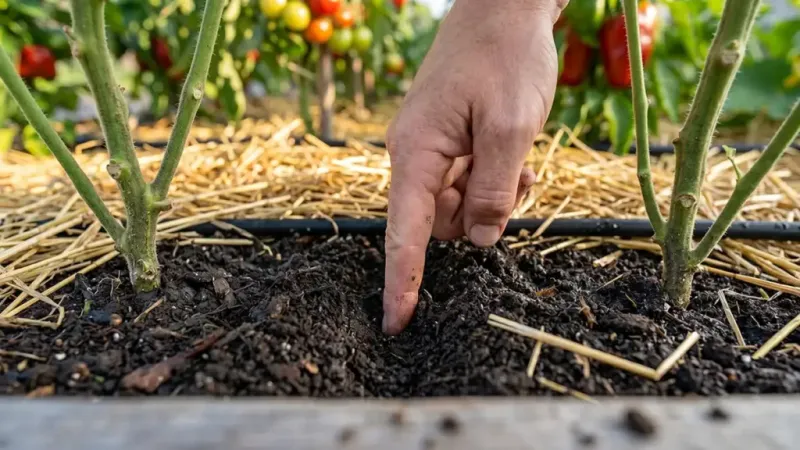
A practical first step when cucumber leaves look yellow, crispy, or wilted in late-summer heat is a moisture check several inches below the surface. Oklahoma State Extension and UF/IFAS both point to root-zone moisture and wilting timing as the most useful early indicators.
If the root zone is dry and the plant is wilted in the morning, water deeply and adjust the schedule to match your soil, rainfall, and local heat.
When soil moisture is adequate or the site drains poorly, adding water is not the answer. UMN’s cucumber leaf-discoloration tool and UMN’s heatwave pest guide point toward spider mites, disease, or other causes that require a different response entirely.
Water stress is worth checking first in late-summer heat, but it deserves to be confirmed before it is treated as the cause. Getting that one step right changes everything else that follows.