
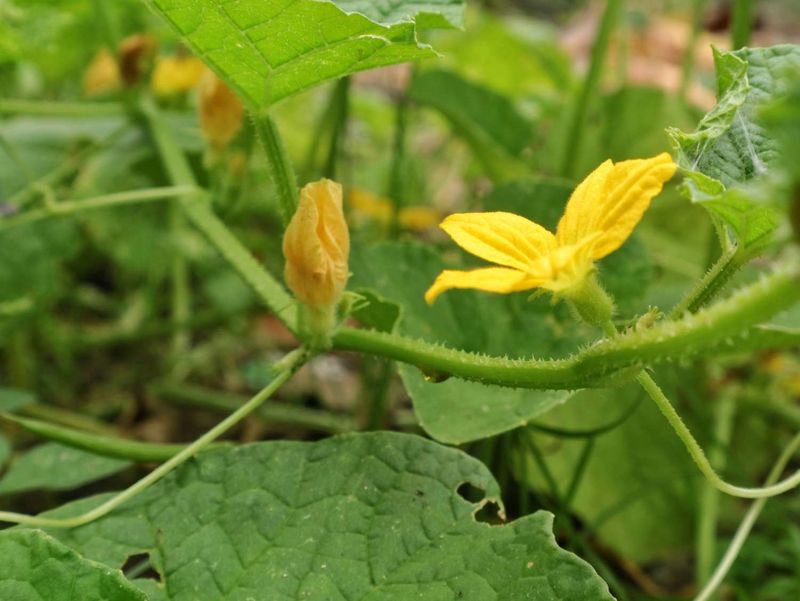
Few sights in a summer garden are more frustrating than a cucumber vine covered in bright yellow flowers that never turn into cucumbers. You water, you wait, and still nothing develops.
The good news is that this problem often has a traceable cause, and once you know what to look for, you can take real steps to fix it. Heat-related pollination trouble is one strong possibility, but the flowers themselves will tell you where to start.
Many flowers can hide a fruit-set problem
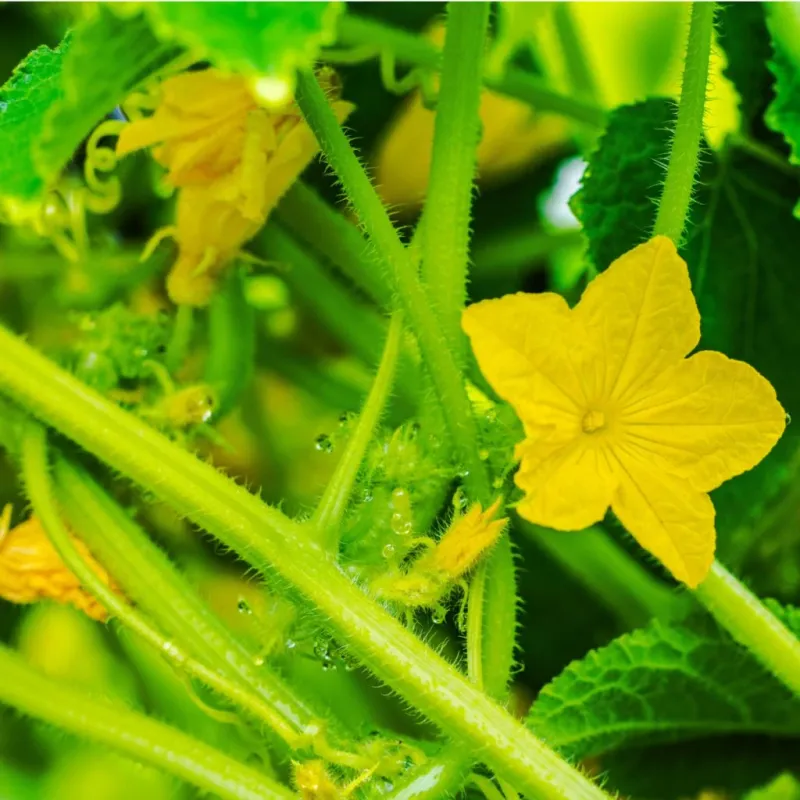
A cucumber vine loaded with yellow blossoms looks productive, but flower count alone does not tell you much. Cucumbers need pollen to move from male flowers to female flowers before any fruit can develop, and when that transfer breaks down, the vine just keeps blooming without ever setting a cucumber.
Hot weather can interfere with this process in several ways at once, including reducing the activity of bees and other pollinators, altering the ratio of male to female flowers, and causing developing flowers to drop before they ever open fully.
Before drawing any conclusions, UMN Extension guidance on growing cucumbers notes that male flowers commonly appear first and naturally fall off the vine. That alone is not a problem.
The more useful symptom to watch for is female flowers that also drop without enlarging, or female flowers that never appear in the first place.
Heat-related pollination trouble is worth investigating first, but it is not the only explanation. Water stress, cloudy or rainy weather during bloom, excessive nitrogen in the soil, disease, insect damage, and variety requirements can each produce a very similar picture.
UMN Extension research on heat and vegetable gardens confirms that very hot weather can reduce pollination, increase flower abortion, and contribute to poor or misshapen fruit. Treating heat as the likely culprit is a reasonable starting point, but the vine itself holds the evidence you need to confirm it.
Inspect the vine for female flowers first
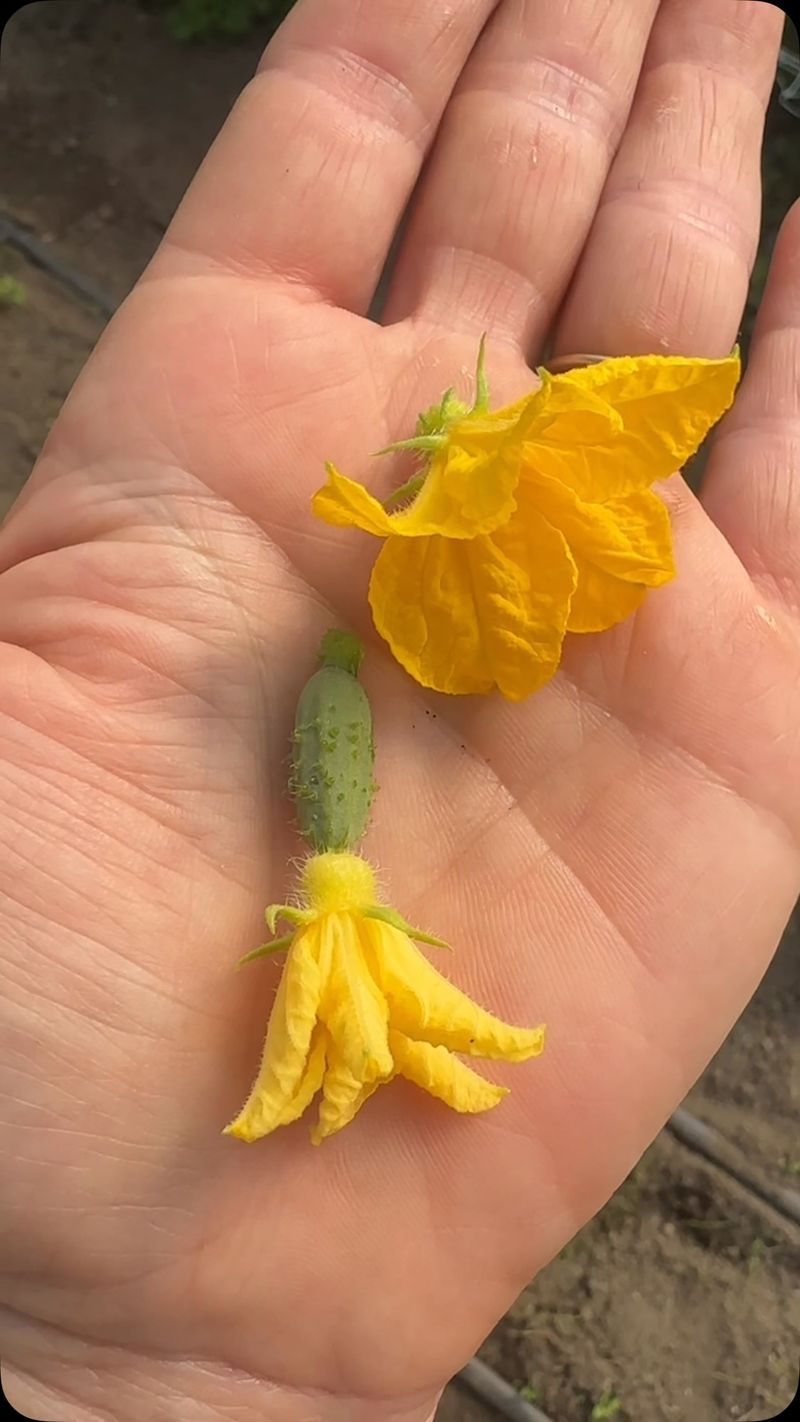
Before deciding what is wrong, spend a few minutes actually counting what kind of flowers your vine is producing. A female cucumber flower has a small swollen bump directly behind the petals that looks exactly like a miniature cucumber.
That tiny structure is the ovary, and it is the only part of the plant that can grow into a full-sized cucumber. A male flower sits on a narrow, plain stem with no swelling behind it.
UMN Extension’s cucumber growing guide explains that male flowers commonly appear earlier in the season and naturally fall from the vine without any intervention. Seeing dropped flowers on the ground is not automatically a sign of trouble.
The question that matters is whether female flowers are present, and if they are, whether the tiny ovary behind each one begins to swell and enlarge after the flower opens.
A vine producing mostly male flowers requires a different response than a vine producing plenty of female flowers that fail to develop. If you count the blossoms and find very few with that small cucumber-shaped bump behind them, the problem may be related to plant stress, variety biology, or environmental conditions that are suppressing female flower production rather than a simple pollination shortfall.
Getting that count right first prevents wasted effort chasing the wrong cause.
Heat can disrupt several steps before fruit develops
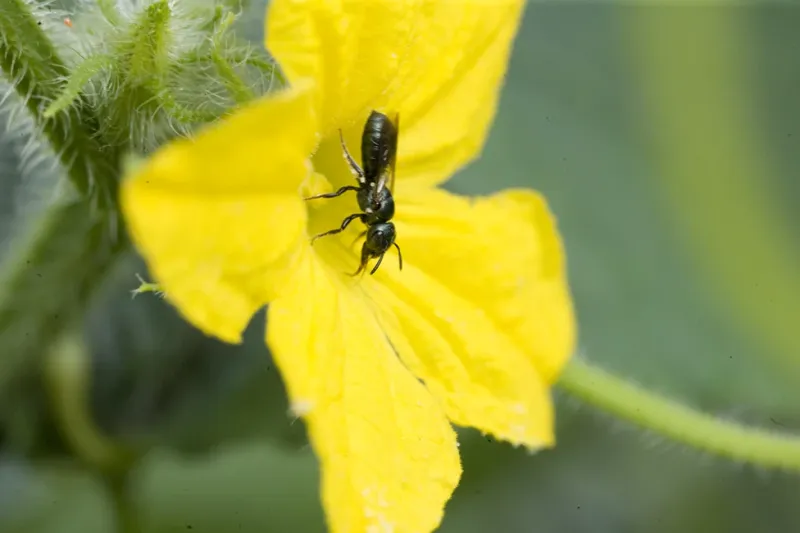
Cucumber flowers are only open and receptive for a limited window, which makes the timing of pollen transfer critical. When afternoon temperatures climb into the upper 80s and beyond, that window can become a problem.
Bees and other native pollinators tend to reduce their foraging activity during the hottest parts of the day, which means fewer visits to flowers precisely when the heat is most intense. Extension guidance from UMN identifies roughly 90 degrees Fahrenheit as a practical heat-stress indicator for vegetable crops, though this should not be read as a hard cutoff that applies equally to every cucumber variety, every location, or every set of growing conditions.
UMN Extension’s heat and vegetable garden research notes that very hot weather can reduce pollinator activity, increase flower abortion, alter flower production patterns, and contribute to poor or misshapen fruit. How a specific plant responds depends on how long the heat lasts, what nighttime temperatures look like, humidity levels, available soil moisture, and the particular cultivar.
UGA Cooperative Extension’s pollination guide reinforces that cucumber flowers have a limited period of receptivity, making any disruption to pollinator timing especially costly.
Research from UF/IFAS on cucurbit crop pollination, which focuses primarily on squash and pumpkins, indicates that high temperature combined with humidity can reduce pollinator visitation and pollen viability in closely related cucurbit crops. Those findings are useful context for cucumbers, but they are not cucumber-specific field evidence.
Taking them as supporting information rather than a definitive cucumber diagnosis keeps the investigation honest.
Hand-pollinate when fresh female flowers are present
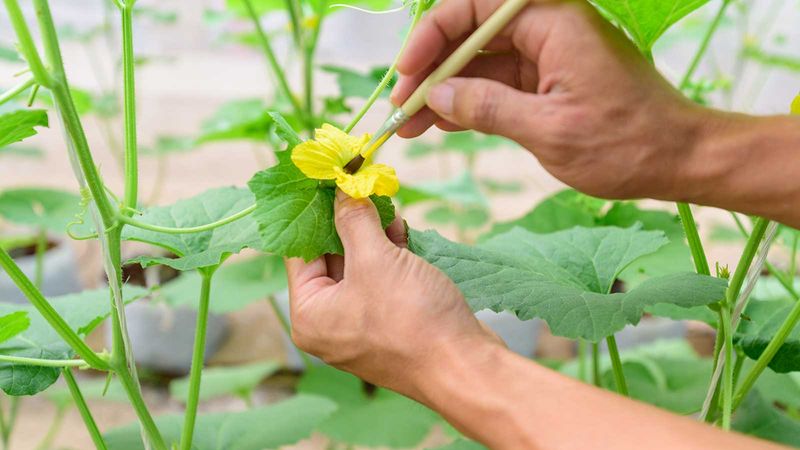
When female flowers are present but bee activity seems low or unreliable, hand-pollination gives you a direct way to test whether pollen transfer is the bottleneck. The best time to work is early morning, while flowers are freshly open and both pollen and stigmas are at their most receptive.
Waiting until midday often means working with flowers that are already closing or past their peak.
The process is straightforward. Select a fresh male flower, the one on the narrow plain stem with no swelling behind it, and use a soft artist’s brush or a cotton swab to collect the yellow pollen from the central anther.
Then carry that pollen directly to the sticky central stigma inside a fresh female flower. Texas A&M AgriLife Extension’s cucumber guide recommends this method as a practical home-garden response when natural pollination is unreliable.
Watch the treated female flowers over the next day or two. If the tiny ovary behind the petals begins to swell and elongate, that is strong evidence that pollen transfer was indeed the limiting factor.
If nothing changes, or if the flower drops anyway, the problem likely runs deeper. Hand-pollination cannot correct a vine that is producing no female flowers at all, and it will not overcome severe disease, widespread insect damage, or chronic water and root stress.
UGA Extension’s vegetable crop pollination guidance confirms that flower receptivity timing is a key factor, so morning application consistently gives the best chance of success.
Keep moisture steady through the heat
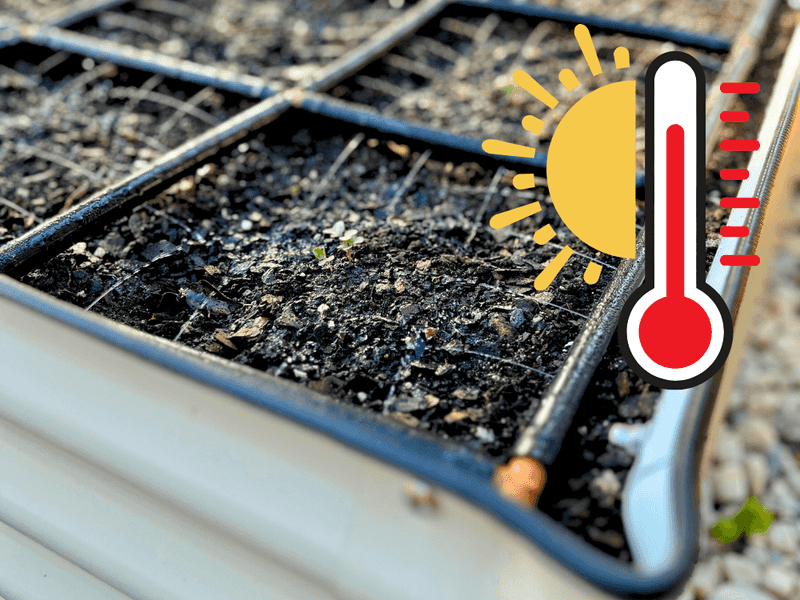
Water stress and heat stress often arrive together in Southern gardens, and their combined effect on fruit set can be severe. When cucumber roots run dry during the flowering window, the plant may respond by aborting flowers and small developing fruit as a survival strategy.
UMN Extension’s vegetable irrigation guidance recommends deep, consistent watering at the root zone rather than frequent light sprinkling that barely penetrates the soil surface.
Shallow watering encourages roots to stay near the surface, where they are most exposed to heat fluctuations. Routine overhead watering during the flowering window can also interfere with bee activity and leave foliage wet in ways that invite fungal disease.
The goal is steady soil moisture several inches down, which supports consistent plant function through the hottest stretches of the season.
Mulch is one of the most practical tools for maintaining that moisture. UMN Extension’s mulching research confirms that organic mulch lowers peak soil temperatures and improves the soil’s ability to hold water between irrigation cycles.
Apply a layer of straw, shredded leaves, or wood chips around the base of the vine, but keep it pulled slightly away from the main stem. Mulch piled against the crown can trap excess moisture and create conditions that favor crown rot and other disease problems.
Protect insects during the flowering window
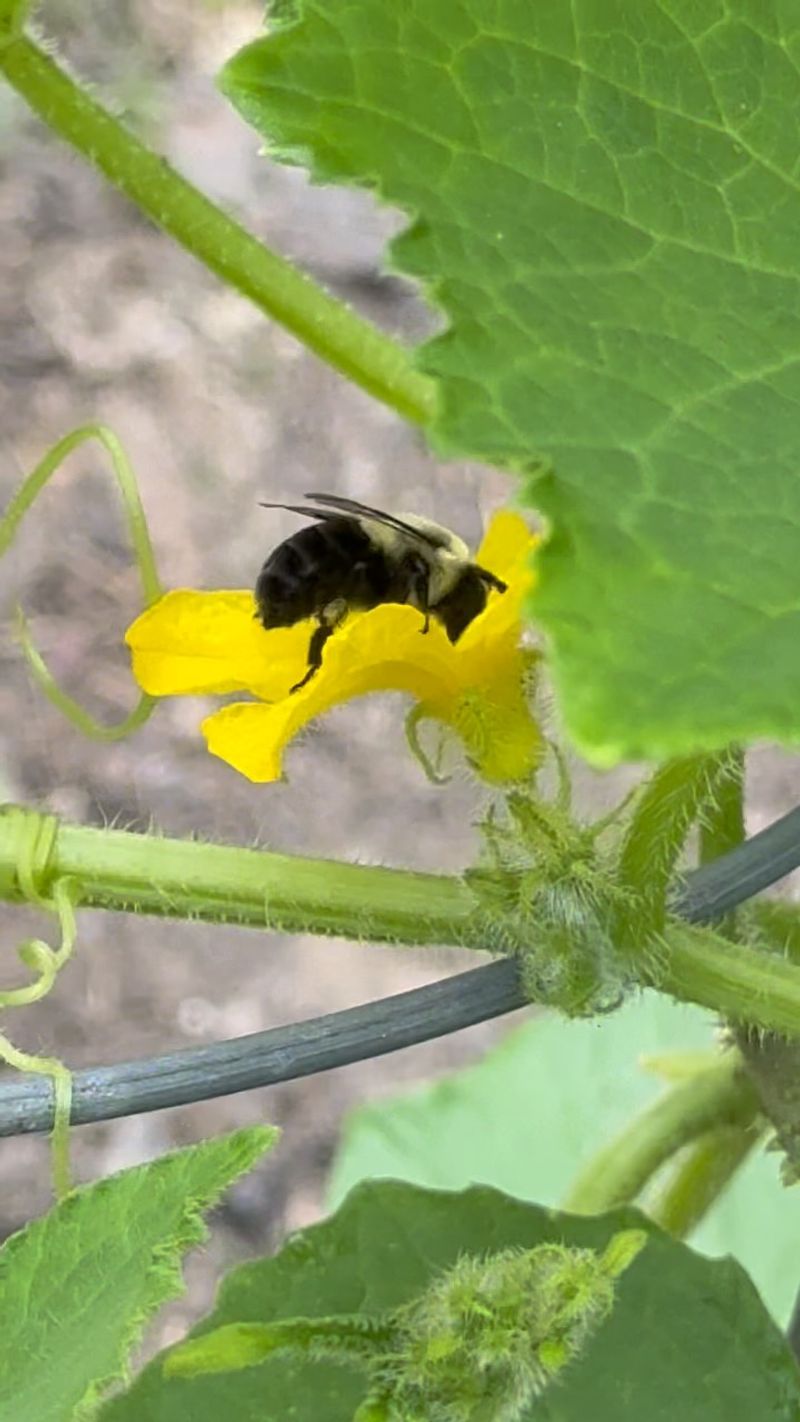
Natural pollination depends on insects having reliable access to your flowers at the right time, and two common garden habits can quietly cut that access off. Row covers are useful for pest control and temperature management early in the season, but once flowers appear, a cover that stays in place acts as a physical barrier between your blossoms and every bee flying past.
UMN Extension’s growing guide for cucumbers recommends removing row covers once flowering begins, unless you are growing a parthenocarpic variety that sets fruit without pollination or you are committed to hand-pollinating every female flower yourself.
Pesticide timing is the other major factor. Insecticides applied to flowering plants or to blooming weeds nearby can injure or kill the bees and native pollinators your cucumber flowers depend on.
EPA guidance on pollinator protection directs gardeners to avoid unnecessary applications during bloom and to follow every product label carefully, including any bee-protection restrictions listed on the label.
Protecting insect access during the flowering window does not guarantee fruit set on its own. If heat, moisture stress, or female flower scarcity is the primary problem, better bee access will not fully solve it.
However, removing preventable barriers to natural pollination is a low-cost step that costs nothing to try and removes one variable from an already complicated picture.
Check the cucumber type before blaming pollination
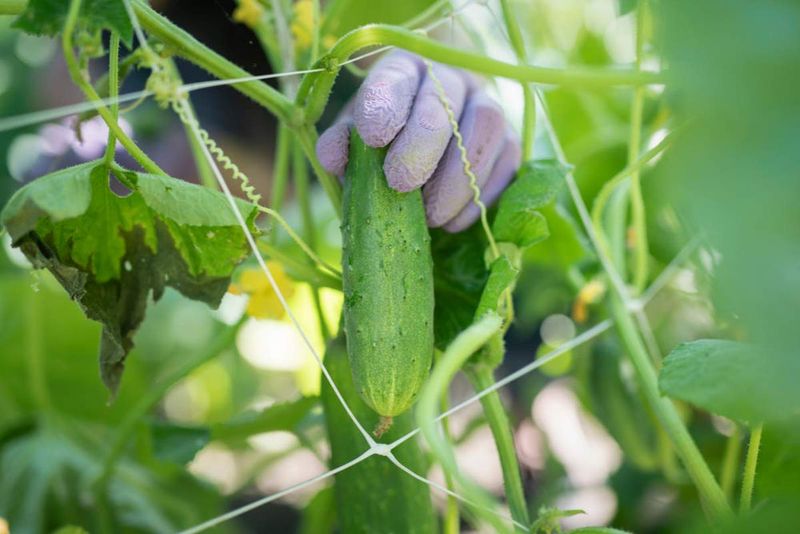
Not all cucumbers behave the same way when it comes to pollination, and the variety you planted can change the entire diagnosis. Parthenocarpic cucumbers, often sold as seedless or greenhouse types, can set fruit without any pollination at all.
If you are growing one of these and your fruit set is poor, a lack of bees is probably not the explanation, and hand-pollination will not help either. UMN Extension’s guide to pollination requirements clarifies that standard field cucumbers generally require insect pollination, while parthenocarpic varieties do not.
Gynoecious varieties present a different situation. These plants produce mostly or entirely female flowers, which sounds ideal until you realize they need pollen from a compatible male-flowering variety nearby.
Without a pollenizer plant in range, even a gynoecious vine covered in female flowers may set little or no fruit. Check the seed packet or variety description to see whether a pollenizer is listed as a requirement.
Fertilizer history deserves a look as well. Excess nitrogen pushes a plant toward lush, leafy vine growth at the expense of flower retention and fruit development.
UMN Extension heat stress guidance identifies excessive fertility as a recognized contributor to poor flowering and fruit production in cucurbits. Rather than adding more fertilizer by guesswork, pull your application records and consider a soil test before making any changes.
A test tells you what the soil actually needs instead of what you might assume it lacks.
Use the next flowers to choose the next step
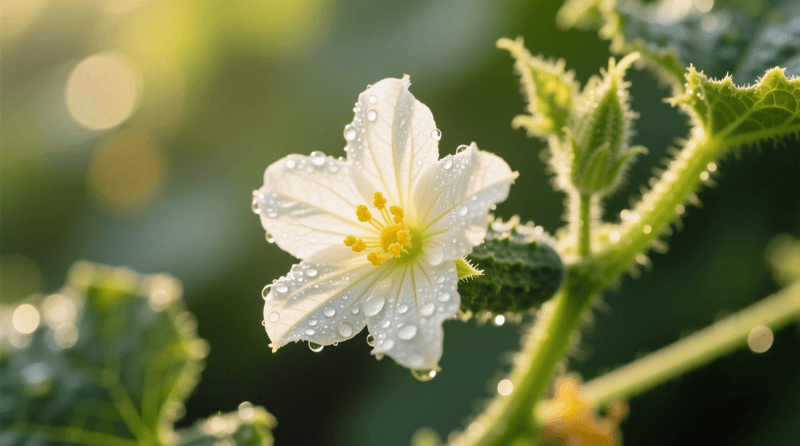
The next round of flowers your vine produces is also your best diagnostic tool. Start by confirming that female flowers are present, then observe whether those fresh female flowers receive pollen and whether the small ovary behind each one begins to swell within a day or two.
Make sure the plant has steady root-zone moisture and that pollinators have unobstructed access during this window.
Improvement after hand-pollination points toward a pollen-transfer problem that heat, reduced bee activity, or both may have caused. Absent female flowers, persistent wilting, visible disease symptoms, heavy insect damage, or continuing flower abortion after hand-pollination all call for broader troubleshooting that goes beyond pollination.
UMN Extension’s cucumber guide and UMN heat stress research both reinforce that heat can contribute to fruit-set failure, but the plant’s own flowers and symptoms provide the clearest evidence of where the real problem lies. A vine that responds to better pollination and steady moisture is one you can keep working with; a vine showing signs of disease or root failure needs a different kind of attention entirely.