
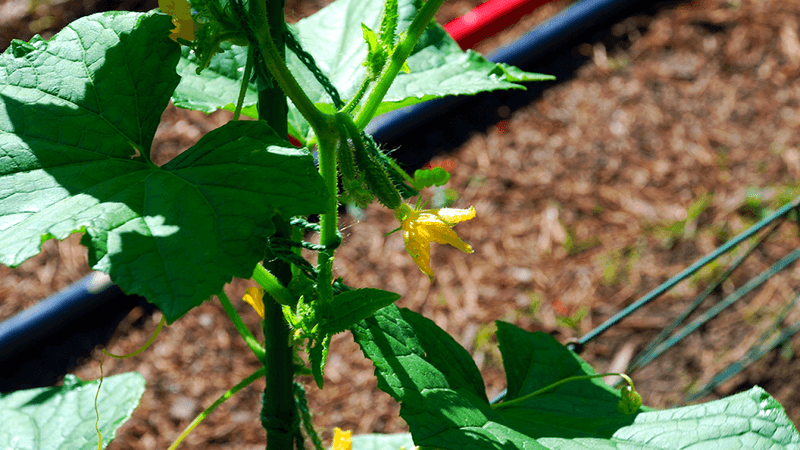
Your cucumber vines are loaded with flowers, but the fruit just isn’t showing up. Before you pull the plants or start guessing at fixes, a closer look at how cucumbers actually make fruit can point you toward the real problem fast.
For Southern gardeners in Florida and Texas dealing with August heat, inadequate pollination is one of the first things worth checking on a standard outdoor cucumber vine with female flowers but little fruit. That said, heat stress, water problems, and a handful of other culprits can produce the exact same symptom, so a quick inspection beats a rushed fix every time.
Start by confirming that female flowers are present
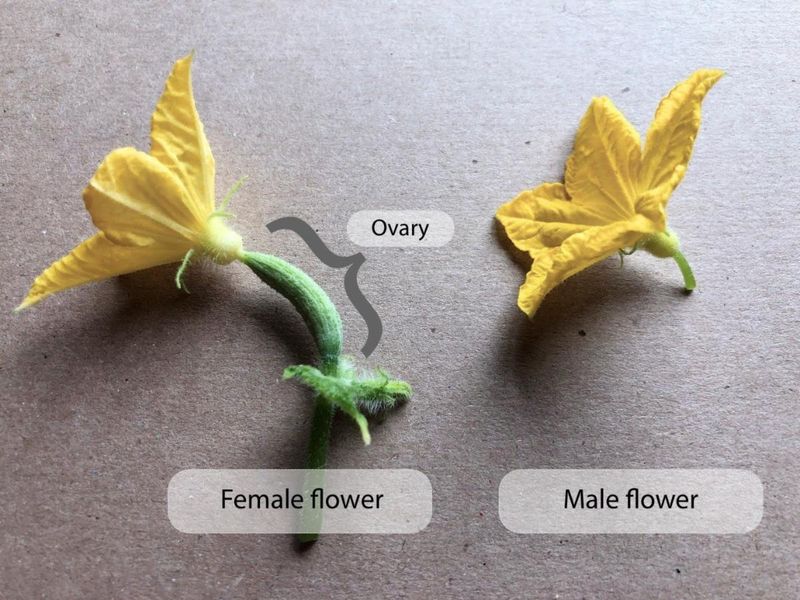
Before blaming pollinators, spend a few minutes looking at the actual flowers on your vine. Pick several freshly opened blossoms and check what sits directly behind each one.
A female cucumber flower carries a small, cucumber-shaped swelling right at its base, a miniature fruit waiting to develop if pollination goes well. A male flower grows on a narrow, plain stem with no swelling or miniature fruit at its base whatsoever.
This distinction matters more than most gardeners realize. NDSU Extension guidance on vegetable garden pollination points out that many cucumber varieties produce mostly male flowers during the first few weeks of flowering, with female flowers arriving later.
A vine covered in male blooms is not necessarily failing; it may simply be following a normal developmental pattern for that variety.
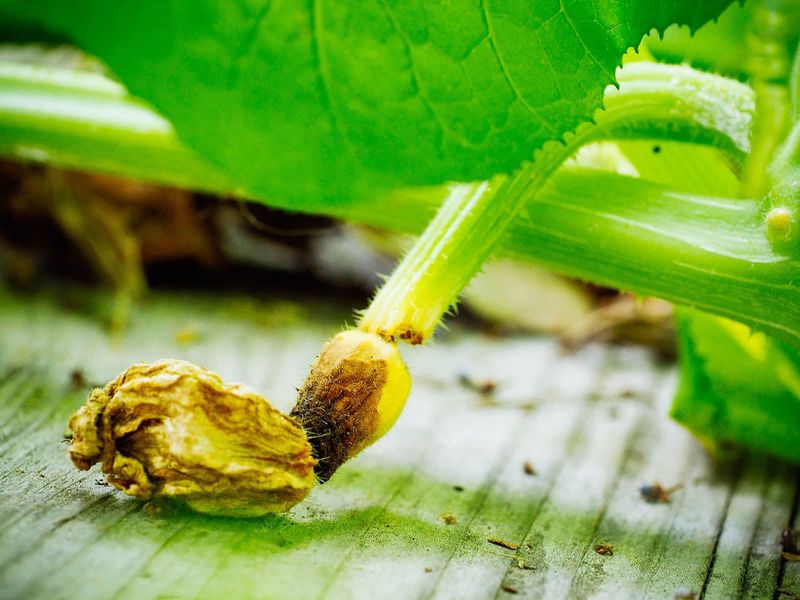
The more useful question to ask is whether female flowers are actually present and, if so, whether their tiny ovaries begin to enlarge after the bloom opens. If the ovary stays small, yellows, and shrivels rather than swelling into a young cucumber, that is a meaningful clue.
Purdue Extension’s cucumber production guide confirms that a vine with only male flowers early in its life is behaving normally, not signaling a pollinator crisis.
Save your diagnosis for vines that clearly show female flowers failing to develop.
Heat can disrupt pollination and fruit set in several ways
Standard field-grown cucumbers have separate male and female flowers on the same plant and rely primarily on bees to move pollen between them. Penn State Extension’s cucumber pollination research documented honey bees as the most abundant visitors to cucumber flowers in one Pennsylvania field study, while also recording bumble bees, flies, and other insects contributing to the work.
When heat climbs, that pollinator activity can drop off sharply during the hottest hours of the day, leaving female flowers open with no pollen transfer happening.
Hot conditions affect the plant itself, not just the bees. High temperatures can reduce pollen viability or impair a plant’s reproductive performance directly.
Penn State’s high-tunnel cucumber guide cites temperatures above roughly 90 degrees F as a point where reproductive failure and declining fruit set can occur, though the exact response depends on the cultivar, how long the heat persists, nighttime temperatures, and soil moisture. These are useful reference points, not guaranteed backyard cutoffs.
Texas A&M gardening guidance specifically lists hot temperatures and pollen damage as reasons cucumbers in Texas may flower without setting fruit. The visible results can include a female flower that dries and drops without developing, a tiny cucumber that shrivels within a day or two, or fruit that grows unevenly.
Use actual temperature readings and plant symptoms to make your diagnosis rather than the calendar month alone.
Use morning hand-pollination as a practical test
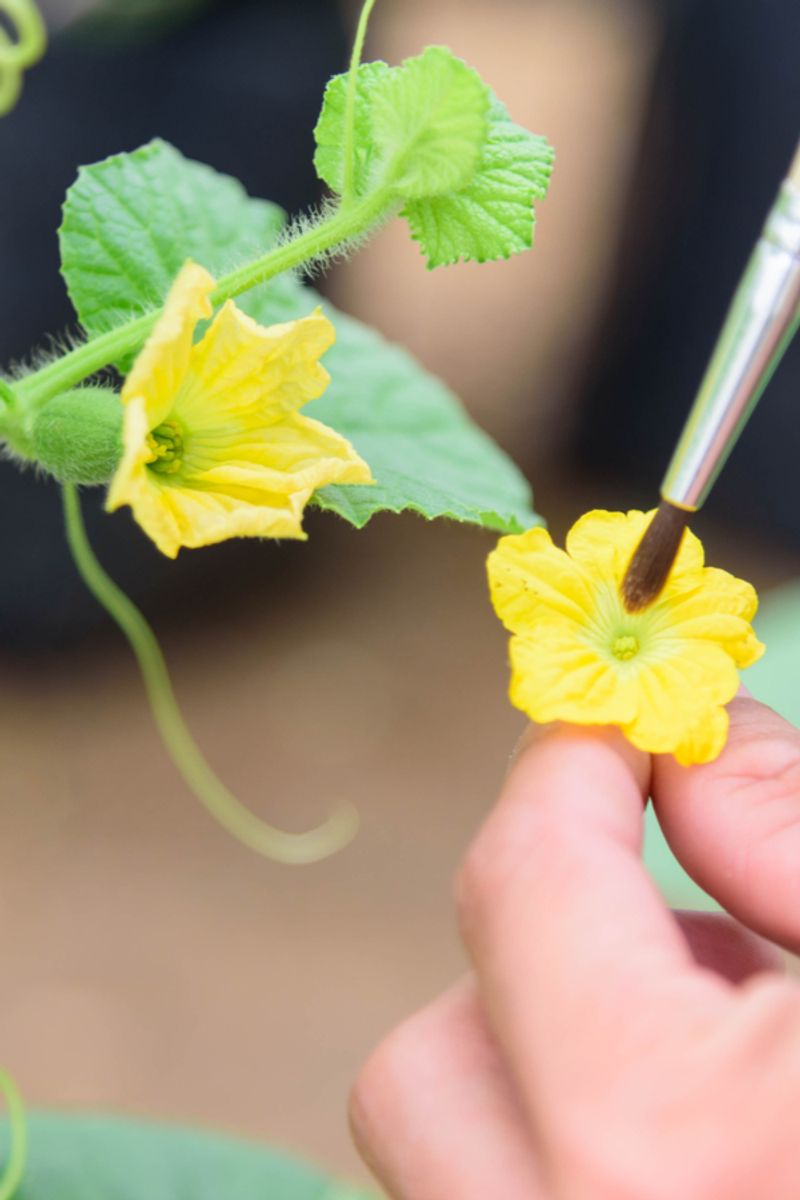
When female flowers are opening but very few pollinators seem to be visiting, morning hand-pollination gives you both a short-term rescue attempt and a useful diagnostic. UF/IFAS pollination guidance recommends working with freshly opened blooms, ideally in the morning when flowers are at their most receptive and pollen is fresh.
Cucumber flowers open shortly after sunrise and stay receptive for a limited window, so earlier in the day is consistently better than waiting until afternoon.
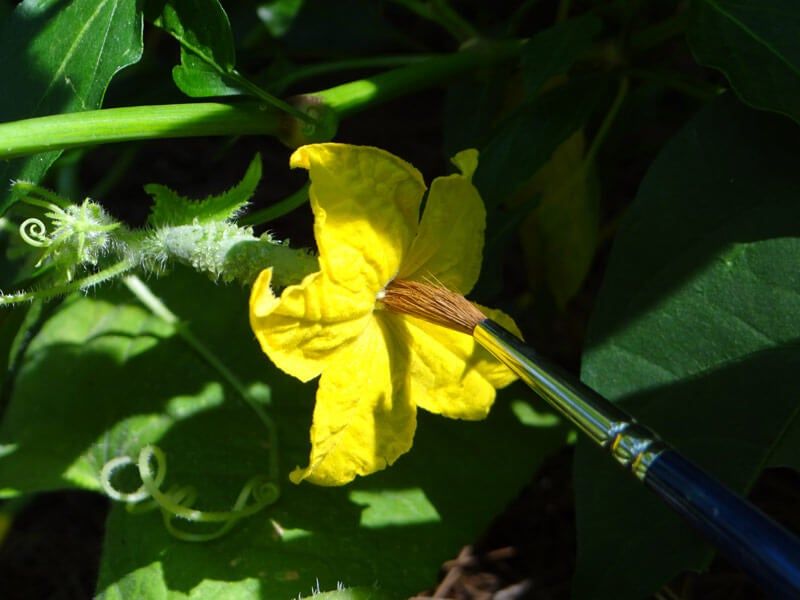
The process is straightforward. Locate a newly opened male flower and use a small, clean, soft paintbrush to collect the yellow pollen from its center.
Then gently brush that pollen onto the stigma, the central structure inside an open female flower. NDSU Extension and University of Georgia Extension both support this brush-transfer method as more reliable than shaking the vine, which does not work the same way for cucumbers as it does for tomatoes since the flowers are structurally separate.
Treat at least four or five female flowers rather than just one so the result tells you something meaningful. After pollinating, watch the tiny ovary behind each treated flower over the next two to three days.
An ovary that begins to swell and lengthen suggests pollination succeeded. One that yellows and shrivels points toward continued failure, whether from heat, pollen quality, or another stress the plant is carrying.
Hand-pollination will not guarantee fruit set, but it narrows the question considerably.
Reduce heat and moisture stress while fruit develops
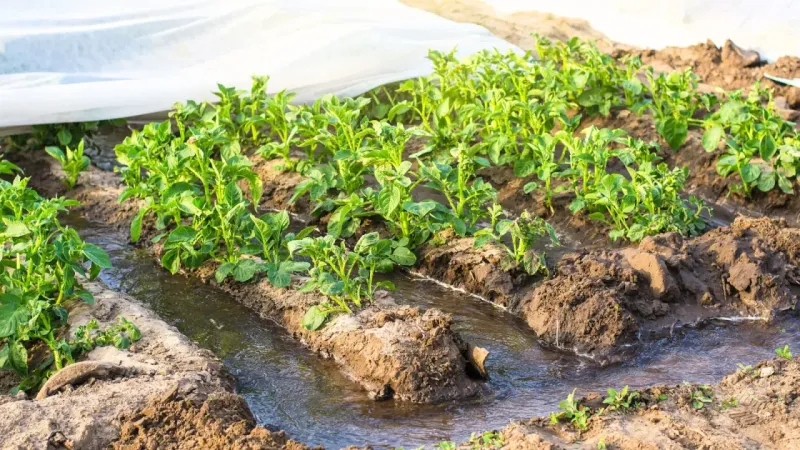
Getting pollen onto a flower is only part of the equation. A young cucumber that has been successfully pollinated can still abort if the plant is under serious water or heat stress during the days that follow.
UConn Extension’s drought and heat guidance for vegetable crops identifies flowering, pollination, and fruit enlargement as especially critical periods for irrigation, noting that moisture stress during these stages raises the risk of fruit abortion and misshapen development.
Consistent soil moisture, without keeping the root zone waterlogged, is the practical target. Uneven watering, where the soil swings from dry to soggy, can contribute to fruit problems even when bees visit reliably.
UF/IFAS cucumber production information for Florida supports steady moisture as a key management step during the warm season, and Penn State’s high-tunnel guide connects water stress directly to fruit quality problems under heat.
Regular harvesting belongs in the same conversation. Colorado State Extension guidance on cucumbers notes that large, overmature fruits left on the vine can slow or stop additional fruit set by keeping the plant focused on seeds already developing.
Picking cucumbers at usable size every two to three days removes that brake and keeps the plant in productive mode.
Think of consistent watering and regular harvesting as ways to remove common late-season stresses rather than as proof that pollination caused the original problem.
Check the variety before changing the pollination strategy
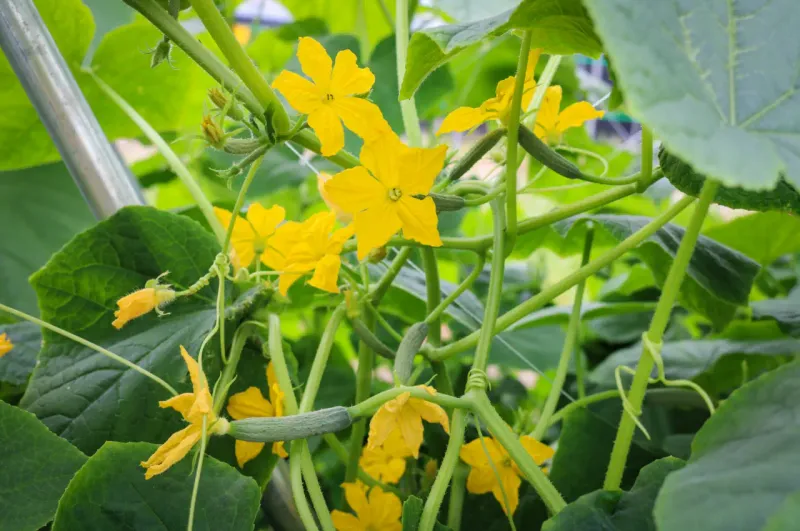
Not every cucumber on the market needs a bee to produce fruit. Parthenocarpic varieties are bred to set fruit without pollination and are commonly recommended for greenhouses, high tunnels, containers, or any protected growing space where pollinators have limited access.
University of Minnesota Extension’s pollination requirements guide explains that parthenocarpic cucumbers do not need insect pollination, and that hand-pollinating them can actually result in seeded, distorted, or lower-quality fruit rather than improving the harvest.
If your seed packet or variety tag shows a parthenocarpic type and your fruit set is poor, the cause almost certainly lies elsewhere, such as heat, water stress, or disease, rather than a shortage of bees. UF/IFAS cucumber production guidance and Iowa State Extension’s home cucumber guide both support checking variety type before adjusting your pollination approach.
Gynoecious varieties add another layer of nuance. These plants produce mostly or only female flowers, which sounds like an advantage for fruit production, but gynoecious does not automatically mean the plant sets fruit without pollen.
Penn State Extension and Oklahoma State Extension’s cucumber production fact sheet both clarify that some gynoecious plants require pollen from a compatible monoecious pollinator variety planted nearby, while gynoecious-parthenocarpic types do not.
Read the seed packet carefully before assuming your garden’s setup is correct for the variety you planted.
Keep pollinators reaching the flowers
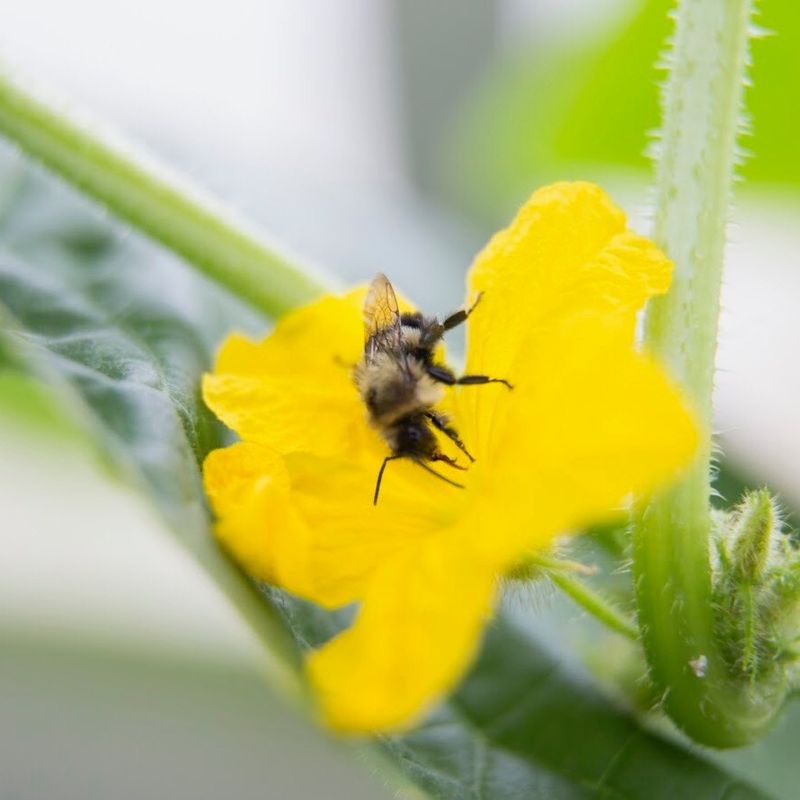
Hand-pollination works as a short-term fix, but supporting natural pollinator visits is a more sustainable approach for the rest of the season. Planting a few flowering herbs or native annuals near the cucumber bed gives bees and other beneficial insects a reason to stay in the area and visit more frequently.
Reducing or eliminating unnecessary pesticide applications during bloom is equally important.
NC State Extension’s cucurbit insect management guidance advises growers to avoid broad-spectrum insecticide applications during flowering whenever possible. If a pest problem genuinely requires treatment, University of Illinois Extension and Cornell Cooperative Extension both stress following the product label and using all available pollinator-protection precautions.
Evening application can reduce the chance of bees being directly contacted while foraging, but it does not guarantee safety because some products leave residues on flowers and foliage that remain hazardous the following morning.
Row covers and insect netting are popular tools for blocking cucumber beetles, and University of Wisconsin Extension’s cucumber beetle guidance supports their use for pest management. For conventional cucumbers, though, the cover must be removed during bloom or pollinators must have another route to the flowers.
University of Maryland Extension’s pollination resource notes that parthenocarpic varieties are the exception since they can remain covered because they do not need insect visits to set fruit.
Investigate other causes when flowers still abort
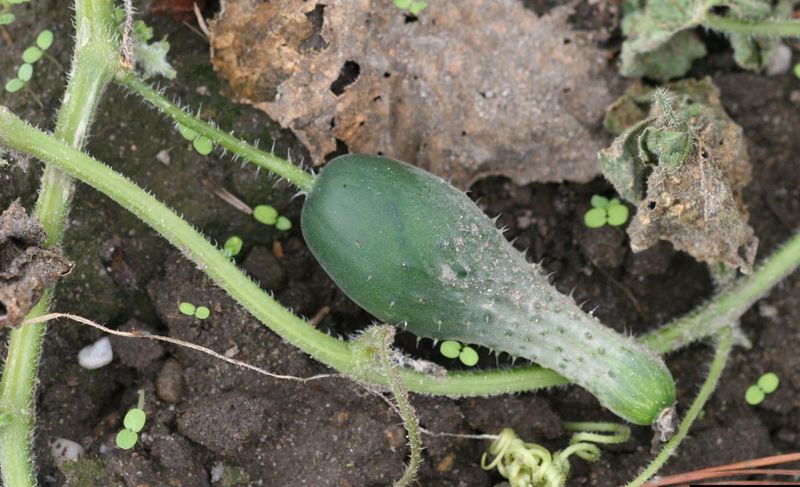
Persistent flower drop or tiny fruit that keeps shriveling after you have already checked for female flowers and tried hand-pollination points toward something beyond a simple pollinator shortage. University of Kentucky Extension’s flower drop and fruit abortion resource lists extreme heat, water stress, excessive fruit load, low light, and relatively high nitrogen fertility among the possible causes in cucumber production, and these possibilities apply to outdoor gardens as well as protected ones.
Heat and pollination problems can overlap in ways that make diagnosis harder. A plant may show what looks like pollination failure even when bees are present, because high temperatures have already damaged pollen or impaired the plant’s ability to support fruit development.
Penn State Extension connects direct heat injury to reduced fruit set, which means fixing pollinator access alone will not solve the problem if the plant itself is heat-stressed.
Resist the urge to add extra fertilizer, especially nitrogen, as an automatic response to poor fruit set. Excess nitrogen tends to push leafy growth at the expense of flowering and fruiting rather than solving the underlying problem.
UF/IFAS Florida cucumber guidance supports fertilizing based on actual soil conditions rather than treating failed fruit set with unneeded nutrients.
Also avoid treating a curved or misshapen cucumber as conclusive proof of poor pollination; moisture stress, mechanical interference, and disease can all distort developing fruit just as readily.
Follow a short diagnostic sequence before giving up
A simple sequence covers most situations. First, confirm that female flowers are present and watch whether their tiny ovaries enlarge or shrivel after opening.
If pollinators seem scarce, hand-pollinate several fresh blooms in the morning using a clean, soft brush, then check results over the next few days. Penn State Extension’s cucumber pollination research and UF/IFAS pollination guidance both support morning timing as most reliable for this test.
At the same time, maintain even soil moisture without saturating the root zone, harvest any oversized cucumbers already on the vine, and verify that your variety actually requires insect pollination before adjusting your approach further. UConn Extension reinforces consistent irrigation as a foundation for keeping young fruit from aborting under heat.
If fruit set remains poor after all of these steps, shift your investigation toward heat stress, watering consistency, pest pressure, and disease.
Inadequate pollination deserves an early look on any standard outdoor cucumber vine with female flowers but little fruit. Persistent failure, though, almost always has more than one factor behind it, and the garden that gets the most cucumbers is usually the one where the gardener keeps checking rather than settling on one answer too soon.