
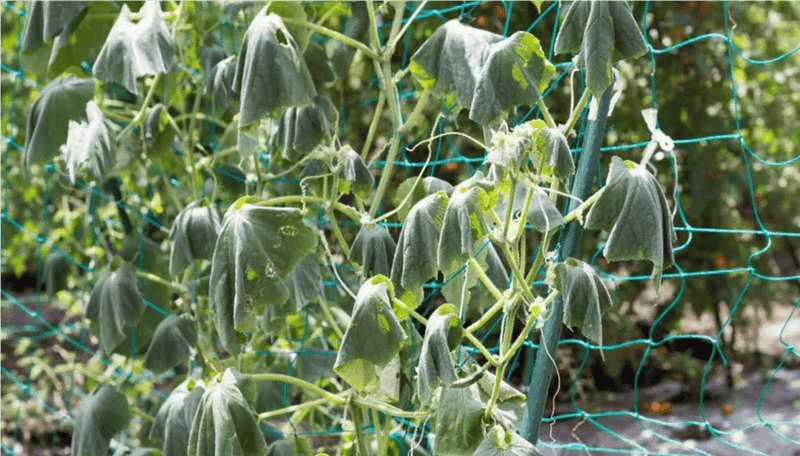
Your cucumber vines were loaded with fruit a few weeks ago, and now the whole plant seems to have shut down. Late-summer heat is a real problem for cucumbers, and warm overnight temperatures are one of the first clues worth checking when production stops.
Still, they are rarely the whole story, and a quick inspection of your flowers, soil, and growing conditions will tell you far more than a single thermometer reading. Working through the right checklist can mean the difference between pulling a healthy vine too soon and giving it the support it needs to bounce back.
Warm nights are an early clue, not a diagnosis
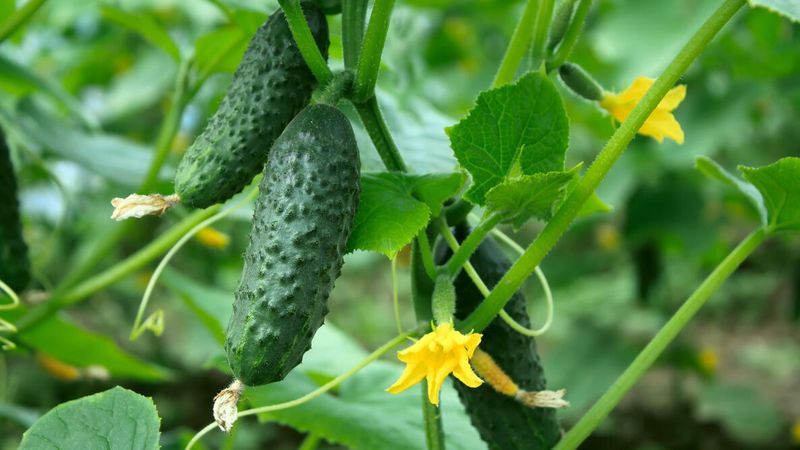
Noticing that overnight temperatures have stayed warm is a reasonable first move when cucumbers stop setting fruit, but it is one clue in a longer checklist rather than an automatic answer. Record several consecutive days of both overnight lows and daytime highs before drawing conclusions.
The pattern that raises the most concern combines nights around or above 70°F with days above roughly 90°F.
Those figures are practical warning ranges, not hard cutoffs that stop every cucumber from fruiting. University of Maryland Extension IPM guidance links high heat to reduced pollen production, poor fertilization, increased flower abortion, and shifts in flower type, while also listing poor bee activity, inconsistent moisture, excess nitrogen, pests, and disease as competing causes of fruit-set failure.
Different cultivars, microclimate conditions, and soil moisture levels can all affect where a particular plant starts to struggle.
A sudden fruiting pause during a heatwave is a signal worth taking seriously, but temperature alone rarely explains the full picture. Use the overnight low as your starting point, then move on to inspect flower type, morning pollinator activity, soil moisture, and overall plant condition before deciding what to fix.
Penn State Extension’s high-tunnel cucumber guide reinforces that fruit-set failure often involves more than one factor, and that correcting the most obvious stressor first gives the plant the best chance to recover.
Hot days and nights disrupt cucumber reproduction
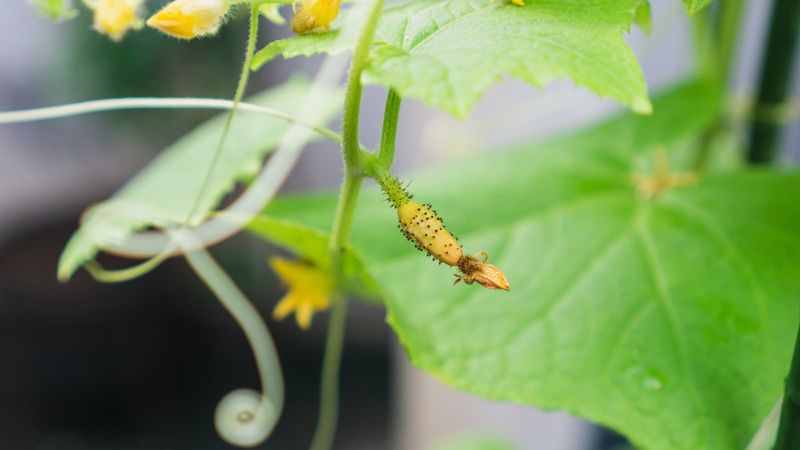
Sustained heat affects cucumber reproduction in several ways, and warm nights do not act alone. Daytime temperatures above roughly 90°F can directly reduce pollen production, lower pollen viability, interfere with fertilization after pollen lands on the stigma, and increase the rate at which small developing fruits abort before they grow to full size.
High temperatures also influence the ratio of male to female flowers. University of Maryland Extension’s pollination guide explains that heat stress can push cucumbers toward producing more male flowers while female flower production drops, which directly reduces the number of potential fruits on the vine.
Warm nights compound this by limiting the plant’s ability to recover overnight from the heat load it absorbed during the day.
Research published in a peer-reviewed study on cucumber male flower development under heat stress found significantly reduced pollen fertility and abnormal pollen development when plants were exposed to approximately 100°F days and 86°F nights. Those are more extreme conditions than most home gardens experience, so the study establishes the biological mechanism without setting a precise backyard threshold.
A separate line of research tracked in work on temperature and cucumber sex expression confirms that both temperature and day length influence which flower types a plant produces, adding another layer to why a heatwave can shift the balance. The practical takeaway is that heat affects multiple reproductive steps at once, and addressing only one of them may not be enough to restart production.
Read the flowers before blaming the weather
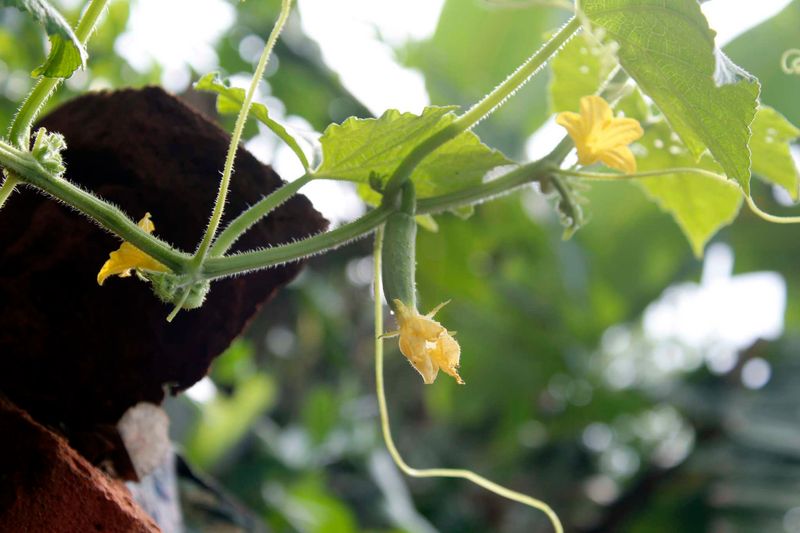
Before assuming heat is the culprit, spend five minutes actually looking at what the flowers are doing. A female cucumber flower has a small, cucumber-shaped swelling directly behind the blossom – that tiny proto-fruit is the ovary, and it is the clearest way to tell male from female at a glance.
A male flower sits on a plain, slender stem with no swelling at the base.
UGA Cooperative Extension’s cucumber production guide explains that pollinators must transfer pollen from male to female flowers for normal fruit development in most conventional varieties. If you are seeing a long run of male flowers with very few females, heat or broader plant stress may be affecting sex expression on that vine.
Research on temperature effects on cucumber flower type supports the connection between sustained high temperatures and a shift toward male-dominated flower production.
Female flowers that open and then shrivel within a day or two without enlarging are a separate problem. That pattern can point to poor pollination, heat injury to the pollen or ovary, or moisture stress, and distinguishing between those causes requires checking more than the flower itself.
UMD Extension’s pollination resource notes that dropped flowers, aborted tiny fruits, narrowed cucumbers, and misshapen fruit all call for a broader diagnostic look rather than a single-cause conclusion. Each symptom is a clue, not a verdict.
Morning pollination depends on insects and cultivar type
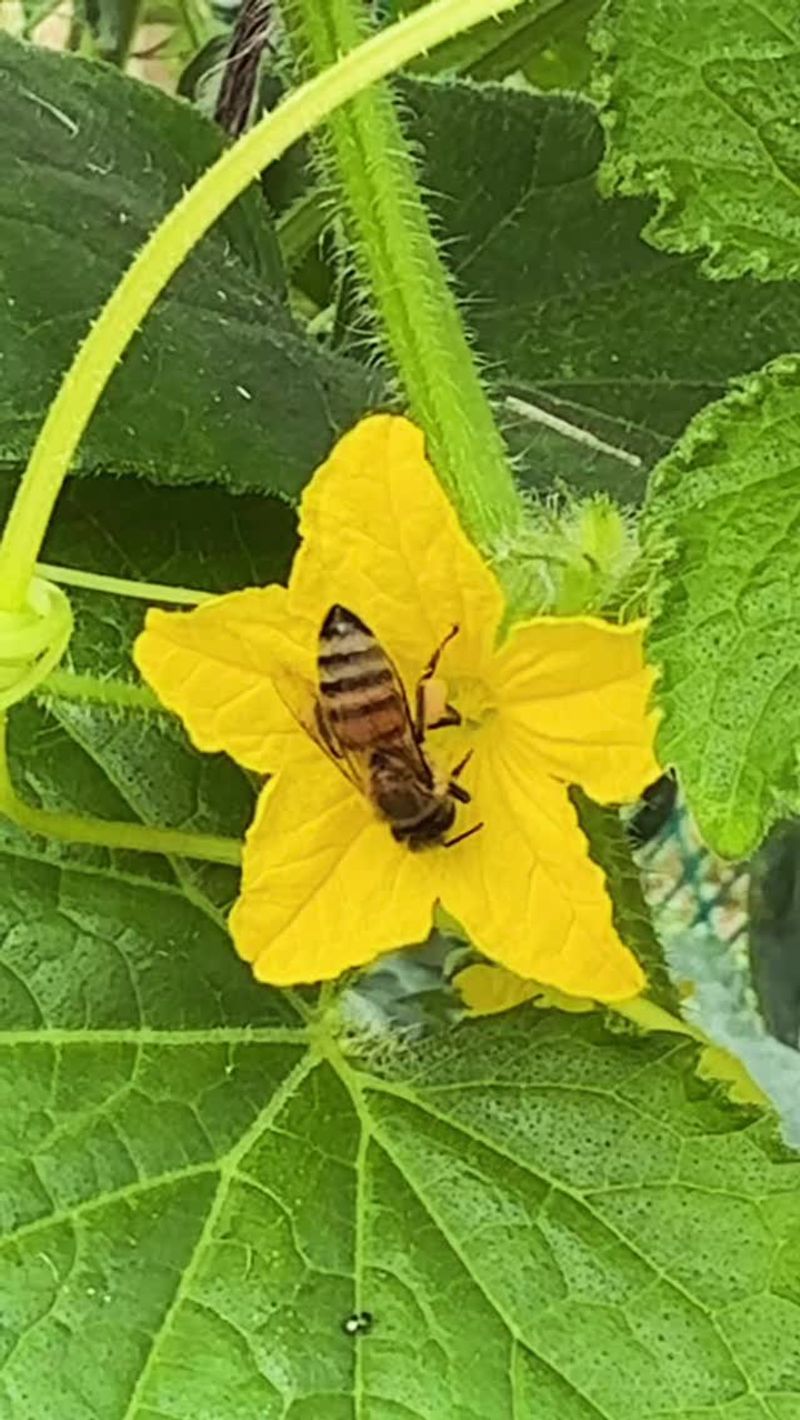
Cucumber flowers do not stay receptive all day. Most are open and ready for pollination during the morning hours, and conditions that disrupt that window – hot air, rain, wind, or a shortage of visiting insects – can reduce the number of fruits that set.
Checking your vines early in the morning gives you the most useful picture of what is actually happening at the flower.
Seeing few bees on the flowers is worth noting, but it does not confirm that heat caused the problem. Pesticide exposure, limited nearby habitat, wet or windy weather, and simple timing can all reduce pollinator visits on any given morning, regardless of temperature.
University of Minnesota Extension’s vining vegetable guide describes the pollination window and the range of factors that can interrupt it. Absent bees are a clue to investigate, not a diagnosis to act on immediately.
Cultivar type also matters more than many gardeners realize. Most conventional, monoecious cucumbers require insects to move pollen from male to female flowers.
Parthenocarpic cultivars, however, can set fruit without pollination at all – a useful trait during a heatwave when bee visits are unreliable. Penn State Extension’s cucumber pollination guide notes that gynoecious varieties, which produce mostly female flowers, may need a compatible monoecious pollinizer plant nearby unless the seed mix already includes one.
Check your seed packet or cultivar label before assuming a pollination problem exists. Hand pollination is a reasonable backup when open female flowers are present and bee visits are genuinely scarce, but it works only when viable pollen is available and the plant is otherwise healthy enough to support fruit development.
Moisture, nutrition, and disease can mimic heat stress
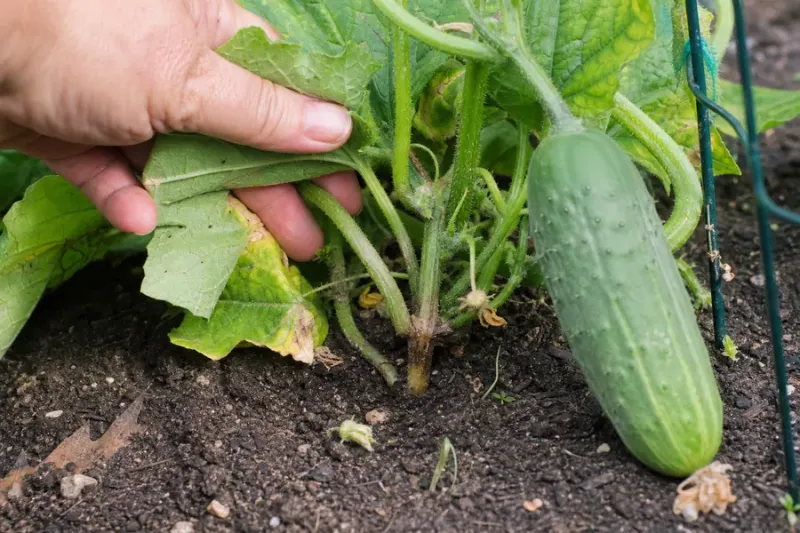
After inspecting the flowers, move down to the root zone and the rest of the plant. Inconsistent soil moisture is one of the most common reasons cucumbers abort fruit or produce oddly shaped cucumbers during hot weather, and the symptoms can look a lot like heat or pollination problems.
Pointed ends, curvature, bitterness, and rapid irregular growth are all associated with uneven watering, not just poor pollen transfer.
Poorly pollinated cucumbers tend to show reduced seed development or distorted shapes that narrow toward the blossom end, but Penn State Extension’s pollination resource cautions that other stresses – including heat, mechanical injury, viruses, and elevated boron – can produce similar deformities. Low light from heavy shade or overgrown foliage, aging vines past their productive peak, and cultivar differences can all reduce fruit set independently of temperature.
Penn State’s high-tunnel cucumber guidance lists pest pressure and disease as additional compounding factors that are easy to overlook when heat seems like the obvious explanation.
Resist the urge to add fertilizer as a first response. UF/IFAS cucumber guidance notes that excess nitrogen encourages leafy growth while delaying or reducing flower and fruit production.
Correct obvious water stress, check leaves and stems for pest damage or disease symptoms, and give the plant a few days to respond before reaching for a fertilizer bag.
Reduce heat without trapping it around flowers
Keeping soil moisture as uniform as possible is the single most important step you can take during a heatwave. Cucumbers have high water demand, and allowing the root zone to dry out between waterings compounds heat stress and increases the chance of flower and fruit abortion.
Deep, consistent watering paired with a 2- to 3-inch layer of organic mulch helps hold moisture in the soil and moderates root-zone temperature at the same time.
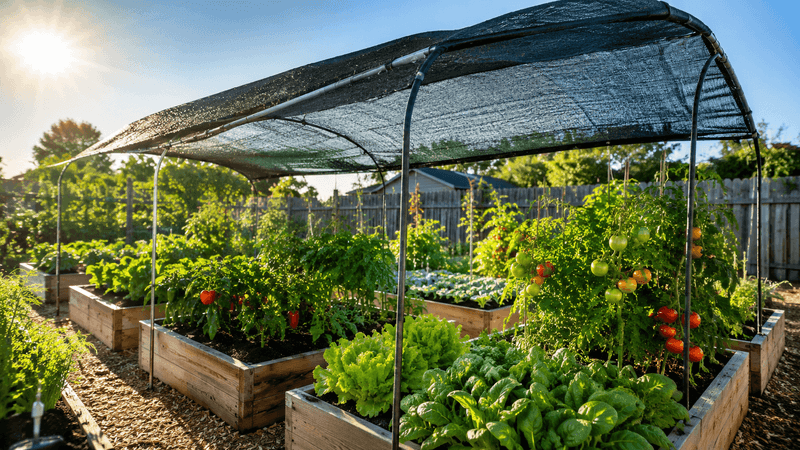
Temporary shade can reduce the heat load on flowering vines when used carefully. University of Delaware Extension’s heat-stress guidance identifies shade cloth as a practical home-garden tool and notes that 30% shade provides meaningful cooling for many vegetables without cutting off too much light.
Treat that figure as a reasonable starting point for your garden rather than a cucumber-specific prescription, and watch the plants for signs that reduced light is slowing growth rather than helping it. Shade cloth reduces heat stress; it cannot reverse disease, root damage, severe pest pressure, or a vine that is simply past its productive life.
One critical warning: plastic row covers and enclosed tunnels should come off once cucumber vines begin flowering. Utah State University Extension’s row-cover research explains that covers can trap heat, restrict pollinator access, and reduce fruit set.
Open-weave shade cloth suspended above the plants on a simple frame keeps air moving while still blocking some direct sun – a meaningfully different approach from wrapping the vines in plastic. UMD Extension’s scouting guide also emphasizes ventilation as part of managing heat stress in vegetable crops.
Hand-pollinate only when the plant can use the help
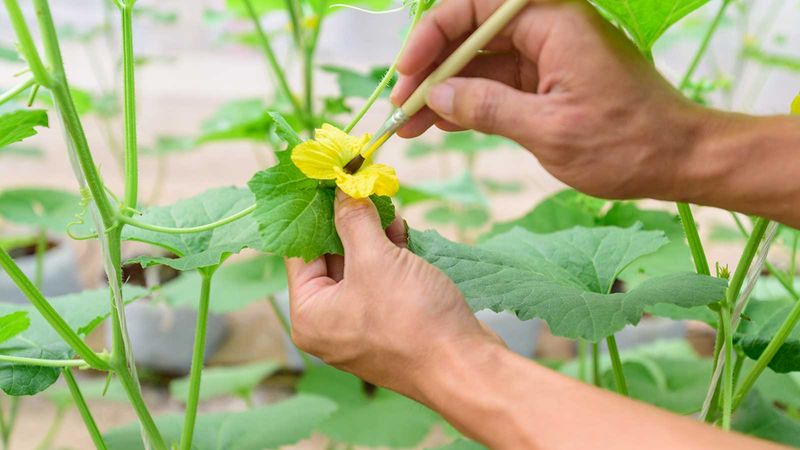
Hand pollination is a targeted tool, not a general fix for a struggling vine. The right time to try it is in the morning while both male and female flowers are fully open, and the technique is straightforward: remove a freshly opened male flower, peel back the petals to expose the pollen-bearing stamens, and brush or press them gently against the sticky stigma at the center of a female flower.
A small, clean paintbrush works just as well if you prefer not to handle the flower directly.
According to University of Minnesota Extension, this technique can support fruit set when receptive female flowers are available and bee visits are genuinely limited. What it cannot do is fix pollen that has already been damaged by extreme heat, compensate for a shortage of female flowers, overcome severe drought or disease, or reverse decline in an aging vine.
Penn State Extension’s pollination guidance frames hand pollination as a useful backup rather than a production guarantee.
Protecting the pollinators that do show up is just as important as any manual effort you make. Avoid applying insecticides to open blooms or during the morning hours when bees are most active.
If a spray is necessary, follow the product label carefully and apply in the early evening after flowers have closed. Keeping pollinators safe keeps your long-term options open even when the current heatwave has reduced their visits.
A healthy vine may resume fruiting after the heat breaks
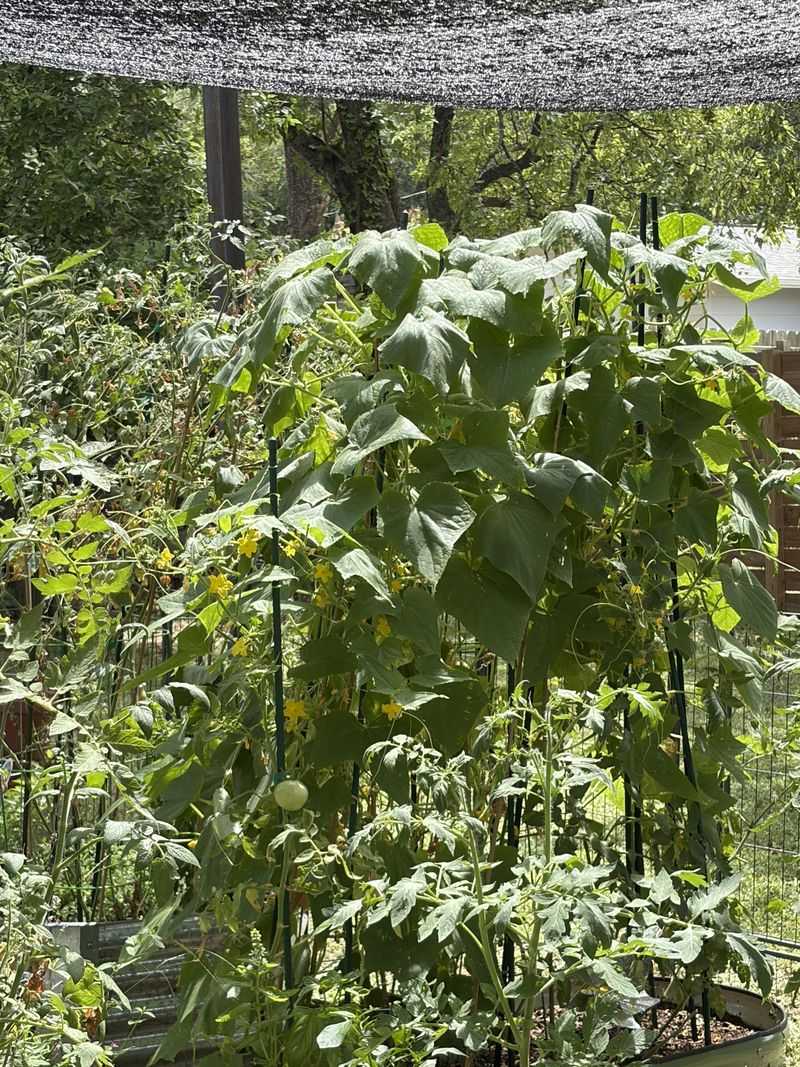
Once temperatures moderate, a vine that has stayed healthy through the heatwave has a real chance of resuming production. Penn State Extension reports that fruit set in cucumbers may resume when daytime highs fall back below roughly 90°F, though recovery depends on plant health, water status, pest and disease pressure, and how much productive foliage remains on the vine.
Continue checking for new female flowers and monitor any developing fruit for signs of normal growth before deciding the plant is finished.
In some parts of Florida, UF/IFAS guidance favors late-summer or fall planting windows rather than pushing through the hottest part of the year, which is a reminder that local timing can matter as much as in-season management. Check with your local Extension office for the planting calendar that fits your specific region rather than applying one schedule to the whole South.
Keep moisture consistent, continue your morning flower checks, and reassess the temperature trend before pulling a vine that still has green, healthy growth and new buds. A brief heat pause is not necessarily the end of the season – sometimes the garden just needs the weather to cooperate again.