
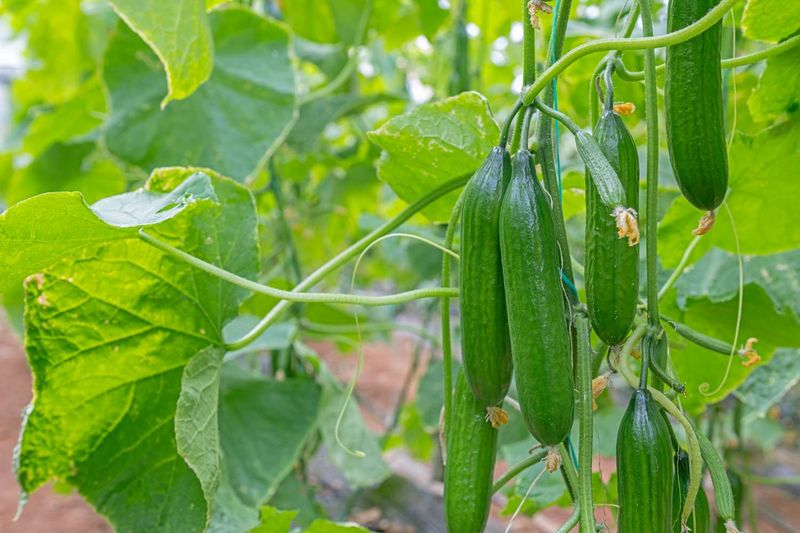
Watching your cucumber vines go limp on a scorching August afternoon is enough to make any gardener panic. The good news is that afternoon wilting does not always mean your plants are in serious trouble, but it does not always mean they are fine, either.
Understanding what is actually happening, and knowing how to check before you reach for the hose, can make a real difference for your plants and your harvest.
Afternoon wilt has more than one possible cause
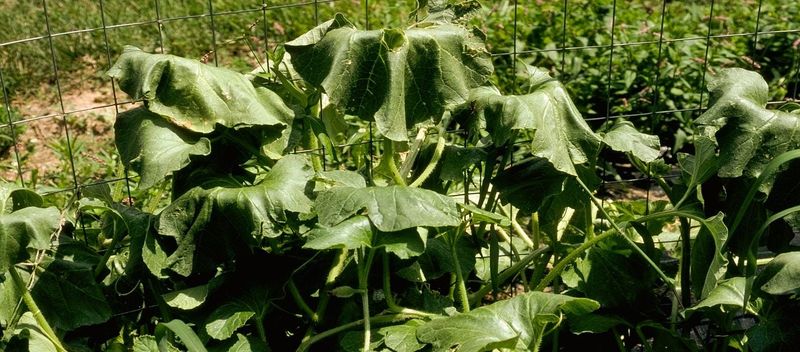
Cucumber vines drooping in the afternoon heat can stop a gardener cold, but the cause is not always what it seems. Hot, dry, or windy conditions can pull moisture out of leaves faster than roots can replace it, even when the root zone still holds plenty of water.
UGA Extension heat-stress guidance notes that this kind of temporary wilting is a physiological response to heat load, not necessarily a sign of drought.
When temperatures drop in the late afternoon or evening, plants experiencing this kind of heat stress often perk back up on their own. Recovery by evening or the next morning makes temporary heat stress more likely as an explanation, but it does not rule out bacterial wilt or another developing problem.
Readers should keep watching for progression, cucumber beetles, or symptoms that worsen rather than treating overnight recovery as a clean bill of health.
The pattern that deserves closer attention looks different: wilt that appears in the morning before heat builds, symptoms that spread from vine to vine, leaves that never fully recover, or a plant that collapses more each day. University of Minnesota’s cucumber wilt diagnosis tool lists several possible causes, including insects, bacterial disease, and root problems, alongside watering issues.
Afternoon wilt alone is not enough information to pin down a single explanation.
Insufficient root-zone watering can leave cucumbers exposed
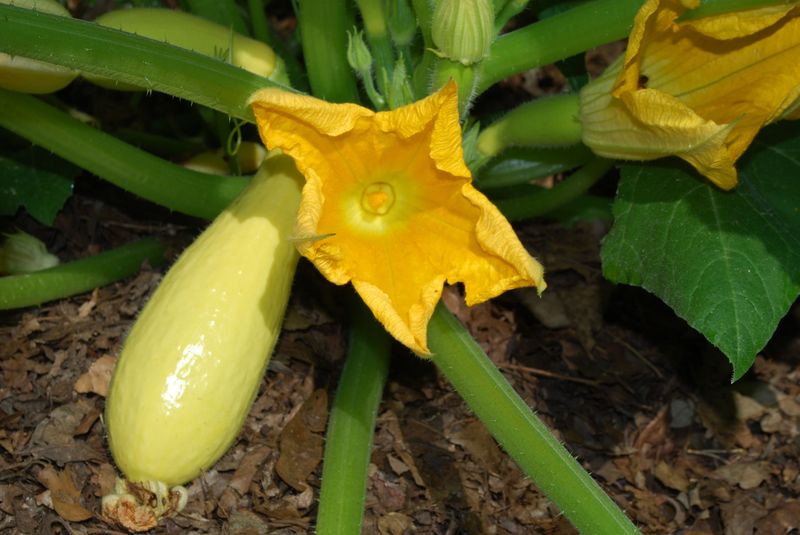
One watering pattern that commonly leaves cucumbers struggling through hot afternoons is repeated small applications that wet only the top inch or two of soil. When irrigation never reaches deeper, roots tend to concentrate near the surface, exactly where heat and dry air can strip available moisture in a matter of hours.
Oklahoma State University’s vegetable gardening guidance points to shallow, frequent watering as a setup for plants that wilt quickly once afternoon temperatures climb.
Shallow root development is the real problem here. A plant whose roots barely extend past the top layer of soil has almost no buffer against the rapid moisture loss that comes with high heat, low humidity, and afternoon sun.
Even if you water every day, brief surface applications can leave the deeper root zone consistently dry.
Overhead spraying is a separate issue and should not automatically be blamed for wilt. A sprinkler or overhead system can still deliver enough water to the soil if it runs long enough, though it tends to waste more water through evaporation and can keep foliage wet longer than ideal.
The core question is whether water is actually reaching the root zone in meaningful amounts, not simply whether it came from above or below. Treating insufficient root-zone irrigation as one possible investigation point, rather than the presumed diagnosis, keeps the diagnostic process honest.
Check the soil before you reach for the hose
Drooping leaves are an unreliable guide to how much water a cucumber actually needs. A plant can wilt from too much water just as easily as from too little, because saturated soil cuts off oxygen to roots and impairs their ability to take up water.
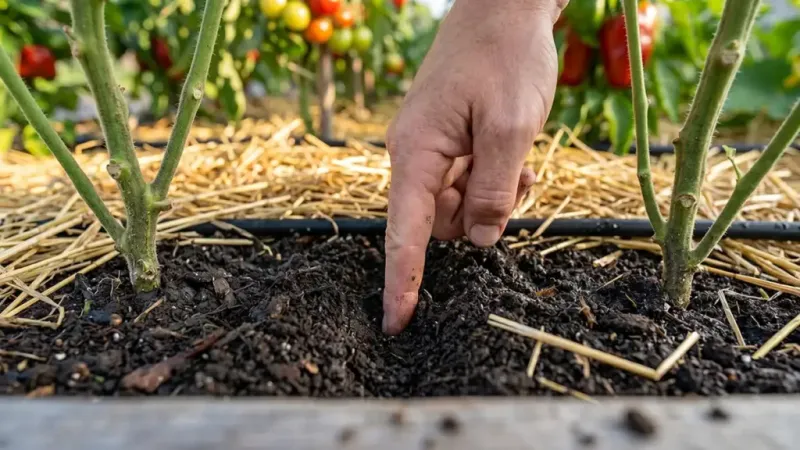
Before adding anything, push a finger or a small trowel two to four inches into the soil near the base of the plant and feel what is actually there.
Dry soil at that depth, especially when a plant is wilting in the morning or has not recovered overnight, supports watering promptly. University of Minnesota Extension’s vegetable watering guidance makes the point clearly: a plant that is genuinely drought-stressed should not wait for a preferred time of day.
Relieve the stress when you find it.
Moist soil paired with wilt that only shows up during peak afternoon heat calls for observation rather than automatic extra water. Adding more water to an already-moist root zone will not help the plant cope with heat-driven transpiration, and it can make drainage problems worse.
UGA Extension’s heat-wave watering caution specifically warns against over-irrigating during high temperatures, noting that soggy soil can stress roots even when the air is scorching. Check first, then decide.
Water slowly enough to wet the root zone
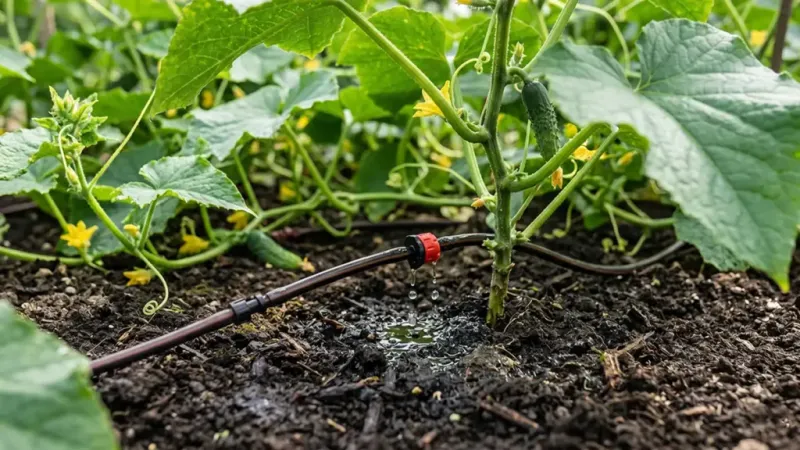
Once you know the root zone is dry, the goal is getting water there without simply wetting the surface and calling it done. Drip irrigation, a soaker hose, or slow hand watering directed at the soil surface all give water time to soak in rather than run off.
Oklahoma State’s cucumber production fact sheet recommends moistening the soil to at least four to six inches, and UGA guidance for deeper-rooted vegetables pushes that target to six to eight inches.
A practical approach is to water slowly, pause if you see runoff forming, and then continue until you can probe the soil and feel moisture at the target depth. There is no single universal duration or volume that works across all soils, garden sizes, and weather conditions, so the soil check is more reliable than any timer.
The point is to replace the quick spritz with a thorough soak that actually reaches where the roots are.
Maintaining more consistent root-zone moisture can also help reduce water-stress-related fruit problems. UGA’s guide to growing cucumbers at home connects moisture stress during flowering and fruit development to bitter, misshapen, or poor-quality cucumbers.
Whether consistent irrigation fully prevents those problems depends on soil, drainage, heat, and plant conditions, but keeping the root zone from cycling between soaked and bone-dry is a reasonable place to start.
Use morning as the default, not a rigid rule
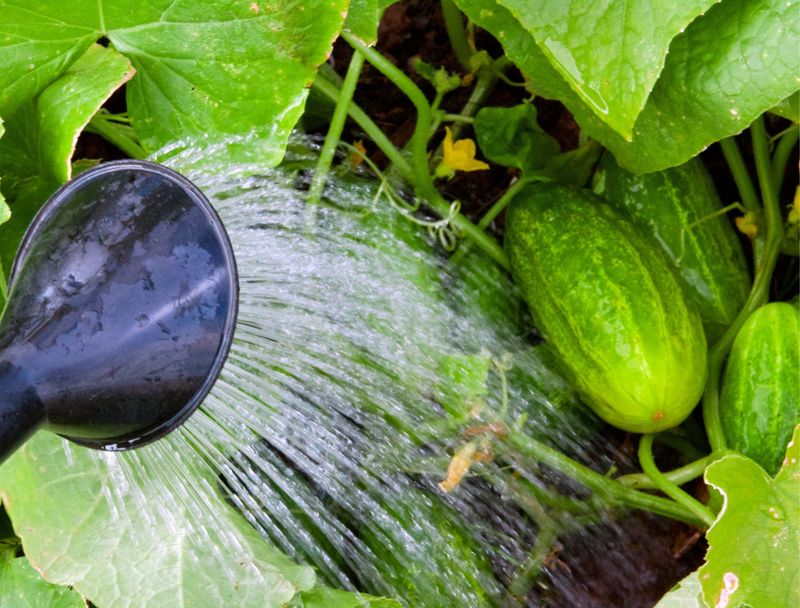
Early morning is the best default window for watering cucumbers because evaporation rates are lower and any water that lands on foliage has hours to dry before night. Oklahoma State’s cucumber production guidance identifies morning irrigation as preferable for reducing both evaporation and foliar disease risk.
Evening watering can work when conditions allow foliage to dry before dark, but repeatedly wetting cucumber leaves overnight raises the odds of fungal problems over time.
Afternoon watering gets a bad reputation that is partly deserved and partly myth. The main drawbacks of midday irrigation are evaporation loss, wind drift, and inefficient delivery, not the idea that sunlit water droplets will burn the leaves.
Penn State Extension’s garden watering myths piece identifies leaf burn from water droplets as unsupported, noting that evaporation and inefficiency are the real concerns with midday irrigation.
None of this means you should leave a drought-stressed plant wilting until tomorrow morning. University of Minnesota Extension is direct on this point: water when the plant needs it.
If you check the soil at two in the afternoon and find it dry alongside a wilting plant, water at the root zone now and adjust your schedule going forward. Morning is a preference for routine care, not a reason to let a plant suffer.
Match the schedule to soil, weather, and the growing setup
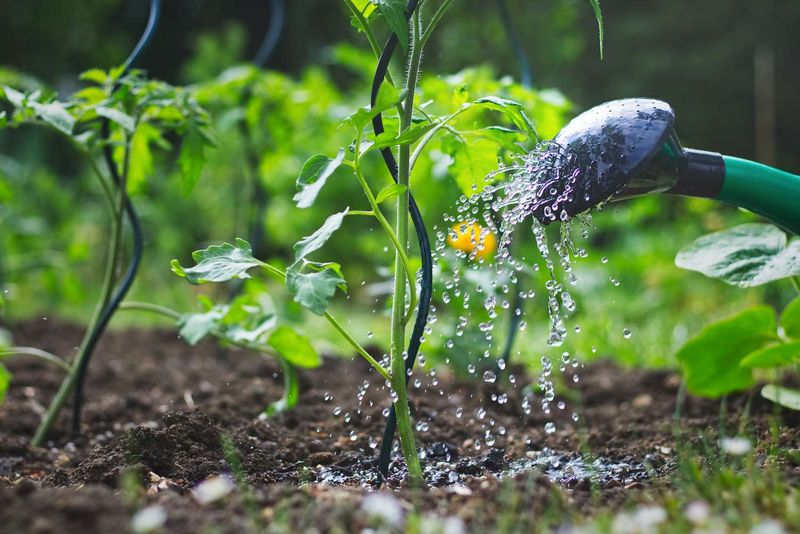
Published guidelines often cite roughly one to two inches of water per week for cucumbers, and Oklahoma State’s cucumber production guidance suggests approximately 1.5 inches every seven to ten days during the hottest months when rainfall is short. These figures are reasonable starting points, but they can mislead gardeners who treat them as fixed rules.
Soil type, container size, mulch, plant maturity, rainfall, and heat all shift the actual requirement.
Sandy soils, which are common across much of Florida, drain quickly and can leave roots dry within a day or two of watering. UF/IFAS cucumber production guidance for South Florida recommends using soil-moisture measurements rather than a calendar, partly because over-irrigation in sandy conditions can leach nutrients and stress plants even during a heat wave.
Shorter, more frequent irrigation cycles often work better in those soils than longer, less frequent ones. Texas gardeners in clay-heavy soils face the opposite challenge: slower drainage means water lingers longer, and the risk of saturation is real after heavy rain.
Containers and raised beds dry out faster than in-ground beds and often need more frequent attention during summer heat. Mature vines with heavy fruit loads also pull more water than young transplants.
UGA’s guide to conserving water in the vegetable garden recommends roughly three to four inches of organic mulch to reduce evaporation and moderate soil temperature, kept away from the cucumber stem to avoid rot. Mulch will not solve a disease problem, but it can meaningfully reduce how fast the root zone dries between waterings.
Persistent or worsening wilt needs a broader diagnosis
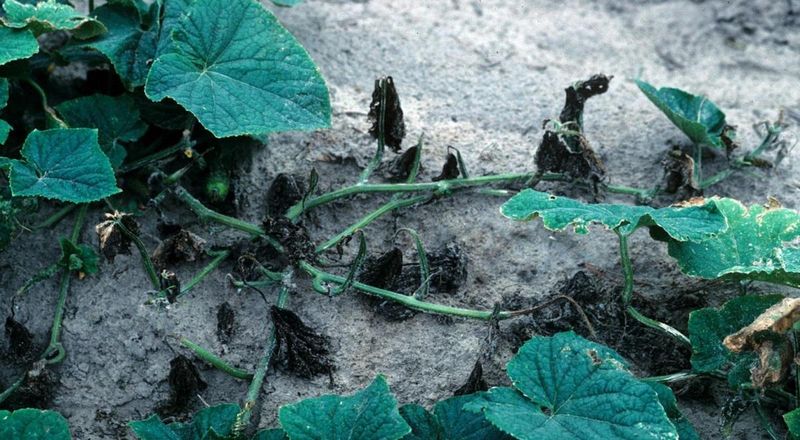
When wilt does not follow the typical heat-stress pattern, a watering adjustment is unlikely to fix it. Start by checking drainage and the soil around the roots.
Persistently saturated soil deprives roots of oxygen, which reduces their ability to move water upward even when plenty of moisture is present. UGA Extension’s heat-wave overwatering caution makes clear that soggy roots in hot weather can produce wilt symptoms that look identical to drought stress.
If the soil is waterlogged and the plant is still wilting, adding more water will make things worse.
Root damage from compaction, cultivation tools, or soil-dwelling pests can also reduce uptake. Beyond the root zone, insects are a critical diagnostic clue.
Cucumber beetles, both striped and spotted varieties, transmit bacterial wilt as they feed, and their presence on the plant or nearby should raise concern. University of Minnesota Extension’s cucumber wilt diagnosis tool lists bacterial wilt as a serious possibility when wilting is severe or progressive, with cucumber beetles as a key indicator.
Bacterial wilt can be deceptive early on. A vine may wilt during the day and appear to recover at night, which can look like ordinary heat stress at first.
Over days, the wilting typically worsens, spreads to more of the plant, and stops reversing overnight. UF/IFAS cucumber production guidance notes that there is no cure for bacterial wilt once a plant is infected.
Monitor for symptoms that appear in the morning, spread to new vines, or fail to resolve with corrected irrigation. No amount of improved watering will reverse a disease problem, and waiting too long to investigate can cost an entire bed.
Follow a soil-first response on the next hot afternoon
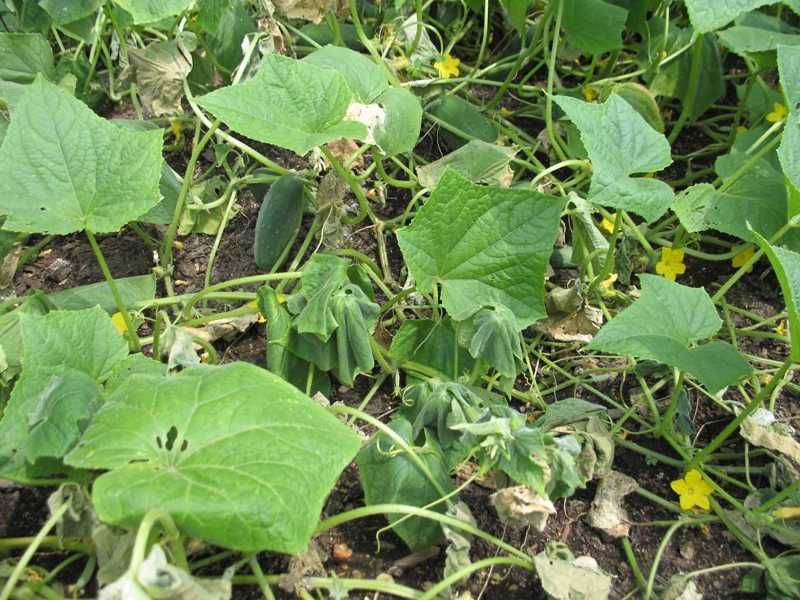
The next time cucumber leaves go limp in the afternoon heat, start with the soil before doing anything else. Probe two to four inches down near the base of the plant.
Dry soil alongside a wilting plant calls for slow, thorough watering at the root zone right away. Oklahoma State’s vegetable gardening guidance supports moistening the soil to a meaningful depth rather than applying a quick surface spray and moving on.
Moist or saturated soil paired with afternoon wilt is a signal to observe and investigate, not to add more water. Check for drainage problems, inspect roots for damage, look for cucumber beetles, and watch whether symptoms worsen or spread over the following days.
University of Minnesota Extension’s wilt diagnosis tool is a useful next step when the cause is unclear.
Favor morning for routine irrigation, mulch the bed to slow moisture loss, and adjust your frequency as soil type, rainfall, and heat dictate. Afternoon recovery is useful information, but a plant that bounces back by evening has not necessarily cleared itself of disease.
Keep watching.