
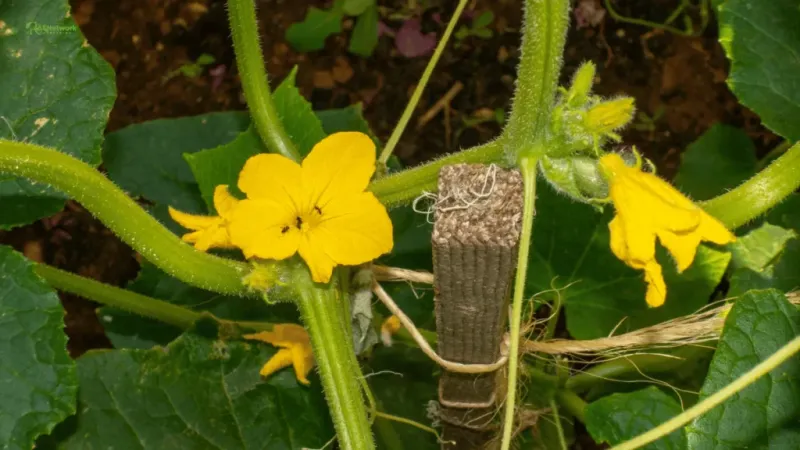
Few things are more frustrating than watching healthy cucumber vines push out flower after flower while the kitchen stays empty. The good news is that several fixable problems can explain this, and most of them start with the flowers themselves. The title’s promise of one hidden culprit is tempting, but the real picture is a little more layered – pollination trouble is often the first thing to check, though it is rarely the only possibility worth ruling out.
Inspect the flower before changing anything
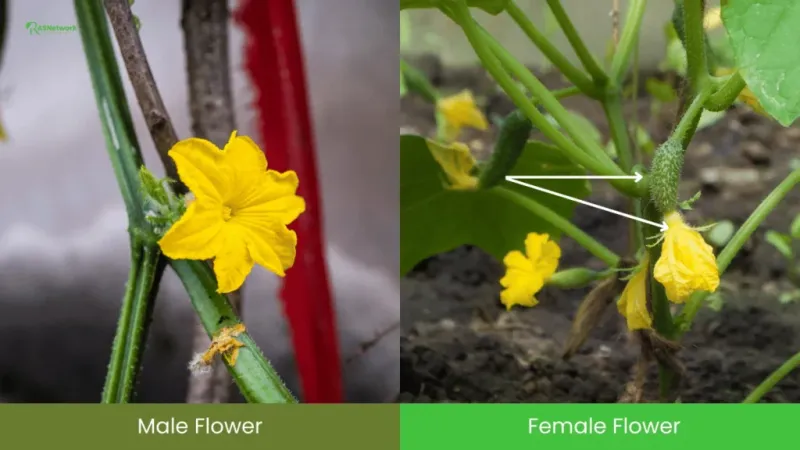
Before adjusting watering, adding fertilizer, or doing anything else, spend a few minutes looking closely at the flowers on your cucumber vine. Standard cucumbers produce two distinct flower types, and understanding which type you are looking at changes everything about the next step. University of Minnesota Extension guidance on growing cucumbers explains that only female flowers can develop into cucumbers, while male flowers exist solely to provide pollen.
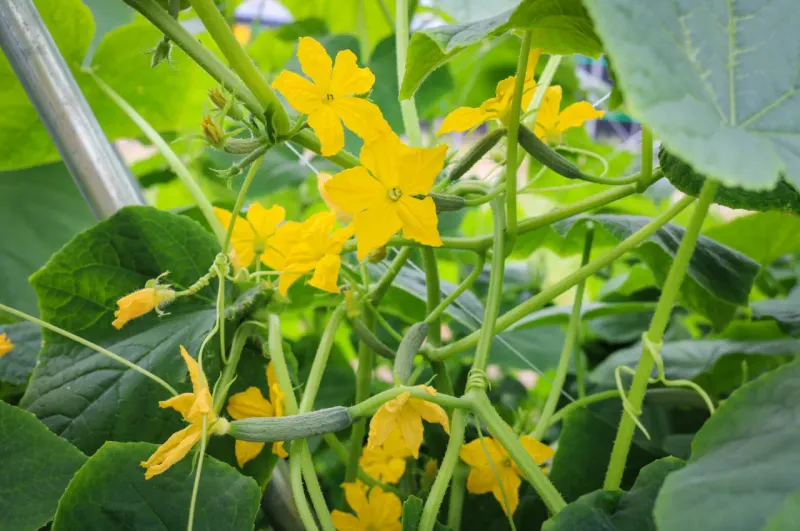
Telling them apart is straightforward once you know what to look for. A female flower has a small, cucumber-shaped swelling sitting immediately behind the blossom – that tiny bulge is the immature ovary that will grow into a cucumber if pollination succeeds. A male flower has a thin, plain stem with no swelling behind it whatsoever.
Early in the season, it is completely normal for a vine to open many male flowers before the first female flower appears. Those early males drop on their own, and that is not a sign of failure. The situation becomes worth investigating when female flowers are present but their small ovaries start to yellow, shrivel, stop enlarging, or fall from the vine before any growth occurs. That pattern – female flowers present but failing – is the specific signal that a fruit-set problem may be underway and worth diagnosing carefully.
Late-summer heat can disrupt fruit set in several ways
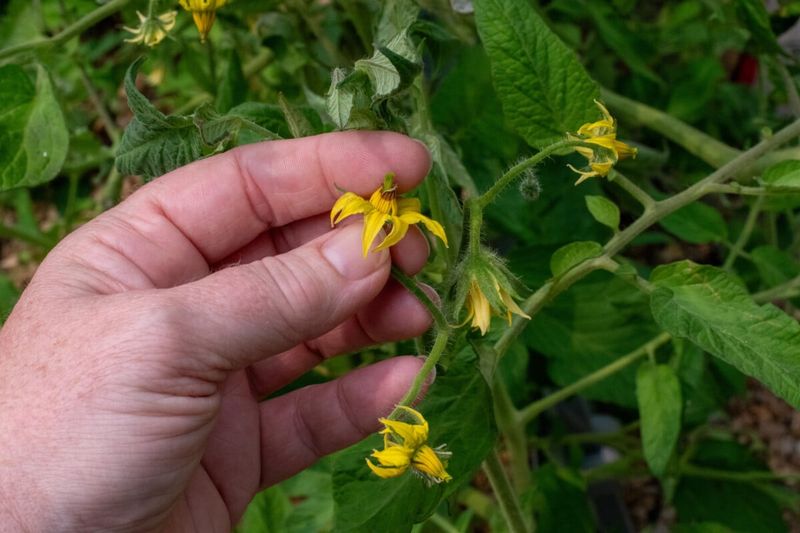
A vine can look completely healthy and still struggle to set fruit when summer heat peaks. The reason comes down to how cucumbers are pollinated. Standard varieties produce separate male and female flowers, and insects must carry pollen from one to the other – without that transfer, female flowers cannot develop into cucumbers. Hot, humid August weather can interrupt that process through several overlapping mechanisms rather than a single dramatic failure.
University of Minnesota Extension’s vining vegetable guide notes that daytime temperatures in the 90s or nighttime temperatures in the 70s are associated with flower and small-fruit abortion in cucurbits, and that hot conditions can also reduce pollinator activity during the brief morning window when cucumber flowers are open. Think of these figures as warning ranges rather than hard cutoff points – cultivar, humidity, soil moisture, and your local microclimate all influence how a specific plant responds.
Heat can also shift the balance of flower types the plant produces. Research published in the European Journal of Horticultural Science found that high-temperature treatment reduced pistillate (female) flower production in some cucumber cultivars, with responses varying by genotype. Add in the possibility that heavy rain during morning hours can keep bees grounded, and you have several separate reasons why an August vine with plenty of flowers might still produce very little fruit. Assessing your actual temperatures, flower types, and insect activity gives you far more useful information than the calendar date alone.
Try targeted morning hand-pollination
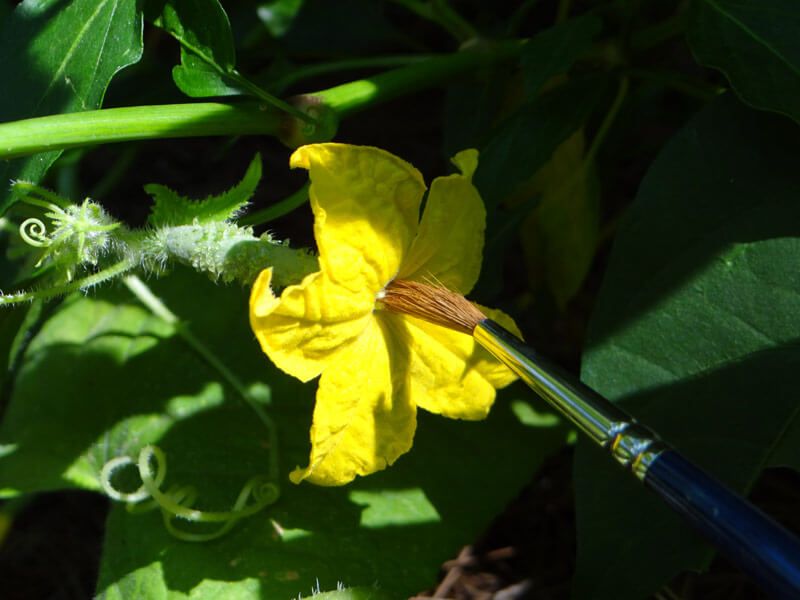
When female flowers are present and open but bee activity around your cucumbers seems low, hand-pollination gives you a targeted way to test whether limited pollen transfer is part of the problem. The procedure is simple and takes only a few minutes. Colorado State University Extension’s vegetable garden hints recommend transferring pollen from the center of a freshly opened male flower directly onto the sticky center of an open female flower, using either the male flower itself or a small artist’s brush.
Timing is the part most gardeners underestimate. Minnesota Extension’s cucurbit guidance points out that cucumber flowers are generally open for only a few hours, mostly in the morning. Waiting until midday often means the flowers have already closed, making pollen transfer impossible regardless of technique. Step outside early, identify flowers that opened that morning, and work quickly.
After hand-pollinating a female flower, watch whether its small ovary begins to enlarge over the following days rather than yellowing and dropping. Continued growth is an informal clue that the pollination attempt may have worked, but treat it as a rough indicator rather than a reliable test – other variables, including heat and plant health, affect whether a young fruit continues to develop. Penn State Extension’s cucumber pollination resource also notes that inadequate pollination can produce light or misshapen fruit even when a cucumber does form, so shape and weight at harvest can offer additional information. Hand-pollination is a useful rescue step, not a guaranteed solution.
Keep flowers open to insects and roots evenly watered
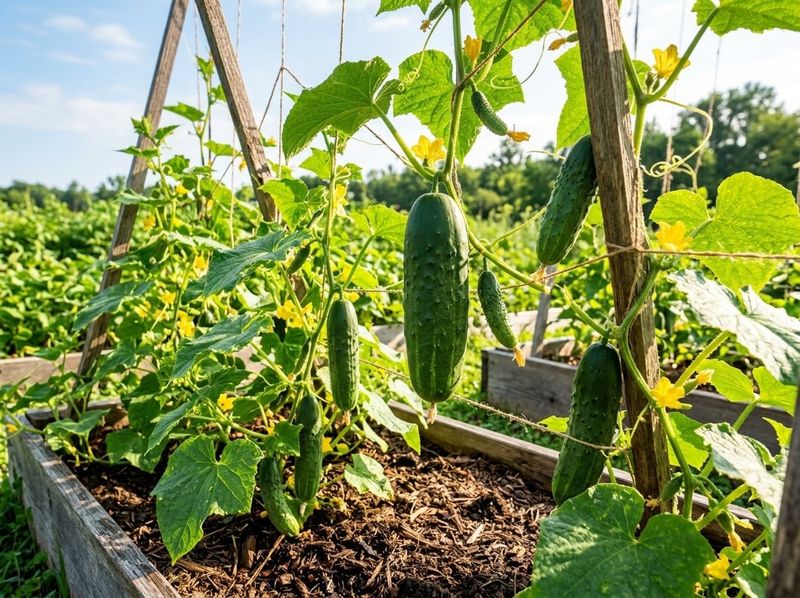
Row covers are excellent for keeping pests off young cucumber plants, but they become a problem once flowering begins. A covered vine can grow vigorously and produce flowers that never get pollinated simply because no insect can reach them. Utah State University Extension’s cucumber guide advises removing covers when flowers open, unless the specific covering system is designed to allow insect access. Checking for this oversight takes about thirty seconds and can immediately change the situation.
Soil moisture matters just as much as flower access. Uneven watering – periods of drought followed by heavy irrigation – can contribute to flower or fruit abortion and can also produce bitter, pointed, or misshapen cucumbers. Deep, reasonably consistent watering combined with a layer of mulch helps buffer the soil against rapid moisture swings. Exact irrigation needs depend on your soil type, plant size, rainfall, and local climate, so use the soil itself as your guide rather than a fixed schedule.
The method of watering also affects pollinator activity. Oklahoma State University Extension’s cucumber production guide advises avoiding overhead irrigation during the sunrise-to-11 a.m. window when flowers are open and bees are most active. Drip irrigation or soil-level watering sidesteps this issue entirely. On the pesticide front, EPA pollinator protection guidance recommends avoiding insecticide applications to blooming plants when pollinators are foraging and following each product label’s specific bee-protection restrictions – label requirements vary, and no single timing window is universally safe for all pollinator species.
A vine with only male flowers needs a different diagnosis
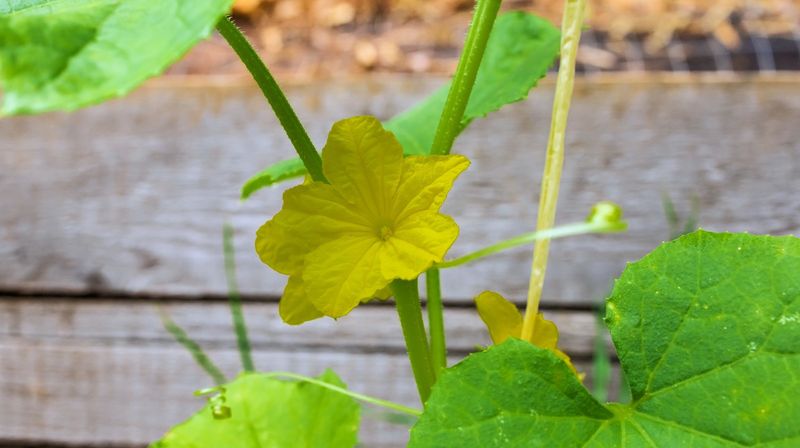
Hand-pollination only works when open female flowers are available. If every flower on your vine has a thin stem and no swelling behind the blossom, you are looking at an all-male flush, and moving pollen from one male flower to another accomplishes nothing. Recognizing this pattern early saves time and redirects your attention to the conditions actually limiting fruit set.
Early in the season, cucumber vines commonly open a run of male flowers before producing any females – that is a normal developmental sequence, not a failure. The pattern becomes more concerning when a mature, late-season vine continues producing only males week after week. Minnesota Extension’s cucumber growing guide notes that several factors can influence flower-type balance, including heat, plant stress, and cultivar genetics. The same extension’s vining vegetable resource connects high temperatures with shifts toward more male flowers in some cucurbit types.
Nutrition also plays a role worth examining. Missouri Extension’s cucumber article points out that excess nitrogen can push a plant toward lush vegetative growth at the expense of flowering and fruiting. If the vine is producing dense, dark-green foliage but few or no female flowers, the soil’s nitrogen level is worth reconsidering before adding any more fertilizer. Checking heat, moisture, nutrition, and cultivar type together gives a clearer picture than any single factor alone.
Rule out moisture, nitrogen, and overripe-fruit problems
Not every fruit-set problem traces back to pollination. Several common growing conditions can cause female flowers to abort or new cucumbers to stop developing, and addressing them requires a different set of actions than hand-pollination or attracting more bees.
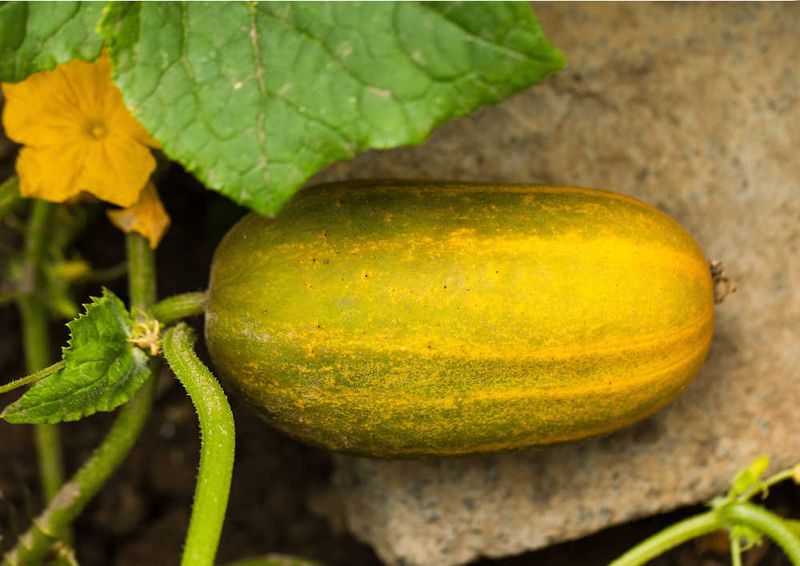
One of the most overlooked factors is leaving mature cucumbers on the vine too long. Colorado State University Extension’s cucurbit guide explains that fruit left on the plant can suppress additional fruit set until it is harvested. Checking the vine every two to three days and picking cucumbers at the right size keeps the plant focused on producing new fruit rather than maturing existing ones. A single large, yellowing cucumber hiding under the foliage can quietly stall production for days.
Nitrogen and water deserve equal scrutiny. Missouri Extension notes that excess nitrogen encourages foliage at the expense of flowering and fruiting, so adding fertilizer simply because the vine looks vigorous can worsen the problem. Utah State University Extension connects inconsistent soil moisture with flower and fruit abortion as well as bitter or misshapen cucumbers. If the vine looks otherwise healthy but fruit set remains poor after addressing pollination, row covers, and harvest timing, look more carefully at roots, foliage diseases, and pest pressure – those problems require their own diagnosis and cannot be solved by improving pollen transfer alone.
Check the cultivar’s pollination requirements
The seed packet or cultivar name sitting in a drawer can change the entire diagnosis. Not all cucumbers behave the same way, and applying standard outdoor pollination advice to the wrong cultivar can lead to confusion or even unintended fruit quality problems.
Standard cucumbers generally require insects to transfer pollen from male to female flowers before fruit will set. Parthenocarpic varieties are different – they can produce fruit without pollination at all, which is why they are common in greenhouse and high-tunnel production where insects are excluded. University of Minnesota Extension’s pollination requirements guide explains this distinction clearly. For a parthenocarpic variety grown outdoors, hand-pollination is unnecessary and insect access is not the limiting factor.
Gynoecious cultivars add another layer of complexity. These varieties produce predominantly female flowers, which sounds ideal, but Penn State Extension’s cucumber pollination resource points out that gynoecious types may still need a separate pollenizer plant to supply pollen unless the cultivar is also parthenocarpic. Seed companies often include a few pollenizer seeds in the packet for this reason. Penn State’s high-tunnel cucumber guide also notes that unwanted insect pollination of parthenocarpic protected-culture types can cause curved or misshapen fruit, which means the shape of your cucumbers can sometimes reflect cultivar traits or pollination status rather than a straightforward growing problem.
Knowing your cultivar type before troubleshooting saves real time.
Use the flower pattern to choose your next step
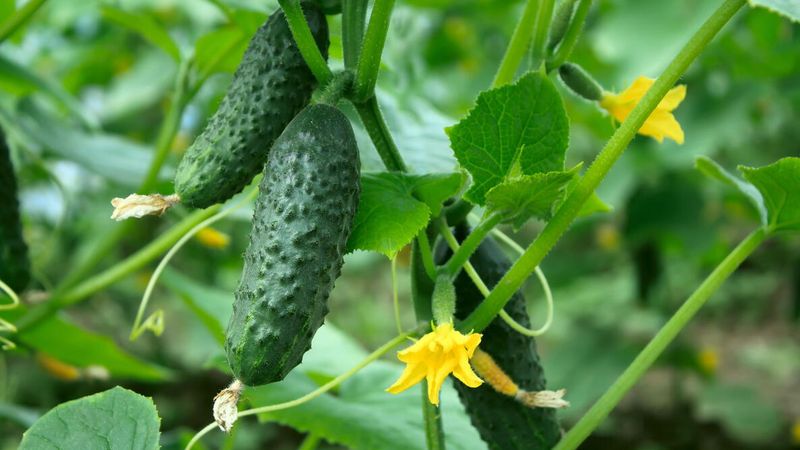
The most useful thing you can do right now is walk out to the vine in the morning and look at the flowers. Are female flowers present? If yes, check whether their small ovaries are enlarging or yellowing and falling. That single observation tells you more than any general checklist.
When open female flowers are present and insect activity around the vine seems low, try targeted morning hand-pollination as a limited test. At the same time, remove any row covers blocking insect access, check that soil moisture has stayed reasonably consistent, and harvest any overripe cucumbers that may be suppressing new fruit set. Utah State University Extension reinforces that even moisture and prompt harvesting support continued production in ways that go beyond pollination alone.
If female flowers are absent entirely, shift your attention to heat, nitrogen levels, cultivar requirements, and overall plant health rather than pollen transfer. Minnesota Extension’s cucumber guide is a reliable starting point for working through those possibilities systematically. Pollination deserves an early look, but the vine’s actual flower pattern and growing conditions should always drive the response. A garden that teaches you to read the flowers first rarely keeps its problems hidden for long.