
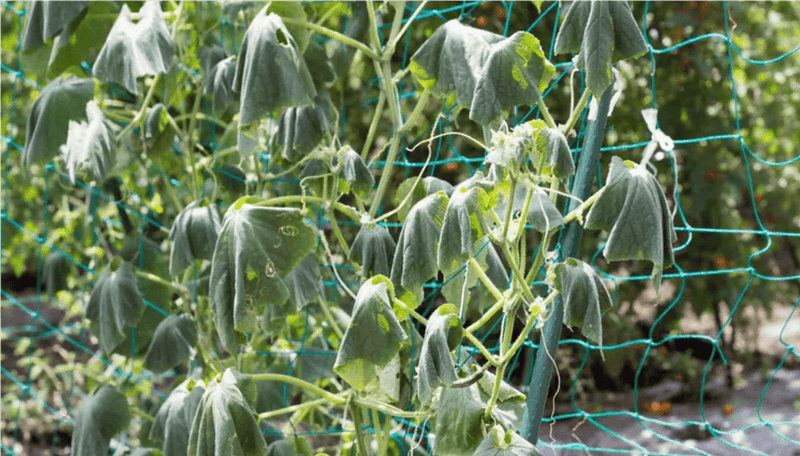
Cucumber vines can look perfectly healthy in the morning, then show curled, folded leaves by early afternoon, sending many gardeners into a panic. Before you grab a hose, a fertilizer bag, or a spray bottle, there is one straightforward observation to make first.
Understanding what that afternoon timing tells you, and what it does not, can save your plants from the wrong fix.
Start with when the leaves curl and when they recover
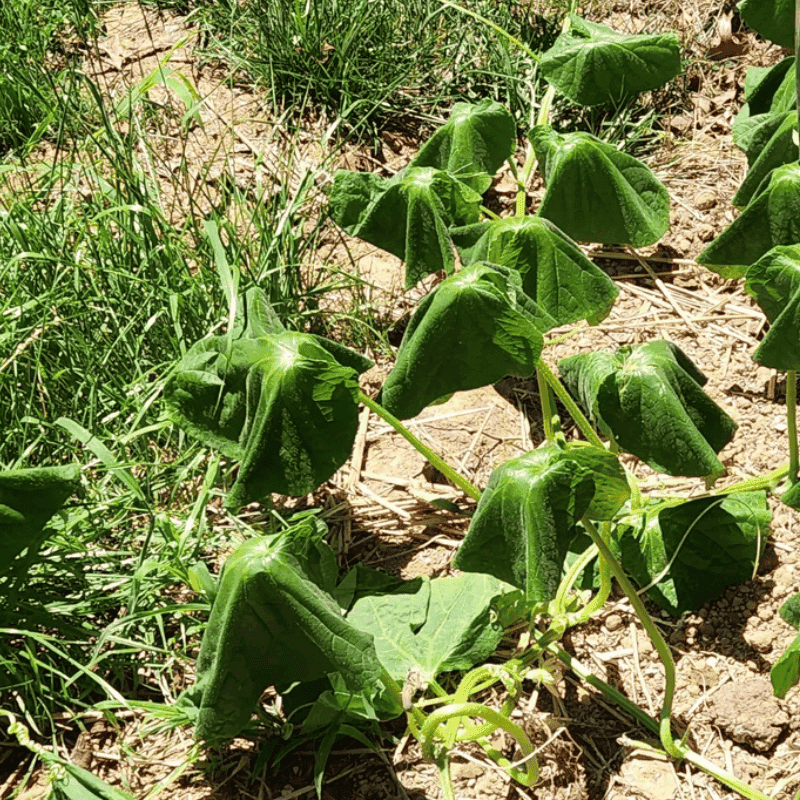
Paying attention to the clock matters more than most gardeners realize. When cucumber leaves curl or fold mainly during the hottest part of the day but look relaxed and normal again by evening or the following morning, that pattern is a useful starting clue.
OSU Extension guidance on heat stress in garden plants describes afternoon-only wilting that resolves as temperatures fall as a typical heat-stress pattern, one where high atmospheric demand temporarily outpaces the rate at which roots can move water up to the leaves.
Heat raises the amount of water a plant loses through its leaves, and that loss can outrun root uptake even when there is still some moisture in the soil. So a curling leaf in the afternoon does not automatically mean the soil is bone dry.
The timing pattern narrows the question but cannot answer it on its own.
Afternoon recovery is compatible with temporary heat or water-balance stress, but the same outward symptom can also appear early in a virus infection, after accidental herbicide contact, or when pest feeding is just beginning on tender new growth. University of Minnesota’s cucumber leaf distortion diagnostic lists heat, drought, excess water, aphids, mites, viruses, and herbicide exposure all as possible causes of curling or distortion.
Use the timing as your first filter, then go check the root zone before drawing any conclusions.
Check the soil about two inches below the surface
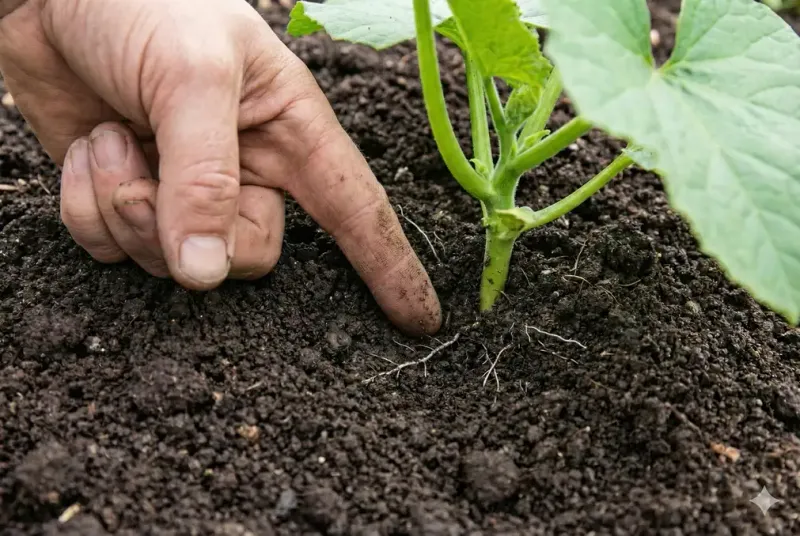
Before you do anything else with the hose, kneel beside the vine and push a finger or a small stick roughly two inches straight down into the soil near the base of the plant. That depth is where you get a reliable read on root-zone moisture.
University of Minnesota Extension’s vegetable garden watering guidance recommends checking about two inches below the surface before deciding whether to water, because dry topsoil and a limp-looking leaf are not enough evidence on their own that the plant needs more water.
Two clear outcomes follow from that check. If the soil at that depth feels dry and crumbly, the root zone genuinely needs water and you should water it.
If it still feels moist and cool, do not add more water automatically just because the leaves look stressed.
Moist soil does not mean the plant is fine, but it does mean that pouring on more water is not the right next move. UMN guidance on watering container plants warns that saturated soil reduces the oxygen available to roots, which can damage them and open the door to root disease.
Heat stress can still occur even when the soil is damp, because atmospheric water demand can exceed root uptake under extreme conditions. A moist reading sends you toward a different set of questions, covered in a later section, rather than toward the watering can.
Water the root zone deeply when it is dry
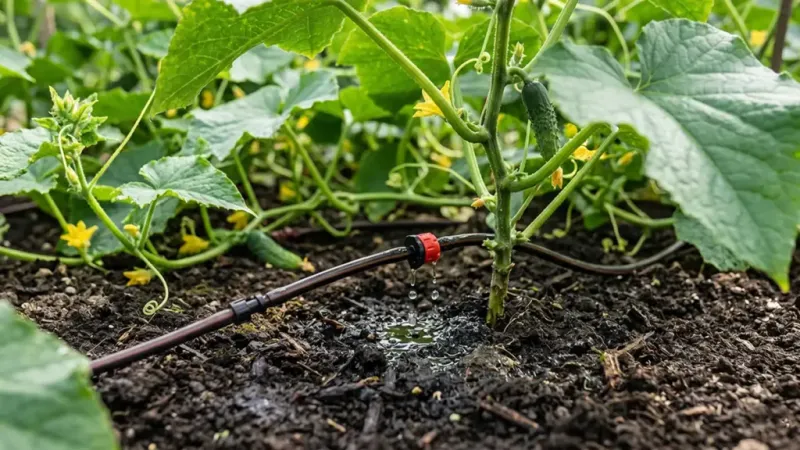
When that two-inch check comes back dry, the right response is slow, even, soil-directed watering around the base of the vine. A drip line, a soaker hose, or a gentle stream from a hose held close to the soil surface all deliver water where the roots can reach it without soaking the foliage.
Keeping leaves as dry as possible matters because prolonged moisture on foliage can encourage fungal disease, especially in the humid conditions common across much of the South.
Morning is generally the most efficient time to water. UMN Extension’s hot-weather gardening guidance explains that plants can absorb morning moisture before peak heat arrives and that foliage has more time to dry through the day.
That said, a genuinely dry, wilting plant should not be left stressed just to honor a rigid schedule. If you check the soil at noon and find it dry with the plant clearly struggling, water it then rather than waiting until the next morning.
The goal is even, consistent moisture through the root zone, not repeated shallow sips. UMN’s vegetable watering page notes that how much water any plant needs depends on soil type, plant size, mulch, local weather, and whether it is growing in a container or in the ground, so no single weekly number applies to every Southern cucumber bed.
Water slowly enough that the moisture soaks in rather than running off, and let the root zone dry slightly between sessions rather than keeping it perpetually saturated.
Use mulch to stabilize moisture through hot weather
One of the most practical things you can do before the next heat wave arrives is lay organic mulch around the base of your cucumber vines. Straw, shredded leaves, wood chips, or similar materials placed roughly two to four inches deep can slow evaporation from the soil surface, buffer soil temperature swings, and help keep root-zone moisture more consistent through the afternoon peak.
UMN Extension’s mulching guide recommends keeping mulch pulled back slightly from direct contact with plant stems to reduce the risk of rot and pest harborage.
Consistent moisture matters particularly for cucumbers because fluctuating wet-dry cycles can stress the plant and contribute to fruit-quality problems. Penn State Extension’s cucumber growing guide notes that temperatures above about 90 degrees Fahrenheit can also interfere with pollination and fruit set, even when vines still look green and vigorous, so anything that moderates the root environment helps during a Southern summer.
Mulch is a management tool, not a guaranteed solution. A thick layer will not eliminate afternoon curling on its own, and it will not protect against pests, viruses, or herbicide injury.
What it does reliably is reduce how quickly the soil dries out between waterings, which makes it easier to keep that two-inch check in the moist range without constant irrigation. Apply it before the hottest stretch of summer, top it off if it thins out, and pair it with the deep, soil-directed watering described in the previous section.
If the soil is moist, scout leaves and new growth
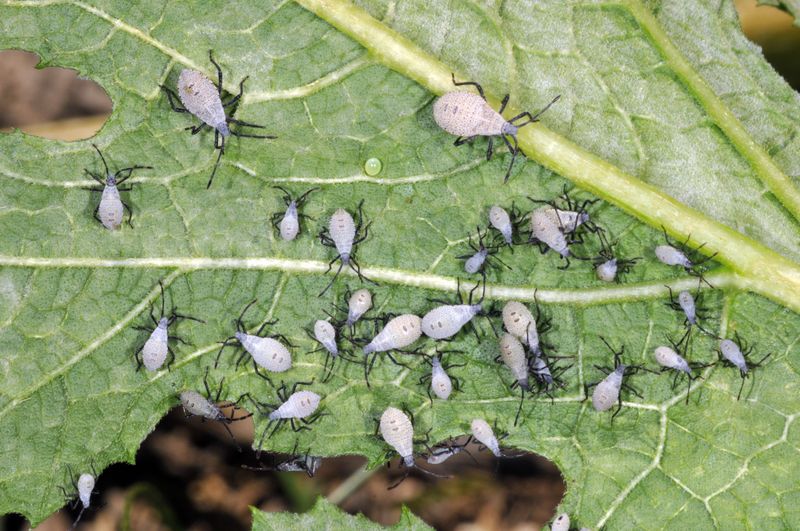
Finding moist soil at the two-inch mark when the leaves are still curling means the diagnosis needs to shift. Start by flipping over a few leaves and looking at the undersides, particularly on younger growth near the vine tips.
UGA Cooperative Extension’s aphid resource describes how aphid colonies often cluster on new growth and leaf undersides, causing curling, crinkling, yellowing, or distortion as they feed.
Spider mites are a second suspect worth ruling out, especially during hot, dry stretches. UMN Extension’s spider mite page explains that these tiny pests thrive in heat and low humidity and produce stippling, bronzing, bleaching, or fine webbing on leaf surfaces, damage that can be confused with drought stress at first glance.
Run your finger along the underside of a leaf and look for very fine webbing or tiny moving specks.
Beyond insects, consider whether any lawn herbicide, weed-and-feed product, or drift from a neighboring yard may have reached the cucumber bed recently. UMN’s herbicide injury guide notes that even small amounts of certain herbicides can produce curling, cupping, or distortion in vegetable plants.
CSU Extension’s vegetable problem guide reinforces that leaf-curl direction alone is not a reliable standalone diagnosis; symptoms need to be read alongside soil condition, pest presence, leaf color, new-growth appearance, and recent spray history. If you do find pests, identify them accurately before reaching for a spray, because UMN’s heatwave pest guidance warns that broad or poorly timed pesticide applications can harm beneficial insects that help control the very pests you are targeting.
Persistent distortion calls for broader diagnosis
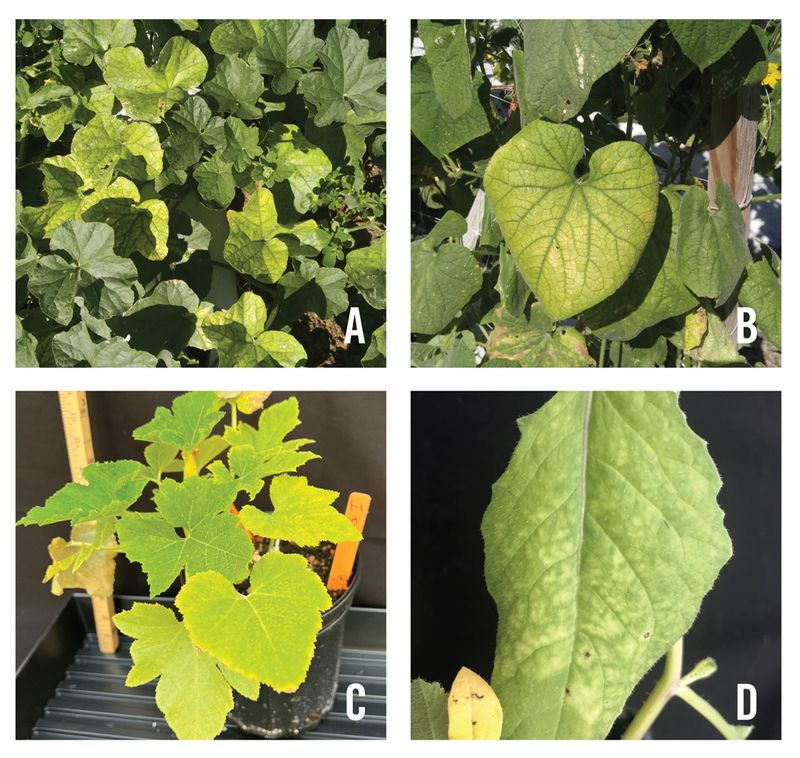
Afternoon recovery is a reassuring sign, but it does not close the case permanently. Leaves that remain curled or puckered overnight, symptoms that worsen over several days, or new growth that emerges already distorted, crinkled, or mottled all point toward a problem that goes beyond simple heat response.
At that point, repeated irrigation without a clearer diagnosis is unlikely to help and may compound root stress if the soil is already moist.
High temperatures can also affect cucumber reproduction even while vines appear outwardly healthy. Penn State Extension’s cucumber production guide identifies temperatures above roughly 90 degrees Fahrenheit as a threshold at which reproductive failure, including poor pollination and reduced fruit set, may occur in cucumbers, with the actual response depending on cultivar and local conditions.
For gardeners in parts of Florida, the Southeast, and south Texas, whitefly-transmitted cucurbit viruses deserve consideration when symptoms persist and whitefly activity has been observed. UGA Extension’s bulletin on whitefly-transmitted plant viruses in South Georgia documents cucurbit leaf crumple and related viruses that can cause curling, crumpling, mottling, yellowing, stunting, or distorted new growth.
Texas A&M AgriLife Extension identifies squash leaf curl as a relevant concern in south Texas. These viruses are not the explanation for every Southern cucumber with curled leaves, and symptoms, location, season, and observed pest pressure all need to support that suspicion before it becomes a working diagnosis.
UMN’s cucumber leaf distortion tool can help you compare what you are seeing against a broader set of documented causes.
Follow the check-before-you-treat decision rule
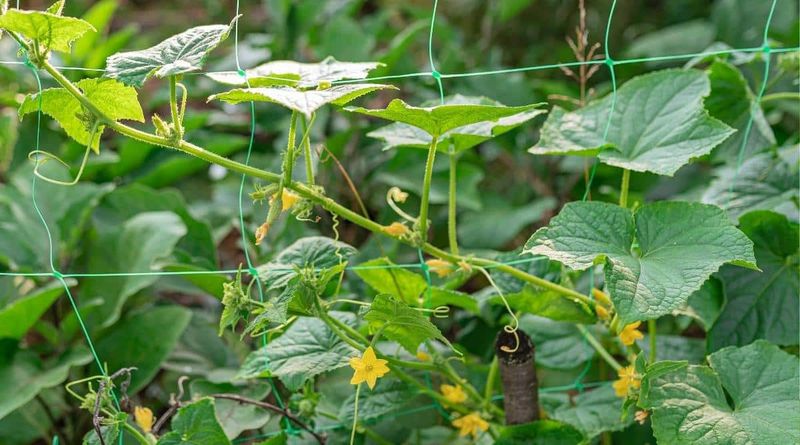
The sequence that protects your plants is simple enough to remember without notes. Watch whether the curl reverses by morning.
Feel the soil two inches down near the vine. Water the root zone slowly and deeply only if that check comes back dry.
If the soil is moist or watering does not change the symptoms within a day or two, shift to scouting for pests, reviewing recent spray history, and looking at new-growth texture rather than adding more water, fertilizer, or pesticide without evidence. UMN Extension and CSU Extension’s vegetable problem guide both emphasize diagnosing before treating, because the wrong fix can make an already-stressed plant worse.
Afternoon curling is a stress signal worth taking seriously, but it is not proof of a single cause and it does not automatically predict harvest failure. UGA Extension’s vegetable problem-avoidance guidance reminds gardeners that a careful look before reaching for any product is almost always the smarter first move.
A cucumber vine that curls at two in the afternoon and stands back up by dusk is telling you something; your job is to listen closely before deciding what to do next.