
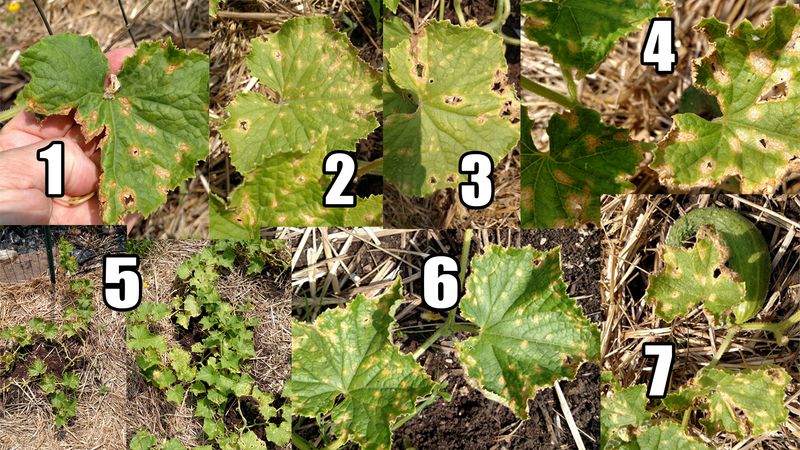
Crispy, brown-edged cucumber leaves in late summer are one of the most alarming sights for a home gardener who has been working hard to keep a vine producing. The good news is that the symptom often points to something fixable, but the cause is not always as obvious as it looks.
Shallow or inconsistent watering can contribute, yet heat, poor drainage, pests, and other problems can produce nearly identical damage. A quick check of your soil and a closer look at your leaves can help you figure out what your cucumber actually needs.
Brown margins signal stress, not a diagnosis
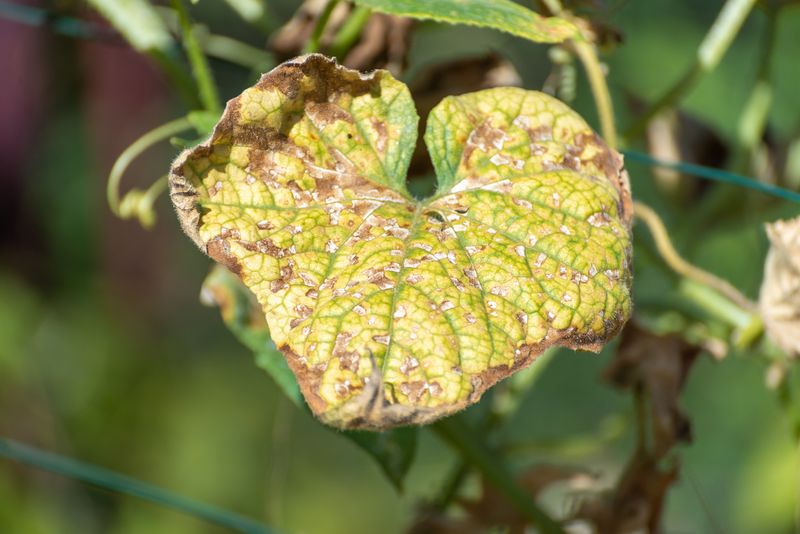
Crispy, brown leaf margins on a cucumber vine are a sign that something is stressing the plant, but the appearance alone cannot tell you what that something is. During late-summer heat, the symptom fits both water stress and heat scorch, and the two can happen at the same time.
Colorado State Extension’s leaf scorch guidance lists improper watering, excessive heat, wind, root damage, and excess fertilizer as separate causes of the same browning pattern.
Hot sun and dry wind increase the rate at which water evaporates from leaf tissue faster than roots can replace it. University of Arizona Extension research on drought and extreme heat explains that high evaporative demand can restrict water movement to leaf edges even when the gardener has been watering regularly.
The visible result looks identical to what happens when the root zone simply runs dry.
Overwatering creates its own version of the same symptom. Roots deprived of oxygen by saturated soil lose their ability to take up water, so the plant shows drought-like damage above ground even when the bed is soaking wet.
Texas A&M AgriLife Extension confirms that both insufficient and excessive moisture can create water-uptake failures with similar symptoms.
The right starting question is not “Did I underwater?” but rather “What is actually happening at the root zone right now?”
Shallow sips can leave active roots short of water
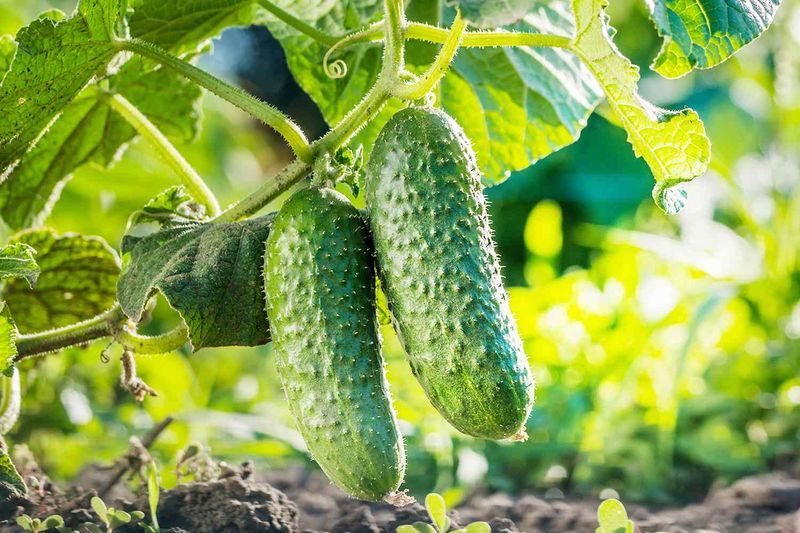
Frequent, minimal watering applications can create a false sense of security. When only the top inch or two of soil gets wet, the active root zone several inches down may stay bone dry, and a vine under fruit-production stress will feel that shortage quickly.
Texas A&M AgriLife Extension states plainly that light sprinkling may settle dust but does little to relieve drought stress. A more thorough application that wets the soil several inches down gives roots something to actually draw from between watering sessions.
That depth varies depending on your soil type, how established the plant is, and where the roots have spread.
Utah State University Extension notes that irrigation needs shift with soil texture, temperature, plant size, and growth stage, which means the right frequency for a young cucumber seedling in clay soil is not the same as for a heavily fruiting vine growing in sandy Florida soil during a heat wave. Inconsistent moisture, where the root zone swings from briefly wet to completely dry and back again, places extra stress on cucumbers that are already working hard to flower and set fruit.
Before changing your routine based on brown edges alone, push a finger or a stick several inches into the soil near the plant to confirm what the root zone is actually experiencing.
The soil check helps decide whether water is appropriate

Checking the soil a few inches below the surface near your cucumber is the most useful diagnostic step you can take before touching your irrigation routine. Push a finger, a wooden dowel, or a soil probe about four to six inches into the bed, close to the drip line of the plant but not directly against the stem.
What you feel matters more than what the surface looks like.
Dry, crumbly soil at that depth supports a thorough watering. Soil that feels cool and damp means moisture is present, and adding more water right away may not be the answer.
Soggy, waterlogged soil with poor drainage calls for restraint and a closer look at whether the bed is draining at all. Utah State University’s cucurbit irrigation guidance recommends monitoring soil water rather than relying on a fixed calendar, because sandy soils dry out much faster than clay soils, and summer heat accelerates that process further.
A soil check guides your irrigation decision, but it cannot rule out every other cause of brown margins. University of Minnesota Extension notes that spider mites thrive in hot, dry conditions and can cause bronzing and bleaching that mimics drought stress.
University of Minnesota’s cucumber leaf diagnosis tool lists multiple causes of discolored leaves beyond watering. University of Georgia Extension’s guide on nutritional deficiencies in vegetables also identifies fertilizer or salt injury as a potential source of brown, dry leaf edges.
The soil check is your first step, not your last.
Reset watering at the root zone
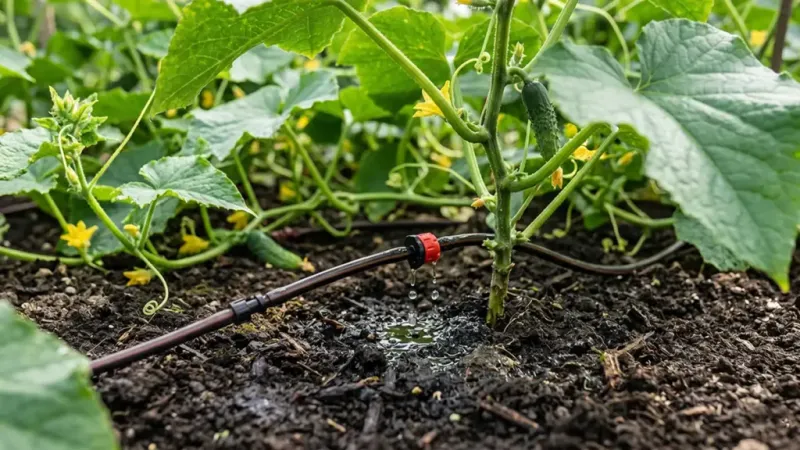
Once the soil check confirms a dry root zone, the corrective move is to water slowly and thoroughly at soil level rather than giving the foliage a quick spray. A soaker hose, drip line, or low-volume stream aimed at the base of the plant delivers moisture where roots can actually use it.
Utah State University’s cucurbit irrigation guidance recommends drip or targeted irrigation for cucumbers because it keeps foliage dry and reduces the conditions that favor foliar disease.
University of Minnesota Extension’s hot-weather gardening guidance suggests watering in the morning when possible, giving the soil time to absorb moisture and allowing any incidental foliage contact to dry before evening. Avoid spraying the leaves as a rescue measure.
Wet foliage that stays damp for hours can increase disease pressure, and it does not address the root zone shortage that triggered the brown edges.
After watering, lay two to three inches of organic mulch around the plant, keeping it a few inches away from the stem to allow airflow. University of Georgia Cooperative Extension’s cucumber production guide recommends mulch to conserve soil moisture, moderate soil temperature, and reduce evaporation between waterings.
A general reference point of approximately 1 to 2 inches of water per week applies to many cucumbers, but Utah State Extension makes clear that this figure shifts with soil texture, rainfall, plant size, and growth stage. Let your soil conditions set the next watering date, not a fixed calendar entry.
Soggy soil can mimic drought stress
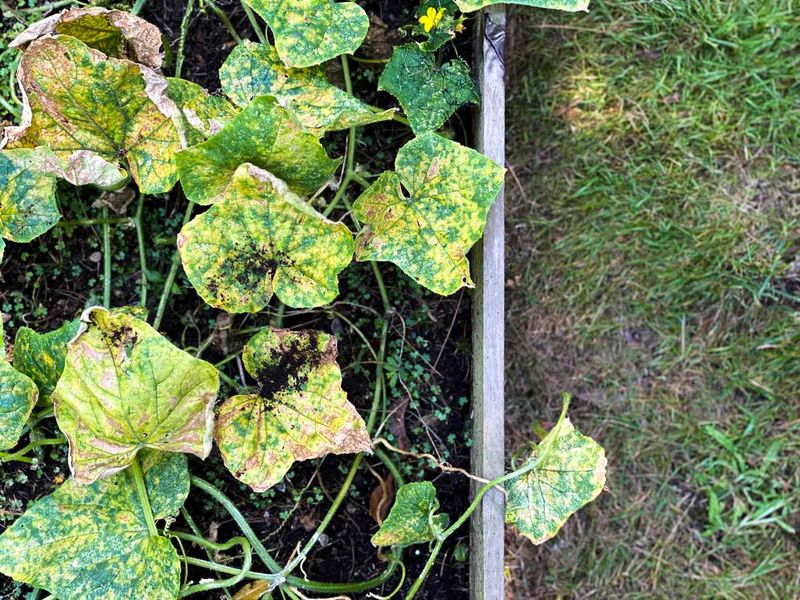
Brown leaf margins do not automatically call for more water. When the soil stays saturated or drains poorly, roots lose access to oxygen and begin to break down.
Damaged roots cannot move water up into the plant, so the vine shows the same above-ground symptoms as a plant that was never watered enough.
Texas A&M AgriLife Extension confirms that excess water can produce drought-like damage because root function is compromised regardless of how much moisture surrounds them. If your soil check reveals a soggy, slow-draining bed, pause irrigation and look at whether the bed has a drainage problem before deciding on any other change.
Adding more water to an already saturated root zone will deepen the problem rather than fix it.
Recovery from brown margins, whatever the cause, does not look like the damaged tissue turning green again. Colorado State Extension’s leaf scorch guidance makes clear that scorched, dead tissue is gone permanently.
The useful measure of improvement is whether the new leaves coming in at the growing tips stay healthy, green, and firm. You can remove badly damaged leaves with clean pruners to tidy the vine, but that step addresses appearance only.
Fixing drainage, adjusting moisture, or identifying the underlying cause is what protects the leaves that have not yet formed.
Inspect for clues beyond watering
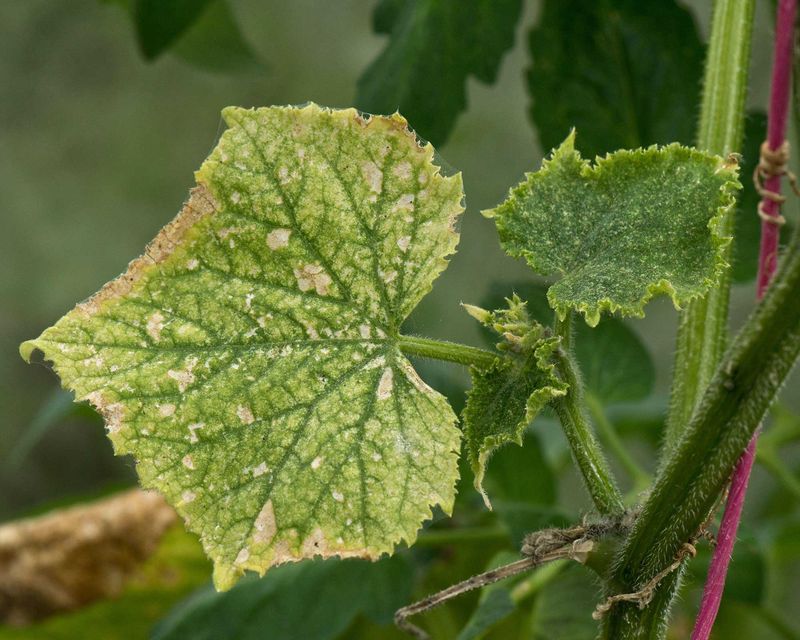
When the soil moisture situation does not clearly explain the damage pattern, a closer look at the leaves themselves can point you toward a different cause. Uniform crisping along the outermost leaf margin is the pattern most associated with heat or water stress, but several other problems produce brown discoloration that can look similar at first glance.
Downy mildew starts as pale or yellow spots, often with angular edges following the veins, and produces a gray-purple fuzzy growth on the underside of affected leaves. Angular leaf spot creates water-soaked lesions that turn brown, stay bounded by leaf veins, and may eventually drop out and leave ragged holes.
University of Minnesota Extension’s cucumber leaf diagnosis resource and Utah State University’s angular leaf spot fact sheet both describe these distinct visual patterns. Neither disease looks quite like a clean, uniform browning of the leaf edge.
University of Minnesota Extension’s spider mite guide explains that two-spotted spider mites are especially active in hot, dry weather and cause fine stippling, bleaching, or a bronze cast, often concentrated on the leaf underside with fine webbing visible when populations are high. Check undersides carefully with a magnifying glass if the pattern does not match simple marginal scorch.
A recent heavy fertilizer application, or white crusty deposits on the soil surface, raises the possibility of salt or fertilizer injury. University of Georgia Extension’s vegetable nutrition guide and Colorado State Extension’s saline soils resource both describe how excess salts restrict water uptake and produce dry, brown margins.
Do not respond to these symptoms by irrigating more heavily without addressing the salt source first. Finally, if a runner or the entire vine collapses suddenly and does not recover overnight, that pattern goes beyond marginal crisping.
University of Georgia Extension’s Southeast vegetable troubleshooting guide identifies bacterial wilt, spread by cucumber beetles, as a cause of rapid, irreversible vine collapse that warrants a separate inspection of stems and beetles.
Judge recovery by the leaves that grow next
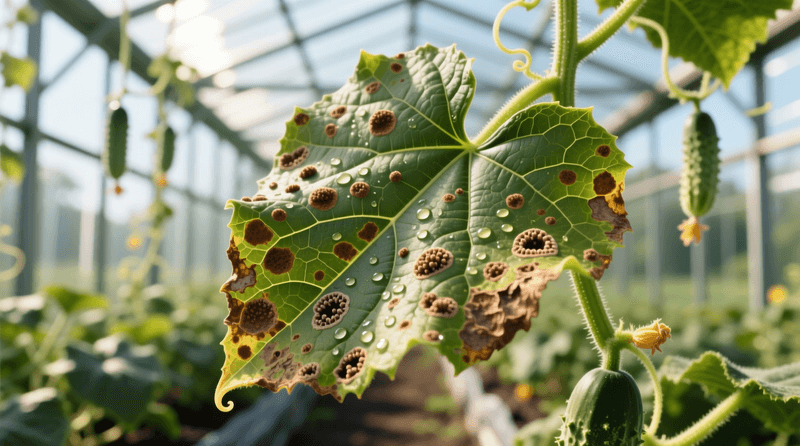
After adjusting your routine, resist the urge to keep adding water or changing other variables every few days. Utah State Extension’s cucurbit irrigation guidance points back to soil conditions as the ongoing guide, not a fixed schedule or a reaction to leaf appearance alone.
Check the root zone, water thoroughly when it is dry, hold off when it is not, and keep mulch in place to stabilize moisture between sessions.
The existing brown edges will not reverse. Colorado State Extension is direct on this point: dead tissue stays dead, and recovery shows up in new growth, not in the old margins turning green.
Watch the vine tips over the following week or two. If the newest leaves come in healthy and the plant continues to flower and fruit, your correction is working.
If browning continues on fresh leaves, or if the pattern shifts to something that looks like stippling, angular lesions, sudden wilting, or salt crust on the soil, revisit the other possibilities covered earlier. Texas A&M AgriLife Extension reminds gardeners that shallow or inconsistent watering is one common contributor to this symptom, not a guaranteed explanation.
Healthy new growth is the real verdict, and it takes observation to reach it.