
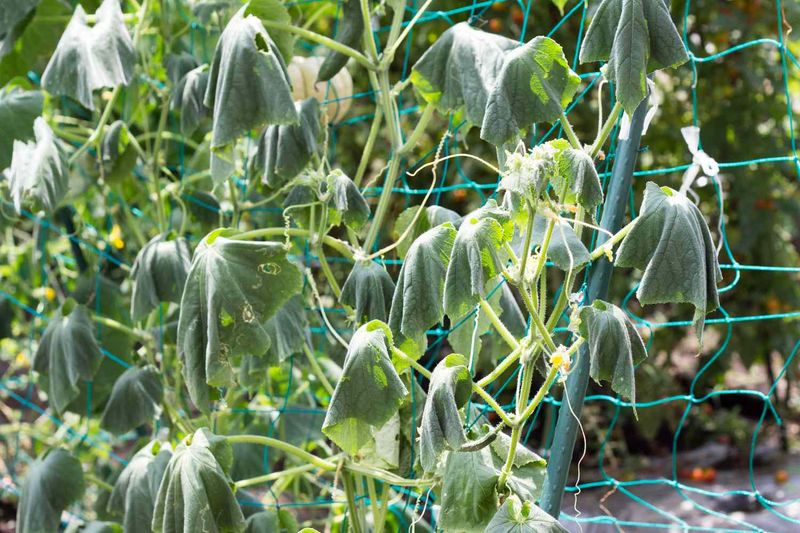
Walking out to your garden and finding a cucumber vine that was thriving just yesterday lying flat and lifeless is one of the most alarming things a home gardener can see. That overnight collapse points to a short list of serious possibilities, and bacterial wilt is near the top.
But heat, dry soil, stem damage, and insects can all produce the same scary picture, so the cause is worth checking before you act.
Overnight wilt raises a concern, but it does not identify the cause
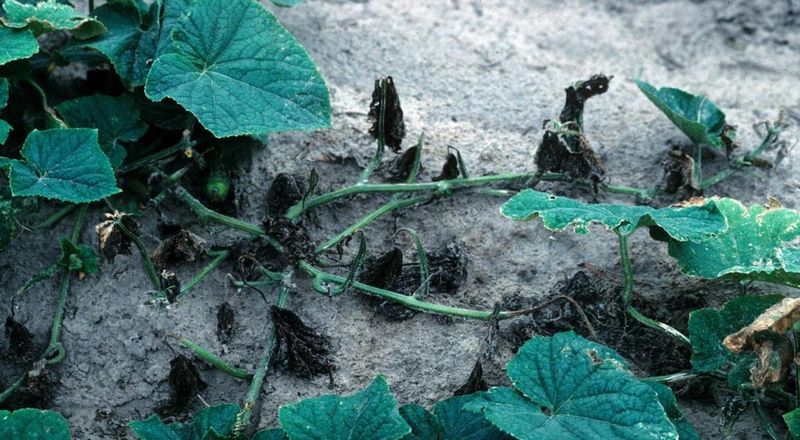
Waking up to a collapsed cucumber vine is alarming, and the urgency you feel is justified. The leading explanation worth investigating first is bacterial wilt of cucurbits, a disease caused by the bacterium Erwinia tracheiphila.
University of Minnesota Extension guidance on bacterial wilt explains that the pathogen multiplies inside the plant’s vascular tissue, blocking water movement and causing wilt that can spread from a single runner to the whole plant. Cucumbers rank among the most susceptible cucurbits, which is why bacterial wilt belongs at the top of the suspect list.
That said, overnight collapse is a symptom, not a verdict. A vine that wilts hard during the hottest part of the afternoon and then perks back up by early morning is often responding to heat or inadequate soil moisture rather than disease.
University of Georgia Cooperative Extension notes that heat stress can cause visible wilting without indicating a disease problem, especially when soil moisture is uneven.
What matters most is whether the plant stays wilted into the cooler morning hours. Wilt that does not recover overnight is more likely to reflect disease, root injury, or stem damage and deserves a closer look.
Keep in mind that what looks like a “whole vine” collapsing may actually be one runner or one section of the plant. University of Wisconsin-Madison horticulture guidance notes that bacterial wilt commonly progresses along individual runners before taking the entire plant.
The rest of this guide walks through the checks that help separate these causes.
Cucumber beetles provide the main bacterial-wilt pathway
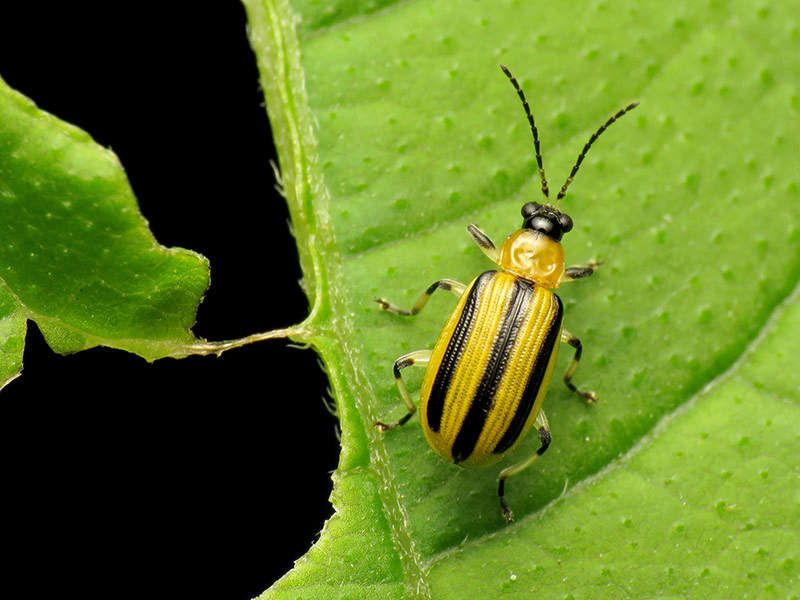
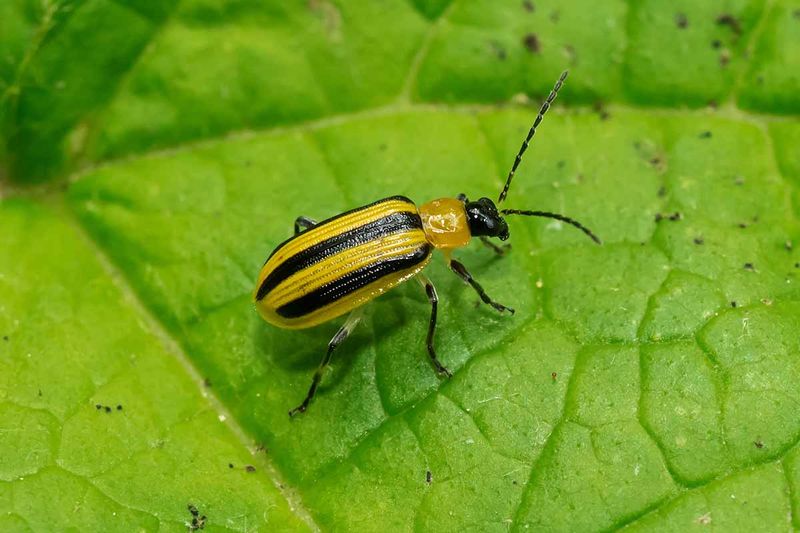
Striped and spotted cucumber beetles are the primary vehicles for Erwinia tracheiphila, the bacterium behind bacterial wilt. Striped cucumber beetles are yellow with three bold black stripes running the length of their bodies.
Spotted cucumber beetles are yellow-green with twelve black spots on their wing covers. Both species feed on cucurbit foliage, flowers, and growing tips, and that feeding is exactly how the disease gets inside a plant.
When a beetle carrying the bacterium chews through leaf or stem tissue, it leaves behind feeding wounds that allow Erwinia tracheiphila to enter the plant’s vascular system. Once inside, the bacteria multiply and gradually obstruct the tissue responsible for moving water through the vine.
University of Minnesota Extension’s cucumber beetle resource confirms that beetle feeding is the primary infection route, and the linked bacterial wilt management page describes how blocked vascular tissue leads to progressive wilt.
Late summer is a realistic window for beetle pressure. Penn State Extension research on striped cucumber beetles notes that a new beetle generation commonly emerges in July, and University of Florida IFAS guidance reports cucumber beetle activity in late-season cucurbit production in Florida.
Seeing beetles on your vine during this period makes bacterial wilt plausible, but beetle presence alone does not confirm the disease in any individual plant. The next step is checking how the vine behaves in the morning.
Check for morning recovery before diagnosing disease
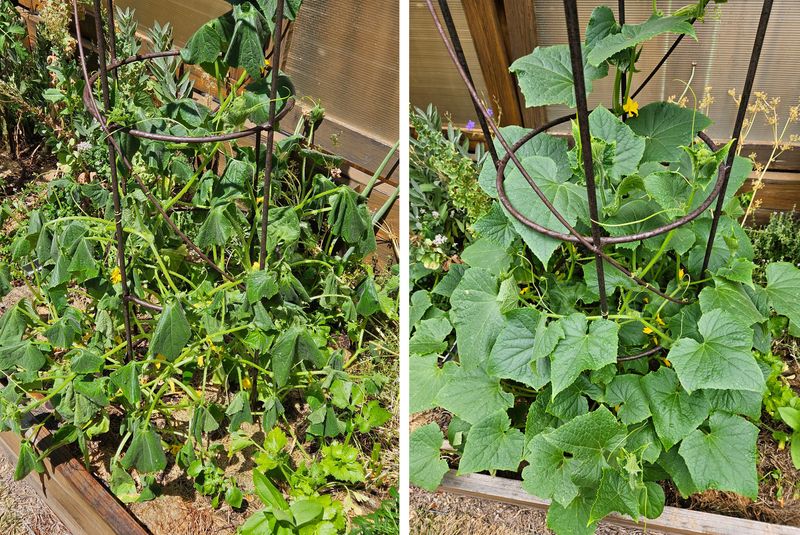
Before reaching any conclusions, go out to the garden early in the morning, before temperatures climb. A cucumber that was flat on the ground at noon but stands upright in the cool morning air is sending a clear message: the plant may have been dealing with heat or water stress rather than a disease.
That kind of overnight recovery does not rule out an underlying problem, but it shifts the most urgent concern away from bacterial wilt.
While you are checking the plant, assess the soil moisture at root depth rather than just looking at the surface. Dry soil a few inches down can cause a cucumber to collapse even when the top inch feels slightly damp.
University of Georgia Cooperative Extension and the UGA Troubleshooting Vegetable Production Problems guide both recommend checking soil moisture as part of diagnosing wilt in Southern vegetable gardens. Deep, thorough watering can correct genuine drought stress and may be all that is needed when the plant recovers on its own.
Heat often exposes or intensifies a problem without being the actual cause. A vine that is already stressed by shallow roots, compacted soil, or minor stem damage may wilt far more dramatically in high temperatures than a fully healthy plant would.
University of Minnesota Extension is clear that watering can correct water stress but cannot cure bacterial vascular disease or repair a stem that has been physically blocked or damaged. If the plant stays wilted into the morning even after water is available, move on to the physical checks described in the next sections.
Use the cut-stem test as supporting evidence
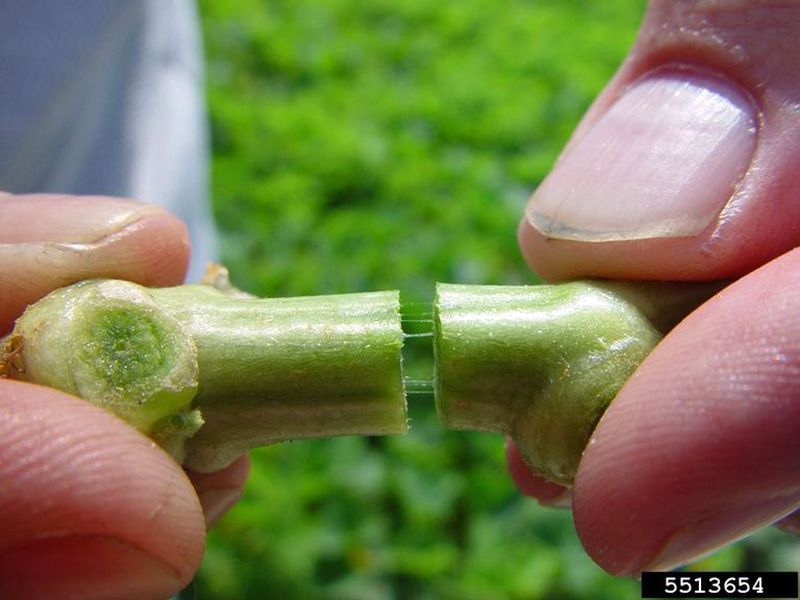
When morning wilt persists and you want a faster clue, the bacterial-stream test gives you one more piece of evidence to work with. Cut a wilted vine close to the crown with a clean knife, then press the two cut surfaces firmly together and pull them apart very slowly.
Thin, sticky strands stretching between the surfaces are a sign of bacterial streaming and strongly support a diagnosis of bacterial wilt.
University of Minnesota Extension and the University of Wisconsin-Madison bacterial wilt article both describe this test as a practical field method for supporting the diagnosis. The Oklahoma State University cucurbit disease identification guide also references bacterial streaming as a diagnostic indicator worth checking in the field.
Read the result carefully on both sides. Visible sticky threads strengthen the case for bacterial wilt and justify moving toward plant removal.
However, not seeing threads does not clear the plant. The strands can be difficult to detect, especially if the infection is early or the sample is taken from a less affected section of the vine.
A negative result simply means the test was inconclusive, not that the plant is healthy.
When the visual checks conflict or the plant shows unusual symptoms you cannot explain, University of Minnesota Extension’s diagnostic help resource for vegetable growers points to county Extension offices and plant diagnostic laboratories as the right next step. Laboratory diagnosis provides certainty when your decision could affect a larger cucurbit planting nearby.
Inspect the crown and lower stem for look-alikes
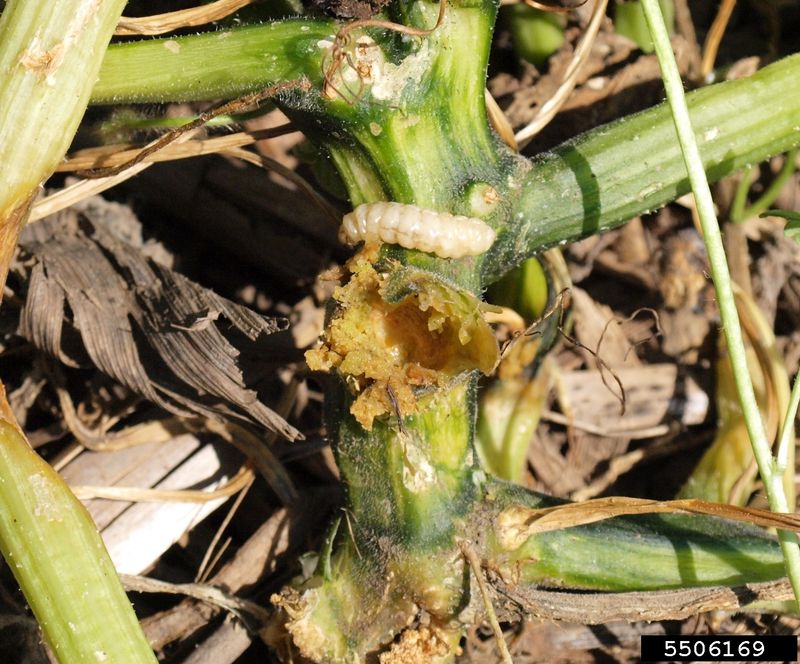
Before attributing a wilted cucumber to bacterial disease, get down and look at the base of the plant. A physical inspection of the crown and lower stem takes less than two minutes and can reveal a completely different problem that mimics bacterial wilt almost perfectly.
Squash vine borer is one of the most convincing look-alikes. The larvae of this moth bore into the base of cucurbit stems and block water movement from the inside, causing sudden and severe wilt.
The telltale clues are a small entrance hole near the stem base and a pile of sawdust-like frass around it. University of Wisconsin-Madison’s squash vine borer article describes these signs clearly and notes that this pest is far more strongly associated with squash, zucchini, and pumpkins than with cucumbers.
Still, if you find a hole and frass on a cucumber stem, the borer is worth considering before you pull the plant.
Squash bugs are another possibility worth checking. These gray-brown insects cluster on the undersides of leaves and at the crown, and their feeding can cause wilting that looks similar to vascular disease.
University of Wisconsin-Madison’s squash bug resource describes their bronze egg clusters and damage pattern. If you spot the insects, their eggs, or feeding injury concentrated at the base of the plant, squash bugs may be contributing to the wilt.
Gardeners in Oklahoma should also be aware that cucurbit yellow vine disease has been documented in that state. Oklahoma State University’s pest alert on reemergent cucurbit disease describes this as a location-dependent problem rather than a general Southern diagnosis.
If you are in Oklahoma and see yellowing alongside wilt, contact your local Extension office for region-specific guidance. For most Florida and Texas gardeners, the crown inspection is mainly about ruling out borers, squash bugs, and physical stem damage before concluding that the problem is bacterial.
Remove a strongly suspected infected plant promptly
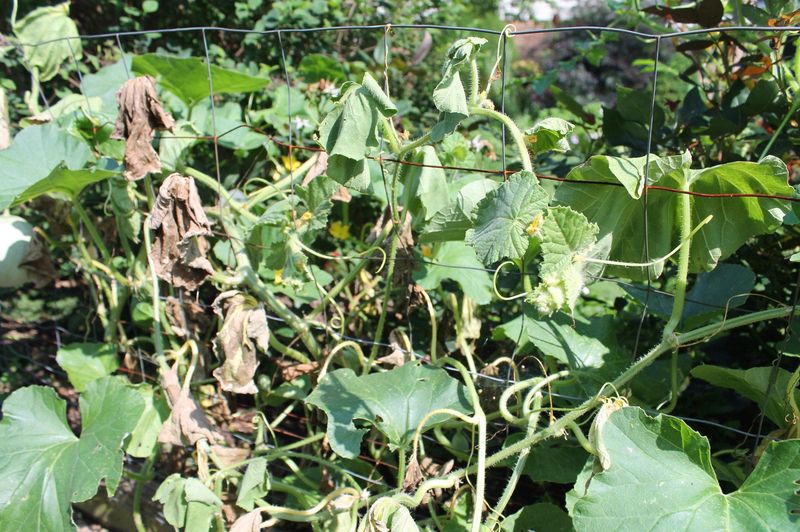
Once your checks point clearly toward bacterial wilt, the most protective thing you can do for the rest of your garden is remove the affected plant entirely. There is no treatment that cures a cucumber already infected with Erwinia tracheiphila.
University of Minnesota Extension is direct on this point: an infected plant cannot be saved, and leaving it in the ground gives beetles additional time to feed on it, acquire the bacterium, and carry it to healthy plants nearby.
Pull the entire plant, including as much of the root system as you can reach, and dispose of it away from the garden. Do not compost it.
University of Wisconsin-Madison’s cucumber beetle article explains that beetles can pick up and transmit Erwinia tracheiphila from infected plant tissue, so leaving a wilted plant in place effectively extends the infection window.
Reaching for a fungicide at this stage will not help. Bacterial wilt is not a fungal disease, and no fungicide addresses a bacterium that has already colonized the vascular tissue of a plant.
The problem is biological and structural, not something a spray can reverse.
After removing the plant, walk the rest of your cucurbit beds carefully. Check cucumbers, melons, squash, and pumpkins for cucumber beetle feeding injury, which often appears as shallow scarring or irregular holes on leaves.
University of Minnesota Extension’s cucumber beetle page and the Utah State University cucumber beetle guide both recommend scouting nearby plants after a problem is found. For a small garden, hand-picking beetles into a container of soapy water is a practical and immediate response that does not require any chemicals.
Protect healthy cucurbits with exclusion and cleanup
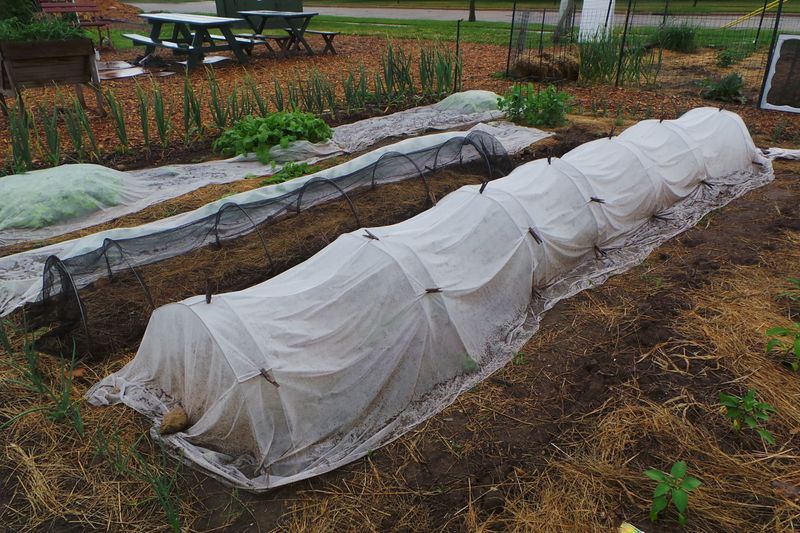
Reducing beetle pressure on the plants that are still healthy is the most direct thing you can do after dealing with an infected vine. Floating row covers placed over young cucurbit transplants physically block beetles from reaching the plants during the most vulnerable early weeks.
University of Minnesota Extension recommends row covers as one of the most effective non-chemical tools for keeping cucumber beetles away from young plants.
There is a critical timing requirement, though. Row covers must come off when cucumber plants begin flowering.
Cucumbers depend on bee pollination to set fruit, and a cover that stays on through bloom will prevent bees from reaching the flowers. Penn State Extension’s vegetable garden troubleshooting guide includes poor pollination as a common cause of production failure in cucurbits.
If you want to keep covers on longer, you will need to hand-pollinate each flower yourself, which is manageable in a small planting but time-consuming at scale.
Garden cleanup matters more than many growers realize. Spent vines, weeds at the garden edge, and plant debris can shelter cucumber beetles between seasons.
Utah State University’s cucumber beetle management guide recommends clearing these materials promptly after the crop ends.
Crop rotation reduces the chance that beetles and disease pressure build up in the same spot year after year. Oklahoma State University cucumber production guidance and Texas A&M AgriLife Extension disease management guidance both recommend rotating cucurbits to different garden areas when space allows.
Pairing rotation with deep, root-zone irrigation as recommended by UGA Extension rather than frequent shallow watering also helps plants handle heat stress without wilting unnecessarily, reducing the confusion between stress symptoms and disease.
Use pesticides only when the label and risk justify them
Insecticide is not the first response to a cucumber beetle problem, and it is never the right response to a plant already infected with bacterial wilt. Scout your plants first.
If beetle numbers are low and you can reach the insects by hand, picking them into a cup of soapy water is safer for bees and other beneficial insects than any spray application.
When scouting shows that beetle pressure is genuinely high on healthy plants and exclusion is not practical, a targeted insecticide becomes an option worth considering carefully. Any product you use must be specifically labeled for use on cucumbers and for control of cucumber beetles.
All label directions, pre-harvest intervals, and pollinator-protection restrictions must be followed exactly. EPA pollinator protection guidance and EPA tips for reducing pesticide impacts on wildlife both emphasize reading and following label language on bloom-time and foraging restrictions.
Never apply an insecticide while bees are actively foraging on open flowers. University of Minnesota Extension’s cucumber beetle resource recommends evening applications when bees are less active if a labeled product is used.
Applying in the morning when flowers are open and bees are foraging risks harming the very pollinators your cucumber plants depend on. And as University of Minnesota Extension notes on bacterial wilt, no insecticide can cure a cucumber vine that is already infected.
Chemical control is strictly a preventive or population-reduction tool, not a rescue measure.
Let the evidence—not the timing—choose the culprit
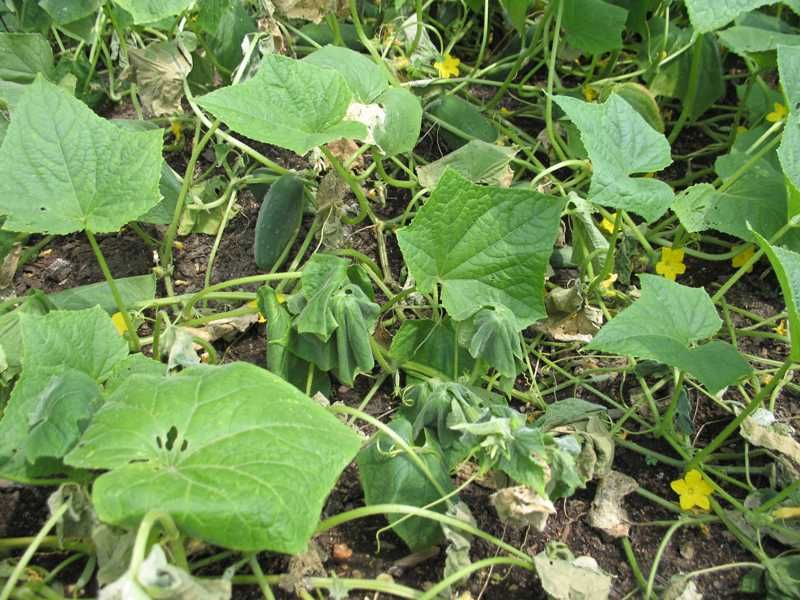
Late summer heat and an overnight collapse create real urgency, but they do not point to a single cause on their own. Work through the checks in order: see whether the plant recovers by morning, assess soil moisture at root depth, look for cucumber beetles and feeding injury, perform the stem-stream test, and inspect the crown and lower stem for borer holes, frass, or squash bug activity.
Each check narrows the list.
If the evidence strongly supports bacterial wilt, remove the plant and scout nearby cucurbits. If the plant recovers overnight, correct the watering and monitor closely.
University of Minnesota Extension and University of Georgia Cooperative Extension both frame wilt diagnosis as a process of ruling out causes rather than jumping to the most dramatic explanation.
When the signs conflict or the symptoms are unusual, send a sample to your county Extension office or a plant diagnostic lab. University of Minnesota Extension’s diagnostic help resource outlines how to get a laboratory diagnosis, which is especially worthwhile when the decision could affect a larger cucurbit planting.
A collapsed vine is worth taking seriously, but the gardener who checks before acting is the one most likely to save the rest of the garden.