
Pulling a cucumber off the vine only to find it bitter or oddly hollow inside is one of summer’s most discouraging garden moments. Many gardeners blame the heat, but the real story is a little more complicated and a lot more fixable. Uneven watering is a common contributor to bitter fruit and can play a role in some hollow or misshapen cucumbers, though hollow fruit in particular has several possible causes. Understanding what is actually happening lets you make changes that help new fruit come in better, even when the cucumbers already on the vine are a lost cause.
Uneven moisture is the first fix to test
Damaged summer cucumbers are genuinely frustrating, and the temptation is to look for one clean explanation. The truth is that repeated swings between very dry soil and heavy watering are a well-supported contributor to bitterness, misshapen fruit, and poor fruit quality in cucumbers, particularly when plants are actively flowering and sizing up during hot or dry stretches. Utah State University Extension notes that water stress during these growth stages can produce bitter, pointed, and misshapen cucumbers with poor flavor and color.
Steadier moisture is the first practical intervention worth testing. It will not reverse problems in fruit that has already formed badly, but it creates better conditions for the cucumbers still developing on the vine. Think of it as resetting the environment for the next wave of fruit rather than rescuing what is already there.
The case for moisture consistency is strong for bitterness, and USU’s cucurbit irrigation guidance specifically identifies inconsistent watering during fruit set and enlargement as a cause of sizing and quality problems. For hollow fruit, however, the picture is less clear-cut. Illinois Extension links bitterness to moisture stress, high temperatures, temperature swings, and poor nutrition, which signals that steadier watering is a productive first step, not a guaranteed fix for every cucumber problem you encounter.
Heat raises water demand, but several factors can cause bitterness
Hot, windy days push cucumber plants hard. Water evaporates faster from both the soil and the leaves, and plants that are flowering or sizing fruit need to pull more moisture from the root zone to keep up. When that moisture is not reliably available, the plant responds with stress, and one measurable result is a rise in cucurbitacins, the naturally occurring compounds associated with bitterness in cucumbers. University of Minnesota Extension notes that cucurbitacin concentration varies by variety and tends to be highest near the skin and blossom end.
Heat can intensify that stress, but it is not the only path to a bitter cucumber. Illinois Extension also ties bitterness to inadequate moisture, poor nutrition, cool conditions, and abrupt temperature swings. A recent Minnesota Extension vegetable update specifically calls out cool weather and large temperature swings as triggers, which means a bitter cucumber in early summer or after a cool spell is not necessarily a heat problem at all.
Variety also matters more than many gardeners expect. Some cucumber types carry a stronger natural tendency toward bitterness regardless of how well they are watered. Improved watering practices can reduce stress-related bitterness in susceptible plants, but they will not override a variety’s baseline cucurbitacin levels. That distinction is worth keeping in mind before writing off an entire season’s harvest as a watering failure.
Hollow cucumbers require a separate diagnosis
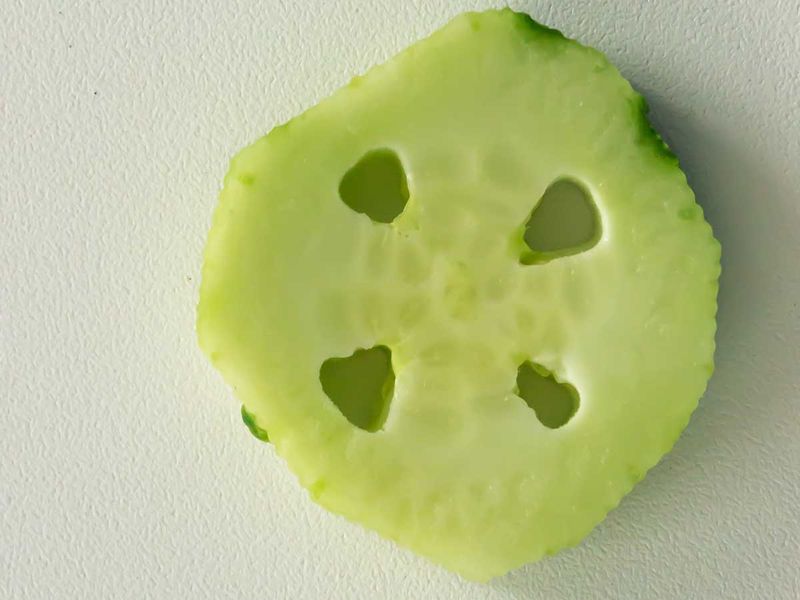
Finding a hollow center in a cucumber does not automatically point to a watering mistake. Hollow heart in cucumbers is a physiological disorder with multiple documented causes, and sorting out which one applies to your plants takes a closer look at what the fruit actually looks like inside and what conditions surrounded it during development.
Research has linked internal hollowness to an interplay of factors including prolonged water shortage, high soil nitrogen, abrupt temperature changes, genetics, and the specific variety being grown. A published study on hollow trait formation in cucumber fruit and related research on auxin and cell-wall development in hollow cucumbers both point to these interacting variables rather than a single cause. Water stress is one piece of the puzzle, but it shares the frame with nitrogen levels, temperature patterns, and the plant’s own genetic predisposition.
A different problem entirely can also produce what looks like hollowness. Fruit with very few or poorly developed seeds, a flattened shape, or poor interior expansion may be pointing toward inadequate pollination rather than a hollow-heart disorder. UC Statewide IPM guidance on poor pollination in cucurbits and Penn State Extension’s cucumber pollination overview both describe how incomplete pollination can result in misshapen, lightly seeded, or poorly filled fruit.
Before settling on a cause, note whether the fruit is uniformly hollow with no seed cavity, sparse on seeds, or misshapen from one end. Each pattern points in a different direction and calls for a different response.
Check the soil instead of following a calendar
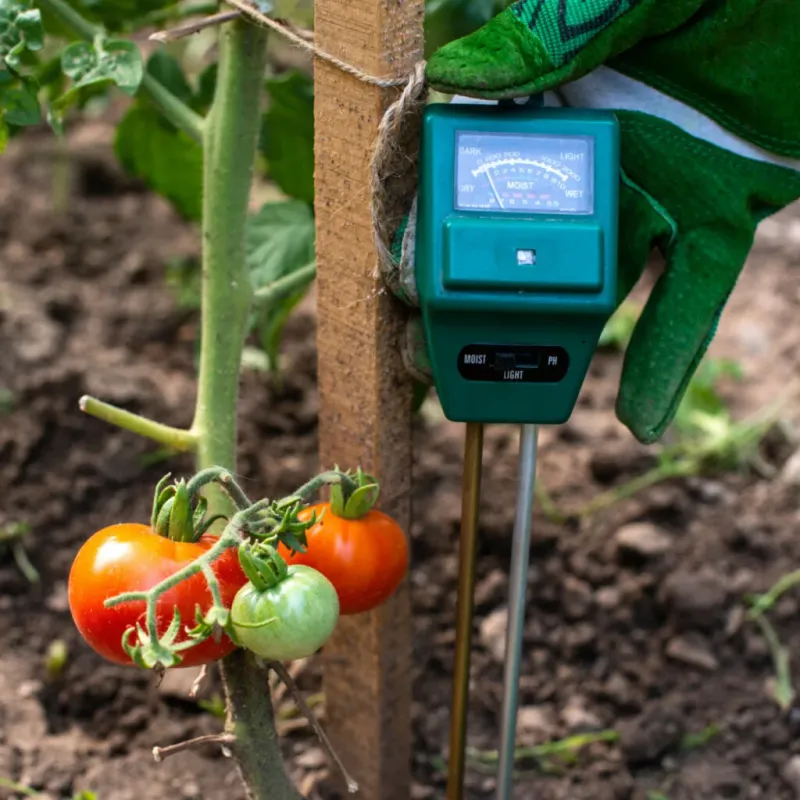
A fixed watering schedule feels reassuring, but soil does not read the calendar. Watering every day on a set routine can overwater heavy clay soils while leaving sandy beds or containers running dry by afternoon. The more reliable approach is to check what is actually happening at root level before deciding whether to water.
Push a finger or a narrow tool into the soil beneath the mulch and feel whether it is dry about 2 inches below the surface. University of Minnesota Extension’s vegetable garden watering guidance advises using this 2-inch check as the trigger for irrigation rather than relying on a universal daily rule. If the soil at that depth feels moist, the plant does not need water yet, regardless of what the thermometer says.
For established cucumber plants, roughly 1 to 2 inches of water per week is a reasonable starting range, as recommended by Utah State University Extension. That benchmark shifts considerably depending on conditions. Sandy soil drains faster and needs more frequent attention than loam or clay. Containers dry out much quicker than in-ground beds.
A week of strong wind or temperatures above 90 degrees Fahrenheit can push plants toward drought stress faster than a cooler, calmer week would.
Penn State Extension’s drip irrigation guidance for vegetables reinforces that run times should account for soil type and plant demand rather than a fixed interval. Recent rainfall also counts. If a half-inch of rain fell two days ago and the soil still feels moist at 2 inches, skip the scheduled watering and check again the next day. Soil moisture, not the date, should make the call.
Apply water slowly and keep the root zone steady
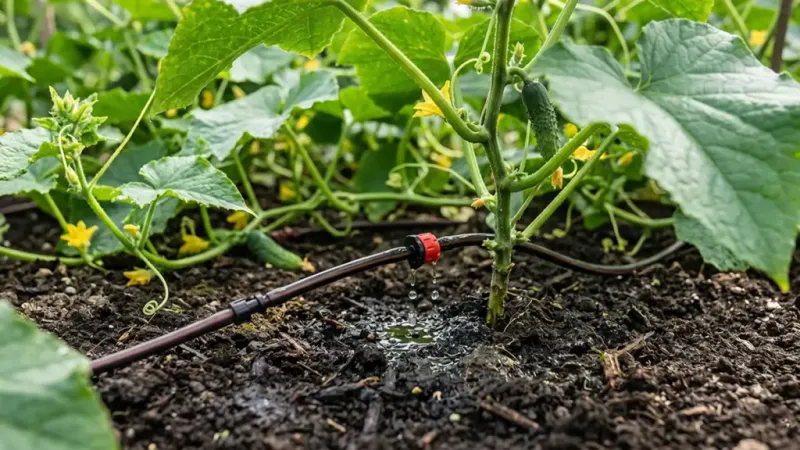
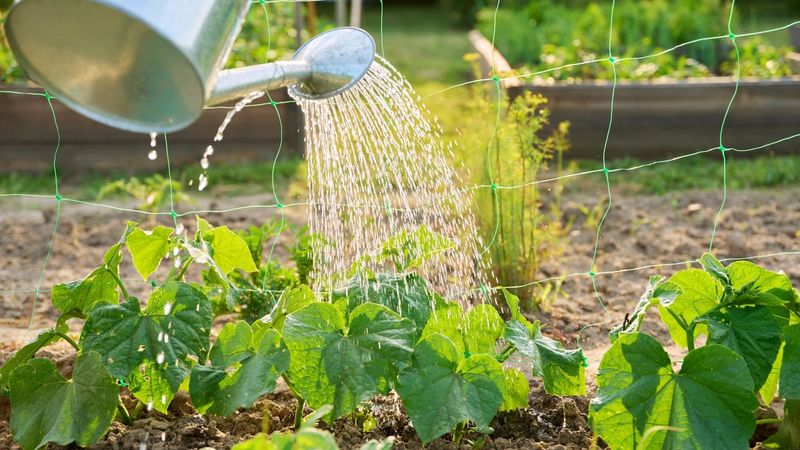
Once you know the soil is dry enough to need water, how you deliver it matters as much as the timing. A quick blast from a sprinkler wets the surface but often runs off before it reaches the root zone, leaving the soil below still dry. A slow, deep soak at the base of the plant is more effective at building the steady moisture cucumbers need during fruiting.
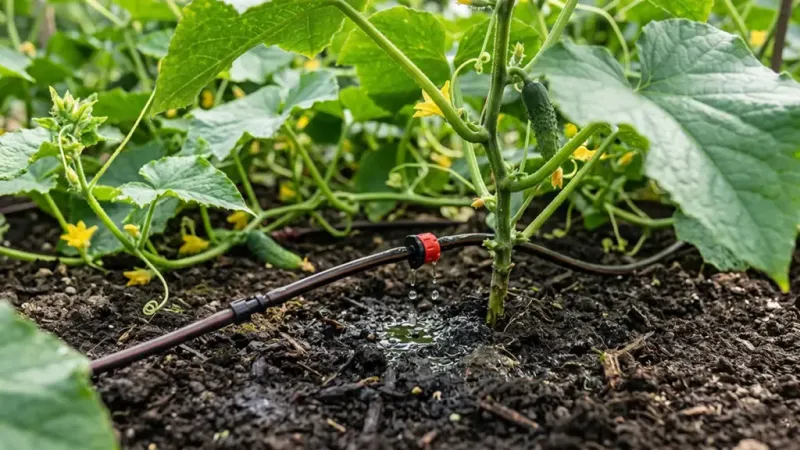
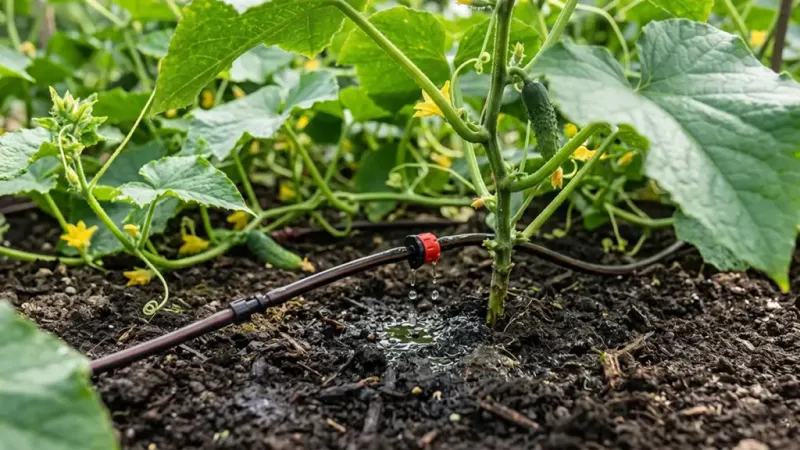
Drip irrigation, a soaker hose laid along the row, or a slow trickle from a regular hose near the plant’s base all work well for this purpose. Utah State University Extension recommends these low-flow methods for cucumbers because they reduce evaporation, keep foliage dry, and deliver water where roots can actually use it. Minnesota Extension similarly favors deep watering at the root zone over frequent light sprinkling.
Morning is a good time to water when the schedule allows, since soil absorbs moisture before peak heat sets in. However, if you check the soil in the afternoon and find it dry while the plant is showing real drought stress, water promptly rather than waiting until the next morning. Minnesota Extension’s fruit-crop dry-spell tips support responding to confirmed drought stress rather than rigidly waiting for a preferred time of day.
Mulch helps slow evaporation and can moderate how quickly the soil dries between waterings, but it can also mask how dry the root zone has become. Always pull it back and check the soil beneath before assuming the plants are fine. USU’s cucurbit irrigation guidance cautions against keeping the soil saturated, so the goal is steady and adequate moisture, not a constantly wet bed.
Look beyond water when the pattern persists
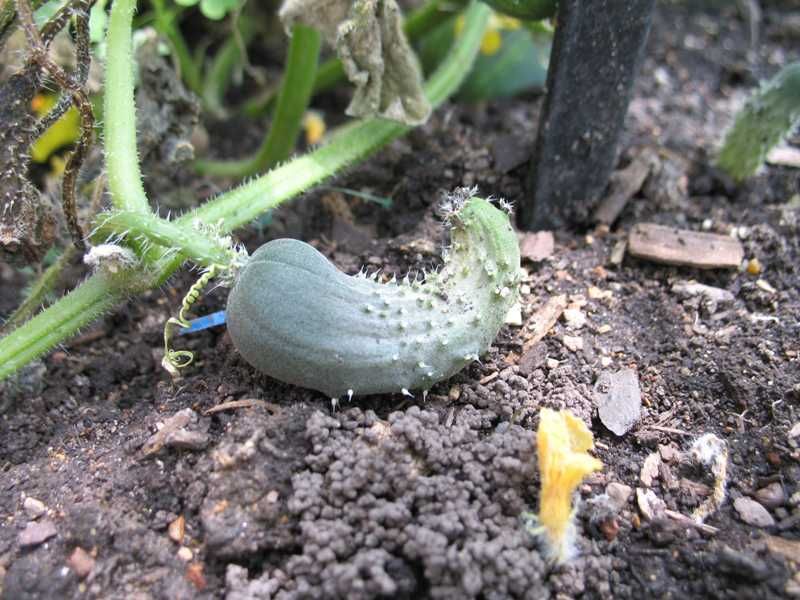
Steadier watering is a productive first step, but some cucumbers stay hollow, misshapen, or bitter even after moisture becomes more consistent. When that happens, the remaining candidates worth examining are pollination, nutrition, temperature patterns, and variety.
Fruit that is small, flattened, or tapered at one end, or that contains very few or poorly filled seeds, is a stronger sign of a pollination problem than a watering problem. UC IPM’s cucurbit pollination resource explains that incomplete pollination can produce misshapen or lightly seeded fruit that may appear hollow or poorly expanded. Penn State Extension’s cucumber pollination page notes that hot, rainy, cold, or otherwise unfavorable weather can reduce bee activity during the window when flowers need to be visited. Insecticide applications near blooming plants can also harm the pollinators cucumbers depend on.
If the fruit looks normally shaped but has a true internal cavity, hollow-heart research points toward high soil nitrogen, abrupt temperature changes, or varietal susceptibility as additional contributing factors. Excess nitrogen can push leafy growth at the expense of fruit development, so a soil test or a switch to a lower-nitrogen fertilizer may be worth considering.
Variety is another lever that often gets overlooked until the end of the season. University of Minnesota Extension notes that some cultivars are bred for reduced bitterness, which can lower cucurbitacin levels in a way that better watering alone cannot achieve. Choosing one of those varieties next season is a practical prevention option, though it will not guarantee zero bitterness under all conditions.
Harvest young fruit and reject extreme bitterness
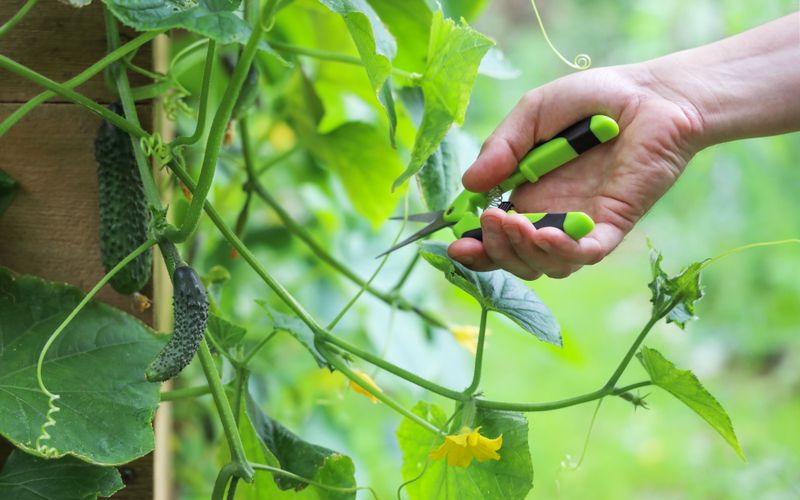
Picking cucumbers at the right time is one of the simplest ways to protect quality. Oregon State University Extension’s cucumber growing guide advises harvesting while fruits are young and before they yellow or develop hard seeds. Leaving cucumbers on the vine too long signals the plant to slow down production, so frequent picking keeps new fruit coming and avoids the quality drop that comes with overmature cucumbers.
Bitterness tends to concentrate near the skin and at the blossom end, so peeling and trimming those areas sometimes reduces mild bitterness enough to make the cucumber edible. Minnesota Extension confirms that cucurbitacin levels are typically highest in those zones. However, peeling is not a reliable rescue for a cucumber that tastes strongly bitter throughout.
Extremely bitter cucumbers should be discarded rather than eaten. Oregon State University Extension warns that unusually high cucurbitacin levels, which are more common in volunteer or unidentified cucurbit fruit, can cause gastrointestinal symptoms. If you find a cucumber that is intensely bitter from the first bite, do not try to cook it down or work around it. That guidance applies especially to any volunteer cucumber-family plant that sprouted on its own, since its origin and cucurbitacin content are unknown.
Hollowness alone is not a safety indicator, but fruit that smells off or shows visible spoilage should also be discarded without question.
Stabilize moisture, then reassess new fruit
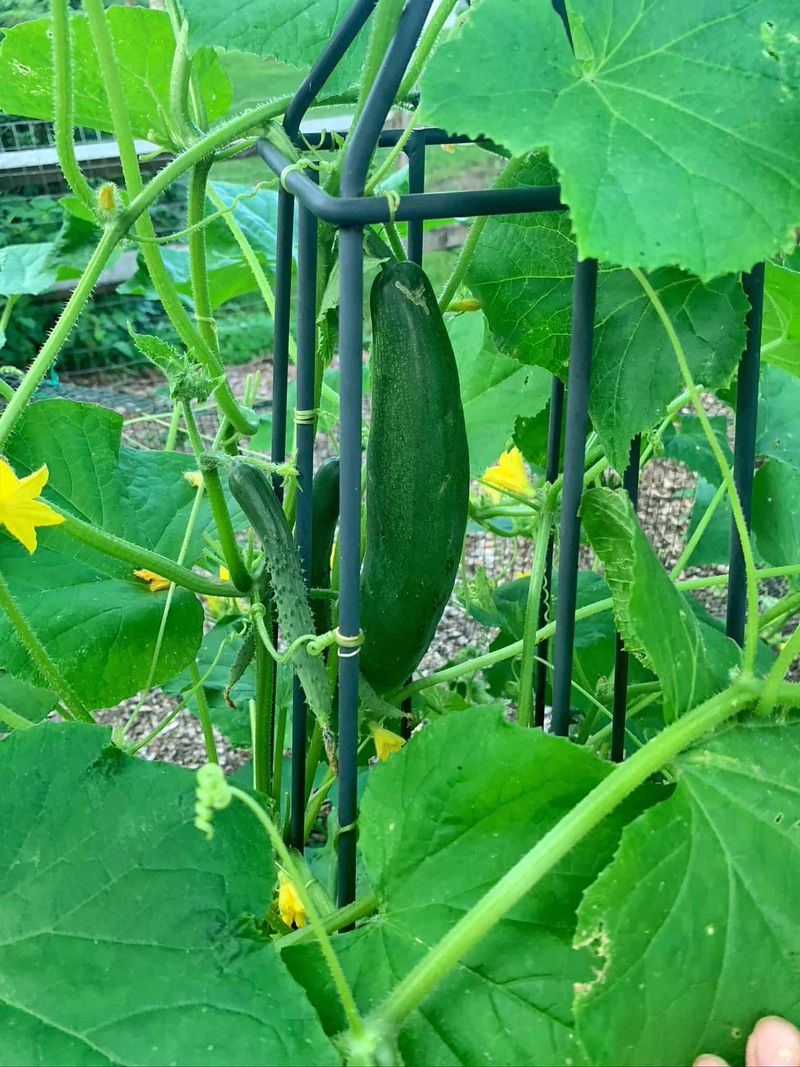
The practical sequence for getting better cucumbers from the rest of the season is straightforward. Check the soil beneath the mulch, water deeply at the root zone when the top 2 inches are dry, and adjust your timing and volume based on weather, soil type, and rainfall rather than a fixed daily routine. USU’s cucurbit irrigation guidance and their general cucumber growing resource both frame the goal as relatively stable root-zone moisture, not perpetually wet soil.
Steadier moisture is the best first fix for stress-related bitterness. If new fruit still comes in hollow, misshapen, or persistently bitter after conditions improve, shift the investigation toward pollination, soil nitrogen, temperature patterns, and variety, all of which hollow-heart research identifies as documented contributors. A garden that produces one difficult summer is not a broken garden – it is one that just gave you a more specific set of clues to work with next time.