
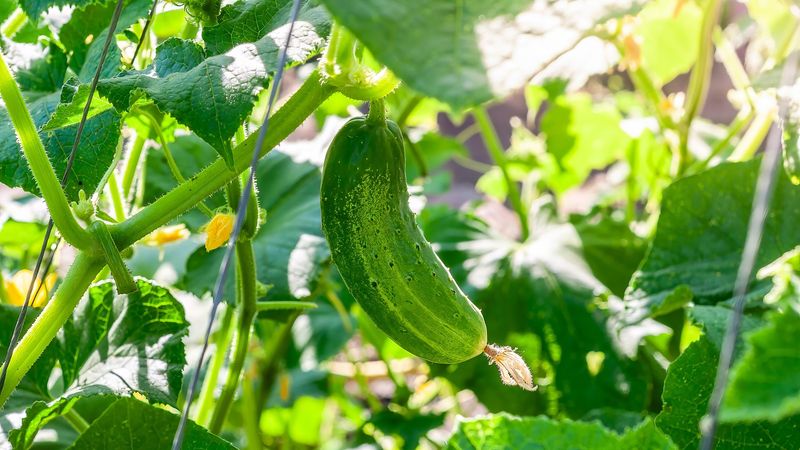
August is the month when cucumber vines hit their fastest growth, and that speed catches a lot of gardeners off guard. A cucumber that looked perfect two days ago can balloon into a thick, seedy, pale fruit almost overnight. Getting the timing right on harvest makes a real difference in what ends up on your plate, and understanding why cucumbers go wrong helps you fix the problem at the source.
Use the cultivar’s harvest size as your first rule
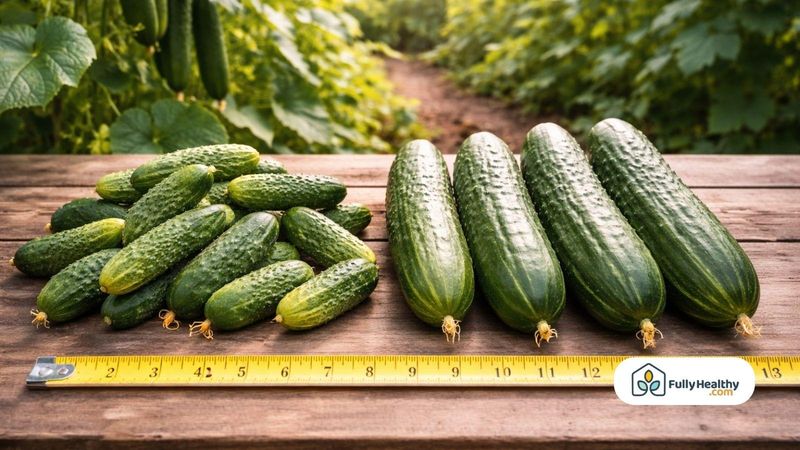
Your seed packet is the single most reliable guide to picking cucumbers at the right moment. Most slicing cucumber varieties are best harvested somewhere in the range of 6 to 8 inches long, though some cultivars reach their peak closer to 6 to 10 inches, and pickling types are usually pulled much smaller, often between 2 and 6 inches depending on whether you want them for whole pickles, spears, or chips. Oregon State University Extension guidance on growing cucumbers recommends checking the cultivar description first, because size thresholds vary enough across varieties that a single universal rule will send some gardeners harvesting too late and others too early.
The most useful cue is firmness combined with size. A cucumber at its ideal harvest stage feels solid all the way through, holds its characteristic green color for its variety, and has skin that is still tender enough to dent slightly with a fingernail. Waiting for any other visual signal, such as a change in color or a dramatic increase in girth, often means the fruit has already passed its prime eating quality.
Harvest timing protects texture, seed development, and overall eating quality. It is not, however, a complete explanation for every bitter cucumber you encounter. Bitterness has several possible causes beyond the vine, and those are worth understanding separately so you are not chasing the wrong fix.
What a missed harvest does to standard green cucumbers
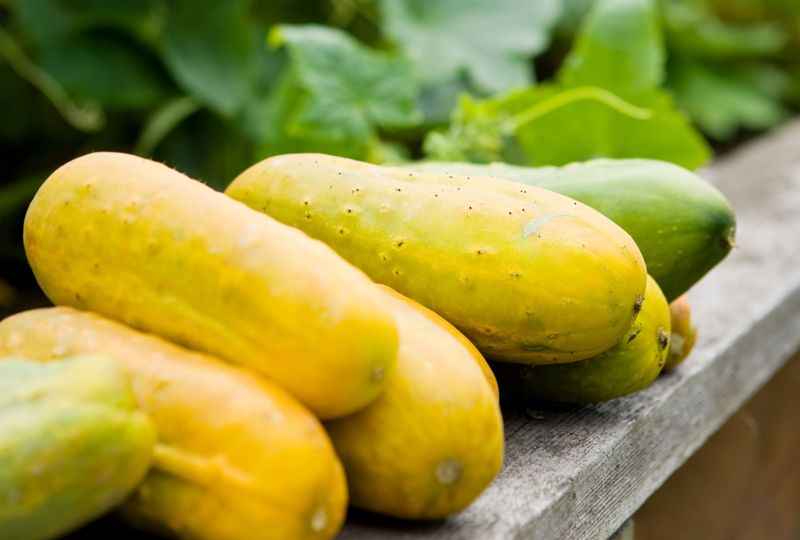
Cucumbers grow fast in summer heat, and a fruit left on the vine even a few extra days past its ideal harvest stage can change dramatically. The skin thickens and toughens, the interior flesh becomes more watery or spongy, and the seeds enlarge and begin to harden. University of Georgia Cooperative Extension notes that cucumbers should generally be harvested before the skin turns yellow and before seeds harden, because both changes signal that eating quality has declined significantly.
Yellowing in a standard green slicing or pickling cucumber is a reliable warning sign of over-maturity, but it is worth pausing before assuming that color alone tells the whole story. Some cultivars naturally produce pale green, yellow, white, or striped fruit at full maturity, so yellowing is mainly a concern when it conflicts with what your variety is supposed to look like. Colorado State University Extension points out that color change means something different depending on the cucumber type, so knowing your variety matters before drawing conclusions.
Bulging, misshapen, or heavily seeded fruit is not always the result of a delayed harvest either. Poor pollination, moisture stress, temperature extremes, disease, and cultivar characteristics can all produce similar-looking fruit, as Penn State Extension notes in its guidance on cucumber production. Keeping over-maturity and these other causes distinct helps you respond to the right problem instead of assuming every odd-looking cucumber is simply one you forgot to pick.
Check fast-growing vines before fruit gets away from you
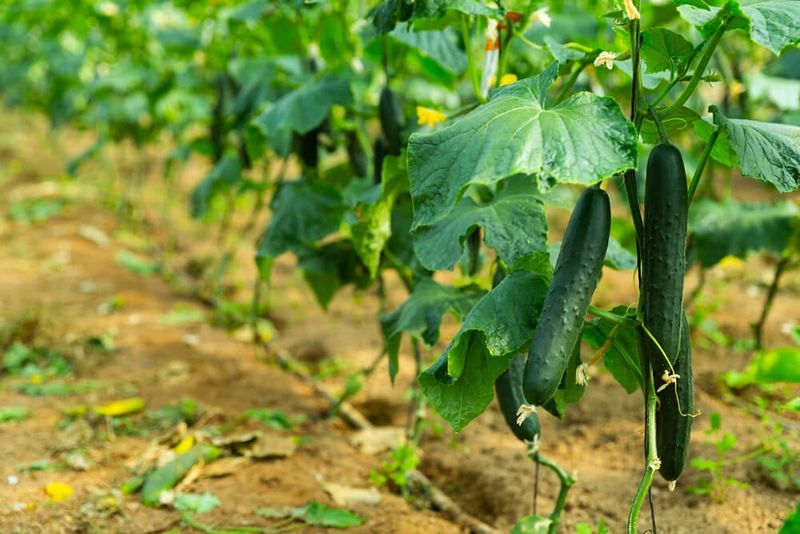
Building a checking habit is more effective than trying to remember a fixed picking day. Illinois Extension’s cucumber growing guide recommends inspecting plants at least every other day during heavy production, with daily checks often being the most practical approach for pickling types. Slicing cucumbers typically develop a little more slowly and can often be harvested every two to three days, but that schedule can shift quickly when temperatures rise and vines are producing at full speed.
Cucumber fruit hides well. Large leaves drape over developing cucumbers, and fruit growing along a trellis can tuck itself behind wires or stems. A thorough check means gently moving foliage aside and running your hand along every section of vine rather than doing a quick visual scan from a standing position. Missing one hiding spot is how an average-sized cucumber turns into a pale, puffy one by the next time you look.
Removing missed or over-mature fruit when you find it is part of the routine, not an optional extra step. Old fruit left on the vine can divert the plant’s energy toward seed development and may reduce new fruit production, though the effect depends on the plant’s overall health and how many mature fruit are present at once. Pulling one forgotten cucumber is unlikely to stop a healthy vine permanently, but making a habit of clean removal tends to keep production more consistent through the rest of the season.
Yellow, bulging, or seedy fruit needs a diagnosis
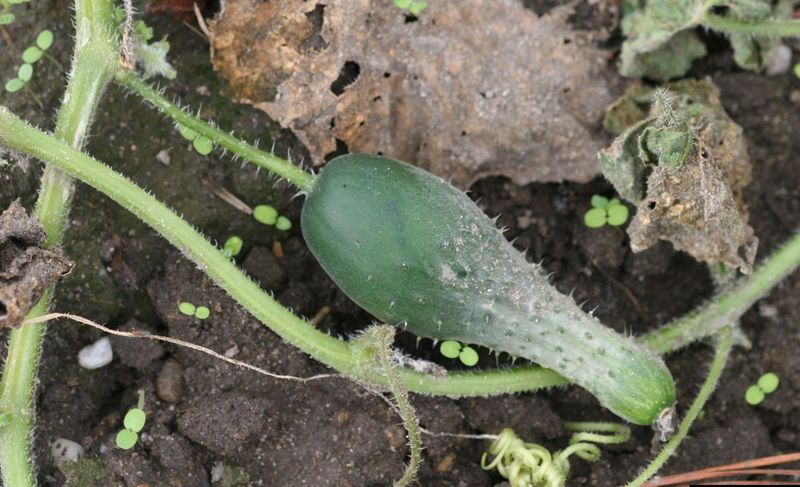
Not every unusual cucumber points to the same problem. Yellowing in a variety that is supposed to stay green can indicate over-maturity, but Colorado State University Extension guidance on cucumbers makes clear that some cultivars naturally produce yellow, pale, or striped fruit, so color alone is not a diagnosis. Before treating a yellow cucumber as a harvesting failure, confirm what color your variety is actually supposed to reach at its ideal picking stage.
Bulging, bottle-shaped, or lopsided cucumbers often point to pollination problems rather than a missed harvest window. When flowers are not fully pollinated, only the fertilized end of the fruit tends to develop normally, creating the characteristic tapered or swollen shape. Moisture stress and temperature extremes can produce similar distortion, and the same is true for disease or unintended pollination in parthenocarpic greenhouse varieties that were bred to set fruit without seeds.
Penn State Extension notes that temperatures above approximately 90 degrees Fahrenheit can interfere with cucumber pollination and fruit set, which means August heat alone can cause fruit to develop abnormally regardless of when or how often you harvest. A seedy, misshapen cucumber grown during a heat wave may have nothing to do with how long it stayed on the vine. Working through possible causes one at a time, rather than defaulting to a single explanation, gives you a much better chance of actually improving the next round of fruit.
Bitterness has more than one possible cause
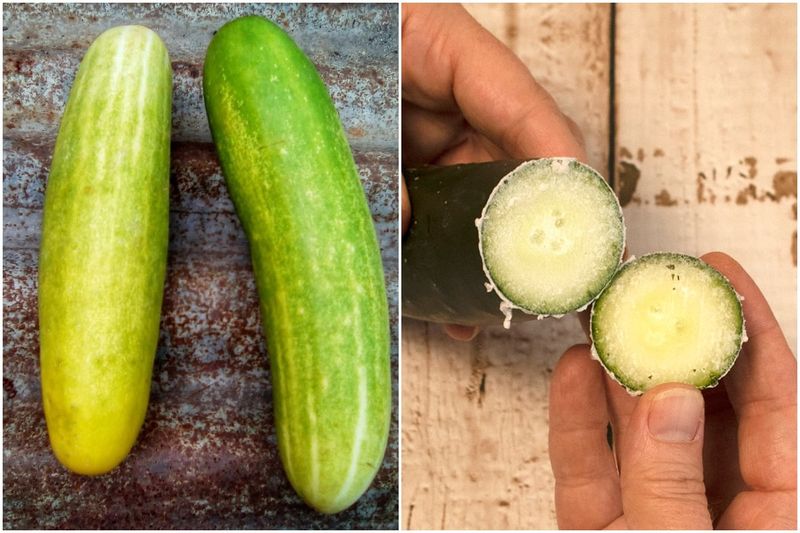
Bitter flavor in cucumbers comes from cucurbitacins, naturally occurring defensive compounds that plants produce in response to various stresses. University of Minnesota Extension explains that cucurbitacins tend to be more concentrated near the stem end of the fruit and just beneath the skin, which is why bitterness is often noticed most strongly at the blossom or stem tip rather than through the whole cucumber. The concentration of these compounds is affected by genetics, growing conditions, and stress, not by harvest timing alone.
Heat, drought, uneven watering, wide temperature swings between day and night, and poor soil nutrition are all recognized contributors to elevated cucurbitacin levels, according to Oregon State University Extension’s cucumber growing guidance. Cultivar genetics also play a meaningful role. Some older or open-pollinated varieties carry more bitterness than modern hybrids that have been specifically bred for low cucurbitacin content, and those differences show up regardless of when the fruit is picked.
August heat can increase plant stress and may contribute to bitterness or reduced fruit set, but it does not make every cucumber bitter. A cucumber harvested at exactly the right size can still taste bitter if the plant has been under moisture stress or if the cultivar is prone to the problem. OSU Extension’s heat stress guidance recommends addressing the underlying growing conditions rather than expecting harvest timing to resolve flavor issues that originate in the plant’s stress response. Bitterness and over-maturity can occur together, but they have separate causes and may need separate solutions.
Build an August routine that protects fruit quality
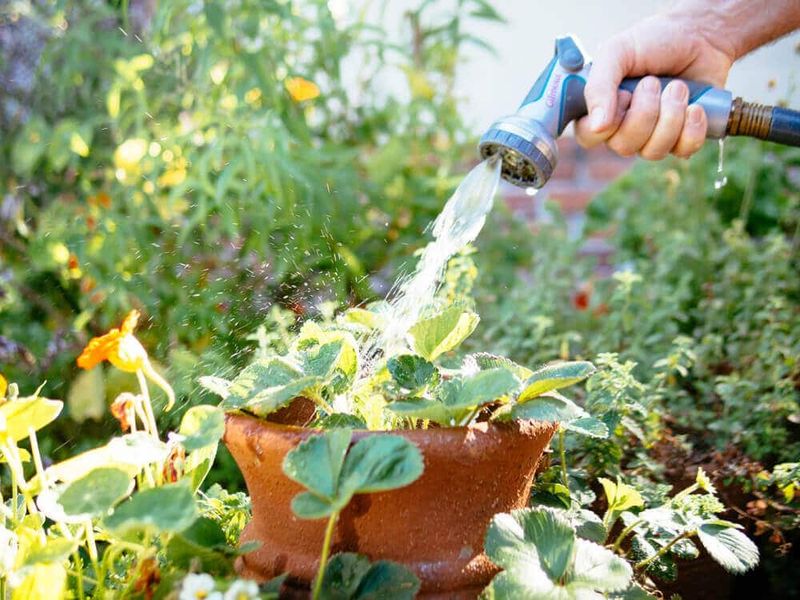
A practical August cucumber routine starts with the inspection schedule from section three and adds a few handling steps that protect quality from vine to kitchen. Harvest in the early morning when temperatures are lower and the fruit is still cool from the night. Cut the stem rather than pulling or twisting the cucumber free, because yanking can tear the vine and damage the attachment point, leaving an entry point for disease or causing stress to the plant.
After cutting, cool cucumbers promptly. Fruit left in a warm bucket or on a sunny porch for several hours after picking loses quality faster than fruit moved to a cool, shaded spot or refrigerator. Illinois Extension and University of Georgia Cooperative Extension both recommend prompt cooling as part of a complete harvest approach, not just a nice-to-have step.
Pair the harvest routine with steady soil moisture. The goal is to avoid drought and sharp swings between dry and wet conditions, not to keep the soil saturated. Mulch helps moderate soil temperature and retain moisture between waterings, and deep, regular irrigation is generally more effective than frequent shallow watering. University of Minnesota Extension recommends consistent moisture during fruit development as a way to reduce stress-related quality problems.
This routine can support better fruit and more consistent production, but it will not repair a plant that is already struggling with disease, severe pest damage, nutrient deficiency, or pollination failure.
Do not treat peeling as a cure for severe bitterness
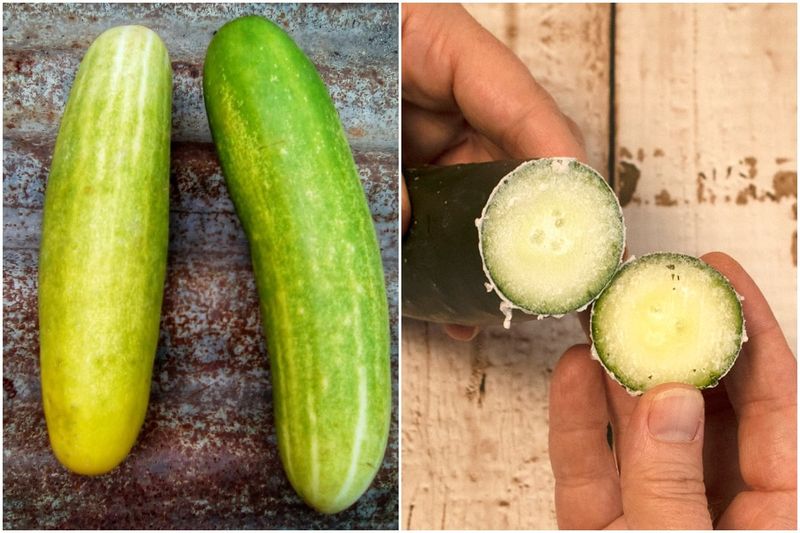
Peeling a mildly bitter cucumber, especially near the stem end, can sometimes reduce the intensity of the flavor. Because cucurbitacins tend to concentrate beneath the skin and toward the stem, removing a generous layer of peel in that area may make the rest of the fruit more palatable. Oregon State University Extension describes this as a possible quality workaround for mild cases, not a reliable treatment or a guarantee that the remaining flesh will taste normal.
For cucumbers with extreme bitterness, peeling is not an adequate response. Nebraska Extension guidance on bitterness in cucumbers and zucchini is clear that severely bitter cucurbit fruit should be discarded rather than eaten, because unusually high cucurbitacin levels can cause gastrointestinal illness. The degree of bitterness matters: a slightly sharp or astringent edge near the skin is different from a fruit that tastes strongly and unpleasantly bitter all the way through.
Harvesting at the right time and maintaining steady growing conditions can help reduce the chances of bitterness developing in future fruit, but neither action reverses bitterness that has already formed inside a cucumber on your counter. Once the compounds are present, no kitchen technique reliably removes them. Discard fruit with severe bitterness, peel thoughtfully for mild cases, and focus your energy on the growing conditions and harvest habits that may reduce the problem going forward.
Pick at the right size and keep checking
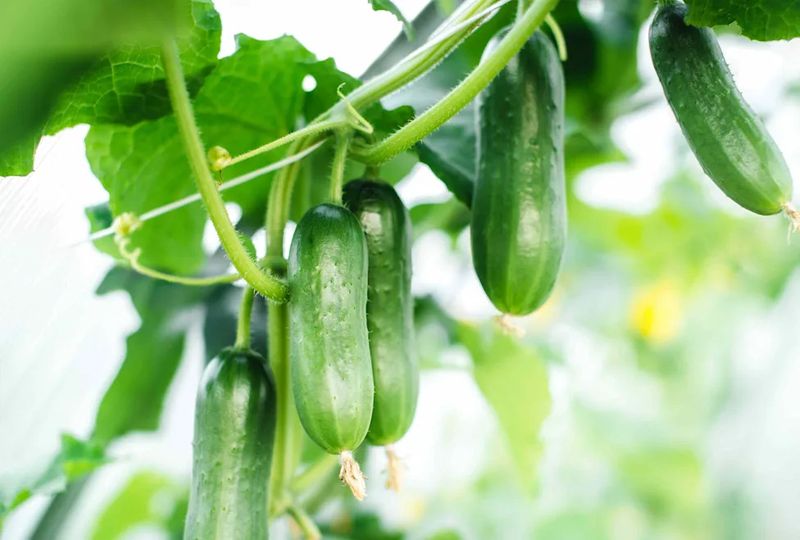
Firm fruit at the cultivar’s recommended size is the clearest signal that it is time to pick. Checking your seed packet or cultivar description gives you a specific target rather than a vague impression, and combining that size reference with a feel for firmness keeps you from relying on color alone as a trigger. University of Georgia Cooperative Extension recommends harvesting before the skin yellows and before seeds harden, which in practice means picking on the early side rather than waiting to see how large the fruit will grow.
Regular inspection on a schedule matched to your cucumber type, combined with prompt removal of any fruit that has exceeded its expected size or developed an abnormal color for its variety, can help maintain quality and support continued production through August. Oregon State University Extension reinforces that even moisture, avoiding drought and sharp wet-to-dry swings, supports better fruit development across the growing season.
Timely harvest addresses over-maturity: the toughness, the large seeds, the declining texture that comes from leaving fruit on the vine too long. Steady growing conditions, a stress-tolerant cultivar, and consistent moisture address the separate problem of bitterness. Solving one does not automatically solve the other, but together they give your August cucumbers the best realistic chance of being worth eating.