
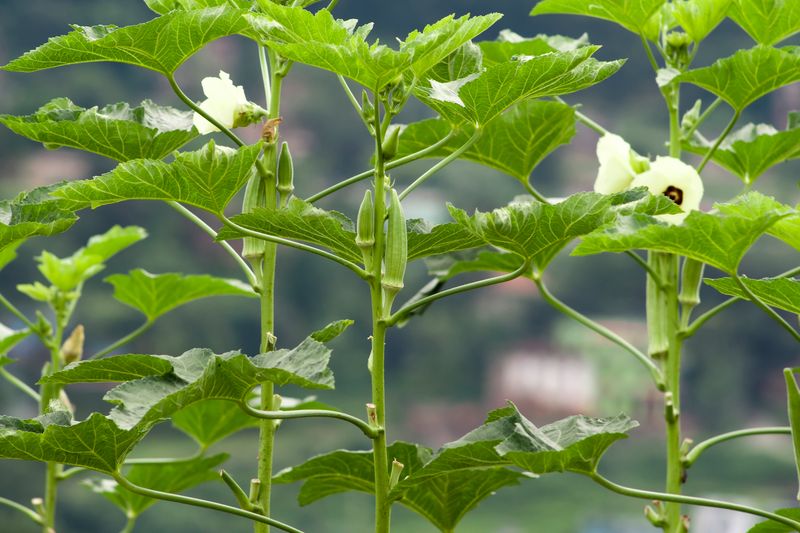
Tall, dark-green okra plants with almost no pods are one of the more frustrating sights in a late-summer Southern garden. You did everything right – watered, fed, and waited – and the plant just keeps putting out leaves instead of food.
The good news is that a handful of specific, fixable causes cover most of these situations, and you can work through them without tearing the plant out. Knowing which pattern your plant fits is the fastest way to get back on track.
Excess nitrogen is one possible reason leafy okra delays pods
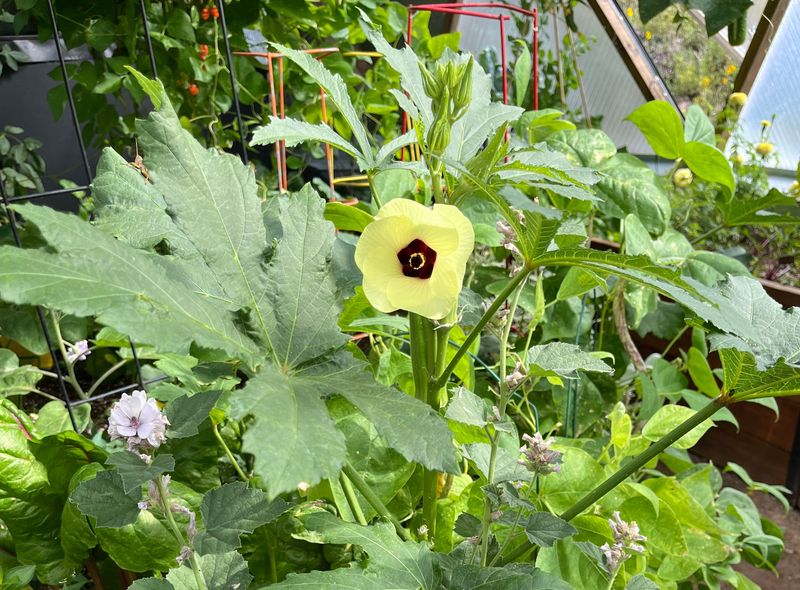
When okra shoots up fast, stays a deep, almost bluish green, and keeps adding leaves while flowers and pods stay scarce, repeated high-nitrogen feeding is worth considering as a cause. Nitrogen drives vegetative growth, and too much of it can tip the plant toward producing leaves rather than reproductive structures.
Oklahoma State University Extension notes that high soil nitrogen causes excessive vegetative growth, delayed flowering, and delayed fruit set in okra, and Utah State Extension specifically links excess nitrogen to increased vegetative growth and reduced yield and pod set.
The likely mistake is not fertilizer in general but repeated applications of high-first-number products. That includes lawn fertilizers, high-nitrogen liquid feeds applied on a short schedule, poultry manure, and manure-heavy amendments.
Texas A&M AgriLife Extension warns specifically against using lawn fertilizers in vegetable gardens because they carry too much nitrogen and may include herbicides that harm vegetables.
That said, this is a plausible explanation when the plant is unusually lush and vigorous – not a confirmed diagnosis or proof that feeding habits are the most common cause of every late-summer no-pod situation. Other factors, covered in the sections below, can produce the same picture.
Before changing anything, check whether the plant actually fits the high-nitrogen profile: rapid, thick growth, large dark leaves, few or no flower buds, and a history of heavy feeding.
Pause routine high-nitrogen feeding before adding anything else
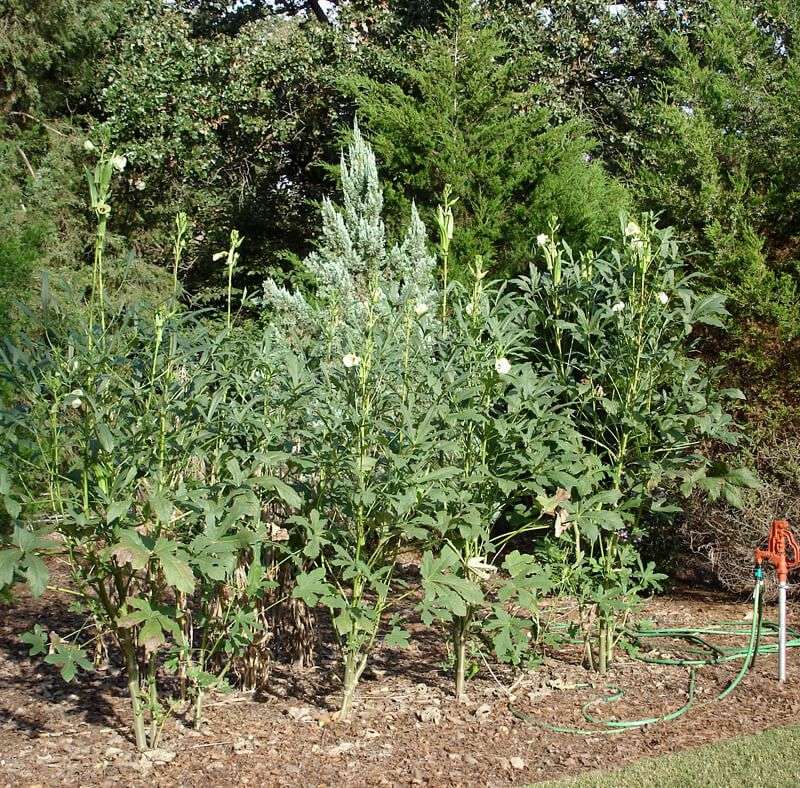
For a lush, podless okra plant with a history of frequent feeding, the safest first move is to stop routine high-nitrogen applications and wait. Do not immediately reach for a corrective product.
University of Maryland Extension and UC IPM guidance on nitrogen excess both caution that adding more nutrients to a soil already carrying excess can create imbalance, salt buildup, and runoff rather than solving the problem.
Phosphorus, potassium, bone meal, Epsom salt, and bloom-booster products are not justified without a soil test or a specific deficiency diagnosis. Each of those inputs can accumulate in the soil, potentially creating new problems while the original excess-nitrogen issue goes unresolved.
Iowa State Extension’s fertilizer rate guidance reinforces that fertilizer numbers represent percentages of nutrients in the product, not the amount the garden needs, and that applying without knowing your soil means guessing.
Pausing is not the same as permanently cutting off all nutrition. Okra needs adequate nitrogen to sustain growth and a long harvest period, as Maryland Extension’s okra growing guide makes clear.
The goal is to stop adding excess while you gather more information, not to starve the plant. Once you have inspected for other causes and ideally run a soil test, you can make a better-informed decision about whether any nutrient is actually needed.
Use the flowers and pods to identify the pattern
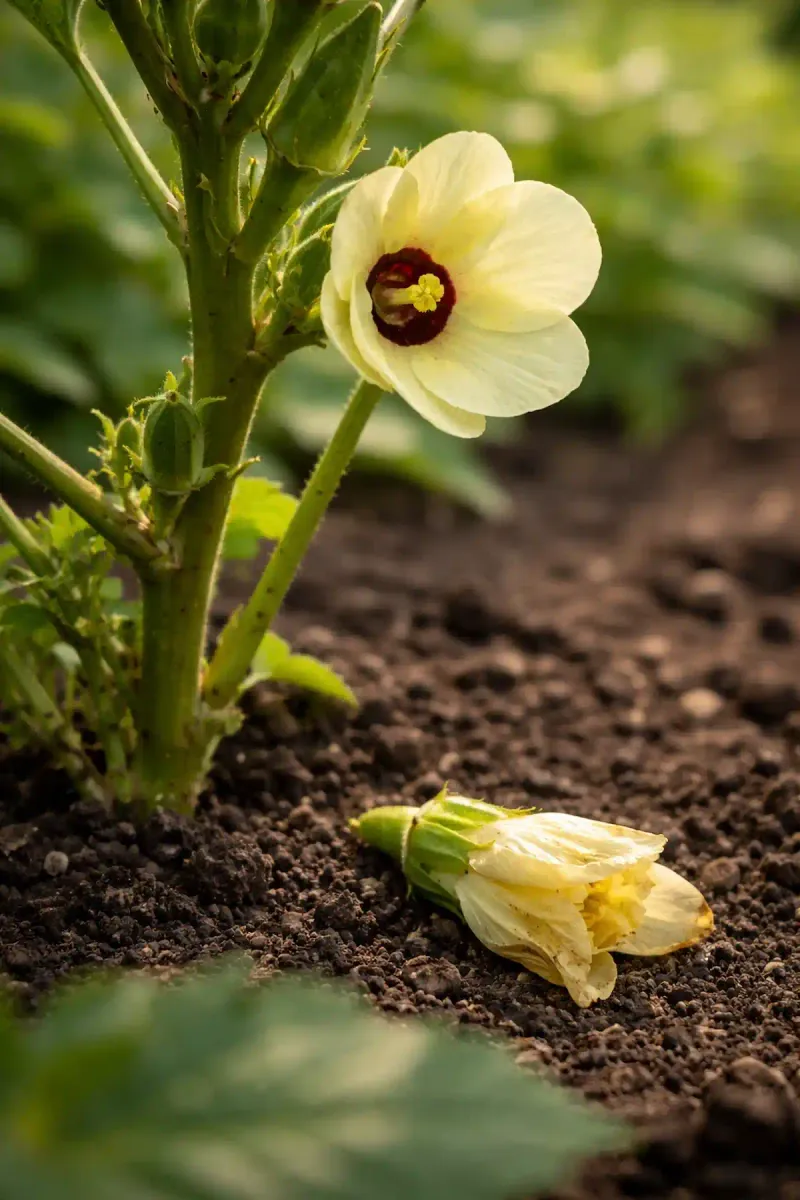
“No pods” covers at least four different situations, and each one points toward a different next check. Sorting out which pattern fits your plant is more useful than guessing at a single cause.
If the plant has no flower buds at all, the candidates include excess nitrogen, insufficient light, planting timing, or general stress. If flowers are opening but falling off without leaving a swelling pod behind, heat, drought, pollination problems, or disease deserve a closer look.
Tiny pods that appear and then disappear before reaching harvestable size suggest fire ants, sucking insects, blossom disease, or water stress. Arkansas Cooperative Extension’s okra guide and Texas A&M’s okra production page both note how quickly pods can develop after flowering, which brings up the fourth pattern: pods that form but go unnoticed or grow past harvest size before the gardener checks.
Okra flowers are generally open for only about one day, so a gardener who walks the garden in the afternoon may see only wilted flowers and assume the plant has failed. Look beneath recently opened or wilted flowers for small pods that are already sizing up.
UGA’s okra feature highlights how rapidly pods can develop – sometimes within days – making a genuinely productive plant look like it is barely trying. Check in the morning, note which pattern you see, and let that guide the next step.
Ordinary late-summer heat does not automatically stop okra from fruiting
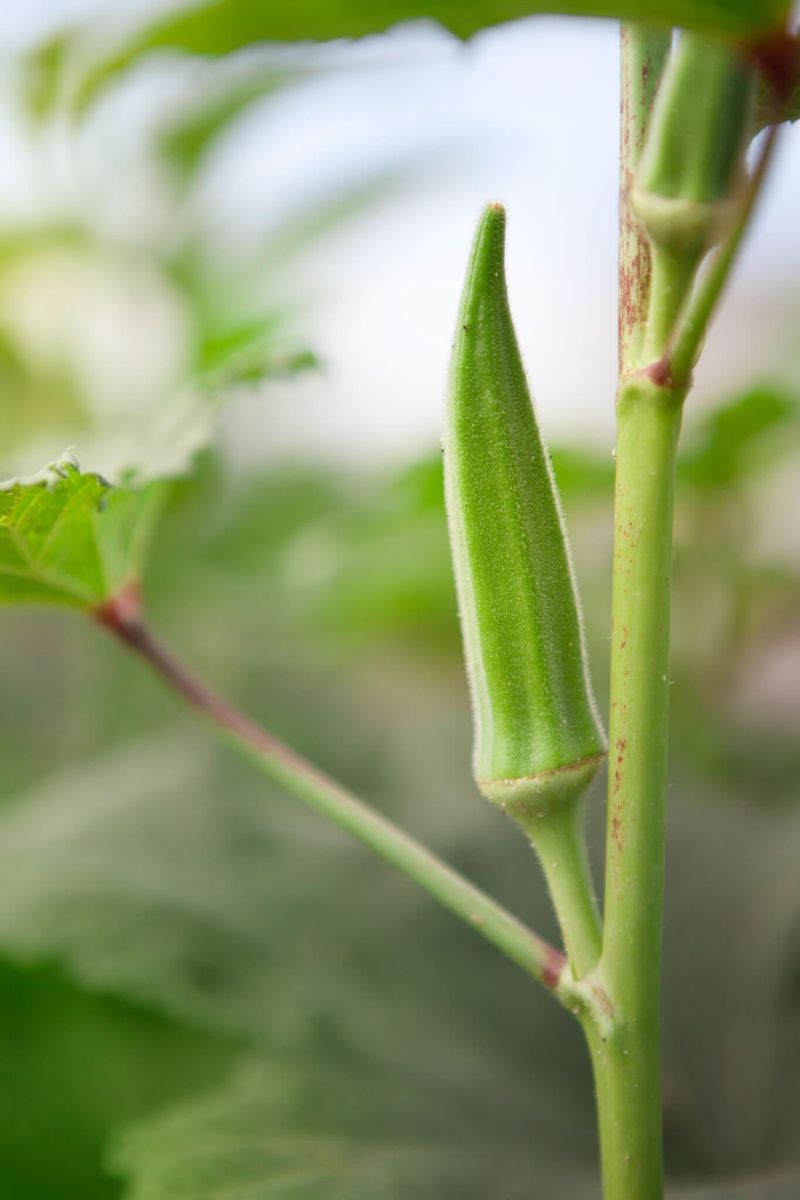
Blaming the calendar is tempting when pods disappear in August, but okra is specifically built for hot weather. Oklahoma State Extension describes okra as capable of flowering and fruiting through high summer temperatures and lists 75 to 95 degrees Fahrenheit as a favorable range for the crop.
Ordinary Southern late-summer heat is not, by itself, evidence of heat failure.
Where heat does become a real factor is when it combines with drought, low humidity, and other plant stresses at the same time. A recent agronomy review reports that temperatures above roughly 104 degrees Fahrenheit, especially with low humidity, can increase flower abortion and reduce fruit set – but that threshold comes from a research context and should not be treated as a universal home-garden cutoff for every cultivar or every Southern location.
Actual plant behavior varies by variety, soil conditions, and how other stresses stack up.
Before writing off pod production to heat, check whether the plant shows actual signs of heat and drought stress: wilting during the day, dry soil at depth, flower buds dropping before they open, or leaf scorch at the margins. Florida Extension describes okra as one of the most heat-tolerant vegetables available to home gardeners in the South, which means a podless plant in hot weather still deserves a closer look at moisture, nutrition, pests, and timing rather than a shrug at the thermometer.
Consistent moisture can reduce drought-related stress
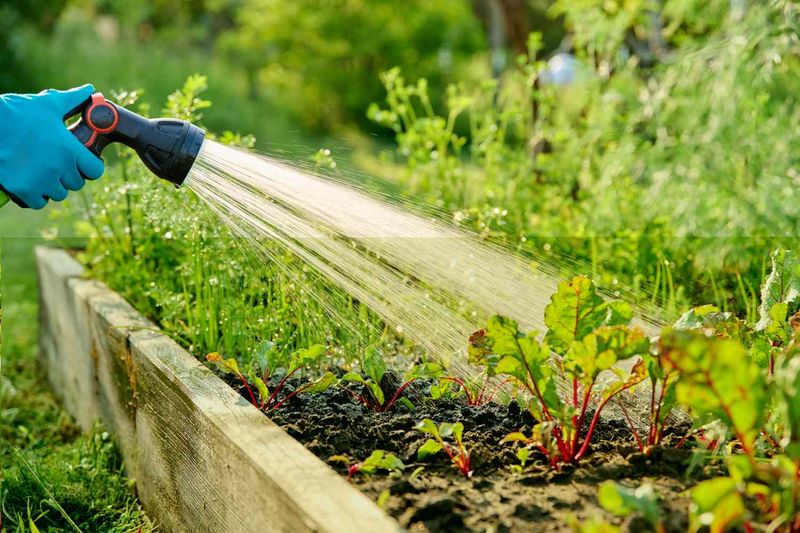
Water is worth checking before revisiting fertilizer. Flowering and pod development both need consistent soil moisture, and a plant that is short on water during hot, dry weather may drop flowers or fail to size pods regardless of what the nutrient situation looks like.
Oklahoma State Extension recommends about 1.5 inches of water every 10 days during production when rainfall is inadequate, treating that as a conditional benchmark rather than a guaranteed production fix.
Sandy soils lose moisture faster than clay or loam, so gardeners in parts of Florida and coastal Texas may need to water more frequently than that benchmark suggests. Texas A&M AgriLife’s okra page notes that watering every 7 to 10 days can improve yield, with the caveat that sandier soils generally require more attention.
The right interval depends on your soil type, recent rainfall, and how quickly the top several inches dry out between waterings.
Apply water at the soil level rather than overhead. Repeatedly wetting the foliage can encourage fungal disease, and surface watering that does not reach the root zone does less good than a slower, deeper application.
Consistent moisture can reduce drought-related stress and support flowering and pod development, but it cannot guarantee production on its own, and it will not resolve a nitrogen excess, a pest problem, or a disease issue that is already underway. Think of it as removing one obstacle at a time, not as a single fix.
Frequent harvest may help prevent reduced continued production
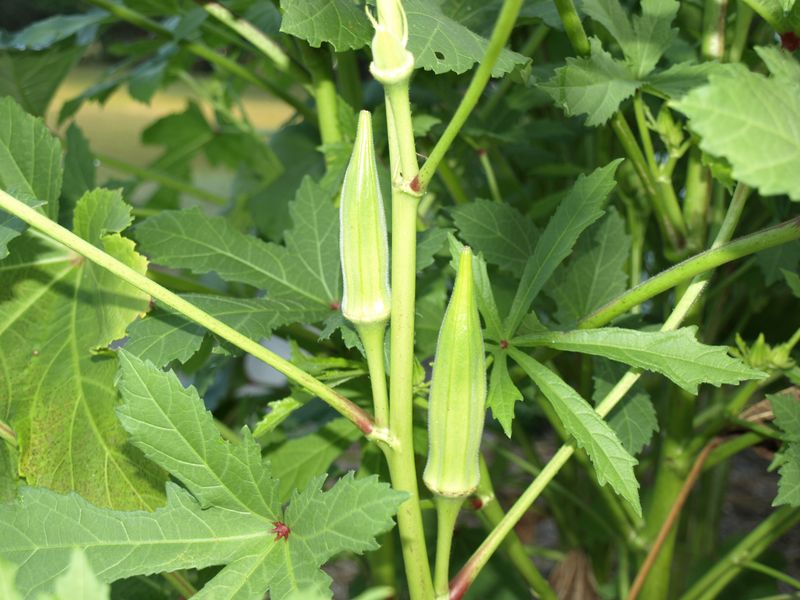
Mature pods left on the plant are one of the more overlooked reasons an okra plant seems to slow down or stop producing. When pods reach full size and begin to dry or harden, the plant shifts energy toward seed development rather than new flowering.
Removing them regularly can help prevent that slowdown, though it will not resolve every no-pod situation and does not replace diagnosis of nutrition, stress, pests, or disease.
Arkansas Extension and Texas A&M’s okra guide both recommend checking plants every day or every other day during peak production. Pods can move from tender and harvestable to oversized and fibrous within a few days, especially in hot weather.
Maryland Extension and Oklahoma State both note that consistent harvesting at the right stage keeps the plant producing longer.
If you find large, tough pods that have been on the plant for a while, remove them along with any that are tender and ready. A quick daily walk through the bed takes less than a minute and prevents the situation where a gardener misses a flush of pods, lets them harden, and then wonders why the plant has stopped flowering.
Harvest management is simple to correct once you recognize it as part of the picture.
Scout for pests, disease, light, and planting timing
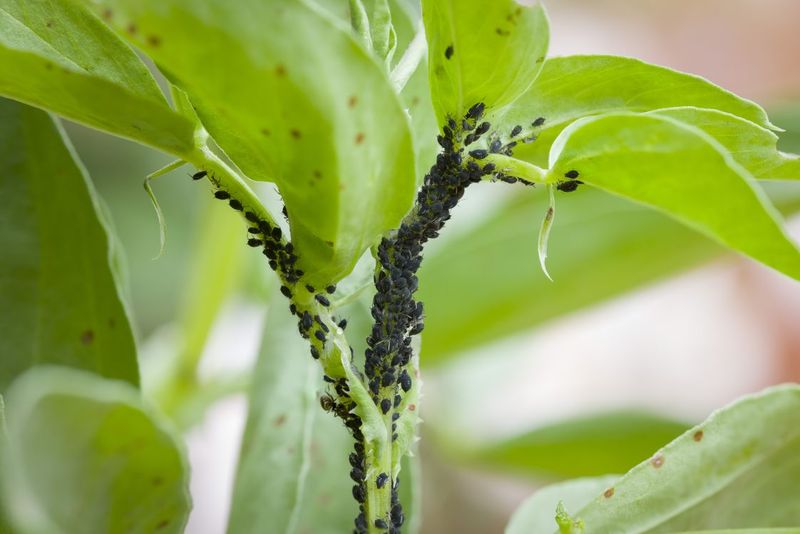
After pausing high-nitrogen feeding and checking moisture and harvest habits, work through the rest of the differential. Start with a close physical inspection of leaves, stems, flower buds, and developing pods.
Aphids, thrips, whiteflies, spider mites, caterpillars, stink bugs, and leaf-footed bugs can all damage okra at various stages. NC State Extension’s pest guide for okra covers the major insect threats in detail.
Fire ants at the base of the plant or around flower buds are worth watching as well, since they can damage developing pods and disrupt beneficial insects.
Florida IFAS Extension and NC State’s okra plant page both document disease issues including root-knot nematodes and poor drainage as factors that can affect okra root health and overall productivity. If the plant looks stunted or the lower leaves yellow unevenly, check drainage and consider whether nematodes could be a factor in sandy Southern soils.
Any pesticide use should follow the product label exactly, including crop registration, pest registration, application directions, and pre-harvest interval.
Light and timing matter too, especially when the plant has never flowered. Okra needs full sun, and a plant shaded for part of the day may delay flowering.
In long-season areas like Florida and Texas, Texas A&M recommends planting fall okra at least three months before the first fall frost, and Florida Extension notes the long warm-season window available to Florida growers. A plant that was set out late may simply need more time to reach reproductive maturity, while one that flowered earlier and has now stopped setting pods needs the closer inspection described throughout this guide.
Use a soil test before resuming or changing fertilization
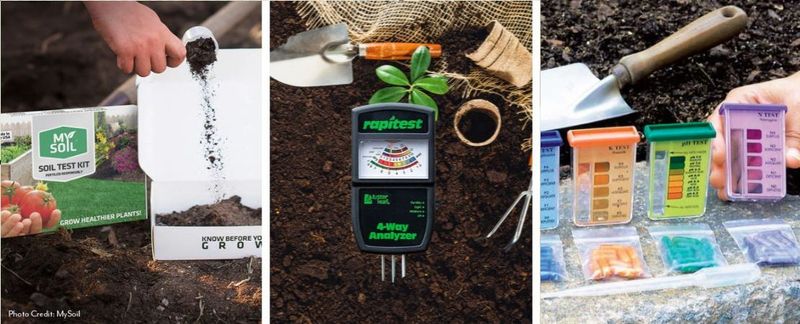
A soil test gives you real information to work with instead of guesses. Colorado State Extension’s soil testing resource explains that tests can identify pH, phosphorus, potassium, and salinity issues that affect nutrient availability – information you cannot get from looking at the plant alone.
Submit a sample through your local cooperative extension office or a reputable lab before selecting a fertilizer product or rate.
That said, a soil test has real limits. It will not diagnose shade, poor drainage, heat injury, root-knot nematodes, insect damage, or disease.
Nitrogen readings can also shift quickly with moisture, temperature, leaching, and microbial activity, so a single test gives a snapshot rather than a complete picture. Texas A&M AgriLife’s fertilizing guide and Iowa State’s fertilizer rate guidance both recommend letting test results drive nutrient decisions rather than applying products based on general recommendations or what worked in a different garden.
The practical sequence for a lush, podless okra plant is straightforward: pause repeated high-nitrogen feeding, inspect flowers and pods to identify the specific pattern, maintain adequate and consistent moisture, remove mature or oversized pods, and scout for pests, disease, drainage problems, insufficient light, and timing issues. Then follow test-based nutrient recommendations rather than reaching for another product.
Oklahoma State Extension sums up the core reality well: okra is a resilient, heat-adapted crop that responds to straightforward care, and most no-pod problems have a traceable, fixable cause once you look closely enough.