
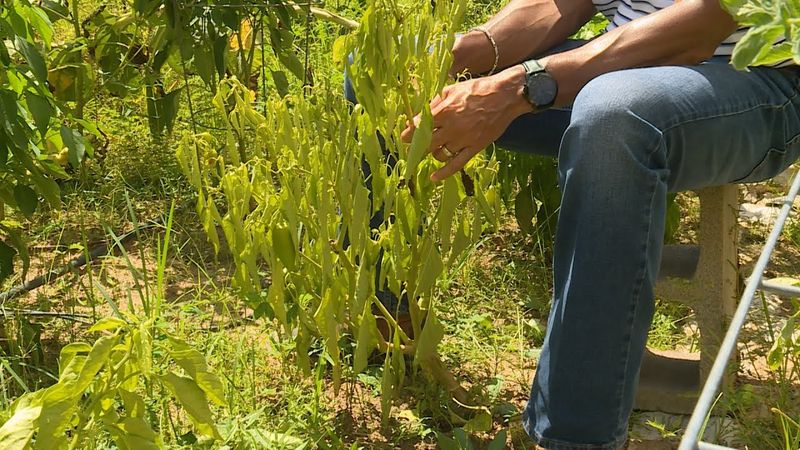
Watching your pepper plants go limp in the afternoon heat is genuinely alarming, especially when you just watered and the soil still looks damp. Before you grab the hose again, take a breath – what you’re seeing may not mean what you think it means.
Late-summer heat can pull water out of pepper leaves faster than even healthy roots can push it back up, leaving plants droopy despite a moist root zone. Knowing the difference between temporary heat stress and a real water or disease problem can save your peppers and your harvest.
The afternoon pattern suggests heat stress—but does not prove it
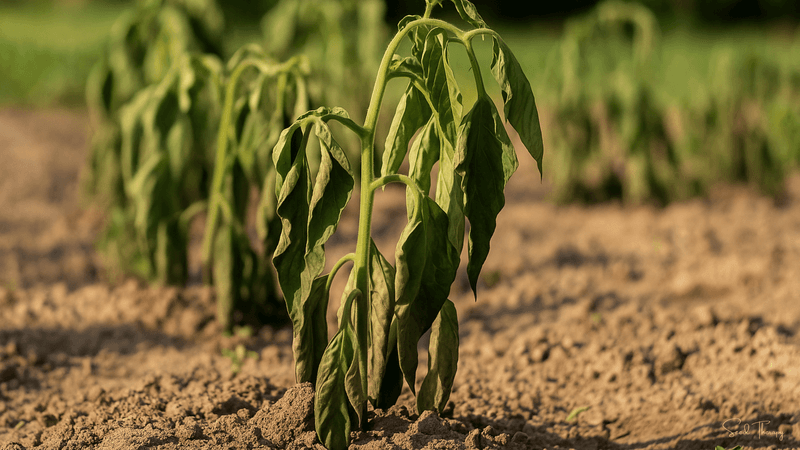
Pepper leaves that droop during the hottest, sunniest hours and then perk back up by evening or the next morning are showing a pattern that fits temporary heat stress. Heat, low humidity, and wind can all push leaf water loss into overdrive, and roots – even healthy ones sitting in moist soil – sometimes cannot keep pace with that demand.
University of Florida IFAS guidance on edible-landscape irrigation specifically notes that plants may wilt during hot, sunny conditions even when they are adequately hydrated.
That evening or morning recovery is a meaningful clue. A pepper that stands back up on its own after the afternoon passes is telling you that its water balance is being restored once temperatures drop and sun intensity fades.
That pattern makes temporary heat stress a reasonable explanation.
However, recovery timing is only a clue, not a diagnosis. University of Maryland Extension points out that wilt lasting overnight or worsening over successive days points toward something beyond afternoon heat, such as drought at root depth, root damage, disease, or another stressor.
Wet-looking soil on the surface does not rule out any of those possibilities, which is exactly why the next step is always a moisture check below the surface rather than an automatic reach for the watering can.
Check moisture where the roots are working
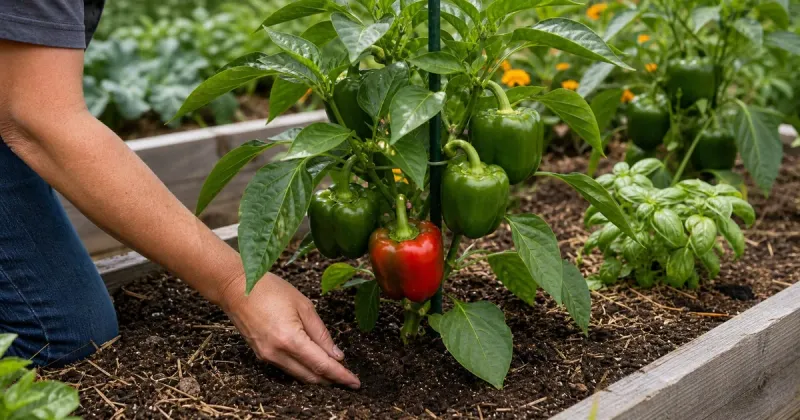
Before doing anything else, push a finger, a wooden dowel, or a soil moisture probe several inches into the ground near the base of the plant. The surface of the soil can feel damp from a recent rain or a quick sprinkle while the root zone several inches down stays surprisingly dry.
Penn State Extension’s review of common watering myths makes clear that surface moisture is not a reliable guide to what roots are actually experiencing.
For established peppers, you want moisture reaching the active root zone. Clemson Extension recommends watering deeply enough to wet soil to at least 6 inches, and West Virginia University Extension pepper guidance echoes the importance of thorough, deep watering over frequent shallow sprinkling, which tends to keep roots near the surface where they are more vulnerable to heat and drying.
What you find at root depth tells you which direction to go. Dry soil several inches down calls for slow, thorough watering at the base of the plant.
Moist soil at that depth means the plant likely has access to water and the afternoon droop is being driven by heat rather than drought. A general starting guideline of around 1-2 inches of water per week from rain plus irrigation is useful, but treat it as a flexible reference point rather than a fixed schedule – sandy Florida soils, heavy Texas clay, containers, and windy exposed sites all change the math considerably.
Wet soil can still leave roots unable to supply water
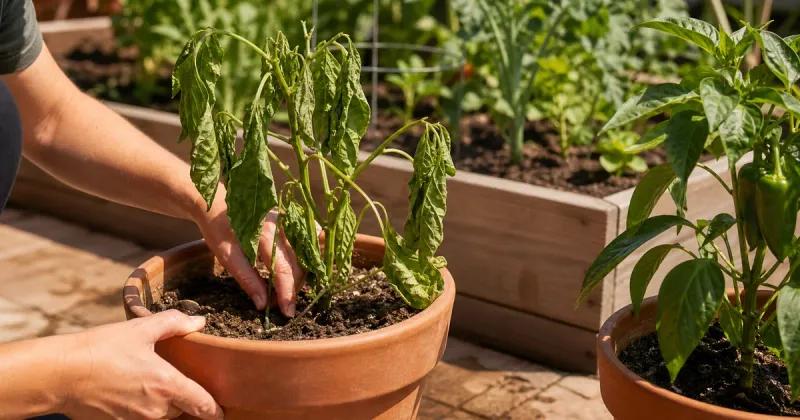
Soil that feels wet is not automatically delivering water to the plant. When soil stays saturated for extended periods, oxygen gets pushed out of the pore spaces, and roots need oxygen to function.
Oxygen-starved roots lose their ability to absorb and transport water efficiently, which means a pepper sitting in waterlogged ground can wilt for the same visible reason as one sitting in dry ground – the leaves are not getting enough water – even though the cause is completely different. Maryland Extension’s vegetable-wilting resource explains this distinction clearly: water availability at the root zone is the useful diagnostic question, not simply whether soil feels wet.
Root damage from other sources creates the same problem. Shallow roots from repeated light watering, transplant stress, soil compaction, or roots overheated in a container sitting in direct afternoon sun can all reduce a plant’s capacity to move water upward even when moisture is present nearby.
Adding more water when soil is already saturated makes things worse, not better. It further reduces oxygen in the root zone and can accelerate the development of root diseases.
Colorado State University Extension’s container-garden guidance and UC IPM’s pepper disease management resource both point toward drainage correction, reduced compaction, and improved soil structure as the path forward when soil consistently stays waterlogged, not additional irrigation.
Cool a moist-rooted pepper instead of adding water automatically
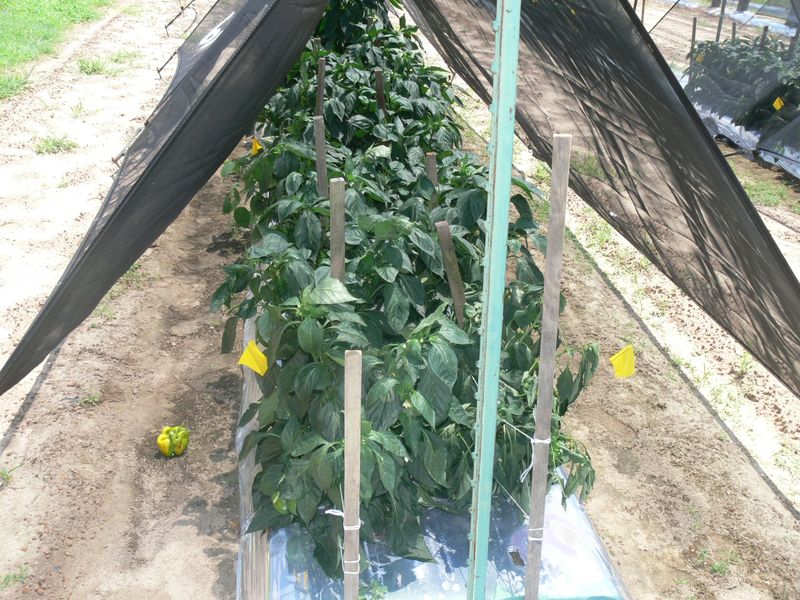
When a root-depth check confirms the soil is moist and the plant bounces back after the afternoon, the goal shifts from watering to cooling. Temporary afternoon shade is one of the most practical tools available.
A shade structure or shade cloth positioned above the foliage – not resting directly on the leaves – can reduce the heat load during the most intense hours of the day. University of Minnesota Extension guidance on heat management suggests approximately 30-40% shade cloth as a reasonable range for reducing heat stress during extreme conditions.
The shade should be temporary. Peppers still need strong light for healthy growth and fruit development, and extended heavy shade can reduce productivity or cause weak, leggy stems.
Remove or reduce the cover once temperatures moderate, whether that means pulling it off each evening or storing it after a heat wave passes. Oregon State Extension’s heat-wave garden guide reinforces that shade is a stress-reduction measure, not a permanent growing condition for peppers.
Mulching the root zone adds another layer of protection. Organic mulch can slow evaporation from the soil surface and moderate soil temperature, helping the root zone stay cooler and more consistently moist between waterings.
WVU Extension’s pepper growing guide recommends keeping mulch a few inches away from direct contact with the stem to avoid trapping excess moisture against the crown. Where wind is a factor, a simple windbreak on the prevailing-wind side can also reduce the rate at which leaves lose water during the hottest hours.
Build a steadier watering routine through the heat
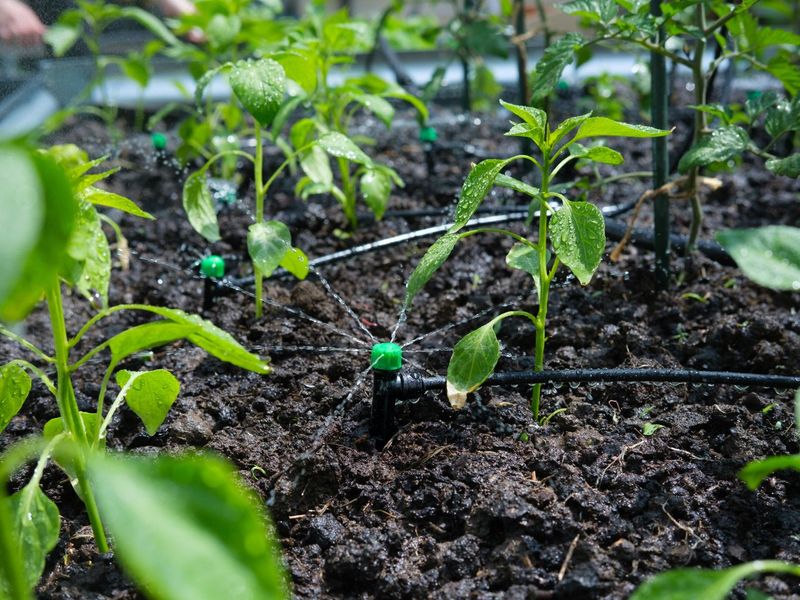
Once the immediate diagnosis is done, the longer-term goal is keeping the root zone consistently moist without swinging between dry and saturated. Drip irrigation, a soaker hose, or slow hand watering directed at the soil surface are all preferable to overhead sprinklers that wet the foliage.
Oregon State Extension’s pepper growing guide recommends root-zone irrigation as the standard approach, noting that keeping water off the leaves reduces conditions that favor certain foliage diseases.
Morning is generally the most efficient time to water. Soil has typically lost some moisture overnight, temperatures are lower so less water evaporates before reaching the roots, and any incidental moisture on foliage has time to dry before evening.
Evening drip or soaker irrigation can also work well when the system delivers water directly to the soil without wetting leaves. What to avoid is frequent shallow sprinkling at any time of day, which tends to keep roots near the surface and leaves plants more vulnerable during hot, dry stretches.
Frequency should follow conditions rather than a fixed calendar. UF IFAS irrigation guidance for edible landscapes emphasizes adjusting based on soil type, rainfall, heat, and plant size rather than watering on a set schedule regardless of conditions.
Heat and water stress during flowering can reduce fruit set, contribute to blossom drop, and leave fruit more exposed to sunburn when wilted foliage stops shading it, though consistent moisture and cooler root conditions may reduce those risks rather than eliminate them entirely.
Treat container peppers as a separate moisture case
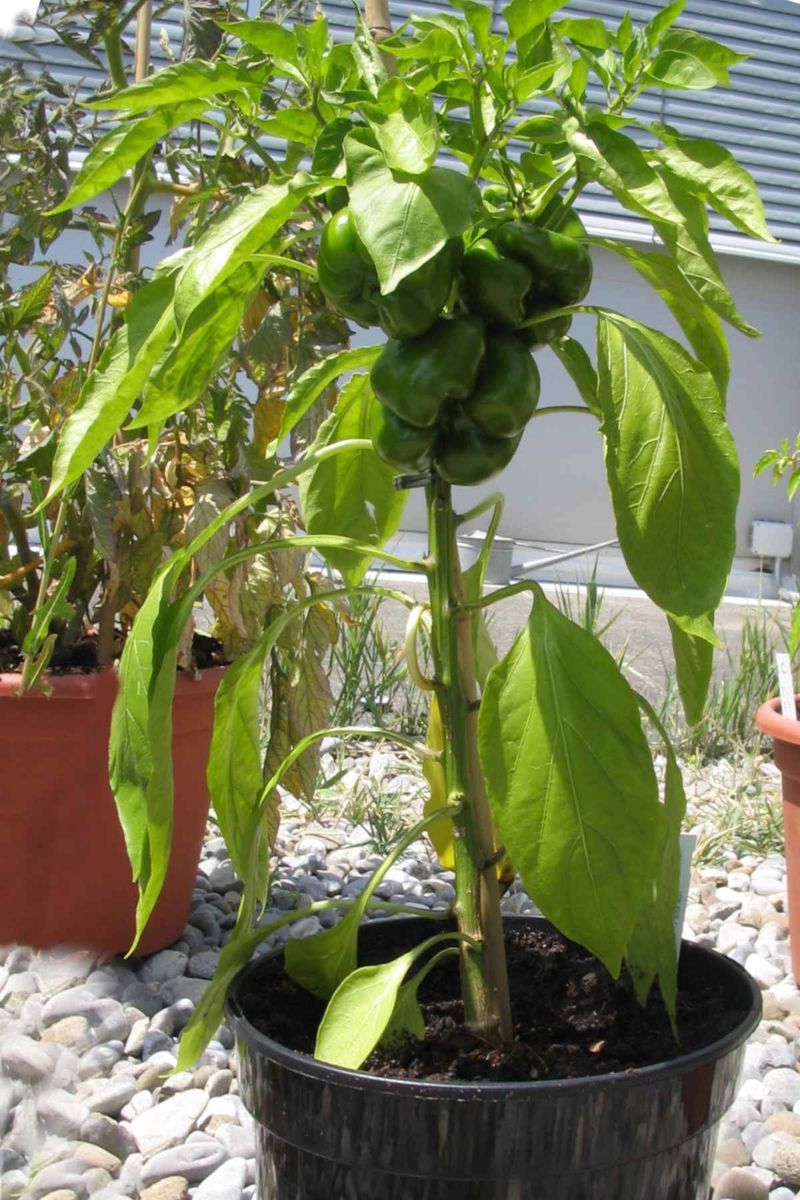
Container peppers behave differently from their in-ground counterparts, and the same surface-looks-wet problem applies in a more concentrated form. Pots heat up far faster than garden beds, and midsummer afternoon sun can raise root-zone temperatures in a dark container high enough to stress or damage feeder roots even when the potting mix feels moist at the top.
A damaged root system in a container cannot supply water efficiently, so the plant wilts despite having moisture nearby.
Poor drainage is the other container-specific trap. If water cannot exit through functioning drainage holes, it pools at the bottom, roots sit in stagnant water, oxygen is depleted, and wilting follows.
Check that drainage holes are open and unobstructed, and empty any water that has collected in saucers or decorative outer pots after each irrigation event. Colorado State University Extension’s container guidance stresses that functional drainage is a basic requirement, not an optional feature.
A common workaround – placing a layer of gravel at the bottom of the pot – does not improve drainage and can actually raise the saturated zone, reducing usable root space. UC Master Gardeners of Santa Clara County explain the drainage-in-containers issue clearly: effective drainage depends on the container having adequate holes and an appropriate potting mix, not on a gravel layer.
Check moisture below the surface with a finger or probe before adding water, just as you would in a garden bed.
Persistent wilt requires a stem, root, and leaf inspection
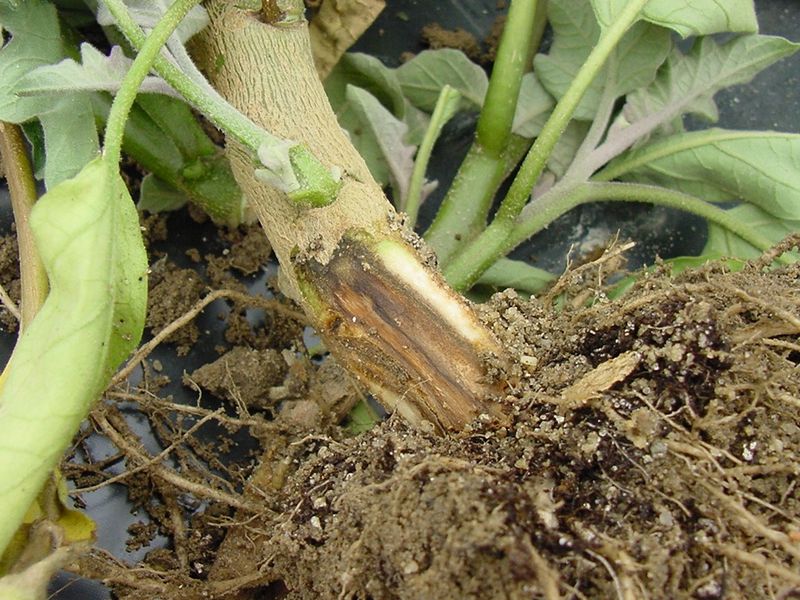
Ordinary afternoon heat stress follows a predictable rhythm: the plant droops, the afternoon ends, the plant recovers. When that rhythm breaks, closer inspection is needed.
Wilt that persists into the evening or overnight, affects only one side of a plant, or worsens rapidly over a day or two is no longer consistent with simple heat stress and calls for a systematic look at the stem, roots, and leaves.
Phytophthora root and crown rot is one of the more serious possibilities in wet conditions. UC IPM’s pepper root and crown disease management guidelines describe the warning signs: dark, water-soaked lesions at or near the soil line, brown or decayed roots, loss of lateral roots, yellowing foliage, and rapid decline that can end in plant death.
Plants with severe root or crown rot may not be salvageable, and removing them promptly helps prevent spread through contaminated soil or irrigation water.
Vascular and viral diseases produce different but equally persistent patterns. Verticillium wilt in peppers can cause drooping, yellowing leaves, and brown discoloration inside the lower stem when you cut through it.
Tomato spotted wilt virus on pepper may produce stunted growth, distorted or bronzed leaves, ring spots on foliage, and spotted or discolored fruit. Neither has a curative treatment once a plant is infected, which is why accurate diagnosis matters before any chemical application.
Illinois Extension’s ask-a-specialist guidance on wilting peppers reinforces that persistent, one-sided, or rapidly worsening wilt requires a broader investigation than heat stress alone can explain. When symptoms are unclear, unusual, or spreading quickly, contact your local Cooperative Extension office or a plant diagnostic clinic for help identifying the problem before committing to a treatment path.
Use the recovery test to choose the next step
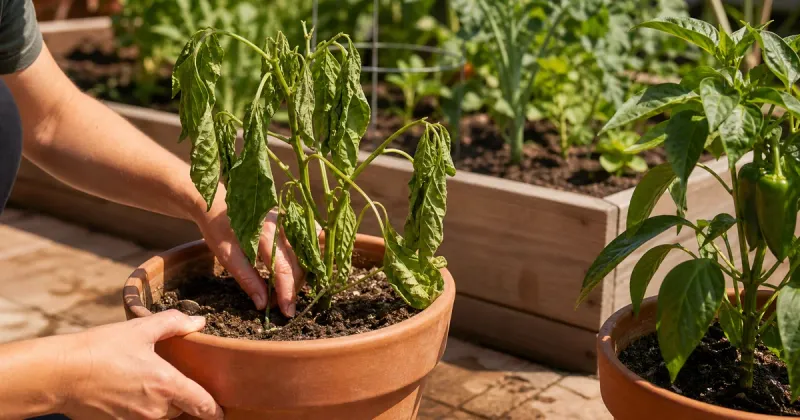
The recovery test is the fastest way to sort an afternoon droop into the right category. Check root-depth moisture first – several inches down, not just the surface.
Then watch what the plant does once the afternoon heat passes. A pepper that stands back up on its own by evening or morning, with moist soil at root depth, is most likely managing temporary heat stress.
Respond by reducing heat and evaporation with temporary shade, mulch, and wind protection rather than adding water the roots do not need.
If the root zone is dry, water thoroughly and slowly at the base, then reassess. Maryland Extension and UF IFAS both support this observe-then-act approach rather than reflexive irrigation whenever leaves look soft.
Saturated soil or wilt that refuses to resolve during cooler hours changes the diagnosis entirely and points toward drainage correction or a disease inspection rather than more water.
Managing root health and reducing heat load during late summer may help limit blossom drop, fruit loss, and sunburn on exposed peppers, though no single watering amount, shade setup, or recovery check can guarantee a healthy plant through every stretch of Southern summer heat. A pepper that tells you it is recovering on its own is usually the best news you will get on a hundred-degree afternoon.