
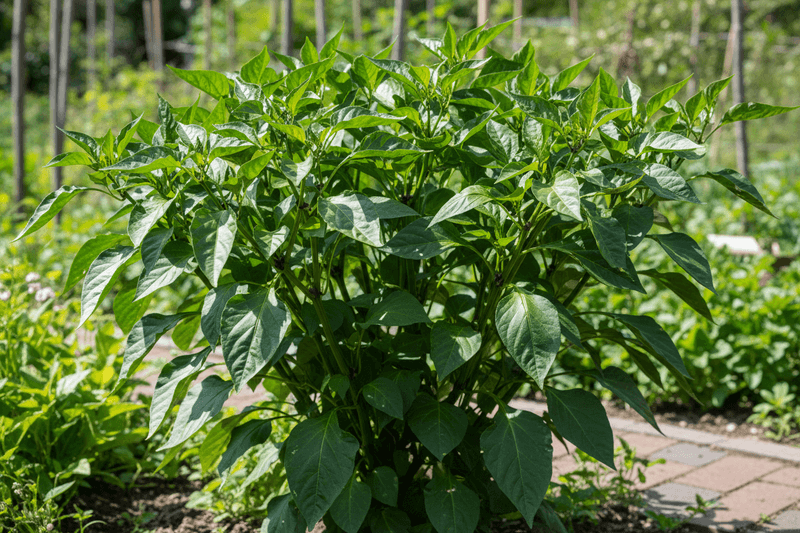
Your pepper plant looks better than ever, full of deep green leaves and strong new growth, yet there isn’t a single pepper developing on it. That mismatch is one of the most frustrating things a Southern gardener can run into in late summer.
Before you reach for a new fertilizer or a bloom-booster product, it helps to understand what’s actually going on, because the fix depends entirely on the cause.
A Lush Pepper Needs Diagnosis Before Fertilizer
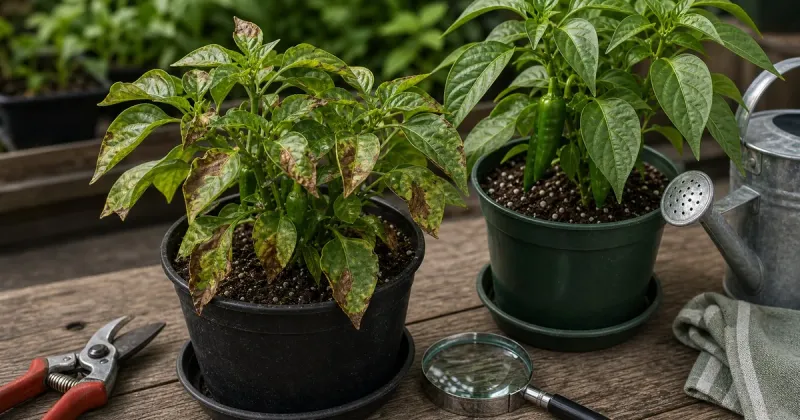
Abundant foliage on a pepper plant that isn’t setting fruit can mean a couple of different things, and they call for different responses. Excess nitrogen is one possibility.
When plants receive more nitrogen than they need, the result is often vigorous leafy growth, delayed flowering, and fewer or smaller peppers. Utah State University Extension guidance on growing peppers specifically cautions against overfertilizing, noting that excessive nitrogen can push vegetative growth at the expense of fruit development.
The catch is that lush foliage alone doesn’t confirm a nitrogen problem. University of Illinois Extension’s review of pepper production problems points out that when flowers abort during a heat wave, the plant loses its developing fruit sink and may redirect energy into leaves and stems.
The plant ends up looking leafy and productive even though the real culprit was temperature, not fertilizer.
A useful diagnostic starts with a few honest questions. How often have you fertilized, and what product have you used?
Are the leaves an unusually dark, almost blue-green color, which can signal nitrogen excess? Has the plant had consistent water, or has it gone through dry spells followed by heavy irrigation?
Do you have a recent soil test?
Reviewing those details gives you a much clearer picture than foliage alone. The feeding reset described in this article is a conditional step, appropriate when nitrogen excess is plausible based on your fertilizer history and plant appearance, not a guaranteed turnaround that applies to every lush, fruitless pepper.
Late-Summer Heat Can Disrupt Flowers and Pollen
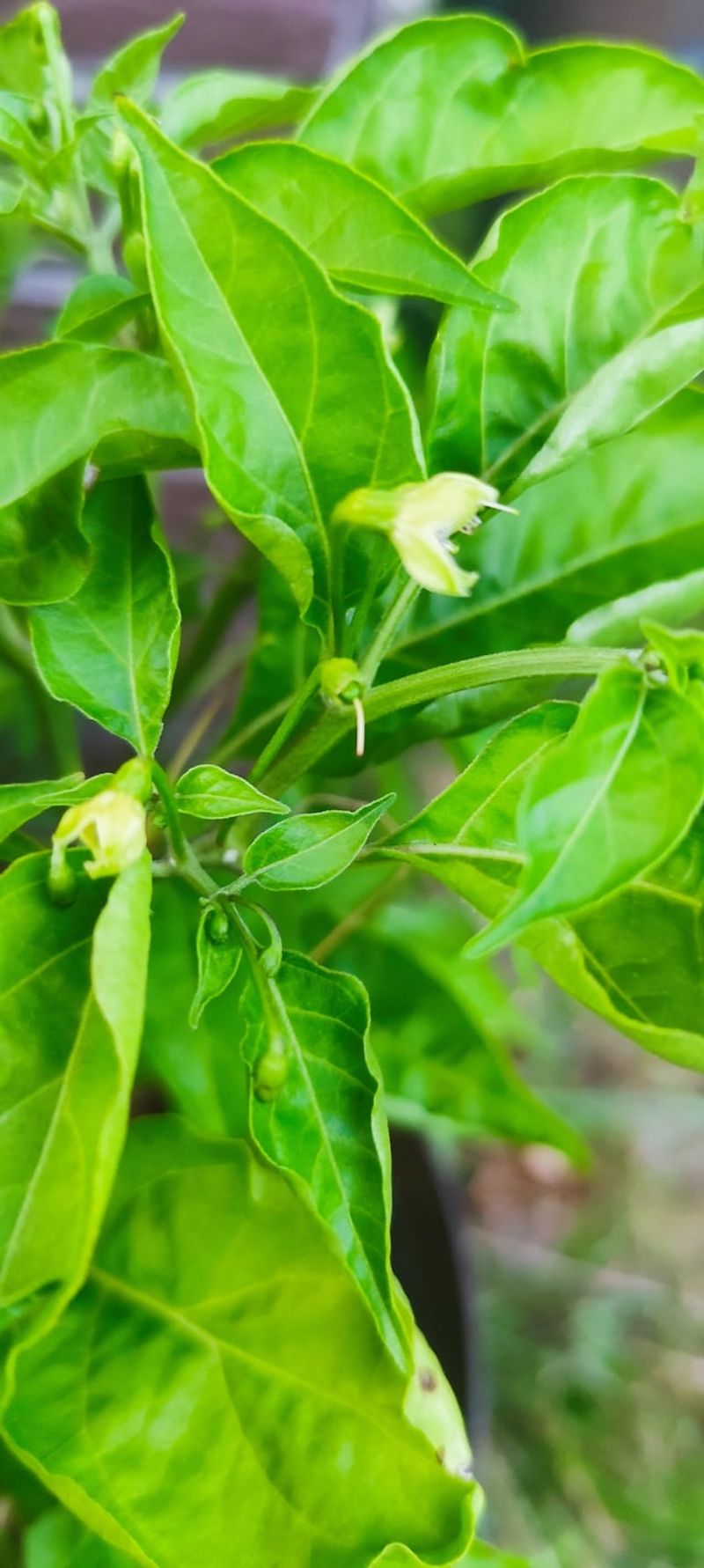
Heat is often the first suspect worth examining when a pepper stops setting fruit in July or August in Florida or Texas. Pepper pollen becomes less viable and flower fertilization can fail when daytime temperatures climb into a rough risk range that multiple university sources place somewhere between the upper 80s and mid-90s Fahrenheit, though the exact threshold varies.
Iowa State University Extension’s pepper guide notes that high temperatures interfere with pollen and fruit set, and that nights remaining unusually warm compound the problem.
Citing a single cutoff temperature as a guarantee would be misleading. Cultivar matters, pepper type matters, how long the heat lasts matters, and whether the plant has been consistently watered or is already under moisture stress all affect the outcome.
Bell peppers tend to be more sensitive to heat-related fruit-set problems than many small-fruited hot peppers. Oklahoma State University’s pepper production fact sheet notes that some small-fruited pungent types handle high-temperature conditions better than bell types, so the two shouldn’t be treated as identical.
When you’re trying to figure out what happened to your plant, timing is a useful clue. Think back to when flowers first appeared and whether a stretch of unusually hot days followed shortly after.
If the heat wave lines up with when flowering started or when small fruit would have been developing, temperature disruption is a strong candidate. That context matters more than a quick look at the leaves when you’re choosing your next step.
Pause High-Nitrogen Feeding Only When the Evidence Fits
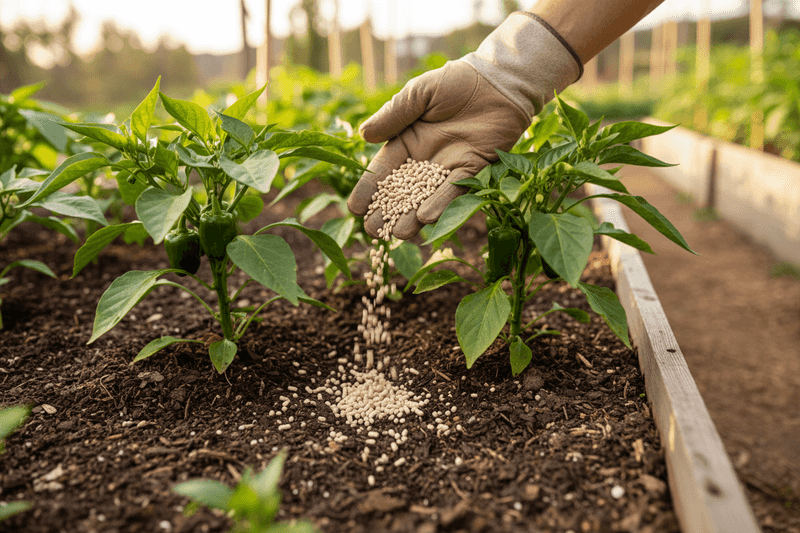
Pausing additional high-nitrogen fertilizer makes sense under a specific set of conditions: the plant is unusually leafy, growth has been vigorous and dark green throughout the season, and you have been applying a nitrogen-heavy product on a regular schedule. That combination makes excess nitrogen a plausible contributor.
What you’re doing is stopping an ongoing input that may be reinforcing the problem, not trying to starve the plant into fruiting.
University of Minnesota Extension’s pepper growing guide recommends applying fertilizer according to soil-test results and splitting applications rather than feeding heavily throughout the season. That guidance also cautions against adding phosphorus or potassium without evidence of a deficiency.
Before reaching for a bloom booster, a low-phosphorus product, or any other corrective fertilizer, get a soil test. If the test comes back showing adequate fertility across the board, no additional fertilizer is needed at all.
If testing does identify low fertility or a genuine nutrient gap, apply a complete or lower-nitrogen fertilizer following the product label and the soil-test recommendations. Place the fertilizer beside the plant rather than against the stem to avoid root or crown burn, and water it in thoroughly.
UC IPM’s cultural tips for growing peppers also emphasizes avoiding overfertilization, particularly with nitrogen, as a basic best practice for pepper health.
One thing to be clear about: a switch to a lower-nitrogen fertilizer cannot restore flowers that already dropped due to heat. It doesn’t produce an immediate recovery.
The goal is to stop adding to a potential imbalance while the plant waits for conditions to improve.
Stabilize Moisture and Reduce the Heat Load
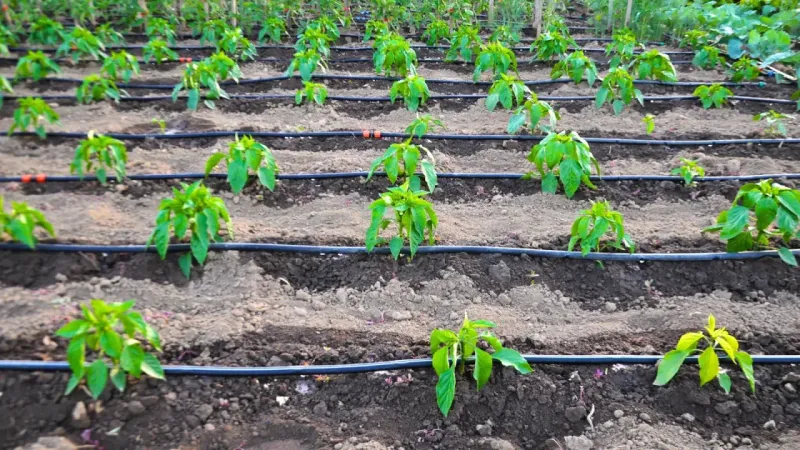
Keeping soil moisture consistent is one of the most practical things you can do for a heat-stressed pepper plant. Drought stress, irregular watering, and hot dry wind can all cause flowers and small developing fruit to drop, and those same conditions can make any existing nutrient imbalances worse.
UC IPM’s pepper growing guide recommends maintaining evenly moist, well-drained soil and avoiding both drought and waterlogged conditions.
Drip irrigation or a soaker hose delivers water directly to the root zone without wetting foliage, which is the better approach compared to frequent shallow overhead watering. A layer of mulch over the soil surface helps slow moisture evaporation, moderates soil temperature, and reduces the rapid wet-to-dry swings that stress roots.
Spraying leaves in the afternoon to cool the plant is not a reliable strategy and can increase disease risk under certain conditions, so it shouldn’t be your go-to move during a heat stretch.
Temporary shade is worth considering during periods of extreme heat. University of Delaware Cooperative Extension’s heat-stress guide identifies approximately 30% shade cloth as a useful level for many vegetables, enough to reduce heat load without cutting too much light.
Install it securely so it doesn’t collapse onto plants, and plan to remove or adjust it once temperatures moderate. These measures reduce ongoing stress and give future flowers a better environment, but they cannot reverse flowers that already aborted during an earlier heat event.
Do Not Confuse Pollination Failure With Blossom-End Rot
Peppers are generally self-pollinating, which means they don’t need bees the way cucumbers or squash do. Wind and plant movement can help release pollen, and bumblebee vibration may improve fruit size or seed count in some cases, but a missing bee population is not automatically the reason your plant has no fruit.
North Dakota State University Extension’s guide on pollination in vegetable gardens confirms that peppers can pollinate without insect assistance. When heat has damaged pollen viability, manually transferring pollen from flower to flower won’t reliably fix the problem either, so hand-pollination is at best a limited experiment in a sheltered or enclosed garden, not a standard rescue step for open-ground plants in a heat wave.
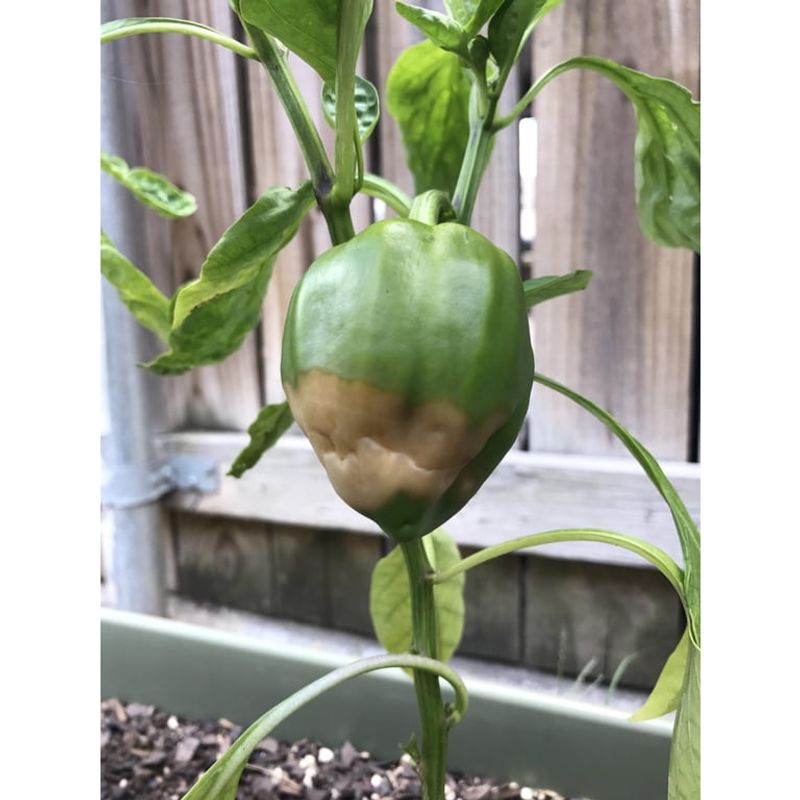
Blossom-end rot is an entirely separate issue that sometimes gets lumped in with fruit-set failure. Rather than a plant producing no peppers, blossom-end rot shows up as a sunken, dark, leathery lesion at the bottom tip of an existing young pepper.
It involves how calcium moves through the plant and how water delivery affects that movement, not simply a shortage of calcium fertilizer in the soil. UF/IFAS research on blossom-end rot in bell pepper states that foliar calcium sprays are unlikely to correct or prevent the condition, and that consistent soil moisture and good root health are the more effective management tools.
Calcium fertilizer does not fix heat-damaged pollen or make flowers set. Epsom salt, which supplies magnesium and sulfur, has no documented role as a general remedy for heat-related fruit-set failure.
Neither product should become an automatic addition unless a soil or tissue test shows a genuine deficiency that warrants it.
Wait for Better Conditions or Plan a Local Fall Crop
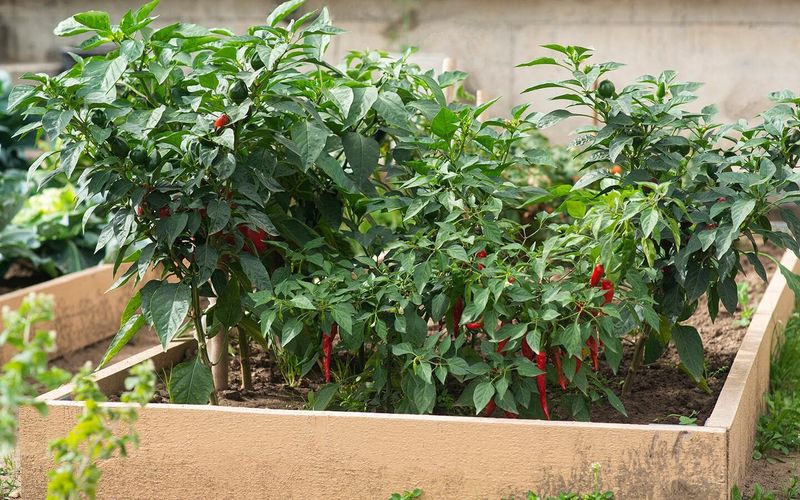
Once you’ve paused unnecessary nitrogen, stabilized moisture, and added temporary shade where needed, the next step is patience. A pepper plant cannot recover flowers that already aborted during a heat event.
What it can do is produce new flowers when temperatures drop to a more favorable range, and those new flowers have a better chance of setting fruit if the growing conditions have improved. Waiting for that window is a reasonable strategy, particularly for an established plant with a healthy root system.
Harvesting any green peppers already on the plant may support that process. UC Marin Master Gardeners’ pepper guidance notes that allowing fruit to remain on the plant and ripen can slow new fruit development in some situations, so picking existing peppers green keeps the plant from diverting resources into ripening and may encourage it to set more fruit as conditions improve.
This is a secondary tactic, though, not a solution to heat-related flower abortion on its own.
For gardeners in Florida, a late-summer or early-fall planting is a genuine option. UF/IFAS Gardening Solutions’ pepper page lists planting windows that include August and September depending on the region of the state, and the UF/IFAS chapter on pepper production outlines late-summer timing for commercial and home growers alike.
In Texas, Texas A&M AgriLife Extension’s fall vegetable gardening guide identifies peppers as a suitable fall crop when planted at the right time for your region and first-frost date.
Starting fresh isn’t automatically more reliable than waiting for an established plant to recover. The better choice depends on your region, the pepper type you’re growing, how much season remains, and the condition of the existing plant.
Check your local extension planting calendar before deciding.
Use a Conditional Reset Checklist
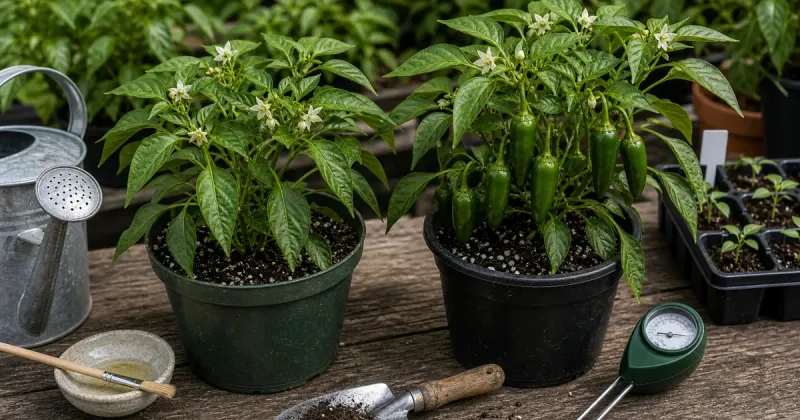
Working through a short checklist before making any changes keeps you from applying a fix to the wrong problem. Start by assessing whether excess nitrogen is actually plausible.
If you’ve been fertilizing frequently with a high-nitrogen product and the plant is unusually dark green and leafy, pausing that input makes sense. If your fertilizer history is moderate or you haven’t fed the plant in weeks, nitrogen excess is much less likely to be the issue.
Next, check soil moisture and recent watering patterns. Inconsistent moisture is a common contributor to flower drop and should be corrected before anything else.
Add mulch if the soil surface is bare and drying out quickly. If heat has been extreme, consider installing approximately 30% shade cloth temporarily, as noted by University of Delaware Cooperative Extension, and plan to remove it when temperatures moderate.
Before adding any corrective product, including phosphorus, potassium, calcium, or Epsom salt, run a soil test. University of Minnesota Extension and UC IPM both recommend fertilizing based on soil-test results rather than assumptions.
If no deficiency exists, no corrective product is needed.
Then wait. New fruit set may improve when temperatures moderate and the plant has stable moisture and manageable heat.
Better conditions give the plant better odds, but they don’t guarantee a harvest from flowers that were never there to begin with.